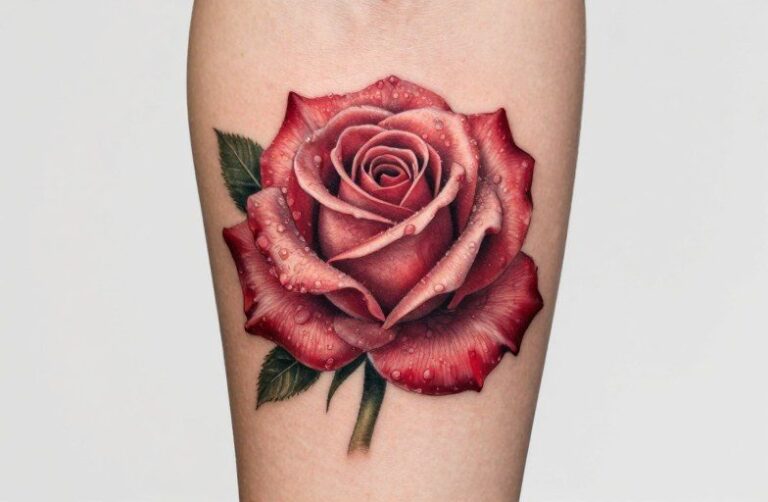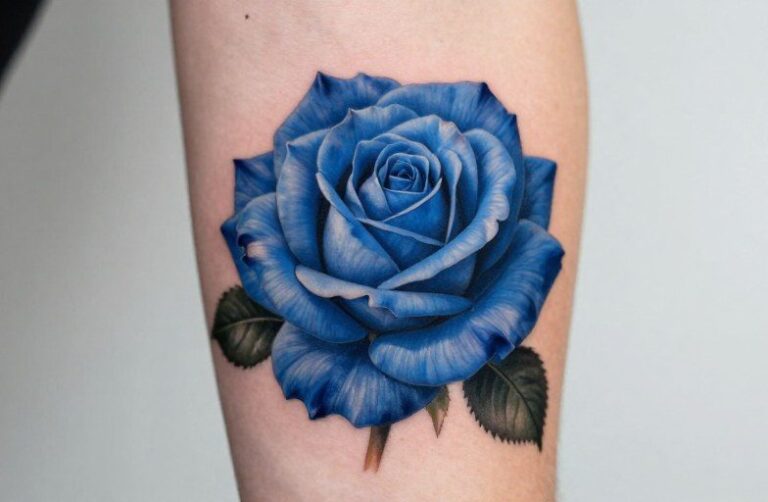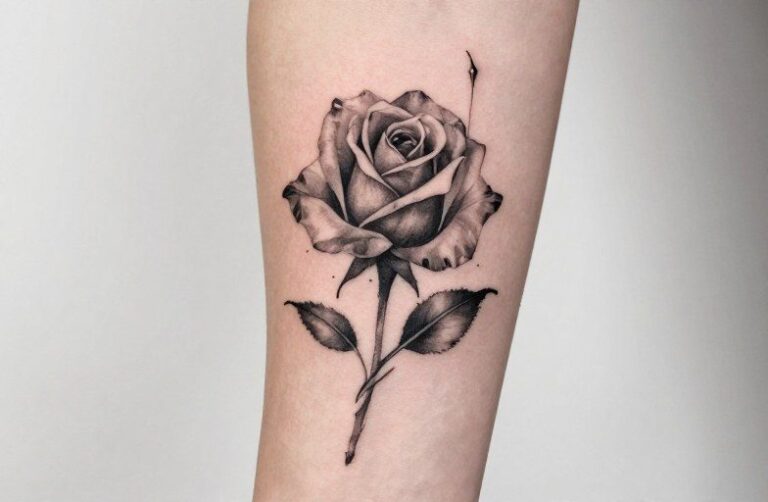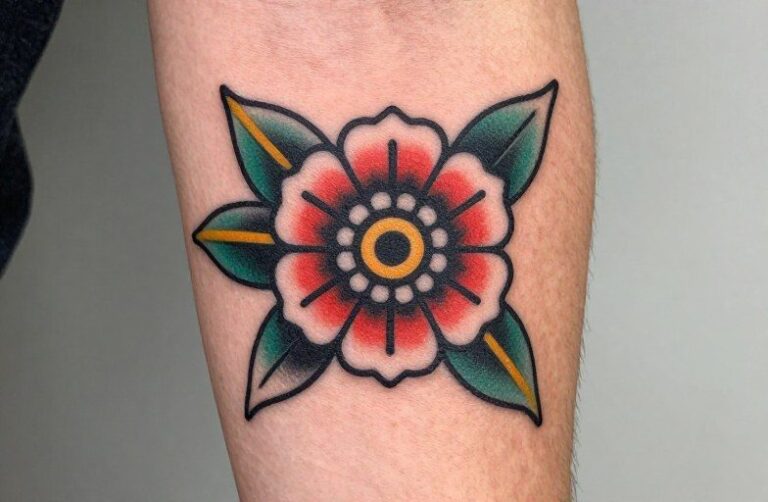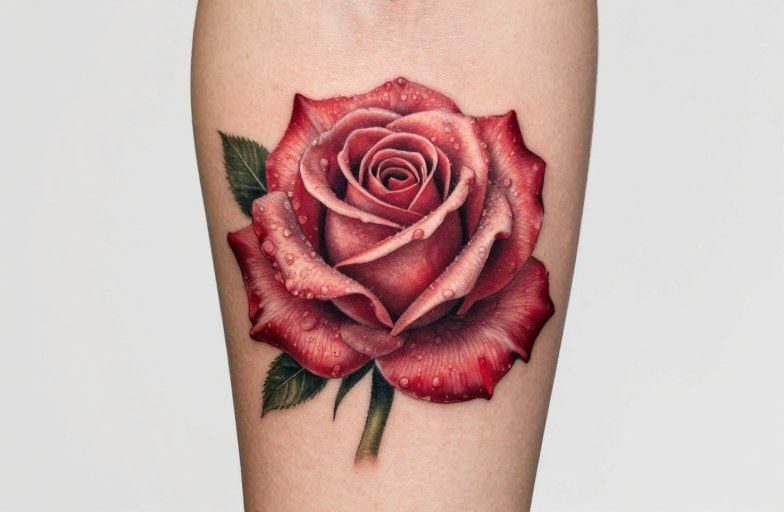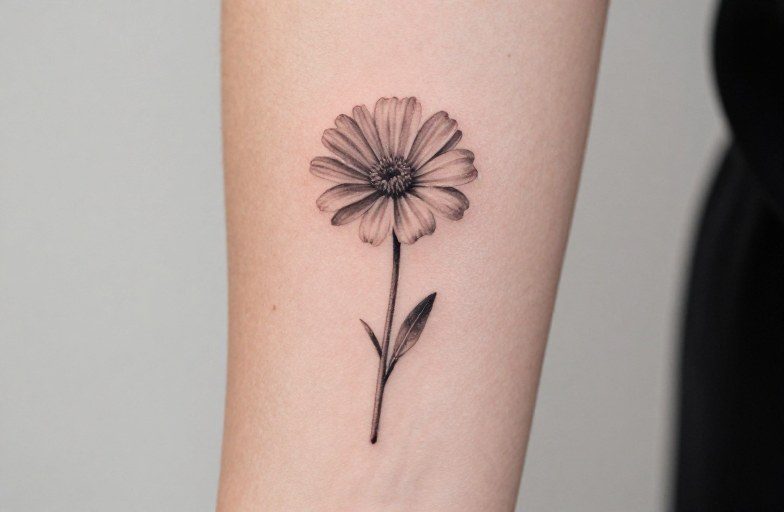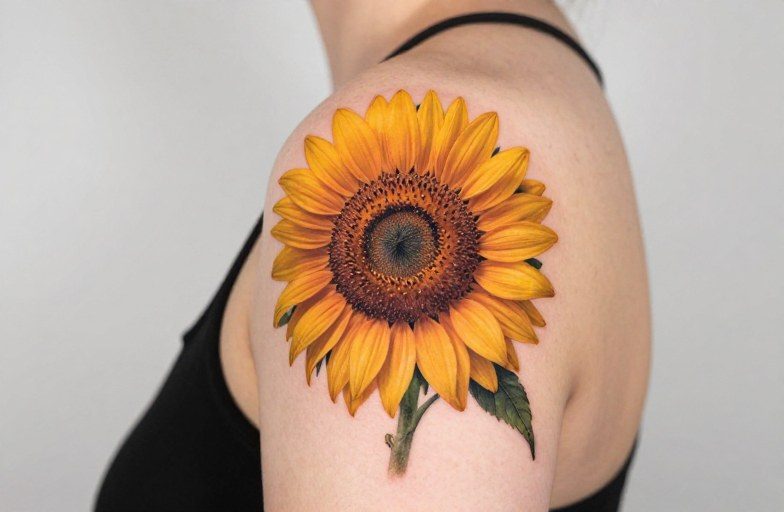
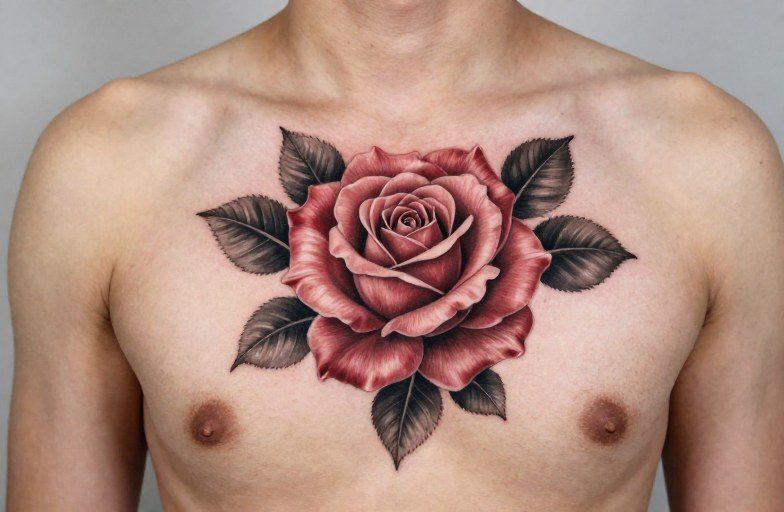
A rose tattoo on the breast typically symbolizes love, beauty, and the coexistence of pleasure and pain, the thorn and the bloom in one image. Placement amplifies this: sitting over the heart or along the curve of the breast adds layers of intimacy, vulnerability, and personal significance that a rose on the arm or back simply doesn’t carry. The breast as canvas makes the symbolism private yet powerful, visible only when chosen.
Symbolism & Core Meaning
The rose carries some of the oldest and most consistent symbolism in tattoo culture. Unlike trend-driven imagery that shifts decade to decade, the rose has maintained its core associations across centuries and styles.
The Duality of Beauty and Pain
Every rose tattoo contains the unspoken presence of thorns. On the breast, this duality reads especially sharp, the softness of the placement against the potential for pain in tattooing there, the vulnerability of the location against the toughness required to sit through it. The image becomes a physical record of endurance. Many choose this placement after hardship, marking survival without needing words.
Love and Devotion
Proximity to the heart isn’t accidental symbolism. A rose breast tattoo often functions as a permanent gesture of love, romantic, filial, or self-directed. Names, dates, or initials tucked into leaves or stems are common additions, though the rose itself carries enough weight to stand alone. The placement says what the image cannot: this matters enough to keep close.
Mythology & Folklore
Roses thread through mythologies worldwide, though their associations vary significantly by culture and era.
Greek and Roman Roots
The rose is often linked to Aphrodite and Venus, goddesses of love and beauty. Some trace it to Adonis myths, where the flower springs from his blood, beauty born from violence and loss. This origin story resonates with breast placement particularly: creation and destruction intertwined, the body as site of both nurturing and mortality.
Christian and Medieval Traditions
The rose became associated with the Virgin Mary in medieval Europe, the “rose without thorns” symbolizing purity and divine love. Secular love poetry of the same era adopted the image for earthly passion, creating the tension between sacred and profane that still clings to rose imagery. A breast placement can invoke either tradition, or deliberately straddle both.
Religious & Spiritual Angles
Beyond Christian associations, roses carry spiritual weight in several traditions.
In Sufi poetry, the rose and nightingale represent the soul’s longing for divine union, the rose as beauty that wounds. Hindu tradition connects roses to Lakshmi, goddess of prosperity and fertility, making breast placement especially meaningful for those drawing on this association. The five petals of the wild rose often correspond to the five wounds of Christ in Western esoteric Christianity, a detail some incorporate deliberately through petal count or arrangement.
Contemporary spiritual tattooing sometimes uses the rose breast placement as a chakra marker, positioned over the heart center (Anahata). The intention here isn’t doctrinal but energetic, opening, protection, or remembrance of someone who shaped the wearer’s capacity for love.
Personal & Modern Meanings
Today’s rose breast tattoos resist fixed interpretation. The same image marks mastectomy reconstruction, memorializes loss, celebrates survival, or simply claims aesthetic pleasure without deeper narrative obligation.
Reclamation and Transformation
Post-mastectomy rose tattoos carry specific weight. The image reclaims territory marked by medical intervention, often incorporating scars into stem or thorn lines. The rose here isn’t decoration, it’s reassertion of bodily autonomy and feminine identity on the wearer’s own terms. Artists working with scar tissue need specific skill; the skin takes ink differently, and design must accommodate texture and movement.
Queer and Subcultural Readings
In lesbian and queer tattoo culture, the rose breast placement has historical resonance with 1950s butch-femme iconography, though contemporary wearers rarely reference this directly. The image persists as coded recognition, reclaimed and stripped of its earlier obligatory femininity. Modern placement often plays with traditional placement, higher on the chest, wrapping toward the shoulder, or deliberately asymmetrical to reject conventional framing.
Color vs Black and Grey
Color choice fundamentally alters how a rose breast tattoo reads and how it ages.
Red and Traditional Palette
Bright red roses command attention. On breast tissue, which shifts with hormonal cycles, weight fluctuation, and age, saturated color provides visual stability. However, red ink is notorious for fading fastest, within five to seven years, bright crimson often mutes to dusty rose. Touch-ups are almost inevitable. Yellow roses carry associations of friendship and joy; pink, gentler love; white, purity or memorial. Black roses traditionally signal death or farewell, though this reading has softened in recent decades.
Black and Grey Longevity
Black and grey roses age more gracefully on breast skin. Without color to muddy, the contrast between deep blacks and skin tone remains readable longer. Shading technique matters enormously here, smooth grey wash requires skin that holds pigment evenly, and breast tissue varies. Areola-adjacent skin often takes ink differently than upper chest planes. Experienced artists adjust needle depth and pigment load accordingly.
Line-only rose designs (no shading) are increasingly popular but risky on the breast. Thin lines blur faster here than on denser skin areas like the forearm. Bold lines, strategic negative space, and simplified petal structure age better than intricate detail.
Design Tips & Pairings
Placement within the breast area shapes both aesthetics and meaning significantly.
Specific Placements
- Over the heart (left side): Most traditional, most emotionally legible. Works well with stem trailing down toward ribs or curling over shoulder.
- Underboob/upper sternum: Creates a framing effect, often paired with symmetrical elements. Roses here read as ornamental, almost armor-like.
- Side breast, wrapping toward back: More private, allows larger composition. Thorns and leaves can extend meaningfully along rib cage.
- Nipple-adjacent or areola-integrated: Requires specialist comfort and technique. The rose becomes the areola or surrounds it; deeply intimate, often post-surgical.
Common Pairings
Daggers through roses remain perennial, the blade adding danger, betrayal, or protection depending on interpretation. Skulls paired with roses on the breast create memento mori with bodily immediacy, the heart beats beneath the image of death. Clocks, names in banners, and snakes all extend narrative possibility. Butterflies with roses suggest transformation specifically; bees, industry and sweetness. Each pairing should be weighed for longevity, trendy combinations date faster than the rose itself.
Script integrated into breast roses demands careful font choice. The curve of the breast distorts straight lines; flowing script that follows organic shapes ages more gracefully than rigid lettering. Size matters too, small text blurs; overly large dominates the image.
What to Remember
A rose breast tattoo carries weight because of where it sits, not despite it. The skin here changes, pregnancy, weight shift, aging all alter the canvas. What reads as centered and balanced at twenty-five may drift by forty-five. Planning for this means discussing long-term placement with your artist, not just immediate aesthetics.
Healing on breast tissue requires specific aftercare attention. The area moves with breathing, arm motion, and sleep position. Friction from bras complicates early healing, many plan timing around work schedules and clothing requirements. Color saturation and line crispness depend significantly on how well you protect the piece during initial healing.
Finally, the meaning you bring matters more than any symbolic dictionary. The rose on your breast signals what you choose: love, survival, beauty, pain, or their combination. The image has held these meanings long enough to trust it with yours.
Frequently Asked Questions
Does a rose breast tattoo hurt more than other placements?
Breast and chest skin tends to be thinner with more nerve endings near the sternum and areola, making it generally more sensitive than arms or thighs. Underboob and sternum areas are typically the most intense; upper breast toward the shoulder rates moderate for most people.
How well do rose breast tattoos hold up over time?
Breast skin changes significantly with weight fluctuation, pregnancy, and aging, which can shift placement and distort detail. Bold lines and simplified designs age better than fine detail. Black and grey typically outlasts color, especially red, which fades fastest.
What’s the best size for a rose breast tattoo?
Too small and details blur within years; too large and the design fights the breast’s natural curve. Most successful pieces range from palm-sized to covering the full upper chest, with the rose head sized to complement, not overwhelm, the specific breast shape.
Can you get a rose breast tattoo after a mastectomy or reconstruction?
Yes, though timing and technique matter significantly. Tattooing over scar tissue requires an artist experienced with compromised skin; ink retention varies. Many wait until healing is complete and work with specialists in paramedical or restorative tattooing for optimal results.