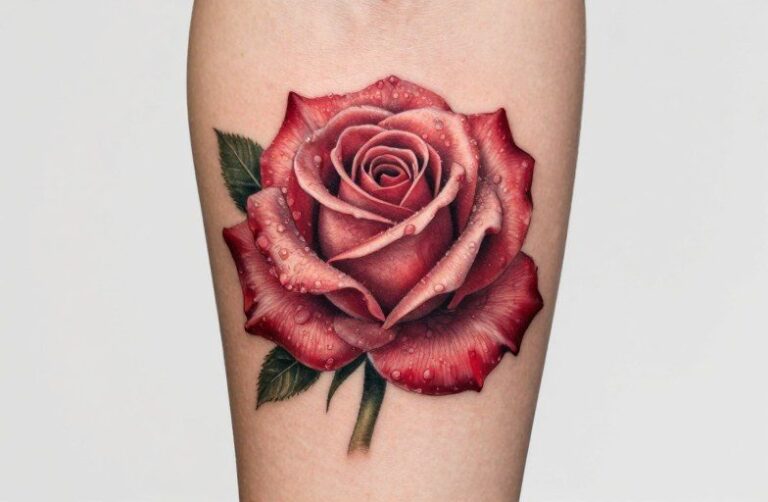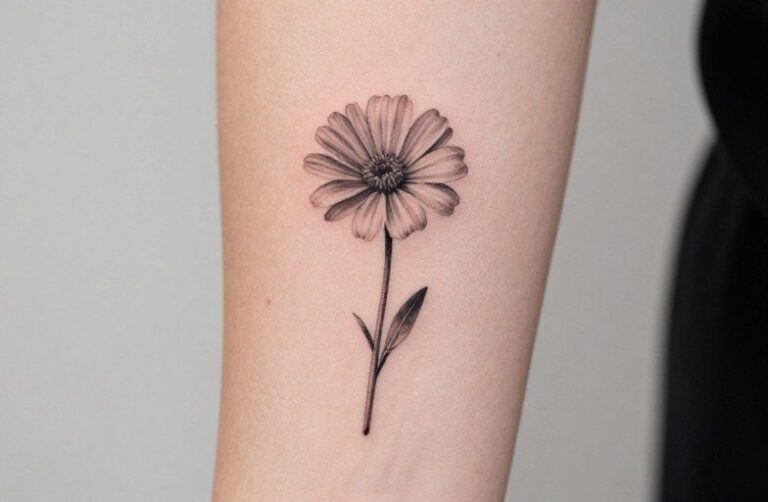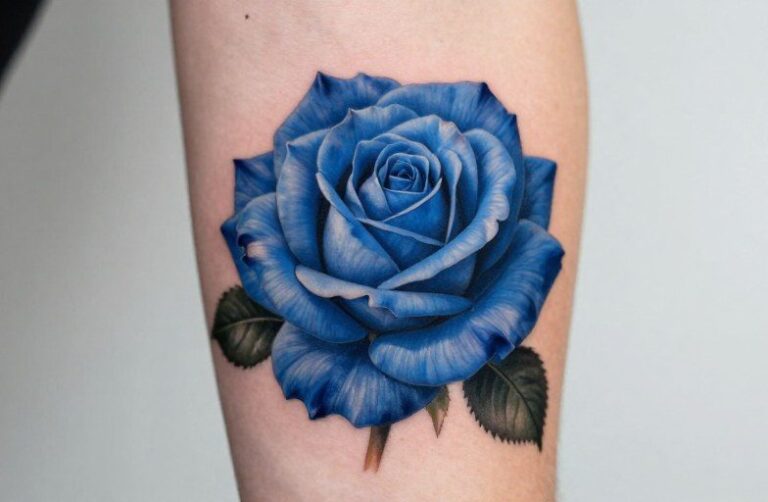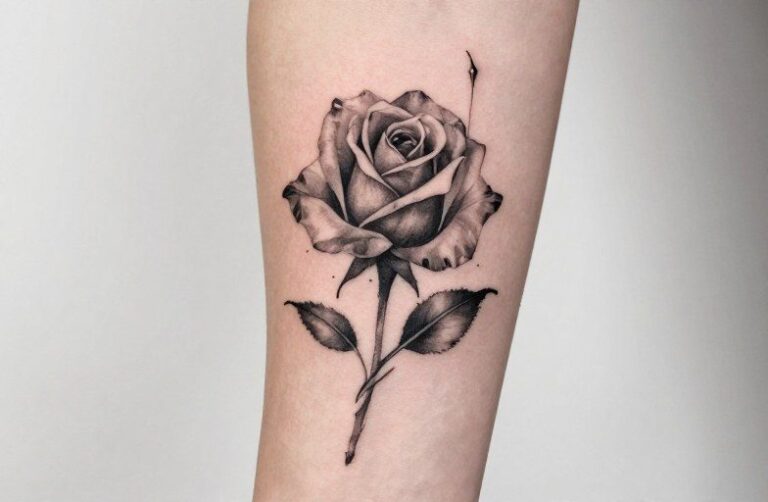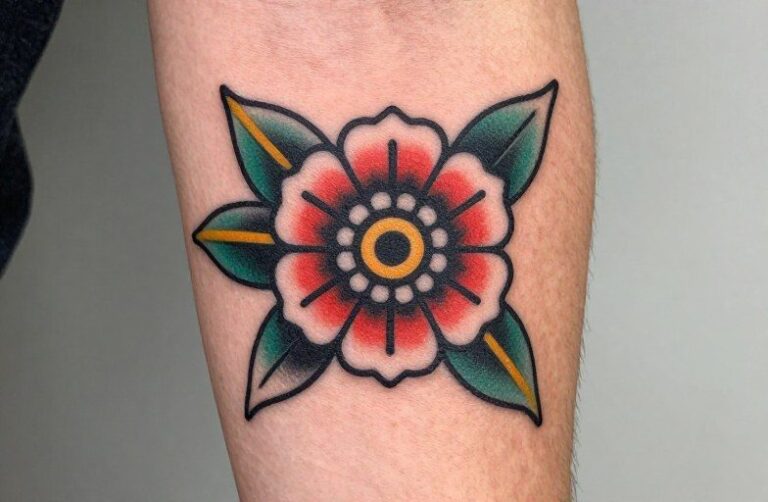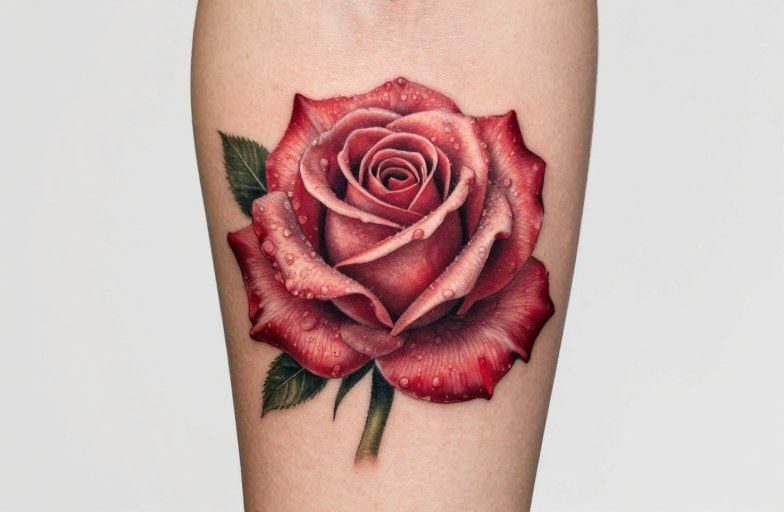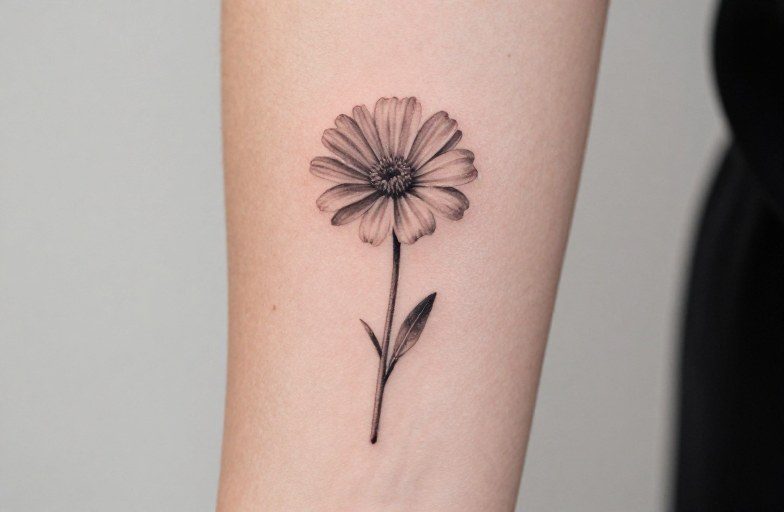
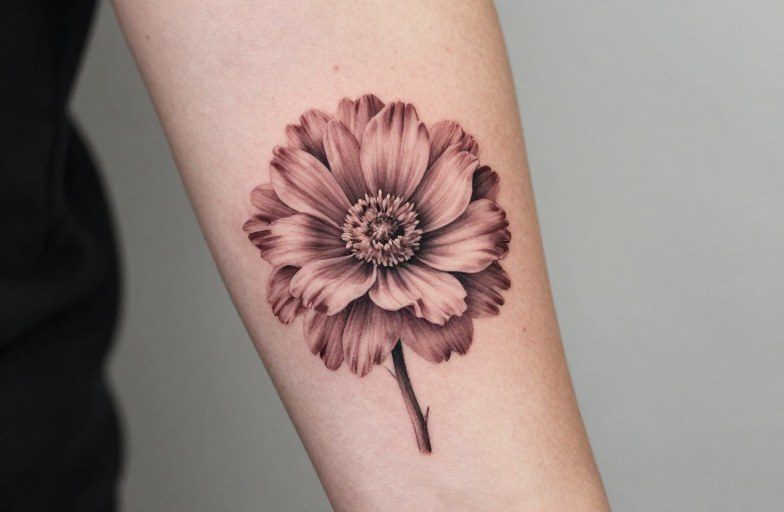
A May and September birth flower tattoo brings together the lily and the aster, two flowers that do not obviously belong in the same garden but find unexpected balance on skin. The lily, May’s flower, opens wide and assertive; the aster, September’s, gathers itself into tight, star-shaped clusters. Together they suggest a movement from openness into earned density, or from early bloom into late-season resilience. People choose this pairing for children born in those months, for partners, or to mark their own passage between two points in time that reshaped them.
Who This Tattoo Suits
This design attracts specific circumstances more than a broad personality type. The most frequent request comes from parents with children born in May and September. Couples whose birthdays fall in those months also arrive at this pairing, though they often need to negotiate whose flower takes visual priority. The tattoo can feel arbitrary without that personal anchor. Without a genuine connection to the months, the lily and aster combination lacks the immediate recognition of rose-and-thistle or lotus-and-cherry blossom pairings.
Personal Milestones
Some people use these flowers to bracket a powerful period. A marriage in May, a recovery completed by September, a move between seasons that changed their trajectory. The lily’s association with new beginnings and the aster’s connection to patience after difficulty can map onto lived experience without requiring text or dates. The flowers do the work of annotation.
Related reading: May September birth flower tattoo | May birth flower tattoo female | may august birth flower tattoo | may july birth flower tattoo
Family and Memorial Context
- Parents honoring two children, or a child and a parent or grandparent
- Memorials for someone born in one month, with the wearer born in the other
- Siblings with complementary birth months who want matching but not identical designs
Siblings sometimes split the pairing, one wearing lily and the other aster, reuniting the design only when they stand together. This requires careful planning with the same artist to maintain stylistic consistency across two bodies.
Reading the Symbolism
The lily carries weight across multiple traditions. Purity in Christian iconography, restored innocence in funeral contexts, fertility in pre-Christian European symbolism. The aster, often linked to Greek mythology involving the tears of a grieving goddess, carries connotations of patience, love, and daintiness. Together they create a narrative arc rather than a static statement.
Position and Sequence
Where each flower sits changes how the design reads. A lily placed above or before an aster suggests innocence leading to wisdom, or birth leading to maturation. Reversed, it can imply a return to simplicity after complexity. Side-by-side arrangements read as coexistence, two distinct qualities held in balance rather than sequence. Vertical arrangements on the forearm naturally follow the body’s orientation; horizontal placements across the chest or back read more as partnership or equality.
Color as Modifier
Color choice shifts the register significantly. White lilies with purple asters maintain traditional associations. Orange lilies, often associated with passion or confidence, paired with red asters create a more assertive, less delicate statement. Yellow lilies with white asters invert expected color logic and can read as deliberately unconventional. Black and grey renderings sacrifice some immediate recognition but gain longevity and avoid the fading and yellowing that plague white and pale yellow inks.
Number and Arrangement
- Single stem of each: direct, legible, works at smaller sizes
- Multiple lilies with scattered asters: visual hierarchy favoring May
- Aster cluster dominating with lily accents: September-forward, less common but valid
- Wrapped or intertwined stems: unity, interdependence, harder to execute cleanly without muddling both forms
Design and Placement
The lily’s structure, six prominent stamens, broad trumpet or bowl-shaped petals, substantial stem, demands more space than the aster’s compact, multi-floret head. This size disparity creates genuine design challenges rather than mere aesthetic preference.
Placements That Work
The forearm’s outer surface accommodates both flowers at moderate scale with the lily above and aster below, following natural arm orientation. The upper arm’s front plane allows side-by-side arrangement. Ribs and thighs provide enough room for full stems with leaves, which many lily designs require for visual completion. Ankle and wrist placements force hard choices: either miniaturize both, losing detail, or crop aggressively, often to just the lily bloom and aster head without stems.
Behind the ear fails for this pairing. The lily’s radial symmetry requires room to read correctly; compressed, it becomes unidentifiable generic flower. The aster fares slightly better small but loses its characteristic cluster structure. If you want something subtle, consider a single flower from this pairing rather than forcing both into inadequate space.
Complementary Elements
- Birth month numerals: straightforward but risks clutter; better as a separate, smaller piece
- Butterflies or moths: natural pollinator context, adds movement and scale variation
- Geometric frames: contains the organic forms, creates deliberate contrast
- Water or dew drops: technically demanding but adds dimension to flat color areas
Line weight deserves attention. Lily petals need confident, clean outlines or very smooth gradient shading; wobbly lines destroy their formal elegance. Asters tolerate slightly rougher treatment because their natural form is already irregular and textured. Matching line quality across both flowers requires a steady hand and consistent needle grouping. Discuss this explicitly with your artist; mixed line weight within a single design usually reads as inexperience rather than intention.
History and Folklore
The lily’s mythological connections are often linked to Hera in Greek tradition, milk from her breast supposedly creating the flower, though this narrative appears in various forms across sources and should be treated as tradition rather than fixed history. In Christian contexts, the white lily became fixed as a symbol of Mary’s purity, a development often dated to medieval period art, though exact origins remain debated among historians. The aster’s Greek connection to the goddess Astraea, weeping at the lack of stars on earth, her tears becoming flowers, is commonly referenced, though some trace it to later poetic invention rather than ancient source material.
Seasonal Reality
Both flowers carry practical history beyond symbolism. Lilies were cultivated for medicinal and ornamental use across Europe and Asia for millennia; their presence in May reflects actual blooming periods in temperate climates. Asters, from Greek for star, are late-season bloomers, sometimes the last flowers standing before frost, which grounds their association with endurance and patience in observable behavior rather than abstract concept.
This agricultural reality affects tattoo color choices. Asters naturally range through purples, pinks, whites, and blues; lilies through whites, yellows, oranges, and pinks. Choosing colors outside these ranges, a blue lily or green aster, moves the design toward fantasy and away from botanical recognition. This is neither good nor bad, but it is a choice you should make deliberately rather than by accident.
Related Symbols and Substitutions
People considering this pairing sometimes explore alternatives. The lily of the valley, May’s alternate birth flower, offers a radically different visual: small, bell-shaped, clustered, against the same September aster. That combination reads as more delicate, less architecturally assertive. The gladiolus, August’s flower, or morning glory, September’s alternate, create taller, more linear compositions. The peony, May’s alternate in some systems, provides fuller, more rounded, softer edges against the aster’s spikiness. Some confuse chrysanthemum, November’s flower, with aster; verify your birth month accuracy before committing.
Combining birth flowers with birthstones, emerald for May, sapphire for September, adds visual complexity but risks muddying the floral focus. A small stone element near the stem base works better than integrating gem facets into petals.
How This Tattoo Ages
Flower tattoos age predictably based on their structural characteristics. The lily’s large, relatively unbroken color areas, especially in white or pale yellow, are vulnerable to sun damage and ink migration. White ink particularly fades toward skin tone or yellows unevenly. Darker lilies, deep orange or spotted varieties, hold definition longer because the contrast between ink and skin remains stronger over time.
Technical Considerations for Longevity
Aster’s fine detail, the many small petals radiating from center, blurs faster than simpler forms. After five to ten years, the distinct star shape can soften into a textured blob unless the original tattoo maintained strong contrast between petal tips and centers. Black linework around individual florets helps preserve structure but creates a harder, less naturalistic look when fresh. You are trading immediate softness for long-term legibility.
Shading strategy matters. Smooth gradients on lily petals break down into mottled, patchy areas as skin texture changes with age. Slightly more textured, stippled shading from the start ages more gracefully because the technique already incorporates irregularity. Solid black or very dark backgrounds behind light flowers create maximum contrast but require larger scale to avoid the sticker effect, where the design looks applied rather than integrated.
Budget for a refresh session at the five-year mark, sooner if the placement receives significant sun exposure. The lily’s broad petals and the aster’s fine detail both benefit from occasional reinforcement. This is not a failure of the original tattoo or the artist; it is simply how skin and ink interact over time. Planning for maintenance from the beginning produces better long-term results than hoping for permanence without intervention.
What to Remember
The lily and aster pairing works best when it carries personal weight. Without a genuine connection to May and September, the design becomes a pretty but arbitrary combination, indistinguishable from any other floral arrangement. With that connection, the contrast between the lily’s open form and the aster’s gathered density becomes meaningful, a visual argument about growth and patience, about early bloom and late-season endurance.
Placement demands honesty about scale. These are not flowers that thrive in tiny spaces. The lily needs room for its radial symmetry to read; the aster needs room for its cluster structure to remain distinct. Compromise on size, and you compromise on recognition.
Color choices should be deliberate, not default. Traditional white and purple carry one meaning; orange and red, another; black and grey, still another. The flowers are old symbols, but your combination of them is yours to define.
Finally, plan for the long term. This is a design that will need attention, perhaps a touch-up, certainly protection from sun. The best birth flower tattoo is not the one that looks perfect on day one, but the one that still reads clearly in decade one, still carrying the meaning you gave it when you chose to wear these two flowers together.
Frequently Asked Questions
Can I get this tattoo if I was not born in May or September?
You can, but the design loses its primary organizing logic. Without the birth month connection, the lily and aster pairing becomes aesthetically valid but symbolically thin. Consider whether another flower combination carries more personal weight for your specific situation.
Which flower should be larger in a couples design?
There is no fixed rule, but visual hierarchy usually follows personal significance rather than birth order. Some couples alternate placement by body side, one wearing lily-forward on the left, the other on the right. Discuss this openly before the appointment to avoid last-minute tension.
How do I choose between lily and lily of the valley for May?
The lily of the valley is smaller, more delicate, and creates a very different visual against the aster. If you want architectural contrast and bold presence, choose the standard lily. If you prefer subtlety and clustered detail throughout, the lily of the valley may suit you better. The aster remains constant in either pairing.
Will white ink lily petals turn yellow?
White ink is prone to yellowing and fading toward skin tone, especially with sun exposure. This is not universal but common enough that you should plan for it. Some artists mix slight blue or grey into white to slow yellowing; others recommend avoiding large white areas entirely in favor of skin-tone negative space.