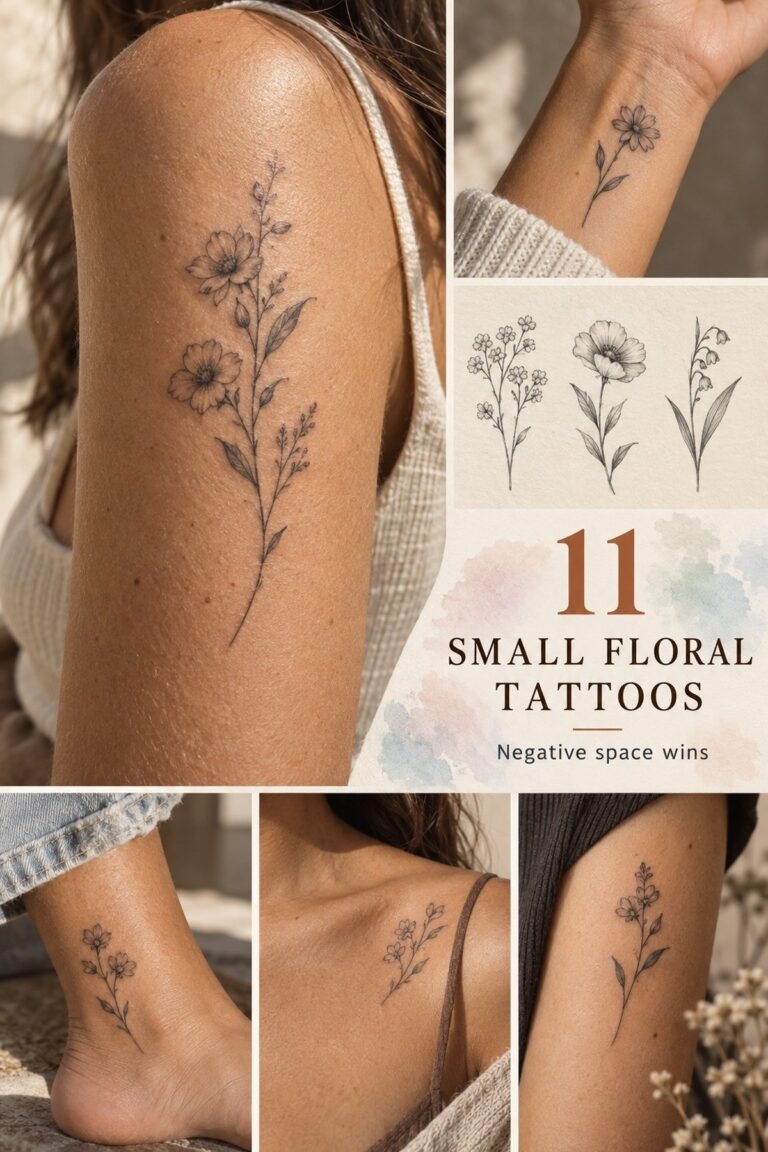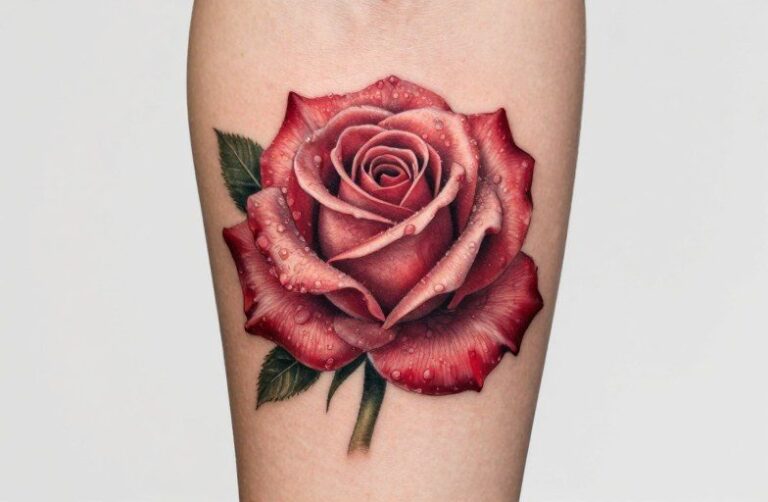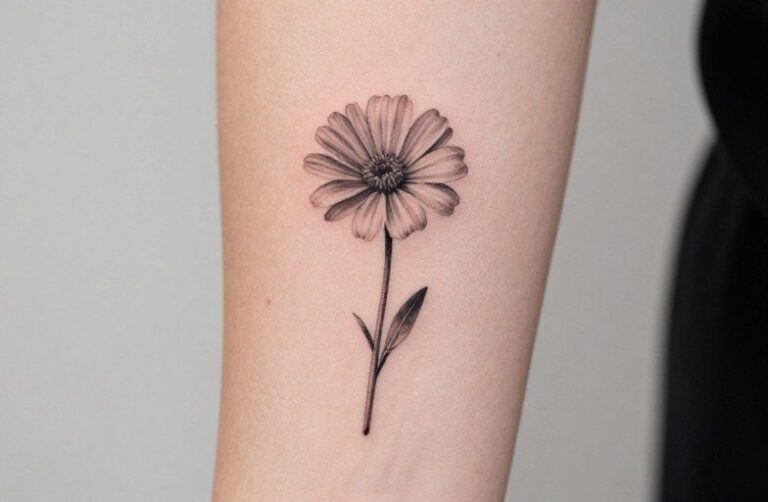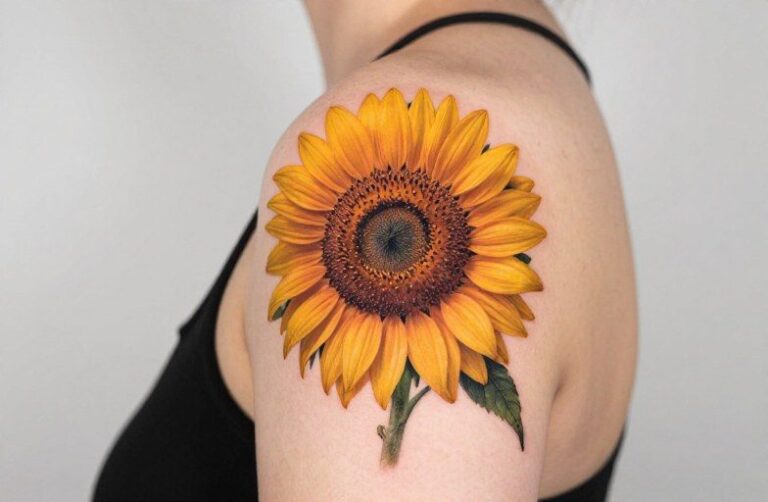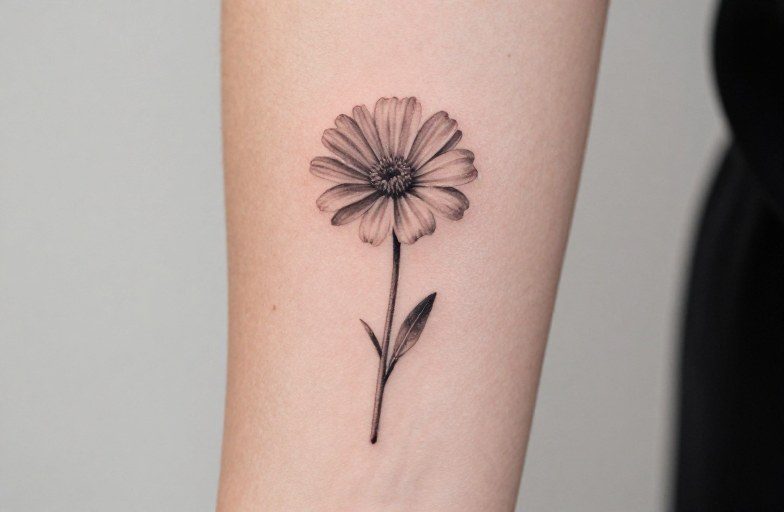
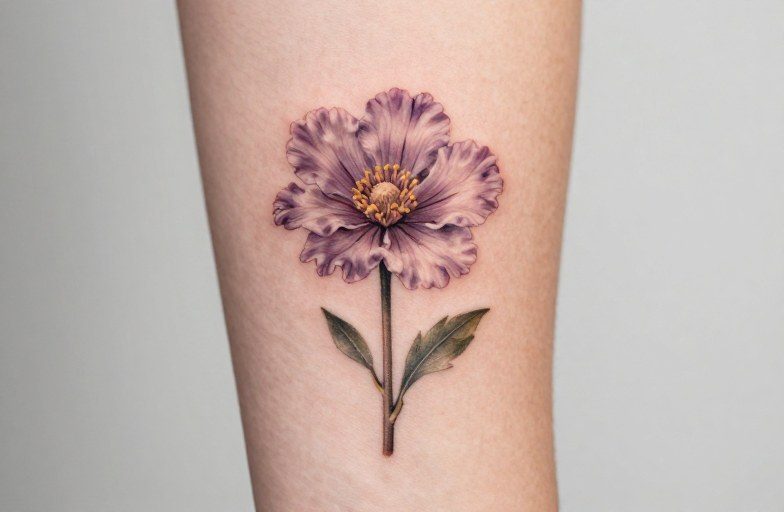
May and July birth flower tattoos pair the lily with the larkspur, creating a design that speaks to purity, rebirth, and the strength of bonds between people born in those months. The lily, associated with May, carries centuries of meaning around innocence and renewal, while July’s larkspur represents an open heart and deep attachment. Together, these flowers offer a layered visual language that works for couples, siblings, parents and children, or anyone honoring two significant dates.
History & Cultural Roots
Birth flower symbolism developed gradually across Victorian England and early American culture, with floriography, the language of flowers, shaping how people assigned meaning to specific blooms. The lily’s connection to May solidified through its association with spring renewal and religious iconography, not through any single authoritative source. Larkspur’s link to July emerged more organically from its peak summer blooming period and its use in cottage gardens across Europe and North America.
Lily: From Ancient Symbol to Modern Ink
The lily’s symbolic weight predates birth flower traditions by millennia. Often linked to Greek mythology and the story of Hera’s milk creating the Milky Way, the flower absorbed Christian meaning during the medieval period as a symbol of the Virgin Mary’s purity. In tattoo form, this accumulated resonance gives the lily a gravity that transcends simple decoration. Artists frequently render calla lilies for their sculptural simplicity, or Asiatic lilies for their complex petal structure and visible stamens.
Larkspur: A Lesser-Known Bloom with Regional Depth
Larkspur carries more regional variation in meaning than the lily. Some trace its protective associations to Transylvanian folk traditions where it was planted near homes to ward off scorpions. In tattooing, larkspur demands attention to its distinctive spur, the backward-projecting nectar tube that gives the flower its common name. This structural detail offers artists a chance to create dynamic, asymmetrical compositions that break from more static floral arrangements.
Common Variations & Styles
How these flowers get rendered changes their emotional impact significantly. Line-heavy designs emphasize the lily’s elegant curves and the larkspur’s vertical spike, while painterly approaches capture color gradients that black ink cannot achieve.
Single Bloom vs. Bouquet Arrangements
A single lily and single larkspur stem, crossed or intertwined, dominates small-scale placements like the inner forearm, collarbone, or behind the ear. This approach keeps the design legible as it ages and avoids the muddying that happens when too many elements compete in a compact space. Bouquet arrangements work better on the thigh, ribcage, or upper arm where the artist can establish clear visual hierarchy, typically placing the larger lily forward and letting larkspur recede slightly or frame the composition.
Botanical Realism vs. Stylized Interpretation
Botanical realism demands technical precision: lilies show six distinct tepals (undifferentiated petals and sepals), prominent anthers on filament stalks, and often visible nectar guides. Larkspur requires accurate spur length and the characteristic dolphin-like shape of individual blooms that gives the genus its Latin name, Delphinium. Stylized versions, Art Nouveau curves, traditional bold-line approaches, or geometric abstraction, sacrifice botanical accuracy for symbolic clarity and often age better on skin that sees sun exposure or frequent movement.
Design Tips & Pairings
Practical decisions about placement and scale determine whether this tattoo holds up over decades or becomes a blur requiring cover-up.
- Inner bicep or calf: Offers flat, stable skin where fine lines in larkspur spurs and lily tepal edges stay crisp longer than on joints or high-movement areas.
- Along the ribcage: Accommodates vertical composition following the larkspur’s natural growth habit, with lilies branching at natural anatomical points.
- Clavicle to shoulder: Creates a diagonal flow that can incorporate birth dates or initials without crowding the floral elements.
Pairing text with these flowers requires restraint. Birth dates in small serif numerals tucked beneath blooms read as personal without overwhelming the botanical focus. Names tend to date the design and can complicate future relationships; initials or Roman numerals offer more flexibility. Some choose to weave in secondary elements, bees for pollination symbolism, or specific leaves that reference a meaningful location, but each addition competes for visual attention and skin real estate.
Religious & Spiritual Angles
The lily’s Christian associations run deep enough that a standalone lily tattoo often reads as religious even without explicit iconography. The Madonna lily specifically, with its white trumpet shape and golden anthers, became so synonymous with Mary’s purity that medieval artists used it as shorthand for divine conception. For those seeking this meaning, specifying the exact lily species to your artist matters, tiger lilies or stargazer varieties carry entirely different visual and symbolic weight.
Larkspur in Folk Belief
Larkspur’s spiritual associations remain more scattered and less institutionally codified. Some traditions connect it to protection during travel, others to open-heartedness in love. In tattoo form, this ambiguity becomes a feature rather than a limitation, the flower can carry personal meaning without broadcasting a specific doctrinal affiliation. The blue-purple color range common to larkspur also connects to throat chakra symbolism in some contemporary spiritual practices, though this association is modern rather than historical.
Who Chooses This Tattoo
The pairing attracts specific relationship configurations more than others. Romantic partners with May and July birthdays form the largest group, followed by siblings and parent-child pairs. The design also appeals to individuals born in one month who lost someone significant born in the other, memorial applications where the flowers represent continued connection rather than living relationship.
Less commonly, people choose this combination for its aesthetic balance rather than personal dates. The lily’s broad, open form and the larkspur’s vertical spike create natural compositional tension that skilled artists exploit. This purely visual motivation is valid, though most clients do bring some personal connection to the months or flowers.
Color vs Black and Grey
This decision fundamentally changes how the tattoo reads and how it ages.
Color Realism
White lilies demand technical execution that many artists underestimate. White ink on skin lacks the opacity of white paint; it relies on negative space and surrounding contrast to read as white. Stargazer lilies with their pink gradients and freckled throats offer more forgiving color dynamics. Larkspur in its natural purple-to-blue range holds up reasonably well, though blues are among the fastest-fading tattoo pigments and will soften noticeably within five to seven years without diligent sun protection.
Black and Grey
Removing color from these flowers shifts focus to form and texture. Lilies translate well, their large, smooth tepals create natural highlight areas where the artist leaves skin tone, while shadowed undersides build depth. Larkspur presents more challenge; its smaller, clustered blooms can merge into indistinct grey masses without careful attention to individual flower separation. Strong line work becomes essential here, establishing boundaries that shading alone cannot maintain as the tattoo ages.
Black and grey also broadens the stylistic range. Japanese-inspired approaches, with bold outlines and flat grey washes, give these European flowers an unexpected visual context. Traditional American styling emphasizes the lily’s curves with thick black contour and limited grey fill. Either approach typically outlasts color in sun-exposed placements.
The Bottom Line
May and July birth flower tattoos succeed when they respect the structural realities of both blooms and the skin they inhabit. The lily’s symbolic weight and the larkspur’s more delicate form require different technical approaches that a versatile artist can unite into coherent composition. Whether rendered in saturated color or restrained black and grey, these flowers carry genuine historical resonance without demanding any single interpretation. The best versions leave room for the wearer’s own meaning to accumulate over years, the way any lasting tattoo should.
Frequently Asked Questions
Do lily and larkspur tattoos work for same-sex couples with May and July birthdays?
Absolutely. The flower meanings, purity, rebirth, open-hearted attachment, translate across any relationship configuration. The design language is inherently neutral, and many artists have extensive experience adapting birth flower pairings for couples regardless of gender.
How big should a combined lily and larkspur tattoo be to stay clear over time?
Plan for at least four to five inches in the longest dimension. Larkspur’s individual blooms are small and clustered; below a certain scale, they fuse into a purple blur. The lily needs room for its tepal structure to read as intentional rather than blob-like.
Can I add other birth flowers if my family has more than two May and July birthdays?
You can, but composition gets crowded quickly. Three or more flowers typically require larger placement or simplified rendering of each bloom. Consider a wreath or scattered arrangement rather than a tight bouquet, and discuss scaling with your artist before committing.
Why do some artists recommend against white ink for lily tattoos?
White ink alone rarely achieves true white on skin; it tends toward yellow or grey as it heals. Experienced artists create the illusion of white through strategic negative space and surrounding contrast. If you want a convincing white lily, find someone who specifically shows healed white-work in their portfolio.