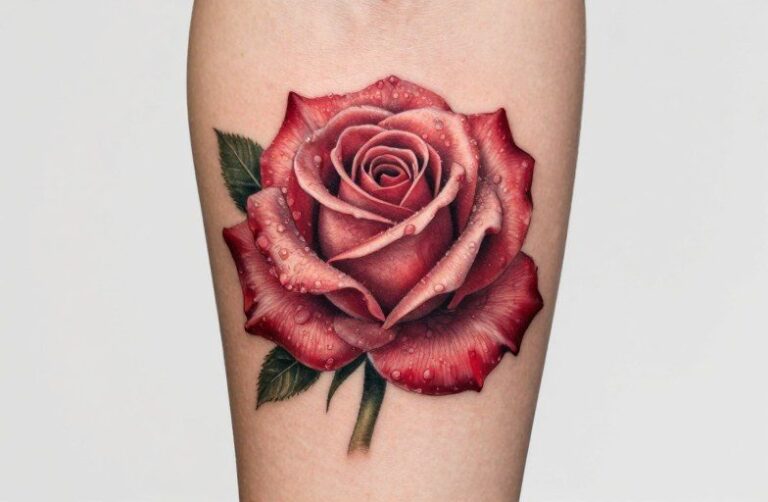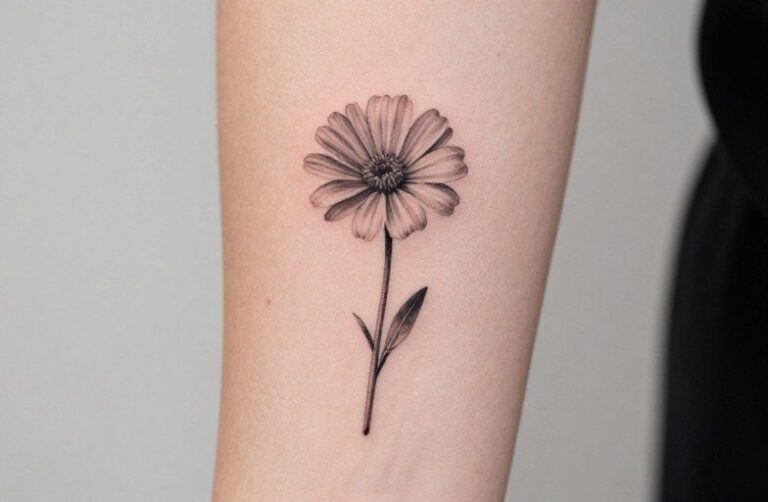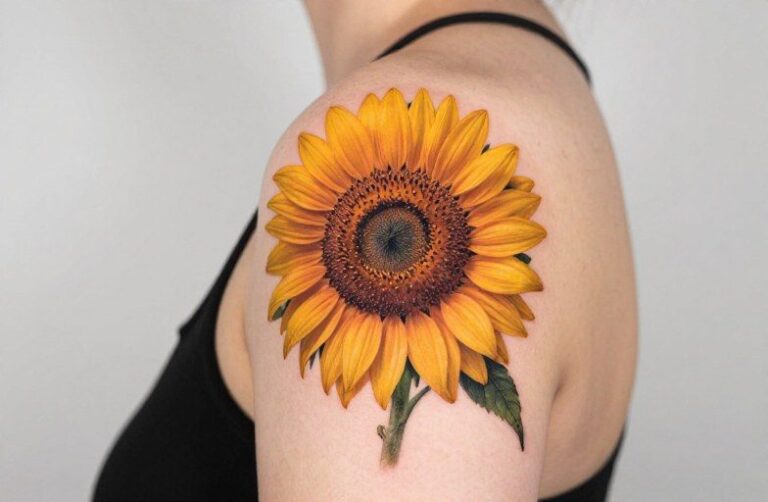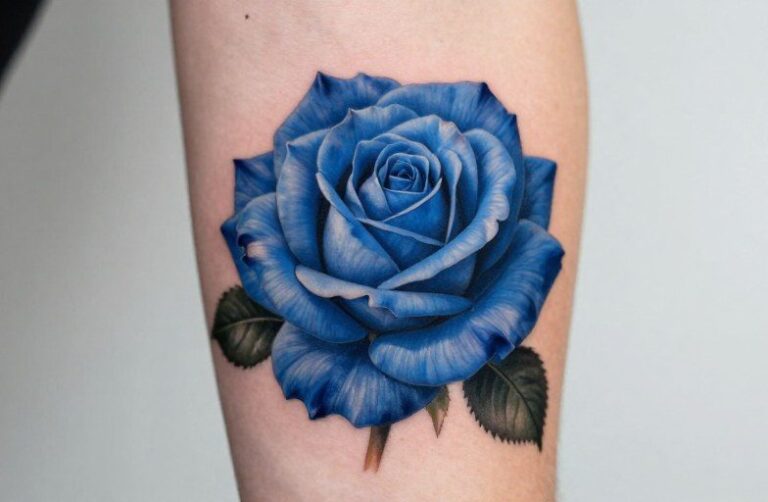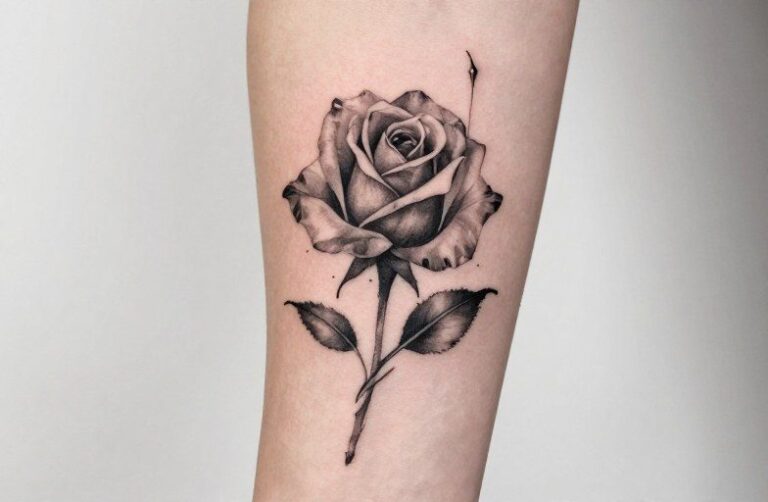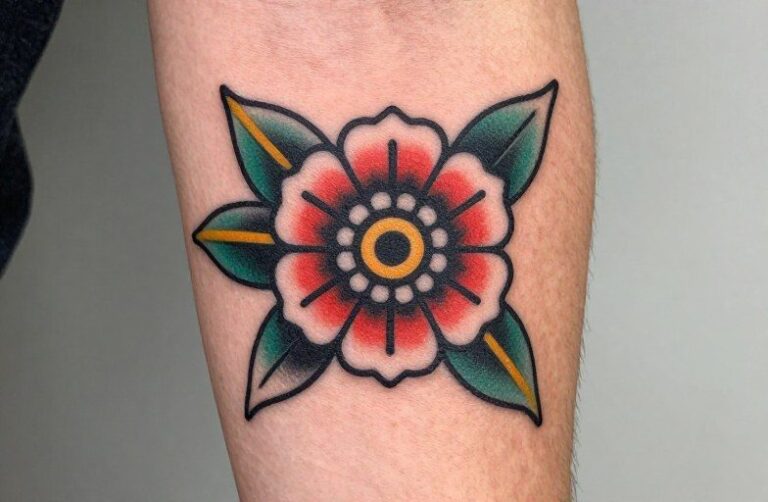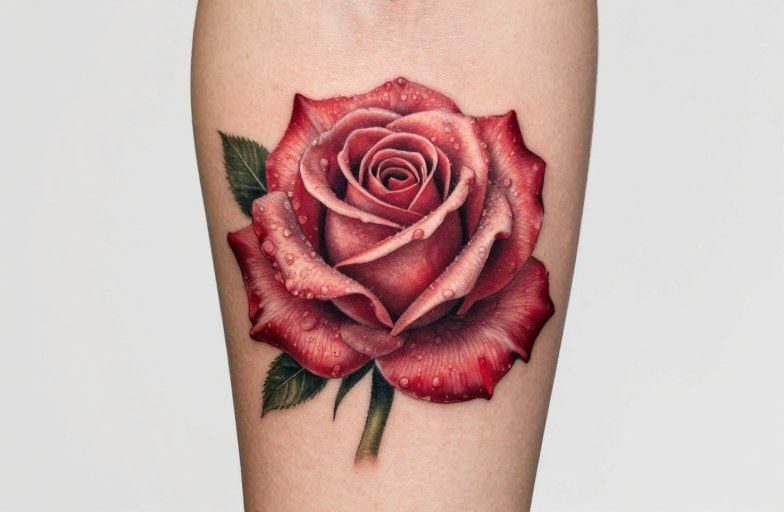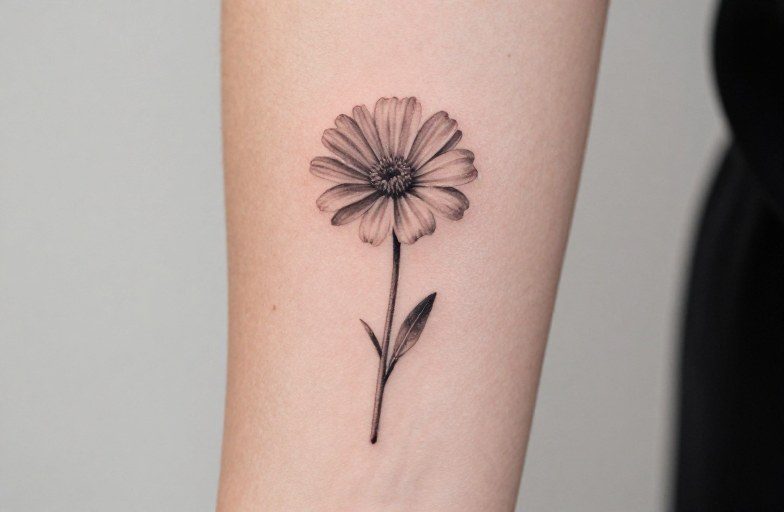
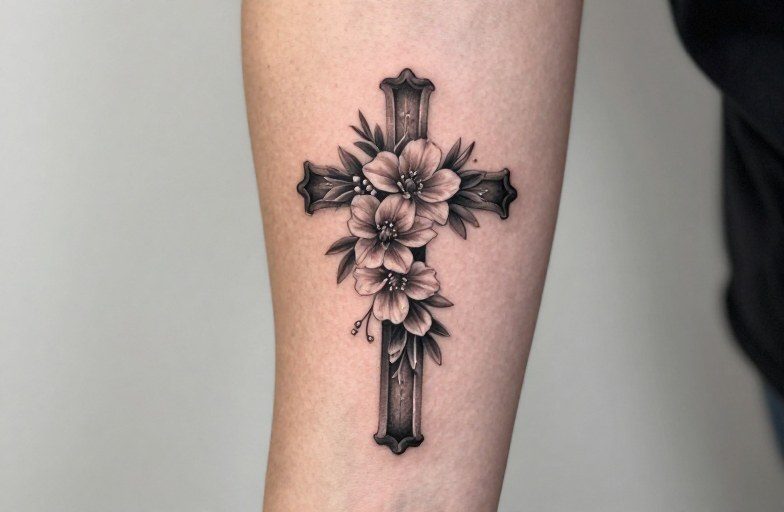
A cross with flowers tattoo typically represents the intersection of faith and mortality, life, death, and rebirth held together in one image. The cross anchors the design in spiritual or memorial territory, while flowers soften the edges and introduce layers of meaning: roses for love and pain, lilies for purity and restoration, poppies for sleep and remembrance. What you pair with the cross changes the entire message, sometimes toward grief, sometimes toward hope, sometimes both at once.
How It Ages on Skin
These designs carry a specific aging risk because they combine two very different visual elements. The cross usually wants clean, readable lines, while flowers demand fine detail and smooth gradations. Over five to fifteen years, those two needs start working against each other.
Line Integrity vs. Soft Shading
Bold cross outlines hold up better than the whisper-thin veins in a petal or the delicate stippling around a stamen. Black linework spreads slower than color, but even black lines blur at the edges over time. The problem emerges when a flower’s detail sits inside or against the cross structure, those fine elements fade first, leaving the cross dominant and the flowers looking washed out. Plan for this by keeping flower details slightly bolder than you think necessary, with enough negative space between elements that they don’t mud together.
Color Fading Patterns
Red roses turn dusty rose or brownish within a decade. Yellows and oranges often hold longer than deep reds. Purple and blue flowers fade fastest, sometimes shifting toward grey entirely. Greens in stems and leaves tend to survive better than petal colors. If memorial significance matters, consider that the colors you choose now won’t look the same at your funeral, some people find this acceptable, even meaningful; others prefer black and grey to avoid the drift.
Best Placements
Where you put this tattoo determines how much detail survives and how the symbolism reads to others.
High-Detail Zones
- Upper arm/outer bicep: Flat surface, easy to heal, readable from multiple angles. Classic for memorial pieces.
- Thigh: Large canvas allows full cross with wreath or climbing roses. Less sun exposure than arms.
- Back, upper center: Symmetrical placement suits the cross structure. Can span shoulder width for dramatic scale.
Smaller Options
Forearms work for medium-sized pieces but suffer more sun damage and potential job-market friction. Wrists and ankles force severe simplification, often just a tiny cross with a single flower. Behind the ear, the same. These small versions read more as personal tokens than as developed compositions. Ribcage placement offers privacy and a vertical format that suits the cross shape, though healing hurts more and the skin there stretches and compresses with breathing, which can affect long-term crispness.
Color vs Black and Grey
Color carries specific flower associations that black and grey cannot replicate. A red rose means something different from a rose-shaped grey smudge. But black and grey ages cleaner and carries a somber weight that suits memorial work.
When Color Serves the Meaning
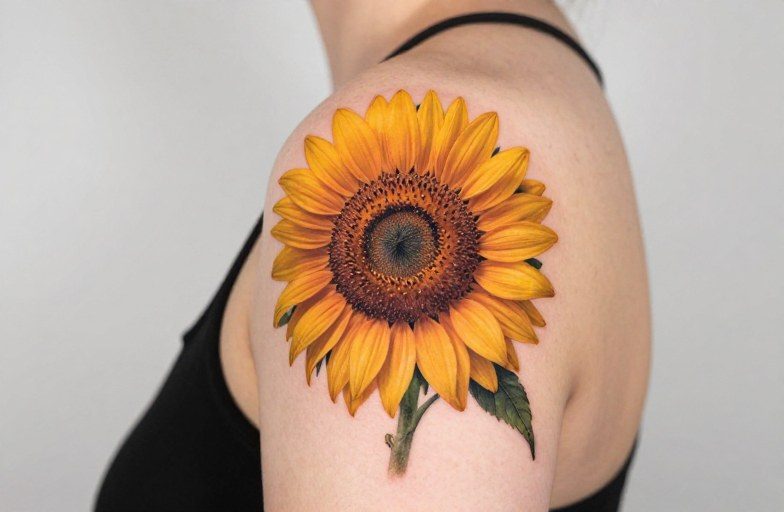
Birth flower crosses, mums for November, daffodils for March, need their actual colors to communicate. A mother’s favorite flower, a specific bloom from a funeral arrangement, a national flower tied to heritage: these cases justify the extra sessions and faster fading. Color also separates overlapping elements visually. A yellow sunflower against a black cross creates instant readability that two-tone grey would muddy.
Black and Grey Advantages
Without color, the tattoo relies on contrast, texture, and composition. This often produces a more timeless, less dated result. The cross reads as structure; the flowers read as organic form through shading technique rather than hue. For religious crosses especially, the stripped-down palette avoids the decorative or sentimental associations that full color can introduce. One compromise: limited color accents, a single red rose among grey lilies, a green stem only, drawing the eye without committing to full spectrum aging.
History & Cultural Roots
The pairing of crosses and flowers predates modern tattooing by centuries, though the specific tattoo style emerged from multiple streams.
Christian Funerary Art
European grave markers from the 1700s onward commonly combined crosses with carved roses, lilies, or ivy. The cross marked salvation; the flowers marked the brevity of earthly life. This visual language transferred naturally into tattoo culture through sailors and soldiers who encountered such imagery at home and wanted portable memorials. The tradition of “mourning tattoos”, names, dates, crosses with flowers, grew from this root, particularly in British and American naval communities.
Latin American Influences
The cross with marigolds connects directly to Día de los Muertos, where cempasúchil flowers guide spirits back to the living world. Tattoos drawing on this tradition often incorporate sugar skull elements or papel picado patterns alongside the cross. This is distinct from European memorial traditions in tone, celebration rather than lament, though the visual ingredients overlap. The cross in this context may be wooden and rustic rather than ornate metal, and the flowers are typically bright orange and yellow rather than subdued.
Design Tips & Pairings
Specific combinations carry established meanings that viewers will read whether you intended them or not.
- Rose + cross: Love and sacrifice, often romantic or maternal. Thorns add suffering; a fully bloomed rose with fallen petals suggests completed life.
- Lily + cross: Purity, restoration, resurrection. The Easter lily specifically. Works for infant or child memorials, or for recovery from illness.
- Poppy + cross: Military remembrance, sleep, death as peace. Common in Commonwealth countries for WWI/WWII memorials.
- Daisy + cross: Innocence, simplicity, sometimes youth. Less common, which can make it feel more personal.
- Lotus + cross: Emerging spirituality, overcoming difficulty. The lotus rises from mud; paired with cross, suggests faith born through struggle.
Structural Approaches
Flowers can wreath the cross, climb its vertical beam, fill the negative space between cross arms, or replace the cross entirely (flower stems forming the cross shape). Wreath formats read as honor and completion. Climbing growth suggests ongoing life, persistence. Negative-space flowers create a more integrated, less illustrative composition. The stem-cross hybrid is harder to execute clearly but offers the most fused symbolism.
Common Variations & Styles
Style choice changes meaning as much as subject choice does.
Traditional/Americana
Bold outlines, limited color palette, stylized rather than realistic flowers. The cross often has flared ends or a three-ringed Orthodox shape. These tattoos read as established, timeless, slightly masculine in cultural association. They age excellently because the style was developed for skin longevity.
Realism and Photorealism
Individual petals, water droplets, soft shadows. Stunning fresh, demanding to maintain. The cross may be rendered as actual wood grain or weathered stone. These pieces function as portraits of objects rather than symbols, closer to a photograph of a grave marker than to an emblem of faith. The emotional impact is immediate and specific; the symbolic reading is narrower.
Fineline and Single-Needle
Popular for smaller placements, delicate wrists or collarbones. The cross becomes thin wire; the flowers become botanical illustrations. This style risks aging poorly but serves clients who want the tattoo to feel like jewelry or a whisper rather than a declaration. The meaning shifts toward private significance, less public proclamation.
Neo-Traditional and Illustrative
More color range than traditional, more stylization than realism. Flowers can be impossibly saturated; crosses can incorporate ornamental metalwork, gems, or architectural elements. These designs often feel celebratory, even triumphant, rather than mournful.
Final Thoughts
A cross with flowers tattoo works because it holds contradiction steady: the permanent and the perishable, the vertical claim of faith and the horizontal spread of organic life. The specific flowers you choose, their color or absence, their placement on or around the cross structure, these decisions matter more than most clients initially realize. Take time matching flower type to personal meaning, not just visual preference. Consider how the piece will read at fifty versus twenty, both to yourself and to others. The best versions of this tattoo don’t try to resolve the tension between cross and flower; they let it persist, visible and unresolved, on the skin.
Frequently Asked Questions
What does a cross with roses specifically mean compared to other flowers?
Roses add layers of love and suffering to the cross, thorned roses especially suggest sacrifice or pain endured. Other flowers shift the meaning: lilies toward purity and peace, poppies toward remembrance of war dead, daisies toward innocence or youth lost.
Is a cross with flowers only for religious people?
Not necessarily. Many wear it as a memorial without active religious practice, or as cultural heritage, Latin American Día de los Muertos traditions, for instance, use this imagery beyond church affiliation. The cross functions as a universal marker of death and transition even when faith is complicated or absent.
How much detail can I get in a small cross with flowers tattoo?
Less than you probably want. Under three inches, individual petals blur together within a few years. For small placements, simplify to one flower type, bold outlines, and minimal shading. Save intricate botanical detail for palm-sized or larger pieces.
Can I add a name or dates to a cross with flowers design without cluttering it?
Yes, but placement matters. A banner across the cross center is traditional but competes visually with the flowers. Consider wrapping text along the cross arm edges, or placing dates small at the base where the stem or flower cluster meets. Let the artist design negative space for text rather than squeezing it in afterward.