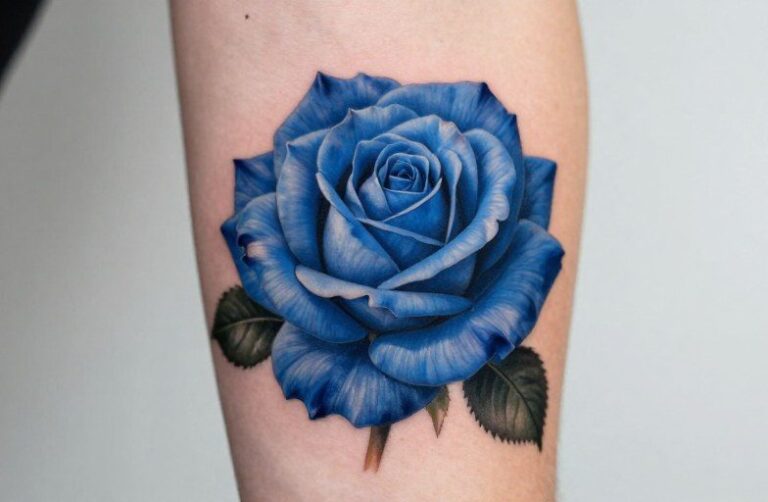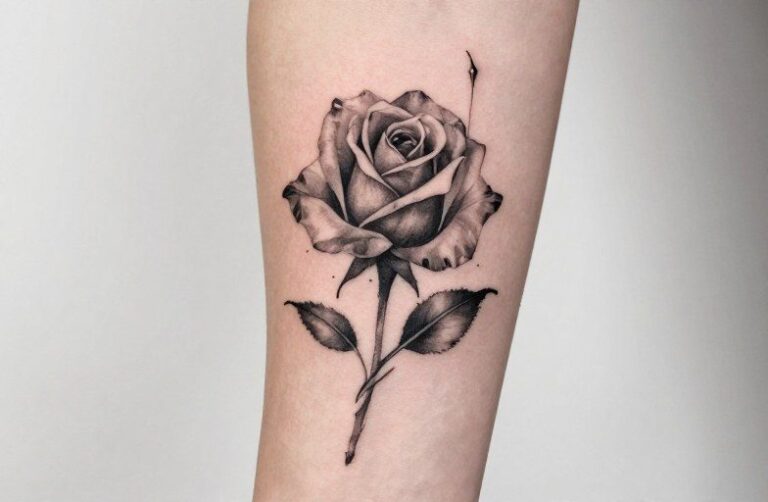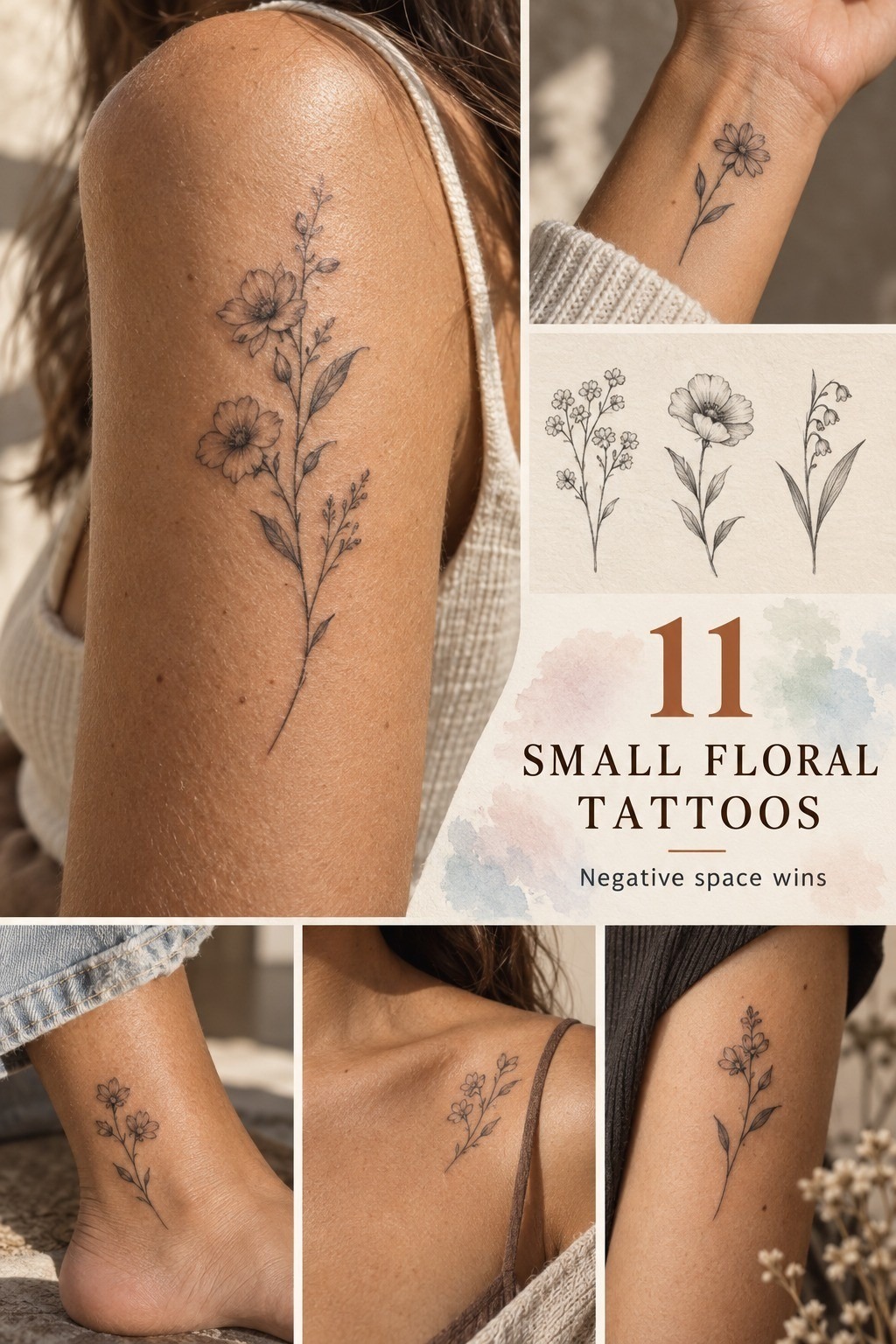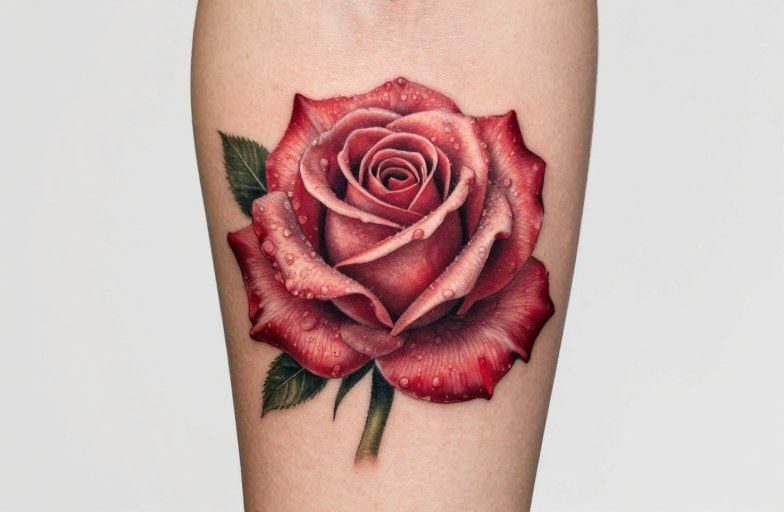
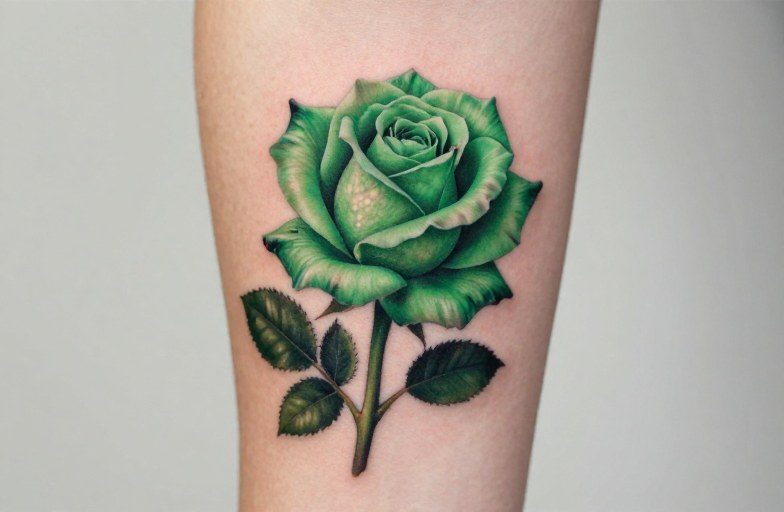
A green rose tattoo carries a quiet but distinct symbolism: growth, renewal, fertility, and hope. Unlike the passionate red rose or the innocent white, the green rose speaks to what is coming into being rather than what already is. On skin, it functions as a marker of personal transformation, new beginnings, or an enduring connection to nature.
History & Cultural Roots
The green rose itself is a botanical rarity. Naturally occurring green roses are uncommon, which has shaped much of their symbolic weight across cultures. This scarcity made the bloom feel almost mythical, reserved for meanings that sat outside ordinary human experience.
European and Victorian Associations
During the Victorian era, the language of flowers, floriography, assigned green roses meanings of abundance, bounty, and fortunate new ventures. A green rose given in a bouquet signaled hope for flourishing business or personal growth. Some trace the tattoo’s symbolic lineage to this coded communication, where color carried as much weight as the flower itself. The Victorians also linked green roses to envy in certain contexts, though this darker reading rarely dominates modern tattoo choices.
Irish and Celtic Connections
The green rose holds particular resonance in Irish heritage, where the color green carries national and spiritual significance. A green rose tattoo often functions as a nod to Irish ancestry, sometimes paired with shamrocks or Celtic knotwork. The combination merges botanical and national symbolism without tipping into the more common four-leaf clover territory. In this context, the rose becomes a vehicle for identity rather than romance.
Best Placements
Where a green rose tattoo sits on the body changes how it reads, both to the wearer and to observers. The color green presents specific challenges and opportunities that influence placement decisions.
Color Retention and Visibility
Green ink, particularly lighter or more yellow-leaning greens, tends to fade faster than black or deep red. Sun exposure accelerates this. For this reason, placements with less direct UV exposure, inner bicep, ribcage, upper thigh, or back of the arm, preserve the original hue longer. Forearms and hands, while popular for visibility, will require more frequent touch-ups to maintain the green’s vibrancy.
- Behind the ear: small, intimate, minimal fading from sun
- Collarbone: frames the design, allows for stem extension toward shoulder
- Calf or ankle: good for larger pieces with detailed leaves and thorns
- Upper back/shoulder blade: accommodates full blooms with surrounding foliage
Size and Detail Considerations
Green roses benefit from enough scale to show the color variation within the petals. A tiny green rose risks reading as a blob of color rather than a defined flower. At minimum, two to three inches in diameter allows for the gradient work that makes the bloom dimensional. For single-needle or fine-line styles, the artist must balance detail with the reality that green pigment spreads slightly more than black during healing.
Personal & Modern Meanings
Contemporary wearers gravitate toward green roses for reasons that rarely appear in historical floriography. The meaning has expanded to encompass recovery, sobriety anniversaries, and environmental consciousness. Someone marking a year of sobriety might choose a green rose to represent the life that has grown in place of old habits. The color signals forward motion rather than commemoration of the past struggle itself.
Environmental and nature-focused interpretations have gained traction. A green rose can function as a permanent commitment to ecological values, especially when paired with elements like honeybees, ferns, or recycling symbols. The flower becomes less about romantic love and more about relationship to the living world.
Some wearers select green roses simply because they prefer the aesthetic departure from traditional red or black-and-grey roses. The meaning, in these cases, may be secondary to the visual impact, a valid choice that tattoo culture increasingly accepts.
Religious & Spiritual Angles
Green holds sacred significance across multiple traditions, and the rose shape layers additional meaning onto that foundation.
Christian Symbolism
In Catholic tradition, the rose often connects to the Virgin Mary, and a green rose specifically has been linked to Our Lady of Guadalupe in some devotional imagery. The color green represents hope and the promise of eternal life in Christian liturgical colors. A green rose tattoo in this context functions as a devotional piece, sometimes incorporating prayer text or halo elements. The combination of flower and color creates a layered religious statement without relying on more common imagery like crosses or praying hands.
Broader Spiritual Frameworks
Heart chakra associations in various New Age and yoga-derived practices connect green to emotional healing and balance. A green rose tattoo in this framework marks a commitment to heart-centered living or recovery from emotional woundings. The rose, with its thorns, acknowledges that growth includes pain, an interpretation that resonates with many seeking spiritual rather than religious tattoo symbolism.
Who Chooses This Tattoo
Green rose tattoos attract a specific subset of tattoo collectors, though not an exclusive demographic. People marking transitions, career changes, relocations, recoveries, graduations, often gravitate toward this design. The flower communicates change without the overt drama of phoenix imagery or the weightlessness of butterfly tropes.
Men selecting green roses typically do so with additional masculine-framing elements: thorn-heavy stems, geometric backgrounds, or incorporation into larger nature-themed sleeves. Women more commonly choose softer interpretations, though this distinction blurs considerably in contemporary tattooing. The green rose crosses gender expectations more easily than, say, a pink rose or a skull-and-rose combination.
People with Irish heritage or those who have spent significant time in Ireland sometimes choose green roses as a subtler alternative to shamrock tattoos. The rose raises the reference from tourist symbol to something more integrated into personal aesthetic.
Common Variations & Styles
The green rose adapts to multiple tattoo traditions, each carrying distinct visual weight.
Traditional and Neo-Traditional
American traditional green roses feature bold outlines, limited but saturated green palettes, and heavy black shading. The color reads immediately across a room. Neo-traditional work allows more gradient within the green, sometimes incorporating teal or emerald shifts for dimension. Both styles age well due to their structural reliance on strong linework.
Realism and Watercolor
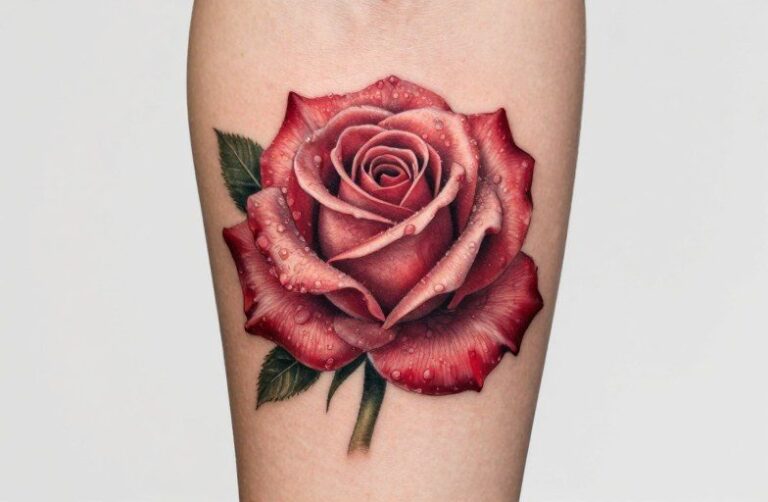
Realistic green rose tattoos demand technical precision to avoid the “cabbage” effect, where layered petals collapse visually into a round green mass. Reference photography of actual green roses (like the ‘Green Ice’ or ‘St. Patrick’ varieties) helps artists capture the subtle color variations. Watercolor styles, with their bleeding edges and splatter effects, suit green roses conceptually but require careful planning; unfocused green pigment can heal into muddy, undefined shapes.
- Black-and-grey with green accents: thorns or leaves in color, bloom in greyscale
- Single-needle fine line: delicate, requires larger scale to prevent color bleeding
- Japanese-inspired: green rose as secondary element within larger floral or nature compositions
- Geometric framing: rose emerging from or contained within angular structures
What to Remember
A green rose tattoo succeeds when the color choice serves the meaning rather than novelty. Green ink requires more maintenance planning than black or red. The symbolism, while flexible, carries strongest impact when connected to genuine personal narrative, growth, recovery, heritage, or hope, rather than selected for aesthetic alone.
Consult with your artist specifically about their green pigment experience. Not all greens heal equally; some shift toward blue or yellow during settling. Request healed photos of their green work, not just fresh tattoos. The bloom you leave with will not be the bloom you live with in five years, and planning for that evolution separates satisfying tattoos from disappointing ones.
Frequently Asked Questions
Does a green rose tattoo always mean hope and new beginnings?
Those are the most common associations, but wearers assign personal meanings ranging from Irish heritage to environmental values to recovery milestones. The symbolism is flexible, though growth-related interpretations dominate.
Will a green rose tattoo fade faster than a red one?
Generally yes, especially lighter or yellow-based greens. Sun exposure accelerates fading. Placements under clothing and diligent SPF use significantly extend color vibrancy.
Can a green rose work in a black-and-grey sleeve?
Absolutely. Many collectors use a single green rose as a deliberate color accent within otherwise monochrome work. The contrast draws the eye and creates visual hierarchy.
What tattoo styles suit green roses best?
Neo-traditional and realistic styles handle green roses most effectively. Watercolor can work but risks muddy healing. Traditional bold-line approaches ensure long-term readability.