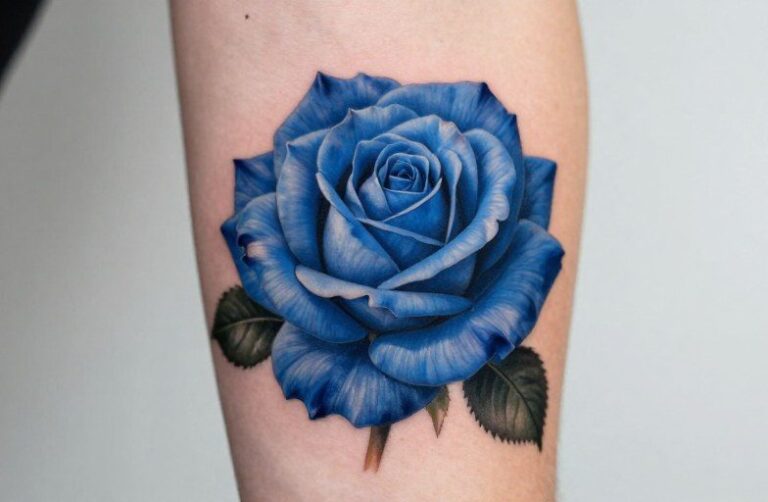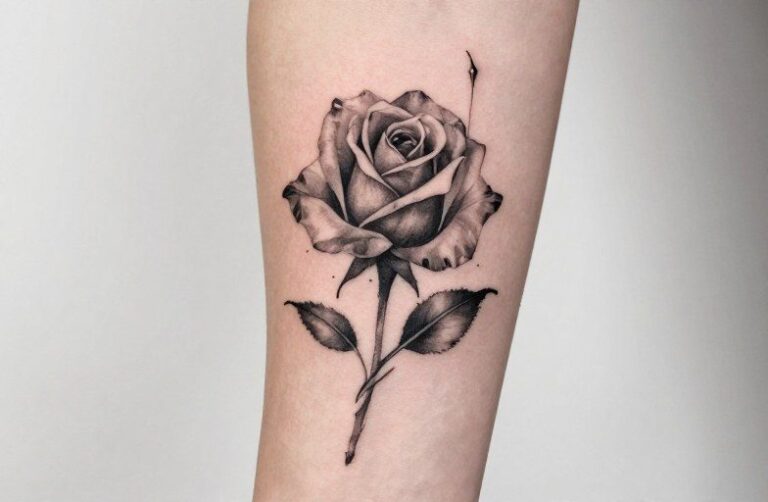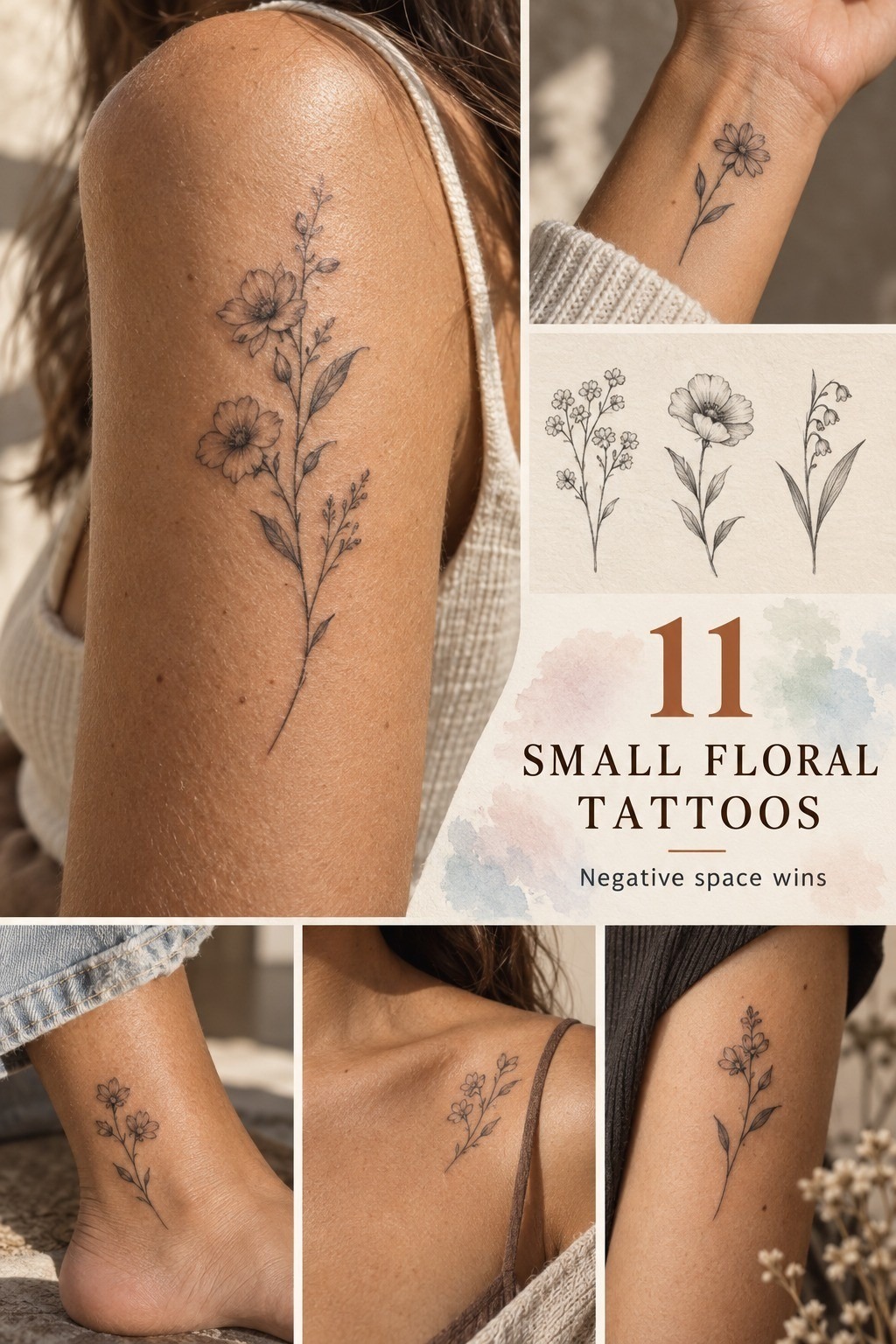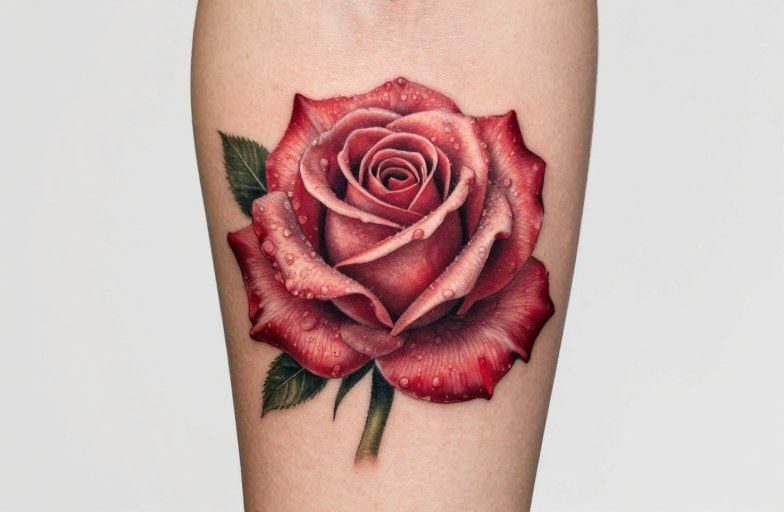
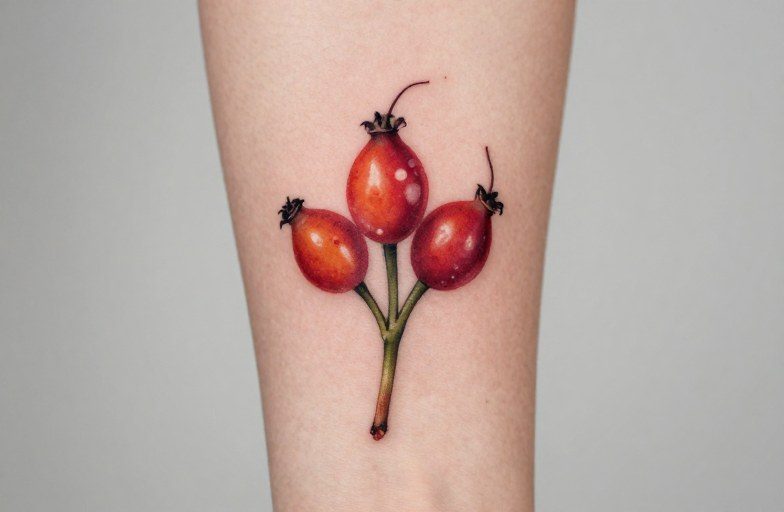
A rose hip tattoo carries the symbolism of endurance and quiet reward. Where the rose bloom speaks to passion and romance, the hip, the swollen, seed-bearing fruit left behind after petals fall, represents what survives after beauty fades. It is the body’s stored potential, the hard-won result of a season’s growth, often chosen to mark recovery, perseverance, or the value of what remains when showier things have passed.
Who Chooses This Tattoo
People drawn to rose hip imagery usually want something botanical without the obviousness of a full bloom. The hip attracts those who connect with cycles, gardeners, foragers, people who’ve watched plants through seasons. It also appeals to anyone who prefers symbolism that doesn’t announce itself immediately; a rose hip reads as decorative to most viewers, its deeper meaning held privately.
Common Placements and Why They Work
The hip’s small, rounded form suits several locations particularly well. Behind the ear, it becomes a subtle, almost hidden fruit. Along the collarbone, it follows the natural line of the bone and ages gracefully because that area sees less stretching than lower neck or chest placements. The outer upper arm carries it at a readable size without dominating. For something more intimate, the inner forearm offers daily visibility and enough flat surface for fine detail.
People sometimes choose the actual hip area for a rose hip, playful, but the skin there shifts significantly with movement and weight change, so linework there tends to blur faster than on more stable surfaces.
What Usually Precedes the Choice
- Recovery from illness or hardship, wanting to mark what was endured rather than the crisis itself
- A connection to herbalism, folk medicine, or practical plant knowledge
- Preference for autumnal, waning-season imagery over peak-bloom symbolism
- Memorial work where the full rose feels too romantic or expected
Similar & Related Symbols
The rose hip sits in a family of botanical imagery that trades drama for endurance. Pomegranate seeds share the fruit-as-patience theme, though with heavier mythological weight. Acorns operate similarly, small, hard, containing future growth. Dried seed pods of any kind (poppy, lotus, honesty plant) carry comparable energy: the after-stage, the holding pattern.
Among rose family members, the hip contrasts directly with the open bloom. Buds suggest potential; hips suggest result. Thorned stems speak to defense and pain; hips to what comes after. Some designs combine hip and thorn to hold both meanings, struggle and its aftermath.
Non-botanical parallels include the Japanese concept of wabi-sabi (imperfection and impermanence), though the hip embodies this without needing the reference. Hourglasses, too, mark time’s passage, but mechanically; the hip does it organically.
History & Cultural Roots
The rose hip’s symbolic use in tattooing is relatively recent compared to the bloom itself, but the plant’s practical history runs deep. Rose hips have served as food and medicine across Northern Europe, North America, and parts of Asia for centuries. During World War II, British citizens collected wild hips for vitamin C syrup when citrus imports collapsed, a specific historical weight some people reference directly in their designs.
Traditional and Folk Associations
In Scandinavian and Germanic folk practice, rose hips were often linked to protection and to Thor in particular, though this connection is often linked to rather than definitively established. The plant’s prevalence in hedgerows and waste ground gave it a humble, accessible quality, magic and medicine for ordinary people, not rarefied elites. Tattoo imagery sometimes draws on this democratic character, the hip as the people’s rose.
Celtic traditions in Britain and Ireland used the wild rose (and by extension its fruit) in boundary marking and hedging, which layers additional meaning: the hip as threshold, as liminal space between wild and cultivated.
Modern Symbolic Layers
Contemporary tattoo culture has adopted the hip as part of a broader turn toward botanical accuracy and “unromantic” nature. Where traditional tattooing favored the stylized bloom, the hip represents the botanical illustration tradition, precise, scientific, appreciative of the whole plant. This appeals to people who want their nature tattoos to reflect actual observation rather than inherited iconography.
How It Ages on Skin
Rose hip designs age well if planned for the medium. The fruit’s natural form, oval, slightly wrinkled, with a dried calyx at the top, translates to skin better than hyper-detailed botanical illustration. The key is avoiding too-small stippling or single-needle shading that will muddy within five to seven years.
Linework defining the overall shape holds longest. Internal texture can be suggested through whip shading or sparse dotwork rather than dense black fill. The little star-shaped crown (the persistent sepals) at the hip’s top needs clean, confident lines; this is often the first area to blur if over-detailed.
Color hips, with their oranges and deep reds, fade predictably: warm tones shift toward brownish or yellowish versions of themselves, sometimes requiring refresh after a decade. Black and grey versions simply soften, which many people prefer for the subject’s quiet character.
Color vs Black and Grey
The choice between color and monochrome changes the tattoo’s emotional register significantly. Color rose hips can capture the actual fruit’s range, green-tinged orange, brick red, almost black purple in some species. This reads as specific, observed, autumnal. It connects to harvest, to the sensory world, to the particular moment of ripeness.
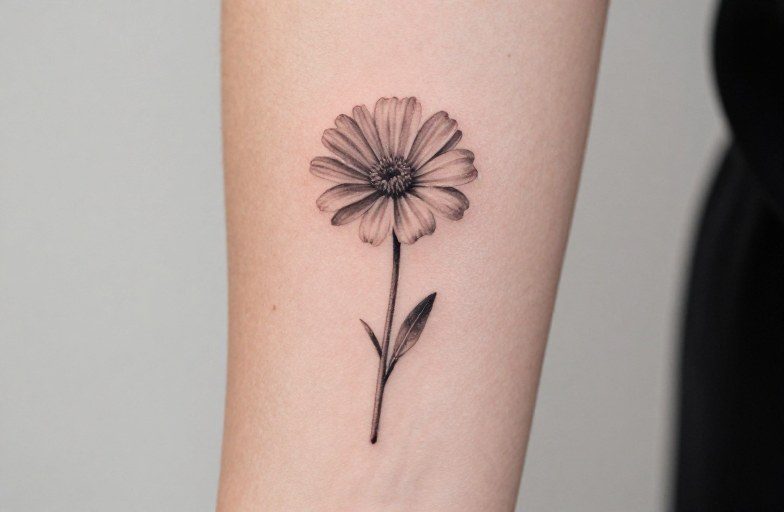
Black and grey shifts the emphasis toward form and shadow. The hip’s wrinkled surface becomes more sculptural, more like a small still life. This suits the memorial or reflective meanings many people bring to the image. It also photographs more consistently across lighting conditions and pairs more easily with existing blackwork.
Some effective middle paths exist: a black and grey hip with selective warm tone in the calyx, or a largely monochrome piece with a single muted color note. The hip’s natural color variation in reality supports this approach.
Design Tips & Pairings
Compositionally, the rose hip works as a single focal point or as part of a cluster. Multiple hips on a stem create rhythm and allow for size variation, smaller, less detailed ones behind a primary fruit. Leaves, if included, should show the rose’s characteristic serrated edge and compound structure; generic leaves weaken the botanical accuracy that often draws people to this subject.
What Pairs Well
- Bare stems and thorns for contrast between hard and soft, defense and result
- Other autumn fruits (hawthorn, blackberry) for seasonal composition
- Moths or butterflies, particularly species that overwinter as adults, extending the survival theme
- Script or lettering, though the hip’s small scale usually demands minimal text
Avoid overcrowding the hip with too many elements; its power is partly in its modest size. Negative space around the fruit often serves the design better than additional filler. For style, botanical illustration approaches suit it best, though neo-traditional can work if the artist simplifies rather than cartooning.
Key Takeaways
The rose hip tattoo offers a specific, grounded alternative to more common floral imagery. Its meanings, survival, stored potential, the beauty of aftermath, resonate without requiring explanation. The design succeeds when it respects the fruit’s actual form: small, wrinkled, persistent, not pretty in conventional ways but compelling in its honesty. Choose placement for long-term line clarity, consider whether color or black and grey better serves your intent, and resist overcomplicating a subject whose strength is its restraint. The best rose hip tattoos look like they were always there, quietly present, waiting out the season.
Frequently Asked Questions
Does a rose hip tattoo always have to mean something sad or difficult?
Not at all. While many people choose it for survival or recovery, the hip also represents harvest, preparation, and natural cycles. Some simply love the form or connect to gardening and foraging traditions.
How detailed can a small rose hip tattoo be before it starts to blur?
Keep the main outline clean and bold. Internal texture should use minimal stippling or light whip shading. The star-shaped calyx at the top needs the most careful line planning, overly fine detail there is usually the first to age poorly.
Can a rose hip work in a larger sleeve or is it only for small pieces?
It works at many scales. As a small standalone piece it reads as intimate and specific. In larger work, multiple hips on a stem create movement and can fill gaps between bolder elements without competing for attention.
What’s the difference between a rose hip and a rose bud in tattoo symbolism?
The bud holds potential, what might open. The hip holds result, what has already been. Buds anticipate; hips remember. Choose based on whether you want to mark possibility or aftermath.