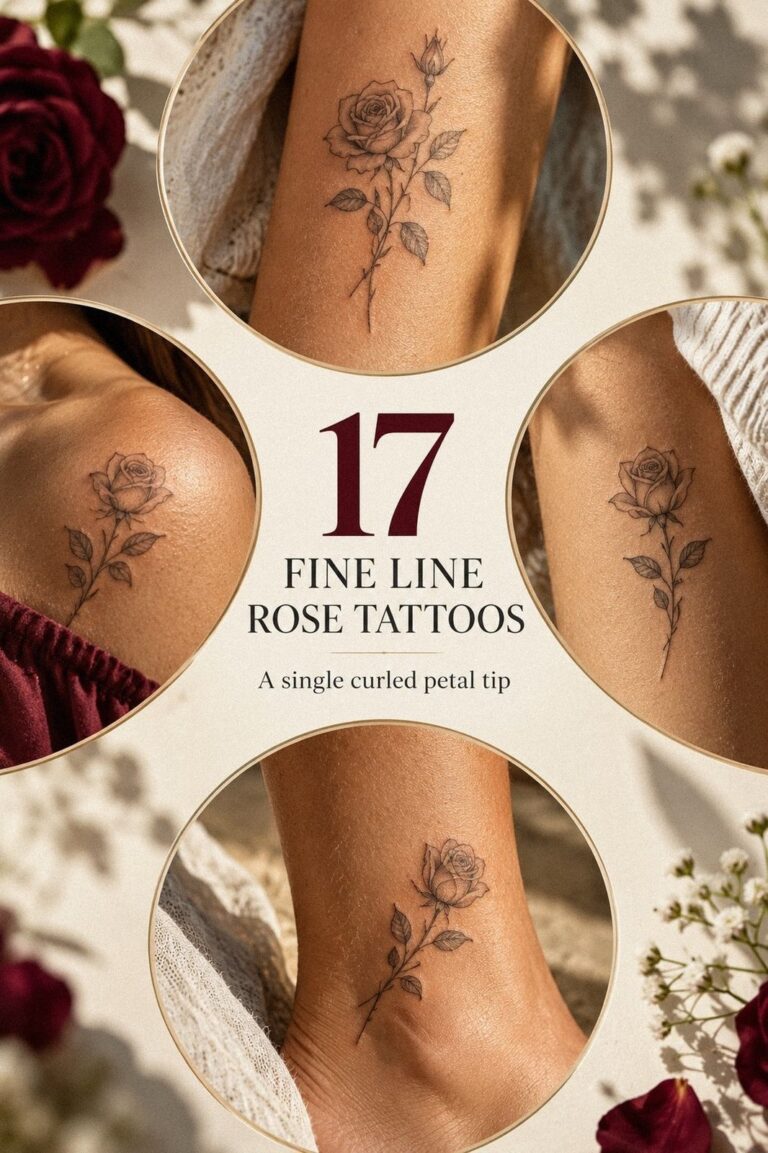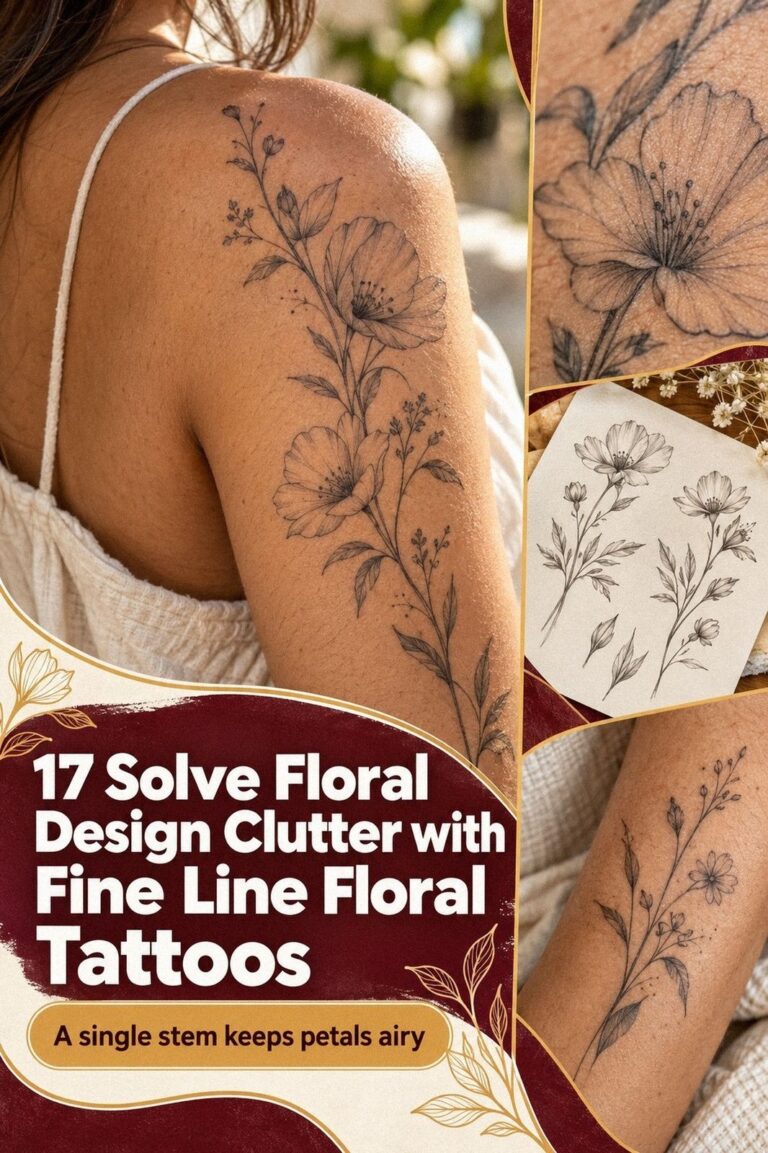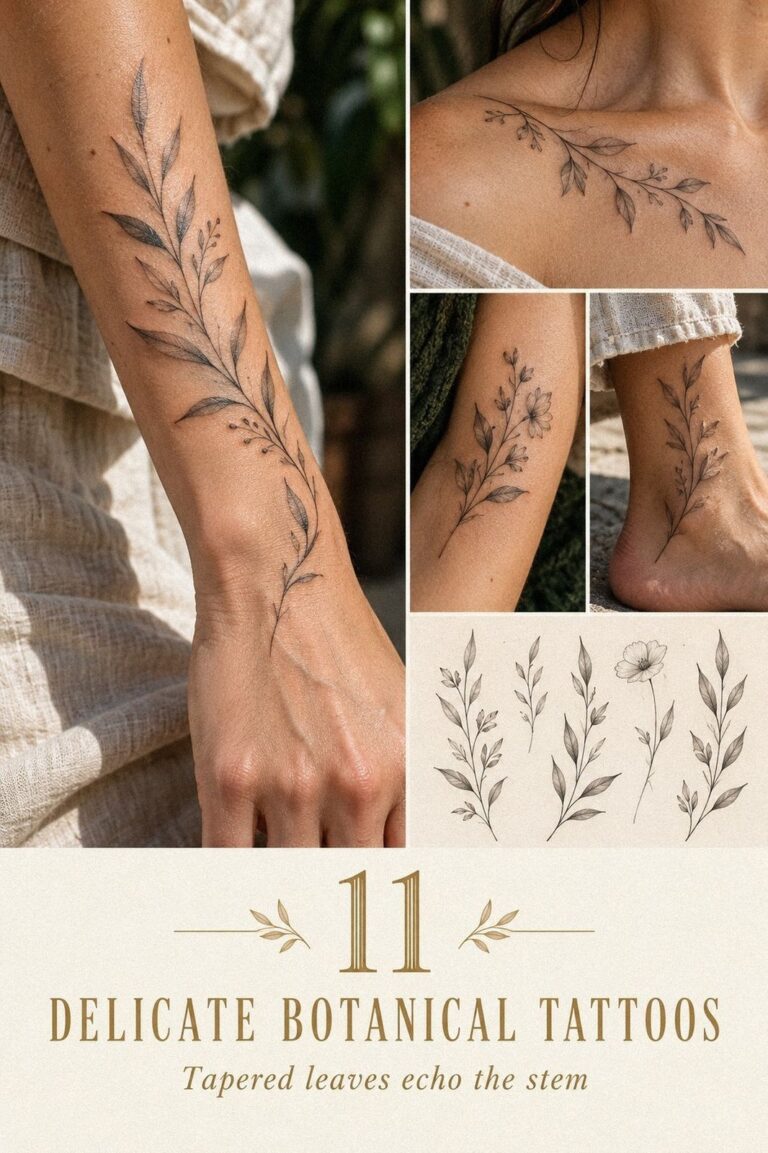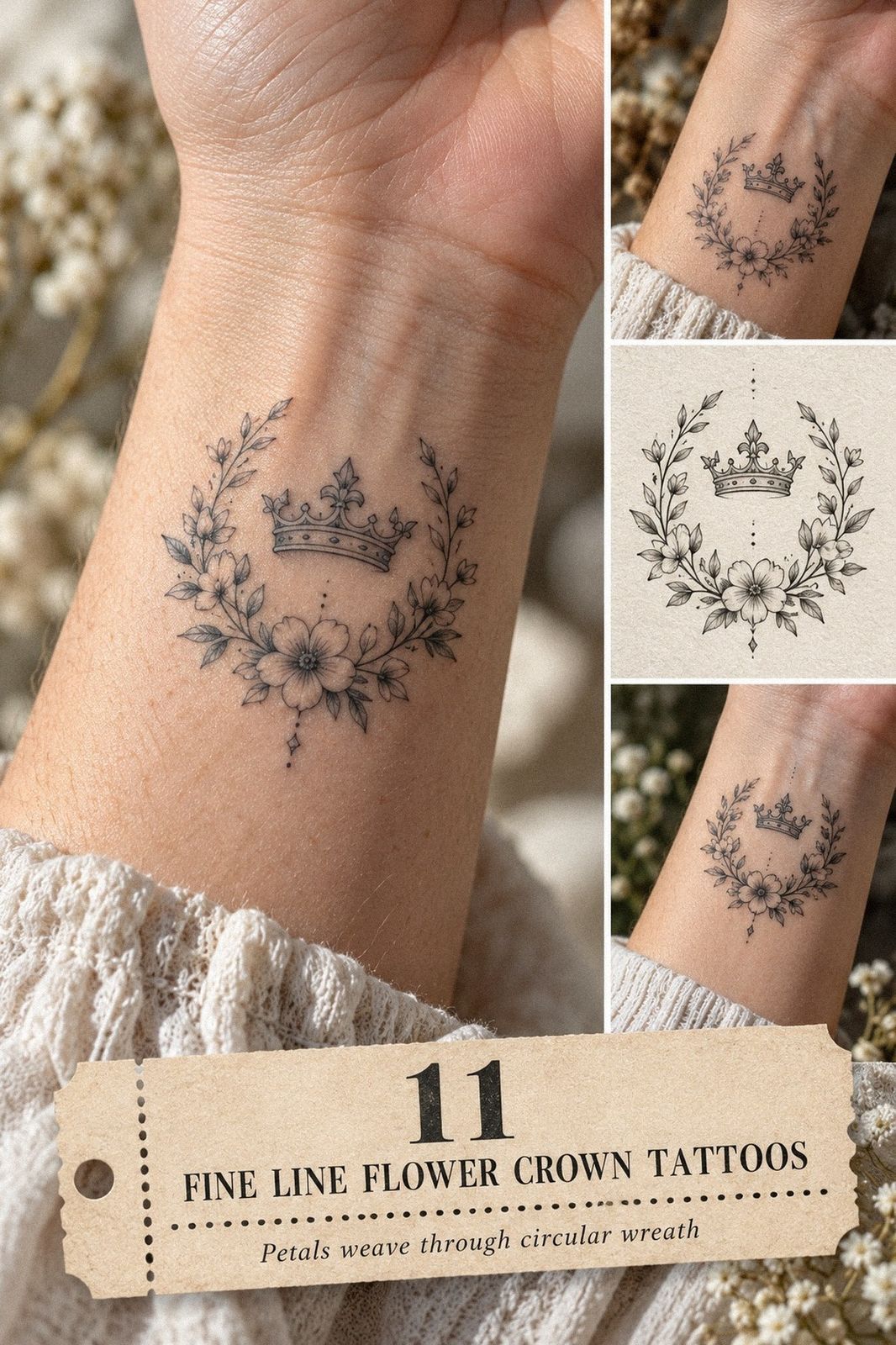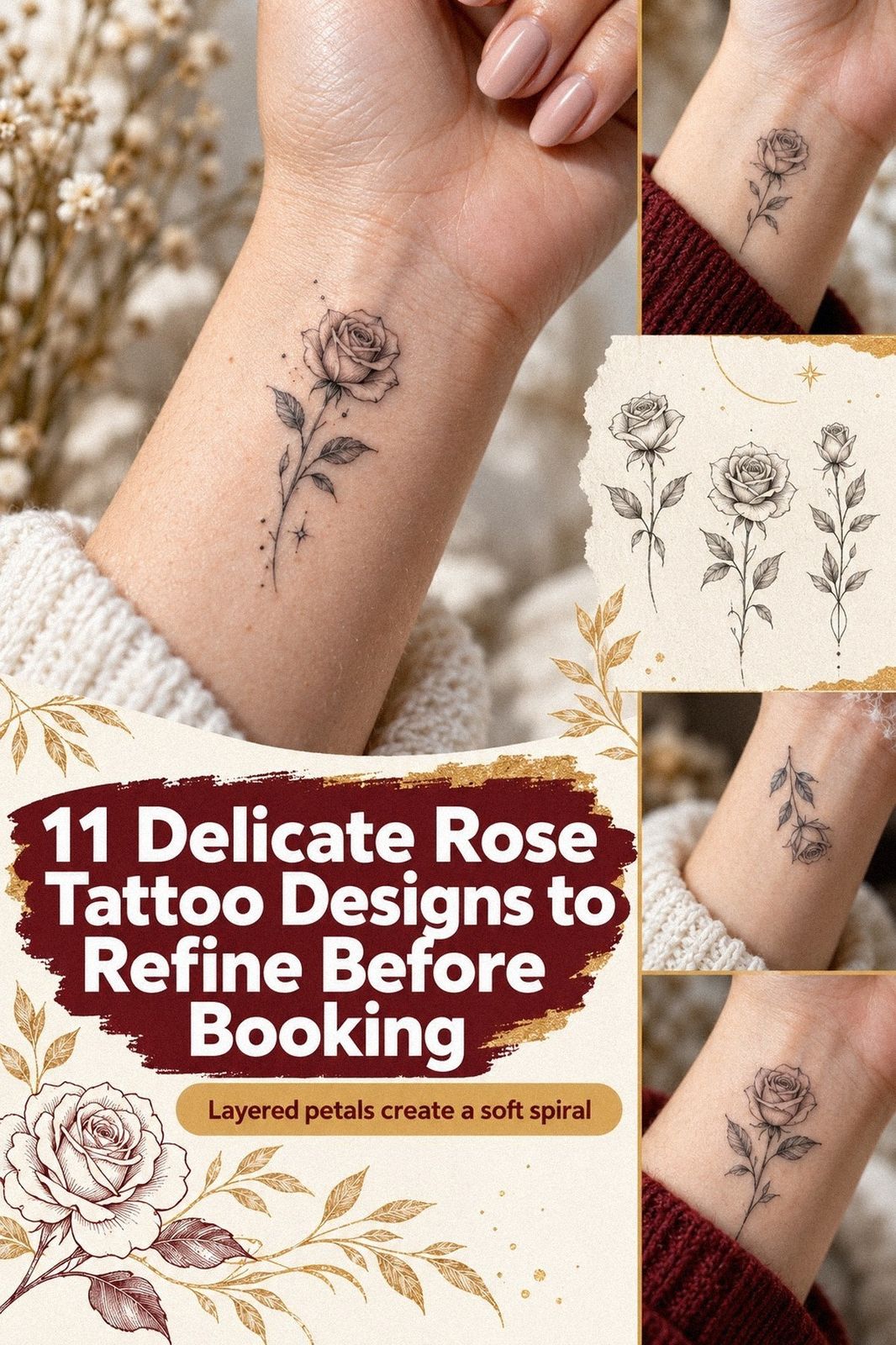
Delicate rose tattoos can stay readable for years when the design, placement, and line weight work together. I learned that after choosing a wrist rose that was too small and too crowded. Fine details need breathing space. These 11 ideas show how you can keep your rose personal, crisp, and expressive without making it loud!
- Small Delicate Rose Tattoos on the Wrist
- Fine Line Rose Tattoos Behind the Ear
- Watercolor Delicate Rose Tattoos on the Shoulder
- Single Needle Rose Tattoos Along the Ribcage
- Tiny Rose Bud Tattoos on the Finger
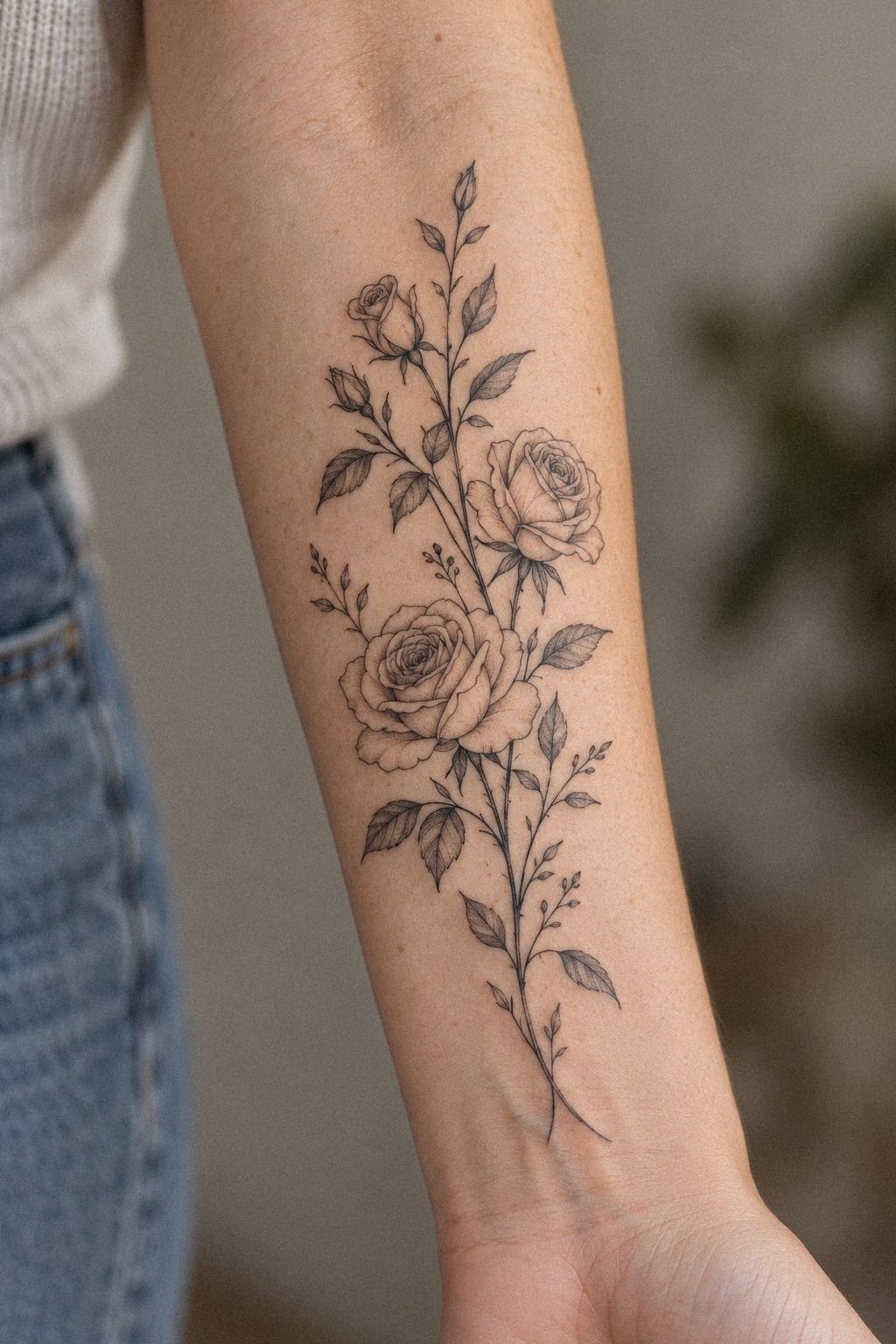
- Botanical Delicate Rose Tattoos on the Forearm
- Blackwork Rose Tattoos with Thorn Details
- Birth Month Rose Tattoos with Meaning
- Delicate Rose Tattoos on the Collarbone
- Vintage Rose Tattoos in Soft Shading
- Unique Rose Tattoos Framed by Script
1Small Delicate Rose Tattoos on the Wrist
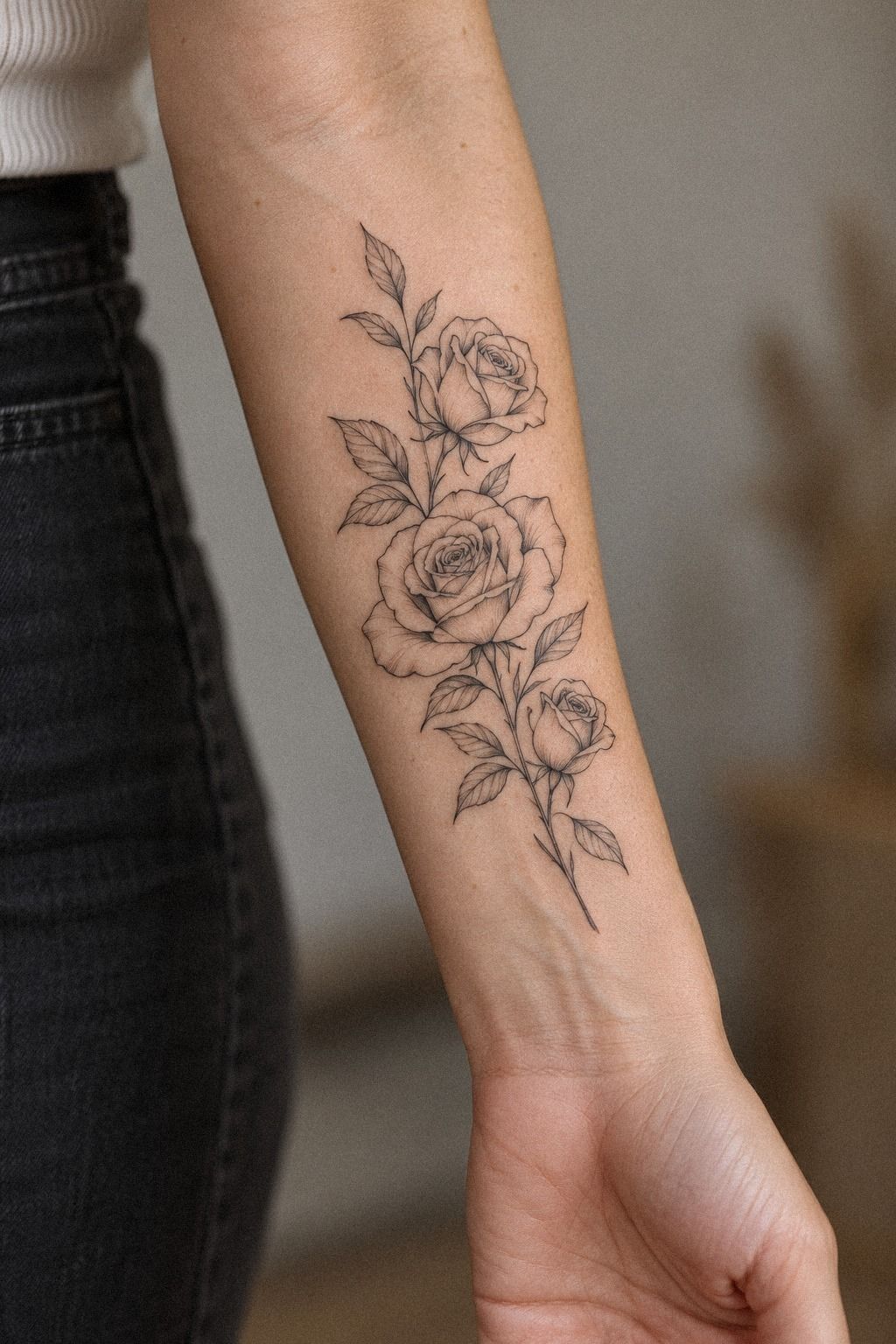
A small wrist rose works best when you want your tattoo visible but understated. The profile shape lets each layered petal read clearly without taking over your wrist.
Ask your artist for crisp linework, a narrow stem, and enough open skin between the petals. You’ll want the flower to look delicate, not blurred, once the skin settles.
I’d keep this version around 1.5 to 2 inches if your artist agrees that the details will hold. My first instinct would’ve been to make it tiny, but that’s where many small rose tattoos lose their shape. A slightly larger wrist rose tattoo can look graceful and personal.
If you’re comparing scale, these small rose tattoo ideas can help you judge what still reads from a short distance.
A thin outline with selective petal shading usually looks more polished than outlining every fold. That choice keeps the design elegant and lets the natural skin show through.
Skip dense gray fill if you prefer a minimal result. The single-needle rose should still have enough contrast to remain sharp.
Your wrist moves constantly, catches sunlight, and gets washed often, so aftercare matters. Wash gently, moisturize as directed by your artist, and avoid swimming or strong sun while the surface heals over roughly 2 to 3 weeks.
The tattoo won’t be fully settled for about 2 to 3 months. That patience is worth it!
2Fine Line Rose Tattoos Behind the Ear
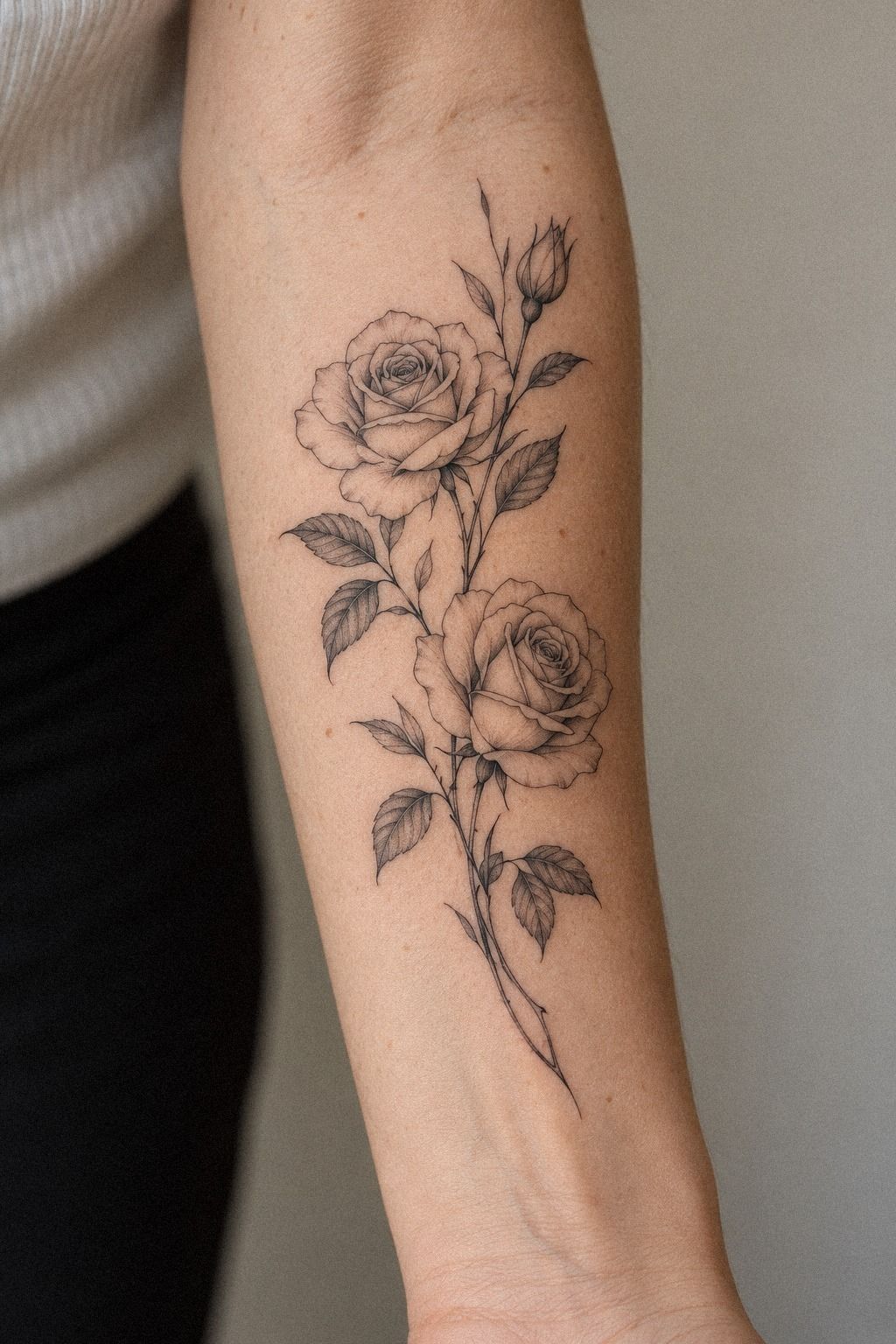
Behind-the-ear placement gives a rose a secretive, romantic quality without making it invisible. The curve suits a profile flower, while layered petals create an intricate shape that still feels dainty.
You’ll want the artist to leave a clean gap between the rose and your hairline. Otherwise, the outline may disappear beneath loose strands.
This placement suits you if you like an intimate tattoo that can show with a ponytail and vanish beneath your hair. I’d choose a behind-the-ear rose with one graceful stem and restrained shading. A heavy outline would make the small design feel edgy in the wrong way, while soft selective lines keep it timeless.
Behind the ear can be more sensitive than an outer forearm because the skin is thin and close to bone. Your session may be short, but you shouldn’t choose an artist only because they’re quick.
Look for healed examples, clean lines, and healed tattoo work in ordinary light. You’ll learn more from that than from a stylized portfolio sample.
If you’re drawn to several tiny motifs, resist crowding them together. One rose has more presence than three compressed symbols here.
You can browse these tiny rose tattoo designs before your appointment, then show your artist what scale still feels readable. The result can be subtle, feminine, and quietly powerful.
3Watercolor Delicate Rose Tattoos on the Shoulder
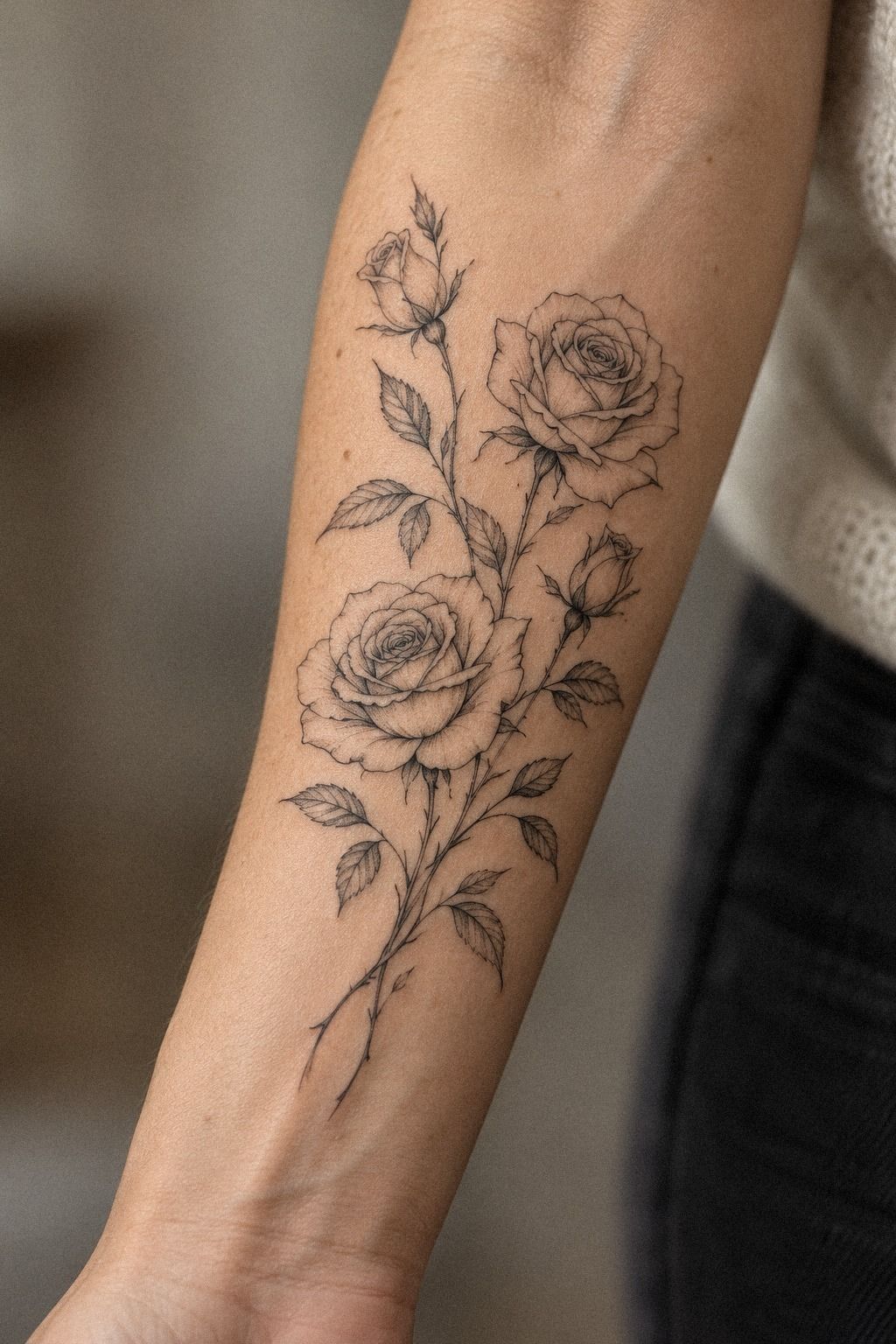
A watercolor rose on the shoulder gives you more flexibility for transparent color and flowing edges. A single profile rose with layered petals, a light outline, and soft color beyond the flower can feel ethereal without becoming vague. You’ll want the color placed deliberately, not brushed everywhere like a blur.
I’d ask for a watercolor rose tattoo with a crisp central contour and restrained washes around the outer petals. That contrast matters.
The black structure keeps the rose recognizable, while the color makes it playful, expressive, and slightly vibrant. If the whole design is soft, your eye won’t know where the flower ends.
Shoulder placement is generally more tolerable than ribs, feet, hands, or sternum, which makes it a practical choice for a first tattoo. You’ll still feel plenty during the session, but you can usually keep your shoulder relaxed. Don’t arrive with sunburned skin, and don’t plan a pool day while the shoulder placement is healing.
Color can change how your rose ages, so your artist should explain what will remain distinct over time. I’d choose one main tone with a second muted accent rather than a crowded rainbow palette. For more symbolic color ideas, compare yellow rose tattoo meanings before deciding whether your design should feel cheerful, meaningful, or haunting.
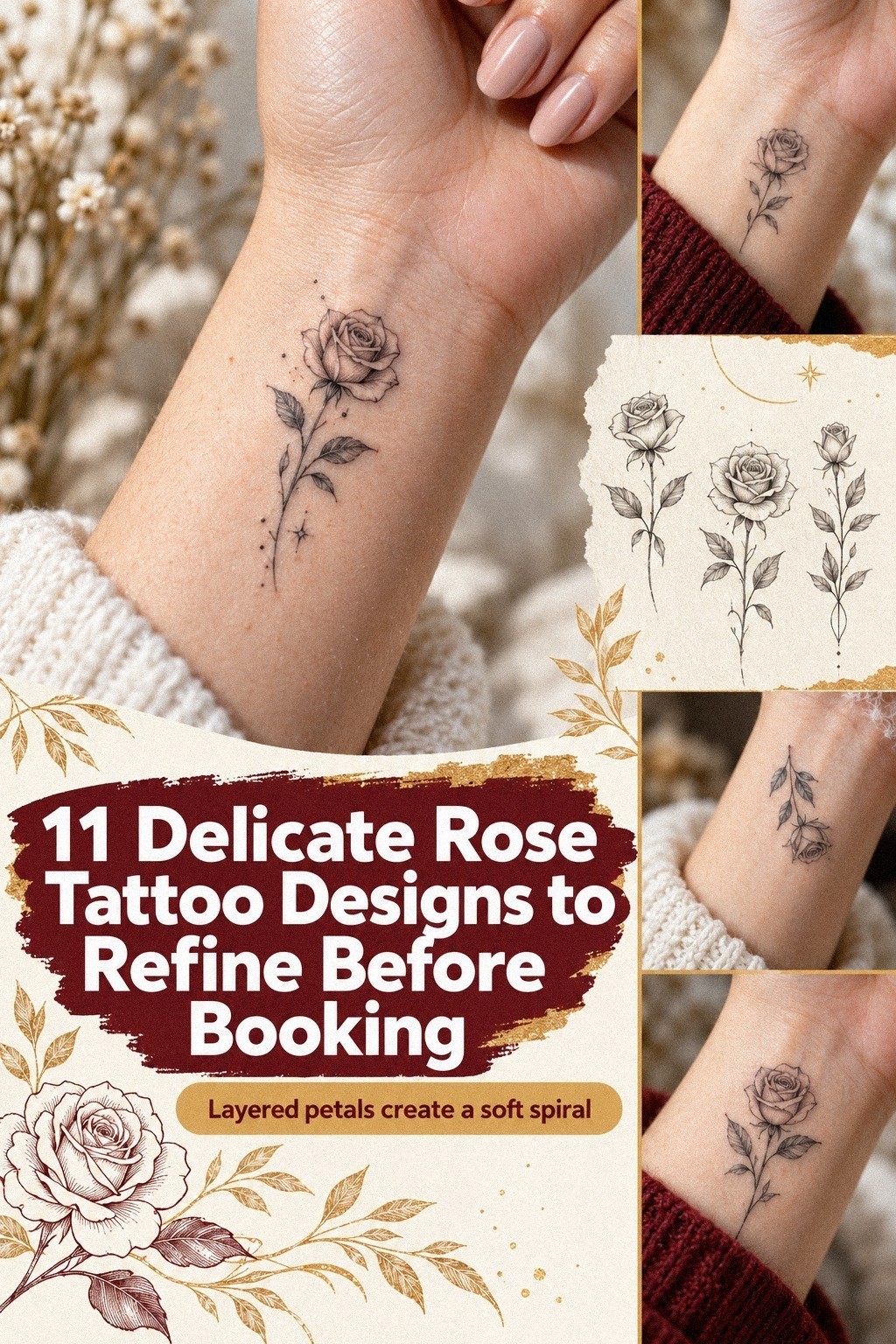
4Single Needle Rose Tattoos Along the Ribcage
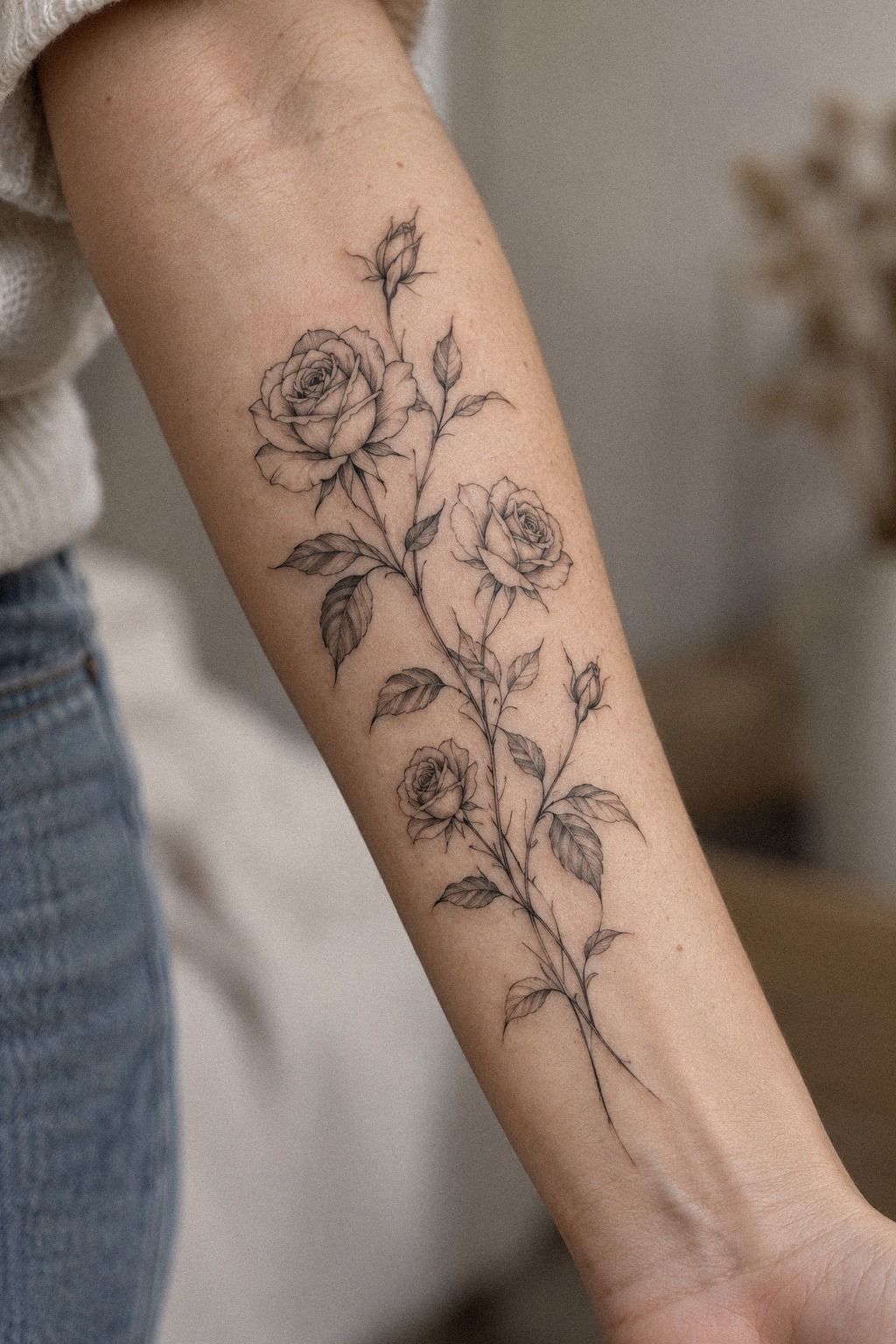
A ribcage rose can look graceful because the body gives the stem a long, natural path. A botanical profile rose with layered petals and a thin stem can follow the curve of your ribs beautifully. You’ll want the placement mapped while you’re standing, not only while you’re lying down.
Rib tattoos are often more uncomfortable than shoulder or outer-forearm tattoos, and you shouldn’t choose this spot just because it looks dramatic online. I’d select single-needle botanical linework only if you’re willing to protect the design during healing and accept a more intense session. The result can be striking, but the placement asks more from you.
A long stem gives the rose a flowing silhouette, while a few leaves can make the design feel organic without turning it into a crowded branch. Ask your artist to leave open skin between each leaf and petal.
You’ll get a sharper, more polished result than you would from tightly packed details. That clarity can make the extra long stem worth the effort.
If you’re nervous about the pain, ask for a consultation and discuss the expected session length. Don’t promise yourself that you’ll tolerate anything for a certain look. Your artist may suggest a slightly shorter rose or a different rib position.
That adjustment can keep the design elegant instead of forcing a fierce idea onto skin that needs more breathing space.
For additional reference, compare these realistic rose tattoo ideas with fine-line examples before deciding how much shading your ribcage can support.
5Tiny Rose Bud Tattoos on the Finger
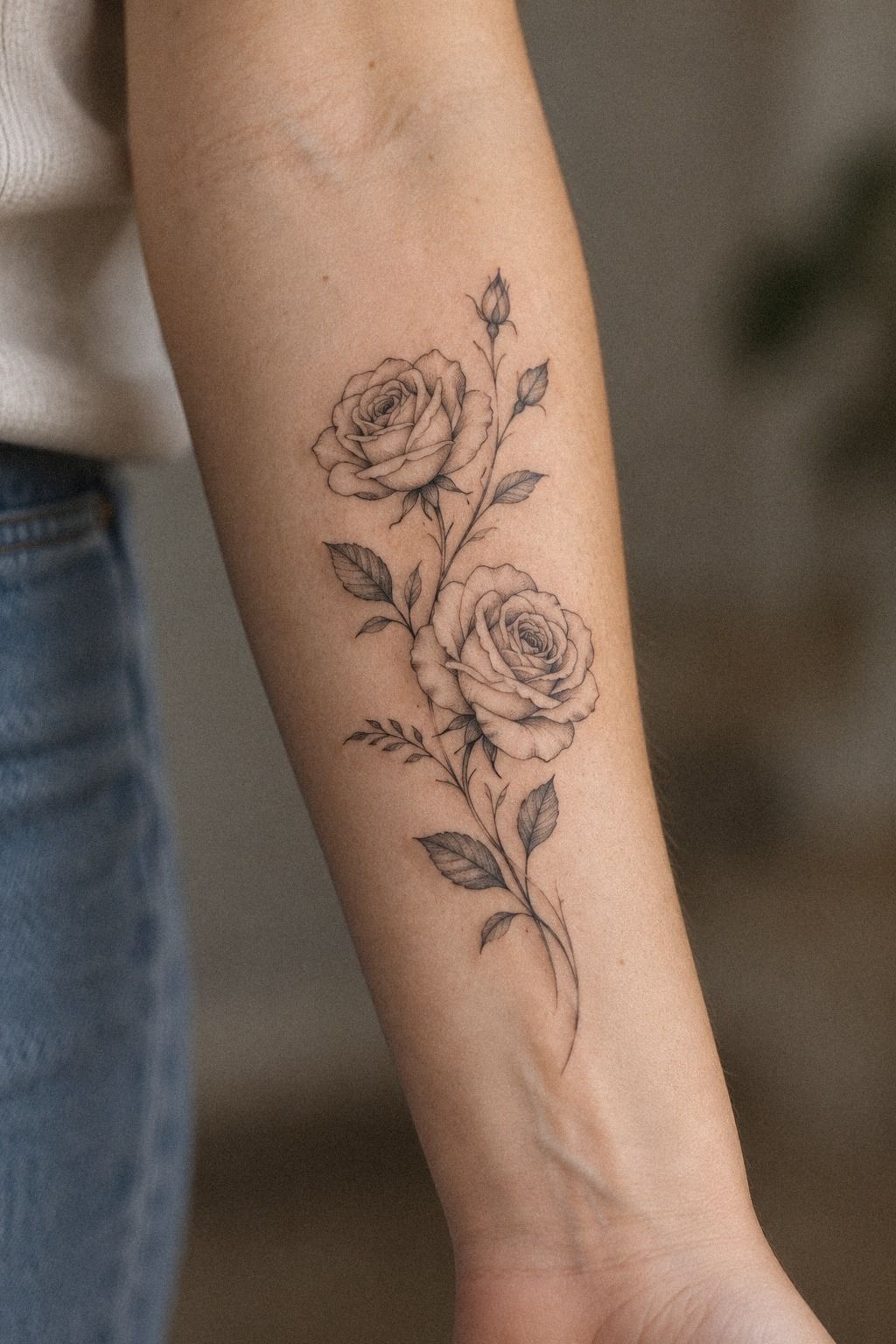
A tiny rose bud on the finger works beautifully as a flash-style idea because the shape can be understood in a few crisp marks. Choose one design rather than combining every detail on a limited surface. A compact bud, narrow stem, and one small leaf can feel symbolic without becoming crowded.
Finger tattoos can fade or soften faster than tattoos on areas with less friction. Soap, hand washing, sun, and daily movement all affect the result, so ask your artist how they handle touch-ups. I’d choose a tiny rose bud with solid structural lines instead of delicate shading that may vanish first.
The best flash-sheet choice is the one that still looks clear at a glance. You don’t need a dozen petals to make the flower meaningful.
One curved outer line, a small center, and a short stem can feel personal. If you’re choosing between a bud and a full bloom, the bud will usually offer better value at this scale.
Don’t tattoo yourself at home or ask a friend with a machine to improvise. A budget idea isn’t the same as an amateur procedure.
You’ll want a licensed tattoo artist, a hygienic studio, and a portfolio showing healed finger work. For more small-scale references, these minimalist rose tattoos show how restraint can make a design feel iconic.
6Botanical Delicate Rose Tattoos on the Forearm
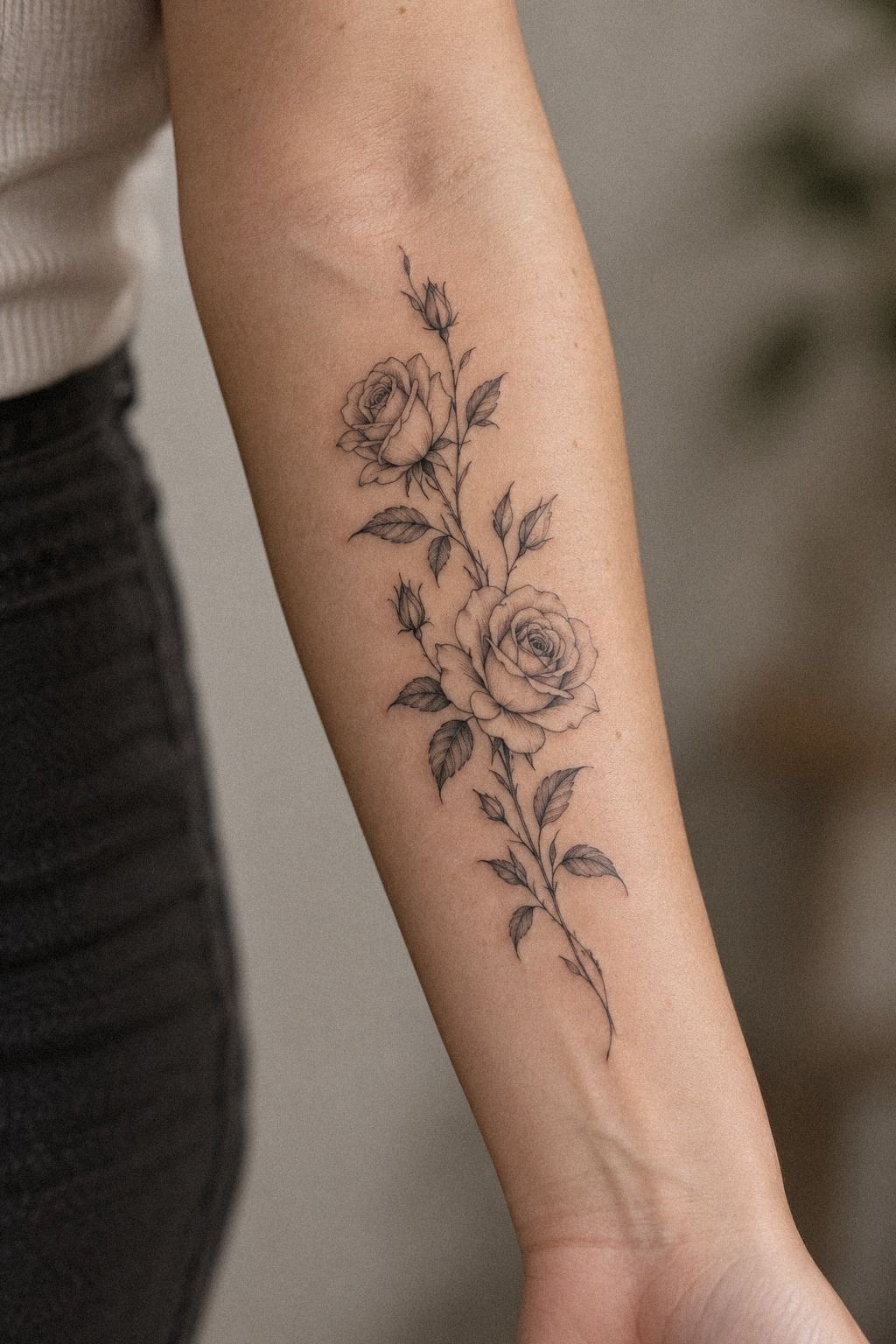
The forearm gives a botanical rose enough breathing space, and darker skin can make confident linework especially expressive. The profile flower can use layered petals, a narrow stem, and leaves arranged along one side. You’ll want your artist to consider contrast, spacing, and how the design will look from both sides of your arm.
I’d request botanical rose linework with a confident outline and selective black accents. That approach keeps the tattoo crisp and bold without filling every area. Your rose can stay delicate while still holding visual weight, which is why the forearm is such a strong placement for a first or second piece.
A forearm tattoo is usually easier to monitor during healing than a rib or spine tattoo. You’ll see whether the surface is dry, irritated, or exposed to sunlight, and you can protect it with loose clothing. Wash gently and follow the artist’s instructions rather than applying a thick layer of random products.
Good tattoo healing habits protect the value of the work.
If you want a larger collection later, leave generous space around this rose. I’ve seen people regret placing a second design too close before they knew how their first tattoo would settle. You can explore delicate floral tattoo ideas for companion motifs, but I’d keep the first rose graceful and complete on its own.
7Blackwork Rose Tattoos with Thorn Details
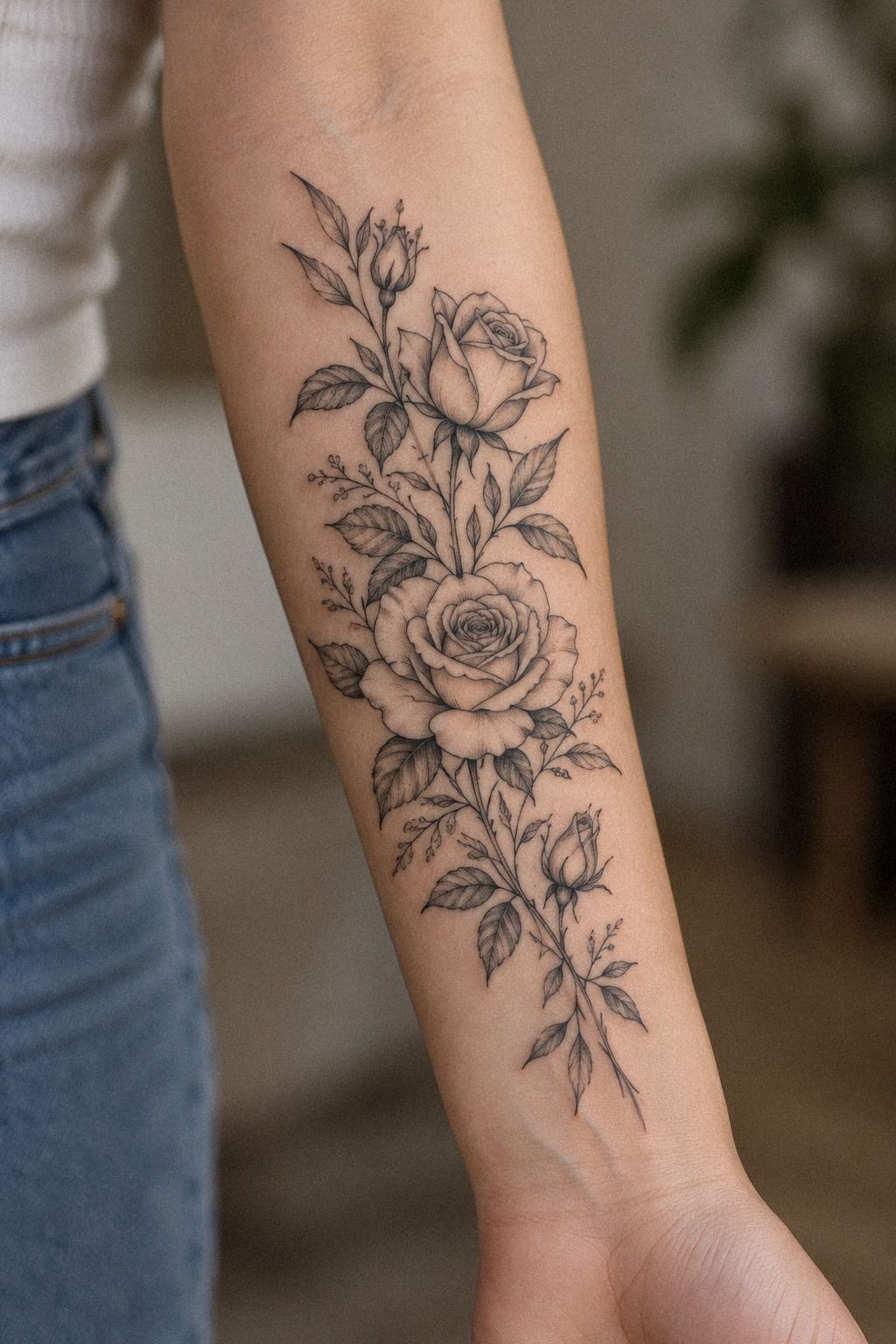
Thorns change the emotional language of a rose immediately. A blackwork bloom with a firm outline and pointed leaves can feel raw, fierce, and symbolic without becoming overly ornate. The contrast gives the flower a bold presence, while the thorn details add an empowering edge!
I’d ask for a blackwork rose with solid black accents concentrated around the petals, stem, and thorns. Avoid filling every open area if you want the design to remain readable. A controlled balance of dark ink and untouched skin can make the rose feel sharp, expressive, and timeless.
Thorns can represent protection, hardship, resilience, or a boundary you had to create. Their meaning doesn’t have to be tragic. One or two distinctive thorns may say more than a dense ring of sharp points.
Keep the thorn details intentional so they support the flower instead of competing with it.
Blackwork needs strong placement and confident execution because the ink carries so much visual weight. Ask to see healed examples at a similar size, especially if you’re considering the wrist, ribs, or ankle. The right artist can keep the result intricate and powerful while preserving the healed blackwork clarity.
8Birth Month Rose Tattoos with Meaning
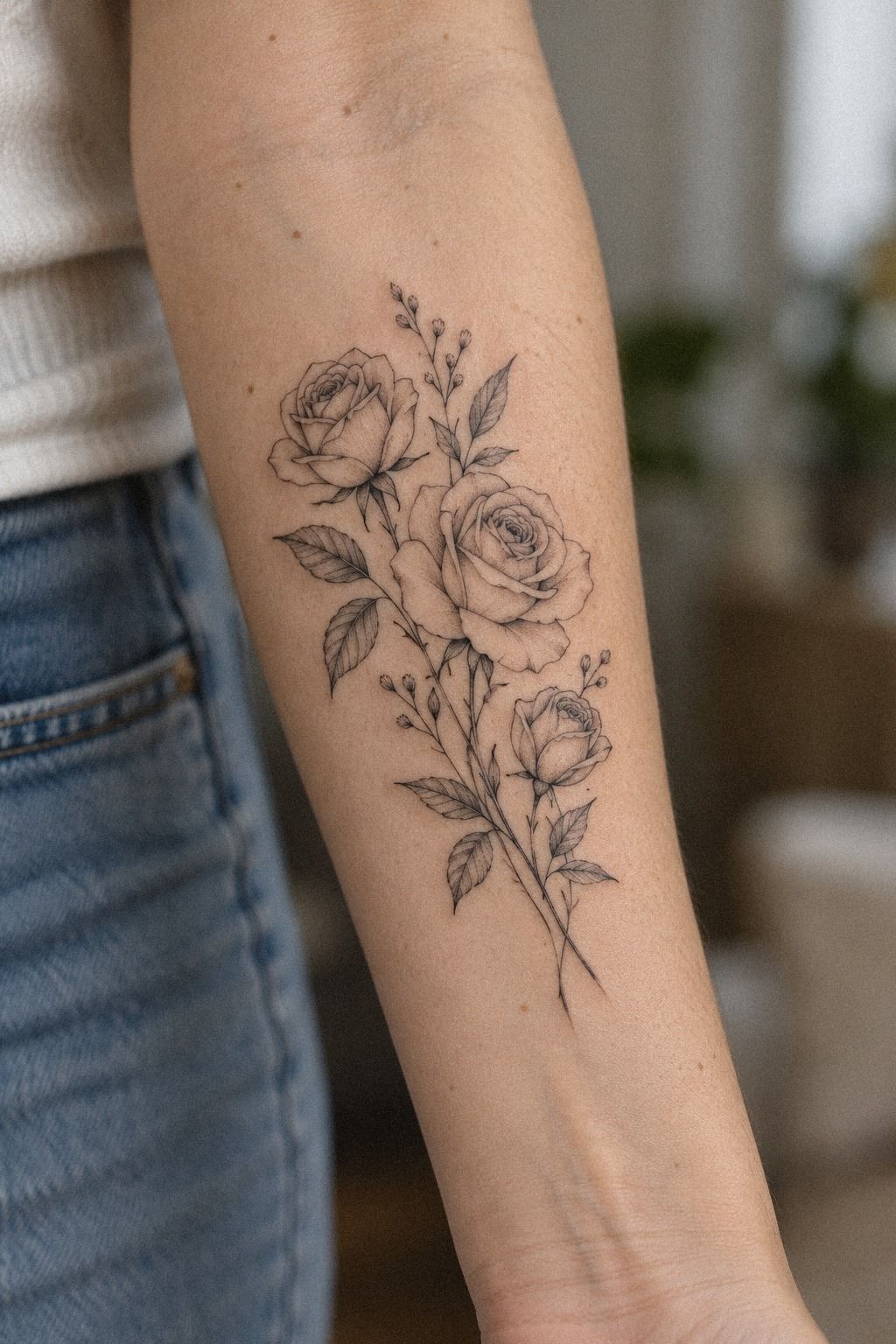
A birth month rose gives you a symbolic reason to choose one flower over another. It can honor a child, a parent, a lost relative, or a private turning point without using text. A birth-month rose feels meaningful because the choice starts with your story.
I’d keep the flower simple and let the symbolism carry the message. Adding a date, initials, or a long quote can make the ankle feel crowded. A small name or one discreet mark may work, but the rose will usually feel more timeless without several competing symbols.
Ankle skin sits close to bone, so you may find the session more uncomfortable than an outer forearm or shoulder. You’ll also need to consider socks and shoes during the first stage of healing. Loose footwear and careful aftercare can protect the ankle tattoo while it heals over roughly 2 to 3 weeks.
If color matters to your meaning, discuss how the tone will look on your skin after healing. A muted red, soft black, or limited color wash can each create a different mood. You can read about white rose tattoo meaning if your idea leans sacred, graceful, or quietly memorial.
That research can save you from paying for a design whose symbolism feels wrong later.
9Delicate Rose Tattoos on the Collarbone
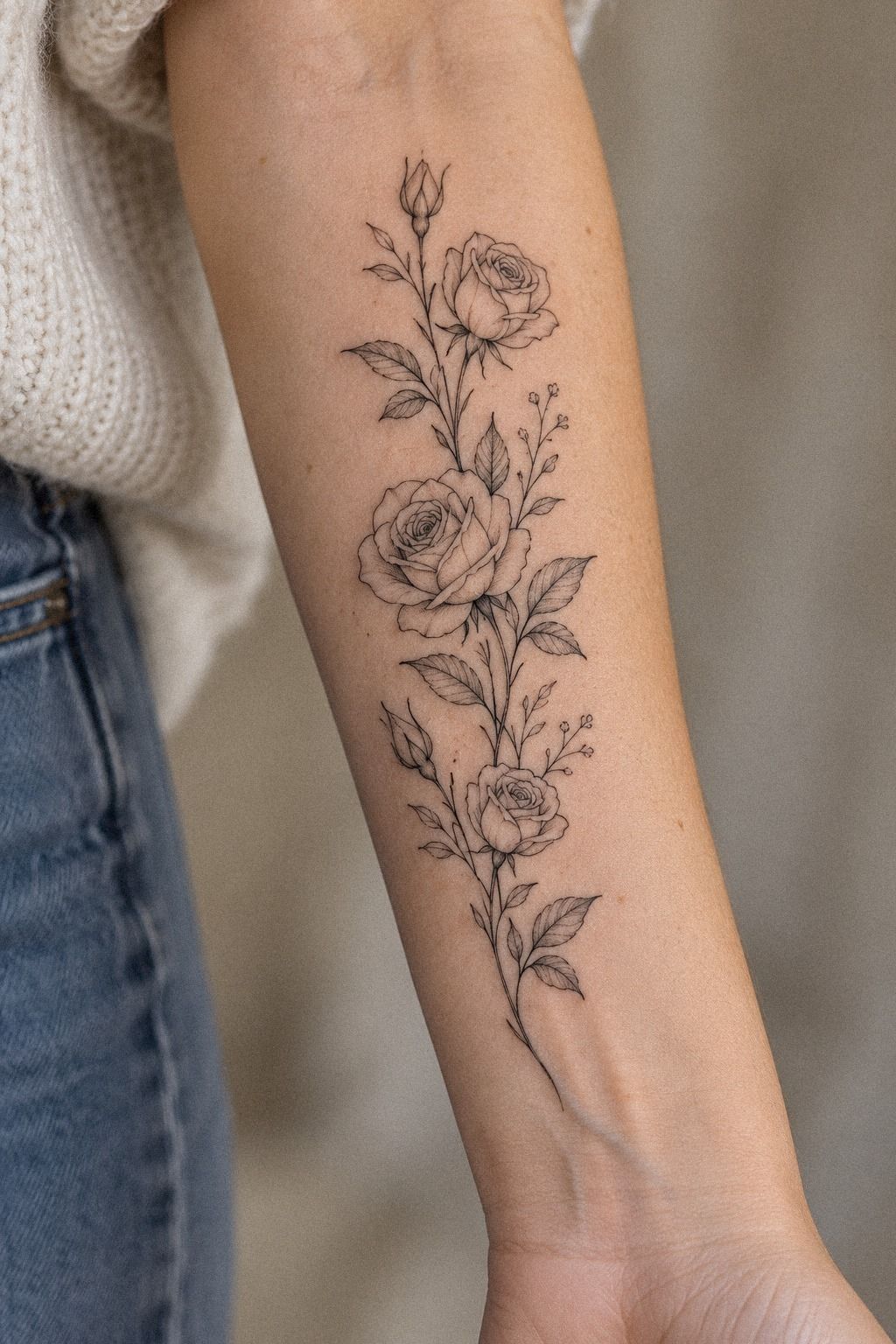
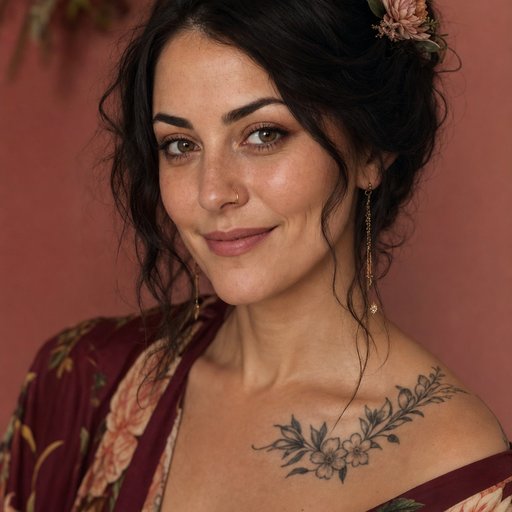
A collarbone rose can follow the body’s natural line and feel almost like a small emblem. A botanical profile rose with layered petals, a narrow stem, and a few leaves can look striking beneath the bone. You’ll want the artist to stencil the design while you’re standing so it doesn’t tilt when your posture changes.
I’d choose collarbone linework with a slightly stronger outer contour. The area is visible, but it’s also exposed to sun and clothing friction, so extremely faint lines may lose clarity sooner. Your rose can remain elegant without being so pale that you have to squint to find it.
This placement works well if you want something feminine, stylish, and easy to show with an open neckline. You’ll still have the option to cover it for work or formal events.
Skip a design that runs too close to the shoulder joint if you want a clean silhouette while moving your arm. A polished feminine tattoo should work with your daily habits, not fight them.
I’d also avoid squeezing script into the same small area. A single rose has more visual authority than a rose plus three tiny words fighting for space. For a simpler comparison, look through these small rose tattoo ideas and notice how much clearer the designs feel when the lines have room.
10Vintage Rose Tattoos in Soft Shading
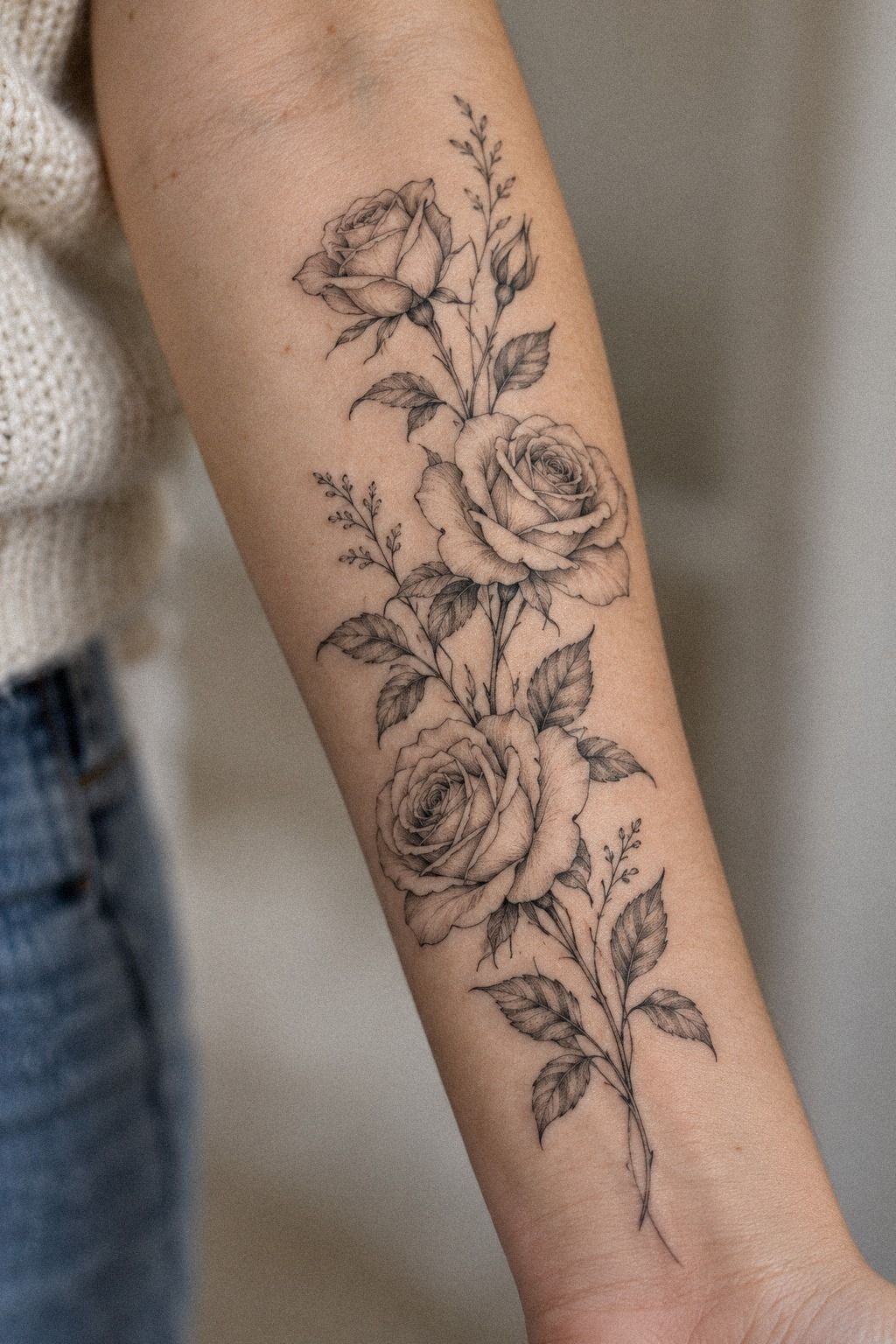
A vintage rose can feel classic without looking old-fashioned. Rounded petals, gentle tonal shifts, and a slightly fuller bloom create a romantic, timeless result. This style suits you if you want something polished and expressive rather than stark or aggressively graphic.
I’d choose soft shading that defines the inner folds without turning every petal gray. A darker center and lighter outer petals can give the flower depth while preserving open skin. The result feels elegant, feminine, and quietly dramatic.
Vintage roses can work on the upper arm, shoulder, thigh, or forearm, depending on how much detail you want. Larger placement gives the artist more room for layered petals and subtle transitions. A compact version can still work, but the vintage tattoo should lose detail before it loses structure.
Think about whether you want a fresh bloom, a weathered flower, or a rose with a slightly antique mood. Those choices change the emotional tone. I’d keep the outline confident and the shading selective so the aged rose tattoo stays graceful rather than muddy.
11Unique Rose Tattoos Framed by Script
A rose framed by script can become one of the most personal designs in this list. The spine placement allows a profile rose, layered petals, and lettering to follow the vertical line of the body. You’ll want the words to support the flower instead of turning it into a crowded label.
I’d keep the script-framed rose narrow, with generous spacing between the letters and petals. Your phrase could be a name, a date, or a short word that carries weight for you. A long quotation may sound meaningful, but it can shrink the rose and make the entire piece harder to read.
The spine can be more sensitive than the forearm or shoulder, and you’ll need to stay still while the artist works along a curved surface. Ask for a stencil placement session first.
You’ll see whether the text follows your body naturally or looks tilted when you stand, bend, and move. That planning is worth the investment.
Custom lettering needs the same care as the flower itself. Check every spelling, punctuation mark, and letterform before the session. A spine tattoo with one meaningful word can feel more powerful than a paragraph squeezed into the design.
This is the most expressive idea here, but it doesn’t need to be ornate. I’d choose one rose, one line of script, and perhaps one small thorn or leaf. If you’re still working out the meaning, this guide to what a rose tattoo represents can help you make the symbolism personal rather than decorative.
Choose the Size Before You Choose the Detail
Size controls nearly everything: petal count, line weight, lettering, shading, and how much symbolism the design can carry. A tattoo size that looks beautiful on a screen may be too small once it has to live on moving skin. Ask your artist what minimum size will keep the details legible.
If you want an intricate rose, give it enough breathing space to stay crisp. A smaller design can still be dainty, but it may need fewer petals and a simpler stem.
That tradeoff is often worth it. Clear structure will age more gracefully than a miniature design packed with every idea.
When you compare references, look at the actual measurements instead of trusting labels such as “tiny” or “micro.” A negative-space design needs open areas to remain visible. If your preferred version costs slightly more because it needs extra scale, that may be the better value over time.
These delicate floral tattoo ideas can help you compare how petal density changes when the same concept is drawn at different sizes.
Can Fine Lines Stay Legible?
Fine lines can stay elegant, but no tattoo remains frozen forever. Sun exposure, friction, placement, skin behavior, and the artist’s technique all affect how the design settles. A fine-line tattoo should still have enough contrast to read clearly after healing.
Ask your artist how they handle areas that move or receive frequent washing. Fingers, hands, feet, and some collarbone placements may need more maintenance than a forearm or shoulder. You’ll want an honest conversation about touch-ups before you book.
Line weight matters as much as the motif. If every mark is equally faint, the petals may merge as the tattoo settles. A confident outer contour with lighter interior marks can preserve the line weight and keep the design graceful.
For a useful scale comparison, revisit these small rose tattoo ideas and notice which details remain readable without magnification.
Cost vs. Value: A Budget Check
The cost of a delicate rose tattoo depends on size, placement, artist experience, regional pricing, and the amount of custom drawing involved. A simple design may fit a smaller budget, while detailed shading or lettering can raise the price. Ask for a clear estimate before you commit.
A low quote isn’t always a bargain. Hygiene, healed work, consultation time, and technical skill all contribute to the tattoo cost. You’re paying for a permanent piece of work, so the cheapest option may not offer the best value.
If you need to control spending, simplify the design before choosing an inexperienced artist. Remove extra text, reduce the color palette, or start with one strong flower. A realistic tattoo budget should include possible touch-ups and proper aftercare products.
This floral tattoo guide can help you compare a simple single-flower concept with a more involved custom design before requesting a quote.
Read the Healed Portfolio First
Fresh work can look vibrant, sharp, and polished because the skin hasn’t completed its recovery. That doesn’t make fresh work useless, but it shouldn’t be your only evidence. A healed portfolio reveals whether the artist understands spacing, contrast, and long-term clarity.
Look for roses at a similar scale and on comparable placements. A large shoulder piece won’t tell you much about how an artist handles a tiny finger bud. You’ll learn more from several ordinary healed examples than from one highly stylized sample.
A reputable artist should answer questions without making you feel rushed. Ask how long the surface usually heals, what products they recommend, and whether they expect the design to need a touch-up. A clean professional tattoo studio should make those details easy to discuss.
Before booking, compare these tiny rose tattoo designs with the artist’s healed work at a similar scale. That comparison can reveal whether their smallest pieces hold their shape.
Victorian Rose: Meaning Before Ornament
Rose symbolism can shift depending on color, culture, family history, and personal memory. Red may suggest love, white may feel sacred or memorial, and a thorn may represent protection or hardship. A symbolic tattoo doesn’t need to follow a universal dictionary if the meaning is yours.
Color also changes the visual mood. Blackwork can feel raw and powerful, while a soft wash may seem romantic or ethereal. Before you choose rose color, ask whether you’ll still connect with that mood years from now.
The strongest designs usually begin with one clear idea. Maybe the flower marks a relationship, a recovery, a birth month, or a boundary. Once you know the feeling, the artist can shape the petals, stem, and placement around that personal meaning.
If your concept leans memorial, compare the white rose tattoo meaning with other color associations before finalizing the palette.
What I’ve Learned About Choosing a Rose Tattoo
I used to think the smallest rose would always be the most delicate. It sounds logical, but skin doesn’t work like paper.
When too many petals, leaves, and words are compressed into a tiny area, the design can lose its crisp shape. Now I’d rather choose a slightly larger rose with clear negative space than force an intricate idea into a size it can’t support.
Placement changes the whole feeling. A wrist rose is visible and conversational.
A behind-the-ear rose is intimate. Ribs can feel fierce and private, while a forearm design gives you more control over viewing and aftercare.
You’ll want to decide whether your tattoo should greet you every morning or appear only when you choose to show it.
I also pay attention to healed work now. Fresh tattoos look vibrant, sharp, and polished because the skin hasn’t completed its recovery.
A folder of healed work tells you whether the artist understands line weight, spacing, and contrast. If an artist only shows fresh work, I’d keep looking.
Your tattoo deserves evidence, not a promise.
The most meaningful rose isn’t always the most ornate one. A single stem may remind you of a person.
A thorn may mark a boundary. A birth-month flower may carry family history without needing a caption.
Ask yourself what you want to remember when the trend has moved on. That answer will lead you toward a timeless rose tattoo.
For another perspective, read what a rose tattoo represents and then write down the meaning you want your own flower to carry.
The Questions Worth Answering First
How much does a delicate rose tattoo usually cost?
A delicate rose tattoo in the United States often costs about $100 to $300, depending on size, placement, artist, and region. Some studios have a minimum of roughly $50 to $100, while hourly rates may run around $100 to $250. You’re paying for tattoo skill and hygiene, not just minutes under the machine.
Are delicate rose tattoos a good idea for a first tattoo?
Yes, delicate rose tattoos can be a meaningful first choice, especially on the forearm, shoulder, or outer thigh. Those areas are often more tolerable than ribs, feet, hands, or sternum. Choose an artist with healed linework, and your first rose tattoo can feel elegant, personal, and manageable.
How do I choose a tattoo artist for delicate rose tattoos?
Choose an artist whose portfolio shows clean fine-line work and healed results. You’ll want to see roses at a similar scale, not only large dramatic pieces. Check studio hygiene, ask about their process, and discuss how the design may age before you book.
That research gives your artist selection real value.
How much do delicate rose tattoos hurt?
Pain varies, but ribs, feet, hands, and sternum are commonly more painful than the forearm, thigh, or shoulder. Your placement, session length, and personal sensitivity all matter.
You’ll have a better experience if you eat beforehand, communicate clearly, and don’t treat discomfort like a competition. Good preparation protects your tattoo experience.
How long does a delicate rose tattoo take to heal?
The surface usually heals in about 2 to 3 weeks, while complete settling can take about 2 to 3 months. You’ll need to wash gently, moisturize as directed, avoid strong sun, and skip pools while the surface is healing. Your artist’s aftercare instructions should lead, especially during tattoo recovery.
What’s the best placement for delicate rose tattoos?
The forearm and shoulder are strong choices when you want better visibility and generally more tolerable sessions. The wrist, collarbone, ankle, and behind-the-ear placements feel more intimate but may face more friction or exposure. You’ll want the placement to match both your style and your daily routine.
That practical placement choice can matter as much as the design.
Where I’d Start First
If I had to pick one, I’d start with the botanical forearm rose. It gives the petals room to stay crisp, it’s easier to protect during healing, and it can remain delicate without disappearing. A botanical forearm rose offers an excellent balance of meaning, visibility, and long-term readability.
Pin the delicate floral tattoo guide for later and bring your favorite reference to a consultation. I’d rather spend time refining one striking, personal rose than rush into a design that only looks good for a few weeks. Start there!