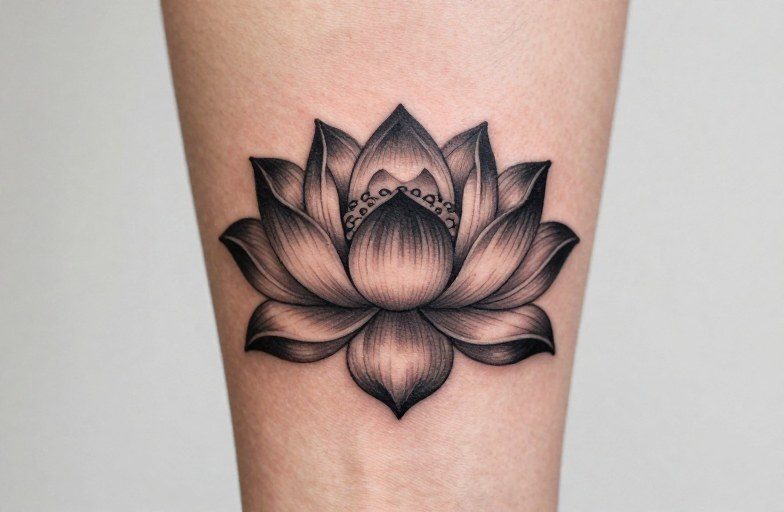
A lotus flower tribal tattoo means personal growth rising from hardship, expressed through bold black lines and geometric patterns rather than realistic shading. The lotus carries ancient associations with purity and spiritual awakening, while the tribal style adds visual weight and a graphic, timeless quality. Together, they create a piece that reads clearly from a distance and holds up for decades if placed and executed well.
Symbolism & Core Meaning
The lotus grows from mud through murky water to bloom on the surface. That biological reality shaped its symbolic meaning across multiple cultures. In tattoo form, this narrative of emergence becomes permanently visible on the body, chosen by people who want to mark a turning point, a survived difficulty, or a commitment to ongoing self-work.
Rebirth and Resilience
The daily cycle of the lotus, closing at night, reopening with morning light, lends itself to meanings of renewal and persistence. Tribal styling amplifies this through thick, unbroken lines that suggest durability and backbone. The contrast between organic flower form and rigid geometric framing creates tension: something delicate held within something strong.
Purity and Spiritual Practice
Often linked to Buddhist and Hindu traditions, the lotus represents detachment from material struggle. The tribal interpretation doesn’t require religious commitment; many wearers connect to the broader idea of maintaining internal clarity despite external chaos. The stark black ink strips away decorative color, focusing attention on structure and intention.
History & Cultural Roots
Polynesian and Maori tattoo traditions developed the bold, patterned blackwork that Western tattooing later labeled “tribal.” These original forms carried specific genealogical and status information, patterns weren’t chosen for aesthetics alone. The modern lotus tribal hybrid borrows the visual language of those traditions without replicating their cultural protocols.
From Cultural Mark to Global Style
During the 1990s, tribal patterns became massively popular in Western shops, often divorced from their origins. The lotus tribal fusion emerged later as artists and clients sought to combine the graphic impact of blackwork with meaningful imagery. Some trace it to Southeast Asian Buddhist art, where lotus motifs appear in temple carvings with strong outline-based design. Today’s versions range from respectful homage to purely decorative adaptation.
Regional Variations in Pattern
- Samoan-influenced pieces use more rounded, flowing shapes and graduated shading within black areas
- Maori-style adaptations incorporate koru spirals alongside or within petal forms
- Thai temple art often shows sharper, more angular geometry with pointed petal tips
- Contemporary fusion work mixes multiple influences without strict adherence to one tradition
Personal & Modern Meanings
People choose this design for reasons that rarely appear in symbol dictionaries. Recovery from addiction, surviving abuse, leaving a restrictive community, completing a difficult education, these lived experiences map onto the lotus narrative without requiring explicit explanation. The tribal style adds a quality of self-protection, almost armor-like, around the vulnerable symbolism.
Placement as Meaning
Where the tattoo sits on the body changes how it’s read and how it feels to the wearer. Upper back placements create a sense of carrying the symbol behind you, support rather than display. Forearm pieces tend to function as self-reminders, visible during daily tasks. Chest work over the heart area intensifies the personal commitment aspect. Lower back or hip placements keep the meaning more private, shared selectively.
Gender and the Design
The lotus carries feminine associations in some cultural contexts, but the tribal treatment balances this with aggressive visual weight. Men and women both wear these tattoos; the tribal framing shifts the energy significantly. A delicate watercolor lotus reads differently than the same flower rendered in heavy black interlocking shapes.
Common Variations & Styles
Not all lotus tribal tattoos look alike. The core concept allows substantial variation in execution, and these choices affect both immediate appearance and long-term aging.
Single Bloom vs. Full Composition
A standalone lotus with minimal surrounding pattern works well for smaller placements and ages cleanly because there’s less fine detail to blur. Full compositions incorporating multiple blooms, water lines, sun or moon elements, and extensive background patterning demand more skin real estate and more skilled execution. The complexity must be appropriate to the size; a 3-inch tattoo cannot hold what a 6-inch tattoo can.
Line Weight and Negative Space
Classic tribal relies on heavy black fill with strategic skin breaks creating the pattern. Some lotus tribals reverse this, using thick black outlines for the flower with interior negative space forming the tribal pattern. Others use consistent medium-weight lines throughout. Heavy black fill ages more predictably than fine-line interior work, which tends to soften and lose definition within 5-10 years depending on sun exposure and skin type.
How It Ages on Skin
Black tribal work generally ages better than color realism or fine-line illustration, but it’s not immune to time. The lotus tribal style faces specific challenges because the flower form requires some detail to remain recognizable.
The Blur Factor
Over years, tattoo lines spread slightly under the skin, roughly 1-2 millimeters of softening per decade in most cases. Petal tips that start needle-sharp become rounded. Small interior patterns merge into solid black. Artists compensate by building in enough space between elements and avoiding detail below a certain size threshold. A good rule: if you have to look closely to see it, it won’t last.
Sun and Skin Changes
UV exposure degrades black ink faster than protected skin. A lotus tribal on the outer forearm or shoulder will fade and blur sooner than one on the upper inner arm or torso. Weight fluctuation affects large solid black areas more than line work; the stomach and upper arms are particularly vulnerable to distortion. The upper back, outer thigh, and calf maintain stability well for this style.
Color vs Black and Grey
Traditional lotus tribal work is black only. Some contemporary variations introduce color, which changes both meaning and maintenance requirements.
Sticking to Black
Black-only lotus tribals require fewer touch-ups, cost less to execute, and maintain the graphic punch that defines the style. The high contrast between black ink and skin tone creates immediate readability. On darker skin tones, black can be built up in layers for density, or artists may use dark grey for subtle variation without sacrificing the tribal aesthetic.
Adding Color Strategically
When color enters, it usually appears as limited accents: a small red center, purple petal shading, or a blue water line. Full color throughout the lotus while maintaining tribal patterning is difficult to execute successfully, the two visual languages compete rather than complement. Color also shifts and fades unpredictably; blacks remain more stable. Any color addition should be discussed with the artist specifically regarding long-term expectations for that pigment on your particular skin.
Key Takeaways
A lotus flower tribal tattoo combines spiritual symbolism with graphic durability. The meaning centers on emergence and resilience, expressed through a visual style that prioritizes bold structure over delicate detail. This pairing works best when the artist understands both the cultural weight of tribal patterning and the technical requirements of aging blackwork. Placement affects privacy and longevity; simpler compositions age more gracefully than overcrowded ones. Whether chosen for deeply personal reasons or aesthetic preference, the design succeeds when the black is solid, the spacing is generous, and the flower form remains legible even as lines soften over years. The best pieces balance respect for the style’s origins with the individual wearer’s specific intention.
Frequently Asked Questions
Does a lotus tribal tattoo have to mean something spiritual?
No. Many people choose it for the visual strength of the design or to mark personal change without religious framework. The meaning is whatever you bring to it, though the lotus carries unavoidable cultural associations with growth and emergence.
How big should a lotus tribal tattoo be to last well?
At minimum, plan for enough space that petal tips and interior patterns don’t cram together. On most bodies, that means the bloom alone needs at least 3-4 inches in its longest dimension. Smaller than that, and detail blurs together within a few years.
Can any tattoo artist do good tribal work?
Not necessarily. Tribal blackwork requires confident, consistent line execution and solid fill without patchiness. Look at an artist’s healed photos specifically, fresh tattoos always look sharper than they settle into. Ask to see pieces that are 2+ years old.
Is it disrespectful to get tribal-style patterns if I’m not Polynesian or Maori?
The modern “tribal” category is broad and often abstracted from specific cultural origins. Direct copying of sacred Maori or Samoan patterns without understanding or connection is widely considered inappropriate. Generic geometric blackwork with a lotus is less problematic, but researching your specific design’s lineage is worth doing.