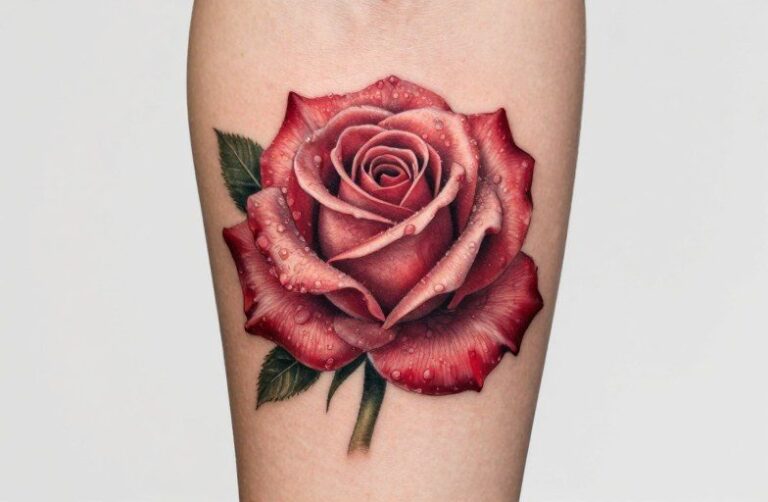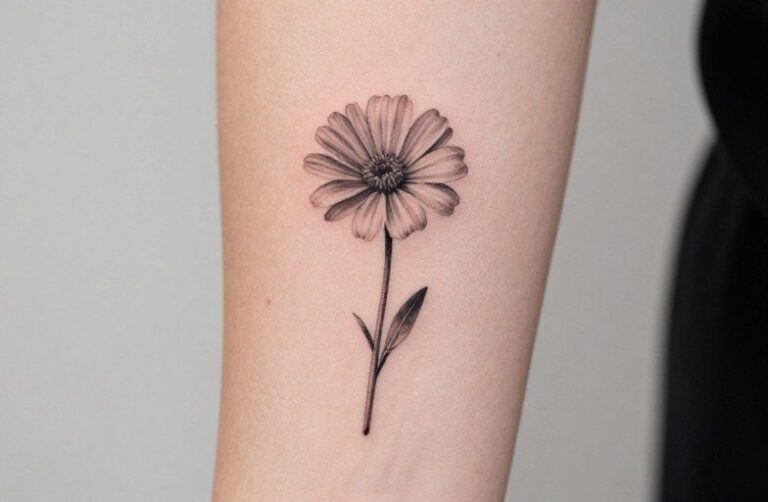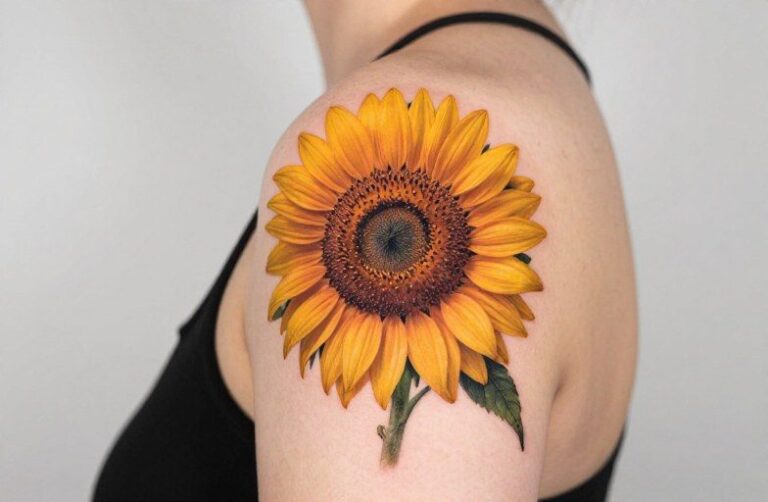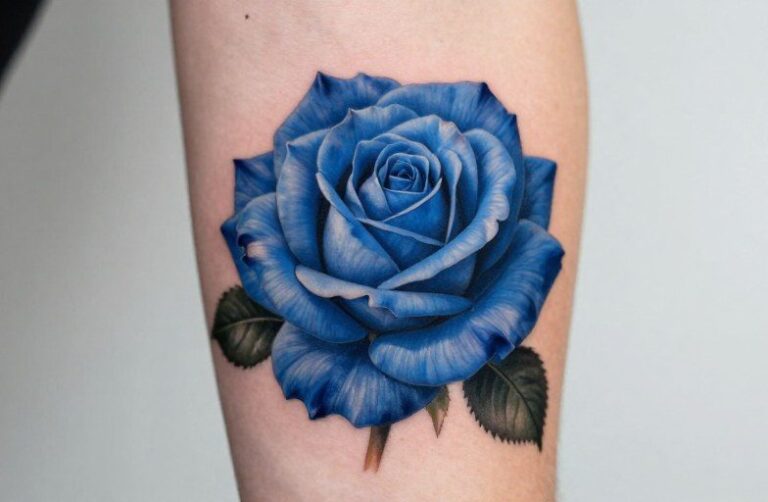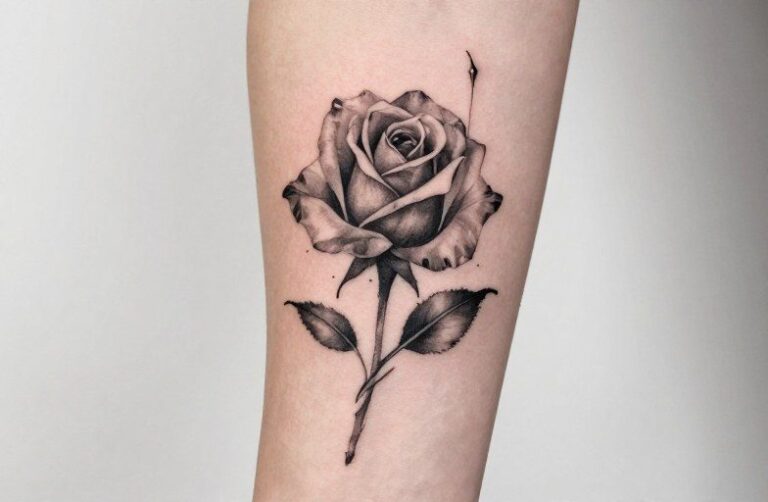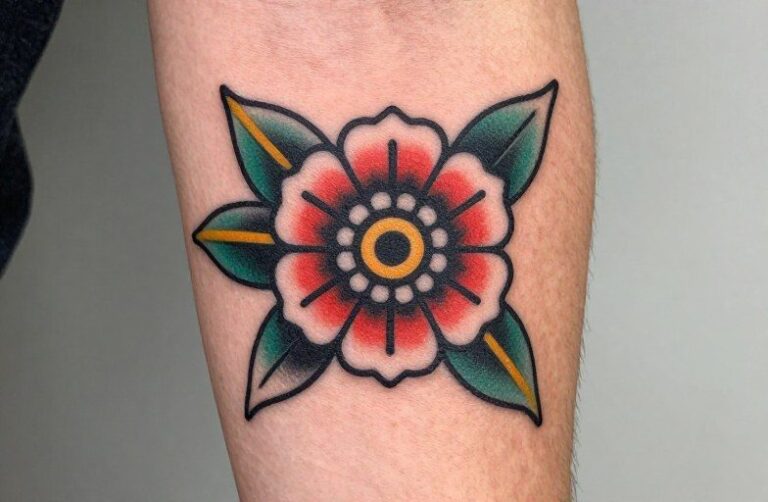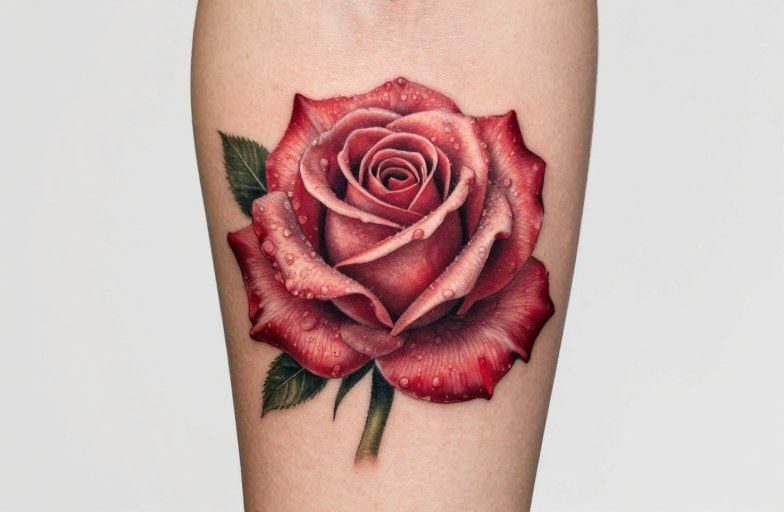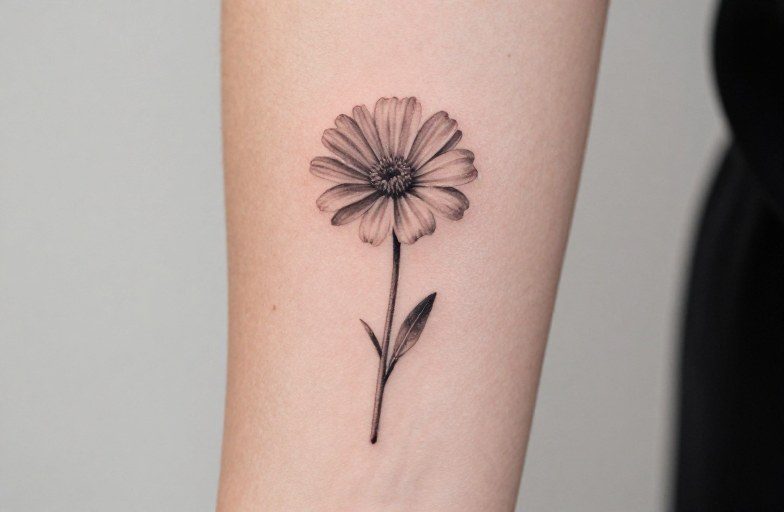
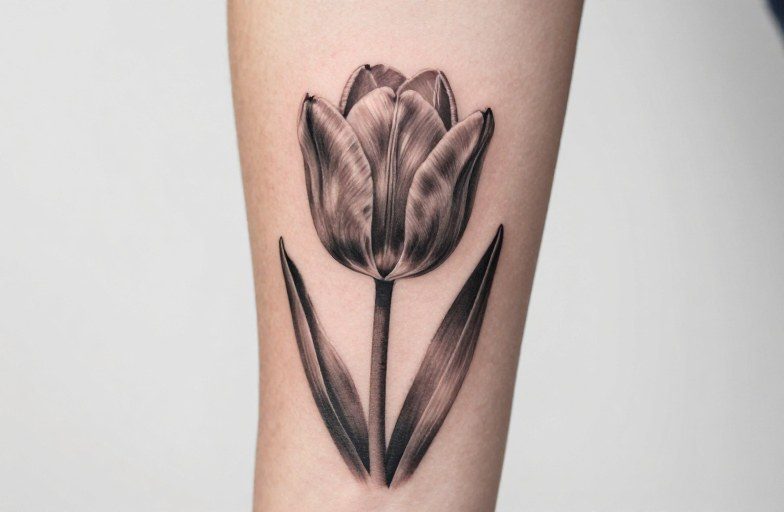
A realistic tulip tattoo reproduces the flower’s specific anatomy with photographic accuracy: the cup-shaped corona, six distinct tepals with their subtle color gradients, the slender stem’s slight curve, and the long, strap-like leaves with parallel venation. Unlike stylized or traditional floral work, this approach demands close attention to how light passes through petal tissue, how edges soften and curl, and how the bloom transitions from tight bud to full open form. The tulip’s relatively simple structure makes it an excellent subject for realism, but that simplicity also exposes every technical flaw.
Common Mistakes to Avoid
Flattening the Form
The most frequent error in realistic tulip work is treating the petals as flat surfaces rather than curved, three-dimensional forms. Each tepal has a convex outer surface and a concave inner one, with light hitting differently on each. When shading is applied uniformly across the petal, the result looks like a cutout rather than a living bloom. Good artists build form through gradual value shifts, darker at the base and where petals overlap, brightest at the highlighted ridges. The white or pale edge common on many tulip varieties must be rendered as a true value change, not left as negative space that reads as unfinished skin.
Wrong Color Choices
Tulip pigments in tattoo ink behave differently than the flower’s actual colors. Bright reds and yellows are prone to fading toward orange or pink within a few years. Purple varieties often shift toward muddy brown as the blue component breaks down faster than the red. For longevity, slightly desaturated versions hold better than hyper-saturated ones. Black and grey realism avoids this entirely, relying on value structure to suggest the flower’s color rather than literal pigment matching. Either approach works, but mixing them, partial color with partial black and grey, usually fails unless the design is deliberately planned for that contrast.
- Over-detailed backgrounds that compete with the flower’s simple silhouette
- Stems drawn too straight; tulip stems have a natural lean and slight twist
- Leaves placed incorrectly; they emerge from the bulb, not the flower base
- Scale mismatched to placement; a single tulip needs room to show its structure
Who It Suits
Placement Considerations
Realistic tulip tattoos work best on flat or gently curved surfaces where the bloom’s form won’t distort. The outer upper arm, thigh front, calf side, and ribs (for smaller pieces) all accommodate the vertical orientation naturally. The flower’s elongated proportions suit forearm lengths well. Hand and foot placement generally fails for this style; the fine detail required for petal edges and veining blurs quickly in high-wear areas, and the tulip’s delicate aesthetic clashes with the ruggedness those placements imply. Neck and face are poor choices for similar reasons of scale and context.
Skin Tone and Technique
On darker skin, black and grey realism with strong contrast reads more clearly than pale color washes that can disappear into the skin’s natural pigment. White highlights, often overused in color realism, should be applied sparingly on any skin tone; they heal yellowish and can look chalky. Tulip varieties with strong dark markings, the “broken” patterns of some historic cultivars, translate well across skin tones because the design incorporates natural dark values rather than relying solely on added shading.
Aftercare Notes
The fine detail in realistic tulip work makes aftercare particularly consequential. Heavy scabbing across petal surfaces can pull out subtle gradations, leaving patchy light areas where the ink didn’t settle. Thin lines defining leaf edges or petal veins are vulnerable to premature sun exposure, which causes them to spread and soften. During healing, the tattoo should be kept clean and lightly moisturized, never soaked or picked at. Loose clothing matters more than with bolder styles; friction across a fresh realistic tulip can lift the superficial ink that creates the soft transitions between colors or values.
- Expect 2-3 weeks of active healing before the final values settle
- Color realism often appears 20-30% darker when fresh; plan for that shift
- Direct sunlight during the first month can permanently alter light tones
- Touch-ups at 6-8 weeks are common and should be anticipated in the initial plan
Origins & History
The tulip’s association with tattooing is often linked to Dutch Golden Age still-life painting, where the flower represented both beauty and the transience of wealth. Some trace the motif to Ottoman decorative traditions, where stylized tulips appeared in textile and ceramic design centuries before European botanical illustration. In tattoo history specifically, realistic floral work gained traction with the refinement of color realism techniques in the 1990s and 2000s, when artists began translating the photographic reference common to portrait work into botanical subjects. The tulip’s clean lines and recognizable silhouette made it a natural test case for artists developing their color realism skills. Today it persists as a subject that demonstrates technical control without the emotional weight of portraiture or the cultural complexity of some animal motifs.
Cost & Sessions
Size and Complexity Factors
A single realistic tulip at palm size, black and grey, typically requires 3-4 hours of tattooing. Color adds 1-2 hours for the additional passes needed to build saturation without muddiness. Multiple blooms, a bulb and roots, or environmental elements like water droplets or background texture increase time proportionally. Large compositions with several tulips in various stages of bloom might span two or three sessions. Hourly rates for artists capable of this level of realism generally fall in the upper third of any market, reflecting the specialized skill and slower working pace. A small, competent piece might start around $400-600; substantial work can reach several thousand.
Consultation Value
Realistic floral work benefits enormously from advance planning. Reference photography of the specific tulip variety, discussion of whether the bloom should be tight or open, and decisions about stem length and leaf number all affect the composition. Artists often sketch from multiple angles to find the most structurally convincing view. This preparation time is usually built into the booking deposit rather than billed separately, but it represents real labor that distinguishes professional execution from rushed approximation.
How It Ages
Color Degradation Patterns
Realistic tulip tattoos age predictably based on their color structure. Red-dominant designs shift toward orange-pink as the cooler pigments fade faster. Yellows become paler and sometimes slightly greenish where they overlay blue undertones. Purple, as noted, muddies toward brown. Black and grey ages more gracefully, with the main risk being loss of the subtle mid-tones that create the flower’s volume; without refresh, a grey tulip can flatten into a silhouette with internal shading rather than a rounded form. The fine lines defining petal edges and leaf veins spread at different rates depending on the artist’s needle configuration and the skin’s characteristics, often becoming the first element that needs reinforcement.
Maintenance and Refreshing
After 5-7 years, most realistic tulip tattoos benefit from evaluation. Color pieces may need selective repigmentation of faded areas; black and grey often requires rebuilding of lost mid-tones. The original artist is usually the best choice for this work, having planned the initial value structure. Sun protection remains the single most effective preservation strategy, more impactful than any aftercare product during healing. A tulip tattoo that sees regular SPF application and minimal tanning can retain its character for decades; one exposed to constant UV without protection may need significant refresh within 3-5 years.
The Bottom Line
A realistic tulip tattoo succeeds when the artist understands the flower’s physical structure and the client’s skin as interacting variables, not separate problems. The style rewards patience in both execution and healing, and it demands a longer-term view of maintenance than bolder, simpler designs. Choose an artist whose portfolio shows specific botanical realism, not just general color work, and expect to collaborate on reference and composition. The tulip’s visual simplicity is deceptive; getting it right requires the full range of technical control that realism demands, applied to a subject whose every proportion is already familiar to the eye.
Frequently Asked Questions
Can a realistic tulip tattoo work in black and grey if the real flower is brightly colored?
Yes, black and grey relies on value structure to suggest color through contrast and form. A skilled artist renders the same flower by emphasizing how light interacts with petal surfaces rather than matching literal hues.
How do I choose between a single tulip and a bouquet composition?
Single blooms show structural detail clearly and suit smaller placements. Multiple tulips allow narrative stages, bud, open, fading, but require more space and cost. Consider your available skin area and whether you want the flower as focal point or part of a larger scene.
Why do some realistic tulip tattoos look like plastic flowers after healing?
This usually results from oversaturated color, too-smooth gradients without natural variation, or incorrect edge softening. Real petals have microscopic texture and slight imperfections that good artists replicate through deliberate value variation and needle technique.
Is there a best season to get a tulip tattoo for healing purposes?
Late fall through winter offers practical advantages: less sun exposure during healing, easier coverage with clothing, and reduced outdoor activities that might compromise fresh work. However, any season works with proper sun protection and care.