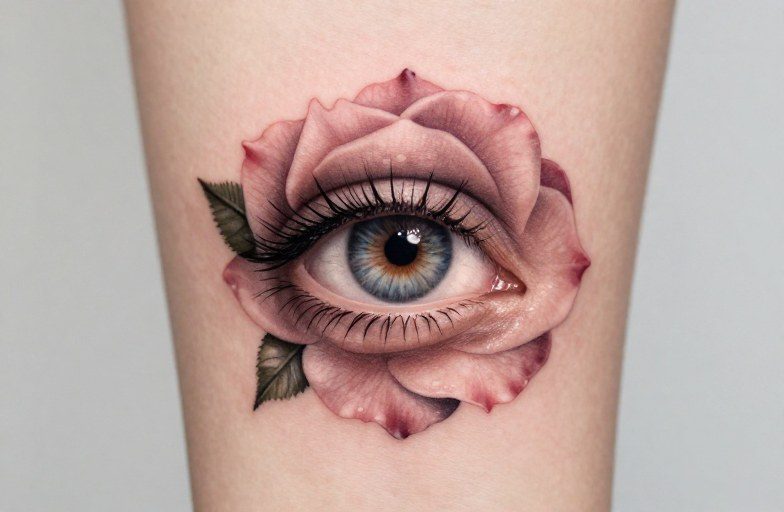
An eye in a rose tattoo merges two loaded symbols into one image: the eye as perception, protection, and truth, and the rose as beauty, love, and the fleeting nature of both. Together, they create a tension, something delicate being watched over, or perhaps beauty itself as a form of surveillance. The meaning depends heavily on how the design is handled, but the core idea is seeing clearly through illusion, whether that means romantic clarity, self-awareness, or guarding something precious.
Who Chooses This Tattoo
People drawn to this design usually want symbolism with visual weight. It’s not a casual flash choice; it tends to attract those who’ve thought about the image for a while. The overlap of beauty and vigilance speaks to specific experiences, surviving betrayal, protecting a softened heart, or simply refusing to look away from hard truths.
Emotional Resonance vs. Aesthetic Appeal
Some wearers connect the eye to a specific protective instinct: watching over a loved one, guarding their own boundaries, or acknowledging that love requires attention. Others come to it purely for the visual drama, the way a realistic eye disrupts the organic flow of rose petals creates genuine tension on the skin. Both approaches are valid, but the tattoo hits harder when there’s personal alignment between the two.
- Common motivators: recovery from deception, new romantic clarity, memorial work, gothic or surrealist aesthetic affiliation
- Less effective: choosing it because it “looks cool” without connecting to either symbol, this design needs intent to avoid feeling like a trend piece
Best Placements
The eye in a rose demands space to breathe. The detail work in the eye, iris pattern, catchlights, lid structure, needs room, and the rose petals surrounding it must flow naturally rather than crowding the focal point.
High-Detail Areas
The outer upper arm, thigh front, and chest plate offer the most reliable canvas. These flat or gently curved surfaces let the eye sit centrally without distortion, and the rose can wrap around it organically. Forearms work but require careful scaling; too small, and the eye becomes muddy within a year as lines spread slightly during healing and aging.
Challenging Spots
Ribs and inner bicep curve aggressively, which warps circular elements like irises. Hands and feet move constantly, accelerating fade and blur. The neck can work for bold, graphic versions, but realistic detail tends to compress and distort there. If you’re set on a visible spot, consider simplifying the eye to a more stylized form rather than fighting anatomy.
- Ideal: outer thigh, upper arm, chest, calf (flat panels, minimal daily flexing)
- Risky for detail: ribs, elbows, knees, fingers, feet
- Healing consideration: chest and upper arm experience less friction from clothing than thigh during initial healing
History & Cultural Roots
Neither element originates in tattoo culture specifically, which is part of why the combination feels fresh despite using ancient symbols. The eye has served as protective emblem across multiple traditions, the Egyptian Eye of Horus, the Mediterranean evil eye, the all-seeing eye in Freemasonry and on currency. The rose carries equally deep roots: Greek association with Aphrodite, Roman funerary use, Christian martyrdom symbolism, and later, the coded language of Victorian flower messaging.
Their pairing in tattooing likely emerged from the broader surrealist art tradition of the 20th century, where unexpected juxtapositions were used to jar viewers into new perception. Salvador Dalí’s eye imagery and the general surrealist fascination with displaced body parts created visual precedent. In tattooing specifically, the combination gained traction as realism techniques improved enough to make the eye convincingly three-dimensional against soft petals, something that would have read as flat and symbolic in earlier, less technically refined work.
Religious and Esoteric Connections
The eye is often linked to divine watchfulness in Abrahamic traditions, while the rose carries particular weight in Catholic iconography (the rosary, the Virgin Mary as “rose without thorns”). Some trace esoteric eye-and-rose combinations to alchemical illustration, where the rose sometimes represented the completion of a spiritual process being witnessed or judged. These layers remain available to wearers who want them, but the tattoo functions equally well without any specific religious affiliation.
Similar & Related Symbols
Understanding adjacent imagery helps clarify what the eye-in-rose specifically offers that other combinations don’t.
- Eye in triangle/pyramid: More explicitly about institutional power, surveillance, or conspiracy. Less personal, more political or cosmic.
- Eye with tears: Grief, mourning, compassion. Removes the rose’s complexity in favor of direct emotional statement.
- Rose with dagger: Beauty and pain, love and betrayal. More aggressive, less contemplative than the watchful eye.
- Eye in hand (Hamsa/Khamsa): Pure protection, often cultural or familial. The rose adds romantic or mortal dimension that the hand lacks.
- Single realistic eye: Surrealist tradition, self-portrait, or “the watcher.” Without the rose, it can feel more clinical or detached.
The eye in a rose occupies a middle space: it’s protective but not defensive, beautiful but not naive, personal but not necessarily autobiographical. That flexibility is its strength.
Common Variations & Styles
How the tattoo is executed changes its meaning as much as the symbolism itself. A crying eye in a wilted black rose reads mourning; a bright open eye in a blooming red rose reads alert passion.
Realistic vs. Stylized
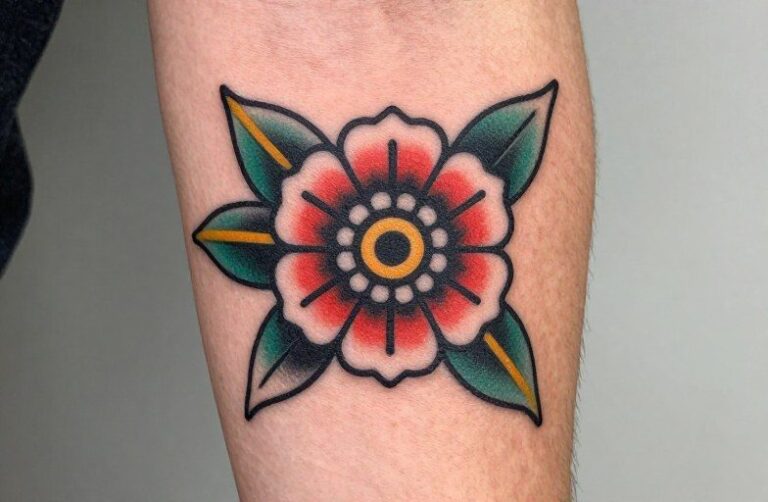
Realistic rendering emphasizes the uncanny, making the eye actually seem to see, to follow the viewer. This works best with strong contrast, detailed iris work, and careful catchlight placement. Stylized or traditional approaches (bold outlines, limited shading) shift the emphasis toward symbolism rather than illusion. Neo-traditional and Japanese-influenced versions exist but are less common; the image really thrives in either full realism or graphic boldness, with the middle ground sometimes feeling uncertain.
Single Eye vs. Multiple Elements
Some designs incorporate additional eyes within the rose’s center, or scatter smaller eyes among petals. Others add script, geometric frames, or mandala backgrounds. Each addition dilutes the central tension slightly; the pure eye-and-rose combination works because of its restraint. If you want more elements, consider whether they serve the core idea or just fill space.
- Popular additions: geometric framing (circles, triangles), mandala patterns, script banners, moth or butterfly integration
- Effective simplifications: eye as rose center only, no surrounding eye structure; eye floating above a rose rather than embedded
Color vs. Black and Grey
This choice fundamentally alters the tattoo’s emotional temperature.
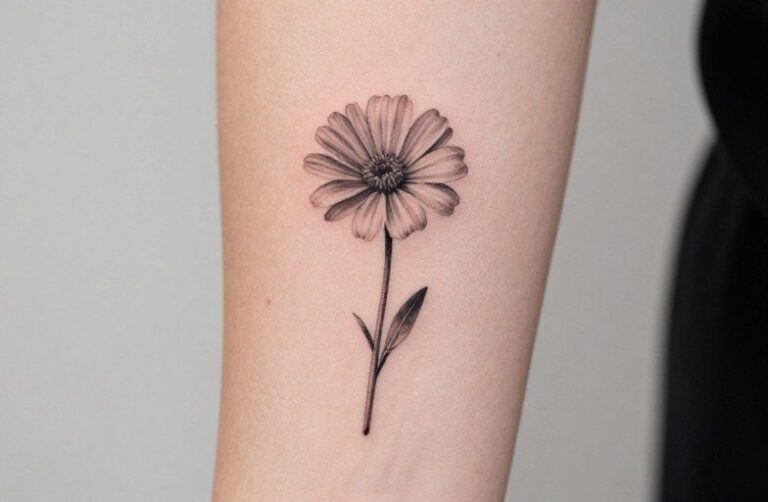
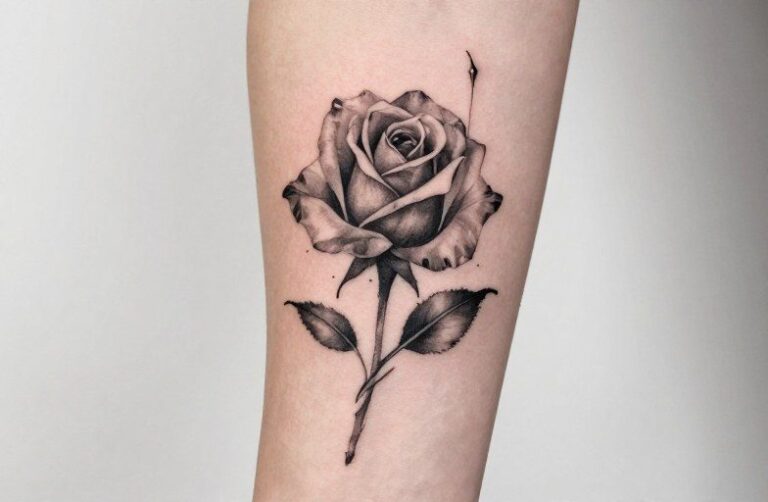
Black and grey emphasizes the eye’s sculptural quality, the way light falls across the sclera, the depth of the pupil, the architecture of lids and lashes. It ages more predictably, with less risk of color muddiness over time. The mood tends toward somber, timeless, slightly melancholic. For the rose, black and grey can suggest vintage illustration or memorial work.
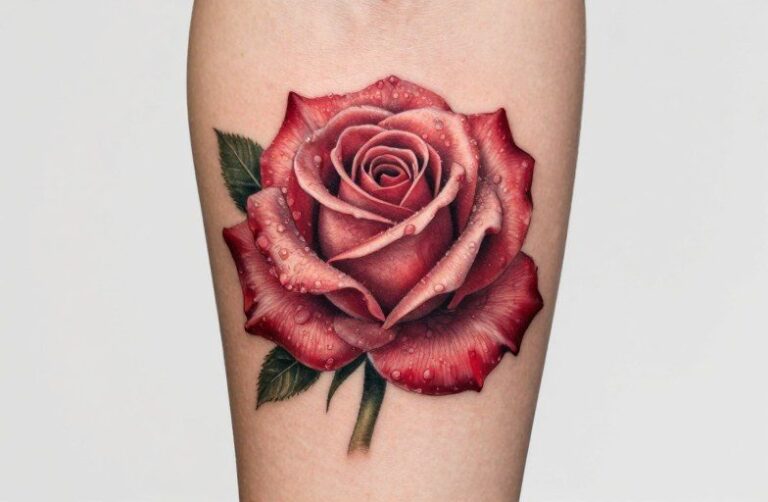
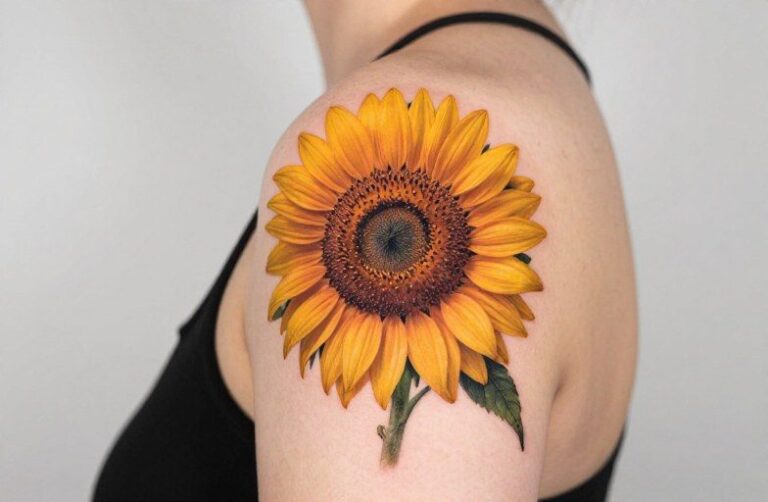
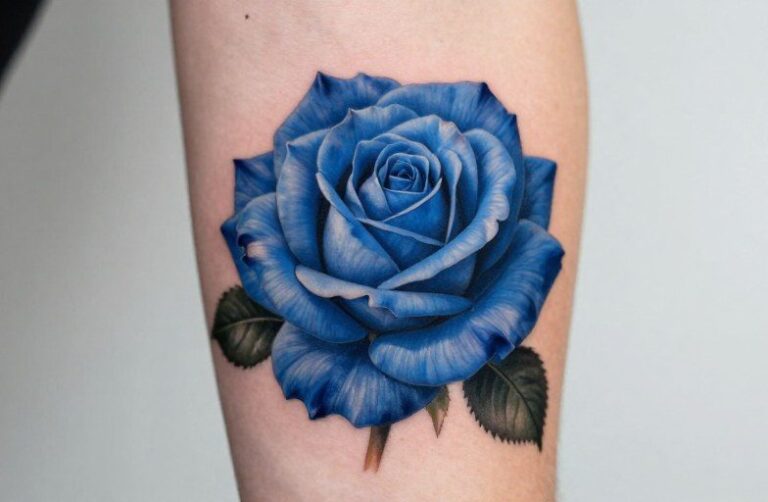
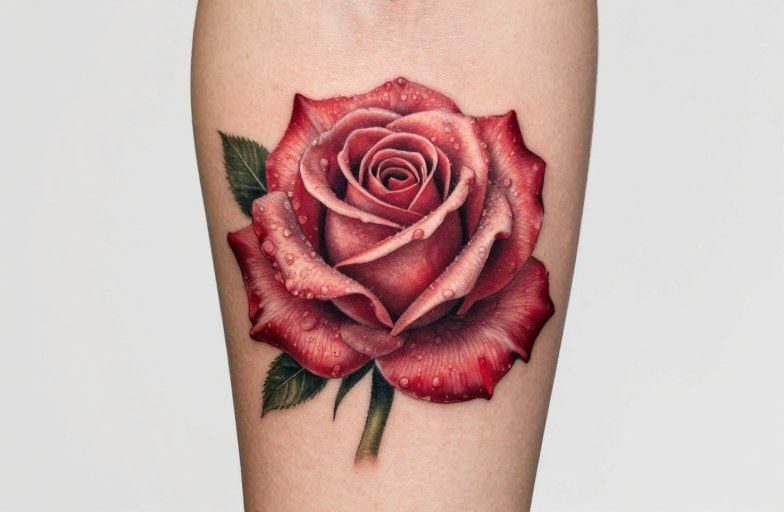
Color introduces specific symbolic language. A blue eye carries different connotations than brown or green. Red roses speak passion and blood; pink, gentler affection; white, purity or death; yellow, jealousy or friendship depending on cultural context. Color realism requires more technical skill to execute well, and the eye’s whites are particularly tricky, poorly handled, they read as grey or infected rather than luminous. Budget for a specialist if you want color realism; this isn’t a design to shop for by hourly rate alone.
- Black and grey advantages: longevity, broader artist pool, stronger contrast for the eye’s form
- Color advantages: specific symbolic coding, more immediate visual impact, rose variety reads instantly
- Hybrid approach: black and grey eye with selective color in rose only, effective but technically demanding
Final Word
The eye in a rose tattoo works when the two elements feel genuinely integrated rather than collaged. The eye should seem to belong in the rose, or the rose to have grown around the eye, however the artist solves that spatial problem determines whether the piece feels like a symbol or just a graphic. Take time finding reference images that show this specific integration done well, not just good eyes and good roses separately. The best versions make you slightly uncomfortable, which is exactly what the combination is meant to do: beauty that watches back, awareness wrapped in something seductive, the understanding that seeing clearly and loving deeply are not separate acts.
Frequently Asked Questions
Does the eye in a rose tattoo always mean someone is watching over me?
Not necessarily. While protection is one reading, many wearers intend it as self-awareness, seeing through romantic illusion, or acknowledging that beauty requires vigilance. The meaning depends on which symbol you emphasize.
Will the detail in the eye blur or fade faster than the rose?
Fine lines in the iris can spread slightly over years, especially with sun exposure or poor initial healing. The eye’s whites are particularly vulnerable to greying out. A skilled artist plans for this by building contrast that holds even as edges soften.
Is this design more popular with men or women?
It crosses gender lines more than many floral or eye designs. The combination of symbolic elements, neither purely masculine nor feminine, makes it genuinely unisex, though style execution (realistic vs. graphic) sometimes skews one way or another.
Can the eye face a specific direction, and does that change the meaning?
Forward-facing eyes create direct confrontation, meeting the viewer. Profile or three-quarter angles feel more observational, like watching something specific. Some wearers choose direction based on placement flow rather than symbolic intent, but it does shift the emotional register.