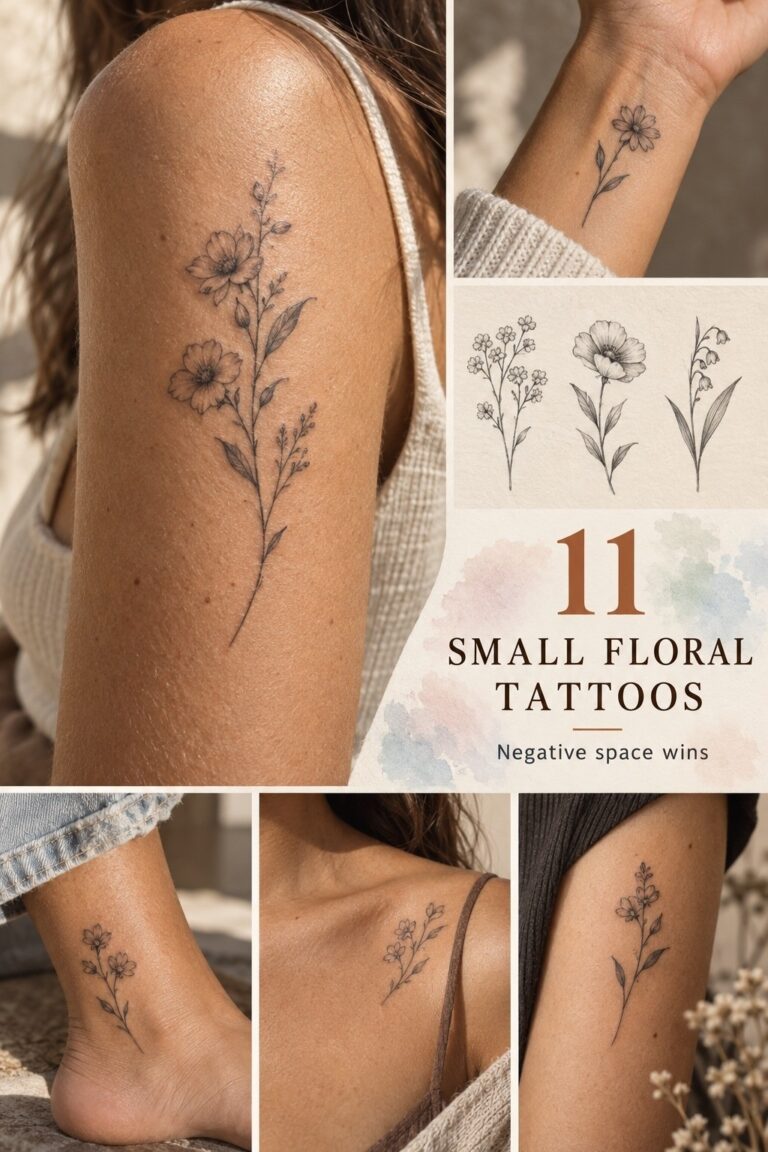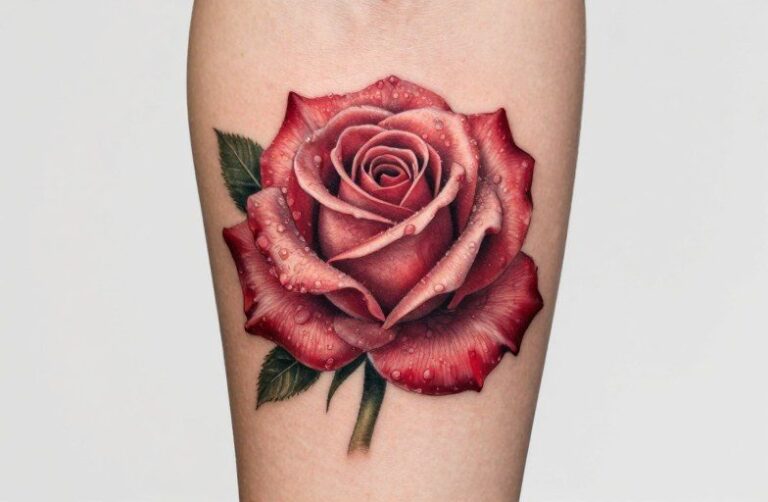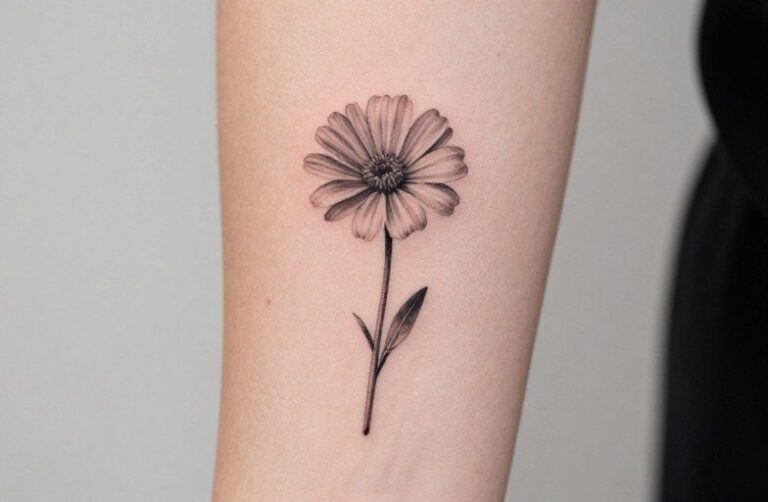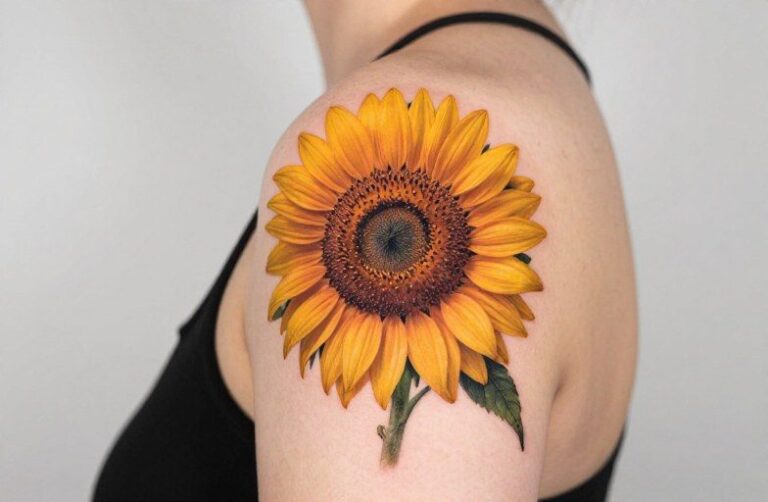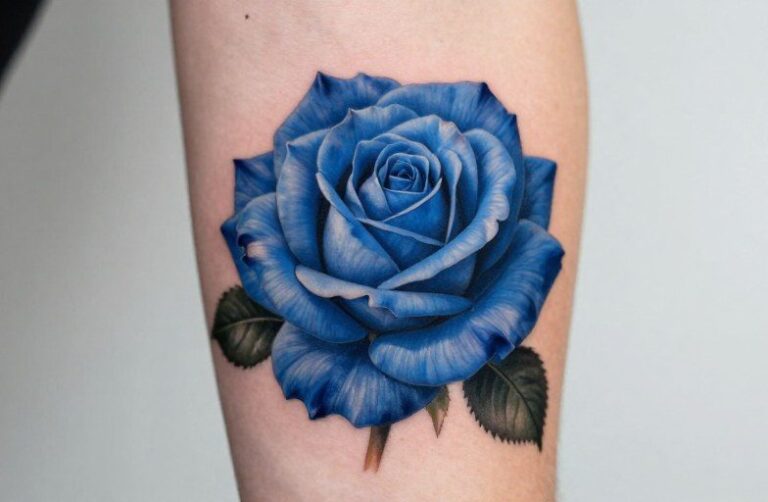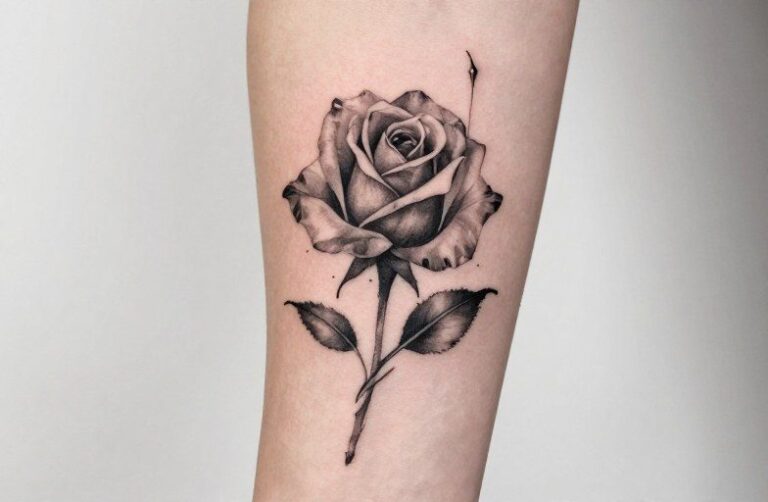
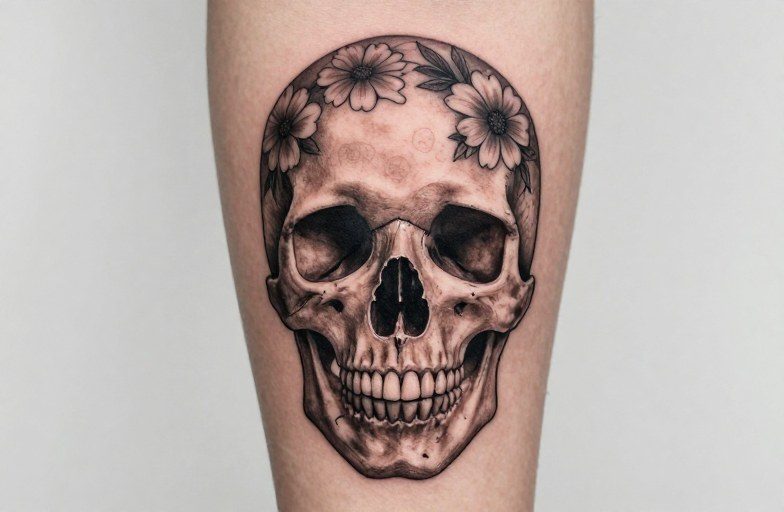
The skull with flowers tattoo lives in tension. The skull marks death, endings, the hard limit of being alive. Flowers signal growth, beauty, the persistence of renewal. Together they make a visual argument that decay feeds new life, that neither truth exists without the other. The specific message shifts with the flower type, how the skull is rendered, and where the design sits on your body.
Where the Imagery Comes From
This pairing predates modern tattooing by centuries. European memento mori art from the 16th and 17th centuries placed wilting flowers beside skulls to remind viewers that beauty and life are temporary. Mexican Día de los Muertos traditions later popularized the visual through decorated sugar skulls, or calaveras, adorned with marigolds. Those flowers matter specifically: their scent and bright color were believed to guide spirits back to the living world during the festival.
From Religious Warning to Personal Symbol
Early Christian vanitas paintings used skulls and flowers as moral warnings against earthly pleasure. Tattooing borrowed the imagery but stripped away much of the religious guilt, keeping the core tension between fleeting beauty and inevitable end. By the 1970s and 1980s, American traditional and Japanese tattoo artists had both adopted the motif, though with different visual grammar. American shops favored bold outlines and limited palettes. Japanese work built more elaborate compositions with background elements and narrative flow.
How Meaning Shifts Across Traditions
In Japanese tattooing, or irezumi, skulls often appear with cherry blossoms or peonies as part of larger narratives about impermanence, a concept often linked to mono no aware. Chicano tattoo culture favors roses with skulls to honor deceased family members, sometimes incorporating names or dates. These are not interchangeable traditions. The same visual elements carry different weight depending on whose hands build the tattoo and whose skin receives it.
How This Design Ages on Skin
Skull and flower tattoos age distinctly because the two elements behave differently under skin. Skulls rely on strong contrast: dark eye sockets, nasal cavity, teeth definition. Flowers depend on subtle color gradation and fine petal edges. This creates a maintenance challenge most people do not anticipate when they choose the design.
Line Work vs. Shading Longevity
- Black linework skulls with minimal shading hold up best over decades; the negative space, skin showing through, reads clearly even as lines soften slightly
- Heavy graywash skulls can muddy after 5-10 years, especially on areas with frequent sun exposure like forearms and calves
- Color flowers fade predictably: reds and oranges last longest, purples and pastels degrade fastest, whites yellow or disappear entirely
- Watercolor-style flower backgrounds age poorly; the soft bleeding effect becomes indistinct blur as edges spread over time
Placement Realities
High-friction areas like hands, feet, and inner biceps wear faster. Skull details, fine cracks, small teeth, delicate bone texture, are the first to blur. The upper arm outer surface and upper back or shoulder blade offer the best longevity for detailed work. Rib placements, popular for this design, stretch and compress with breathing and weight fluctuation. This can distort circular flower arrangements over time, turning careful geometry into uneven shapes.
Symbols That Sit Nearby
Several tattoo motifs occupy adjacent symbolic territory. Understanding the differences helps clarify why someone might choose skull-with-flowers over alternatives.
Hourglass with roses: More explicitly about time’s passage, less about the organic cycle of decay and growth. The hourglass is mechanical, artificial; the skull-and-flower pairing is biological, natural.
Moth or butterfly with skull: Shares the transformation and death duality but adds an active journey element, metamorphosis rather than decomposition. Often chosen by people who see themselves as changed by loss rather than merely marked by it.
Crow or raven with skull: Heavier on the death side, with the bird as psychopomp or messenger. Less balance, more ominous. The flower element softens this; its absence sharpens it.
Straight memento mori, skull alone: Pure mortality reminder, no redemption or beauty offered. Adding flowers is a choice toward hope or acceptance rather than stark warning.
Common Variations and Their Weight
The specific flower changes the tattoo’s meaning substantially. This is not decorative preference alone. It is symbolic language, and getting it wrong reads as ignorance or appropriation depending on context.
Flower Types and What They Signal
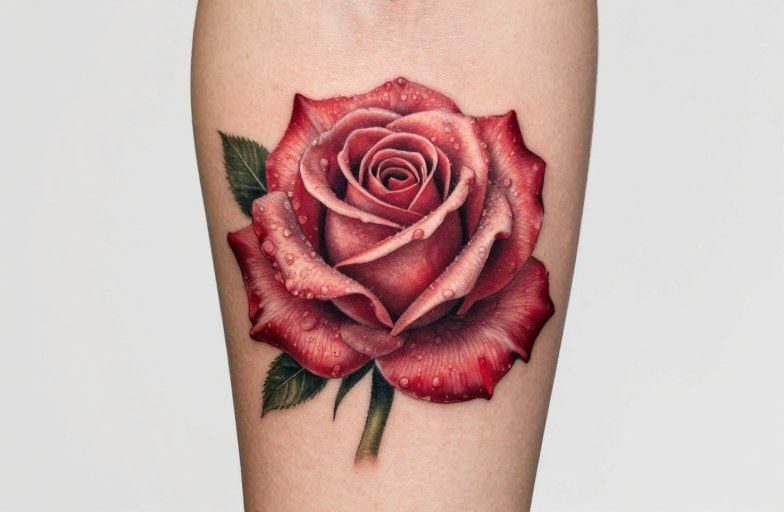
- Roses: The most common pairing, associated with love, grief, and memorial. A skull with a single rose often signals lost romantic love; a wreath of roses suggests broader commemoration
- Marigolds: Specifically Mexican heritage and Day of the Dead observance, not interchangeable with generic orange flowers
- Cherry blossoms: Japanese influence, extreme brevity of beauty, often paired with samurai or warrior skull imagery
- Lilies: Christian resurrection symbolism, purification, sometimes specifically funeral association
- Poppies: Sleep, oblivion, wartime remembrance; adds a narcotic or escape dimension to the death theme
- Forget-me-nots: Literal memorial function, small and delicate against the skull’s harshness
How the Skull Itself Changes the Read
Realistic human skulls read differently from stylized or animal skulls. Deer or ram skulls with antlers and flowers lean toward nature spirituality, hunting culture, or specific regional identity in the Southwestern United States, for instance. Human skulls keep the focus on human mortality. Sugar skull styling, decorative patterns, bright colors, jeweled eyes, celebrates rather than mourns. This is a crucial distinction that affects how the tattoo is perceived by others who recognize the tradition.
Some designs incorporate flowers growing from the skull itself: roots entering eye sockets, stems threading through bone. This visual of life literally feeding on death is the motif’s most direct expression. Others keep the elements separate but balanced, suggesting coexistence rather than causation. Neither approach is more correct, but they communicate differently.
Why People Choose This Design
The demographics here are broad, which makes stereotyping useless. The design crosses gender, age, and subculture lines more than most tattoo motifs. What unites most wearers is a specific personal experience with loss, transition, or a period of significant change.
Common Motivations
- Memorial for a specific death, with the flower type sometimes chosen for the deceased’s preference or birth month
- Survivor’s mark: illness, accident, or crisis survived, the skull representing what was faced, the flowers what grew after
- Philosophical stance: acceptance of mortality as part of living fully, sometimes after a non-lethal but perspective-shifting event
- Aesthetic attraction without deep symbolism: valid, though artists report this is less common than people assume
Placement often signals intent. Visible areas like forearms, hands, and neck suggest the meaning is meant to be shared, part of identity presentation. Hidden or partially covered placements like ribs, upper thighs, and back tend toward private significance, though this is not absolute.
Cultural Frameworks That Inform the Design
Several cultural frameworks inform how this tattoo reads, though wearers may not consciously invoke them. Being aware of these threads helps you choose more deliberately and explain your tattoo more precisely if asked.
Classical and European Threads
Greek mythology connects flowers to death through Persephone and the underworld, with pomegranate and narcissus as thresholds between life and death. The Roman Floralia festival celebrated flowers in spring, but Romans also kept skull imagery in homes as domestic memento mori. Medieval European danse macabre imagery showed death, often skeletal, interacting with all social classes, sometimes with floral garlands that mocked earthly status.
Aztec and Mexican Continuity
Aztec goddess Mictecacihuatl, Lady of the Dead, was depicted with skull imagery and associated with death and rebirth. Spanish colonization layered Catholic observance onto indigenous practice, producing the syncretic Día de los Muertos tradition. The sugar skull with marigolds is a specifically Mexican fusion, not purely indigenous or purely European. Tattoos drawing on this tradition carry that hybrid weight whether the wearer intends it or not.
Japanese folklore offers the shinigami, death spirits, and the concept of mono no aware, the pathos of things, beauty precisely because of impermanence. Cherry blossoms fall at peak bloom; skulls with sakura reference this directly. The pairing is not morbid in this framework. It is aesthetically complete.
Working With Your Artist
This design requires specific communication with your tattooer. The skull and flower elements compete for visual attention and technical approach. Decide which element should dominate, or whether true balance is your goal. Ask your artist how they plan to handle the contrast problem: dark skull against light flowers, or integrated tones that will age together rather than separating into unreadable mush.
Bring reference images from the specific tradition you are drawing from, not generic Pinterest compilations. If you want Japanese influence, show Japanese work. If you want Chicano influence, show that. Mixing visual languages without understanding them produces tattoos that read as confused to knowledgeable viewers.
Discuss touch-up strategy upfront. The flower colors will need refreshing before the black skull work does. Plan for this maintenance or choose a design that looks intentional even as the color mutes.
What to Remember
The skull with flowers tattoo works because it refuses easy resolution. It does not promise that death is beautiful, or that beauty conquers death, or that one cancels the other. It holds both truths simultaneously, which is harder to live with and more honest than either comfort alone. If you choose this design, you are choosing to carry that unresolved tension on your body. Make sure the specific flowers, the specific skull treatment, and the specific placement all serve what you actually mean to say. The visual language is ancient and crowded with meaning. Your job is to make it personal without making it careless.
Frequently Asked Questions
Do skull and flower tattoos have to be memorials?
No. While many people choose this design after loss or illness, others wear it as a philosophical statement about accepting mortality. The meaning depends on your specific flower choice, skull style, and what you tell your artist you intend.
Which flower fades fastest in a tattoo?
Whites and pastels degrade fastest, often yellowing or disappearing within a few years. Purple inks are also notoriously unstable. Reds and oranges generally last longest. Plan for touch-ups or design around this reality by placing your most vulnerable colors where they matter least to the overall read.
Can I mix sugar skull styling with non-Mexican flowers?
You can, but be aware that sugar skull visual language is specifically Mexican and carries cultural weight. Mixing it casually with unrelated flower traditions can read as uninformed appropriation. If you are not from that heritage, discuss with your artist whether your intended combination respects or exploits the source.