Tiny peony tattoo ideas can hold a private story without announcing it across your skin. I once chose a design that was too delicate for its placement, and the petals softened faster than I expected. Now I look for crisp structure, sensible scale, and a style that still feels personal after healing. These 11 ideas will help you choose with confidence!
- Let Fine-Line Detail Stay Open
- Why Does Behind-the-Ear Placement Feel So Private?
- Red Ink or Black? Choose the Mood First
- The Wrist Rule: Make One Decision Memorable
- Translate Botanical Structure Into Simple Linework
- Could the Collarbone Give the Flower Its Best Direction?
- Single-Needle Shading or Open Skin?
- The Ankle Bloom: Visible, But Not Loud
- Let Stem Script Carry the Secret
- Can a Finger Peony Stay Readable?
- Choose Minimal Dotwork for Texture, Not Decoration
1Let Fine-Line Detail Stay Open

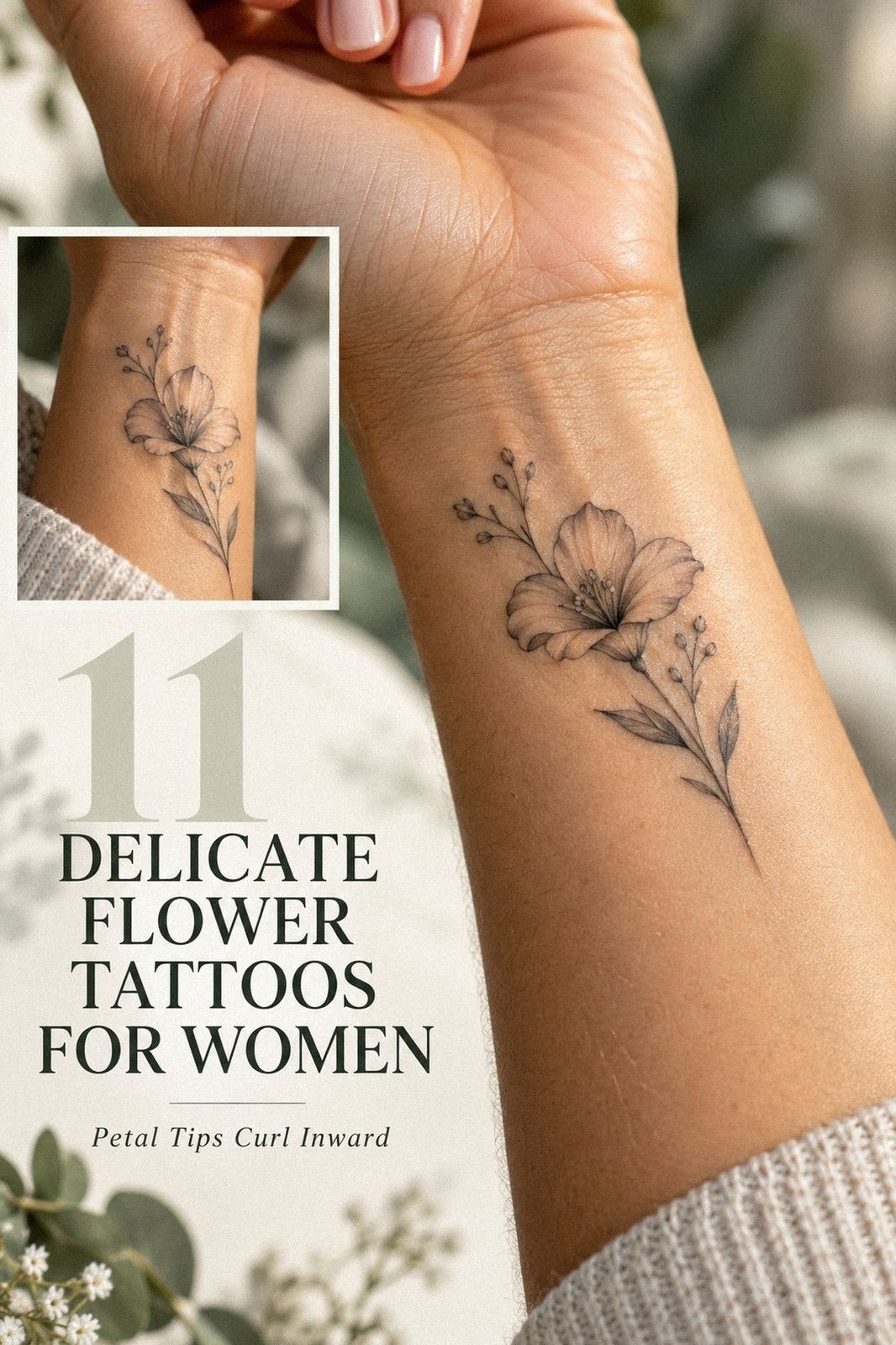
A wrist peony with hair-thin single-needle lines looks striking when the petals stay open instead of collapsing into one dark knot. On fair cool-pink skin, black ink can read crisp and sharp, especially when the artist leaves narrow channels of skin between each curl.
I’d ask for a design around 1 to 2 inches, with one central bloom and a short curved stem. That scale keeps the idea dainty without making the flower vague. If you’re drawn to graceful flowers, compare it with this small peony tattoo guide, then bring only the details that feel personal to your story.
The Fine-Line Whisper Rule is simple: every line needs a job. A clean outer contour gives your eye the flower first, while two or three interior folds suggest the petals.
More lines won’t make the tattoo more intricate. They can make it muddy.
You’ll want to ask how the artist’s healed work looks after 6 months or longer. Fresh lines can seem impossibly delicate, but healed skin tells you more. If your wrist gets regular sun, daily sunscreen matters because UV exposure can soften fine detail.
A small consultation list helps:
– One open peony bloom. – A short stem with no extra leaves. – Hair-thin single-needle lines. – Black ink with restrained negative space.
This is a meaningful, understated choice for someone who wants a visible reminder without a loud symbol. I’d skip dense petals here because the wrist moves constantly and the design needs breathing room. For the cost, that restraint is often worth it!
If you want another small botanical option, the tiny flower crown tattoo collection can help you compare curved stems and compact silhouettes.
2Why Does Behind-the-Ear Placement Feel So Private?

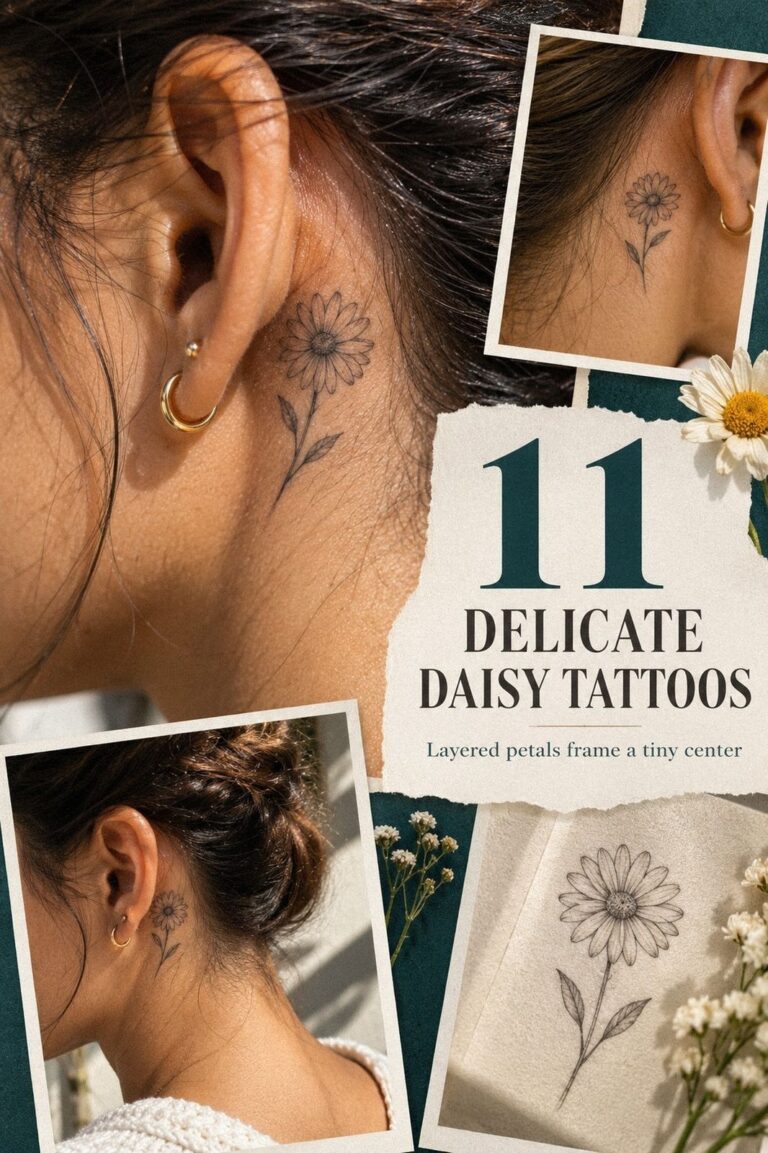
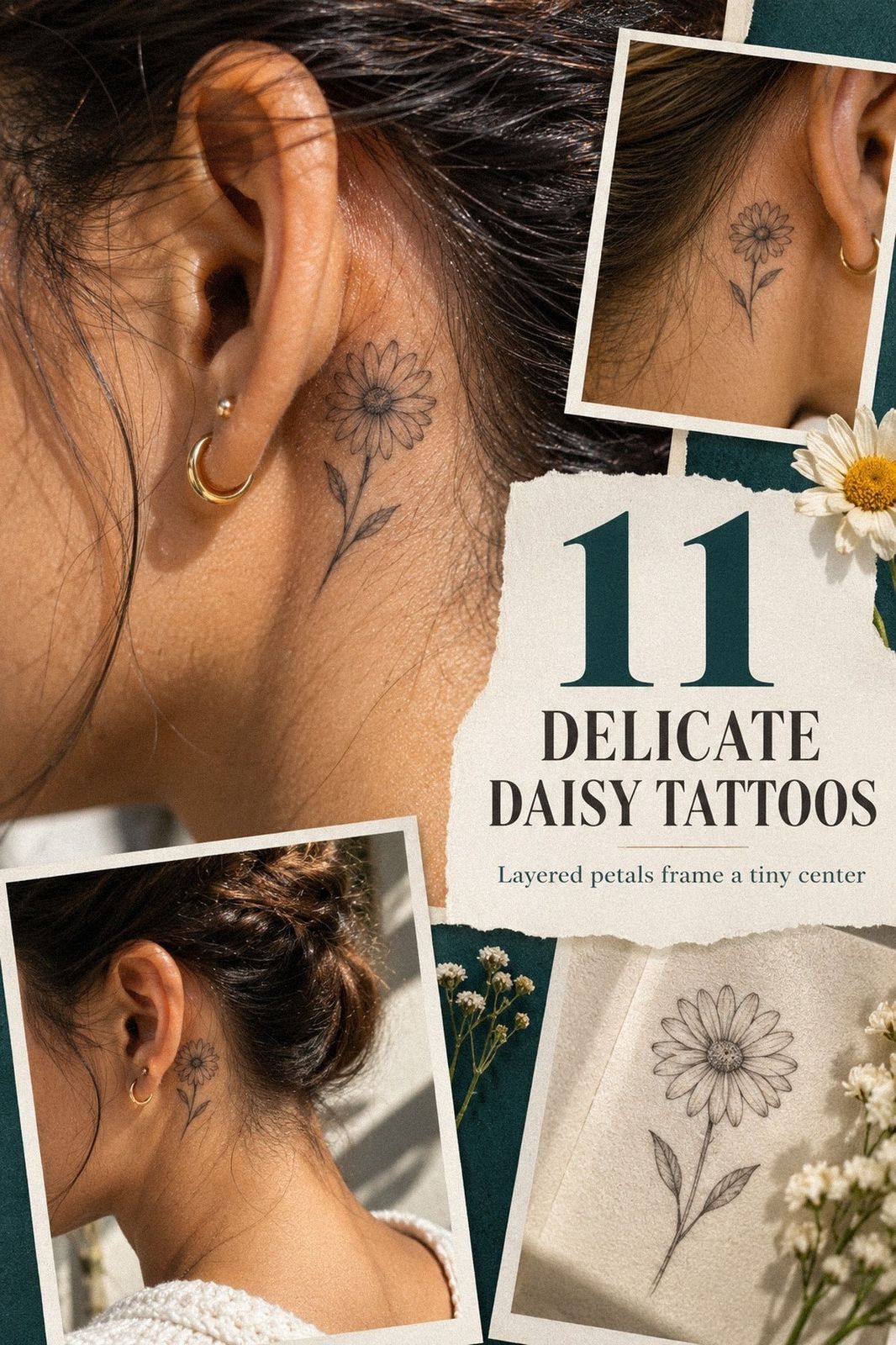
Behind the ear gives a tiny peony a secretive, feminine quality. The placement is intimate, slightly edgy, and easy to conceal with your hair when you want privacy. On medium warm ivory skin, black linework can look soft without losing the flower’s recognizable shape.
The artist should keep the bloom compact and slightly turned, rather than drawing a front-facing flower with too many overlapping petals. You’re working in a narrow area, so a 1-inch outline with one small leaf may age more cleanly than an ornate bouquet.
I’ve seen people choose this spot because the design feels like a private note. If that’s your reason, you don’t need extra symbolism piled on top. A single peony can be meaningful enough, especially when its placement carries the emotional weight.
For this location, ask about hair products, headphones, and aftercare friction. You can wash gently with a fragrance-free cleanser, pat the area dry, and follow your artist’s instructions for a light moisturizer. It’s usually surface-healed in about 2 to 3 weeks, though complete healing can take 2 to 3 months.
The Behind-the-Ear Balance means the flower should face the natural curve of your ear. A sharp vertical stem may look stiff, while a flowing stem that follows the jawline can feel more organic.
But don’t chase perfect symmetry. A slightly imperfect petal often looks more personal.
A discreet consultation note might include:
– Hair-thin single-needle lines. – A tiny black peony outline. – One graceful curved stem. – Minimal detail near the ear fold.
If you’re comparing private placements, the small peony tattoo guide can help you see how botanical shapes stay readable at a small scale. I’d choose this idea when you want an elegant tattoo that can disappear in seconds. That privacy can make the shop minimum feel worth it.
3Red Ink or Black? Choose the Mood First
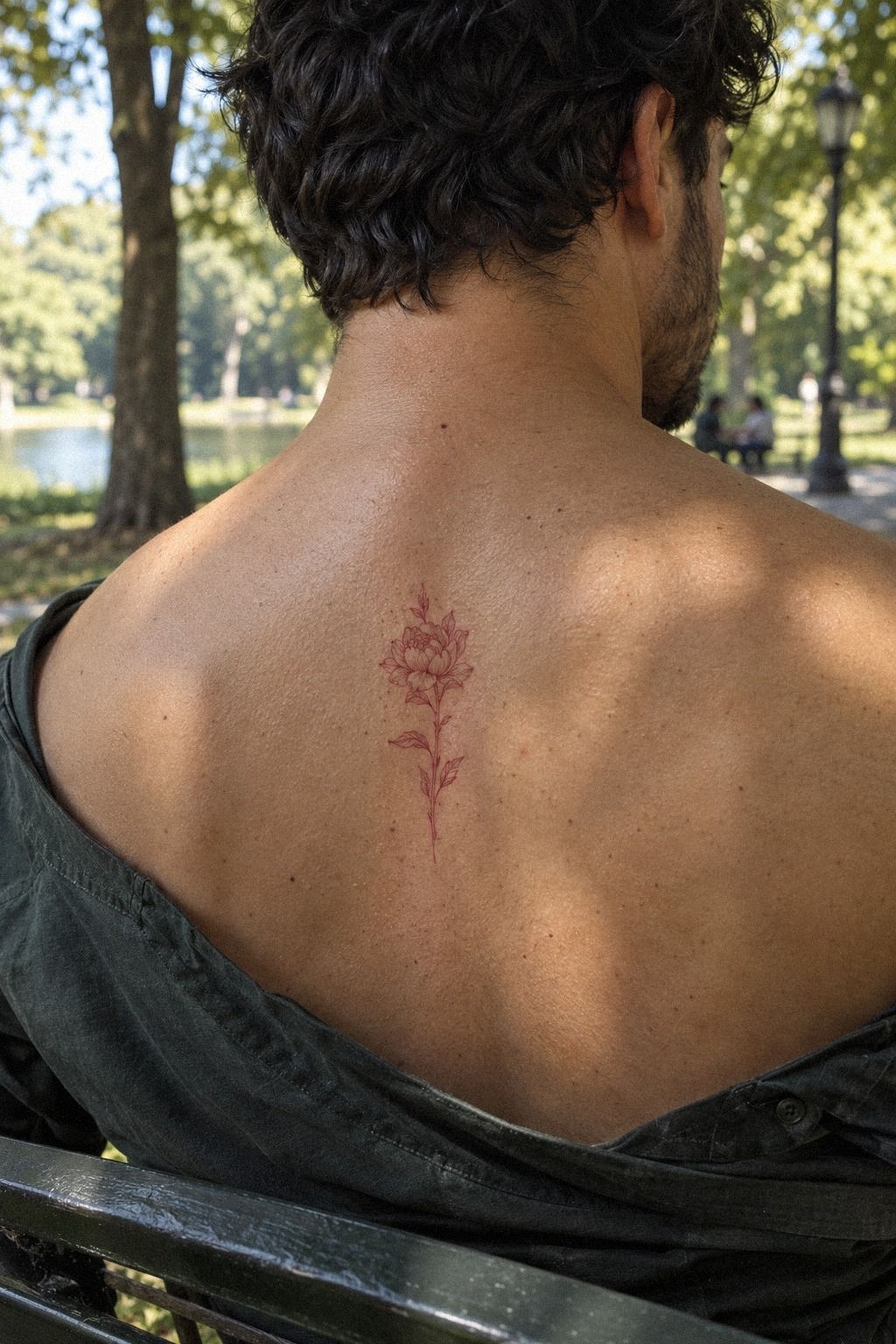
Red ink changes the mood immediately. On the spine of a man with medium olive skin, clean confident linework and even saturation can create a bold, expressive peony without needing heavy black outlines. The result feels vibrant, romantic, and more daring than a standard black design.
I’d keep the flower simple: one red bloom, a thin stem, and perhaps two small leaves. A red peony can look symbolic and powerful, but too many petals may turn into a flat patch of color. The Red Ink Anchor keeps the center strong while letting the outer petals stay readable.
You’ll want to ask your artist how they approach red pigment on healed skin. Fresh saturation can look bright, while healed color often settles into a softer red. If you’re choosing this for a first tattoo, ask to see healed red work in natural light, not only studio photographs.
The spine isn’t the easiest placement. It sits close to bone, and the skin moves as you bend, breathe, and twist. Many people find areas over the ribs, sternum, feet, hands, and spine more uncomfortable than the forearm, thigh, or shoulder.
A simple consultation note could include:
– Even red ink saturation. – Clean, confident linework. – A narrow central stem. – No black shadow competing with the color.
And yes, you can keep the design private even though red feels noticeable. A 1-inch flower between the shoulder blades may be covered most days. I’d skip bright red if you won’t protect the tattoo from sunlight, since UV exposure can fade color faster.
For more symbolism before you commit, read the peony tattoo meaning guide. Your reason matters more than whether the shade is currently fashionable!

4The Wrist Rule: Make One Decision Memorable

A unique wrist peony works best when the design has one memorable decision.
5Translate Botanical Structure Into Simple Linework
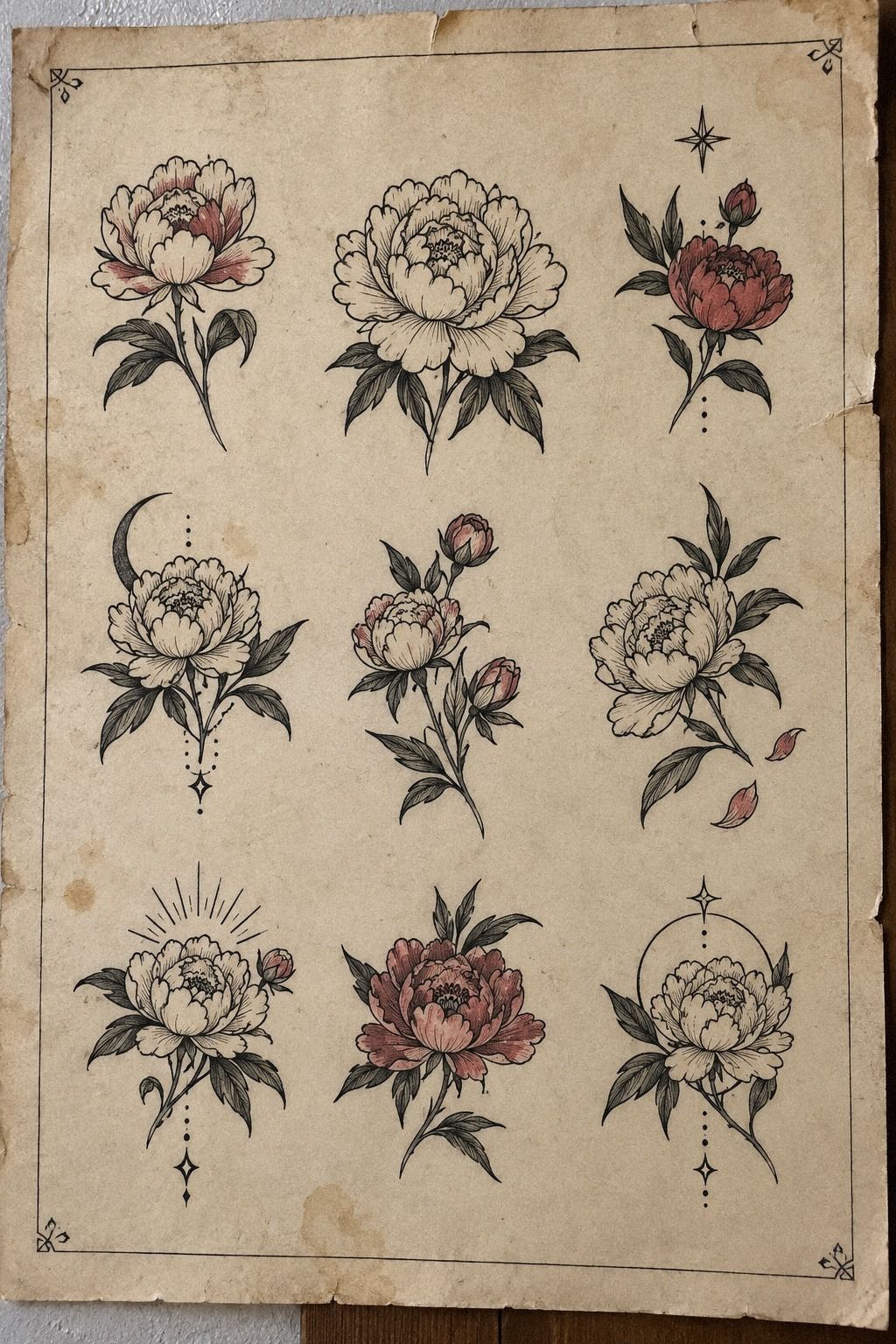
A traditional tattoo flash sheet on aged off-white paper gives this idea a classic, almost archival feeling. Several hand-drawn fine-line peonies can show different directions, petal shapes, and stem choices before you settle on one. The presentation itself feels vintage and stylish.
Look for botanical linework that respects the structure of a peony. The flower should have layered petals, but each layer needs a clear opening. A few leaves can make the design feel organic, while too many will push a tiny tattoo toward visual noise.
The Botanical Translation Rule asks you to simplify without flattening. You’re not copying a photograph.
You’re keeping the silhouette, the petal rhythm, and the way the stem supports the bloom. That can make a small tattoo more expressive than a miniature realistic flower.
If you’re choosing from a flash sheet, ask whether the artist can adjust the scale without changing the line weight. Very fine lines may look crisp at 2 inches and disappear when reduced to 1 inch. Your artist should be honest about that tradeoff.
A useful flash-sheet checklist:
– Aged off-white paper reference. – Black botanical sketches. – Flowing stems. – Clear petal separation. – One bold structural contour.
If you love the symbolic side, compare the flower with the Japanese peony tattoo meaning guide. I’d pick a botanical version when you want the tattoo to feel classic, refined, and connected to plant form rather than trend language.
The strongest flash designs don’t need extra decoration. One graceful bloom can carry the entire idea, and that simplicity can be a smart budget choice.
A second symbolism reference, the flower tattoo meaning guide, may help if the peony represents a personal transition rather than a traditional association.
6Could the Collarbone Give the Flower Its Best Direction?

A collarbone peony can look elegant because the placement already gives the flower a natural line to follow.
7Single-Needle Shading or Open Skin?

Single-needle shading can give a rib peony a soft, ethereal depth without turning it into a heavy black flower. On fair cool-pink skin, hair-thin lines and restrained gray shading can suggest curled petals while keeping the overall tattoo minimal.
The key is restraint. You’re not asking for a miniature portrait of a peony.
You’re asking for a few shadows where petals overlap, perhaps near the center or beneath one outer fold. The Single-Needle Shadow Rule keeps the darkest area small so the flower doesn’t become a gray blur.
Rib placement can be uncomfortable because the skin is close to bone and moves with breathing. If you’re nervous, tell the artist before the stencil is placed. You can pause, adjust your position, and make the session manageable.
I’d ask for a healed photograph of similar gray shading. Fresh gray can look dramatic, while healed shading often softens into a quieter mark. That softer result may be exactly what you want, but you should know the difference before committing.
A strong design brief might say:
– Tiny peony on the ribs. – Hair-thin single-needle lines. – Soft gray shading under two petals. – No dense fill. – A short, slightly curved stem.
Your tattoo can be intimate without being hidden forever. If you want more context around the flower’s symbolism, the peony flower tattoo meaning reference gives you another place to think through the story.
I’d skip full gray shading on a very tiny rib design. It may look polished at first, but open skin and a few intentional shadows usually age more cleanly. That tradeoff is worth discussing before you pay.
8The Ankle Bloom: Visible, But Not Loud

An ankle peony feels dainty, playful, and slightly raw because the placement is visible but not constantly on display.
9Let Stem Script Carry the Secret
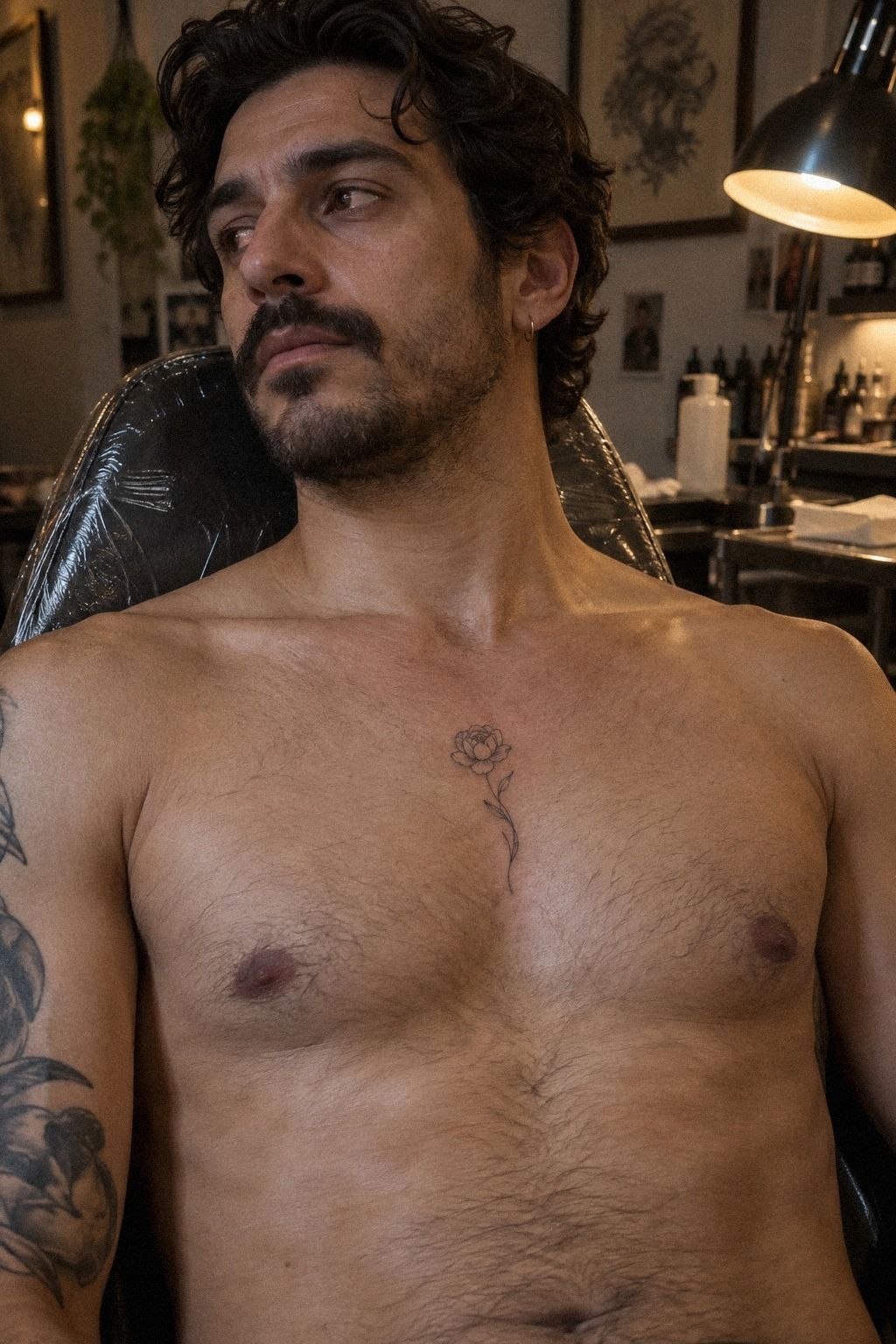
A sternum peony with script worked into the stem can feel meaningful, expressive, and quietly empowering. The design should stay narrow and flow vertically rather than spreading across the chest.
Your script might be a name, date, initial, or one short word. I’d keep it small enough to read as part of the stem, not as a separate label attached to the flower. The Stem Script Principle says the lettering should support the bloom’s movement instead of competing with it.
Sternum placement is more sensitive than the forearm or shoulder because the skin is close to bone. You’ll also want to consider clothing, exercise, and how the stencil sits when you breathe normally. A design that looks centered while holding your breath isn’t correctly placed.
Ask the artist to show the script at its intended healed size. Tiny letters can soften over time, particularly if the strokes are packed too closely. You’re better off with fewer letters and more space than a longer phrase nobody can read.
A personal reference could include:
– One fine-line peony. – Narrow vertical stem. – Small handwritten script. – Black ink with open spacing. – No extra ornamental border.
For symbolism, you can read about yin-yang flower tattoo meaning if your design represents balance or two sides of one story. I’d choose this idea when the words matter as much as the flower, but I’d skip a full sentence because the sternum doesn’t give tiny lettering much room.
The best script feels discovered, not announced. That’s why this design can stay private even when someone sees it. If the artist’s quote includes custom lettering, ask what part of the cost reflects that work.
A personal initial can make the tattoo feel iconic without explaining anything. If you’re unsure about adding text, test the flower alone first and compare it with the peony tattoo meaning guide.
10Can a Finger Peony Stay Readable?
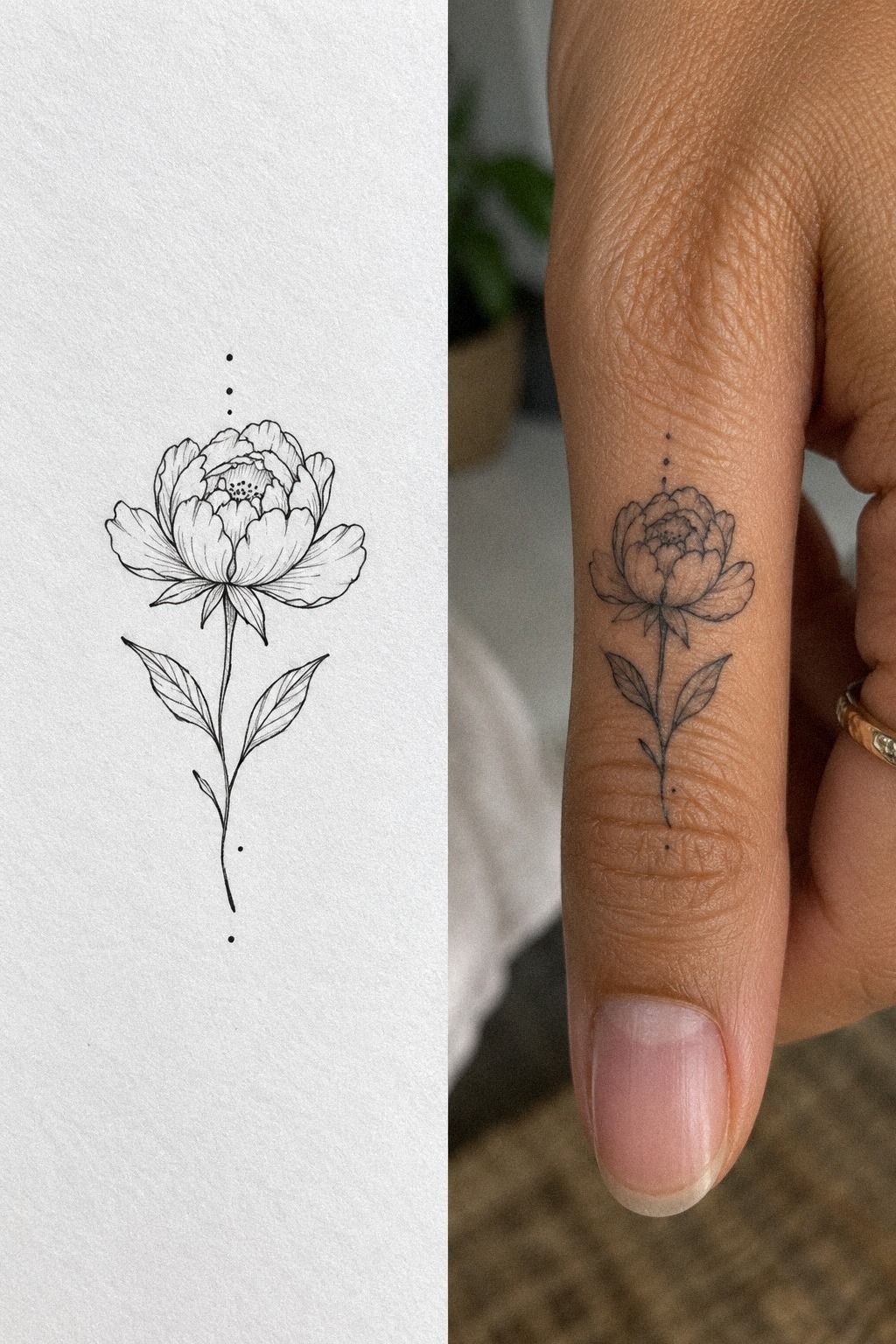
A finger peony needs unusually clear planning because the area is small, exposed, and constantly moving.
11Choose Minimal Dotwork for Texture, Not Decoration

Minimal dotwork gives an inner forearm peony a crisp, almost graphic character. On deep brown skin with a warm undertone, stippled shading can create depth around the flower’s center while leaving the outer petals open and readable.
The artist should use dots as structure, not decoration. A few carefully spaced marks beneath the petals can suggest shadow. A dense field of dots may overwhelm a tiny design, especially if the flower is under 1 inch.
The Minimal Dotwork Grid is a useful way to judge the stencil. Look for three visual levels: open skin, light stippling, and one darker center.
You’re creating contrast through spacing. That can make the peony feel intricate without making it heavy.
The inner forearm is often more tolerable than the ribs, sternum, hands, or feet, though everyone’s experience differs. If you’re choosing your first tattoo, this placement gives you a readable design and a relatively practical aftercare area.
Try a reference set with:
– Stippled black ink. – Open outer petals. – A crisp central shadow. – One flowing stem. – No solid background.
You can compare this with the Japanese peony tattoo meaning guide if you want the dotwork to carry a more traditional feeling. I’d pick this option when you want a timeless, understated tattoo with texture that doesn’t rely on color.
The finished piece should look intentional from arm’s length. If every dot demands a close inspection, the design is probably too busy. That kind of restraint is usually worth the money.
For a softer variation, compare the dotwork with the watercolor peony tattoo guide, then decide whether you prefer texture or color.
Before You Book a Tiny Peony Tattoo
Start with the feeling you want the flower to carry. It might be sacred, romantic, haunting, or simply personal. The meaning doesn’t need to be obvious to anyone else.
Bring references that show structure, not just a finished tattoo. A close-up can help your artist understand petal separation, stem direction, and the amount of negative space you prefer.
You’ll also want to decide whether the tattoo should be visible every day. A forearm or collarbone placement feels expressive, while the ankle or area behind the ear can stay more discreet.
Before paying a deposit, check the artist’s healed floral work, studio hygiene, and consultation process. A polished portfolio matters, but a transparent conversation matters just as much.
How Size Changes the Result
Tiny doesn’t automatically mean easier. A small peony still needs enough room for the petals, center, and stem to remain distinct after healing.
A slightly larger design may offer better value than squeezing intricate detail into a shape that’s too small. Ask your artist to show two stencil sizes and compare them from normal viewing distance.
The best scale is the smallest version that still looks intentional. That may be 1 inch for a simple outline or closer to 2 inches for layered petals and shading.
If you want the design to remain readable for years, don’t let the word “tiny” decide everything. A meaningful tattoo deserves enough space to keep its silhouette.
Where Meaning Lives in a Private Flower
A peony can represent love, grief, recovery, family, luck, or a chapter you’re not ready to explain. Its meaning can stay yours even when the image is visible.
I like symbolic tattoos that don’t over-explain themselves. A single bloom can feel powerful without a quote, date, or additional symbol.
If you’re still deciding what the flower means to you, the peony tattoo meaning guide may help you sort through traditional associations before you commit.
You can also compare the yin-yang flower tattoo meaning guide if your story involves balance, contrast, or two connected people. I’d choose the reference that helps you name your own reason, not the one with the most dramatic symbolism.
Black Ink or Color?
Black ink gives you a crisp, classic foundation and often makes a tiny outline easier to read. Red can feel vibrant and expressive, while muted color creates a softer mood.
Your choice should account for skin tone, sun exposure, and the artist’s healed portfolio. Fresh color can look striking, but healed examples reveal the real result.
If you’re comparing options by budget, ask what the pigment choice changes in the quote. A simple design can still be stylish and meaningful without adding color.
A black outline may be the most understated choice for a private peony. Color can be bold and empowering, but it should support the story rather than distract from it.
What I’d Ask at the Consultation
I’d ask to see healed floral work at a similar size. I’d also ask how the artist adjusts line weight for the chosen placement and skin tone.
You can ask whether your reference needs simplifying, whether the stencil can be moved, and how long the session should take. Those answers help you judge the artist’s portfolio more realistically.
A good consultation should leave you feeling informed, not pressured. If the artist dismisses questions about healing, cost, or placement, I’d keep looking.
I’d also ask whether the artist has worked with your skin tone and whether the chosen details are realistic for the placement. Clear answers are a meaningful part of the decision.
A Budget That Still Feels Worth It
A tiny tattoo can still have a shop minimum, custom drawing fee, color charge, or touch-up policy. Ask for the complete quote before booking so the final cost doesn’t surprise you.
I’d rather save for a skilled artist than choose the cheapest available appointment. The goal isn’t to spend the most. It’s to protect the long-term value of a design you’ll carry every day.
If you need to reduce the budget, simplify the petals, remove script, or choose black ink. Those changes can preserve the core idea without making the tattoo feel generic.
The right tattoo can be dainty and affordable without being rushed. Ask what’s included in the price, whether a deposit is refundable, and whether future touch-ups have a separate fee.
Aftercare That Protects Fine Detail
Follow your artist’s instructions for washing, moisturizing, sun protection, and activity. Don’t pick at peeling skin or judge the final design while it’s still irritated.
The surface commonly heals in about 2 to 3 weeks, while complete healing can take roughly 2 to 3 months. Gentle aftercare gives fine lines and delicate shading the best chance to settle cleanly.
Keep friction in mind during the early days. Socks, tight clothing, headphones, and repeated movement can affect comfort depending on the placement.
Avoid judging the tattoo during the first few days, when swelling and irritation can change how the lines appear. Your artist’s written instructions should take priority over generic advice.
Why I Still Prefer Small Peonies With Room To Breathe
I’ve changed my mind about tiny tattoos over the years. At first, I thought more detail proved that a design was thoughtful.
Then I watched a crowded flower lose its clarity while a simpler bloom kept its shape. That was the lesson I needed: a private tattoo doesn’t need to hide its structure.
It needs enough breathing room for the structure to survive.
For a tiny peony, I’d rather see one strong silhouette than twelve fragile petal marks. You’re choosing a design that has to live through movement, sunlight, washing, and the ordinary friction of your life.
That means placement matters as much as the drawing. A delicate wrist piece, an ankle bloom, and a sternum design won’t age under the same conditions.
I also think people underestimate how personal restraint can feel. A single flower may represent grief, family, recovery, love, or a season you don’t want to explain.
You don’t have to add a date, a quote, or a second symbol for the meaning to count. Sometimes the decision to keep a story private is the most powerful part.
The practical side matters, too. Ask to see healed work.
Ask about line weight. Ask whether your chosen scale gives the petals enough separation.
If you’re unsure, use a stencil and wear it for a few hours. Does it still feel like you when you stop looking at it every five minutes?
That answer is useful.
My own rule is simple: choose the smallest design that still reads clearly, not the smallest design an artist can physically tattoo. There’s a difference.
The first feels intentional. The second can become a regret.
The Questions Worth Answering First
How much does a tiny peony tattoo usually cost?
A tiny peony tattoo usually costs about $100 to $300 in the United States, though a shop minimum may be around $50 to $100 and hourly rates often fall near $100 to $250. Your artist, region, placement, color, and detail level will affect the quote. A clear consultation prevents surprises.
Is a tiny peony tattoo a good idea for a first tattoo?
Yes, if you choose a readable size and a placement you can care for easily. The forearm, upper arm, thigh, and shoulder are often more tolerable than ribs, feet, hands, or sternum. A simple black design gives you a clear first experience without requiring a long session.
How do I choose a tattoo artist for a tiny peony tattoo?
Look for clean linework, healed photographs, and a portfolio that includes floral tattoos in the size you want. You should also ask about studio hygiene, aftercare, and how the artist handles darker skin tones. A healed portfolio is more useful than a gallery of fresh tattoos.
How much do tiny peony tattoos hurt?
Pain varies, but ribs, feet, hands, sternum, and areas close to bone can feel more intense. The forearm, thigh, and shoulder are often more tolerable.
Your session may be short, but placement still matters. Good communication lets you pause when you need to.
How long does a tiny peony tattoo take to heal?
The surface commonly heals in about 2 to 3 weeks, while complete healing can take roughly 2 to 3 months. Wash gently, moisturize as directed, and avoid swimming and strong sun during early healing. Your artist’s instructions should take priority over generic advice.
What’s the best placement for a tiny peony tattoo?
The forearm offers visibility and practical aftercare, while behind the ear or the ankle can feel more private. For long-term clarity, avoid placing extremely fine details where there is constant friction. Your preferred placement should match your lifestyle, not only the photo.
Can I do a tiny peony tattoo myself on a budget?
No, tattooing yourself isn’t a safe budget option. Save for a licensed artist, ask about the shop minimum, and simplify the design if needed.
A small, clean peony usually makes more sense than forcing complex detail into a cheaper session. Safe technique is worth protecting your skin for.
Where I’d Start First
If I had to pick one, I’d start with the tiny peony on the inner forearm. It’s visible, easier to care for, and gives fine lines enough room to stay readable. Pin that reference for later and compare it with this watercolor peony tattoo guide before booking.
I’d also look through the small peony tattoo guide and the flower tattoo meaning reference before making the final choice. The right design should feel timeless, personal, and clear enough to remain yours.
If privacy matters most, I’d compare the inner wrist, behind-ear, and ankle options. If readability matters most, the inner forearm gives you more room to preserve petal separation.
The strongest choice is the one that still feels personal after the first excitement fades. Choose the flower, placement, and scale that let your story stay yours. That kind of restraint can be quietly powerful!