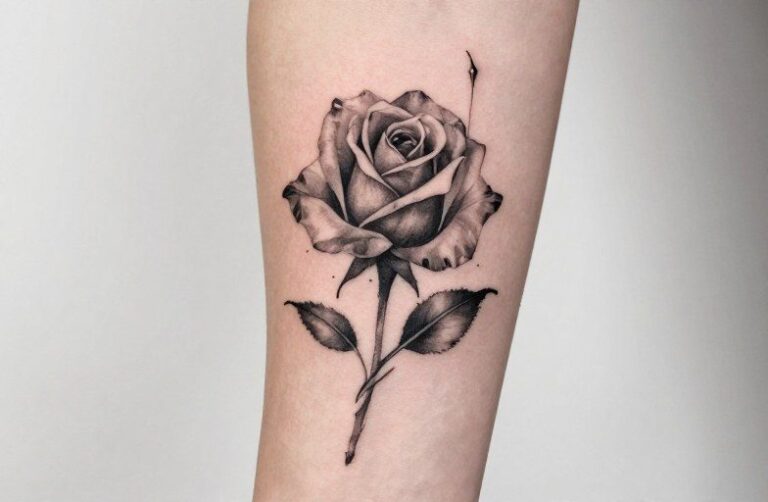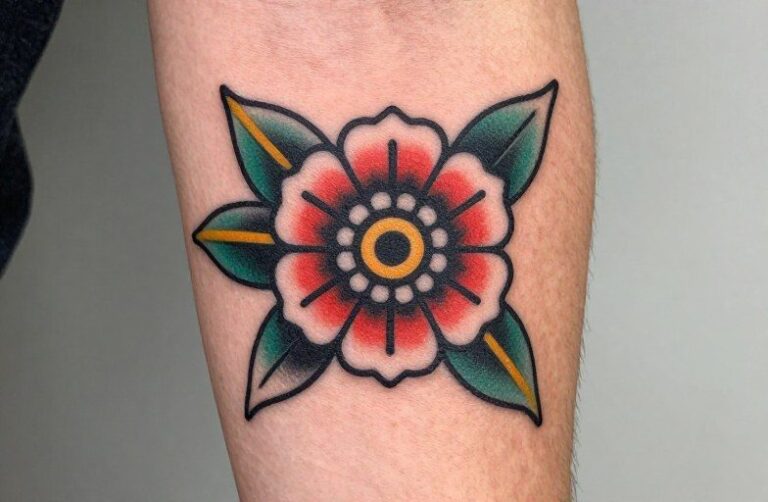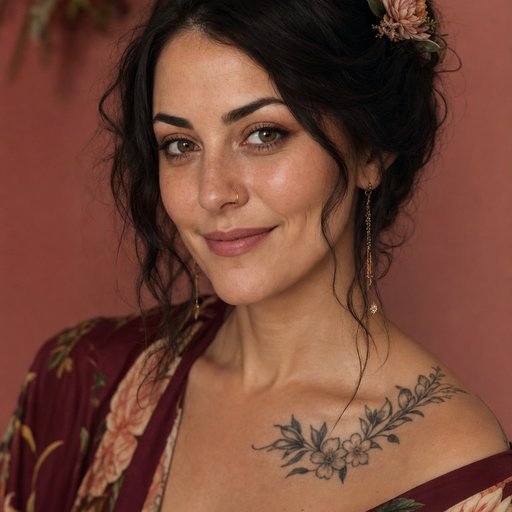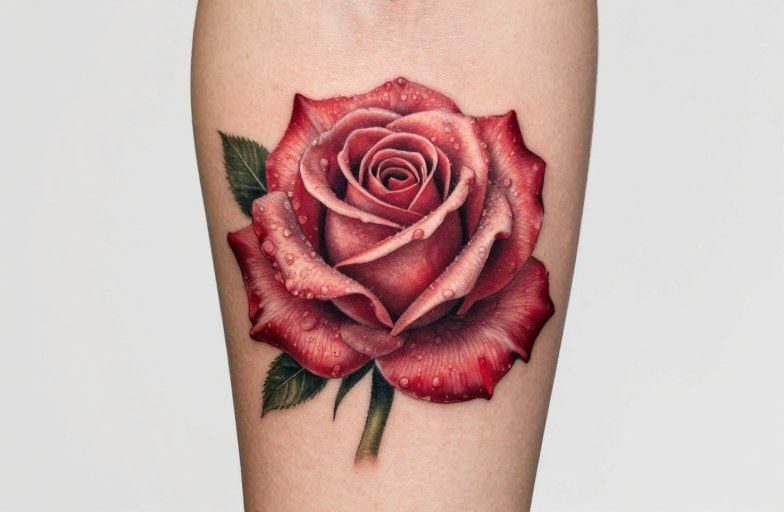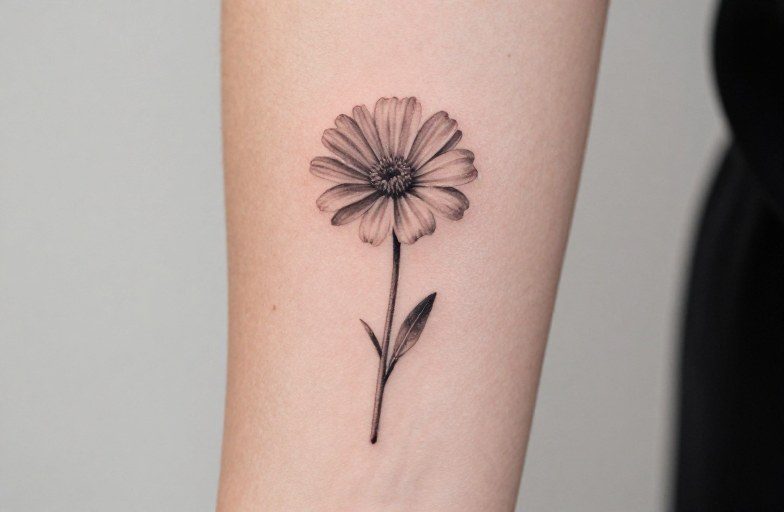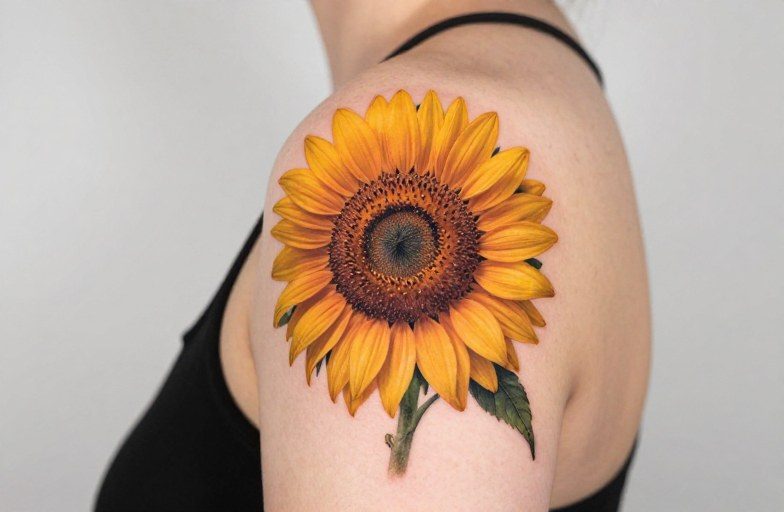
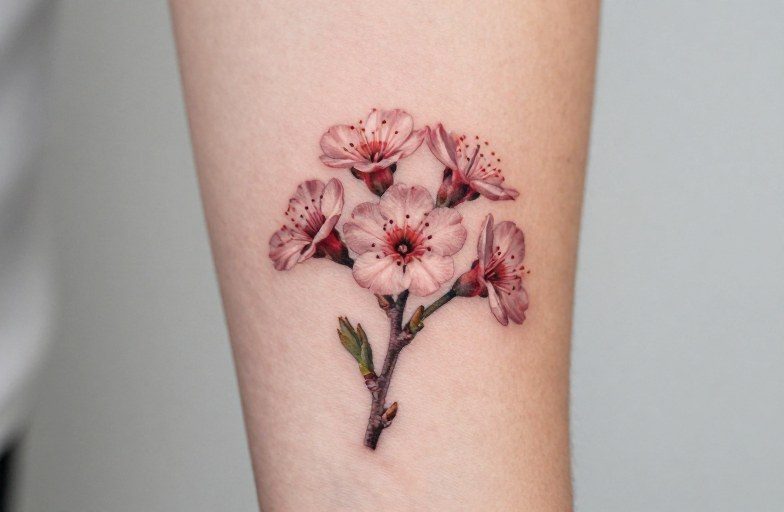
The hawthorn as a May birth flower tattoo represents hope, protection, and the peculiar beauty of things that guard themselves. Unlike softer floral choices, this small tree carries thorns beneath its blossoms, making it a symbol for people who have learned to protect their tenderness without abandoning it entirely. For those born in May, it anchors personal identity to a plant that thrives in hedgerows and boundary lines, neither fully wild nor domesticated.
Symbolism & Core Meaning
The Thorn-and-Flower Paradox
Most birth month flowers lean into pure positivity: daisies for innocence, roses for love. The hawthorn refuses that simplicity. Its white or pink clusters bloom on wood that carries inch-long thorns capable of drawing real blood. This duality runs through centuries of folklore, associated with both bridal garlands and barriers against evil. A hawthorn tattoo suits someone who recognizes that vulnerability and defense aren’t opposites but partners. The visual weight usually falls on the blossom itself, with thorns suggested rather than dramatized, though some designs reverse this emphasis for personal reasons.
May’s Specific Claim
As a birth flower, the hawthorn connects to the month’s liminal quality: spring established but summer not yet arrived. The tree flowers briefly, intensely, then sets to fruit. This compressed cycle resonates with people who value intensity over longevity, or who have experienced pivotal transformations that didn’t announce themselves gradually. The May association also ties to Beltane and older European celebrations of fertility and fire, connections some wearers reference explicitly, others carry unknowingly.
Similar & Related Symbols
Birth Flower Neighbors
The lily of the valley shares May billing and offers a useful contrast. Where the hawthorn defends, the lily of the valley yields, delicate, bell-shaped, toxic if consumed. Pairing the two in a tattoo creates a dialogue between visible and hidden protection, between thorns and poison. Some choose this combination specifically for that tension, placing the lily lower on the body and the hawthorn branch arching above it.
Botanical Cousins
Blackthorn, crabapple, and wild rose occupy similar symbolic territory, European hedgerow plants that flower fiercely on armed wood. The blackthorn’s darker berry and more wicked thorns push toward aggression; the wild rose softens toward romance. The hawthorn sits in the middle, which makes it harder to read at a glance and more interesting as a long-term wearing. Someone who finds roses too common or blackthorn too severe often lands here.
- Blackthorn: darker ink palette, more defensive symbolism
- Wild rose: similar structure, softer cultural reading
- Rowan: another European protective tree, red berries instead of white flowers
- Apple blossom: same family (Rosaceae), no thorns, gentler associations
Personal & Modern Meanings
Recovery and Reclamation
Without claiming any therapeutic property for the image itself, the hawthorn’s specific combination, beauty that hurts to reach, speaks to experiences of guarded recovery. People who have rebuilt boundaries after violation or exhaustion sometimes choose this plant over more explicitly triumphant imagery. The tattoo doesn’t declare victory; it acknowledges the work of remaining open while remaining safe. This reading has grown more common in the last decade as tattoo culture has moved away from pure symbolism toward more ambivalent, personal iconography.
Regional and Family Connection
For those with British or Irish heritage, the hawthorn carries geographic weight. It forms the hedgerows of those landscapes literally, not just figuratively. A branch with specific leaf shape (deeply lobed, unlike the simple rose leaf) can signal place-based identity more precisely than a flag or map. The May tree, the whitethorn, the thorn, its local names multiply, and some inscriptions incorporate one of these dialect terms rather than the standard botanical name.
Design Tips & Pairings
Line Work vs. Shading Approaches
Single-needle line work captures the hawthorn’s fine branches and lobed leaves with precision that ages well if the lines aren’t too crowded. The flowers themselves, five-petaled, clustered, can read as smudged blobs in ten years if over-shaded. A common successful approach: crisp black branches, graywash thorns, and the blossoms rendered in negative space or very light stipple. Color, when used, tends toward soft pink or white with yellow-green centers; these pigments fade faster than black but suit the flower’s actual palette.
Placement and Scale
The hawthorn’s natural growth habit, twisted, horizontal, branching, lends itself to forearm wraps, collarbone extensions, and side pieces that follow the rib curve. Small standalone designs work on wrists or behind ears but lose the branch structure that identifies the plant. For larger pieces, the trunk’s gnarled character becomes available, though most birth-flower designs stay branch-scale. Pairing with a crescent moon, a specific date in script, or a small bird (the hawthorn supports dozens of species) adds layers without cluttering the core botanical recognition.
- Forearm: branch wrapping, good for line work visibility
- Ribcage: follows natural curve, accommodates full blossom cluster
- Upper back/shoulder: space for trunk base and root suggestion
- Ankle: small branch, often with birth date numeral
How It Ages on Skin
Botanical tattoos with fine detail face predictable aging challenges. The hawthorn’s small flower clusters, each blossom barely a centimeter in design scale, blur over time as ink migrates slightly in the dermis. What reads as delicate stippling at two years becomes soft texture at ten. This isn’t failure, it’s transformation, but clients should understand the trajectory. Black branch lines hold definition longest. Red and pink pigments, especially lighter values, fade toward skin tone and may need refreshment if contrast matters to the design’s readability.
Sun exposure accelerates this fading dramatically. A hawthorn tattoo on the outer forearm or collarbone, unprotected by clothing, will shift faster than one on the torso or upper inner arm. The thorn details, often rendered as fine black points, can disappear entirely into surrounding shading as years pass. Artists sometimes exaggerate these slightly at the outset, knowing they’ll settle to intended scale.
Religious & Spiritual Angles
Christian Associations
The hawthorn is often linked to the Crown of Thorns, though this connection emerged more strongly in medieval Europe than in early Christian texts. Some trace it to the legend that the hawthorn was the tree used for Christ’s crown, its subsequent European distribution supposedly following Christian expansion. Whether or not one accepts this provenance, the association exists in Western symbolism and informs some wearers’ choices. Others explicitly reject it, preferring the pre-Christian and folkloric readings.
Folkloric and Pagan Residues
Bringing hawthorn blossom indoors was traditionally considered unlucky in parts of Britain and Ireland, a taboo that suggests the plant’s power was recognized as too volatile for domestic containment. May poles were sometimes hawthorn wood. The fairy association runs strong: the tree as threshold, boundary, liminal space. None of this requires belief to inform a tattoo’s meaning; the cultural residue alone provides depth for those drawn to symbolic layering rather than literal faith.
The Takeaway
The hawthorn birth flower tattoo offers something rarer than simple positivity: earned complexity. It suits May-born people who don’t want their identity reduced to a single cheerful attribute, and it suits anyone who recognizes that protection and openness can coexist in the same living thing. The design demands careful technical execution, fine enough to capture the flower’s delicacy, bold enough to survive decades. In the right hands, the result carries contradiction without confusion, and that specific tension makes it memorable long after more straightforward floral tattoos have faded into generic decoration.
Frequently Asked Questions
Does the hawthorn tattoo have to include thorns?
No. Many designs emphasize blossoms and branches alone, letting the thorns remain implicit in the plant’s identity. Including them adds symbolic weight but isn’t required for recognition.
How small can a hawthorn tattoo be while still reading clearly?
At two to three inches, a skilled artist can render identifiable leaves and flower clusters. Below that, it becomes generic small-flower territory unless paired with text or a distinctive branch structure.
Is the hawthorn tattoo only for people born in May?
Not at all. While the birth-flower connection draws many wearers, the plant’s independent symbolism, protection, hope, liminal space, applies regardless of birth month.
What colors work best for a hawthorn tattoo?
Black and gray carry the structure longest. Soft pink or white blossoms with yellow centers match the living plant but require more maintenance; plan for potential touch-ups if you choose color.