Women’s flower tattoos carry layered symbolism rooted in culture, personal memory, and botanical meaning. A rose often signals passion or loss, while a lotus points to resilience and emergence. Peonies, cherry blossoms, and lilies each carry their own weight, prosperity, transience, renewal. The specific flower, its color, and how it’s rendered all shape what the tattoo communicates, both to the wearer and to anyone who sees it.
Common Variations & Styles
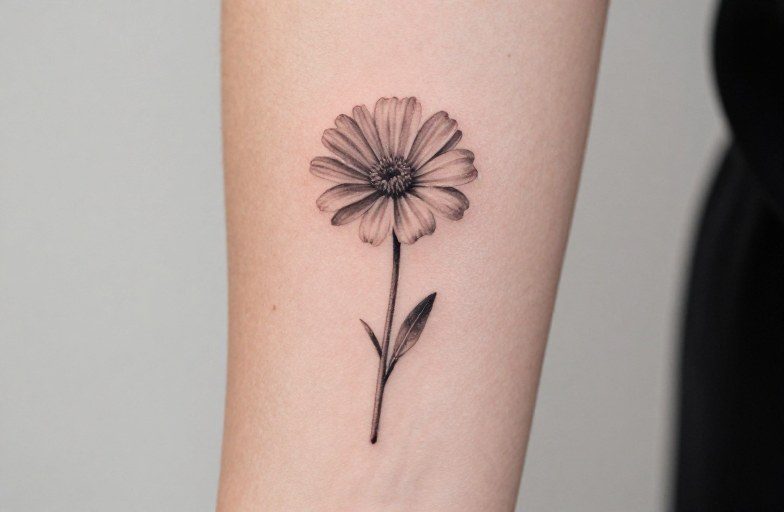
Linework and Fine-Line Florals
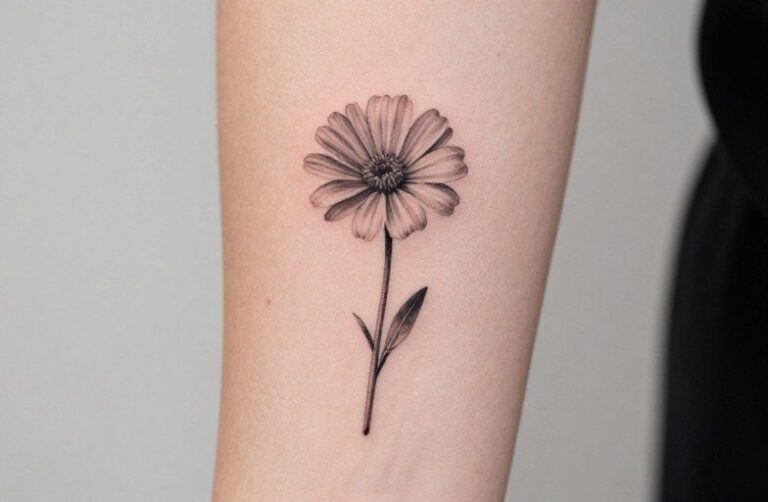
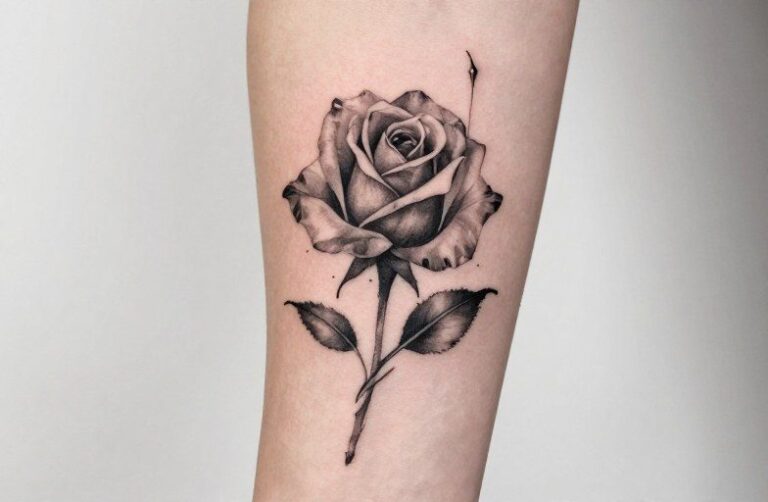
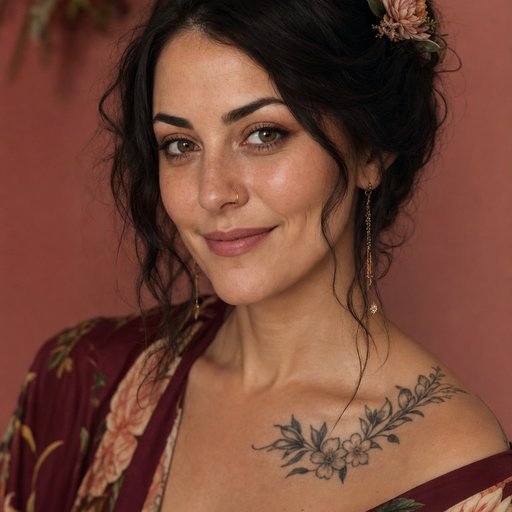
Single-needle and fine-line florals have dominated the last decade. These pieces use hair-thin strokes to capture petal veins, stem texture, and delicate overlap. The trade-off is longevity, ultra-thin lines blur faster than bold ones, and light gray shading can fade to invisibility within five to eight years on sun-exposed skin. For someone wanting a subtle wrist or collarbone piece, this style works beautifully, but it demands touch-ups and sunscreen discipline.
Traditional and Neo-Traditional Blooms
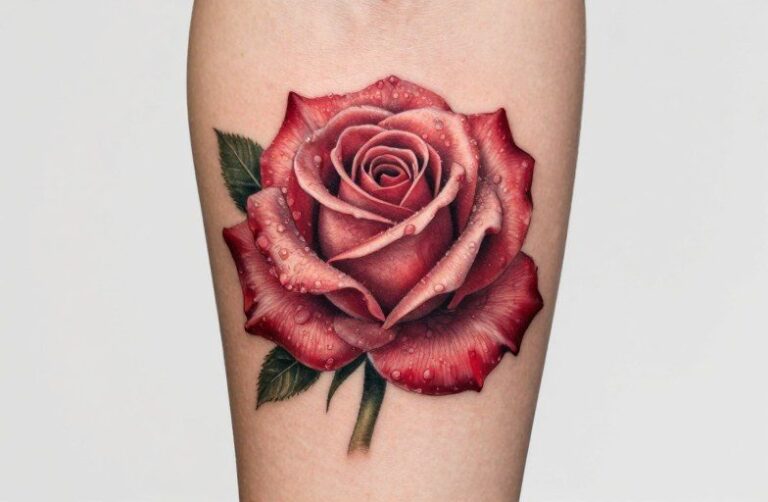
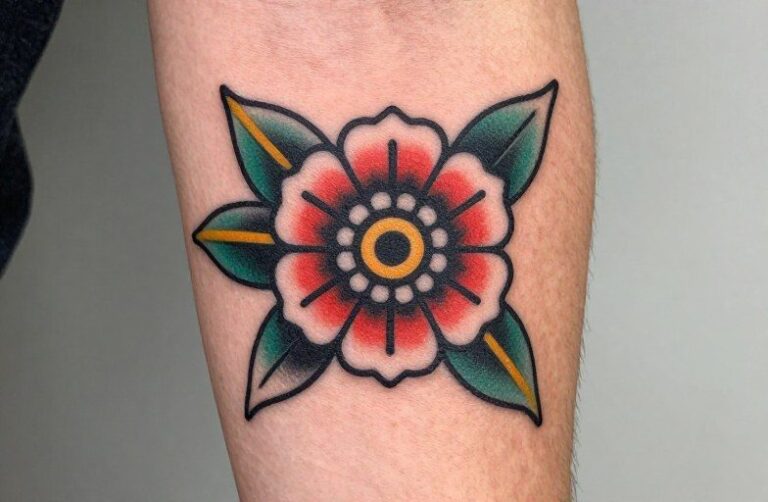
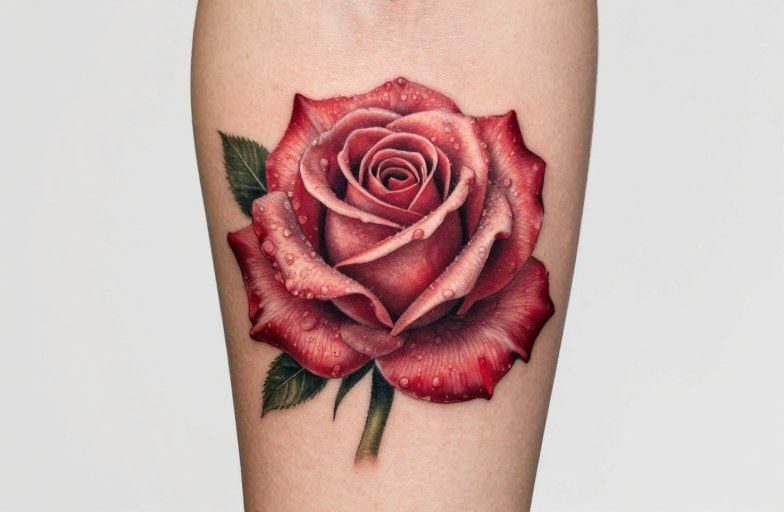
American traditional roses, chrysanthemums, and peonies rely on thick black outlines, saturated reds, and limited but punchy color palettes. Neo-traditional builds on that structure with more dimension, softer gradients, and expanded botanical accuracy. These age harder than fine-line work. The bold outlines hold, and the color saturation keeps contrast visible even as skin texture changes. A traditional rose on a forearm or calf still reads clearly after fifteen years.
- Watercolor florals: pigment splashes without outlines, high visual impact, significant fading risk
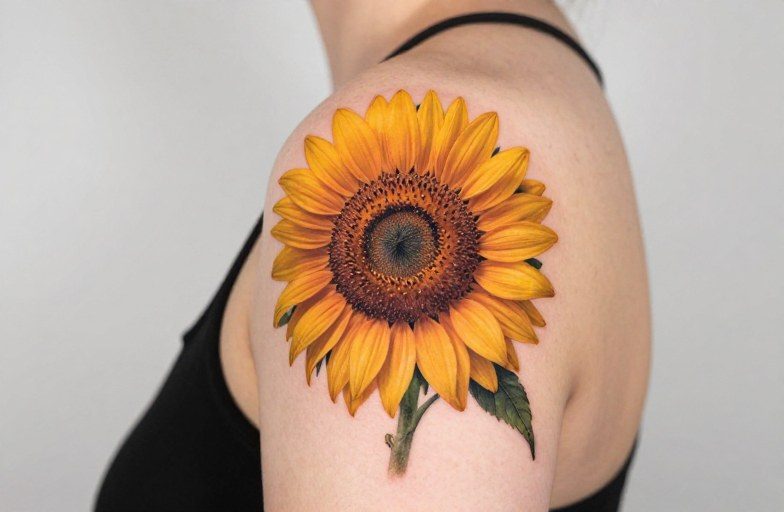
- Black and gray realism: photorealistic petals, heavy detail, requires large scale to avoid muddiness
- Minimalist single-stem: one continuous line, modern aesthetic, placement-dependent for longevity
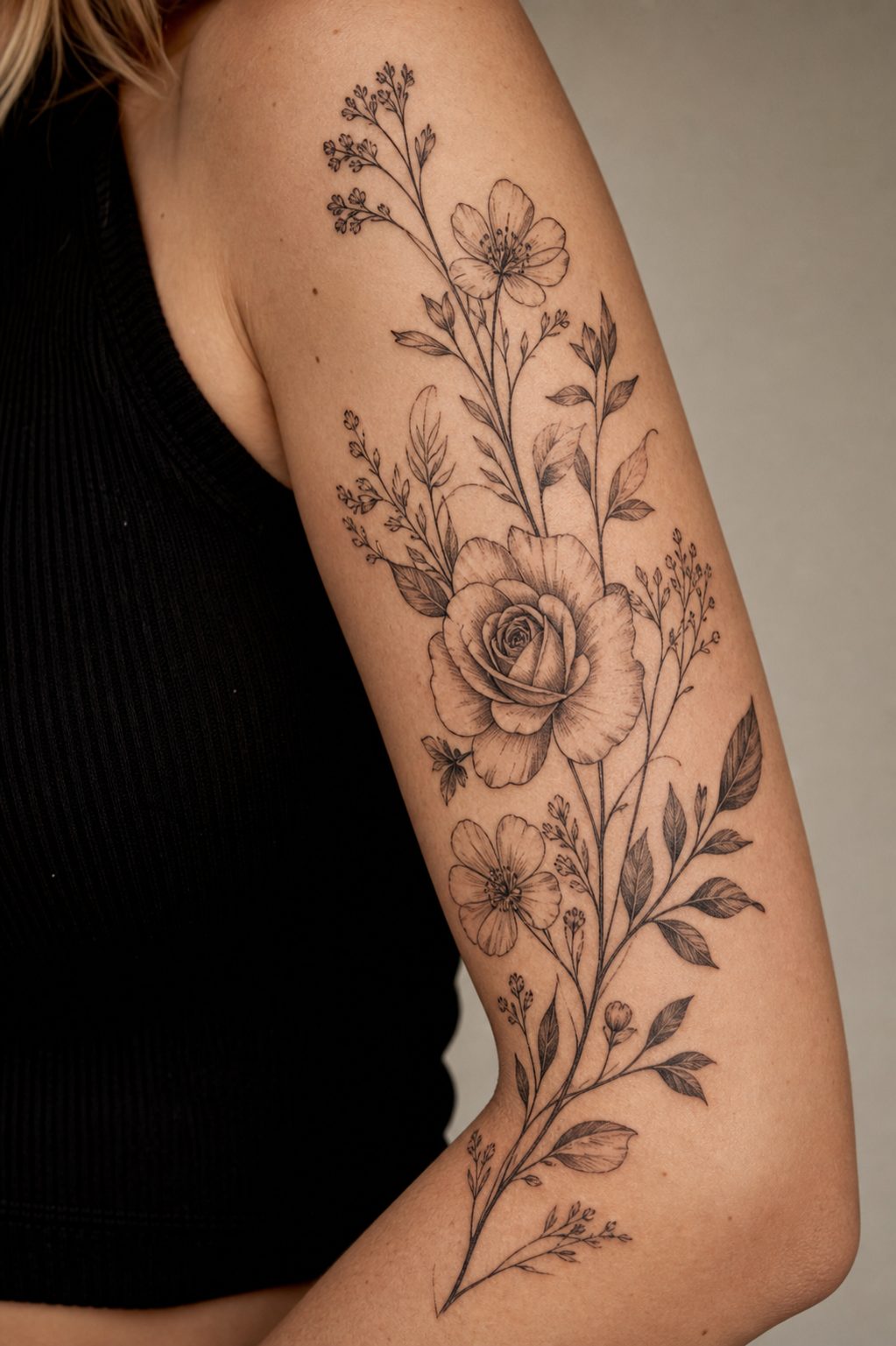
- Botanical illustration style: scientific accuracy, crosshatching or stippling, ages well with crisp technique
Religious & Spiritual Angles
Flowers carry specific weight across religious traditions. The lotus in Buddhism and Hinduism represents purity rising from muddy conditions, roots in darkness, bloom in light. Mary, mother of Jesus, is often linked to roses, lilies, and irises in Catholic iconography. A rose without thorns signals her sinlessness; the lily her virginity. Some Christian women choose these as quiet faith markers, placed on ribs, shoulders, or upper backs where they remain personal rather than performative.
Spiritual But Non-Denominational
Mandala-style florals blend sacred geometry with botanical forms, often chosen for meditation or grounding associations. Chakra-aligned flower designs, lotus for crown, rose for heart, appear in yoga and wellness communities. These aren’t tied to institutional religion but function as personal spiritual vocabulary. The meaning here is self-assigned, which doesn’t diminish it; it just shifts the frame from received tradition to individual practice.
Mythology & Folklore
Greek myth links the rose to Aphrodite, born from her tears and the blood of her lover Adonis. The narcissus flower carries the story of the youth who drowned staring at his reflection, giving us the term and the bloom’s association with self-obsession. Cherry blossoms in Japanese culture, often linked to samurai ethics, represent the beauty of brief existence, mono no aware, the pathos of things.
Regional Flower Lore
In Mexican folk tradition, marigolds guide spirits during Día de los Muertos. Women with Mexican heritage sometimes choose cempasúchil (marigold) tattoos to honor ancestors. Scottish thistle tattoos signal resilience and national identity. The fleur-de-lis, while often read as French royalty, has older roots in Gaulish lily symbolism and later Christian trinity representation. These regional threads let a floral tattoo carry geographic or ancestral weight beyond generic beauty.
How It Ages on Skin
Flowers are detail-heavy subjects, and detail is what time erodes first. Small petals blur together. Thin lines spread. White highlights yellow or disappear entirely. A densely packed fine-line peony on a hand will look like a gray smear faster than the same design on a protected inner bicep.
Color Fading Realities
Reds and pinks, common in roses, peonies, cherry blossoms, are among the most stable tattoo pigments. Yellows and light greens fade faster, sometimes shifting to muddy olive or disappearing into skin tone. Purple splits unpredictably, with blue tones lasting longer than red components. Black and gray florals avoid color-shift issues but can lose contrast if shading is too subtle. For longevity, bold contrast beats delicate gradation every time.
- Sun exposure is the single biggest aging factor; SPF 50 on tattooed skin isn’t optional
- Areas with frequent friction (hands, feet, inner thighs) blur faster
- Large-scale designs with breathing room between elements age more gracefully than tightly packed compositions
- White ink highlights often need reinforcement within three to five years
Best Placements
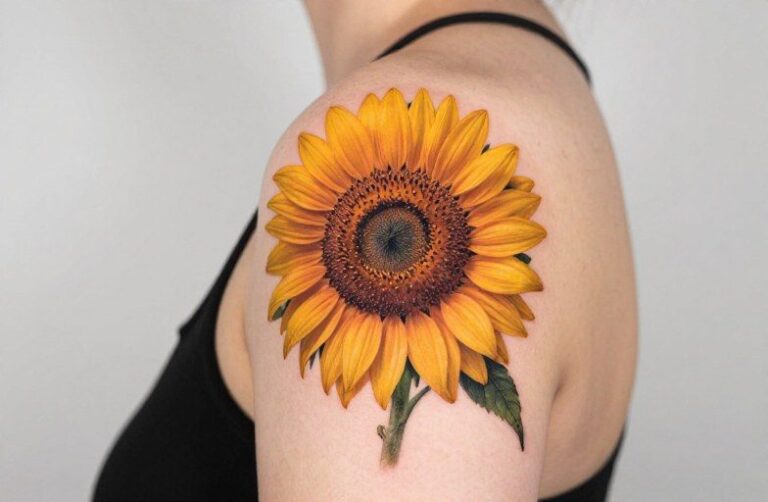
Ribs and side torso offer large, flat canvases for stem-to-bloom compositions that follow the body’s natural lines. These spots hurt, thin skin over bone, plus the constant flex of breathing, but they heal well and stay protected from sun. Shoulder caps and upper backs frame florals like botanical illustrations, visible when wanted, coverable when not. The sternum and underbust area have become popular for symmetrical floral arrangements, though healing involves friction from bras and sleeping positions.
Smaller, High-Visibility Spots
Wrists, ankles, and behind-the-ear placements suit single-stem or small-cluster designs. These locations command simplicity, too much detail collapses at small scale. The trade-off is visibility; these tattoos are hard to hide and age faster due to sun and movement. Forearms offer middle ground: enough space for detail, easy to show or cover, relatively stable skin over time.
Design Tips & Pairings
Pairing flowers with other elements shifts their meaning and visual weight. A snake coiled through roses adds danger and transformation to beauty. A dagger through a heart-shaped arrangement turns romantic symbolism toward betrayal or protection. Moths and butterflies landing on blooms connect impermanence to growth cycles. Skulls nestled in petals, memento mori, confront beauty with mortality directly.
Composition and Flow
Floral tattoos work best when they respect body contours. A stem following the forearm’s natural curve reads organic; a rigid vertical stripe fights the form. Leaves and secondary buds fill awkward gaps and balance asymmetrical blooms. Negative space matters, crowded petals without breathing room age into indistinguishable masses. A good floral design leaves room for the eye to rest, just as a garden needs paths between plantings.
Text integration, names, dates, short phrases, can complement or clutter. Script weaving through stems works when the lettering matches the botanical style: flowing cursive with fine-line florals, bold block letters with traditional blooms. Mismatched aesthetics create visual friction that doesn’t resolve well.
The Takeaway
Women’s flower tattoos offer genuine symbolic depth when chosen with intention, not just aesthetic appeal. The specific flower, its cultural and historical resonances, the style it’s rendered in, and where it sits on the body all shape what it means and how long it lasts. A rose on a shoulder in bold traditional color carries different weight than the same rose as a single-needle rib piece. Neither is wrong; they’re different statements requiring different commitments. Know what you’re signing up for, both in meaning and in maintenance, and the result holds value beyond the initial appointment.
Frequently Asked Questions
Do flower tattoos have to mean something specific, or can I just pick one I think is pretty?
You can absolutely choose a flower for visual appeal alone. Many people do. But even a ‘pretty’ choice carries cultural associations you might want to understand beforehand. A lotus or cherry blossom, for instance, comes with specific symbolism that others may read into your tattoo regardless of your intent.
Which flower tattoos age the best over time?
Bold, high-contrast designs with clear outlines age better than delicate fine-line work. Roses, peonies, and chrysanthemums rendered in traditional or neo-traditional styles hold their definition for years. Avoid watercolor styles and tiny detail clusters if you want the design to stay readable for decades.
Is there a placement that hurts less for a first floral tattoo?
The outer upper arm and outer thigh have more muscle and fat padding, making them generally less painful than ribs, feet, or sternum. These spots also heal more predictably and aren’t subject to constant friction or sun exposure. They’re practical choices for a first piece.
Can I combine multiple flowers in one tattoo, and do their meanings clash?
Combining flowers is common and effective visually. Meanings don’t inherently clash, context and arrangement matter more. A bouquet with birth flowers of family members reads as commemorative. A rose and thistle together might signal love and resilience. Talk through the combination with your artist to ensure the composition supports the message.