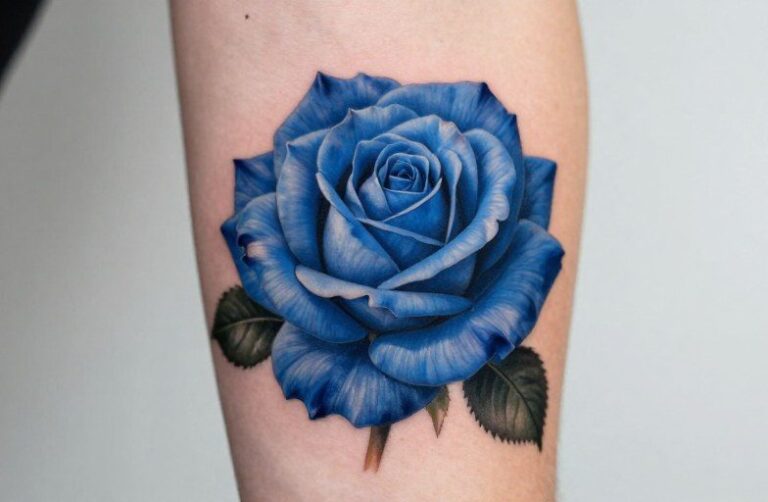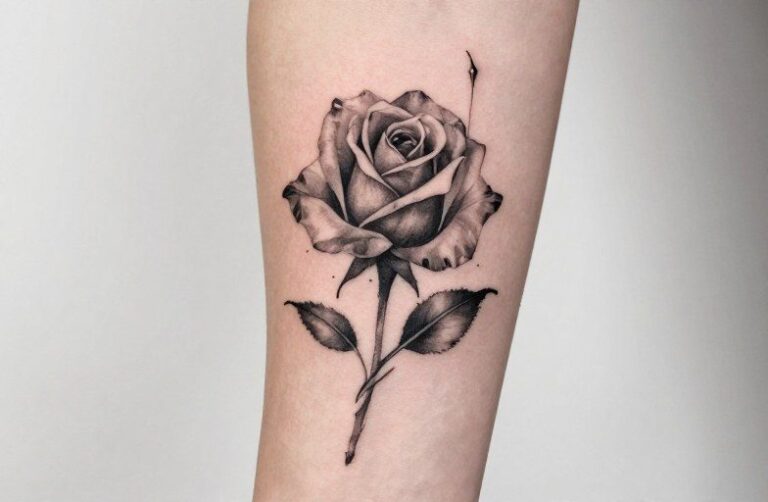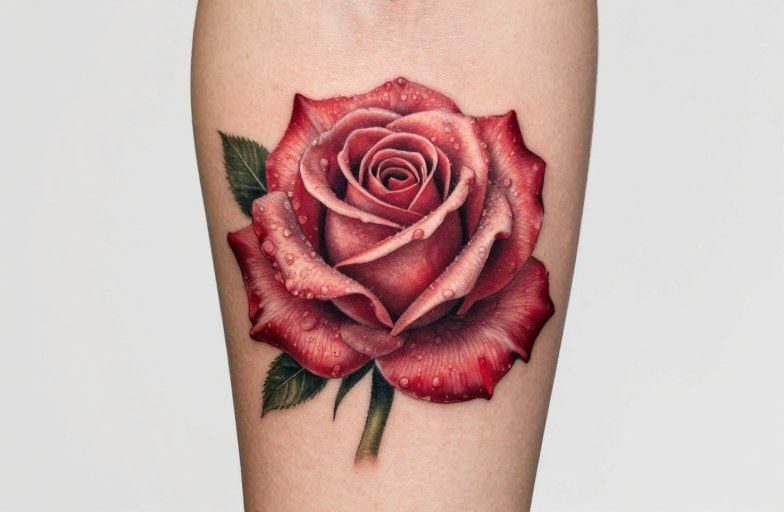
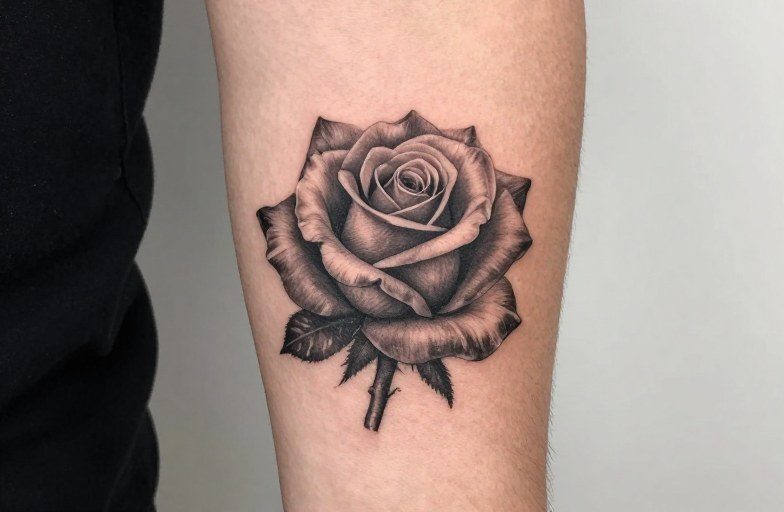
A rose tattoo on a guy typically signals contrast. The bloom represents beauty, love, or passion; the thorns add pain, loss, or protection. Together they create a symbol of something valuable that costs something to keep. Men have worn this duality for decades across every style from Sailor Jerry flash to photorealistic black and grey.
Symbolism & Core Meaning
The rose’s core tension is what makes it stick. Unlike symbols that point one direction, the rose contradicts itself openly. That contradiction maps onto lived experience better than cleaner emblems.
Beauty and Pain
The thorned stem is not decorative extra. It changes the entire reading. A rose without thorns reads as romance or tribute. Add the thorns and the meaning shifts to earned beauty, survived difficulty, or guarded tenderness. Most guys who choose this motif want that second reading. The thorns say: this wasn’t free, this isn’t soft, this still mattered.
Love and Loss
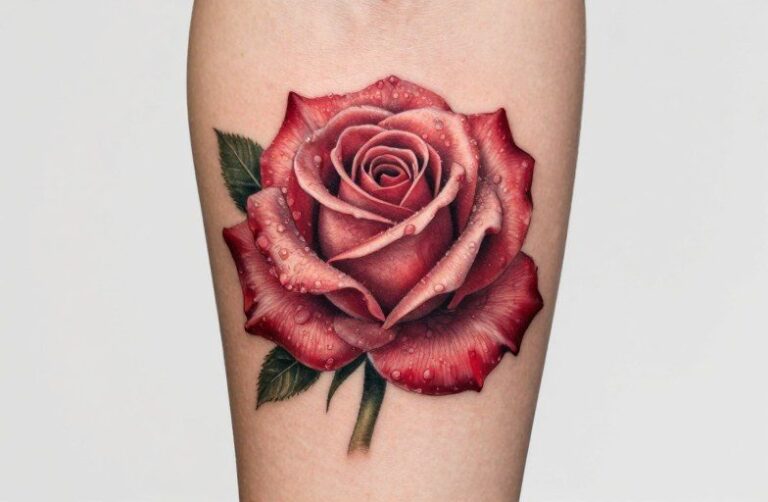
Red roses specifically carry romantic weight, but in tattoo form they often memorialize. A name banner beneath a rose, a date worked into leaves, a blackened bloom, these adaptations turn the flower into grief work. The rose becomes something that keeps growing despite being cut. That metaphor of continued life after severance runs through much masculine rose tattooing, particularly on forearms and chest pieces where the wearer sees it daily.
Best Placements
Where a rose sits changes how it reads and how it ages.
Forearm and Calf
These cylindrical surfaces suit the rose’s natural curve. A forearm rose wraps slightly, following muscle contour. The calf offers similar geometry with less daily sun exposure. Both locations heal relatively predictably. The skin isn’t thin like the wrist or thick and prone to blowout like the lower back. Line work holds crisp; shading stays readable at conversational distance.
Hand and Neck
These are statement placements. A rose on the hand or neck commits to visibility. The small area forces simplification, less detail, bolder lines, more negative space. Hand skin sheds faster and holds ink differently; roses here blur sooner and need touchups. Many artists won’t tattoo hands on clients without substantial existing work. The neck offers better retention but carries similar social weight. A throat rose reads differently than a shoulder rose. It faces the viewer, not the mirror.
Chest and Back
Large canvas allows composition. A single rose on the chest centers over the heart deliberately. A back piece might pair roses with daggers, skulls, or clock faces. The flat planes suit photorealism. However, chest skin stretches and shifts with muscle and weight change. Roses here can distort. Artists often design with that movement in mind, placing the bloom where distortion matters least.
Common Variations & Styles
Style choice determines meaning as much as subject. Same rose, three ways, three messages.
- Traditional/American: Bold black outlines, limited color palette, stylized leaves. The classic Sailor Jerry rose reads as heritage, toughness, membership in tattoo culture itself. It ages exceptionally well. The heavy lines stay visible decades in.
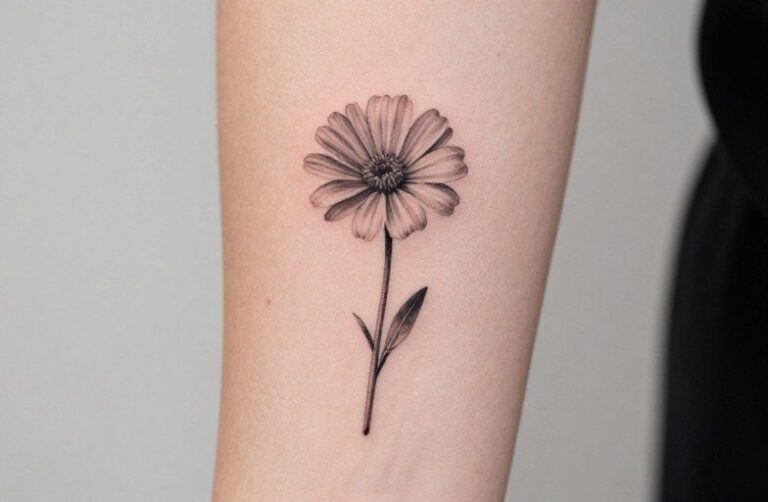
- Black and Grey Realism: Soft shading, no outlines, photographic reference. This style emphasizes mortality, the wilting edge, the torn petal, the water droplet. It suits memorial pieces. The lack of color focuses attention on form and shadow.
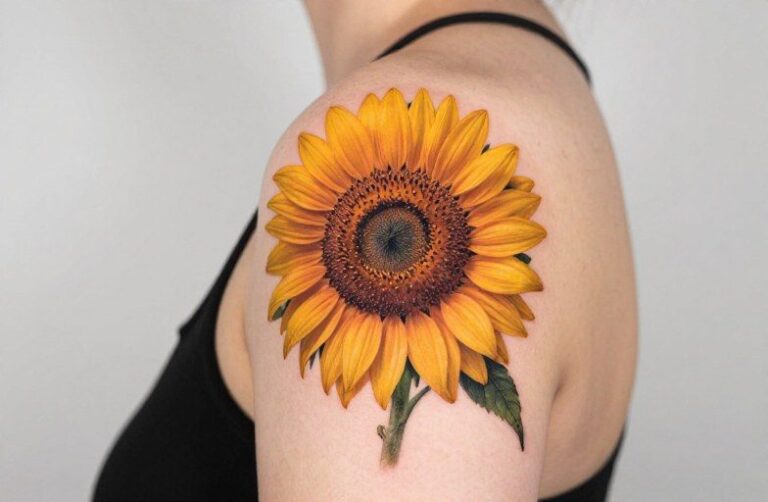
- Neo-Traditional: Bold lines return but colors expand to jewel tones, compositions become more elaborate. Roses here often pair with animals, eyes, or ornamental frames. The style allows personal symbolism without sacrificing readability.
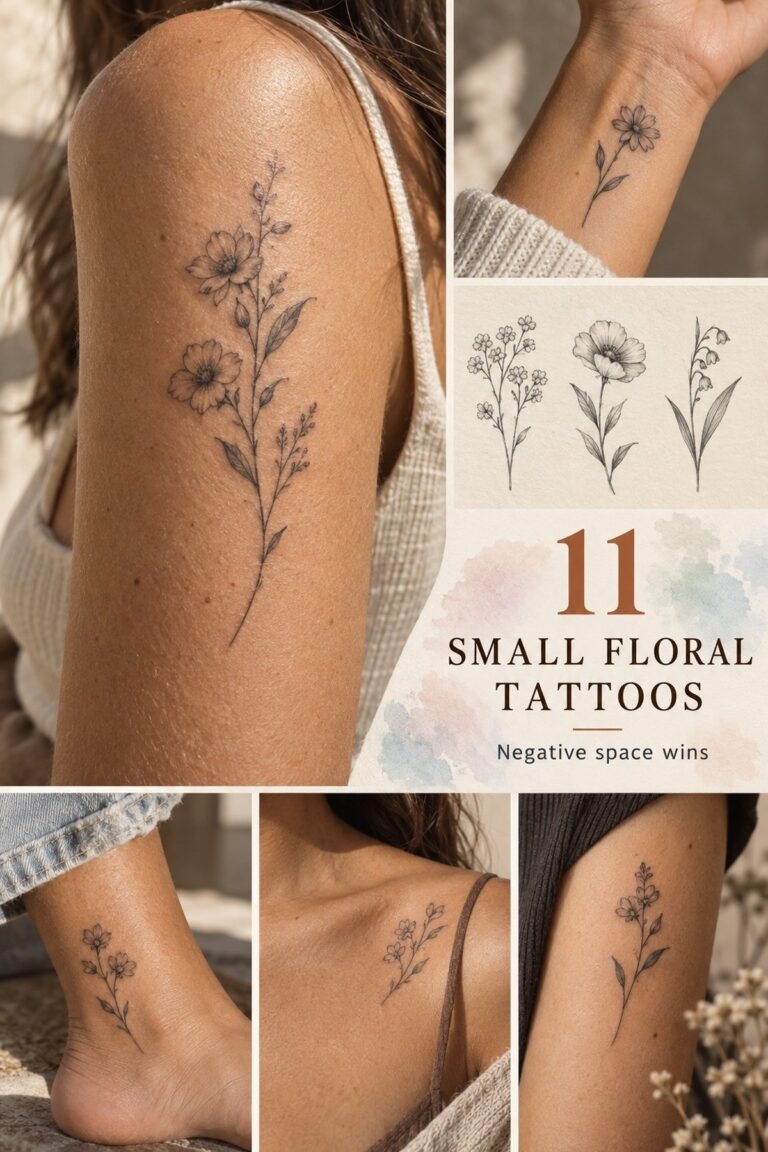
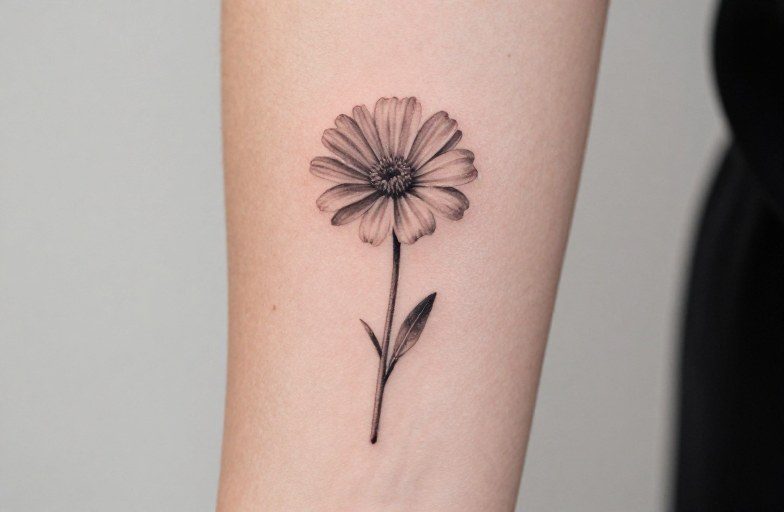
- Fine Line/Single Needle: Delicate, minimal, often small. This approach risks aging poorly, thin lines spread, light shading disappears. On a guy, it can read as intentional contrast: tough placement or larger body, delicate mark. Or it can read as trendy. The distinction depends on surrounding work and the artist’s technical control.
Religious & Spiritual Angles
The rose carries specific weight in several traditions, often linked to the Virgin Mary in Catholic iconography. The Rosa Mystica appears in medieval and Renaissance art as her symbol. A guy wearing this reference usually signals devotion, family tradition, or cultural identity rather than generic spirituality. The placement and accompanying elements clarify intent, a rosary intertwined, a sacred heart adjacent, a specific blue tone to the petals.
In esoteric traditions, the rose and cross combination (Rosy Cross or Rosicrucian imagery) points to mystical Christianity or alchemical transformation. This is less common in street shop work, more frequent in custom pieces with clients who bring specific reference material.
Mythology & Folklore
Greek myth often links the rose to Aphrodite, with the flower springing from her tears and her lover’s blood. That origin story reinforces the beauty-from-pain theme. Roman adaptation associates the rose with Venus and with secrecy, sub rosa, beneath the rose, meant confidential discussion.
Some trace the rose’s connection to silence and mystery to this Roman usage. In tattoo form, a rose with a sealed lip, a lock, or a covered eye draws on this lineage. The meaning becomes: I keep something, I protect something, I don’t disclose everything.
In English folklore, the War of the Roses (Lancaster red, York white) provides historical reference. Some guys choose the specific colors as regional or family identity markers. The combination rose, red and white petals together, represents Tudor union. This is niche reference, usually meaningful to those with specific English heritage or historical interest.
Similar & Related Symbols
Roses rarely stand alone in masculine tattooing. The pairing matters.
Dagger and Rose
The dagger through the rose is traditional flash imagery. It reads as betrayal, sacrifice, or the willingness to destroy what you love. The composition requires balance, too large a dagger dominates; too small it looks incidental. Skilled artists use the blade’s angle to create movement, tilting it to suggest falling or thrusting.
Skull and Rose
Memento mori updated. The skull says death; the rose says life, beauty, or memory. Together they become “remember you will die” or “beauty persists despite death.” The relative sizing shifts meaning. A small skull beneath a large rose emphasizes life continuing. A dominant skull with a single rose suggests something lost.
Clock, Pocket Watch, or Hourglass
Time and beauty’s decay. These pairings often memorialize a specific moment, birth, death, a relationship’s beginning or end. The rose’s stage of bloom matters here: tight bud for potential, full bloom for peak moment, wilting for passing time, skeletal for ended.
What to Remember
A rose tattoo on a guy works because of its flexibility, not despite it. The same image carries romance, grief, toughness, or devotion depending on color, style, placement, and pairing. Red signals passion or blood. Black reads as loss or rebellion. Yellow, less common on men, can mean friendship or jealousy depending on context. White suggests purity or memorial.
The thorns are optional but significant. Their inclusion or omission changes the piece’s emotional register. Their rendering matters too, delicate, almost decorative thorns read differently than heavy, weaponized spikes.
Healing and aging deserve consideration. Red ink fades faster than black. Highly detailed realism softens over years. Traditional bold-line work persists. A rose you choose at twenty-five will look different at fifty. That isn’t failure; it’s the nature of the medium. Design with that trajectory in mind, not against it.
Finally, the rose’s very popularity is its advantage and risk. Everyone recognizes it. The challenge is making yours specific, through the artist’s hand, the personal reference, the placement choice, the combination with elements that narrow rather than broaden the meaning. The rose doesn’t need reinvention. It needs your particular weight on it.
Frequently Asked Questions
Do rose tattoos look too feminine for guys?
Not with the right execution. Heavy black lines, thorn emphasis, strategic pairing with skulls or daggers, and placement on traditionally masculine areas like the forearm or chest shift the reading entirely. The rose’s history in sailor and biker tattooing predates any recent feminization.
What color rose should I choose for a memorial piece?
Black roses dominate masculine memorial work, though deep red remains common for lost romantic partners. White roses suit memorials for parents or children. The specific shade matters less than the overall design coherence and the personal association you bring to the color.
How well do detailed rose tattoos age on men?
Fine detail in petals softens over five to ten years. High-contrast designs with solid blacks and limited color palette age better than photorealistic pieces with subtle gradations. Sun protection significantly extends readability. Expect touchups, especially on high-exposure placements like hands and forearms.
Can a rose tattoo cover existing work or scars?
Roses adapt well to cover-ups because the layered petals create natural camouflage. Darker color values in the design hide older ink beneath. For scar tissue, the rose’s organic shapes distract from irregular skin texture, though heavily scarred areas may hold ink unpredictably and require a test patch.