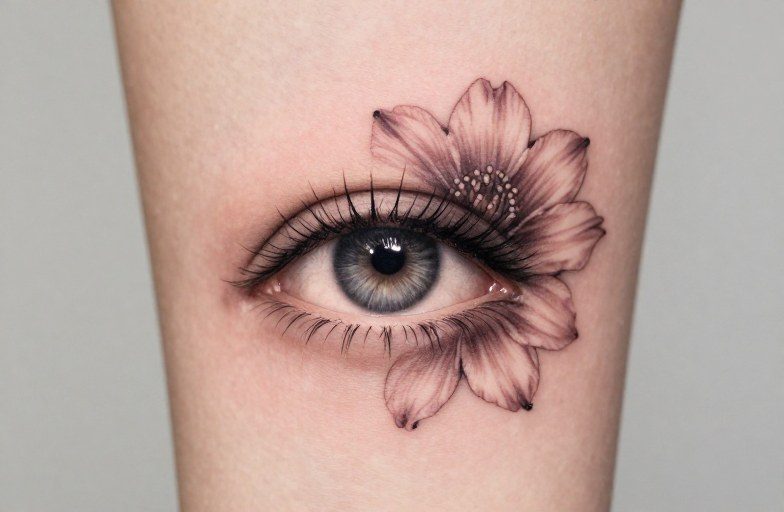
An eye and flower tattoo typically represents the balance between seeing and feeling, perception paired with natural beauty, vigilance softened by growth. The eye brings connotations of awareness, protection, and truth; the flower adds mortality, renewal, or emotional openness. Together, they create a tension that reads differently depending on which flower you choose and how the two elements interact.
Symbolism & Core Meaning
At its simplest, this pairing fuses two of tattooing’s oldest motifs into something more layered than either alone. The eye watches; the flower wilts. That contrast gives the design its emotional weight.
The Eye: What It Carries
The eye in tattoo tradition draws from multiple sources. The Evil Eye symbol, found across Mediterranean and Middle Eastern cultures, functions as protection against malice. Surrealist painters used floating eyes to suggest the unconscious watching back. In tattooing, a single eye often signals self-awareness, someone who observes their own motives with uncomfortable clarity. Placed with a flower, that self-scrutiny gains a softer context: growth, forgiveness, or the acceptance of imperfection.
Flower Choice Changes Everything
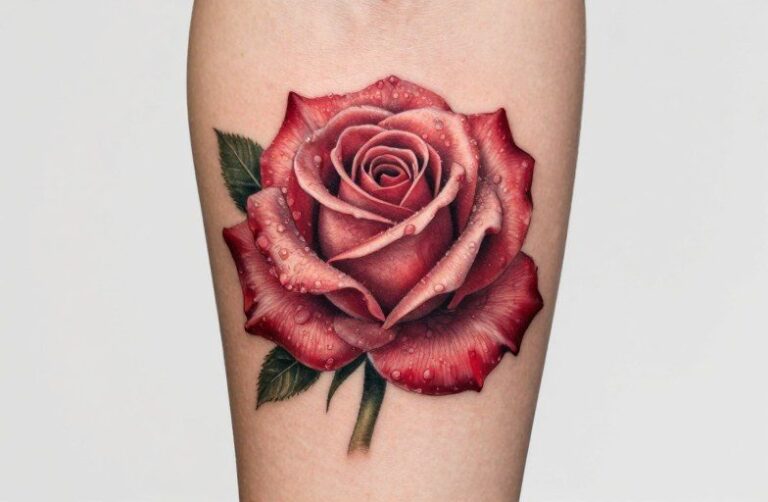
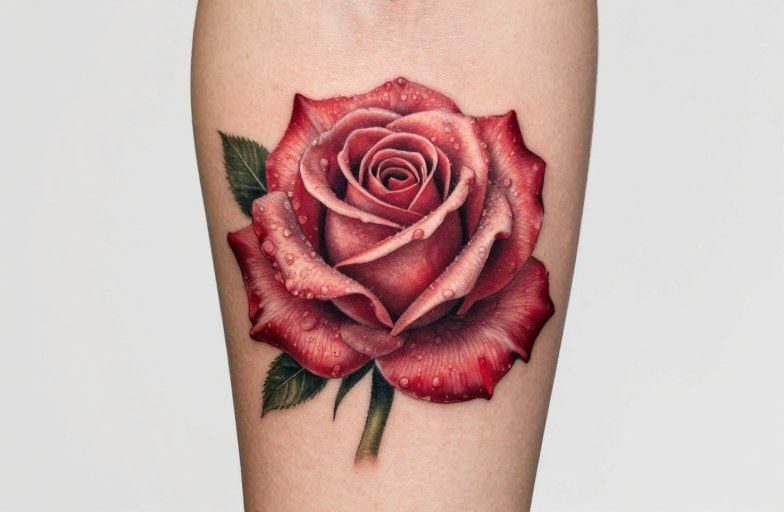
- Rose: Love and pain together; the thorned stem complicates the eye’s gaze with romantic risk
- Peony: Often linked to prosperity and honor in East Asian traditions; with an eye, suggests guarded wealth or hidden value
- Poppy: Sleep, death, and remembrance; paired with an eye, becomes almost accusatory, witnessing loss
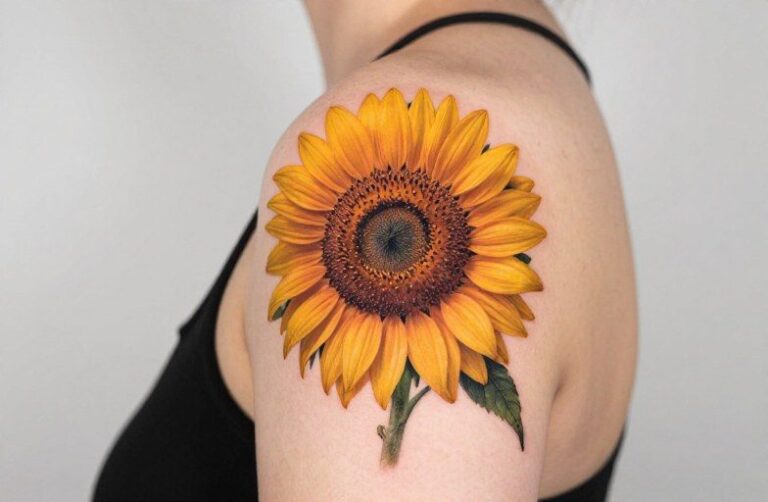
- Sunflower: Loyalty and light-seeking; the eye becomes the sun, or the follower
- Cherry blossom: Transience; the eye records what cannot last
Meaning shifts dramatically based on whether the eye is human, animal, or stylized. A realistic human eye with a rose reads intimate, possibly mournful. A cat’s eye with the same flower turns witchy, nocturnal, self-protective.
How It Ages on Skin
This design presents specific technical challenges that affect how it looks at five, ten, fifteen years.
Line Weight and Detail Loss
Eye tattoos depend on fine lines for lashes, iris patterns, and the reflective catchlight that gives life. These are the first elements to blur. A line that reads as delicate eyelash at month three becomes a soft gray smudge at year eight. The solution is building contrast through surrounding elements, the flower’s petals, done with slightly heavier outline and more saturated fill, can carry the design as eye detail softens.
Iris color ages predictably: blues and greens fade cooler and muddier; warm browns and ambers hold better but can shift orange. Black and gray irises actually maintain readability longest, which is why traditional-style eye tattoos often outlast full-color realism.
Placement Realities
- Forearm: Moderate sun exposure; plan for one significant refresh after 7-10 years
- Ribcage: Protected from light but stretched by breathing; fine lines may distort slightly
- Thigh: Good longevity if weight stays stable; large canvas allows bolder detail that ages better
- Hand or neck: Fast fading due to sun and skin turnover; the eye’s fine work becomes illegible quickest here
Flowers with dense petal structure age better than sparse ones. A peony’s packed layers remain readable as soft shapes even when individual lines blur. A lily’s six distinct petals, each outlined thinly, can merge into confusing blobs.
Religious & Spiritual Angles
Religious eye imagery predates most tattoo traditions by millennia. Understanding these roots helps avoid unintentional appropriation or hollow pastiche.
The Eye of Providence and Its Cousins
The triangle-enclosed eye, often linked to Christian divine watchfulness, sometimes appears with floral elements in Masonic and folk art. Tattooed without the triangle, the eye loses that specific meaning but retains a general spiritual surveillance. Adding a flower, particularly a lily, associated with Mary’s purity, can gently Christianize the image without the heavy symbolism of a full sacred heart or crucifix.
Hamsa and Nazar Influences
The Hand of Fatima and the blue glass nazar amulet both center protective eyes. Some trace floral elements in these traditions to Ottoman and Persian miniature painting, where roses and eyes share decorative space. A tattoo combining these elements works best when the artist understands the visual grammar: the eye should dominate as protective symbol, the flower as ornamental frame, not competing focal point.
Buddhist and Hindu traditions use the third eye concept, often with lotus flowers. This pairing in tattoo form risks flattening complex spiritual practice into aesthetic, so specificity matters. An ajna chakra design with a lotus is distinct from a generic eye-and-flower piece.
Personal & Modern Meanings
Beyond tradition, contemporary wearers assign meanings that reflect current concerns.
Surveillance and Self-Exposure
Living documented lives, social media, workplace monitoring, facial recognition, has made the watched eye feel less mystical and more mundane. Some choose this tattoo to acknowledge that condition: the flower as organic self, the eye as external observation. Others invert it, the eye as their own witnessing of others’ curated performance. The meaning depends on which element you read as subject and which as object.
Mental Health and Perception
Anxiety disorders and depression both involve distorted perception. The eye-and-flower pairing can represent the effort to see clearly through internal fog, or the gap between how one appears (the flower, presentable) and how one perceives (the eye, sometimes harsh). These personal readings rarely need to be explained; the image carries them quietly.
Design Tips & Pairings
Technical decisions shape how the symbolism reads and how the tattoo lasts.
Composition Approaches
- Eye emerging from flower: The bloom as body, the eye as center; organic, slightly surreal, suggests hidden consciousness in nature
- Eye above, flower below: Hierarchy of perception over beauty; or surveillance of the natural
- Eye within petals: Protected vision, private seeing; the flower shields and frames
- Separated but connected by stem or line: Two distinct elements in dialogue; allows larger scale and more detail in each
Style Compatibility
Traditional American handles this pairing well: bold eye with limited iris detail, flower with strong outline and limited color palette. Japanese work can integrate the eye into a larger botanical or figurative scene. Fine-line single needle demands simplified forms, too much detail in the eye becomes illegible quickly. Blackwork and dotwork age exceptionally well; stippled shading in the iris creates texture that blurs gracefully rather than collapsing.
Adding a snake, dagger, or moth extends the narrative but risks clutter. These pairings work best when the secondary element connects eye to flower physically, snake as stem, dagger piercing the bloom, rather than floating nearby as disconnected symbol.
Mythology & Folklore
Myths about eyes and flowers rarely combine directly, which gives this tattoo its opportunity: the wearer creates the connection.
Isolated Threads That Merge
Odin’s sacrifice of an eye for wisdom at Mímir’s well, Flora’s flowers springing from spilled blood or transformed bodies, the Greek eyes on ships and wine cups meant to ward off evil, these stories share themes of exchange and transformation. A tattoo combining them doesn’t illustrate any single myth but operates in their shared emotional territory: what you give up to see, what grows from wound sites.
Floriography and the Language of Flowers
Victorian flower codes assigned specific messages to blooms. Combining these with eye symbolism creates precise personal statements: an eye with a yellow rose (jealousy) reads differently than one with a white rose (innocence), even without explicit explanation. This historical layer rewards research but doesn’t require viewer knowledge; the wearer holds the full code.
Some trace the eye-in-flower motif to alchemical illustrations where the philosopher’s stone appears as a flowering sun with a central eye. This esoteric connection appeals to those drawn to hermetic imagery, though most contemporary tattoos don’t pursue such specific reference.
The Bottom Line
An eye and flower tattoo succeeds when the specific combination answers a real question for the wearer, about how they see, what they protect, what they allow to be seen. The design’s longevity depends on respecting technical limits: bold enough to age, detailed enough to satisfy. Choose your flower deliberately, place the eye with compositional purpose, and trust that the meaning will accumulate rather than diminish over years of living with it.
Frequently Asked Questions
Which flower pairs best with an eye for a protective meaning?
Bluebonnets and lavender both carry protective associations in folk traditions, but the peony’s layered structure also shields the eye visually. For explicit protection, consider the nazar’s traditional blue paired with any bloom rather than a specific flower.
Does an eye and flower tattoo hurt more than other designs?
Pain depends on placement and your personal sensitivity, not the image itself. Eye tattoos often involve fine, repeated needlework in concentrated areas, which can feel more intense than bold shading. The flower portion typically spreads sensation across a larger area.
Can this design work as a cover-up?
The eye’s circular form and the flower’s organic edges adapt well to hiding older tattoos, especially if the previous work is faded. Darker iris tones and dense petal shading provide coverage; plan with an artist experienced in strategic concealment.
Is it culturally appropriative to get an Eye of Providence with flowers?
The Eye of Providence itself is broadly available as Western symbolic heritage, though Masonic-specific renditions carry organizational meaning you may not intend. Pairing it with flowers is generally uncontroversial; avoid copying exact ritual imagery without understanding its context.