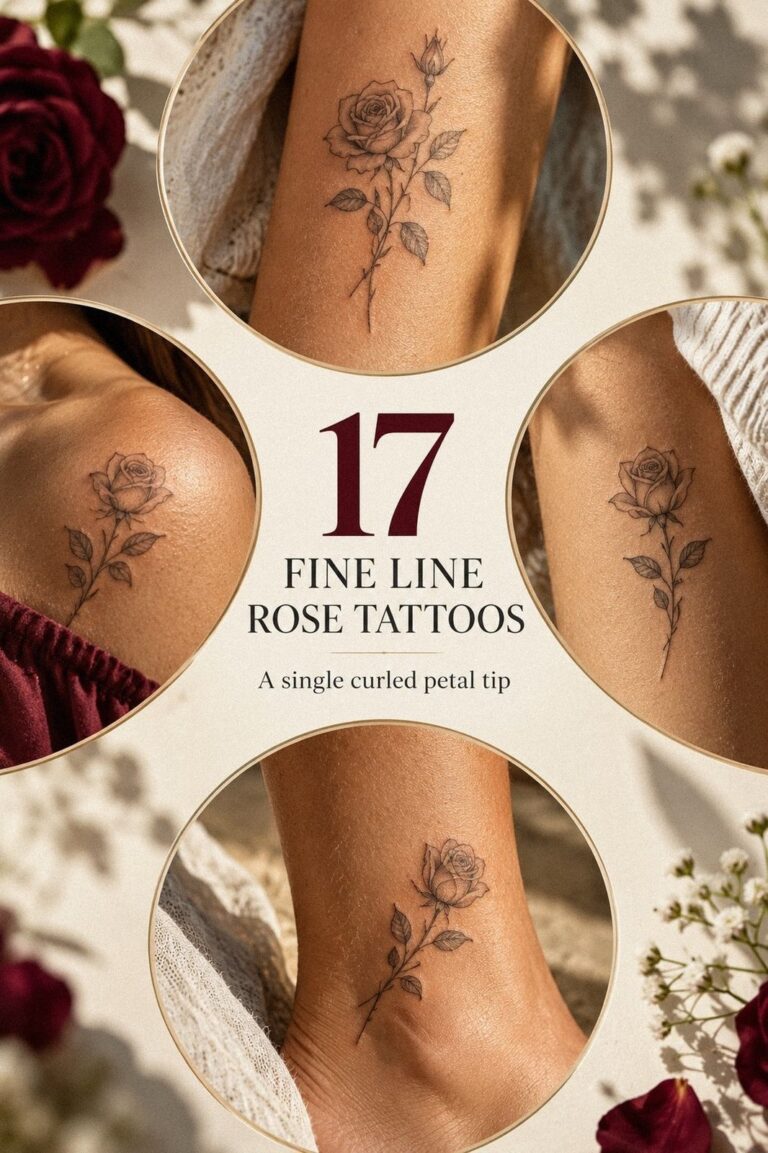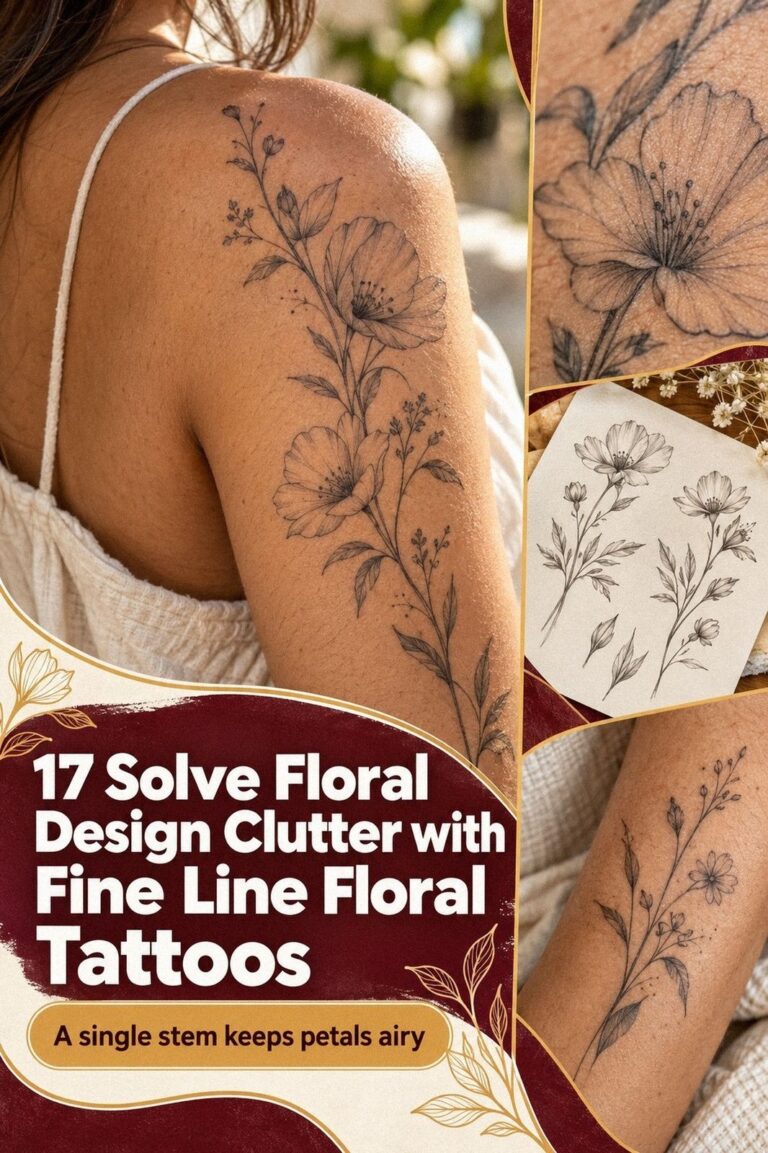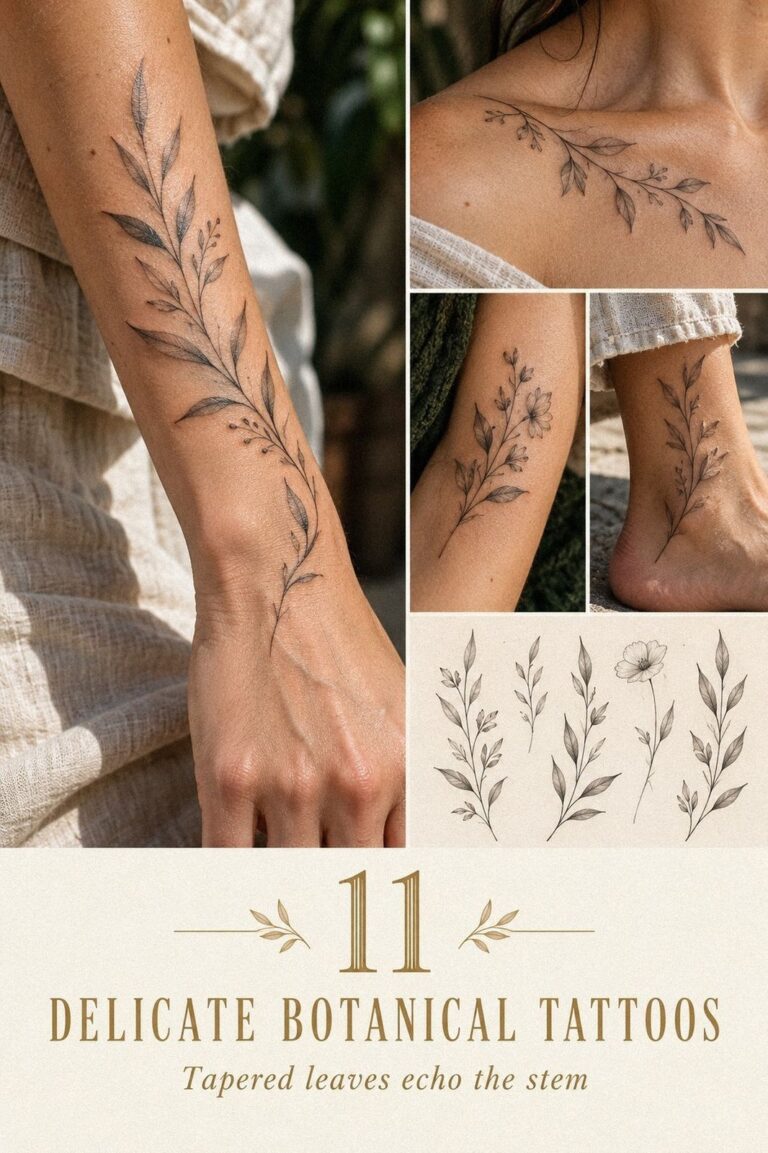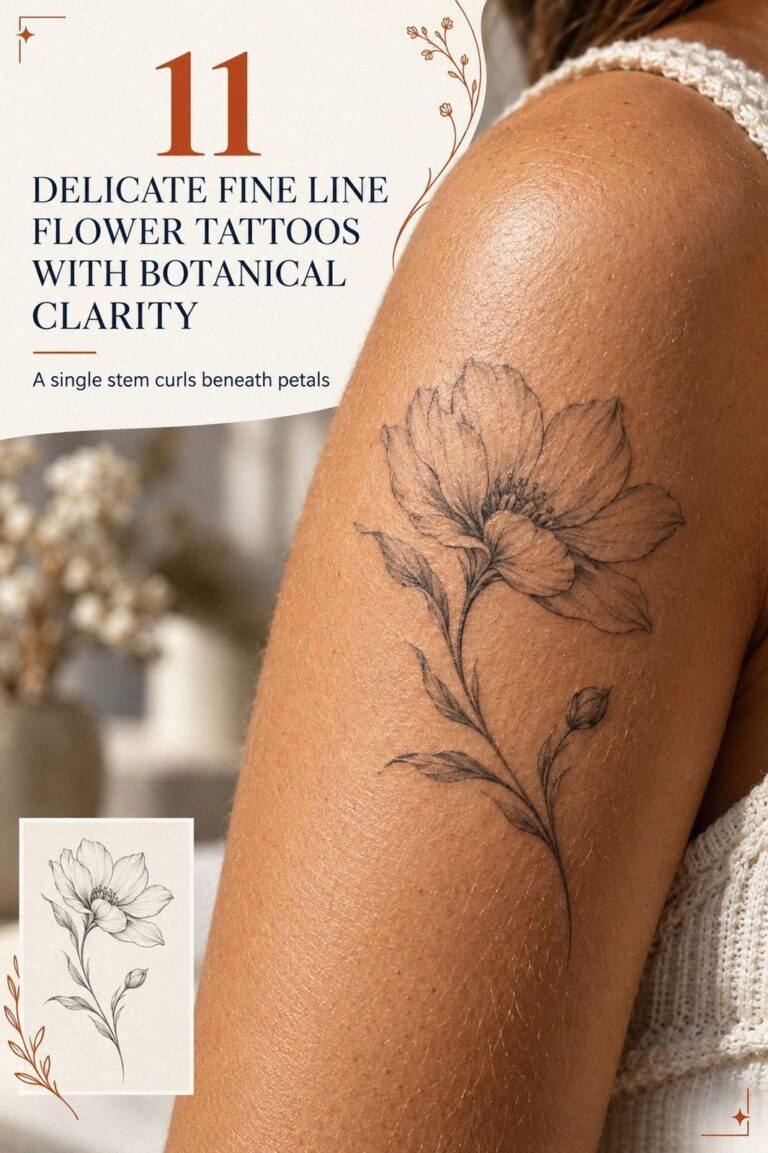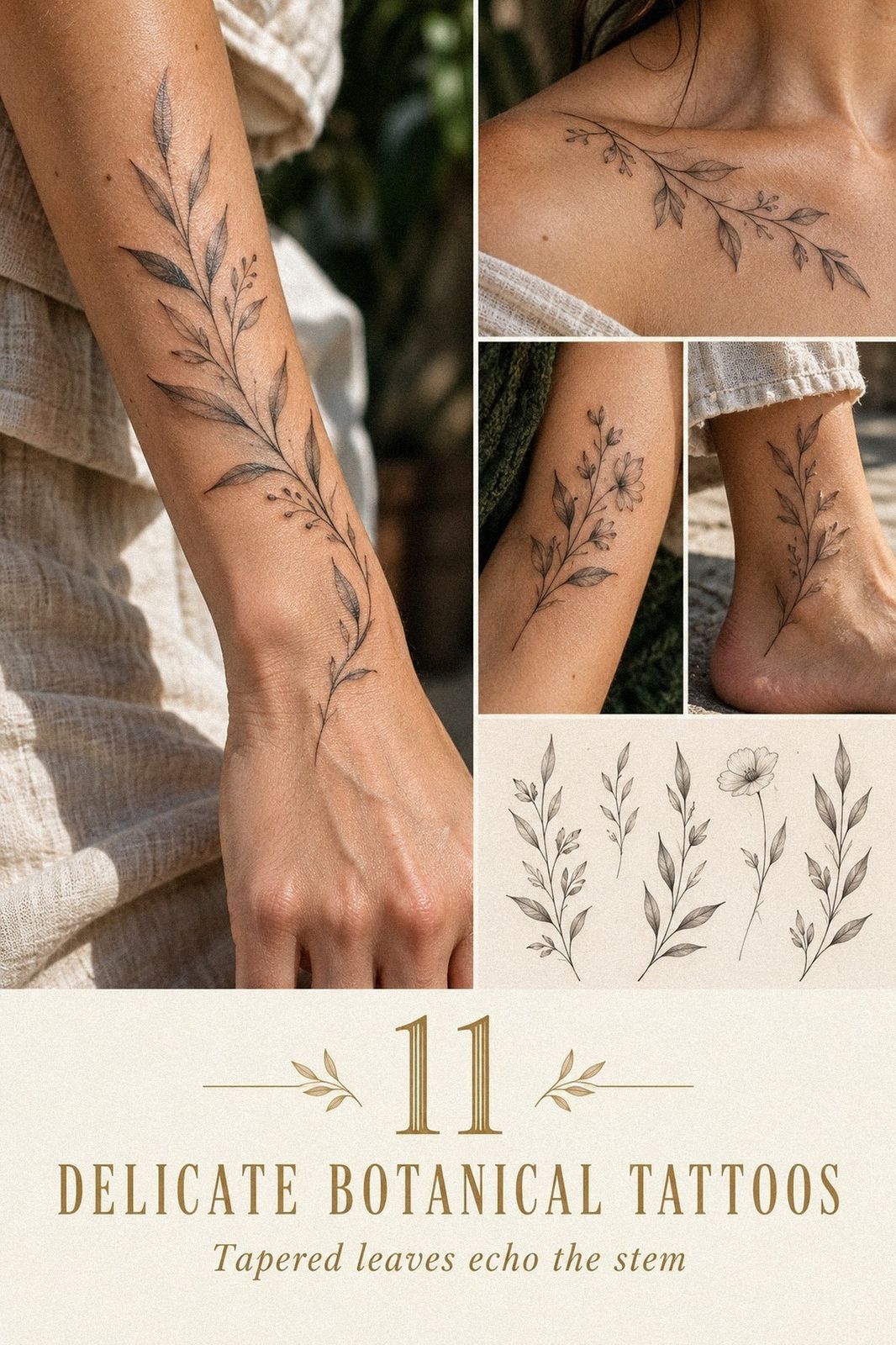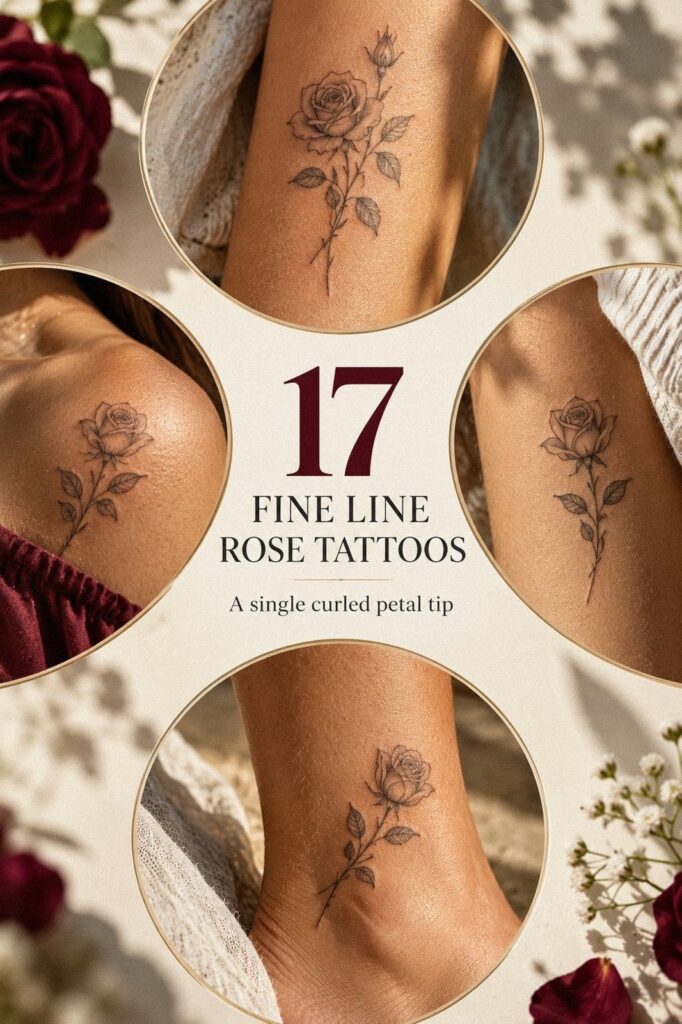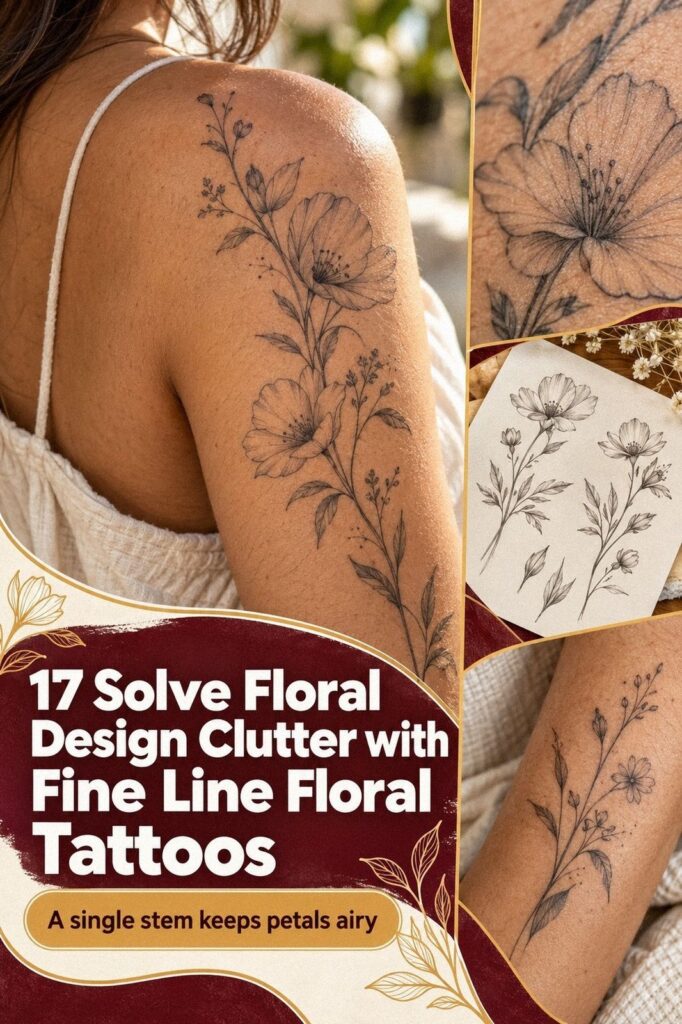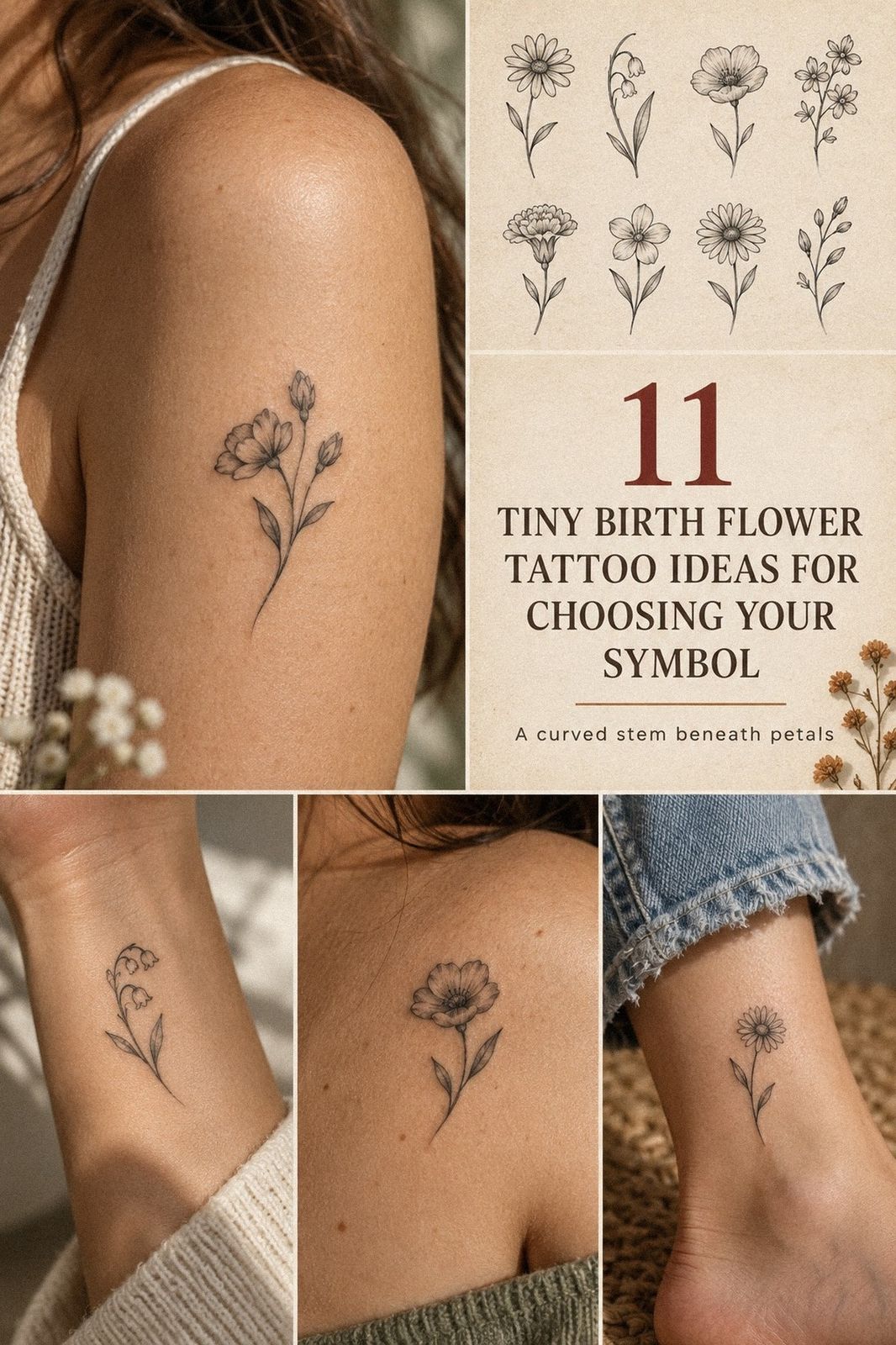
A tiny birth flower tattoo can often fit into one sitting, especially on a less sensitive placement. I learned that size alone doesn’t decide comfort or longevity. The line weight, location, and healed portfolio matter more. These delicate botanical tattoos keep the design personal, crisp, and easy to plan before you book.
My favorite ideas below stay meaningful without becoming overworked. Some are minimal and understated.
Others are bold, symbolic, or quietly daring. The best choice depends on your birth month, skin, lifestyle, and tolerance for touch-ups.
Tiny Birth Flower Tattoo on the Wrist
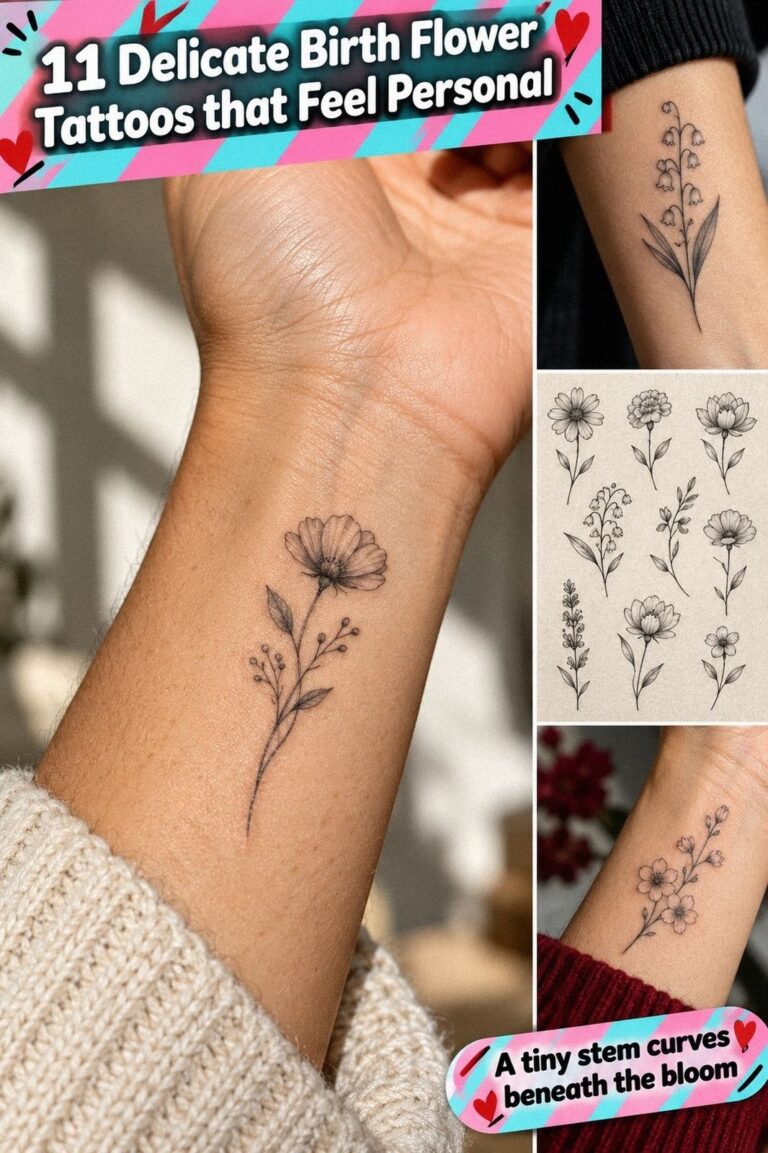
A wrist flower gives you a visible, personal design without taking over your hand. Choose a flower whose symbolism still feels meaningful after the novelty settles. Before you decide, browse these small birth flower tattoo ideas and compare the silhouettes at the same scale.
Keep the stem flowing toward the hand, not straight across the wrist. That small angle makes the design feel more graceful and helps it follow your natural anatomy. I’d skip a crowded bouquet here.
One single-stem botanical is more stylish, more readable, and often more worth it than a dense design that needs early correction.
Your artist can keep the flower around 1 to 2 inches, depending on the petals and stem length. A fine-line black ink finish can look crisp, but ask to see healed examples before you commit. Fresh work isn’t enough evidence when you’re judging long-term value.
And remember, your wrist gets sun, soap, friction, and constant movement. Use gentle aftercare, moisturize once the surface has closed, and avoid direct sun while it heals. It’s a timeless placement, but your linework will need protection if you want that understated look to stay sharp!
Small Tiny Birth Flower Tattoo Ideas
Rib placement makes a small flower feel private and slightly romantic. Choose a design with open petals and limited interior detail. You’ll get a more intimate result when the flower connects to your birth month or a family member instead of functioning as a random trend.
The ribs can feel more intense than the wrist because the skin sits close to bone. Don’t let that scare you, but don’t pretend it’s nothing either. I’d ask for a compact design with a soft black outline, limited interior marks, and enough open skin between each petal.
Your artist might angle the stem vertically so it follows the curve of your side. That creates a flowing silhouette instead of a sticker-like shape. For more symbolism, compare your month with a second flower through this guide to birth flower meanings, then keep the final drawing simple.
If you’re nervous, wear a loose shirt and ask about breaks before the session starts. Your comfort matters, and you don’t have to prove anything by sitting through unnecessary detail. A four-petal botanical can offer better budget value than an intricate design squeezed into a tiny space.
Unique Tiny Birth Flower Tattoo Linework
A spine tattoo gives this idea an edgy direction while keeping the flower itself gentle. Center the design carefully, because even a slight shift can change the balance. The long placement works especially well for a narrow stem and one vertical bloom.
Ask your artist to place the bloom between the shoulder blades or lower along the spine, depending on the flower’s proportions. I prefer a vertical botanical study over scattered symbols here. It looks sleek, and the long placement gives your eye somewhere to travel.
Spine skin can be sensitive, so keep your first version modest. Your artist may suggest a 1-inch bloom with a longer stem rather than a wide flower packed with petals. Bring a reference folder, but let the artist redraw it for your body instead of copying a flat image exactly.
If you want something less expected, look through these unique tiny birth flower tattoo references for line weight and placement ideas. The best design won’t be the most complicated one. It’ll be the one your artist can make sharp, balanced, and readable in a narrow space.
Tiny Birth Flower Tattoo Behind the Ear
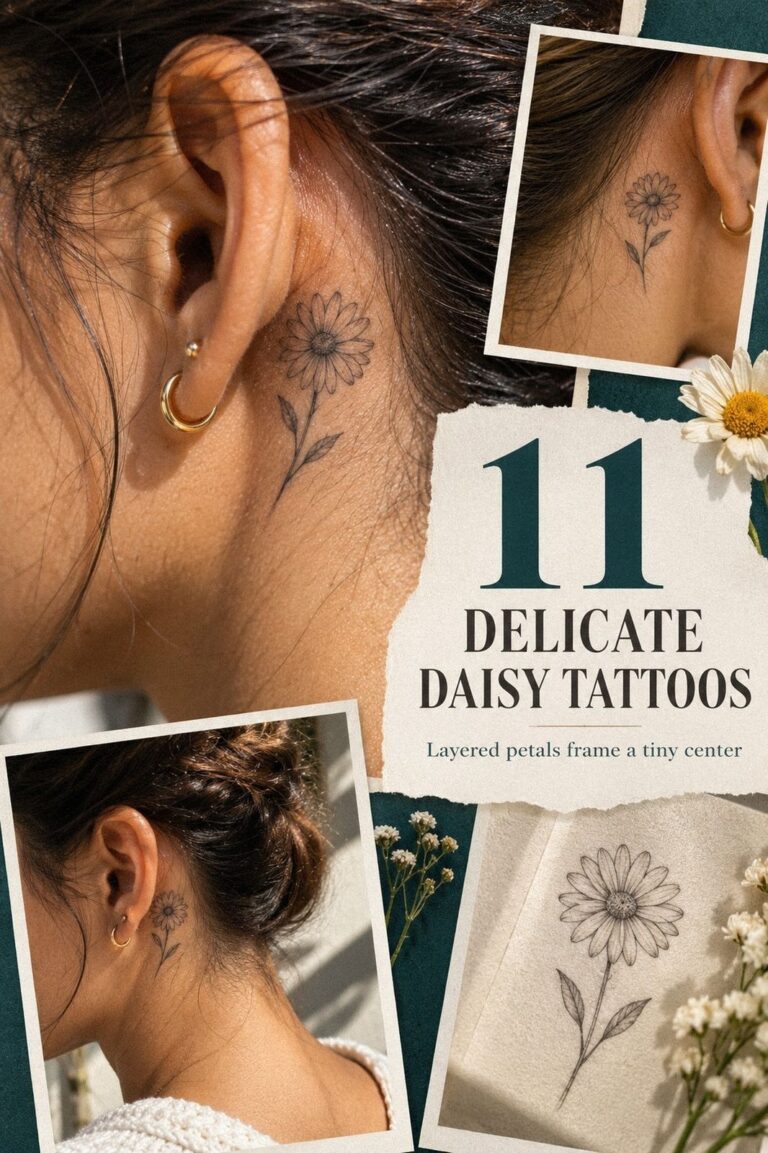
Behind-the-ear placement makes a tiny flower feel discreet, playful, and easy to reveal when you want to. The short stem keeps the design from competing with the curve of the ear. You’ll get a small statement with a very compact footprint.
This is where a minimal black botanical works best. I’d avoid too many tiny leaves because hair, movement, and natural skin texture can make a crowded design look muddy. One flower, one stem, and a few petal lines will give you a more polished result.
The area can be sensitive, and the sound of the machine may feel louder near your ear. Ask your artist to explain each step so you’re not surprised. A dainty design doesn’t mean the session has to feel rushed, and a calm setup can make the experience feel less stressful.
If you’re choosing between several flowers, compare their silhouettes first. A marigold, daisy, or poppy won’t all fit the same way. You can also look at a tiny lotus flower tattoo for ideas on simplifying layered petals into a symbolic outline that still has character!
Tiny Birth Flower Tattoo with Initials
A flash sheet is useful when you want to see several versions before committing. Compare flowers, initials, stems, and spacing at a glance. This approach can keep your consultation focused and help you decide whether the design fits your budget.
Keep the initial small and let the flower carry the visual weight. I’d place one letter beside the stem, not inside a petal, because interior lettering can disappear as fine lines soften. A black ink initial beside an open flower feels more meaningful than a crowded monogram.
Your artist should redraw the flash rather than tattooing a sketch without adjustment. Ask how the letter will look at the final size, especially if you’re using a narrow serif or handwritten script. Tiny lettering can lose its identity quickly, while a simple capital remains crisp.
For a family tribute, you might pair the initial with a birth month flower. These May and September birth flower meanings can help you choose a symbol before the appointment. If you’re marking a sibling, keep each flower related but not identical.
Delicate Tiny Birth Flower Tattoo on Fingers
Finger placement looks bold because the design is so visible, even when the flower is tiny. You’ll want the petals to read from a distance, not dissolve into several nearly invisible marks. Clear shapes matter more here than elaborate detail.
The fingers can be more painful and more demanding than softer placements because of bone, movement, friction, and frequent washing. I’d skip delicate gray shading. A solid black flower outline has a better chance of staying legible than pale details that may fade unevenly.
Ask your artist whether the side, top, or outer finger will suit the design. The top gives more visibility, while the side can feel more discreet. Your daily work, rings, handwashing, and sun exposure all matter.
A fierce little flower needs practical planning, not just a pretty reference.
Aftercare can be awkward because you use your hands constantly. Keep the area clean, don’t pick at peeling skin, and follow the studio’s instructions.
If you want a softer alternative, compare these tiny flower tattoos for women before choosing your final placement. The most understated version may offer the best value over time.
Minimal Tiny Birth Flower Tattoo in Color
A calf tattoo gives you enough space for a small wash of color without making the flower feel oversized. Start with a restrained palette, such as muted red petals, pale green leaves, or one vibrant color accent. You’ll still see the linework first.
I’d choose one color, not a rainbow. A muted red pigment in the petals can make the flower feel expressive, while a black stem keeps the design grounded. Too many colors can turn a tiny flower into visual noise, especially when the artist has little space to blend.
Color may soften differently from black over time, and sun exposure can affect how fresh it looks. Ask your artist about healed color examples, not just bright appointment photos. The cost can also rise when color requires extra passes, so ask for a clear estimate before booking.
If you’re unsure about the flower itself, start with the meaning and then simplify the palette. A May and October birth flower tattoo meaning guide can narrow your choices. A minimal flower with one carefully chosen shade will usually look more elegant than a design trying to display every available color.
Tiny Birth Flower Tattoo for Siblings
A collarbone flower can represent siblings without looking like a matching set from a catalog. Choose a single stem with layered petals and a fine black contour. You’ll get a visible but still intimate placement that works with open necklines and everyday clothing.
Choose a shared flower shape, then let each sibling personalize the stem, petal count, or tiny mark beside it. I’d avoid giving everyone the exact same stencil. A paired botanical symbol feels more empowering when each person has a small difference that reflects their own story.
The collarbone can be more sensitive because the skin is close to bone. Your artist may angle the flower along the collarbone rather than placing it directly over the sharpest point. That adjustment can make the design look more natural and may help you tolerate the session more comfortably.
For a sibling born in a different month, choose flowers with similar silhouettes instead of forcing a single species. You can compare May and July birth flower meanings before you book.
The result should feel connected, not matched down to the last line. That distinction makes the idea more personal!
Fine Dotwork Tiny Birth Flower Tattoo
Dotwork gives a tiny flower a textured finish without filling every petal with solid shading. On the thigh, two small dots or a light stippled shadow can make the layered bloom feel more ornate. You’ll have more space here than you would on a finger or behind the ear.
Ask your artist to keep the dots deliberate and spaced. When dotwork is packed too tightly, it can heal into a gray patch.
I’d choose a controlled stipple shadow around the flower’s center, then leave the outer petals open. That contrast keeps the design refined and readable.
The thigh is often more tolerable than ribs, feet, hands, or sternum, though everyone’s experience differs. Your artist can work with the curve of the leg and position the flower so it follows your natural movement. A soft dotwork gradient can give the bloom depth without making it look heavy.
Use healed portfolio photos when you’re comparing artists. Fresh dotwork can look dramatic, but healed work tells you whether the spacing stayed clean. If you like symbolic flowers, this May birth month flower tattoo guide can help you choose a design that feels sacred rather than merely decorative.
Tiny Birth Flower Tattoo on the Ankle
The stencil and healed result should both guide your decision. A healed black line tattoo can look softer than the fresh version, and that difference is normal. Ask to see work at several stages if your artist has it available.
Ankle skin and foot-adjacent areas can be more sensitive, especially near bone. I’d keep the petals open and the stem slightly thicker than a single hairline. A clear stencil transfer gives your artist a chance to check scale, angle, and spacing before the machine starts.
The surface generally settles in around 2 to 3 weeks, while complete healing can take about 2 to 3 months. Your artist’s aftercare instructions come first, but gentle washing, light moisturizing, and avoiding sun or pools are common parts of the process.
If you like comparing stencil ideas with finished pieces, save this tiny flower crown tattoo collection for contrast. You don’t need a crown shape to borrow its rhythm. A small ankle flower can be classic, polished, and quietly striking when the healed lines still have room to breathe.
Symbolic Tiny Birth Flower Tattoo Bouquet
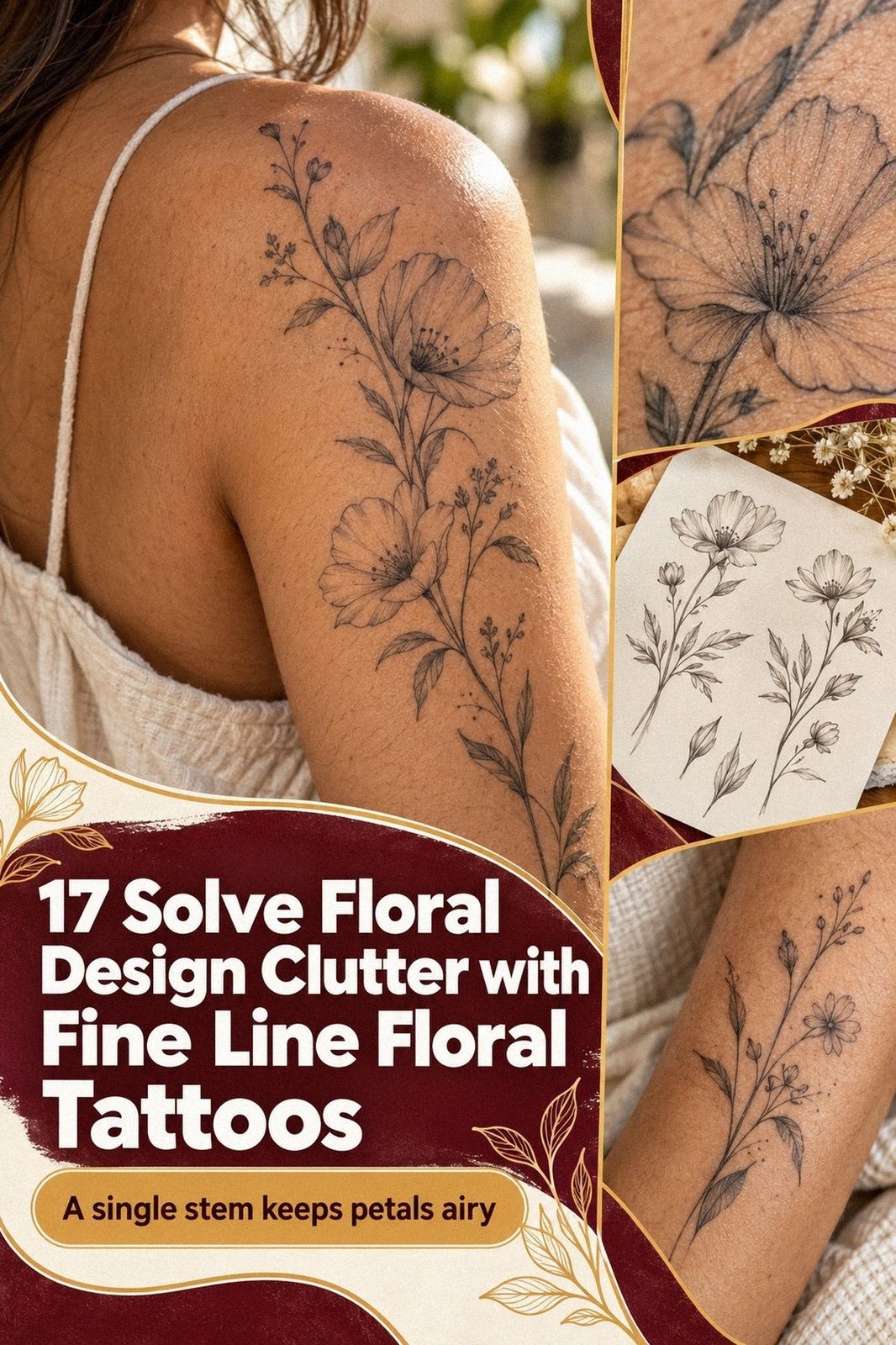
A forearm bouquet gives you plenty of flexibility. Use one main flower, a smaller bloom, and a few clean leaves. You’ll get symbolism without turning the design into a crowded garden.
Choose one dominant flower and let the others support it. I’d avoid giving every bloom equal size because the result can lose its focal point. A layered bouquet composition feels more powerful when your eye knows where to land first.
You can use flowers for birthdays, children, siblings, or personal milestones. Keep the stems crossing naturally, and ask for enough negative space between the petals. Your artist may suggest a slightly larger design than 1 inch so the symbolism remains visible as the lines soften.
For a more specific direction, compare tiny flower crown tattoo ideas with a traditional bouquet layout. I’d choose the bouquet if you want something iconic, expressive, and easy to expand later. It can begin as one meaningful flower and grow only when you have a real reason to add another.
Start With Your Birth Month
Begin with the flower’s symbolism before you choose a placement. A small birth flower tattoo guide can help you compare flowers by shape, meaning, and how much detail they need. This step keeps the design personal instead of trend-driven.
Then make a short list of two or three candidates. A daisy may work beautifully as a simple outline, while a layered lotus might need more open skin. If your favorite flower is intricate, ask your artist how to make its silhouette readable at a small scale.
Your budget should come after the concept, not before it. A simpler flower may lower the cost, but the cheapest option isn’t always the best value if it requires an early touch-up. Ask what the artist recommends for your skin and placement.
May, September, and the Meaning You Keep
May and September flowers can carry very different visual moods. One may feel romantic and soft, while another looks crisp, graceful, or more striking. The right choice is the one whose meaning still feels personal when you stop thinking about trends.
Use this guide to birth flower meanings as a starting point, then bring your own story into the consultation. You might choose a birth flower for yourself, a child, a parent, or a date that changed your life.
I prefer one strong symbol over several vague ones. A small flower with a clear stem and confident petals can feel more timeless than a complicated arrangement that tries to say everything at once.
Compare Line Weight Before You Book
Line weight changes the entire mood of a tiny flower. A very thin line can feel ethereal and graceful, while a slightly stronger contour may look sharper and remain more readable after healing. Neither choice is automatically better.
Ask to see healed examples in the same style you want. Your artist should be able to explain how fine-line structure behaves on your chosen placement, especially if you’re considering fingers, ankles, or behind-the-ear skin.
This is also where a realistic budget helps. Compare the artist’s healed results, consultation process, and touch-up policy rather than judging only the appointment cost. A polished portfolio can offer more value than a lower quote from someone without small-scale experience.
The Ink-Weight Rule for Tiny Birth Flowers
Tiny tattoo design is a balance between detail and ink weight. Your reference may look ethereal on paper, but the artist still needs enough contrast for the shape to survive real skin, sun, movement, and time. I’d choose readable linework over fragile detail every time.
Your artist may recommend black ink with a slightly stronger outline instead of ultra-thin lines everywhere. That doesn’t make the tattoo less delicate.
It gives your fine-line structure a better chance of staying crisp. You’ll want to ask for healed examples before you approve the final stencil.
Black Ink vs. Color: Which Is Worth It?
Black ink usually offers the strongest visual anchor for a tiny tattoo. Color can feel vibrant and expressive, but it may soften differently and require more careful sun protection. If you want the most understated result, black may be worth it!
A tiny lotus flower tattoo can show how layered petals work when the palette stays restrained. You don’t need every petal filled with pigment. One muted accent can make the design feel personal without overwhelming the silhouette.
Ask about pigment, touch-ups, and healed color before you decide. A color tattoo isn’t automatically higher value, and a black tattoo isn’t automatically more timeless. Choose the finish that matches your daily habits and the way you want the flower to age.
Which Placement Will You Still Like in Five Years?
Ask yourself where you’ll still want to see the flower when the first excitement fades. A wrist or forearm is visible and easy to appreciate, while ribs or behind-the-ear placement feels more private. Your answer should match your daily life, work, sun exposure, and comfort level.
I’d skip a fragile hand design if you work with tools, wash your hands constantly, or don’t want frequent touch-ups. A thigh or forearm can be a smarter choice for your first tattoo.
Placement longevity isn’t only about the artist. It’s also about how you treat your skin afterward.
Black ink generally gives small tattoos a stronger visual anchor, while very fine lines can spread or soften over time. Your flower doesn’t need to look untouched forever.
It needs to age in a way you can accept. That’s a more honest and timeless goal than chasing a permanently fresh tattoo.
And if you’re still deciding, save two references for each location and compare them at the same scale. Which one still looks striking when it’s printed small? That answer usually tells you more than a long list of trends.
You can also compare small flower crown tattoo ideas for placement rhythm and proportion.
What I Learned From Choosing a Tiny Flower
I once focused too much on the flower and not enough on the placement. The drawing was gorgeous on paper, but the location made the stem feel cramped.
I also underestimated how much sun and friction a visible area receives. Those mistakes taught me to plan the skin first, then the symbol.
My strongest opinion is simple: choose an artist for healed linework, not just fresh appointment photos. Fresh ink can look bold, saturated, and dramatic because the skin is still irritated. Healed work shows whether the petals stayed separated, whether the stem remained clean, and whether the artist understands small-scale design.
Your budget may begin around a shop minimum of $50 to $100, while hourly rates often fall around $100 to $250 in the United States. The final cost varies by region and artist. You’re paying for judgment, hygiene, drawing, setup, and technique, not only the minutes the machine touches your skin.
I’d also leave room for a consultation. Bring your birth month, preferred placement, size range, and two or three references.
Don’t insist on copying a design that won’t suit your body. A meaningful, raw, and well-adjusted flower will always beat a technically impressive idea that feels borrowed.
A Few Things Worth Answering
How much does a tiny birth flower tattoo usually cost?
A tiny birth flower tattoo often starts around a shop minimum of $50 to $100, while hourly rates may run about $100 to $250 in the United States. Your artist, region, placement, and drawing time will affect the total. Ask for a quote before booking, with clear pricing in writing.
Are tiny birth flower tattoos a good idea for a first tattoo?
Yes, they can be a good first tattoo when you choose a tolerable placement and a readable design. Your forearm, thigh, or shoulder may feel easier than ribs, feet, hands, or sternum. A personal birth symbol can also make the experience feel more worthwhile than choosing a random trend.
How do I choose a tattoo artist for a tiny birth flower tattoo?
Look for clean linework, healed photos, consistent petal shapes, and a studio that explains hygiene clearly. Your artist should be comfortable simplifying references for real skin. A polished healed portfolio matters more than a large follower count, especially when you’re requesting small, precise work.
How much do tiny birth flower tattoos hurt?
Pain varies, but ribs, feet, hands, and sternum are often more sensitive because of bone and thin skin. Forearms, thighs, and shoulders are commonly more tolerable. Your session may still feel sharp or warm, but the design’s small size can limit the total time.
How long does a tiny birth flower tattoo take to heal?
The surface usually settles in about 2 to 3 weeks, while complete healing can take around 2 to 3 months. Your aftercare usually includes gentle washing, light moisturizing, and avoiding sun or pools while the skin closes. Follow your artist’s instructions if they differ.
What’s the best placement for a tiny birth flower tattoo?
The forearm or thigh is often a practical choice because the areas can be more tolerable and easier to protect. Your wrist, ankle, or behind-the-ear placement will be more visible but may face more friction or sun. Choose based on comfort, lifestyle, and the value you place on visibility.
Where can I get a tiny birth flower tattoo?
Book with a reputable licensed studio that shows healed work and follows clear hygiene practices. Your best artist may be local rather than famous online. Check the consultation process, ask about the stencil, and confirm that the artist regularly works with delicate botanical linework.
Where I’d Start First
If I had to pick one, I’d start with the forearm bouquet. It gives your flower enough space to stay readable, it’s usually easier to tolerate than ribs or hands, and you can protect it while it heals. Save the reference, ask for healed examples, and book when the design feels personal.
If you want something more discreet, I’d choose a single behind-the-ear or ankle flower with a clear silhouette. If you want more symbolism, the forearm gives you the strongest long-term value. Either way, let the meaning lead and let your artist adapt the details to your skin.