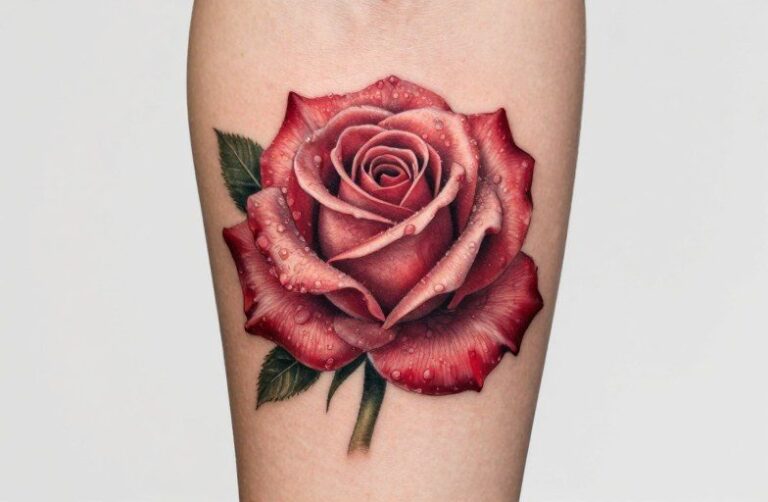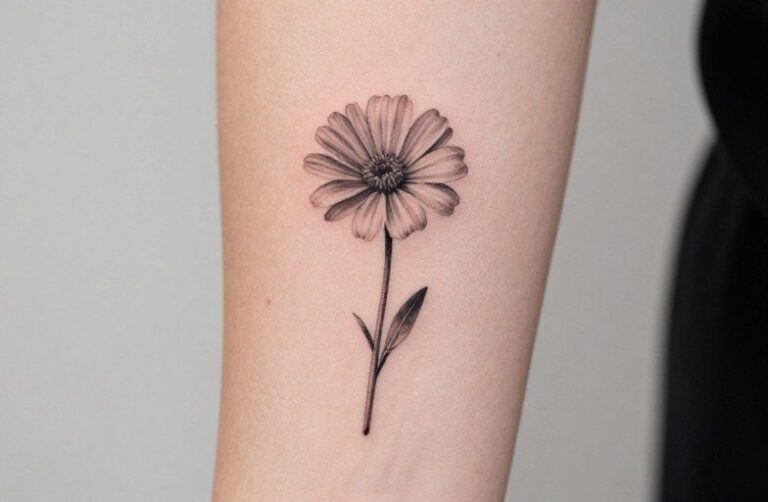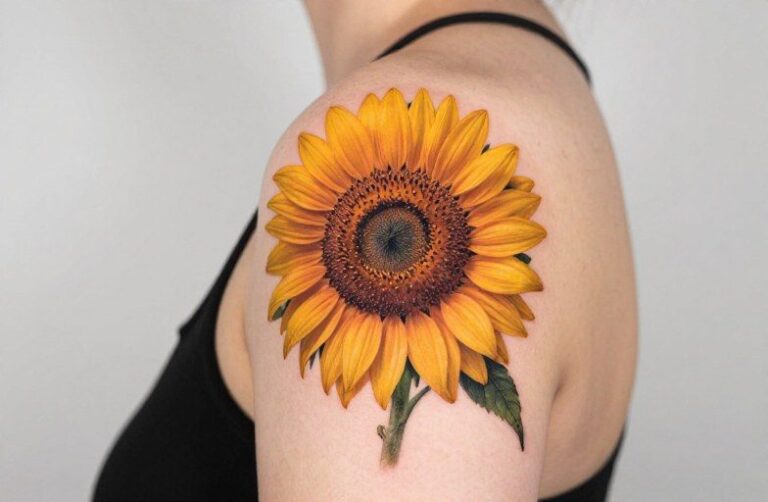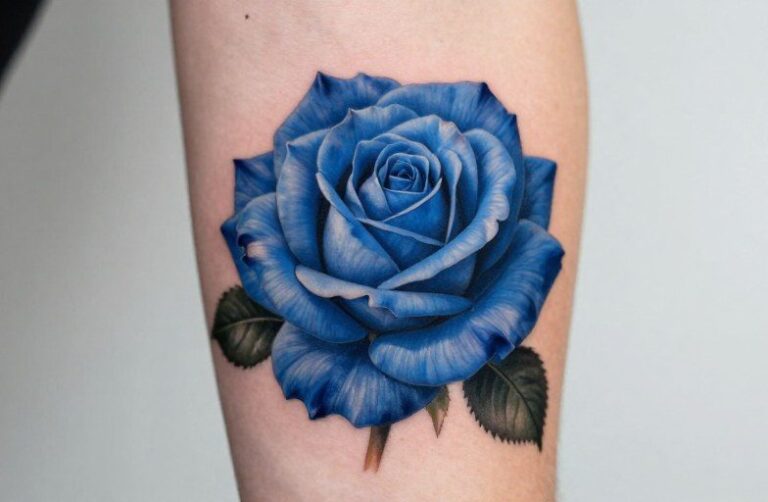
Drawing a rose tattoo that translates well to skin requires understanding how petals fold in three dimensions, how lines thicken and taper for readability, and how negative space creates depth. A rose on paper and a rose on a forearm are fundamentally different problems. This guide breaks down the technical skills you need, the realities of how ink ages, and when your design is ready for a professional to refine or execute.
Cost Factors
Commissioning a custom rose drawing from a tattoo artist, or getting one tattooed, varies widely based on complexity and the artist’s experience. A small, single-needle rose on a wrist might run $150-$250, while a full-chest piece with multiple roses, leaves, and background shading can stretch past $2,000. Location matters too, shops in major cities charge more than those in smaller markets.
What You’re Paying For
Time is the main factor. A detailed rose with smooth gradations takes longer to draw and tattoo than a bold black outline version. You’re also paying for the artist’s years of figuring out how roses age, which colors hold in different skin tones, and how to make petals read from across a room. Custom flash, drawings an artist creates for multiple clients, often costs less than a fully bespoke design.
- Simple black outline rose: lower end, faster execution
- Full color with soft shading: more time, more money
- Cover-up or scar integration: significantly more for design complexity
- Artist reputation and wait times: premium pricing for established names
DIY Drawing vs. Professional Design
If you’re drawing for yourself or a friend, the cost is time and materials. But if you want a drawing that will actually be tattooed, budget for at least one consultation. Many artists charge a drawing deposit ($50-$200) that applies to the tattoo price. This isn’t a markup, it’s because translating a rose to skin requires problem-solving that paper doesn’t.
Pain & Comfort
Pain isn’t something you draw, but it’s something your drawing causes. Dense black shading over a large area hurts more than fine lines. A rose with heavy fill on the ribs or sternum will test most people. Understanding this helps you design with placement in mind, or warn whoever’s getting it.
How Design Affects Sensation
Outline work feels like scratching; solid color packing feels like burning. A rose drawn with lots of open skin and delicate lines will be a quicker, easier sit than one with saturated red petals and dense green leaves. If you’re designing for someone pain-sensitive, suggest a smaller size, less dense fill, or a fleshier placement like the outer upper arm or thigh.
- Bony areas (ankle, collarbone, ribs): more intense, consider simpler linework
- Muscular or padded areas (upper arm, calf, thigh): more tolerable for complex shading
- Long sessions: break complex roses into multiple appointments
Preparing to Sit
Eat a solid meal beforehand. Avoid alcohol for 24 hours, it thins blood and makes the artist’s job harder. Bring something to distract yourself, and don’t be a hero about breaks. A good artist will check in and adjust pace. The drawing you make should match the human on the other end of it.
Realistic Expectations
Roses are one of the most requested tattoo subjects, which means they’re also among the most poorly executed. A beautiful pencil drawing often fails on skin because paper doesn’t stretch, bleed, or age. Your job as the designer is to anticipate these limitations.
How Ink Ages in Rose Designs
Red pigment fades faster than black. Fine lines blur over time as skin regenerates. A rose drawn with hair-thin details and subtle gray washes will look muddy in five years. Bold lines, sufficient contrast, and simplified petal edges hold. Design for the ten-year version, not the fresh photo.
- Lines below a certain weight (roughly 0.5mm tattooed) spread and soften
- Yellow and white highlights often disappear or turn beige
- Black and dark red have the best longevity
- Large areas of solid color age more gracefully than intricate stippling
Skin Tone Considerations
Color theory on pale skin doesn’t translate to darker skin. Bright pinks and light yellows can look ashy. Deep, saturated reds and purples, high-contrast black shading, and strategic negative space work across more skin tones. If you’re drawing for someone specific, ask about their skin tone or design with versatility in mind.
The Direct Answer
Here’s how to actually draw a rose that functions as tattoo art.
Structural Foundation
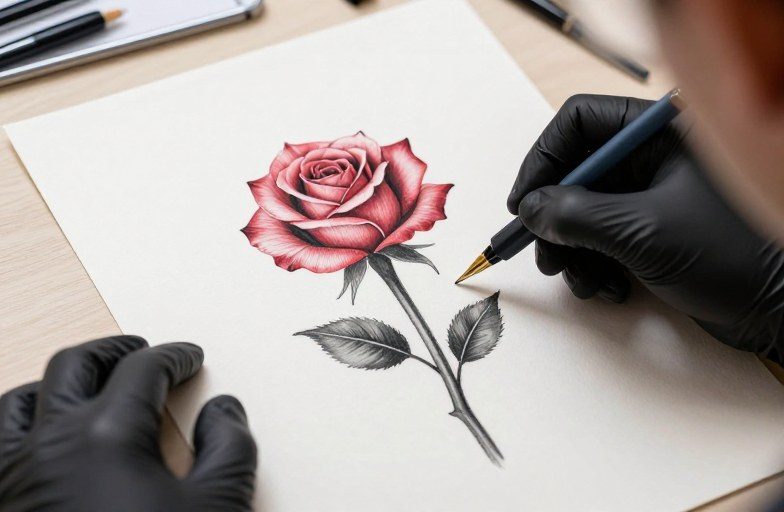
Start with a cupped shape, not a flat spiral. Roses in nature grow from a central point outward, with inner petals tighter and outer ones looser. Draw a small oval center, then wrap petal shapes around it with overlapping edges. Each petal should have a distinct front and back plane, use a center line to keep curvature consistent. Avoid symmetrical, perfect spirals; they look mechanical.
For line weight, vary from thick (outer contours, stem) to medium (petal edges) to thin (detail lines, texture). Thick lines anchor the design and read from distance. Thin lines add interest but will blur over time, so use them sparingly and never for critical structure.
Shading Approaches
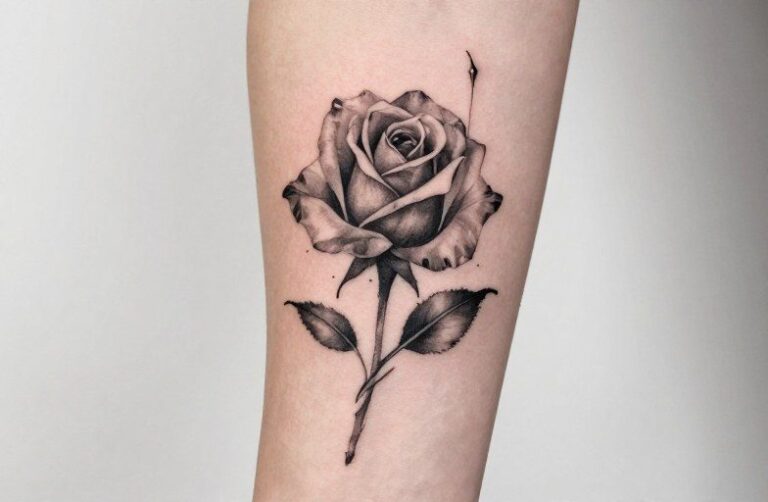
- Black and gray: Use smooth whip shading or stippling for petal roundness. Keep darkest values near the center and where petals tuck behind each other.
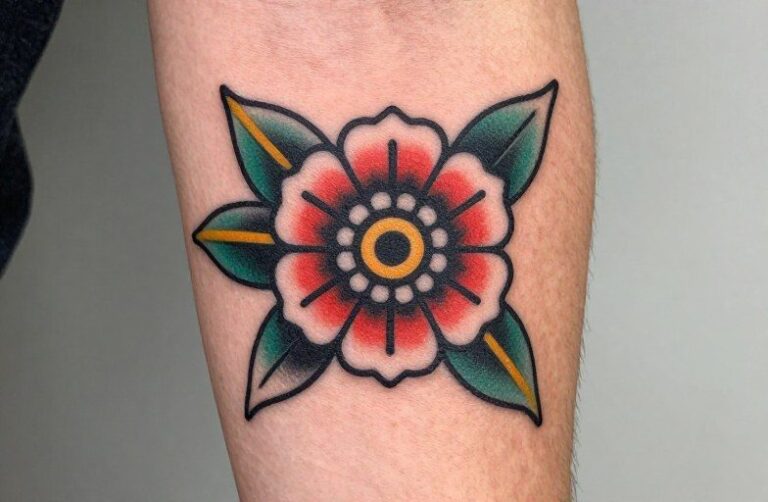
- Traditional bold: Limited shading, heavy black outlines, simplified forms. Most forgiving for aging.
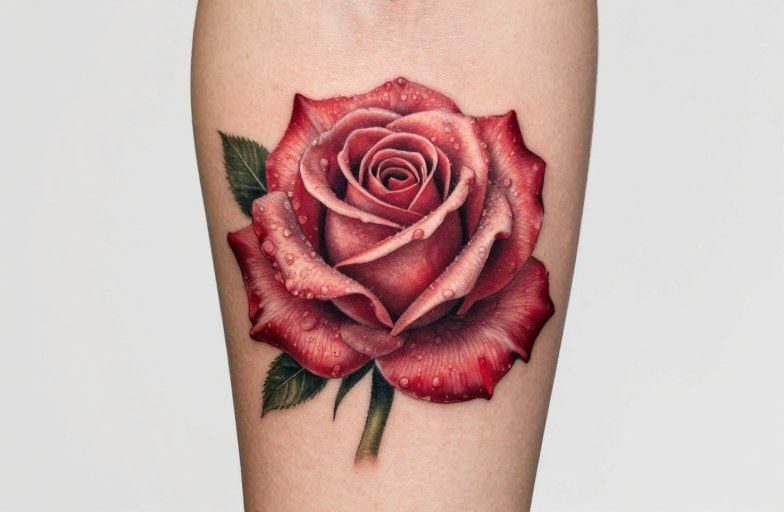
- Color realism: Reference a real rose. Map your light source and stick to it. Use complementary greens for leaves, not generic cartoon green.
Common Composition Mistakes
Petals that float without connecting to a center. Leaves that all point the same direction. Thorns that look glued on rather than growing from the stem. Stems that are too thin to hold the visual weight of the flower. A rose needs a believable structure even in stylized form.
When to See a Professional
Knowing your limits is a skill. Here’s where handoff makes sense.
Your Drawing Is a Starting Point
Most tattoo artists prefer to redraw even strong concepts. They know how their machine handles curves, how ink sits in different body areas, and how to adjust for movement. Bring reference photos, your sketches, and clear direction, but expect the artist to revise. A good professional won’t just copy your drawing; they’ll make it work on a living, moving surface.
Red Flags You Need Help
- You’re designing for a challenging placement (hand, neck, joint areas)
- The rose needs to integrate with existing tattoos or cover old work
- You want photorealism and haven’t studied color theory or anatomy
- The design involves text, geometric frames, or multiple elements that must balance
Cover-ups especially require professional eyes. A rose drawn to hide old ink needs strategic dark areas and specific petal placement. What looks good on blank paper can expose the old tattoo underneath.
Healing Timeline
Aftercare affects how your drawn design ultimately looks. A beautifully drawn rose can heal poorly if neglected.
What Happens Day by Day
Days 1-3: Redness, plasma weeping, tenderness. Keep it clean, don’t over-moisturize. Days 4-7: Flaking and peeling begins. The rose will look dull and possibly patchy, this is normal. Days 7-14: Major peeling subsides. Itching peaks; don’t scratch. Weeks 2-4: Surface looks healed but deeper layers are still settling. Month 2-3: True settled color and line clarity emerge.
Protecting Your Design Long-Term
- Keep fresh work out of direct sun; UV degrades pigment rapidly
- Moisturize regularly once healed to prevent dry, cracked appearance
- Avoid soaking (pools, hot tubs) during initial healing
- Touch-ups are normal, especially for color-heavy roses
How you draw affects how it heals. Dense black areas can scab thicker. Fine lines are more vulnerable to being pulled out during peeling. Design with the healing process in mind, not just the fresh result.
What to Remember
Drawing a rose tattoo well means respecting the medium. Paper is forgiving; skin is not. Build from real structure, vary your line weight with purpose, design for how ink ages, and know when your concept needs a professional’s translation. The best rose tattoos look good at twenty feet and still read clearly at twenty years. That’s not sentiment, it’s technical craft, and it’s what separates a drawing from a tattoo that lasts.
Frequently Asked Questions
What pencil should I use for rose tattoo sketches?
Start with HB or 2B for light construction lines, then switch to 4B or 6B for committed dark lines that simulate tattoo boldness. Mechanical pencils work well for precise petal edges, but soft graphite helps you feel the weight of final contours.
Why do my rose drawings look flat when tattooed?
Flatness usually comes from treating petals as 2D shapes rather than curved forms with thickness. Add a center line to each petal, shade the underside where it curls away from light, and overlap edges to show depth. Paper drawings often lack the structural modeling that tattoo ink needs to read dimensionally.
Can I use watercolor to plan a color rose tattoo?
Watercolor is useful for understanding color relationships, but tattoo ink behaves differently, it sits opaque and doesn’t blend wet-into-wet. Use watercolor for mood and palette, then translate to bold, separated color areas with defined edges for the actual tattoo design.
How do I practice drawing roses that work on curved body parts?
Draw on curved surfaces, balloons, cups, your own arm, to see how shapes distort. A round rose on flat paper stretches when wrapped around a calf or shoulder. Design with the final placement’s curvature in mind, and avoid perfectly circular compositions for highly contoured areas.