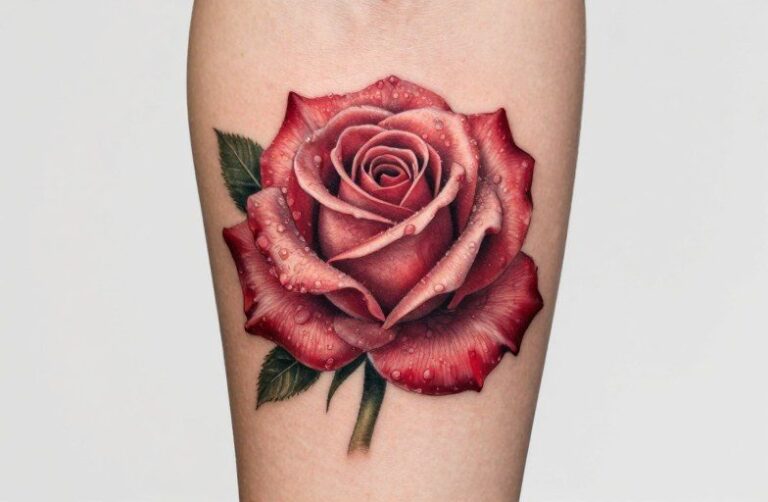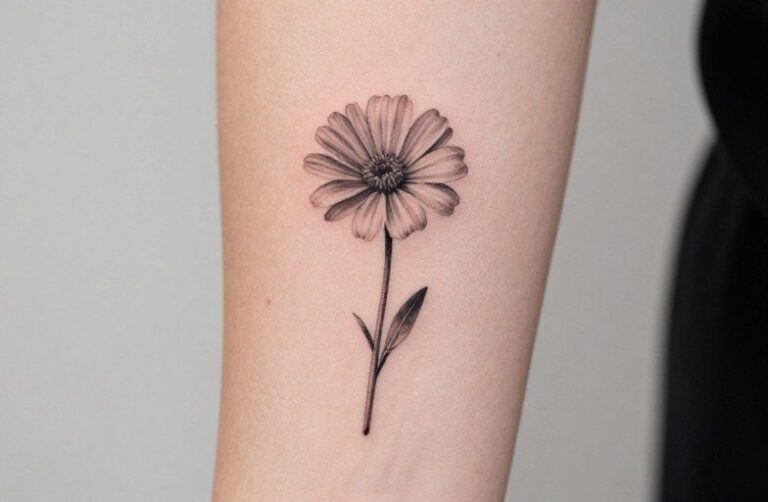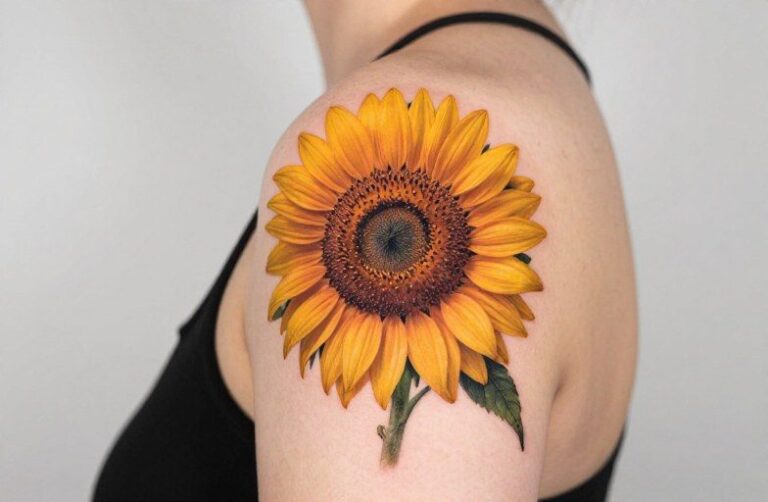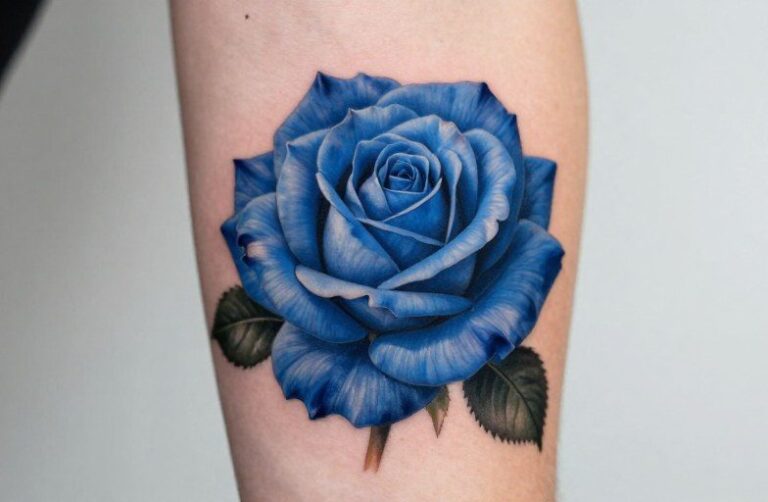
Drawing a tattoo rose starts with understanding how the flower actually grows, then translating that structure into bold lines that won’t blur together and shading that stays readable as the skin ages. Below is a practical breakdown of the process, from the first pencil stroke to the final ink-ready design, plus what you need to know about getting it on skin.
What to Expect Step by Step
Mapping the Structure
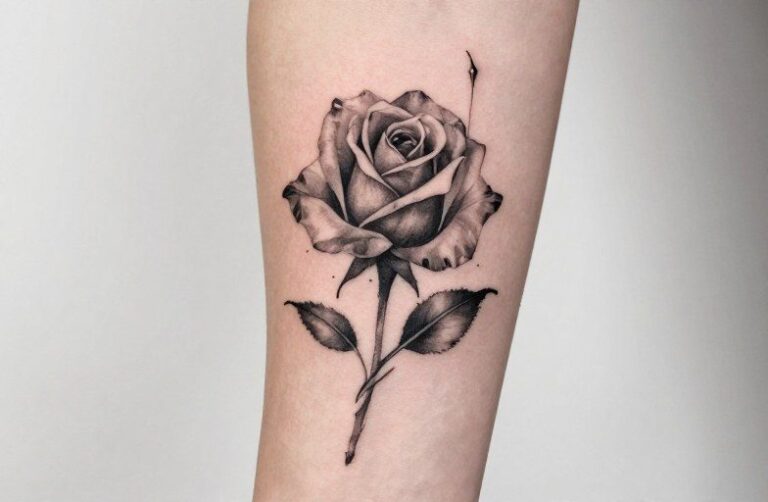
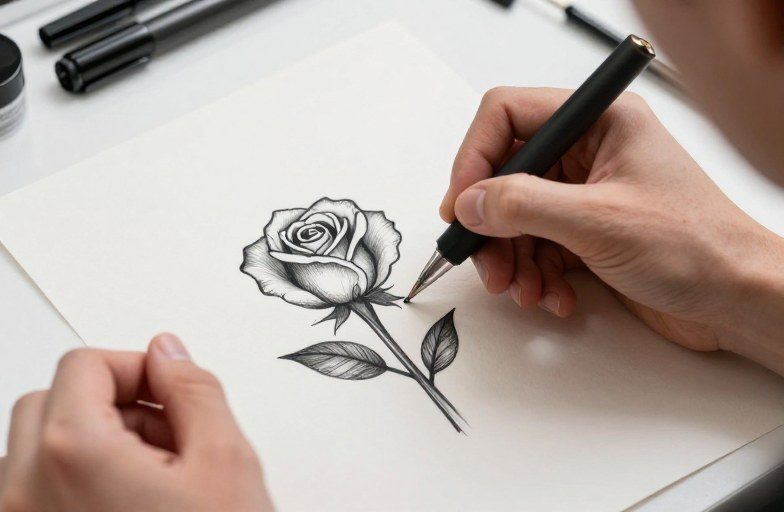
Start with a tight spiral on your page. This isn’t decorative, it’s the rose’s core, where the inner petals tuck into a bud. Draw a shallow cup shape around that spiral, then add overlapping petal shapes that get larger and more open as they move outward. Each petal needs a distinct edge; mushy, fused shapes turn to gray blobs after a few years under skin. Reference real roses, not other tattoos. Photographs of blooms in three-quarter view show how petals actually overlap, which edges catch light, and where shadows pool.
Line Weight and Contour
Outline work needs variation to read as dimensional. Use heavier lines, think 7RL or 9RL equivalent in pencil pressure, on the outermost contours and the bottom edges of petals where they curl away from light. Lighter lines, 3RL weight, work for inner folds and texture details. Every line should do a job: describe an edge, suggest a shadow, or separate overlapping forms. Random detail lines that don’t follow the flower’s structure will clog the design and age poorly.
Shading for Skin
Traditional tattoo roses use whip shading or smooth gray washes to create depth. In your drawing, map the darkest areas first: the spiral center, the undersides of curled petals, and where outer petals overlap inner ones. Leave the top edges and centers of outer petals bright. Smooth gradients matter more than absolute darkness. Harsh black-to-white transitions look dramatic on paper but heal into muddy contrast on skin. Aim for three to four distinct values, no more. Too many gray steps blur together over time.
- Draw from the center outward, petals layer logically this way
- Keep petal edges crisp; soft pencil lines become soft tattoos
- Limit fine detail inside petals to what a single needle could actually render
- Check your design from ten feet away; if the rose shape reads, it will work on skin
Cost Factors
Design Complexity
A single rose with bold outlines and limited shading takes less time than a fully rendered piece with background leaves, drops, or multiple blooms. Most shops in the US charge hourly, with rates running $150-$300+ depending on region and artist reputation. A straightforward palm-sized rose might take two to three hours. Adding a full sleeve’s worth of foliage, or demanding photorealistic soft shading, can stretch to multiple sessions.
Placement and Size
Drawing the rose is free; getting it tattooed is where costs land. Inner bicep, thigh, or calf offer flat, stable skin that lets an artist work efficiently. Ribs, hands, neck, or anywhere with thin, mobile skin demands more technical care and often more time. A rose drawn to wrap a joint needs careful distortion planning, straight lines across a bending knee will warp and look wrong when standing.
Healing Timeline
The First Two Weeks
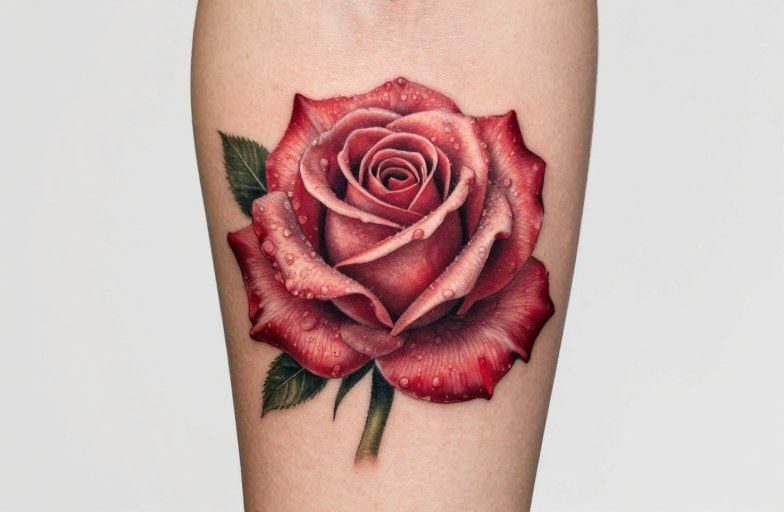
Fresh tattoo roses look darker and more saturated than they will heal. Red ink, especially, tends to flake visibly and can look patchy during days three through seven. This is normal. The bold black outlines usually hold their contrast first; the softer reds and pinks settle later. Don’t judge the color balance until at least week four. Heavy black shading can scab thicker than line work, resist picking, which pulls ink out unevenly.
Long-Term Color Behavior
Red pigments are notorious for faster fading than black, though modern formulations have improved this. A rose drawn with heavy black structure and red as secondary fill will stay readable decades longer than one relying on red linework. Yellows and pale pinks often fade to near-invisible on lighter skin tones; plan for this in your drawing by never making light colors structurally essential.
Pain & Comfort
Where Roses Usually Go
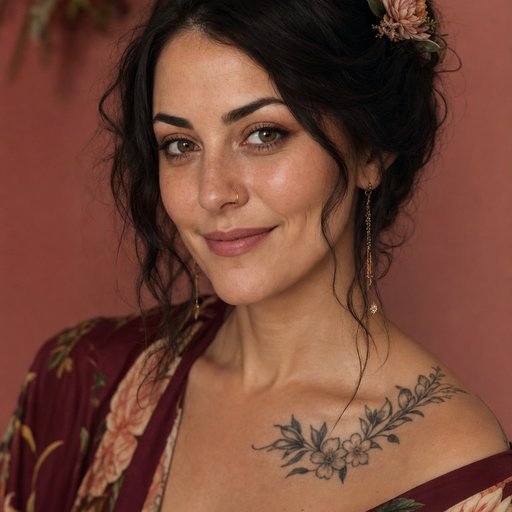
Roses are versatile, thigh pieces, shoulder caps, forearms, chest centers. Fleshier areas with some muscle padding handle the repeated needle passes better than bone-adjacent spots. The outer thigh and upper outer arm rank among the more manageable locations for multi-hour sits. Inner arm, ribs, and sternum demand more breaks and steady breathing. If you’re drawing a rose for yourself, consider how long you can realistically hold still in that position.
Sitting Through the Session
Outline passes feel sharp and immediate; shading is more of a dull, heated abrasion. Color packing in a dense rose, especially solid red fills, can push the skin’s tolerance. Eat a solid meal beforehand. Bring headphones. The vibration of lining through tight spiral details in a rose center can feel intense even on easier placements, anticipate this in your drawing by not making the center unnecessarily dense with tiny lines.
When to See a Professional
Design Translation
You can draw a beautiful rose on paper and still have it fail as a tattoo. A professional artist understands how skin stretches, how ink spreads slightly under the epidermis, and how today’s crisp lines become tomorrow’s softer edges. If your drawing has pencil-shaded areas smaller than a dime, or lines thinner than a hair’s width, those details won’t survive. Take your drawing to a consultation. Most artists will redraw it anyway, but a strong structural drawing saves time and money.
Technical Execution
Smooth color gradients in a rose require machine control and needle selection that takes years to develop. Self-taught stick-and-poke attempts at roses usually heal with wobbly petals and inconsistent saturation. The spiral center, especially, is unforgiving, uneven depth there looks amateur immediately. This is one design where professional execution matters visibly.
Tips From the Chair
Drawing for the Long Haul
Look at healed roses, not fresh Instagram posts. The best reference for your drawing style is traditional American and Japanese work from ten, twenty, thirty years back. Those roses still read because they prioritized silhouette and contrast over texture. Your drawing should look good photocopied in black and white, if it does, the color is bonus, not crutch.
Common Drawing Mistakes
Over-detailing the center is the big one. A rose’s visual weight should feel balanced; too much black or too many lines in the bud makes the whole flower feel heavy and cramped. Another error: petals that all face the same direction or have identical curves. Real roses are asymmetrical. Mirror-image petals look artificial. Draw through to the back of the flower, suggest where petals wrap behind, even if hidden, to avoid a flat cutout look.
- Reference wilting roses too; they show petal structure under stress
- Draw at actual size or larger; shrinking detailed work hides flaws
- Flip your drawing horizontally to catch symmetry errors
- Leave breathing room around the bloom; crowding with leaves or filler weakens the form
What to Remember
A tattoo rose that lasts starts with honest structure, not stylized shortcuts. Draw the spiral, build outward with distinct overlapping shapes, vary your line weight with purpose, and limit your values to what will read through skin’s natural filtering. The drawing process matters because every decision amplifies or degrades under the needle and over the years. Bring strong reference, accept that some paper details won’t translate, and trust that simplicity carries further than complexity. The rose is one of tattooing’s oldest subjects for good reason, when drawn with care, it needs no explanation.
Frequently Asked Questions
Should I draw my rose in color or black and gray first?
Start in black and gray to check your values and structure. Color can hide composition problems. Once the form reads without hue, add color notes separately if needed for your artist.
How big should I draw a tattoo rose for the best results?
Palm-sized or larger works best. Smaller than that, and petals merge during healing. Draw at actual tattoo size or slightly bigger to test if details survive.
Do I need to include leaves and stems in my rose drawing?
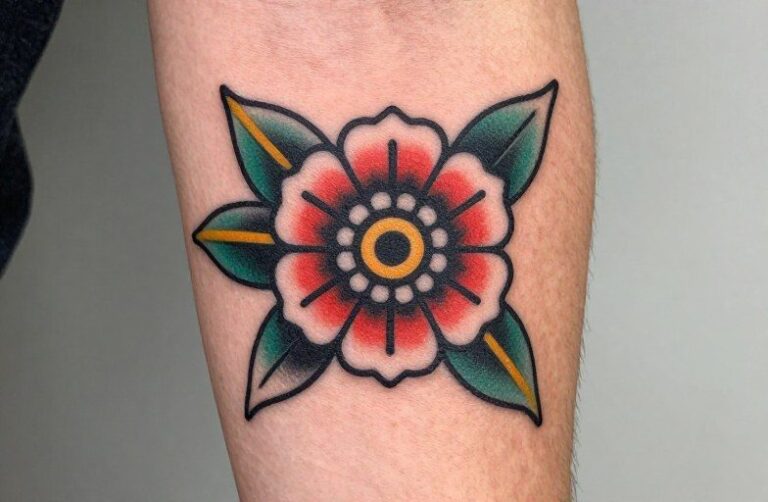
Not necessarily. A standalone rose bloom is a valid tattoo. If you do add greenery, draw it with the same bold simplicity, complex leaf veins rarely heal cleanly.
Why do my drawn roses look flat compared to tattoo roses I admire?
You’re likely shading for light effects rather than form. Focus on where petals turn away from the viewer versus toward them. Use line weight to create depth before adding any shading at all.
Related Tattoo Guides
- How to Draw a Rose Tattoo: A Complete Guide
- Explore more