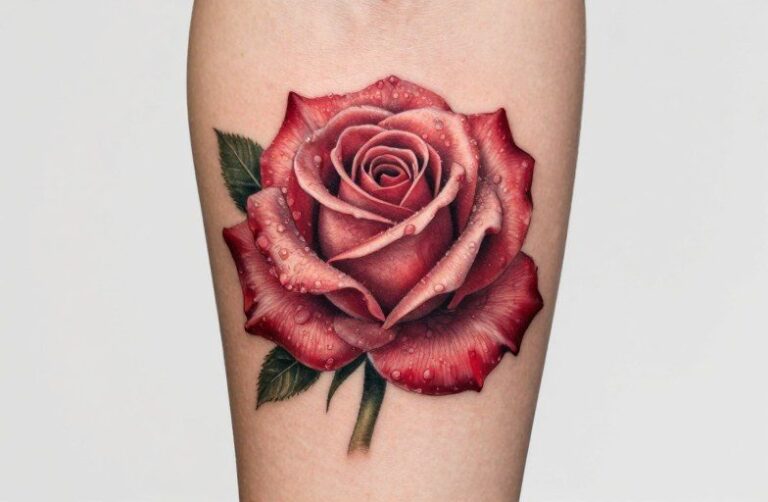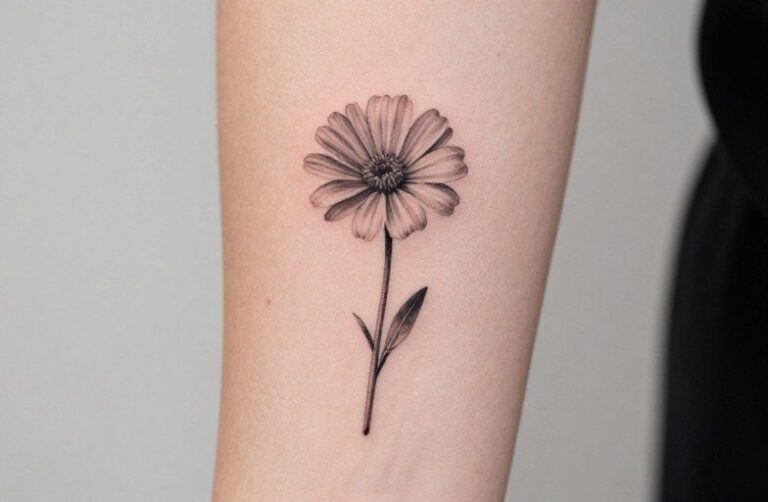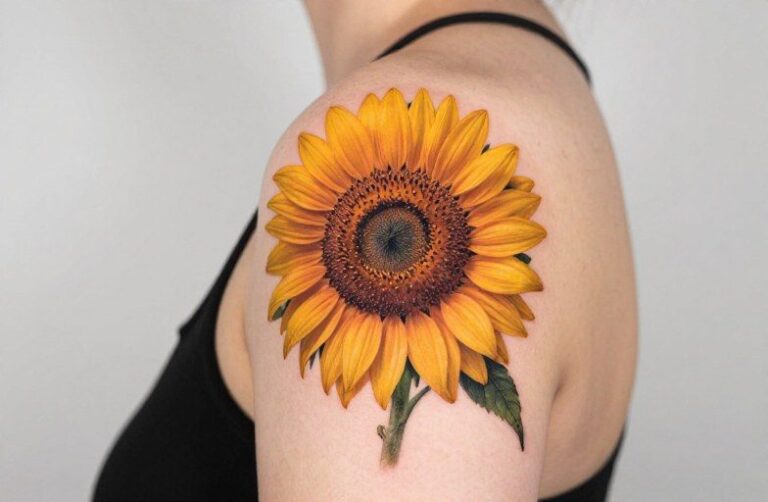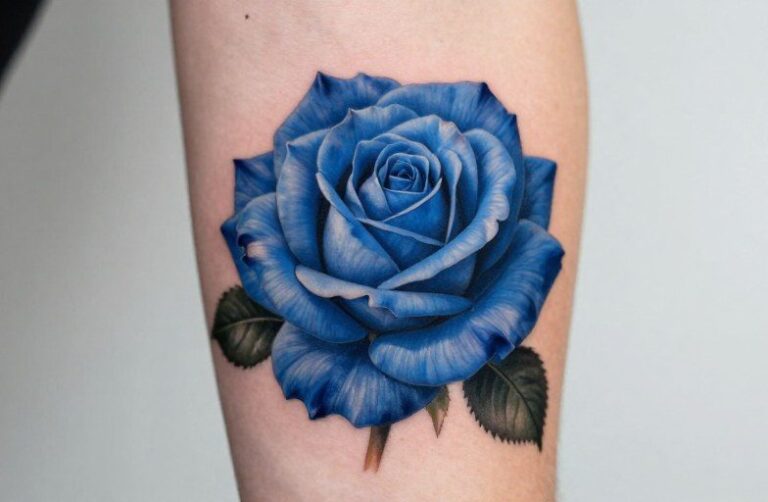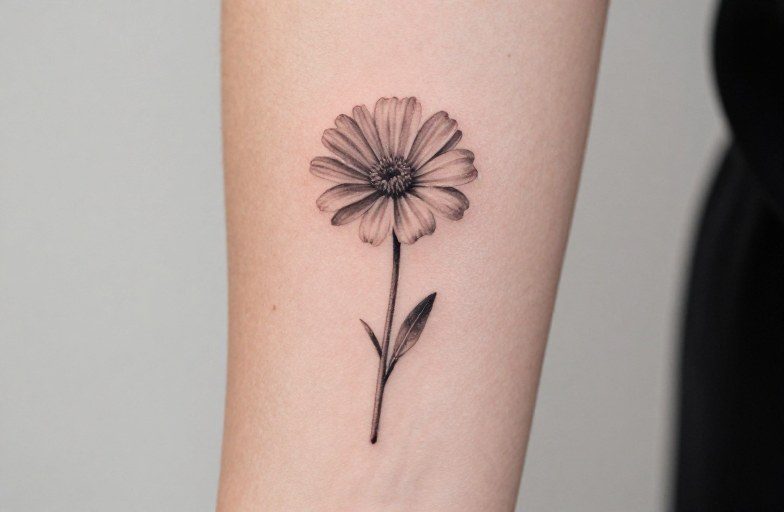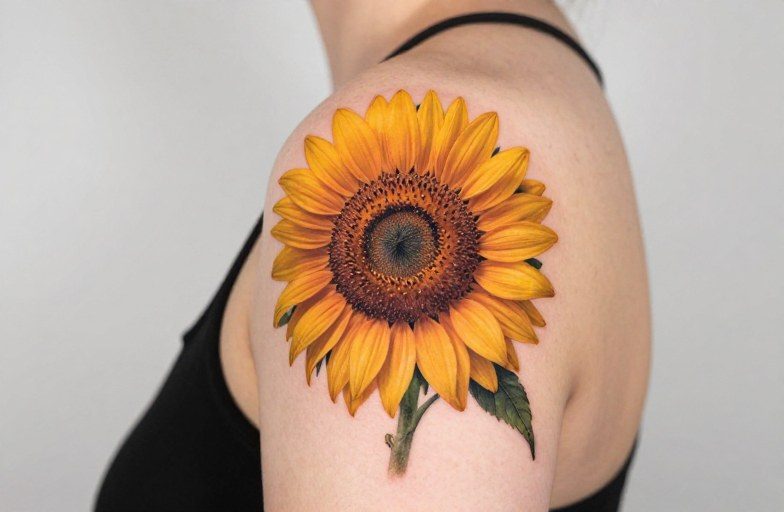
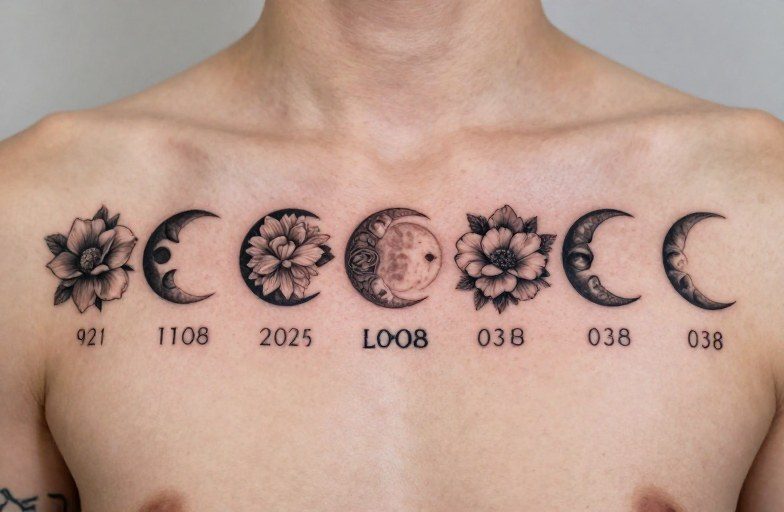
A floral moon phases tattoo combines the waxing and waning of the moon with flowers, vines, or botanical details to represent the natural cycles of growth, decay, and renewal. The lunar sequence, new, waxing crescent, first quarter, waxing gibbous, full, waning gibbous, last quarter, waning crescent, maps onto the life stages of a bloom, from tight bud to full flower to wilted seed head. Together, these elements speak to impermanence as something beautiful rather than something to fear.
Symbolism & Core Meaning
The moon’s phases have long functioned as humanity’s original calendar, governing planting and harvest across agricultural societies. Flowers, equally bound to seasonal time, make the abstract lunar cycle tangible and bodily. A rose opening beside a waxing moon connects expansion with beauty; a wilting bloom paired with the waning crescent accepts decline as necessary.
Feminine Energy and Bodily Rhythms
Many people choose this pairing to honor menstrual cycles, fertility journeys, or menopause. The moon’s approximately 29.5-day cycle mirrors the average human menstrual cycle with eerie precision. Florals soften the astronomical into the organic, making the design feel lived-in rather than clinical. Popular pairings include peonies (often linked to feminine beauty in East Asian traditions) with full moons, or wildflowers with crescents to suggest untamed natural processes.
Impermanence and Acceptance
Unlike a static full moon or a single eternal rose, the phase sequence insists on change. The flower that peaks at the full moon will droop by the third quarter. This resonates with grief work, recovery narratives, or anyone making peace with life’s non-negotiable transitions. The tattoo becomes a visible argument against stagnation.
History & Cultural Roots
Lunar tracking appears in the earliest known human mark-making, from notched bone calendars to cave paintings. Botanical lunar imagery, however, developed more recently through several converging traditions.
East Asian Botanical Moon Painting
Chinese and Korean ink painting traditions often paired moon-viewing scenes with plum blossoms, chrysanthemums, or lotus flowers. These compositions emphasized seasonal specificity, viewing the harvest moon through autumn grasses, for instance. The aesthetic principle of liubai (deliberate empty space) in Chinese painting translates directly to tattooing: negative skin becomes the night sky, allowing the moon phases and florals to breathe.
European Herbalism and Lunar Planting
Pre-industrial European agricultural calendars prescribed planting root crops during the waning moon and above-ground crops during the waxing moon. This folk knowledge, preserved in almanacs, sometimes included botanical illustrations with lunar faces. The tattoo tradition draws less from direct historical imagery than from this cultural memory of plants and moons as intertwined systems.
Common Variations & Styles
The basic formula, moon phases plus flowers, admits enormous stylistic range. Your choice of technique changes the emotional register significantly.
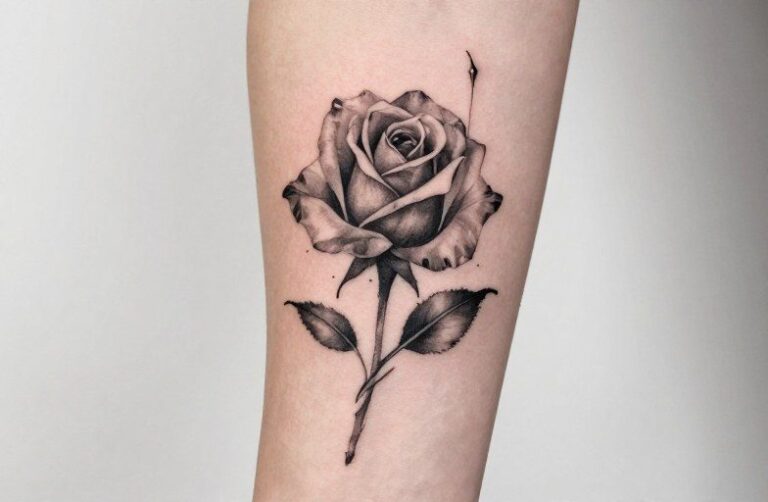
- Botanical illustration style: Fine line work with scientific accuracy, often featuring specific species with identifiable leaves and stamens. Works well as a vertical forearm piece or along the spine. Aging concern: extremely fine lines (0.25mm or below) may soften into indistinct haze within 5-8 years, especially on high-movement areas like wrists.
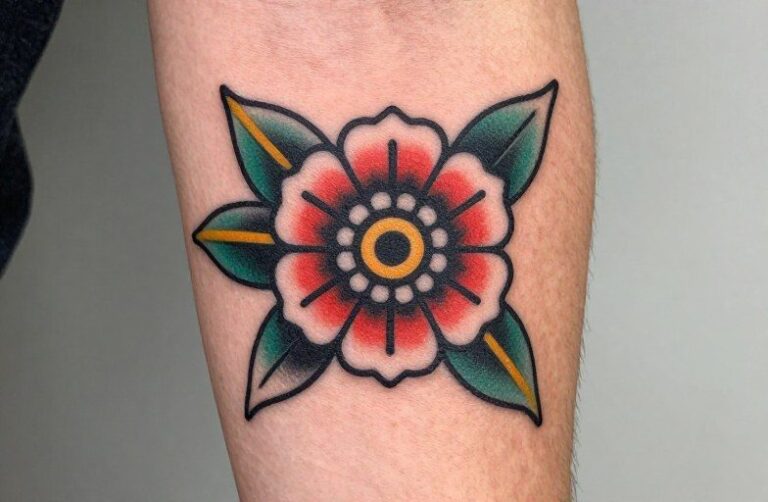
- American traditional: Bold outlines, limited color palette, stylized rather than realistic flowers. Moon phases rendered as solid circles with strong black fill. Holds up exceptionally well over decades; the graphic simplicity resists blur.
- Japanese-inspired: Larger compositions with wind bars, cherry blossoms or chrysanthemums, and softer grey-wash moons. Often wraps the thigh or extends as a partial sleeve. Requires an artist specifically trained in horimono conventions, not merely someone who “does Japanese stuff.”
- Minimalist dotwork: Phases suggested by stippled density rather than solid fills, with a single floral accent. Fragile aesthetically; any blowout or uneven healing becomes immediately visible. Best reserved for experienced collectors with established aftercare discipline.
Placement Considerations
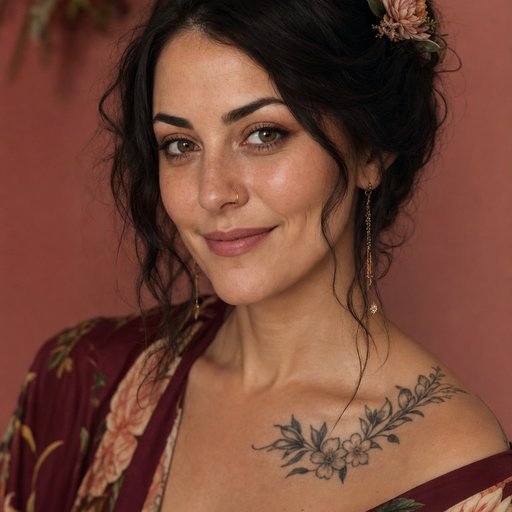
The linear nature of moon phases suits certain body areas particularly. The vertical forearm allows viewing all phases in sequence while the arm hangs naturally. The spine, from nape to mid-back, creates a dramatic vertical axis but requires the wearer to trust their artist’s stencil placement, they cannot see it during application. Clavicle placements, popular for smaller versions, suffer from thin skin and frequent sun exposure; expect more frequent touch-ups. Ribs offer canvas for larger botanical integration but test pain tolerance significantly.
Color vs Black and Grey
This decision fundamentally alters the tattoo’s emotional temperature and practical lifespan.
Black and grey emphasizes the lunar element, connecting to night skies and shadow. The moon phases read immediately; flowers become textural variations in grey wash. Healing tends to be more predictable, black ink has the longest established safety profile and the most predictable settling behavior. Over decades, black and grey ages into a softer version of itself rather than shifting color temperature.
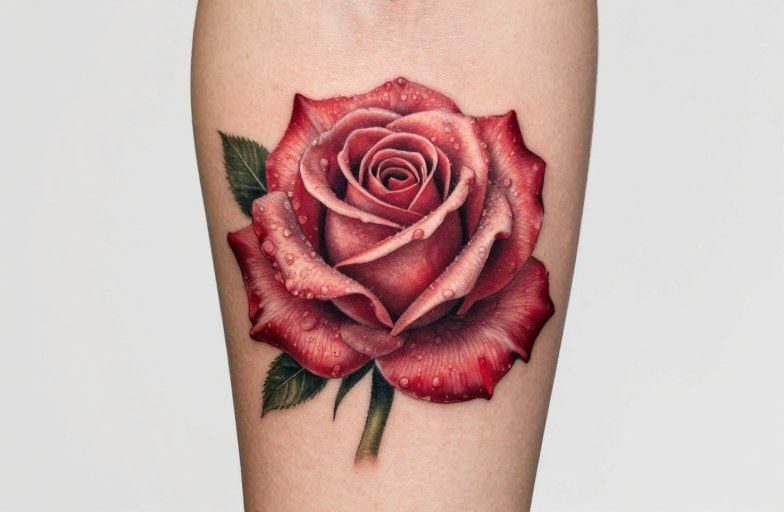
Color introduces the flower’s specific symbolic associations: red roses for passion, white lilies for mourning, yellow marigolds for ancestral remembrance in Mexican traditions. However, certain pigments, particularly yellows and light greens, fade faster and may require refreshment within 7-10 years. Watercolor-style color bleeds, while fashionable, have poor longevity; the blurred edges that look intentional at month six often read as simply blurred by year five. If choosing color, consider limited accents (a single red rose among black linework, for instance) rather than full saturation.
Who Chooses This Tattoo
Certain life contexts make this design particularly resonant, though no exclusive ownership exists.
Major Life Transitions
People marking graduations, divorces, sobriety anniversaries, or career pivots often gravitate toward the phase sequence as a visual representation of “this too shall pass” and “something new follows.” The floral element prevents the design from feeling purely astronomical or coldly philosophical.
Chronic Illness and Recovery Communities
The cyclical rather than linear model of progress, relapse and remission as phases rather than failures, attracts people managing autoimmune conditions, mental health variations, or cancer survivorship. The flower’s biological vulnerability parallels bodily experience without requiring explicit medical imagery.
Personal & Modern Meanings
Contemporary wearers increasingly reject fixed symbolism in favor of personal systems. The same design might commemorate a specific month’s moon phase (a birthday, a death date, a wedding) with the flower that was actually blooming then. Some integrate birth flowers with natal moon phases calculated through astronomical software.
Others use the phases to track ongoing processes: a new moon phase added for each year of sobriety, eventually completing the cycle. This transforms the tattoo from static symbol to living record, though it requires planning the initial composition to accommodate future additions without visual imbalance.
Climate grief and ecological anxiety have also surfaced in recent consultations. The moon persists regardless of human failure; the flower’s seasonality becomes precious rather than guaranteed. Some wearers choose native wildflowers specifically threatened by habitat loss, making the design quietly political without slogans.
Final Word
A floral moon phases tattoo succeeds when the botanical and lunar elements genuinely interact rather than simply coexist. The flower should respond to the moon’s light; the phase should affect how the bloom presents. This requires an artist who thinks compositionally, not just decoratively. Bring reference images of your specific flower species in its actual growth stages, not just tattoo precedents. Discuss with your artist how the lineweight will differentiate moon from petal from background, confusion here produces muddy results. The best versions of this design feel inevitable, as if the flower and moon were always waiting to be arranged this way.
Frequently Asked Questions
Do moon phase tattoos need to show all eight phases?
No. Some designs use just three or four key phases for visual simplicity, while others include all eight for completeness. The choice affects composition length and works best when planned with your artist’s input.
Which flowers pair best with moon phases symbolically?
Night-blooming species like moonflower or evening primrose create literal resonance, but personal significance matters more. Consider your birth flower, a bloom from a meaningful location, or one tied to a specific cultural tradition you genuinely belong to.
How well do fine-line floral moon tattoos age?
Fine line work requires more maintenance. Lines below 0.3mm soften significantly within 5-7 years, especially on high-movement areas. For longevity, prioritize slightly bolder linework or American traditional approaches with their characteristic thick outlines.
Can moon phases be arranged horizontally instead of vertically?
Absolutely, though horizontal compositions suit certain placements better, collarbones, across the upper back, or wrapping the wrist. Vertical arrangements remain more common for forearms and spines. The orientation should follow your body’s natural lines rather than forcing an arbitrary format.