Cherry blossom tattoos carry the weight of transience. The bloom itself lasts barely two weeks, and that brevity became the core meaning: life is short, beautiful, and worth marking while it lasts. In Japanese tradition, this concept is called mono no aware, a gentle sadness at things passing. In tattoo form, the flower becomes a personal reminder of mortality without morbidity, of moments that matter precisely because they don’t last.
Common Variations & Styles
Not every cherry blossom tattoo looks the same, and the style choice changes how the meaning reads visually. Some approaches lean traditional; others strip away context entirely.
Traditional Japanese (Irezumi)
Full sleeves or back pieces place cherry blossoms among waves, koi, or wind bars. Here the flowers aren’t the subject, they’re atmosphere, falling through scenes of struggle or triumph. The petals often trail behind figures in motion, suggesting time passing. Line work tends toward bold, consistent weight; shading builds through tebori hand-poking or machine work mimicking that texture. Colors stay limited: pinks, whites, black, occasionally soft green for stems. The meaning connects to broader narratives of endurance and impermanence within a life story, not isolated sentiment.
Minimalist and Single-Needle
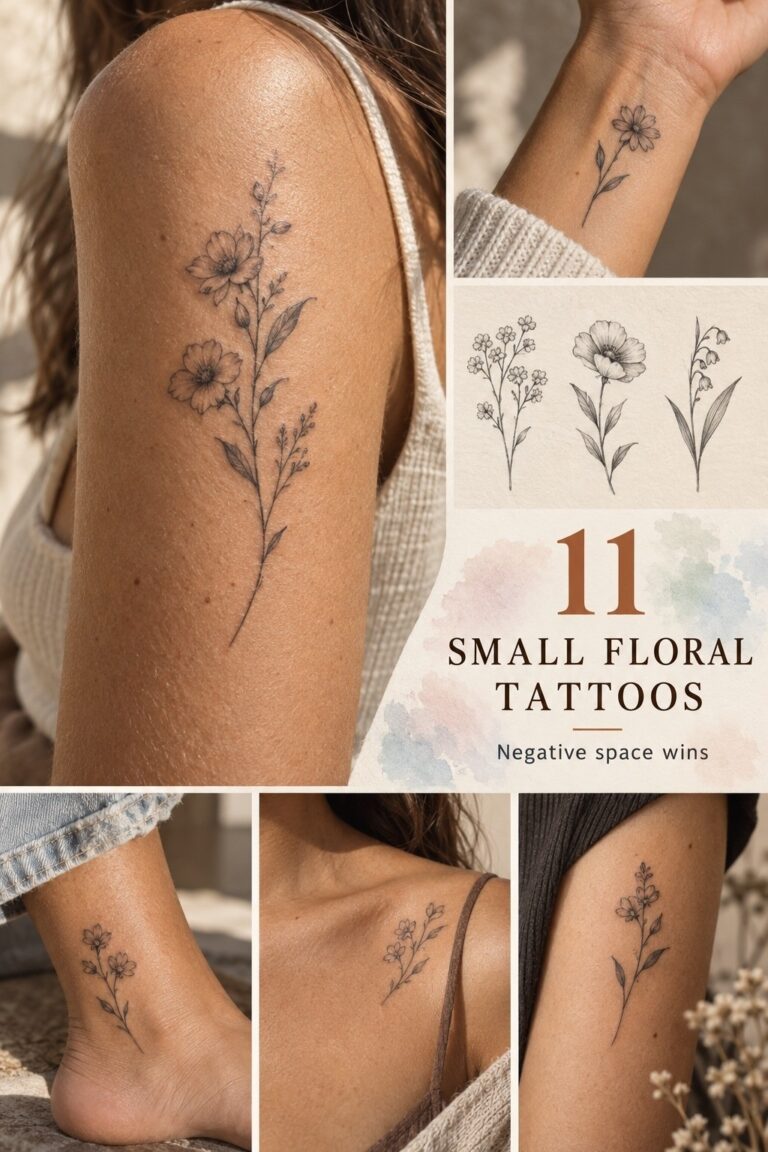
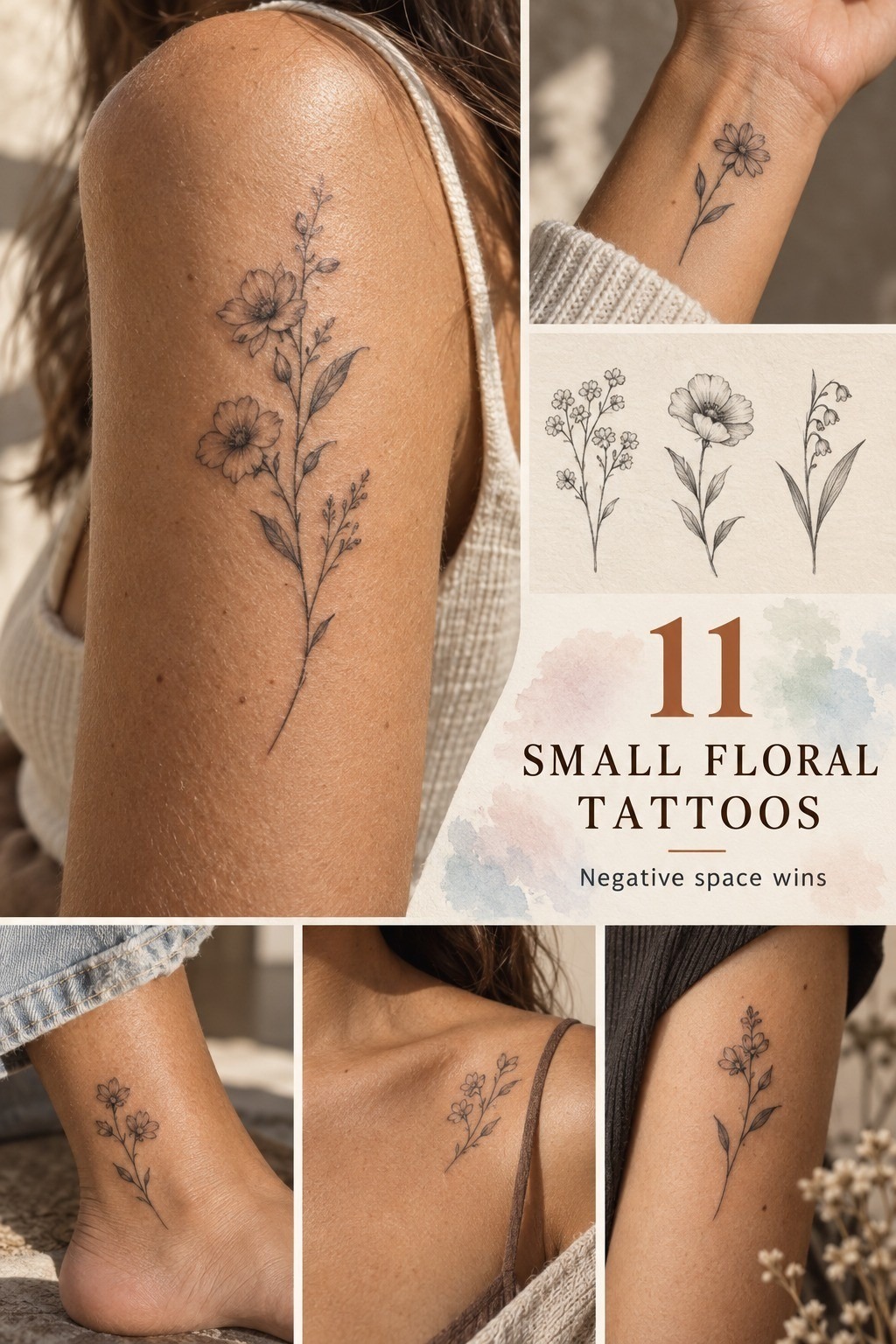
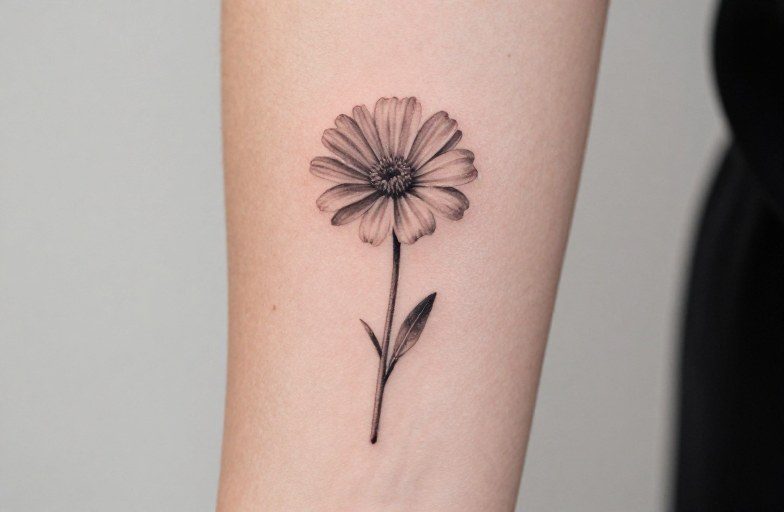
Single blossoms or thin branches, sometimes just five petals with a hint of stamen. These read quieter, more intimate. The fragility of the line itself mirrors the fragility of the subject. Artists working this style need steady hands; one wobble ruins the illusion of weightlessness. Placement usually smaller: wrist, behind ear, collarbone. The meaning here is personal meditation rather than cultural statement.
- Watercolor splashes: Petals dissolving into color pools without hard outlines. Visually striking, but the lack of structure means faster aging and blur.
- Geometric frames: Blossoms contained in triangles, circles, or mandala-adjacent patterns. Creates tension between organic form and rigid structure.
- Negative space: Skin shows through as petal highlights, using absence to create form. Demands excellent contrast planning.
Personal & Modern Meanings
People arrive with their own reasons. The traditional symbolism provides vocabulary; personal history provides the sentence.
Commemoration and Remembrance
Loss sits heavily with this image. The brief bloom maps onto a brief life, child, parent, relationship, even a version of oneself that no longer exists. Some choose falling petals specifically; others want the branch in full bloom, captured at peak. Neither is more correct. The tattoo functions as external memory, something the body carries when the mind wants to forget or can’t stop remembering.
Rebirth and Transition
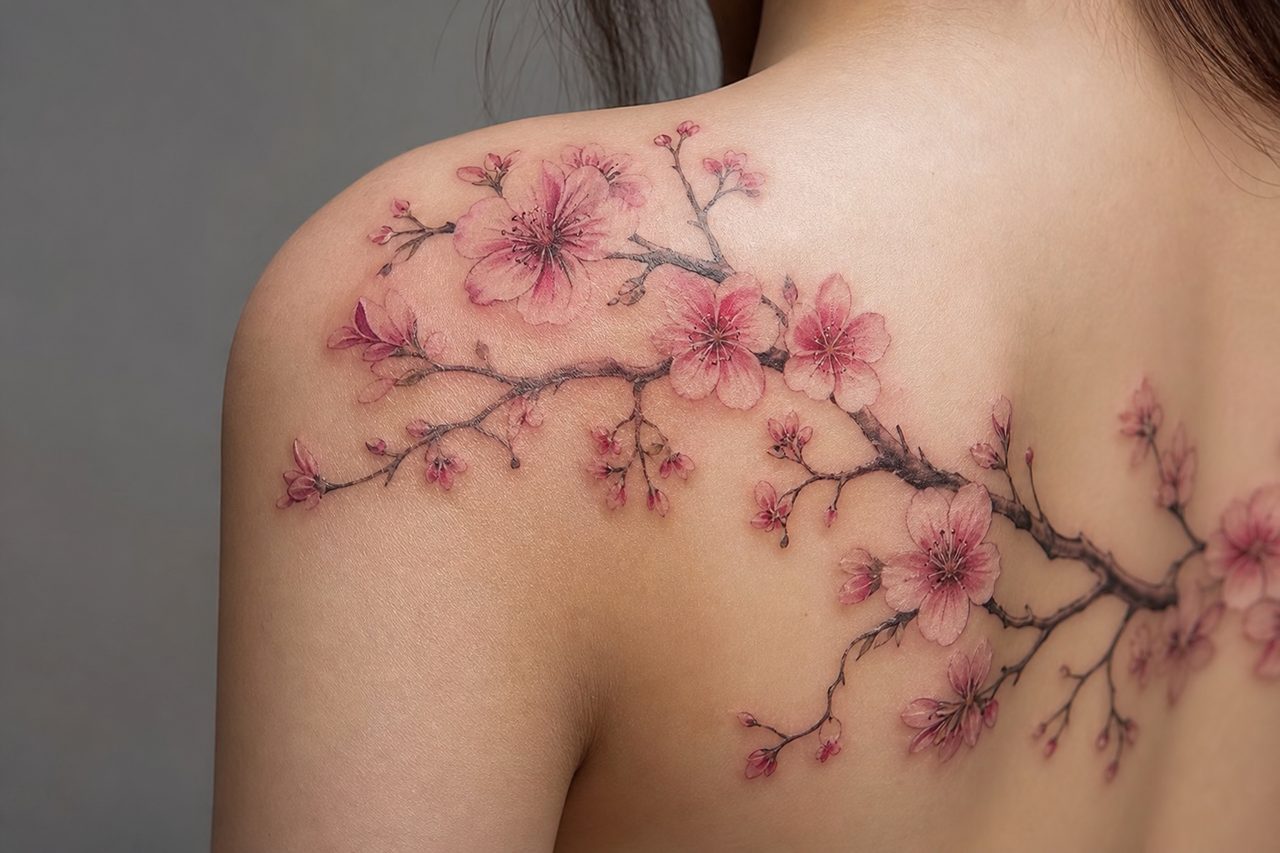
Spring flowers after winter carry obvious metaphor. People marking sobriety anniversaries, gender transitions, career leaps, or geographic moves often gravitate here. The meaning isn’t about death anymore; it’s about return, cyclical rather than linear time. A branch breaking into bloom on a shoulder or ribcage can mark that threshold without needing words.
Modern appropriation also exists. The cherry blossom has become a generic “pretty tattoo” image divorced from context, which frustrates some within Japanese tattoo tradition. That tension, between respectful use and decorative emptiness, is part of the current landscape. Meaning isn’t automatically conferred by the image; the wearer’s understanding and the artist’s intention both matter.
Best Placements
Where it sits changes how it moves, ages, and communicates.
Flowing Areas: Arm, Leg, Torso
Branches follow muscle and bone naturally. A forearm piece can wrap slightly, petals trailing toward the wrist. Thighs offer broad canvas for fuller compositions. Ribs and side pieces let the branch curve with the body’s natural lines, though the bone proximity makes for longer sessions. These placements suit larger work with multiple elements, blossoms, buds, bare branch suggesting seasons.
Contained Areas: Wrist, Ankle, Behind Ear
Small, visible, vulnerable. The wrist moves constantly, accelerating aging. Ankle skin stretches and rubs against shoes. Behind ear stays relatively protected but limits size severely. These spots work for single blossoms or tiny clusters. The meaning reads as private reminder rather than public declaration.
- Upper back/shoulder blade: Flat skin, good for symmetrical compositions, easy to cover or reveal.
- Foot top: Painful, fades fast from sun and friction, but popular for visibility in sandals.
- Hand and fingers: Bold statement, rapid aging, potential employment considerations. Single small blossoms here read differently than full compositions.
Who Chooses This Tattoo
No single demographic owns this image. In Japanese tattoo culture, it’s historically been part of larger work worn by men and women across class lines, though strongly associated with yakuza iconography in post-war periods. Western adoption accelerated through the 1990s and 2000s with anime, travel, and the general spread of Japanese aesthetic influence.
Currently, you’ll find cherry blossom tattoos on people drawn to:
- Japanese aesthetic and cultural connection (some with heritage, others without)
- Feminine-coded floral imagery that carries more weight than generic roses
- Philosophical or spiritual frameworks engaging with impermanence
- Memorial needs seeking something gentler than dates or portraits
The choice often reveals what someone wants to say without speaking. A person with extensive trauma history might select the same image as someone who simply likes pink flowers, their meanings diverge completely. The tattoo doesn’t resolve that difference; it holds space for both.
How It Ages on Skin
This matters specifically for cherry blossoms because their visual impact depends on delicacy.
Line Weight and Detail Loss
Thin lines defining individual petals blur fastest. A single-needle outline at 5 years can look like a soft watercolor smudge at 10. Stamen details, those fine filaments in the flower center, often disappear entirely. Artists compensate by building slightly heavier outlines than the design seems to want, or by accepting that refinement will soften into impression.
Color Fading Patterns
Pinks, especially lighter magentas and baby pinks, fade toward skin tone or muddy rose. White ink yellows or disappears entirely. The contrast between petal and background matters more than the specific pink chosen. Darker, more saturated pinks last longer but read less “cherry blossom” to some eyes. Touch-ups every 5-8 years keep the image present, though some prefer the aged version’s softness.
Placement affects this dramatically. Sun-exposed areas (forearms, hands, shoulders in summer) fade faster. Areas with friction or stretching (stomach, thighs) distort shapes over time. The upper back and outer upper arm generally age most gracefully for this particular subject.
Color vs Black and Grey
The choice changes the tattoo’s emotional temperature and longevity.
Color Realism
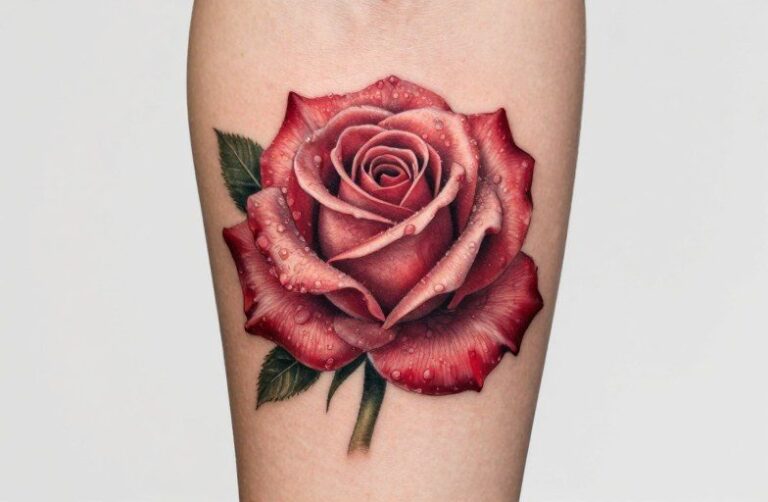
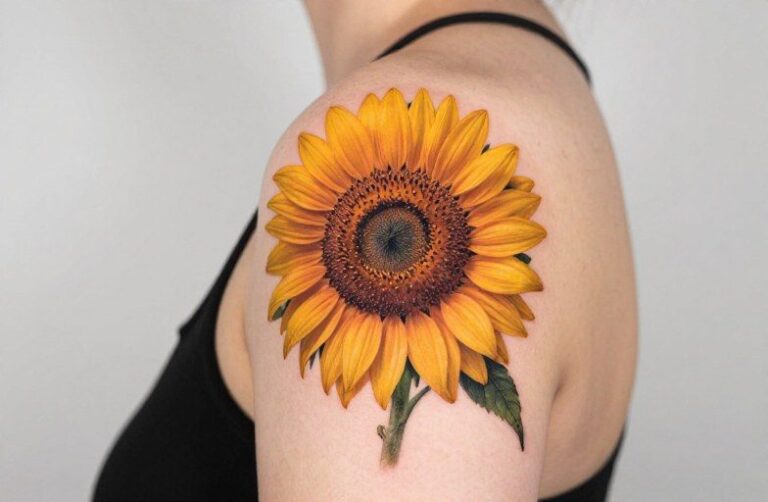
Pink gradients, white highlights, subtle green stems. Visually immediate, culturally recognizable. The color carries the meaning almost automatically, you see cherry blossom, you think spring, you think brief beauty. Downside: faster fading, more touch-up needs, harder to read at distance as the piece ages. Color realism demands either committed maintenance or acceptance of change.
Black and Grey
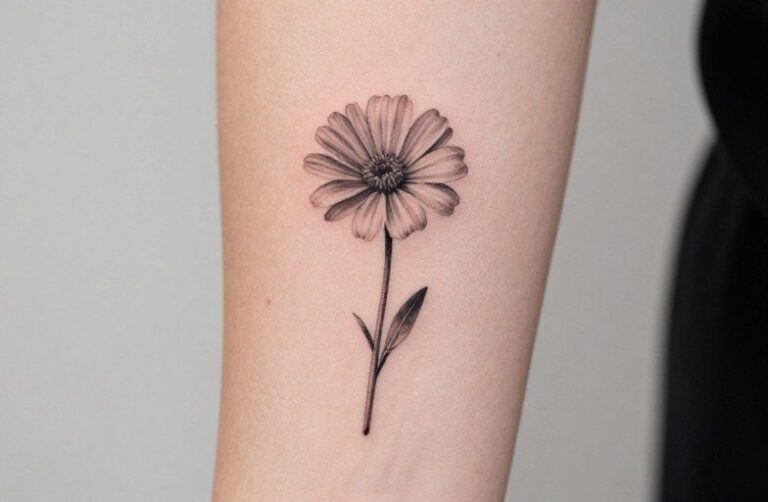
Stripped of literal reference, the form itself must carry weight. Petals read through shading gradients, negative space, and contrast. Often more graphic, sometimes more somber. The meaning shifts slightly, less “spring flower,” more “memory of flower,” more elegiac. Aging tends to be kinder; black ink holds, grey tones soften rather than muddy. For people wanting the symbolism without the decorative associations, this route offers cleaner long-term results.
Some artists combine approaches: black and grey branch with selective pink in one or two blossoms. This creates focal points and extends practical longevity while keeping color presence.
Final Word
A cherry blossom tattoo works when the wearer understands what they’re carrying. The image has enough cultural weight and visual flexibility to support genuine meaning or collapse into mere decoration. The difference lies in intention, placement, and the conversation between artist and client about what needs to last and what is meant to pass.
The flower falls. That’s the point. The tattoo stays, asking you to notice.
Frequently Asked Questions
Do cherry blossom tattoos have to be Japanese-style to be meaningful?
No. The symbolism of impermanence and renewal transcends any single style. What matters is whether the wearer connects to that meaning, not whether the tattoo follows traditional rules. A minimalist single blossom can carry as much weight as a full irezumi sleeve.
How painful is a cherry blossom tattoo on ribs versus arm?
Ribs hurt significantly more, thin skin over bone, plus the breathing motion during the session. Arms, especially outer biceps and forearms, rank among the more tolerable spots. Cherry blossom designs often suit flowing placements, so pain tolerance may influence where you place the detail work.
Can I add cherry blossoms to an existing tattoo?
Yes, and this is common. Blossoms work as filler around larger pieces, as background atmosphere, or as connecting elements between separate tattoos. An experienced artist can integrate them into existing work, though matching aged ink with fresh requires skill.
Will white ink in the petals stay visible?
Generally no. White ink fades to yellowish or disappears entirely within a few years, especially on lighter skin tones where contrast is already minimal. Most artists use skin as the “white” and build pink tones around it, rather than relying on white pigment for highlights.