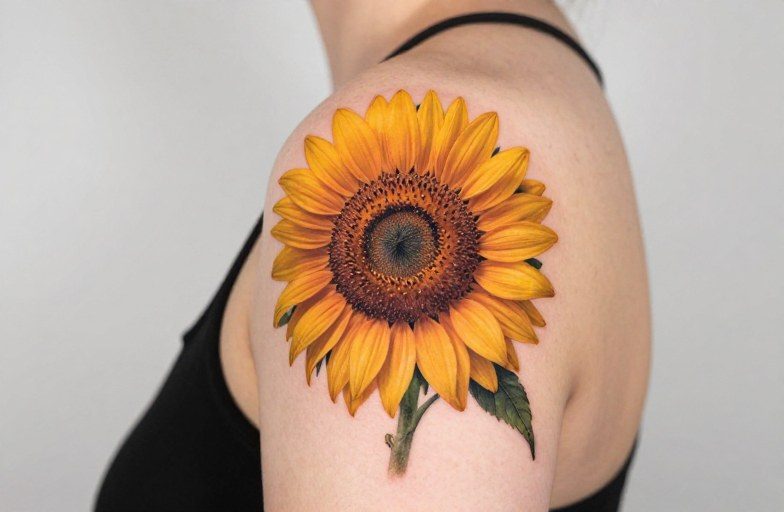
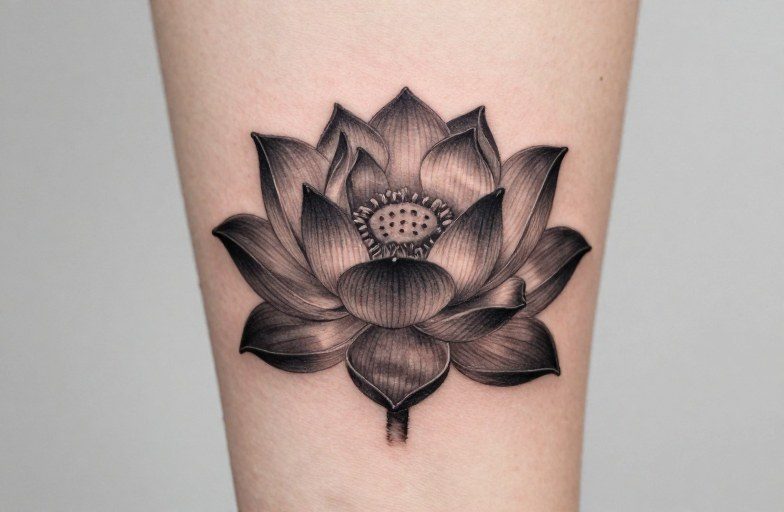
The black lotus flower tattoo most commonly signals transformation through darkness, growth that happens not in spite of struggle, but because of it. Unlike its colorful counterparts, the black lotus strips away the decorative and lands on something more austere: endurance, the beauty of surviving what was meant to break you, and the quiet power of keeping something sacred private. That core meaning branches into dozens of personal interpretations, but the visual language stays consistent across most designs.
Mythology & Folklore
Lotus mythology runs deep across several cultures, though the black variant occupies a narrower symbolic lane than pink or white versions. The flower’s ability to push through murky water and bloom clean has made it a universal emblem of emergence. Blackening that image shifts the narrative from simple rebirth to something grittier.
Death and Rebirth Cycles
In Egyptian tradition, the lotus often linked to solar cycles and the return of light, black ink inverts that brightness without losing the cyclical structure. Some trace the black lotus specifically to darker folklore traditions where the flower represents secrets that must die to be born again, or knowledge gained through suffering rather than light. The image resonates with people who have undergone visible, difficult changes: recovery, loss, leaving a previous identity behind.
Modern Fantasy and Gaming Influence
The black lotus also carries weight from outside traditional folklore. Magic: The Gathering’s Black Lotus card, infamous, prohibitively expensive, game-changing, has driven a subset of tattoo requests since the 1990s. That meaning is purely cultural and self-aware: rarity, power, insider status. Artists working this reference usually know immediately when a client wants the botanical or the gaming nod, though some designs merge both.
Color vs Black and Grey
The choice to go black rather than color isn’t just aesthetic preference. It fundamentally changes how the tattoo ages, what details survive, and what symbolic register the image occupies.
How Black Ink Ages
Black pigment holds. Over five, ten, fifteen years, solid black lines remain readable while color pieces often need refresh work. A black lotus tattoo done with dense linework and strategic negative space will still look like itself decades out. The risk is muddying, too much solid black in too small a space, and the petals lose definition as ink spreads slightly in the skin. Good artists vary the black density, using whip shading and dotwork to create tonal range without relying on gray wash that can fade unevenly.
Symbolic Temperature
Color lotus tattoos read warmer, more approachable, more openly spiritual. Black lotus tattoos run cooler, more interior, more withholding. That temperature difference matters for placement and visibility. Someone choosing black often wants the symbol for themselves first, for others second. The color choice becomes part of the meaning: refusing the expected, opting for severity over decoration.
Religious & Spiritual Angles
Buddhist and Hindu iconography overwhelmingly favors the lotus in natural colors, but the black variant has found its own spiritual niche.
Buddhist Interpretations
In some Buddhist contexts, the black lotus can represent the victory of spirit over material darkness, enlightenment achieved through confronting rather than avoiding suffering. It’s not standard traditional imagery, but practitioners and scholars sometimes adopt it as personal shorthand for the harder path. The eight petals of some designs reference the Noble Eightfold Path, though that structure is more commonly rendered in white or pink.
Contemporary Spirituality
Outside established traditions, the black lotus frequently marks shadow work, psychological integration of repressed or difficult aspects of self. This usage borrows the lotus’s emergence structure but applies it to interior territory: the mud is personal history, the bloom is acknowledged wholeness. Tattoo artists hear this framing regularly from clients who have done substantial therapeutic or recovery work.
History & Cultural Roots
The lotus as tattoo imagery has circulated in Western shops since at least the 1960s, often linked to the counterculture’s uptake of Eastern philosophy. The black variant emerged more gradually, gaining visible traction in the 1990s alongside the broader rise of blackwork and neo-tribal aesthetics.
From Spiritual Tourism to Personal Symbol
Early lotus tattoos sometimes carried a whiff of cultural appropriation, spiritual tourism inked permanently. The black lotus, lacking direct traditional color correspondence, has partly escaped that charge by being obviously non-traditional. It signals personal symbolism rather than claimed religious affiliation. That said, anyone with genuine connection to lotus traditions should feel free to claim the image regardless of color; the point is intention and understanding, not gatekeeping.
Blackwork Technical Evolution
The technical capacity to render a convincing black lotus improved dramatically with modern machines and needle configurations. Single needle and tight round shader groupings allow for petal texture that earlier equipment couldn’t achieve. This technical evolution expanded what artists could offer, and demand followed capability.
Best Placements
Where a black lotus sits on the body changes how it’s read and how well it holds.
- Forearm or wrist: High visibility, often chosen when the meaning is meant to be seen and asked about. The cylindrical surface wraps the design nicely, though small wrist pieces risk blowing out over time from movement and sun exposure.
- Upper arm/shoulder: Classic placement with good canvas size for detail. Can be easily covered or displayed. The muscle movement adds subtle life to the petals.
- Ribcage or sternum: Intimate, painful to execute, often chosen for deeply personal symbolism. The central sternum placement mirrors the heart chakra location, though the black color complicates that reading.
- Thigh or calf: Large, flat surfaces that age well and allow for bigger, more detailed designs. Less daily sun exposure than arm or hand placements.
- Behind the ear or nape: Small, discreet, often single-needle fine line work. The black lotus here reads as private signal rather than statement.
Line-heavy designs with open negative space age better in high-movement areas than solid black fills. A black lotus on a hand or foot will need more frequent touch-up work than one on the upper arm or thigh.
Who Chooses This Tattoo
No single demographic owns the black lotus. The choice crosses gender, age, and background lines more cleanly than many designs. Patterns do emerge in the reasoning, though.
Common Motivations
People who have survived something specific and don’t want a literal representation, no dates, no words, no obvious trauma imagery, often land here. The black lotus communicates without explaining. Others choose it for aesthetic reasons primarily, drawn to the stark elegance of black botanical work, and the meaning accretes after the fact. Both approaches are valid; the tattoo doesn’t require suffering to justify it.
Design Customization
The basic black lotus adapts well to personal modification. Some add geometric framing, mandala integration, or dotwork halos. Others keep it minimal, a single clean bloom with no ornament. The uncustomized flash version exists, but most black lotus tattoos show some individual adjustment, scale variation, petal number changes, stem inclusion or omission. That customization itself becomes part of the ownership.
Final Thoughts
The black lotus flower tattoo works because it carries weight without demanding explanation. Its visual simplicity, recognizable flower, unusual color choice, creates immediate interest, while the symbolic range allows genuine personal attachment. For anyone considering this design, the practical questions matter as much as the meaning: find an artist whose blackwork you admire, think hard about placement and long-term aging, and know why you’re choosing black specifically. The best black lotus tattoos look like they couldn’t have been any other color, because the person wearing them knew exactly what they were doing.
Frequently Asked Questions
Does a black lotus tattoo have to mean something dark or negative?
No. The black color often reads as seriousness or privacy rather than negativity. Plenty of people choose it for aesthetic cohesion with existing blackwork, or because they prefer the visual weight over brighter alternatives.
How much detail can a small black lotus tattoo hold?
Less than most people expect. Under two inches, fine petal lines tend to blur together within a few years. Artists usually recommend simplifying the design or scaling up to preserve readability.
Can a black lotus tattoo be covered up later if needed?
Black ink is dense, which makes cover-ups more challenging than with lighter colors. A skilled artist can work with it, but the design should be chosen with permanence in mind rather than planning for future removal or coverage.
What’s the difference between a black lotus and a white lotus with black ink?
Design intent and execution. A black lotus uses black as the petal color, with negative space or lighter shading for highlights. A white lotus in black ink uses black only for outlines and shading, leaving the petals skin-toned. The symbolic and visual effects are quite different.