A Buddha and lotus flower tattoo carries weight that goes beyond visual appeal. The lotus rises through murky water to bloom unstained; the Buddha represents the completion of that journey from suffering to awakening. Together, they form a compressed narrative about transformation, the possibility of clarity emerging from difficult conditions, and the discipline required to get there.
What These Symbols Actually Mean
The Lotus: Reading the Growth Pattern
In Buddhist contexts, the lotus is not a generic symbol of positivity. Its structure matters: roots anchored in mud, stem pushing through water, flower opening above the surface. This maps directly onto the path from ignorance to awakening. The color choices carry specific associations that many wearers and even some artists overlook. A pink lotus ties to the historical Buddha, Siddhartha Gautama. Blue lotuses connect to wisdom and victory over the senses. White indicates purity of mind, red to compassion and the heart, purple to spirituality and mysticism. When you pair a Buddha figure with a particular lotus color, you are making a theological statement whether you intend to or not.
The eight petals commonly depicted reference the Noble Eightfold Path, the practical framework of Buddhist practice. Some designs show the Buddha seated upon a lotus or holding one in offering. These variations shift the meaning: the seated figure suggests achieved stillness, while the held lotus implies active teaching. A lotus alone can read as vaguely spiritual; paired with Buddha, the Buddhist specificity becomes unavoidable. You should know which tradition you are referencing, or at least acknowledge the ambiguity.
The Buddha Figure: Representation and Its Risks
This is where decisions become complicated. Many Buddhist traditions, particularly Theravada, have historically discouraged Buddha images as potentially idolatrous or disrespectful. The tattoo carries different weight depending on whose body wears it and where that body travels. For practitioners, it may function as devotional commitment, a visible reminder of precepts. For non-practitioners drawn to the aesthetic, it risks appropriation, especially when paired with mantra script or sacred geometry without understanding the underlying practice.
The specific posture matters and is often mangled by artists working from reference photos without context. The meditation pose, with hands in Dhyana mudra, emphasizes inner work and sustained attention. The touching-earth pose, Bhumisparsha mudra, references the moment of enlightenment under the Bodhi tree when the Buddha called the earth to witness his victory over Mara. Reclining poses reference the passing into Parinirvana, the final death of an enlightened being. Each changes the emotional register from aspirational to memorial to achieved. You should choose deliberately, not based on which image looks most peaceful in a flash sheet.
Color Versus Black and Grey
When Color Serves the Symbolism
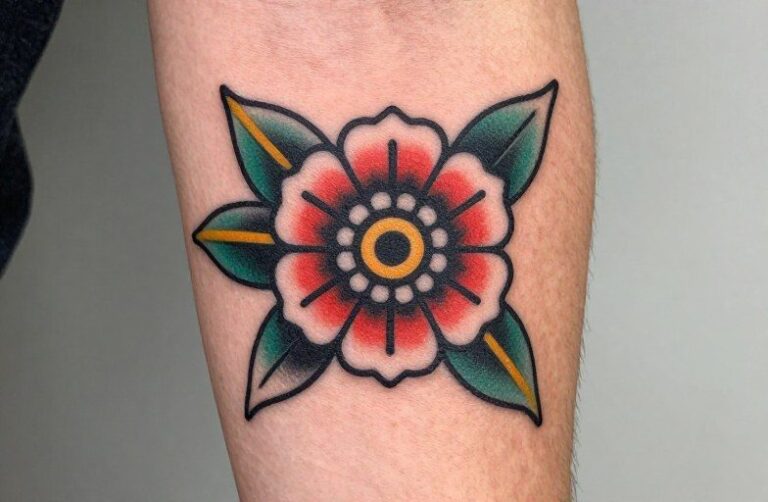
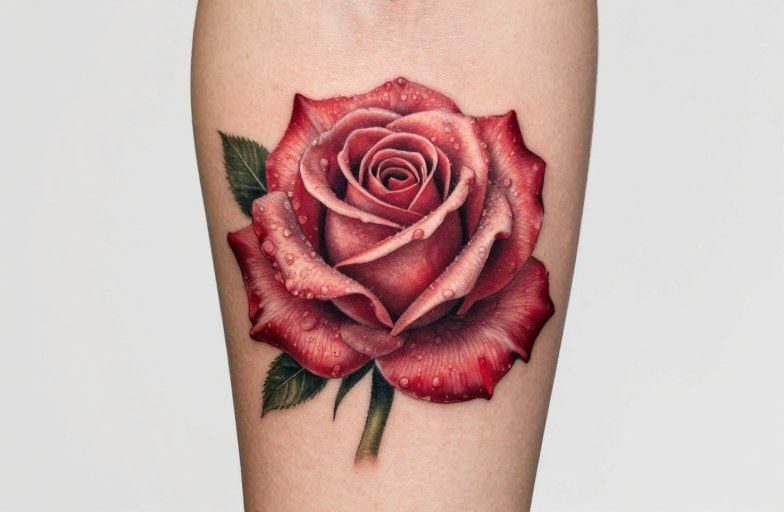
Color in Buddha-lotus pieces should serve symbolic function, not merely visual preference. The lotus petals demand it; a pink, blue, white, or red lotus reads immediately as a specific reference to practitioners who know the code. Gold halos or traditional skin tones on Buddha figures require yellow ochre mixes that age poorly but are necessary for certain stylistic traditions. Traditional Thai temple painting styles use flat, saturated color with heavy black outlines; tattoo adaptations of this style hold up well because the black provides structural integrity as the color fades and shifts over decades.
Watercolor-style backgrounds behind solid Buddha figures have been popular since the early 2010s. The technique works when the Buddha itself is rendered traditionally with strong line weight, allowing the background to dissolve into atmospheric effect. Reversing this relationship, watercolor Buddha with solid lotus, tends to look muddy within a few years as the soft edges blur and the compositional hierarchy collapses. You want the sacred figure to remain legible; the background can afford to fade.
The Case for Black and Grey
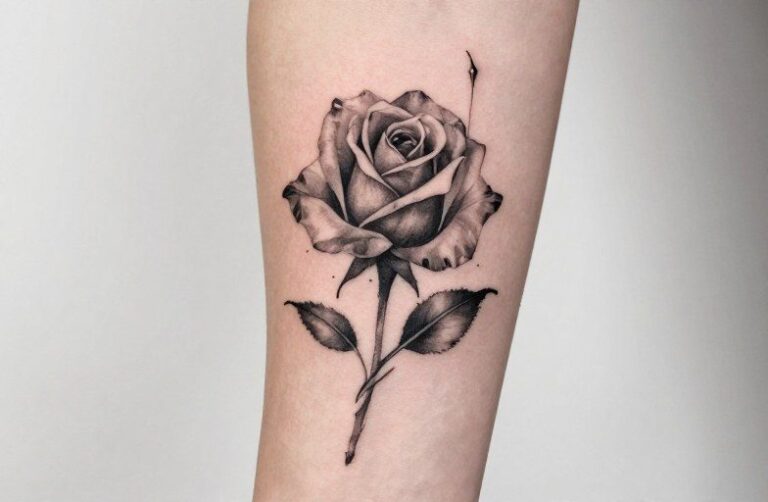
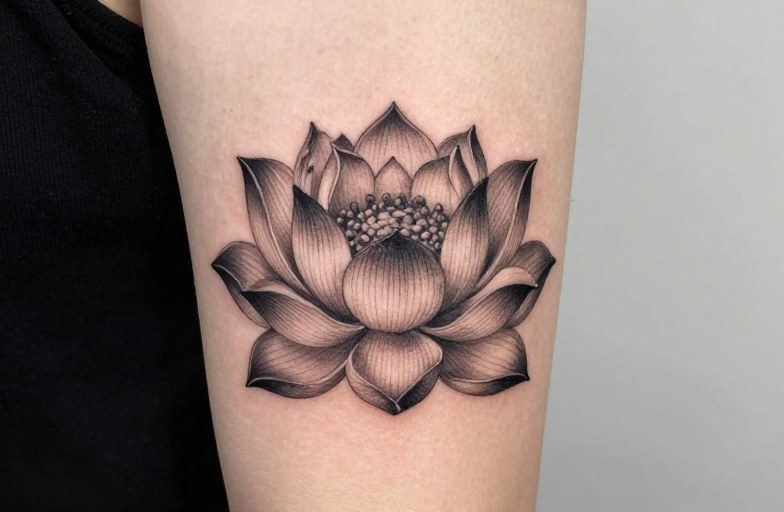
Black and grey excels at conveying the aged, stone-carved quality many seekers want from Buddha imagery. Smooth grey wash can render the rounded forms of a Buddha’s face, the draped folds of monastic robes, the dimensional cupping of lotus petals. Without color competing for attention, texture becomes the focus: skin pores, stone grain, fabric weight, the subtle asymmetry of hand-carved originals.
The limitation is real: lotus color symbolism disappears. A grey lotus reads as generic flower unless the viewer already knows the reference. Some experienced artists solve this by adding subtle color accents, a single pink petal, a blue water tint, a red thread woven through robe folds, keeping the piece primarily monochrome while preserving symbolic specificity for those who can read it. This requires restraint; too much color and you have merely a desaturated color piece, not a true black and grey work with intent.
How the Tattoo Ages on Skin
The Problem of Facial Detail
Buddha faces are unforgiving on skin. Small eyes, subtle smile lines, the urna dot between the eyebrows, all blur as skin ages and ink migrates through dermal layers. Lines that read as serene expression at two years can become ambiguous smudges at ten. The solution is deliberate oversizing: a Buddha face that looks slightly too large when fresh will settle into appropriate proportions as surrounding skin relaxes. Minimum two inches for any facial detail, preferably three if the placement allows.
Lotus petals with fine parallel lines, common in Tibetan thangka-inspired designs, suffer similarly. Those delicate lines merge into solid grey over time, losing the layered quality that suggests depth. Better to establish petal shape through contrasting black and negative space, or through stippled texture that remains readable even as individual dots soften and spread. You want the form to survive, not the technique that created it.
Color Fading and Placement Realities
Yellows and light skin tones in Buddha figures fade fastest, shifting to muddy grey-green that can look diseased rather than aged. Red lotus petals hold better but tend toward orange. Blues and purples in lotus designs survive longest in the color range. Black outlines remain the structural backbone; without them, color-only Buddha pieces become unrecognizable blobs within five to seven years. This is observable across healed portfolios, not theoretical.
- High sun exposure accelerates yellow and grey shift dramatically compared to covered placement
- Hand and foot tattoos in this style rarely hold detail past five years due to skin turnover and friction
- Thick black robe outlines provide natural containment for softer grey wash face rendering
- White ink highlights on lotus petals disappear entirely; use negative space instead for luminosity
Design Structure and Complementary Elements
What Works Alongside the Core Image
Mandala backgrounds behind seated Buddha-lotus compositions create natural framing. The geometry contains the organic forms, preventing visual drift that can make larger pieces feel unfocused. Unalome symbols, representing the path to enlightenment with its spirals and straightening line, pair logically as secondary elements, often positioned to lead the eye toward the central figure.
Script additions require caution that many skip. Sanskrit or Pali phrases demand accurate transcription; misspelled mantra tattoos are common enough to be a minor epidemic. Some reputable artists refuse script they cannot verify with a native reader or scholarly source. The “Om mani padme hum” mantra literally references the jewel in the lotus, making it thematically coherent with this pairing, but visually busy unless kept small and peripheral. You do not want a central Buddha competing with a text band for attention.
Compositional Approaches
Vertical compositions suit forearms and ribs: Buddha seated above, lotus emerging below, or the reverse with the flower supporting the figure. Circular compositions work on shoulders, chest pieces, or upper back, Buddha as center with lotus petals radiating outward like a secondary halo. Horizontal layouts across collarbones or lower back allow landscape elements, water, temple architecture, mountain ranges, to ground the figures in a sense of place.
Negative space lotus petals, where your skin tone forms the petal and black ink defines only the edges, create luminosity that reads as spiritual light. This technique demands confident execution; hesitant lines collapse the illusion into mere incompleteness. The artist must commit fully to the black, knowing exactly where the skin will breathe.
Related Symbols and Common Confusions
Adjacent Imagery to Consider
People considering this pairing often explore related imagery without understanding the distinctions. The Laughing Buddha, Budai or Hotei, is a different figure entirely, a Chinese folk deity of happiness and abundance, not the historical Siddhartha Gautama. Mixing him with lotus symbols creates confusion for knowledgeable viewers and suggests you have not done the reading. The lotus belongs to the Buddha’s story, not to every bald, smiling figure in Eastern art.
Koi fish swimming upward reference perseverance and are often paired with lotus in Japanese-influenced work, but they lack the enlightenment specificity; together they form a more general “overcoming adversity” narrative that may be what you actually want. The Dharma wheel, Dharmachakra, shares Buddhist lineage but reads more abstractly, better for those wanting symbolism without figural representation and the complications that follow. Bodhi tree leaves reference the enlightenment site without requiring human form. For practitioners wanting to avoid potential disrespect of Buddha images, these alternatives carry similar weight with reduced controversy.
Tibetan skull imagery, kapala or chitipati figures, represents impermanence and cuts against the serene lotus-Buddha tone. Combining them requires sophisticated compositional balance and deep understanding of both symbol systems; most attempts read as aesthetic collision rather than meaningful juxtaposition of life and death. You should probably choose one register or the other unless you are working with an artist who specializes in Tibetan tradition.
Before You Decide
A Buddha and lotus flower tattoo succeeds when you understand what you are asking for, not just visually, but culturally and symbolically. The combination offers genuine depth that simpler imagery cannot match: the lotus provides process, the Buddha provides arrival, and together they resist reduction to mere decoration in a way that forces ongoing engagement. They demand something from the viewer, and from you as the wearer.
The risks are equally real. Poorly rendered, the face becomes cartoonish or, worse, unintentionally comic. Culturally uninformed, the piece becomes evidence of shallow tourism rather than genuine connection. Placed without thought to aging, it becomes a blurred reminder of haste.
If you proceed, do so with research that goes beyond image searches. Understand which tradition you are referencing, which posture, which color, which compositional logic. Find an artist who has done this before successfully, whose healed work you can examine. The best Buddha-lotus tattoos are not purchased quickly; they are developed through conversation, adjusted for your specific body and story, and executed with the patience the subject itself represents. The symbolism demands no less.
Frequently Asked Questions
Is it culturally appropriate for non-Buddhists to get a Buddha and lotus tattoo?
Opinions vary significantly across Buddhist traditions and individual communities. Some Theravada practitioners find Buddha images on non-practitioners disrespectful, particularly if placed below the waist or in casual contexts. Others are more accommodating. The lotus alone carries less specific weight and is widely used across multiple cultures. If you are not Buddhist, consider whether your connection to the symbolism is deep enough to justify the image, or whether adjacent imagery like the Dharma wheel or Bodhi tree might serve your intention with less risk of appropriation.
Which lotus color should I choose for my tattoo?
Pink lotuses reference the historical Buddha and are the safest default if you want Buddhist specificity without esoteric complexity. Blue connects to wisdom and victory over the senses, appropriate for pieces emphasizing mental discipline. White indicates purity of mind and works well in monochrome-adjacent designs. Red lotuses carry connotations of compassion and the heart, often chosen by those with caregiving or healing professions. Purple suggests spirituality and mysticism but can read as generic unless paired with specific supporting imagery. Your artist should know these associations, not merely the color codes.
How large should a Buddha and lotus tattoo be to age well?
For facial detail to remain readable over decades, the Buddha head or face needs minimum two inches in height, preferably three. Full-body seated figures require corresponding scale, typically six to eight inches tall for basic detail, larger for intricate robe patterns. Lotus petals can be smaller but suffer from fine line merging; prioritize bold shape definition over delicate interior detail. Consider placement carefully: inner forearm and upper back age most predictably, while hands, feet, and ribs present significant challenges for this particular imagery.