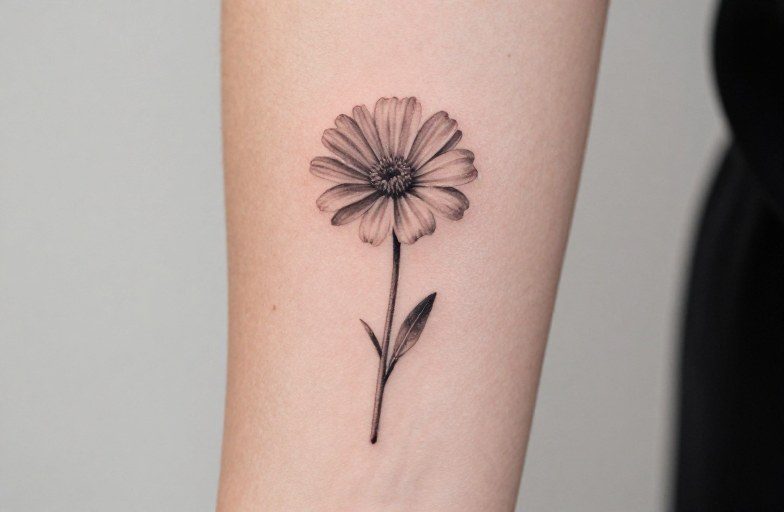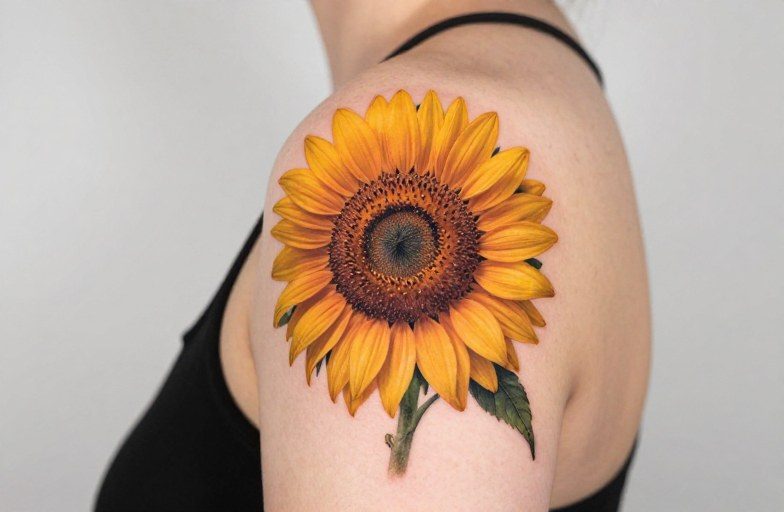
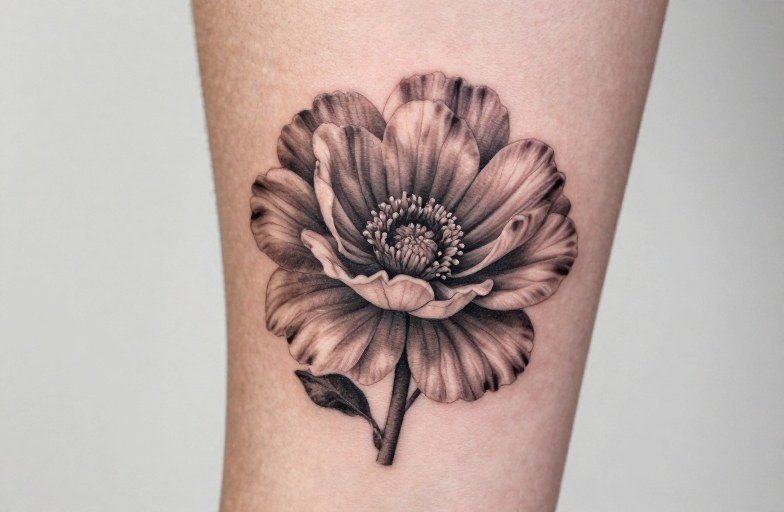
A flower face tattoo merges human features, eyes, lips, a profile, with botanical elements like petals, stems, or full blooms growing from or replacing parts of the face. The core meaning centers on the inseparable link between human life and natural cycles: growth, decay, beauty, and death intertwined. Some wearers choose it as a meditation on impermanence; others as a celebration of personal blossoming or transformation after hardship.
Common Variations & Styles
This design adapts to nearly every tattoo tradition, though certain approaches have become staples in shops across the country.
Portrait-Dominant with Floral Accents
The face remains largely intact, with flowers weaving through hair, growing from the mouth or eye socket, or framing the jaw. This version keeps emotional readability, viewers recognize the human expression first, then notice the botanical intrusion. Line weight matters here: fine lines for the face, slightly heavier or more organic strokes for the plant material, so each element reads clearly at a distance.
Full Floral Replacement
Here the face dissolves entirely into petals, leaves, and stems, sometimes with a single eye or pair of lips preserved as the last human remnant. This approach leans surrealist or neo-traditional and demands confident shading to prevent the image from flattening into a confusing blob as it ages. The best versions use negative space strategically, skin breaks that suggest the ghost of a cheekbone or the curve of a skull beneath the blooms.
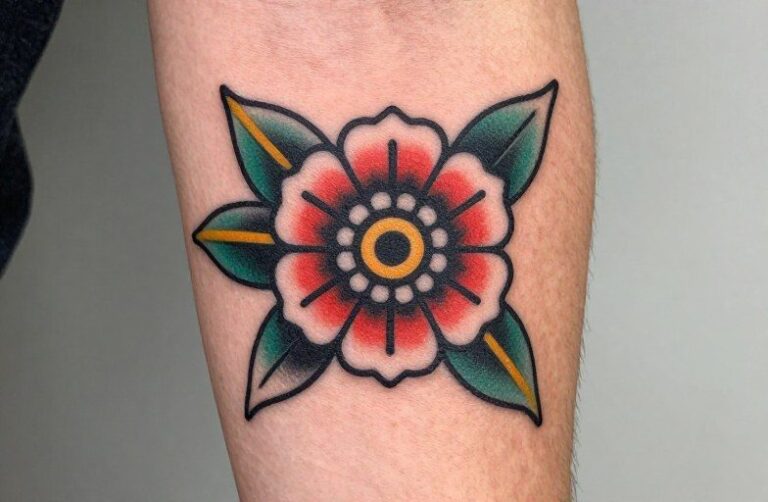
- Neo-traditional: Bold outlines, limited but saturated color palette, stylized features with decorative botanical patterns
- Blackwork/dotwork: Dense stippling for texture on petals, heavy blacks for shadowed eye sockets or hollow cheeks
- Realism: Photographic rendering of both face and flowers, requiring large scale to preserve detail
- Japanese-influenced: Peonies or chrysanthemums integrated with mask-like faces, often asymmetrical composition
Color vs Black and Grey
The choice between color and monochrome changes not just the look but how the tattoo ages and what symbolism it carries.
Color Considerations
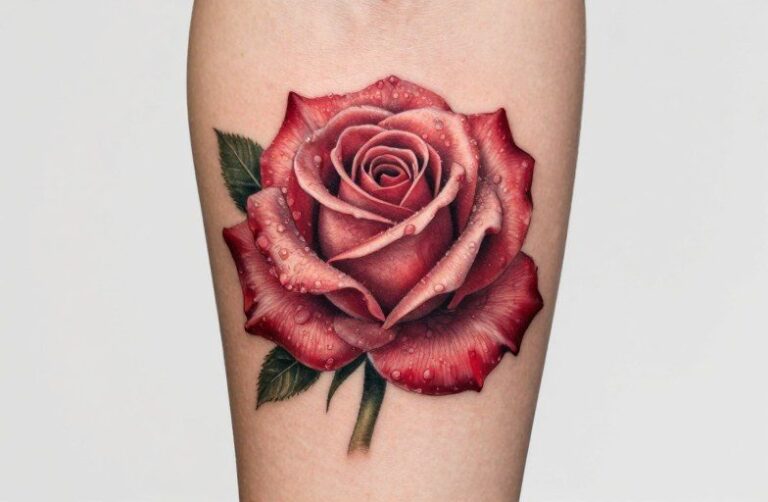
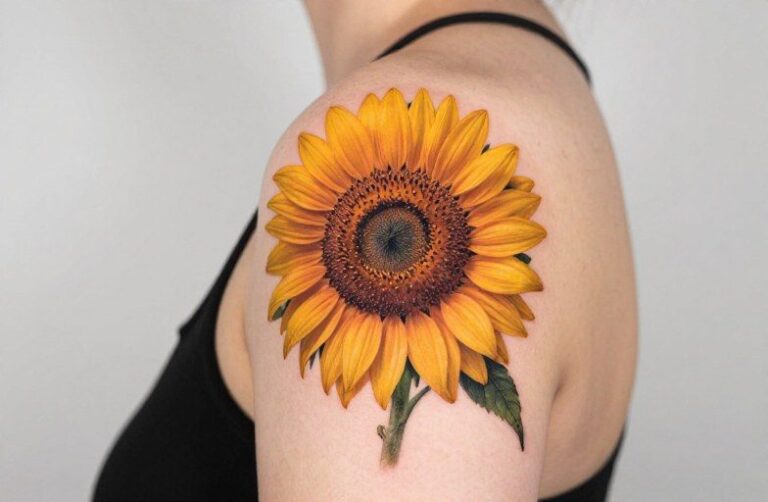
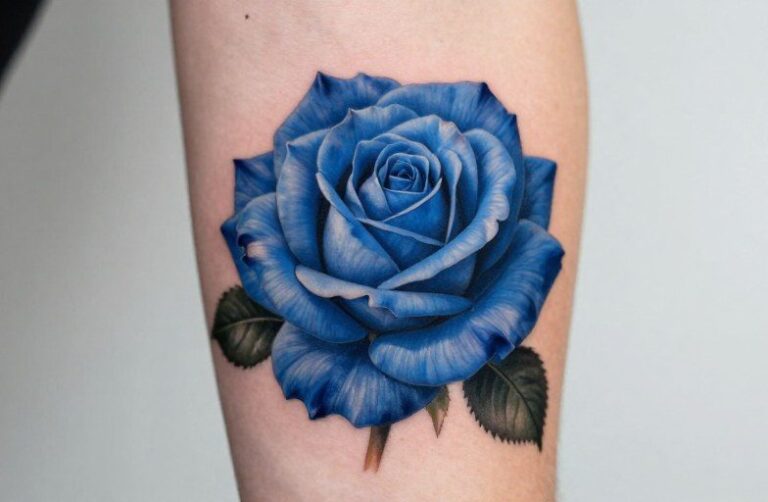
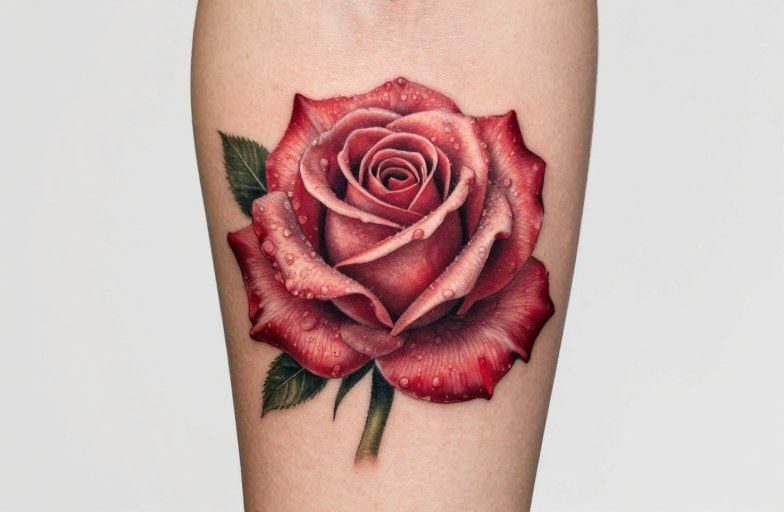
Red roses against pale skin create immediate visual impact, but reds are among the fastest-fading pigments. Yellows and light pinks often require touch-ups within five to seven years, especially on areas with sun exposure. Color works best when the flower species matters symbolically, blue forget-me-nots, black dahlias, orange marigolds for Día de los Muertos references. The trade-off is maintenance; budget for future sessions.
Black and Grey Longevity
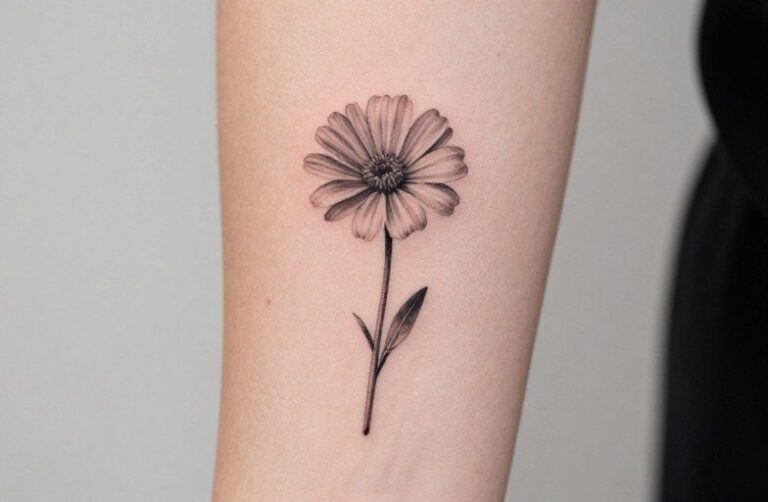
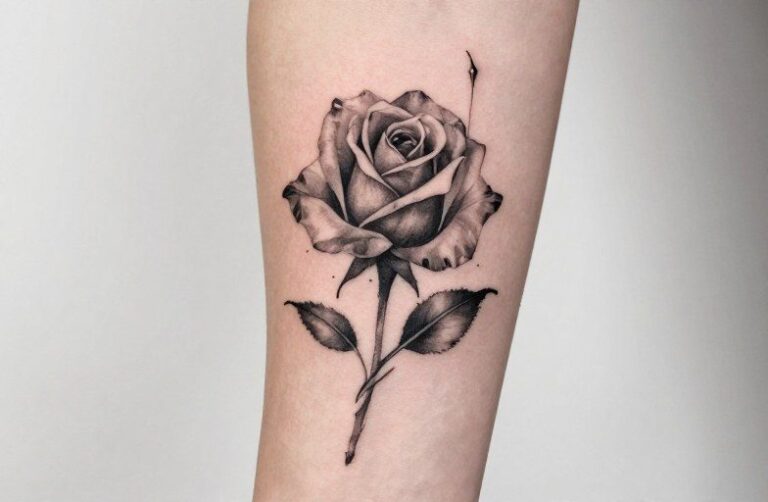
Monochrome relies on contrast between deep blacks, mid-tone washes, and skin tone for its effect. This approach ages more gracefully because black ink holds better than most colors, and the design doesn’t depend on hue recognition to read as “flower.” A skilled artist can suggest a rose versus a peony through petal structure and shading direction alone. For smaller pieces or areas with frequent sun contact, black and grey often proves the smarter technical choice.
Who Chooses This Tattoo
There’s no single demographic, but certain life circumstances tend to precede this request. People marking recovery from illness or grief often gravitate toward the growth-from-decay symbolism. Others come after major creative or personal breakthroughs, wanting to externalize a sense of having “bloomed” into themselves. Some simply love the aesthetic tension between organic softness and human structure.
What unites most wearers is a willingness to sit through lengthy sessions. These designs rarely work small; the detail required for both facial features and botanical elements demands real estate. Someone unprepared for multiple sittings or uncomfortable with the visibility of a face tattoo (even a partial one) usually self-selects out before the consultation.
Best Placements
Arms and Legs
The outer upper arm and thigh offer the flat, broad canvas these compositions need. A flower face wrapping the arm works best when the face orientation follows the muscle flow, eyes looking toward the shoulder, not twisted awkwardly. Forearms demand extra planning because the radius rotation changes which parts of the tattoo face outward; the design must read correctly in multiple positions.
Torso and Back
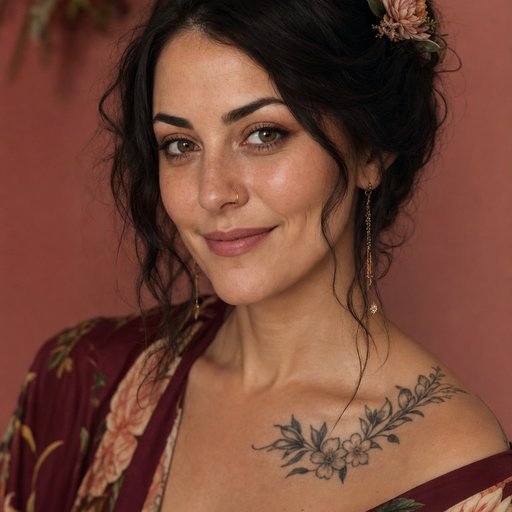
Ribs and sternum allow vertical compositions that emphasize the face’s natural proportions. The sternum specifically suits a central face with flowers radiating outward like a halo or growing from the collarbone upward. Backs accommodate the largest versions, sometimes full portraits with garden-scale botanical elements, but this requires genuine commitment to the concept, you’ll see it in mirrors, in photos, for decades.
Hands, fingers, and neck generally fail for this subject. The detail collapses, the face becomes unrecognizable, and the symbolism turns muddy. A few artists can execute miniature versions successfully, but they’re exceptions proving the rule.
Mythology & Folklore
Human-plant hybrid imagery appears across cultures, though direct precedents for the modern flower face tattoo are scattered.
Classical and European Roots
The Greek myth of Narcissus, who transformed into a flower, and the Roman tale of Clytie becoming a heliotrope, established the person-becomes-plant narrative. Medieval Green Man carvings, foliate faces made of leaves, often with vegetation issuing from the mouth, share formal DNA with contemporary flower face designs. These were often linked to seasonal rebirth and agricultural cycles rather than individual psychology.
Latin American Traditions
Calavera imagery for Día de los Muertos frequently incorporates marigolds (cempasúchil) growing from or around skull faces, representing the bridge between living and dead. Some trace modern flower face tattoos partly to this visual tradition, though the contemporary style usually strips away the specific cultural context, for better or worse.
Japanese folklore offers the futakuchi-onna (two-mouthed woman) and other yōkai with mouths in unexpected places, sometimes with floral or organic elements, but these are more commonly associated with horror than beauty in their original contexts.
Religious & Spiritual Angles
The symbolism shifts dramatically depending on the flower species chosen and the wearer’s intent.
Christian Iconography
The “rose without thorns” as Mary, the “mystical rose,” creates a potential reference point for Catholic wearers. A face emerging from or composed of roses can echo Marian imagery without explicit religious depiction. The lotus, while more commonly associated with Eastern traditions, has been adopted by some Christian practitioners as a resurrection symbol. These connections are usually personal rather than doctrinal, no church teaches flower face tattoos as sacrament.
Buddhist and Hindu Associations
The lotus growing from mud toward light serves as a central metaphor for enlightenment in multiple traditions. A face dissolving into lotus petals can represent the dissolution of ego or individual identity into universal consciousness. This reading requires the lotus specifically; substituting roses or peonies changes the spiritual vocabulary entirely.
Contemporary spiritual-but-not-religious wearers often choose the design as a private meditation on impermanence, drawing loosely from Buddhist anicca without formal practice. The tattoo becomes a daily visual prompt rather than a doctrinal statement.
The Takeaway
A flower face tattoo succeeds when the technical execution matches the conceptual weight. The design needs sufficient size, the right placement for your lifestyle, and an artist who understands both portraiture and botanical structure. The meaning, whether personal growth, mortality contemplation, or pure aesthetic preference, should feel specific enough that you can articulate it without reaching for generic phrases.
Before committing, ask your artist how they’ll handle the aging differential: fine facial details versus softer organic shapes. Request to see healed photos of similar work, not just fresh tattoos. And consider whether you’ll still want to explain this piece at sixty, because unlike a flower, the ink won’t fade on schedule.
Frequently Asked Questions
Does a flower face tattoo always have to be large?
Technically no, but practically yes. The detail required for both facial recognition and botanical accuracy collapses below palm-sized. Small versions often age into indistinguishable blurs within a few years.
Which flower species work best for this design?
Roses and peonies offer the most recognizable petal structures and carry established symbolic weight. Lotus requires more explicit context to read correctly. Avoid flowers with tiny, complex petals like cherry blossoms unless the piece is quite large.
How do I choose between a realistic and stylized approach?
Realism demands a highly skilled portrait specialist and larger scale; stylized or neo-traditional allows more artistic interpretation and typically ages better with slightly less maintenance. Match the style to your existing tattoos if you have them.
Will the face in my tattoo be recognizable as a specific person?
Only if you request a portrait of someone specific. Most flower face tattoos use composite or anonymous features, which gives the artist more freedom to integrate botanical elements. If you want a recognizable person, bring clear reference photos and expect a longer design process.