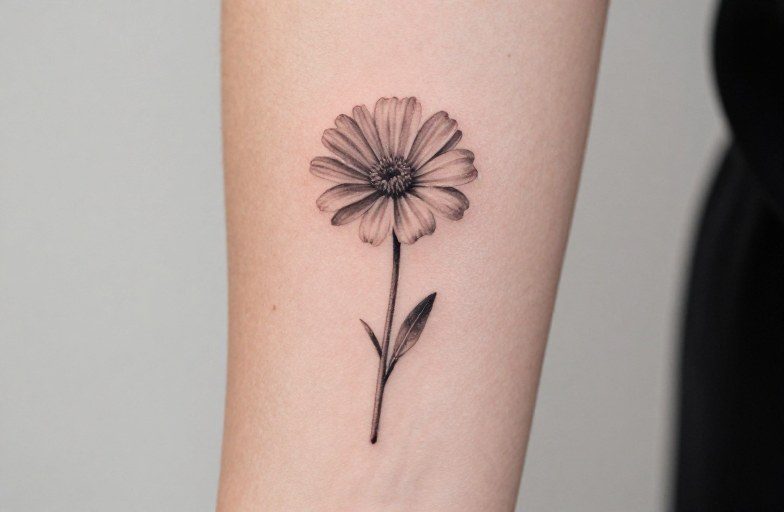
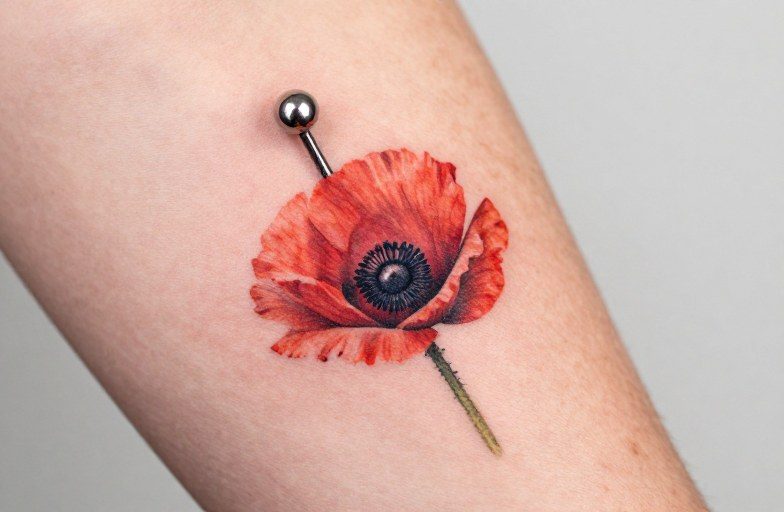
A poppycock tattoo channels the old British expletive into visual form: nonsense, absurdity, and defiant self-expression. Paired with piercing imagery, needles, studs, or flesh, it doubles down on body modification as deliberate rebellion against polite society. The design appeals to people who find power in owning what others dismiss as foolish or extreme.
Symbolism & Core Meaning
The Word Itself
“Poppycock” derives from Dutch pappekak, literally “soft dung.” By the 19th century, English speakers wielded it to dismiss anything they considered ridiculous. A tattoo reclaiming this insult turns the accusation into armor. The wearer essentially says: your judgment is the actual nonsense here. This inversion mirrors how other reclaimed slurs function in subcultural ink, though poppycock carries lighter, more comedic baggage.
Piercing as Visual Counterpoint
When the design incorporates piercing tools or pierced flesh, it grounds the absurdity in physical reality. Needles become symbols of voluntary transformation, pain chosen, not endured. The combination suggests that body modification itself reads as “poppycock” to mainstream observers, which the wearer embraces rather than denies. This pairing works especially well for people whose modifications draw family criticism or workplace side-eye.
Religious & Spiritual Angles
Secular Rebellion, Sacred Echoes
No organized religion claims poppycock imagery, yet the theme of holy foolishness runs through multiple traditions. Christianity has its fools for Christ; Zen prizes the absurd koan; Sufi mystics employed deliberate nonsense to shock seekers past conventional thinking. Some tattoo wearers tap this lineage without claiming religious identity, drawn to the archetype of wisdom disguised as madness.
Body Modification and Taboo
Several religions historically restrict piercing or tattooing, which makes the poppycock-plus-piercing motif inherently transgressive in those contexts. For lapsed members of such communities, the design can mark liberation from childhood prohibitions. The humor softens what might otherwise read as angry anti-religious statement, allowing complexity: fondness for upbringing mixed with rejection of its constraints.
Who Chooses This Tattoo
The typical bearer skews younger and heavily modified already, this rarely functions as a first tattoo. Piercers and tattoo artists themselves sometimes choose the design as professional identifier, signaling that their livelihood seems like nonsense to outsiders but possesses internal coherence. Musicians, comedians, and other performers also gravitate toward the motif’s theatrical absurdity.
Beyond profession, the psychology matters. People who’ve been called foolish for unconventional life paths, dropping stable careers for art, refusing marriage norms, living nomadically, often select this imagery as retrospective mockery of their critics. The tattoo memorializes a specific moment when they chose to trust their own judgment against majority opinion.
- Body modification professionals seeking career-specific ink
- People recovering from religious upbringings that condemned piercing
- Performers whose work embraces absurdity or satire
- Anyone who made a “foolish” decision that proved correct
Similar & Related Symbols
The Jester and Fool Archetype
Jester tattoos share DNA with poppycock designs, both wield humor as weapon and shield. The fool archetype appears across cultures: the vidusaka in Sanskrit drama, the heyoka among Lakota, Shakespeare’s licensed truth-tellers. Unlike generic jester imagery, poppycock specifically invokes language and dismissal, making it more verbal and confrontational.
Punk and Anarchist Visual Language
Safety pins through skin (real or illustrated) carry similar charge, working-class piercing imagery adopted as anti-fashion. The poppycock variant adds linguistic humor that pure punk graphics often lack. British skinhead iconography sometimes overlaps too, though that association carries racial baggage that most contemporary wearers explicitly reject.
Other adjacent symbols include:
- The ouroboros (self-consuming absurdity)
- Broken chains or shattered mirrors
- Comedy/tragedy masks with modified expressions
- Traditional “Snake Oil” or quack remedy imagery
Color vs Black and Grey
Bold Color Approaches
Traditional American styling suits this subject, thick black outlines, saturated reds and yellows, banner scrolls for lettering. The vintage feel matches the word’s 19th-century origins. Some artists render the lettering as circus poster or carnival signage, amplifying the entertainment-as-deception angle. Bright color demands confident placement; it reads as proud declaration rather than private reference.
Black and Grey Restraint
Single-needle or fine-line blackwork creates different tone: more archival, more whispered. Lettering in delicate script or typewriter font transforms the crude insult into something almost literary. Black and grey ages more predictably on hands and necks, where color often blurs within five years. For a phrase-dependent design, legibility longevity matters, faded color turns “poppycock” into illegible mush faster than crisp black lines.
Skin tone significantly affects choice. On darker skin, high-contrast black and grey typically outperforms muted colors; jewel tones (emerald, sapphire) can work but require experienced color packing. White ink highlights on black skin often heal to ash-grey or disappear entirely, not recommended for lettering elements.
Best Placements
Visible Defiance
Forearms and calves function as public billboard, viewable in short sleeves or rolled pants, hideable for formal settings. The outer forearm specifically invites the “what does that mean?” conversation, which wearers often enjoy. Thigh placements offer similar control with larger canvas for accompanying imagery: pierced roses, vintage needles, anatomical cross-sections.
Intimate Locations
Ribs, sternum, or upper inner arm keep the message closer. These spots hurt more (rib tattooing rates among the most painful common placements), which itself suits the theme, voluntary discomfort for private meaning. Sternum designs can incorporate actual piercing imagery symmetrically, mirroring surface piercings that occupy the same territory.
Hand and finger tattoos demand caution. The phrase format requires space; knuckles fit eight letters across four fingers, but “poppycock” is ten. Abbreviations or single-word versions lose impact. Finger skin also sheds ink rapidly, what reads crisp at month three often ghosts by year two. Experienced collectors only, with realistic expectations.
Key Takeaways
A poppycock tattoo with piercing elements transforms insult into identity, using humor as entry point to deeper themes of bodily autonomy and social judgment. The design rewards traditional or fine-line execution, favors visible but controllable placement, and resonates most with people already embedded in modification culture. Age considerations matter significantly, lettering must remain legible, color choices must suit skin tone, and placement must match lifestyle realities. The best versions don’t merely illustrate the word but build visual narrative around it: what gets pierced, what tools appear, what era the typography evokes. Like the modification practices it references, this tattoo type succeeds when the wearer fully commits rather than hedges.
Frequently Asked Questions
Does a poppycock tattoo have to include actual piercing imagery?
No. The word alone carries sufficient meaning, though piercing elements strengthen the body-modification connection. Some wearers substitute carnival, circus, or vintage advertising imagery to similar effect.
How well does lettering this long age on mobile skin areas?
Poorly without planning. Ten letters need adequate spacing; crowding guarantees blur. Bold traditional fonts outperform delicate scripts on forearms and calves where skin moves constantly.
Is this design considered offensive in professional settings?
The mild profanity rarely raises formal objections, but visible placement still carries stigma in conservative fields. Inner arm or thigh versions maintain personal meaning without career friction.
Can the piercing imagery reference my actual piercings?
Absolutely. Many collectors customize with jewelry they wear, septum rings, industrial bars, surface anchors, rendered in the tattoo. This creates personal continuity between body and image.