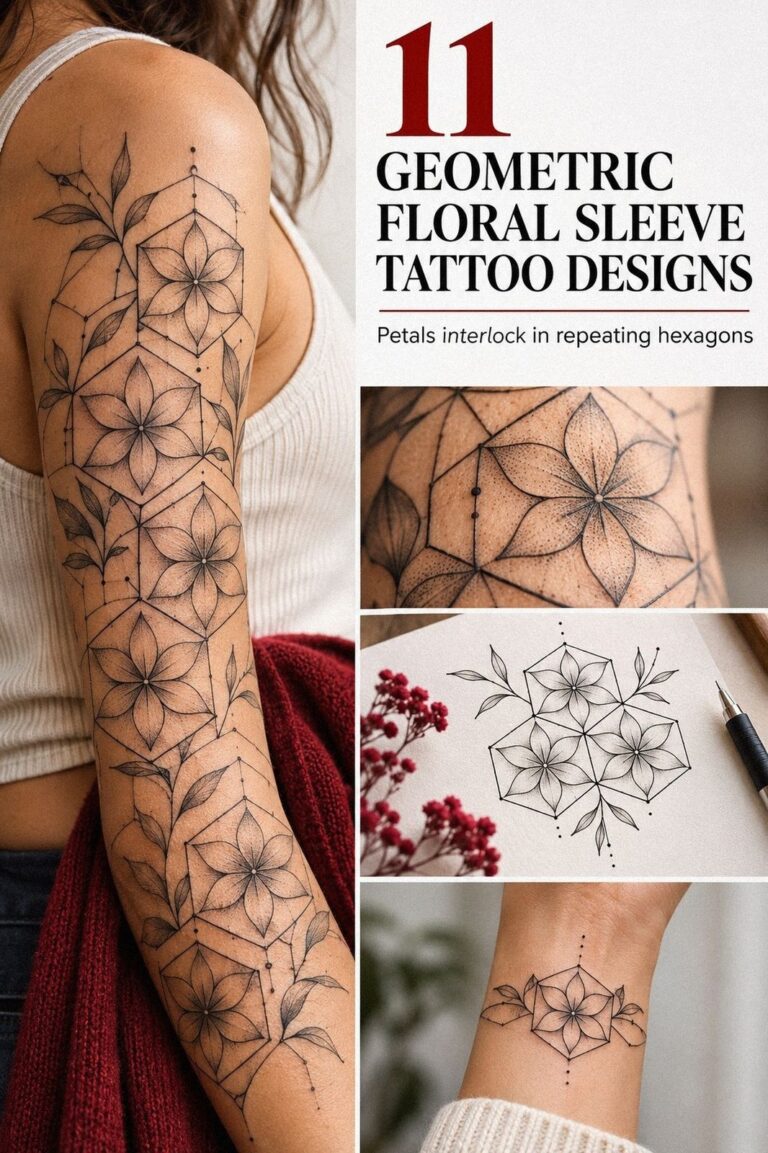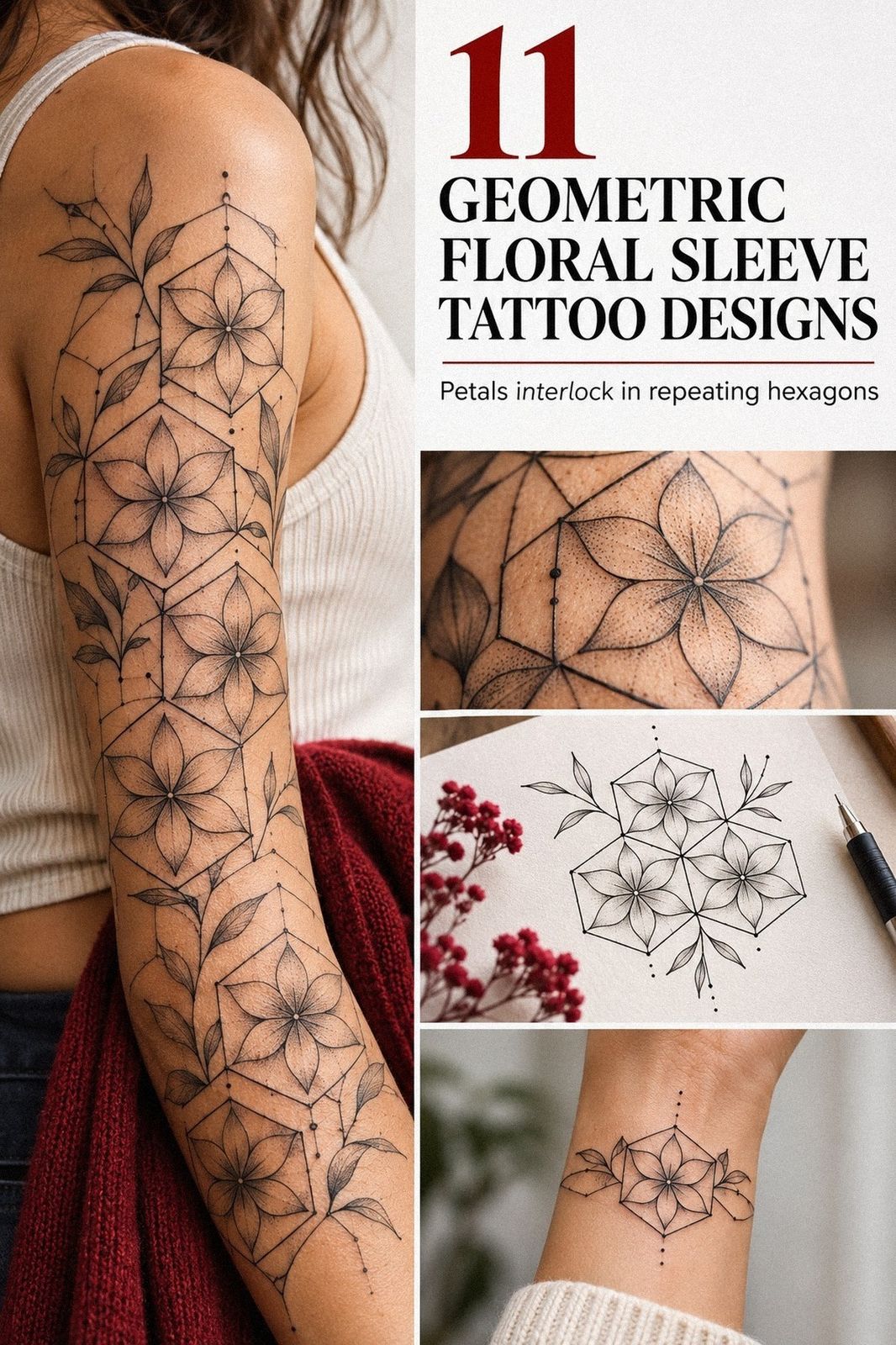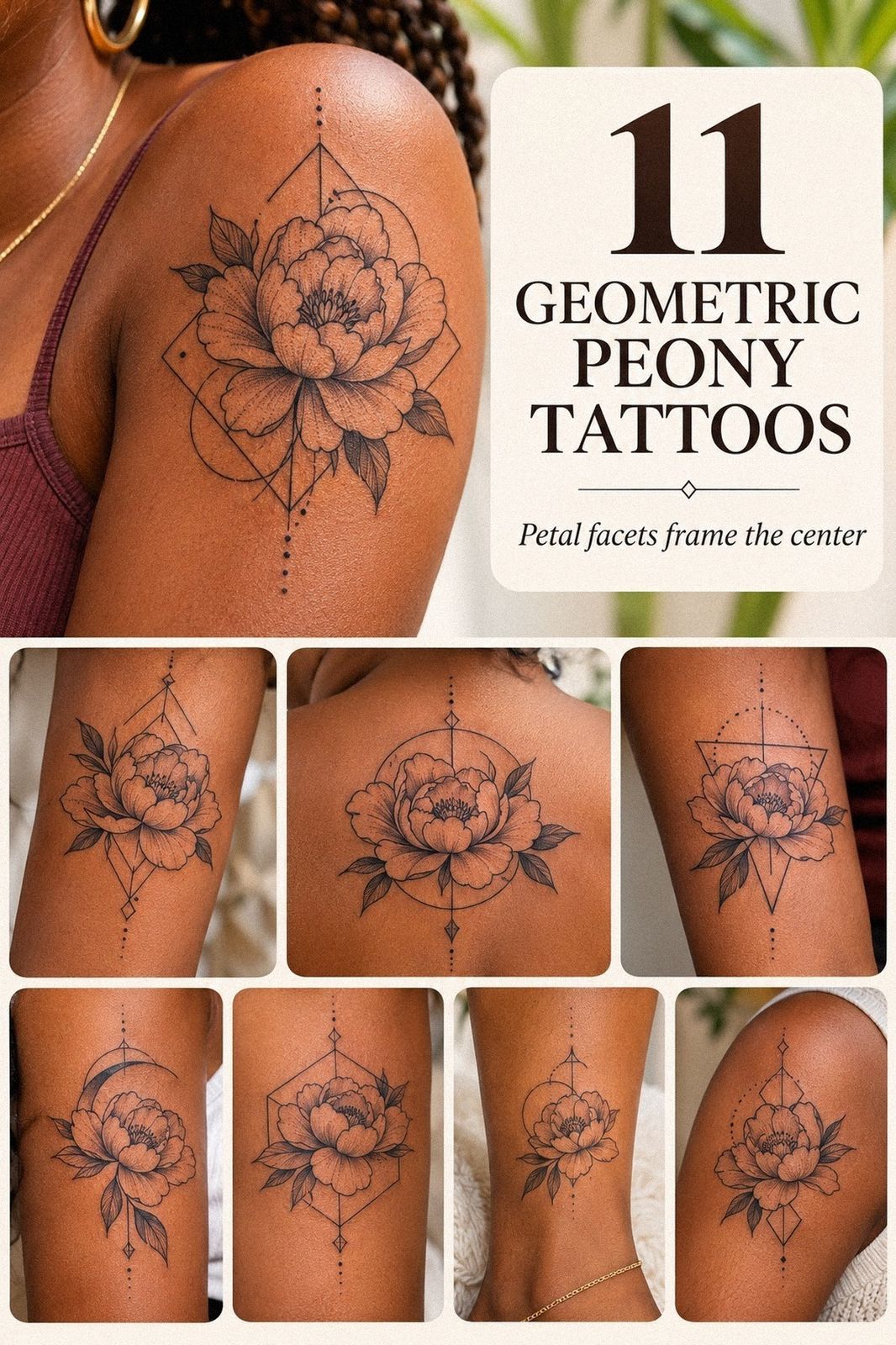
Geometric peony tattoo placements feel less painful when you choose padded areas such as the thigh, forearm, or shoulder. Placement does the heavy lifting. Your design can stay intricate without becoming a long session!
I’d start by deciding what matters most to you: visibility, privacy, symbolism, or a shorter appointment. You’ll make better choices when you match the flower to your body instead of forcing every detail into one small area. A personal design should feel connected to your routine.
- Start Small: Geometric Peony Tattoo With Fine Linework
- Why the Forearm Works for Geometric Peony Tattoos?
- The Two-Line Anchor: Sacred Geometry on the Shoulder
- Make the Shoulder Bloom With Bold Geometry
- Wrist or Wait? Keep the Peony Delicate
- Blackwork Geometry Meets the Collarbone
- Build the Three-Point Frame Along the Ribs
- Behind the Ear, Keep It Minimal
- Add Dotwork to the Upper Arm
- Pair a Geometric Peony With a Crescent Moon
- Let the Ribcage Carry the Geometry
1Start Small: Geometric Peony Tattoo With Fine Linework
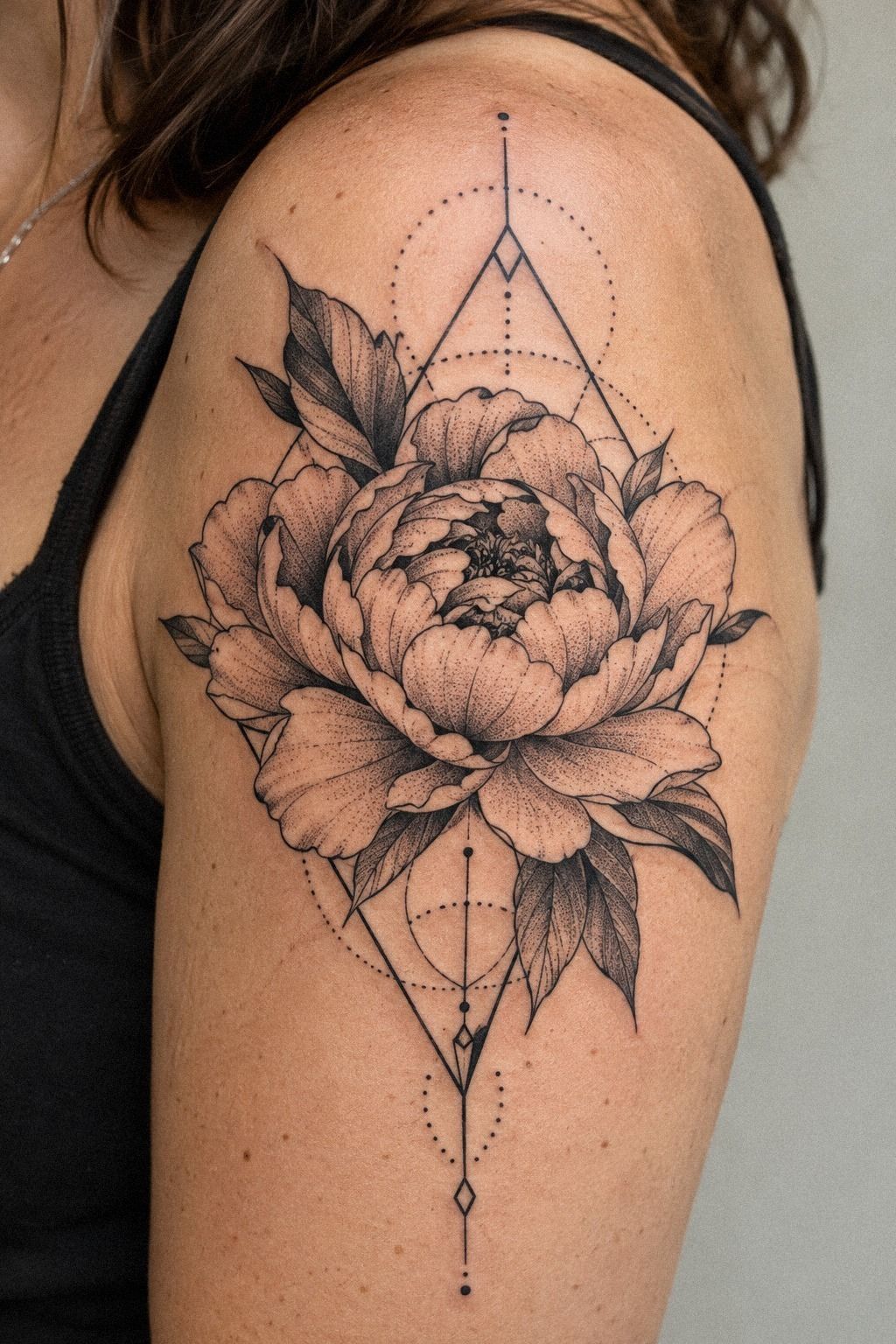
A small geometric peony tattoo on the thigh creates a striking balance between detail and comfort. The outer thigh gives your artist flat skin and enough space for every angle to stay readable.
I’d ask for a compact center, restrained petals, and breathing room between the smallest lines. If the design gets crowded, fine ink can blur as your skin ages. A slightly larger tattoo may offer better value than a tiny one with muddy details.
The thigh works well for a fine linework tattoo because you can keep it private or show it easily. It gets less hand friction than the wrist. Still, tight clothing can irritate fresh skin during healing.
Keep the surrounding area visually simple. A small negative-space halo will make the geometry look sharper. For more compact floral references, compare these tiny peony tattoo ideas before you commit.
2Why the Forearm Works for Geometric Peony Tattoos?

Forearm placement makes geometric peony tattoo ideas easy to read. The outer forearm gives the flower a long, natural path without stretching the petals too far.
I’d keep the bloom near the broadest section. Let the stem taper toward the wrist. You can also control the orientation: face it toward you, outward, or sideways.
The best version doesn’t need much fill. Black ink can carry the center, while open sections keep the peony from becoming a dark patch. Full saturation may raise the cost without adding much value.
Ask for healed examples, not only fresh work. A strong healed portfolio tells you more about line stability and long-term clarity. If meaning matters too, read this peony tattoo meaning guide.
3The Two-Line Anchor: Sacred Geometry on the Shoulder

A unique geometric peony tattoo feels powerful on the shoulder. The rounded muscle gives the flower a natural anchor and leaves enough skin for a meaningful framework.
I’d use one central circle, a few clean intersections, and petals that repeat the same rhythm. That creates the central circle I call the Two-Line Anchor. Two dominant lines should guide the eye before smaller details appear.
Sacred geometry can become busy when every shape has equal weight. A restrained frame feels more meaningful than a dense mandala. You’ll still see the petals clearly!
Shoulder skin also gives you options for future additions. You can keep the peony isolated or extend it toward the upper arm later. Ask about the expected appointment length before you book, and compare the symbolism with this meaningful peony tattoo guide.
4Make the Shoulder Bloom With Bold Geometry

A geometric peony across the shoulder feels fierce rather than dainty.
5Wrist or Wait? Keep the Peony Delicate

A delicate geometric peony on the wrist needs restraint. Limited wrist skin leaves less space for intersections, shading, and tiny petals.
I’d choose fewer lines and a clear silhouette. The open negative space around the flower will keep the design readable as it settles. More detail isn’t always better value here.
Your wrist is visible and personal. It’s also exposed to movement, friction, and frequent washing. I’d skip a full wrist band if you want cleaner edges and simpler healing.
Ask whether the design suits your wrist width. You can request a simpler center or a more expressive petal. For a quieter direction, browse this minimalist peony tattoo collection before your consultation.
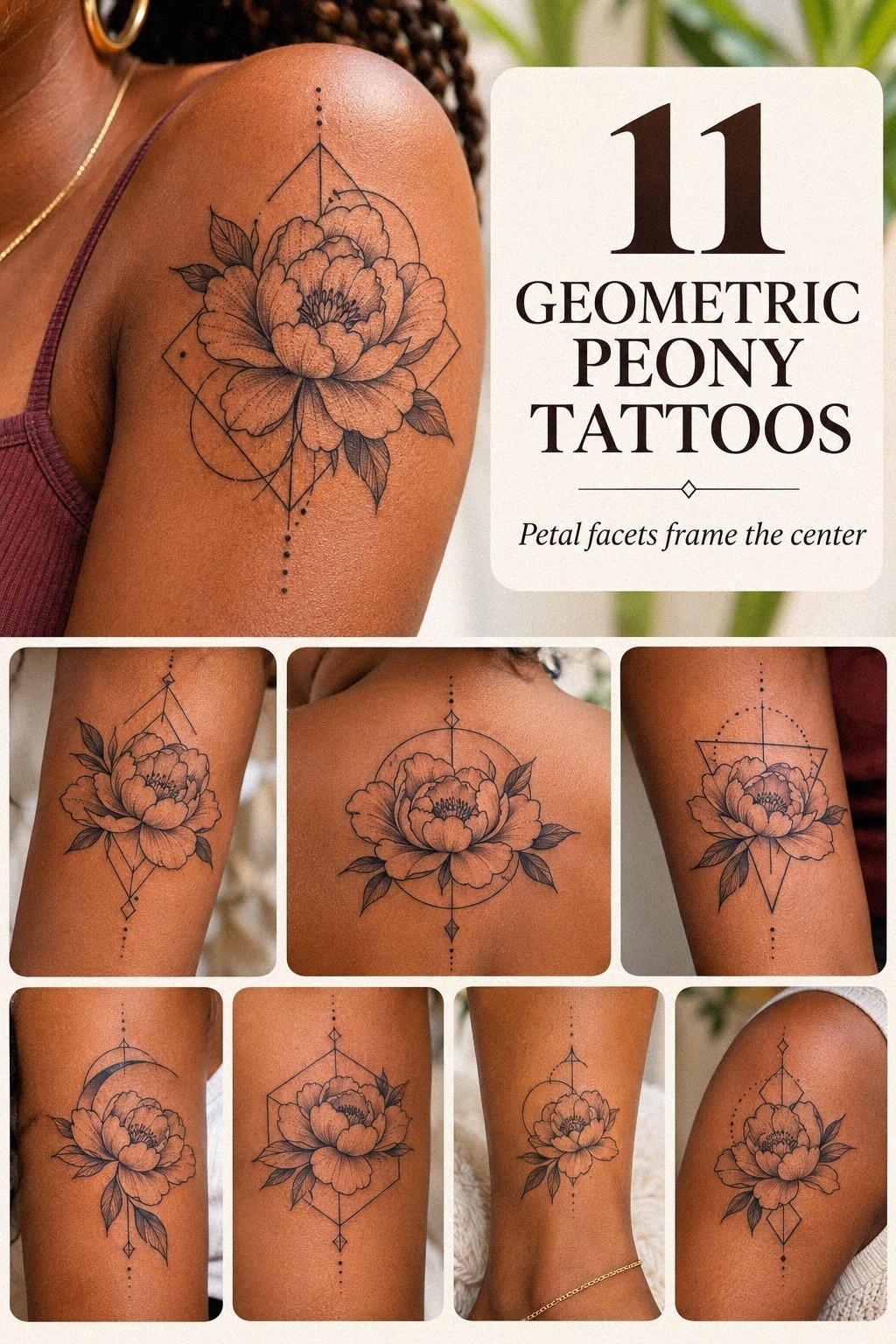
6Blackwork Geometry Meets the Collarbone
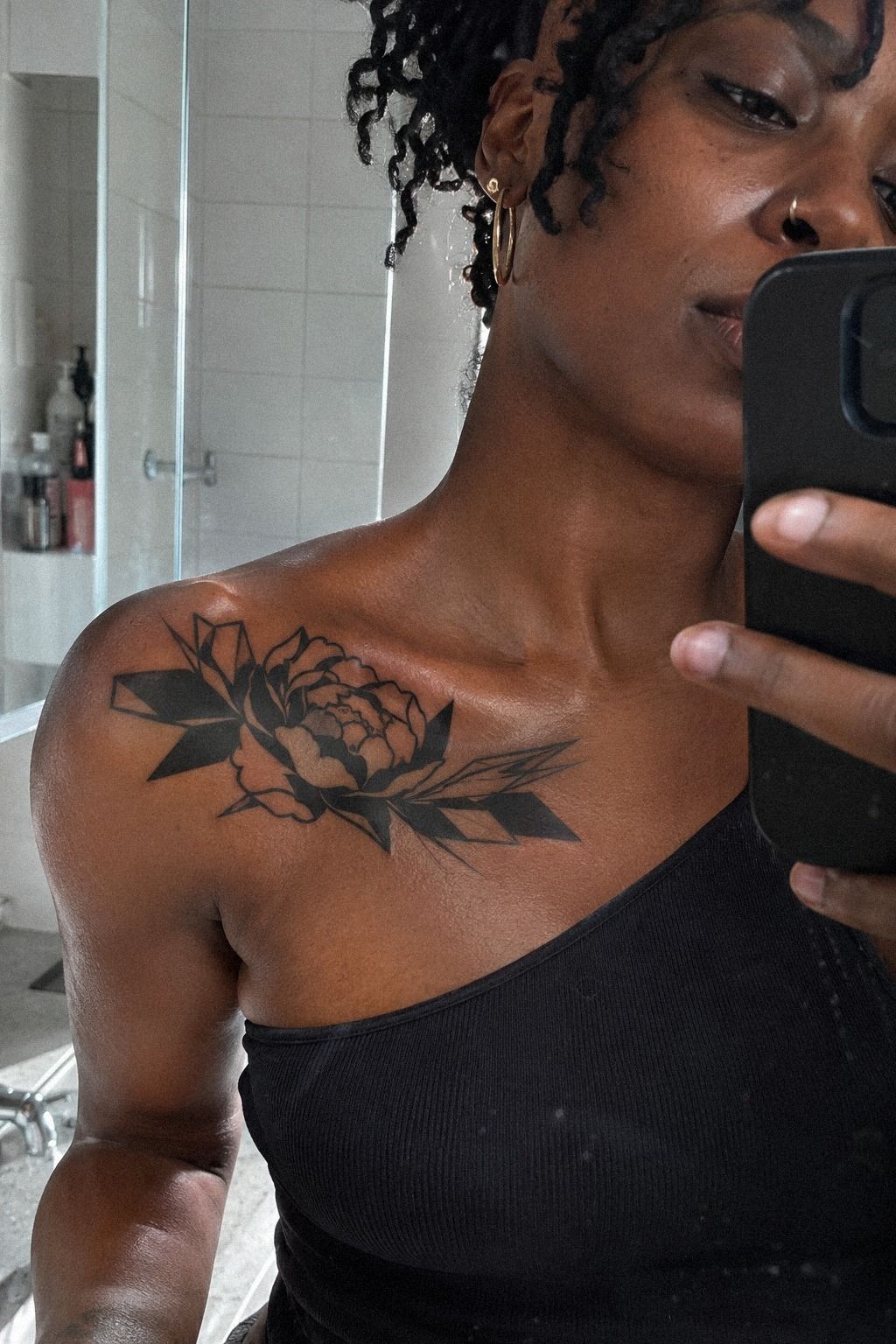
A blackwork geometric peony looks bold across the collarbone. This placement needs careful planning because contrast, saturation, and healed visibility all matter.
I’d use a strong silhouette with selective fill. Open skin can keep the flower expressive, while a solid center gives it structure. That balance may be worth the cost if you want a graphic tattoo with lasting impact.
The collarbone is a bonier placement. It can feel more intense than the forearm or thigh. That’s a reason to simplify the bone placement, not a reason to abandon the concept.
Aftercare matters just as much as the stencil. Wash gently, moisturize with a fragrance-free product, and avoid sun exposure or swimming while the surface heals. Healing often takes two to three weeks on the surface, with deeper healing taking longer.
7Build the Three-Point Frame Along the Ribs
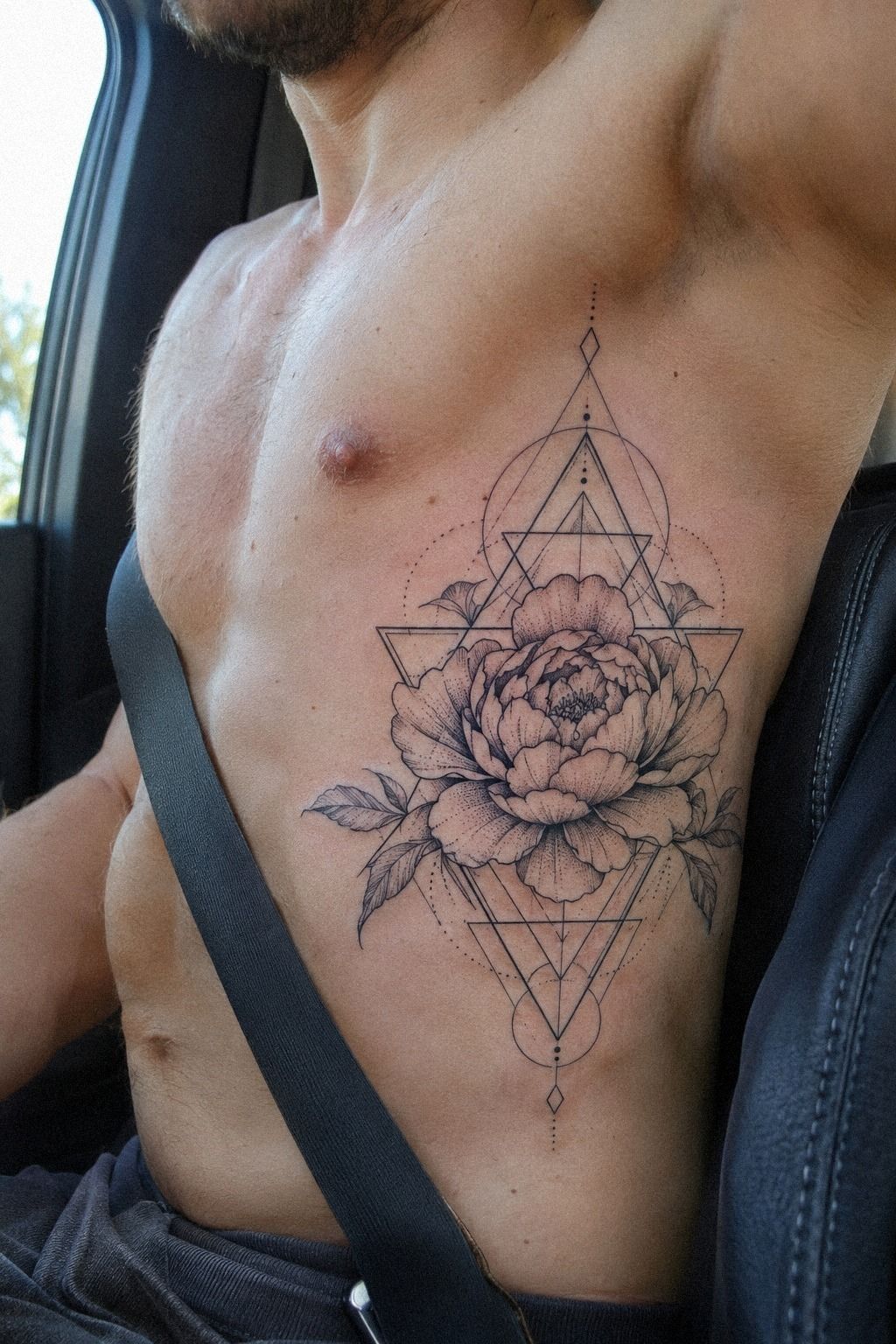
A geometric peony framed by triangles feels edgy on the ribs.
8Behind the Ear, Keep It Minimal

A minimal geometric peony behind the ear can feel understated, personal, and expressive. The behind-the-ear placement stays partly hidden when your hair covers it.
I’d simplify the bloom to its most recognizable shapes. Minimal linework needs a strong outline because there’s little space for texture or shading. The design should read instantly.
Behind the ear is sensitive. The machine noise can also feel intense at close range. A short appointment with fewer lines may offer better value than a crowded design!
I’d skip an overly tiny mandala. It may look ornate on paper but become muddy once the lines settle.
A crisp flower with one angular center feels more timeless. Compare tiny peony ideas with this Japanese peony tattoo meaning guide.
9Add Dotwork to the Upper Arm
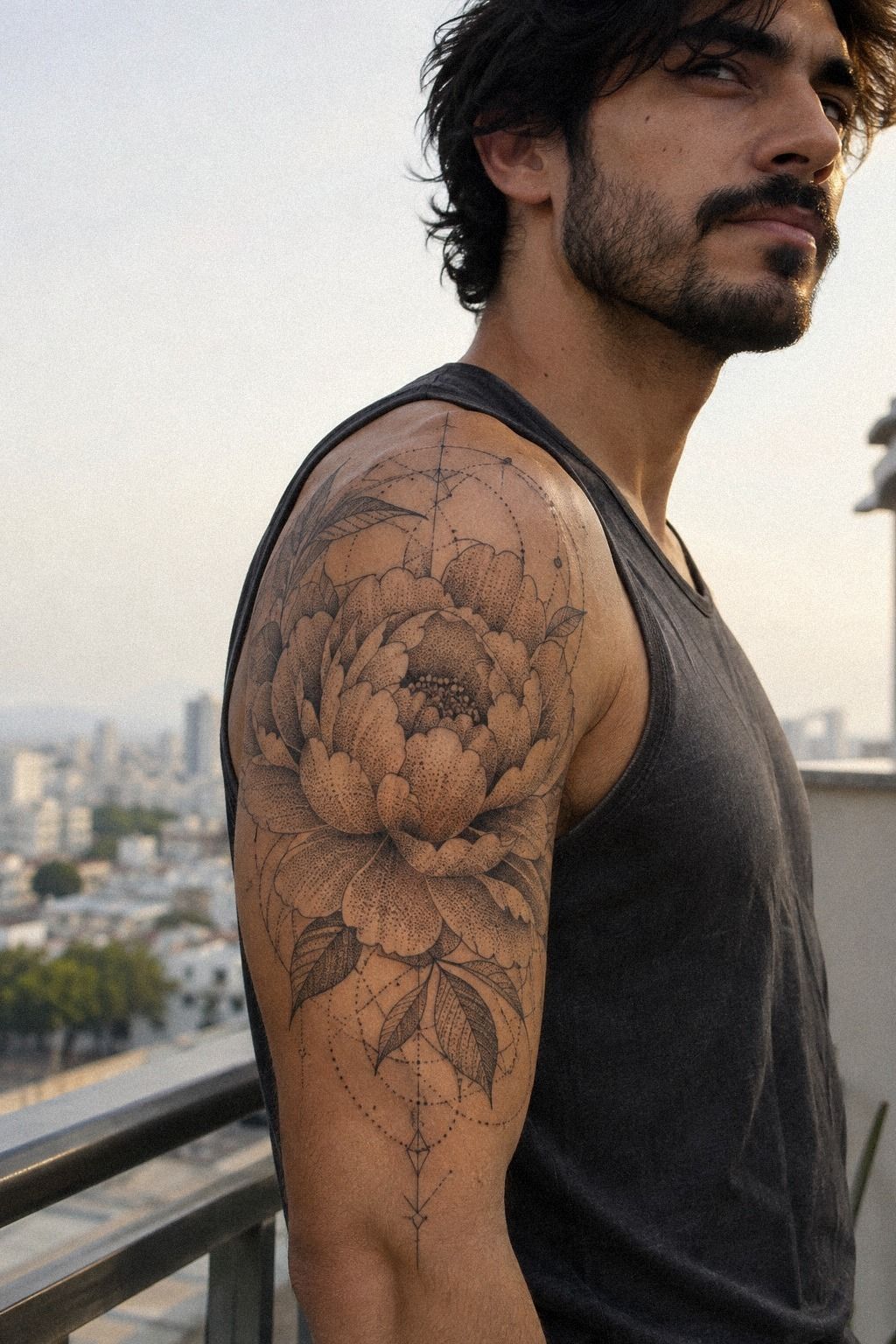
A geometric peony with dotwork gives the upper arm a softer, textured finish. The upper arm also offers enough skin to explore contrast without making the design feel heavy.
I’d use dots only where they explain form. Stippled shading beneath a petal can suggest depth. Dots scattered everywhere may make the tattoo look dusty instead of polished.
The upper arm is often more tolerable than ribs, feet, hands, or sternum areas. Loose clothing can help during healing. You’ll still need to limit UV exposure once the surface heals.
My favorite variation places dotwork on one side of the bloom. That one-sided treatment feels expressive and slightly unexpected. For another floral texture, look through this watercolor peony tattoo guide.
10Pair a Geometric Peony With a Crescent Moon

A geometric peony and crescent moon can feel romantic without becoming overly sweet.
11Let the Ribcage Carry the Geometry

A geometric peony on the ribcage creates a meaningful, intimate placement. The vertical area gives angular petals room to move with your body.
I’d follow the ribcage curve instead of forcing the design into a rectangle. Your artist can angle the stem slightly so the bloom feels connected to your torso.
Ribcage tattoos can feel more painful than forearm, thigh, or shoulder placements. That’s a real consideration. Choose a focused piece with a clear stopping point instead of adding extra symbols halfway through.
Loose clothing, gentle washing, and avoiding swimming can support healing. Friction control also reduces irritation during the early days. If you want to compare symbolism, read this peony tattoo meaning article.
Before You Book: Check the Placement First
Placement affects comfort, visibility, and long-term design value. A forearm may cost more than a tiny wrist tattoo, but it can preserve geometry better.
Look at your daily routine. Do you work with your hands?
Wear tight sleeves? Need the tattoo hidden?
These details matter more than a trend.
Ask your artist to mark the area before the appointment. Walk around with the stencil.
Bend your arm. Sit down.
A few minutes of testing can prevent an expensive mistake.
You can also compare the placement with this minimalist peony tattoo guide if you’re still deciding how much detail your skin can carry.
Which Details Are Worth Paying For?
I’d spend the budget on spacing, stencil adjustments, and an artist with healed geometry. Those choices affect the tattoo more than extra symbols.
A healed portfolio is worth the extra research. Fresh work can look polished while the lines are still swollen. Mature examples show whether the artist’s style stays crisp.
You don’t need every technique in one design. Fine lines, dotwork, solid fill, and sacred geometry can compete. Choose the feature that gives your peony its personality.
If you’re comparing symbolism before the consultation, this peony tattoo meaning guide can help you explain your choices without copying someone else’s design.
Budget for the Whole Session
The cost depends on size, location, detail, and the artist’s shop minimum. A small tattoo may still reach the shop minimum. A larger rib or shoulder design may take several hours.
Ask whether the quote includes the consultation, stencil changes, and touch-up policy. That makes the final budget estimate easier to understand.
A cheaper appointment isn’t always better value. If the artist has strong healed work and a clear process, the higher price may be worth it.
You can ask whether dotwork or limited fill would reduce the appointment without weakening the concept. For a texture comparison, see this watercolor peony tattoo guide.
What Makes Geometry Stay Readable?
Clear spacing is the foundation. Each line needs room around it, especially near the flower’s center.
A crisp silhouette usually ages better than a crowded one. Your artist can remove small marks without weakening the idea.
The peony should have one visual priority. That might be the petals, a sacred circle, or a blackwork center. Pick one and let the other details support it.
I’d inspect the stencil from several distances. If you can’t recognize the bloom from across the room, the design may need fewer intersections. These tiny peony ideas show how a simpler structure can remain expressive.
Match the Design to Your Skin and Routine
Your skin tone, sun exposure, and clothing habits all affect the planning conversation. Ask for healed examples on similar skin tones when possible.
A skin-tone comparison helps your artist discuss saturation and contrast with more accuracy. It also gives you clearer expectations.
Think about body movement, too. A tattoo that looks elegant while standing may shift when your shoulder rolls or your ribs expand. The stencil should follow your body rather than fight it.
If your daily routine includes strong sunlight, ask how to manage sunlight protection once it heals. This poppy tattoo meaning article may also help if you’re weighing a different floral symbol.
The Smallest Detail I’d Keep
If I had to remove one feature, I’d keep the flower’s central structure. A strong center makes the tattoo recognizable even when the outer petals are simple.
The central geometry can be a circle, diamond, or angular rosette. It doesn’t need to be feminine, masculine, or ornate to feel iconic.
Tiny details are tempting. They also add time and cost. Keep them only when they explain the flower or carry real meaning.
For a cleaner reference point, compare the central shape in this minimalist peony tattoo collection before you approve the stencil.
When Is a More Painful Placement Worth It?
A rib, collarbone, or sternum placement may be worth it when privacy and body flow matter most. The trade-off is a more intense session.
You can reduce the session burden with a focused design. A short appointment plan may help you stay calm and protect your budget.
Don’t choose a painful placement simply because it looks dramatic online. Choose it because the placement choice feels right for your body and your life. This Japanese peony tattoo meaning guide may help you decide whether the symbolism justifies the location.
The Geometric Peony Rule I Keep Coming Back To
A geometric peony succeeds or fails before the machine starts. The strongest designs aren’t the ones with the most lines. They’re the ones where your eye knows where to land.
My rule is simple: choose one dominant idea. Maybe it’s a sharp center, a moon, or a blackwork silhouette.
You don’t need all three. A tattoo should have a clear point of view.
Placement is part of the design. Forearm placement gives visibility and flat skin.
A thigh gives privacy. Ribs create intimacy but demand patience.
Fine lines aren’t automatically easy. They need clean spacing, a steady artist, and realistic aging expectations. I’d choose a slightly larger, understated peony over a microscopic design that loses its geometry.
You’ll live with the placement longer than you’ll remember the appointment!
If you’re still choosing the flower’s visual language, this peony flower tattoo meaning guide offers another way to think about the center, petals, and symbolism.
A Few Things Worth Answering
How much does a geometric peony tattoo usually cost?
A geometric peony tattoo often costs about $100 to $300 in the US for a small design. Your artist, region, placement, and detail level can change the quote. Shop minimums may range from $50 to $100, while hourly rates commonly run from $100 to $250.
Are geometric peony tattoos a good idea for a first tattoo?
Yes, especially on the forearm, thigh, or shoulder. Clean linework gives the first piece a clear shape without requiring heavy shading.
I’d still choose an artist with healed examples and ask about the expected cost before booking. If you want a simpler starting point, this minimalist peony tattoo guide is useful.
How do I choose a tattoo artist for geometric peony tattoos?
Choose an artist whose portfolio shows precise geometry, healed tattoos, and work on skin tones similar to yours. Ask about hygiene, stencil changes, and aftercare. A healed portfolio offers better value than a page filled only with fresh work.
How much do geometric peony tattoos hurt?
Pain varies. Ribs, feet, hands, collarbone, and sternum areas often feel more intense than the forearm, thigh, or shoulder. Forearm placement is usually a practical starting point if you’re nervous.
You can ask about breaks before the session begins.
How long does a geometric peony tattoo take to heal?
The surface healing usually takes about two to three weeks. Complete healing can take two to three months.
Wash gently, moisturize as directed, and avoid sun and swimming during early healing. Your artist’s instructions should come first.
What’s the best placement for a geometric peony tattoo?
The forearm is best for visibility and readable lines. The thigh offers privacy and a more tolerable session.
Shoulder placement gives you movement and room for future additions. I’d choose based on how often you want to see the tattoo and how much friction the area gets.
Where I’d Start First
If I had to pick one, I’d start with the forearm. It gives geometric lines enough flat skin to stay crisp, and you can see it while it heals. That’s strong value for the cost.
A shoulder would be my second choice if you want more space for an expressive design. The thigh makes sense when privacy matters most, while the ribs suit someone who values a more intimate placement.
Pin the idea for later and save this minimalist peony tattoo guide.