You want a black birth flower tattoo that still feels personal years from now. The hard part isn’t choosing a flower. It’s turning a familiar symbol into a meaningful mark with the right size, placement, and detail. I’ve made the process simpler. Start with the story, then build the design.
- Start With Your Birth Month Flower Symbolism
- Is a Small Black Birth Flower Tattoo Right for You?
- Choose Intricate Linework For Botanical Detail
- Where Should Your Flower Go?
- Keep The Design Minimal With Crisp Stems
- The Two-Meaning Rule
- Add Birth Month Initials Beside The Blossom
- Bold Petals, Delicate Shading
Write the private meaning before you collect references. That sentence is enough!
Start here! Choose the feeling, memory, or person you want the flower to carry. Then let the drawing become personal, symbolic, and unmistakably yours.
- Start With Your Birth Month Flower Symbolism
- Is a Small Black Birth Flower Tattoo Right for You?
- Choose Intricate Linework For Botanical Detail
- Where Should Your Flower Go?
- Keep The Design Minimal With Crisp Stems
- The Two-Meaning Rule
- Add Birth Month Initials Beside The Blossom
- Bold Petals, Delicate Shading
- How Large Should Your Flower Be?
- Prepare Skin For Tattoo Pain And Healing
- Protect Your Black Ink During Aftercare
1Start With Your Birth Month Flower Symbolism

Begin with your birth month flower, but don’t stop at the first definition you see. Write down three memories, people, or qualities connected to that month, then compare them with the flower’s traditional meaning. A birth flower chart can give you a starting point, but your own history should decide what stays.
If you’re choosing a January carnation, you might connect its layered petals with endurance rather than affection. A June rose might represent your grandmother’s garden, not romance. That’s where the design becomes individual, and you won’t need extra decoration to make it matter.
I like writing the private meaning in one sentence before looking at tattoo references. “This flower reminds me to return to myself” gives your artist more direction than “I want something pretty.” Your sentence can be symbolic, direct, and slightly imperfect.
If your month has more than one recognized flower, you don’t have to choose the popular option. Compare a carnation with a snowdrop, or a lily of the valley with a rose. Ask yourself which one feels more striking when you picture it on your skin.
For extra context, read this birth month flower tattoo meaning guide before you commit. It can help you separate inherited symbolism from the meaning you’re adding yourself!
You can also revisit the traditional birth flower symbolism guide after writing your own definition. The useful question isn’t whether the chart is right. It’s whether the flower still feels meaningful once your memory enters the picture.
2Is a Small Black Birth Flower Tattoo Right for You?

A small black birth flower tattoo works best when its silhouette stays readable from a few feet away.
Small Does Not Mean Forgettable
The most memorable small tattoos usually have one clear visual decision. It might be an open petal, an unusually long stem, or a slight break in the contour. That choice can make the mark feel expressive without making it busy.
Ask to see the stencil at actual size. A design that looks elegant on a phone screen may lose its center when reduced to the wrist. If the flower becomes a dark dot, the cheaper option may not offer the value you expected.
A wrist stencil can reveal whether the flower remains legible when your arm turns. I’d rather see a dainty design with a strong outline than an intricate one that loses its identity after a few steps away.
3Choose Intricate Linework For Botanical Detail

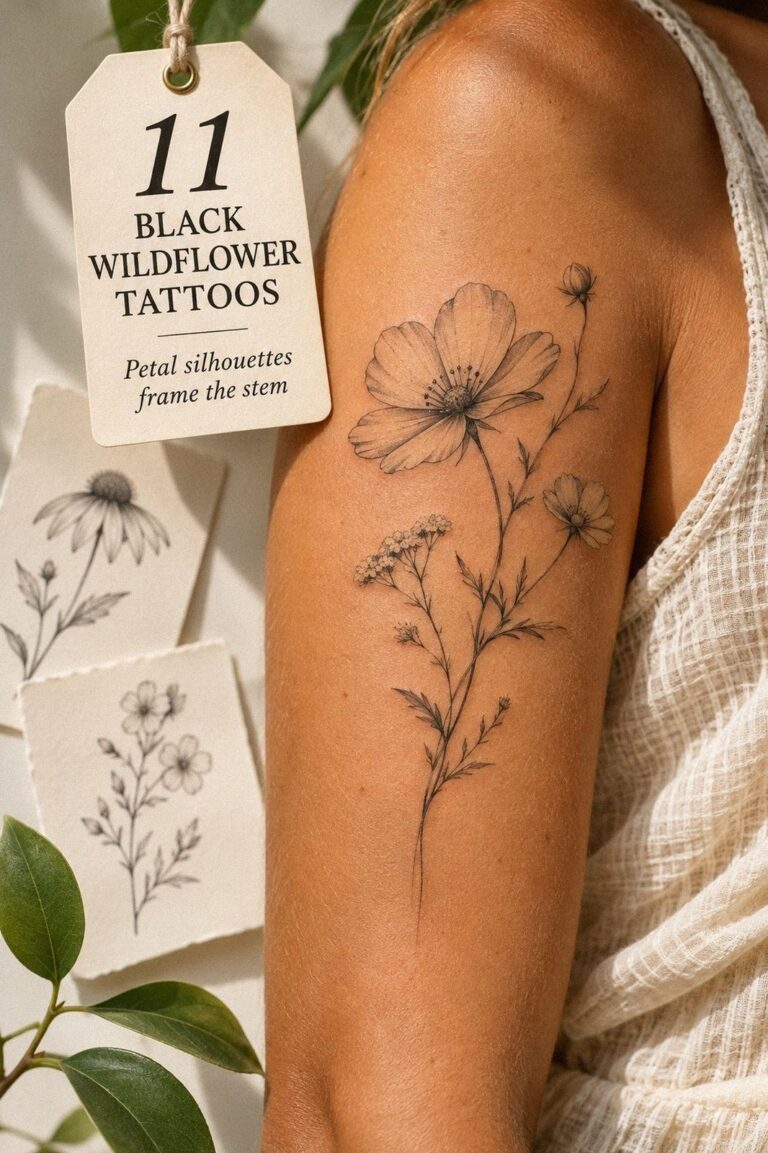
Choose linework that explains the flower instead of tracing every visible edge. A fine-line configuration can create a botanical shape, but the design still needs a clear outer contour. Your artist should know which lines are structural and which ones can disappear.
For a single stem, ask about petal overlap, vein direction, and the flower’s center. Those choices give the image depth without forcing heavy shading into every gap. A 3RL configuration is often discussed for fine detail, but your artist should choose the setup based on their technique and your skin.
Don’t confuse more lines with more realism. A flower with six confident marks can look more crisp than one with thirty hesitant scratches. If you’re comparing portfolios, look for healed examples, especially where thin lines cross or curve around the wrist and ankle.
You shouldn’t ask for “the thinnest possible” line as a goal by itself. Your skin, placement, and the size of the flower all affect how a line settles. The result should be designed for real skin, not just a clean digital sketch.
The minimalist birth flower tattoo collection can help you compare open linework with denser botanical drawings. You’ll see how a modest number of marks can still make the blossom recognizable.
A healed portfolio matters more than a flawless fresh image. It shows whether delicate contours remain readable and whether the artist’s style still feels polished after the skin has settled.
4Where Should Your Flower Go?

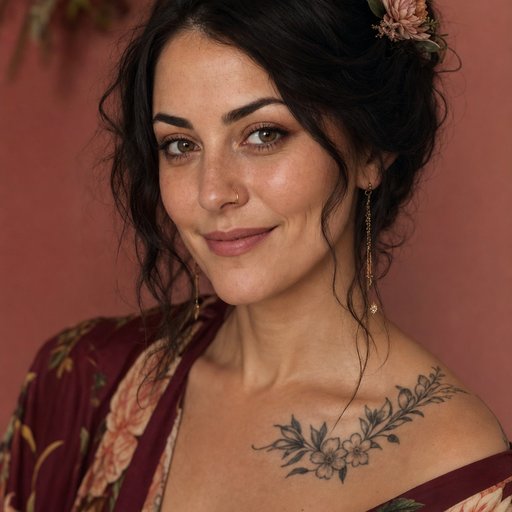
Choose placement by combining emotional meaning with practical wear. A wrist can keep the symbol visible, while a rib or sternum placement can make it feel more private. Neither choice is automatically better.
Ask yourself whether you want the tattoo to act as a daily reminder or a hidden message. A visible forearm flower may feel empowering when you need to see it often. A covered placement may feel more sacred because the meaning remains yours.
Consider friction, sun exposure, work requirements, and how often the skin moves. Hands and feet can require more maintenance, while the upper arm and thigh may offer steadier skin. Your artist can explain how each area may affect the design.
A consultation is worth paying for when placement is uncertain. You can compare several stencils before committing, which may save the cost of a correction later.
For a visual comparison, save a few options from these small birth flower tattoo placement ideas. Notice which one feels quiet when you imagine wearing it every day.
Placement Is Part of the Meaning
The same flower can tell a different story on different parts of the body. A bloom near the heart may feel intimate.
A flower on the forearm may read as an open declaration. Placement changes the emotional volume.
The small birth flower tattoo placement ideas show how the same scale can behave differently on an ankle, forearm, or sternum. I’d save the reference that makes you imagine living with it, not just admiring it.
A sternum placement can make the design feel hidden and intimate, while a forearm can make it a visible reminder. Both can be powerful when the location matches the private story.

5Keep The Design Minimal With Crisp Stems

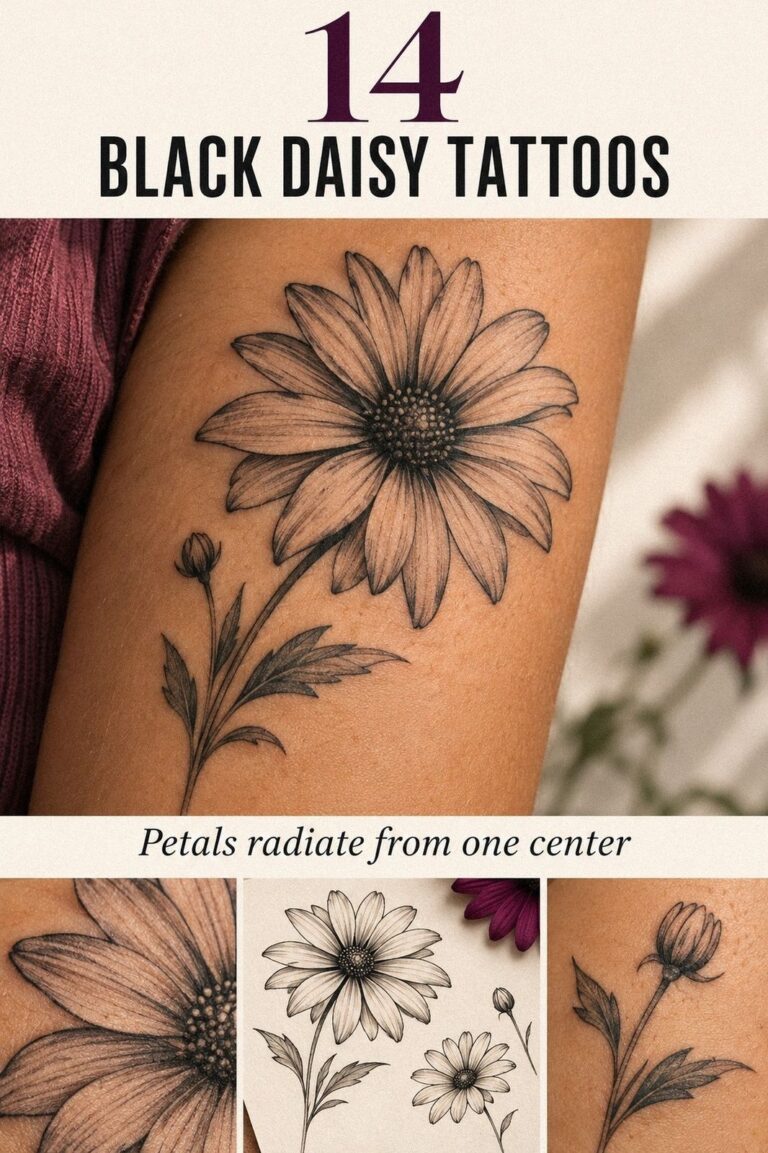
Strip the design down until the flower’s identity survives without filler. Keep one stem, a few leaves, and the petal shapes that make your birth flower recognizable. A single-stem composition can feel minimal while still carrying a powerful memory.
A flash sheet is useful because it lets you compare variations quickly. Look for a botanical flash sheet with open petals, clear stems, and enough unmarked skin between elements. You don’t need every version to have the same weight or angle.
Try three versions: upright, slightly bent, and gently curved. Your favorite may change when you see how the stem follows your wrist or ankle. I prefer the slightly bent version for many flowers because it feels more graceful and less posed.
Don’t add leaves just because an empty area feels uncomfortable. Unmarked skin can make the blossom easier to read, especially when the tattoo is under 3 inches. A clean black stencil will show whether the design has balance before any needle touches your skin.
You can compare simpler options in this minimal birth flower tattoo guide. If the design only works after five extra details, it probably isn’t ready yet.
The same minimal birth flower tattoo guide can help you judge whether a stem, leaf, or petal is doing useful work. A minimal outline can still feel timeless when every mark has a reason.
6The Two-Meaning Rule

Build your composition around one private detail that another person wouldn’t choose automatically. That might be a bent stem matching a childhood plant, a tiny interruption in the leaf pattern, or a petal left open for someone you miss. This is the Two-Meaning Rule: one meaning you can explain, and one that belongs only to you.
Your artist can place the flower at a slight angle, mirror a natural asymmetry, or let one leaf point toward a scar or birthmark. These decisions can make a familiar symbol feel unique without making it confusing. The result should still read as a flower first.
I’m wary of adding initials, dates, stars, and moons all at once. One small personal marker can feel daring; five can compete with the blossom. If you’re tempted to keep adding symbols, pause and ask which one would hurt most to remove.
A black botanical composition also gives you room to think about future tattoos. Leave enough breathing space if you may add a second flower later. Your ribs or upper arm can support a vertical arrangement, while a wrist usually benefits from restraint.
Study these unique birth flower tattoo ideas for compositions that use angle and spacing instead of extra ornaments. You’ll find that the most edgy designs often make one unusual decision and stop there.
If those references inspire you, return to the unique birth flower tattoo ideas and identify the one detail you’d change. That small change may become the personal marker that makes the design yours.
A Private Detail Beats More Symbols
A private detail doesn’t have to be obvious to anyone else. The angle of a leaf, the number of petals, or a missing thorn may carry more emotional weight than a cluster of recognizable symbols. That restraint can make the tattoo feel haunting in the best way.
If you explain the entire story in the design, there may be nothing left for you to discover later. I’d rather see one quiet reference than an ornate collection that needs a paragraph of explanation.
A missing petal can carry more feeling than a decorative border. It may look simple to someone else, yet remain sacred to you.
7Add Birth Month Initials Beside The Blossom

Add initials only when they clarify your story. One small letter beside the stem can mark a person, place, or family name without overpowering the flower. A fine-line initial should be sized for readability, and it shouldn’t be so tiny that the shape closes during healing.
Ask your artist to test the letter in several type styles on paper. A simple serif can look classic, while a handwritten form may feel romantic.
Don’t choose a font because it looks good on a screen. Choose the one that still reads clearly at your planned scale.
Place the initial beside the blossom rather than forcing it underneath. Your letter stencil can follow the flower’s natural direction, creating a visual relationship instead of a caption. If you’re using a birth month letter, check whether it makes sense to you or only to someone else.
I’d avoid a full name for this type of tattoo unless the name is central to the story. An initial leaves some privacy, which can make the piece more emotionally layered. You’ll know what it means without needing to explain it every time.
If your flower is from May, compare the symbolism in the May birth flower meaning guide. You might discover that the letter isn’t necessary once the flower’s own history feels strong enough.
The May birth flower meaning guide is useful when you want to check the traditional association before adding lettering. A single initial can feel dainty, but only if it remains readable.
8Bold Petals, Delicate Shading

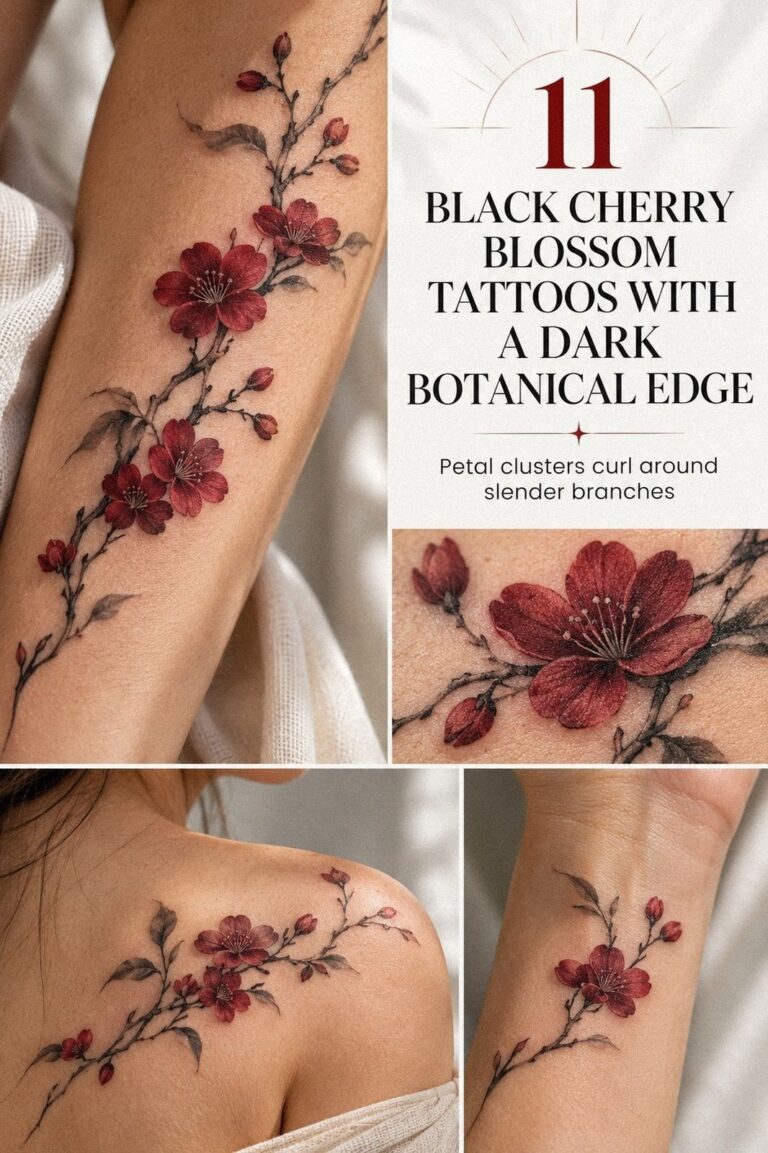
Balance a few dark areas with open skin so the flower has visual weight without becoming a solid patch. Strong contrast can make a small bloom more readable, but too much black may erase the petal structure.
Ask whether the shading will support the flower’s center, leaves, or stem. A blackwork accent can feel fierce when it has a clear purpose. It shouldn’t be added simply because the design looks empty.
Delicate shading may soften during healing, especially in areas with frequent sun exposure or friction. Your artist can explain how much contrast is realistic for your skin and placement.
A bold petal can make the entire flower feel more vibrant without turning it into a heavy block. The goal is a readable blackwork balance, not maximum saturation.
How Much Black Is Enough?
A bold petal can anchor the composition, while untouched skin keeps the rest of the flower light. This balance often feels more restrained than a fully shaded blossom.
Look at healed work rather than judging only fresh tattoos. Fresh black may look extremely strong, while settled pigment can become softer.
That doesn’t mean the design failed. It means the final result needs to be planned honestly.
Compare the minimal birth flower tattoo guide with darker botanical references before choosing your contrast. A healed black accent should support the flower’s shape, not compete with it.
9How Large Should Your Flower Be?

Match the flower’s size to the length and movement of the body area.
What the Stencil Reveals
A stencil answers practical questions that a digital mockup can’t. Does the stem follow your body?
Does the flower turn naturally when you move? Does the size still feel right when you’re standing, sitting, or reaching?
Check the stencil while standing, sitting, and reaching, then leave it alone for a day. If the design still feels polished after the first excitement fades, it may be worth the appointment cost.
You can compare scale in this tiny birth flower tattoo planning guide before asking for a stencil. Actual-size placement often reveals a problem that looked invisible on a screen.
10Prepare Skin For Tattoo Pain And Healing

Prepare your skin by arriving rested, hydrated, and ready to follow your artist’s aftercare instructions. Eat beforehand unless your medical provider has told you otherwise, and wear clothing that gives easy access to the area. A healing sheet can help you understand each stage before your appointment.
Pain is usually more noticeable over ribs, feet, hands, and sternum, while forearms, thighs, and shoulders are often easier for many people. Your experience can still differ. A sternum tattoo may feel sharper than an outer forearm piece, but session length and personal tolerance matter too.
Surface healing commonly takes about 2 to 3 weeks, while complete healing can take around 2 to 3 months. During that time, you’ll wash gently, moisturize as directed, and avoid swimming and strong sun exposure. Don’t pick flakes or judge the final line quality too early.
I made the mistake of inspecting a fresh tattoo every hour and worrying when it looked dull on day five. That was normal healing, not a failed design. Your skin may look raw, tight, or slightly uneven before the settled result appears.
Use the tiny birth flower tattoo planning guide to think through size, appointment time, and placement before you book. You’ll feel more prepared when the practical details aren’t surprises.
The guide can also help you ask about aftercare instructions, appointment length, and realistic healing. A little preparation makes the first few days feel less daunting.
Before You Book
Ask how long the appointment may take, what the studio minimum is, and whether the consultation fee applies to the final cost. These questions make your budget more useful than a vague estimate.
You should also ask what happens if the stencil needs adjusting. A patient consultation has real value because it gives you time to test the design before it becomes permanent.
Ask to see healed botanical work, not only fresh examples. Healed examples reveal whether the artist’s fine lines remain sharp after the skin settles.
11Protect Your Black Ink During Aftercare

Protect your tattoo by following the artist’s exact cleaning and moisturizing instructions. Wash with a gentle cleanser, pat the area dry, and use only the amount of moisturizer recommended. A fragrance-free cleanser supports a calmer healing process without adding unnecessary irritation.
Keep direct sun off the tattoo while it heals, and continue using sunscreen after the surface has recovered. UV exposure can make black lines soften faster, especially on hands, forearms, and other visible areas. Your broad-spectrum sunscreen is part of protecting the design long after the appointment.
Fine lines can widen or blur with time, but good placement, solid black accents, and sensible spacing can help the image age more clearly. You won’t freeze the tattoo in its first-day state, and you shouldn’t expect to. Aging is part of the mark.
If a line softens more than you like, a reputable artist can often refresh the design later. Choose someone who documents healed work and has a touch-up policy you understand. A tattoo that remains polished after years usually began with realistic expectations.
For more symbolism before your appointment, read the May September birth flower tattoo meaning guide. Your finished flower can stay vintage in feeling without looking dated, especially when the structure is clean.
You can revisit the May September birth flower tattoo meaning guide if you’re comparing flowers from different months. The most timeless result usually comes from strong structure, sensible spacing, and a story you won’t outgrow.
The Three-Anchor Rule Behind a Personal Flower
I think a birth flower tattoo becomes memorable when three anchors agree: the flower’s traditional symbolism, your private reason for choosing it, and the physical way it sits on your body. Remove one, and the design can still look attractive, but it may not feel like yours. Keep all three, and even a simple stem can carry real weight.
The first anchor is inherited meaning. You don’t have to accept every dictionary definition, but you should know what people may recognize when they see the flower. A rose can suggest love, a chrysanthemum can suggest devotion, and a lily of the valley can carry ideas of return and renewal.
The second anchor is the memory nobody else can see. Maybe your birth month is tied to a difficult beginning, a sibling, a place you left, or a season that made you feel safe.
That private layer is why I don’t recommend copying a reference exactly. An individual sketch can borrow the pose while changing one leaf, one curve, or one gap between petals.
The third anchor is the body. A sternum flower doesn’t communicate in the same way as a wrist flower, even when the drawing is identical.
One may feel private and protected, while the other becomes a visible daily reminder. Your placement changes the emotional volume of the design.
The most empowering choice is often the one that doesn’t need a long explanation. If you can tell the story in one sentence and still keep part of it for yourself, you’re close. That’s the balance I’d chase: clear enough to recognize, private enough to remain yours.
For more background, revisit this birth month flower tattoo meaning guide and compare its traditional meanings with your own story.
What I Would Budget Before the Appointment
Tattoo prices vary by city, artist, size, and appointment structure. These ranges are useful planning numbers, not promises.
A lower quote isn’t always better value if the artist lacks healed botanical work. A higher cost may be worth it when the portfolio shows consistent line quality, thoughtful placement, and clear communication.
Before paying a deposit, ask what it covers, whether the design can be revised, and what happens if you need to reschedule. That clarity protects your budget and your expectations.
A written estimate can prevent awkward surprises, especially when the artist charges by the hour. I’d rather spend a few minutes asking direct questions than feel rushed into a decision.
The Questions Worth Answering First
How much does a black birth flower tattoo usually cost?
A black birth flower tattoo typically costs about $100 to $300 in the United States, depending on size, placement, artist, and region. Many studios have a minimum of roughly $50 to $100, while hourly rates commonly run about $100 to $250. Ask for a written estimate so you can judge the value accurately.
– Studio minimum – Artist experience – Size and placement – Linework complexity
Are black birth flower tattoos a good idea for a first tattoo?
Yes, a black birth flower tattoo can be a manageable first tattoo because a small design is often easier to plan and place. Choose an area such as the outer forearm, upper arm, or thigh if you want a more tolerable experience. The right choice depends on your pain tolerance and the story behind the design.
– Clear personal meaning – Simple black palette – Readable linework – Flexible placement
How do I choose a tattoo artist for a black birth flower tattoo?
Choose an artist with clean botanical linework, healed portfolio examples, and clear studio hygiene practices. You’ll want to see how their flowers settle after healing, not only how sharp fresh ink looks immediately after the appointment. A short consultation can show whether their process feels worth the cost.
– Healed tattoo examples – Botanical portfolio – Clean studio practices – Direct consultation
How much do black birth flower tattoos hurt?
Pain depends on your body and the placement, but ribs, feet, hands, and sternum are commonly more painful than forearms, thighs, and shoulders. Your session may feel sharp, warm, or scratchy, and the artist can usually pause when you need it.
– Ribs and sternum – Feet and hands – Forearm and thigh – Personal tolerance
How long does a black birth flower tattoo take to heal?
The surface usually heals in about 2 to 3 weeks, while complete healing can take around 2 to 3 months. You’ll wash gently, moisturize as directed, avoid pools and strong sun, and leave flakes alone. Follow your artist’s written aftercare instructions if they differ from general guidance.
– Surface healing – Full settling – Gentle washing – Sun protection
What’s the best placement for a black birth flower tattoo?
The best placement depends on visibility, pain tolerance, and the flower’s shape. An outer forearm offers easy viewing and moderate comfort, while the calf gives a stem room to flow.
Your ribs or sternum can feel more private but may hurt more. Compare actual stencils before deciding.
– Outer forearm – Calf – Upper arm – Ribs or sternum
Where I’d Start First
If I had to pick one step, I’d start with the private meaning. A small flower with one memory behind it will outlast a crowded design chosen for attention. Write that sentence, then bring it to your artist.
Look for a flower that feels feminine, masculine, or simply yours without forcing a category. The final mark might be flowing, sleek, vibrant, or whimsical, but it should still sound like your story.
You’ll know the right sketch when it feels quietly sacred. That’s worth waiting for!