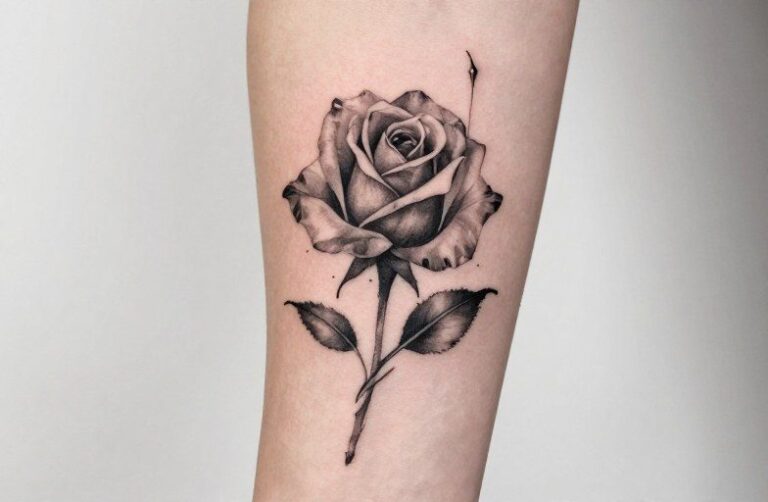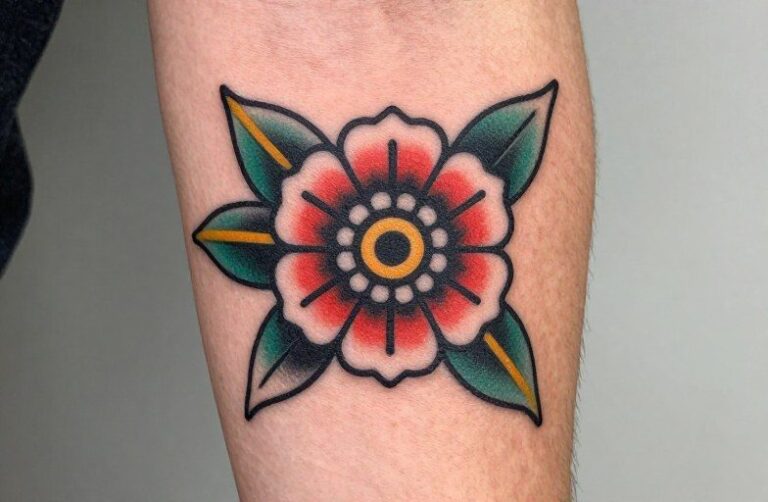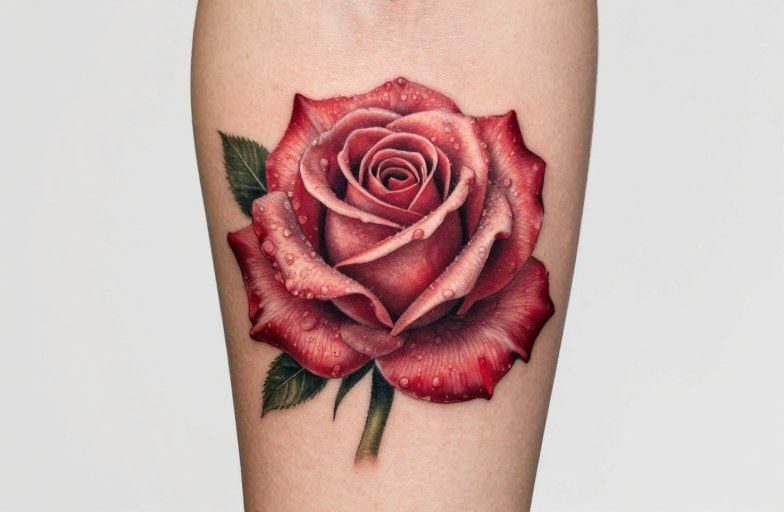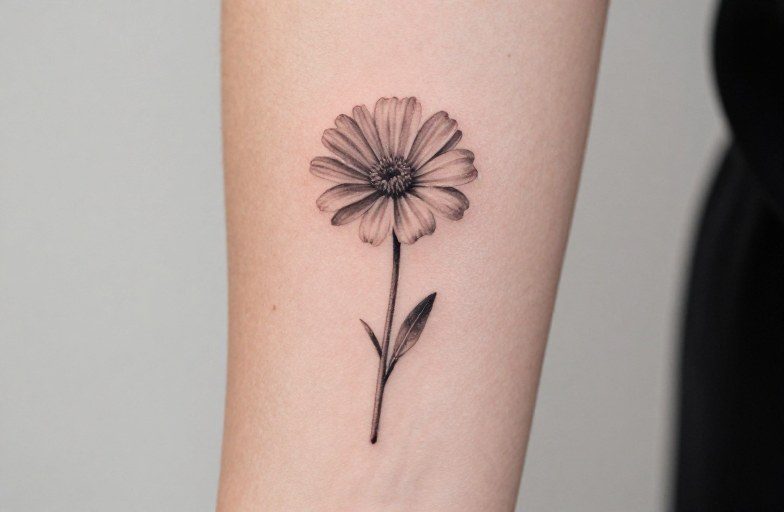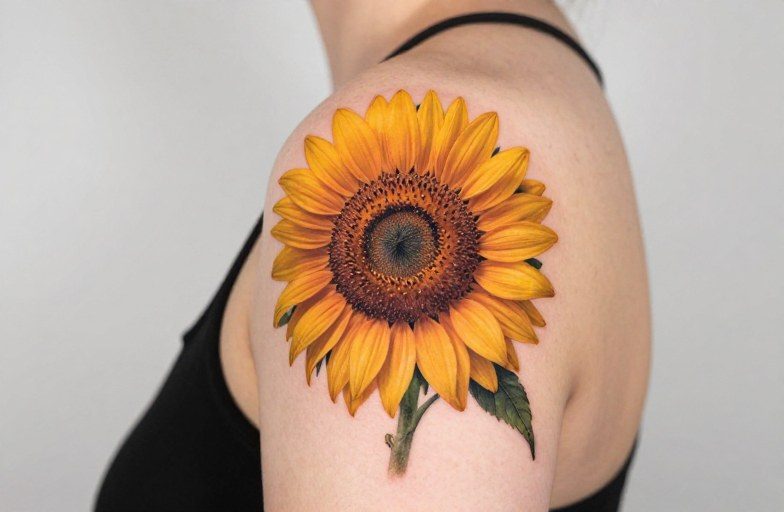
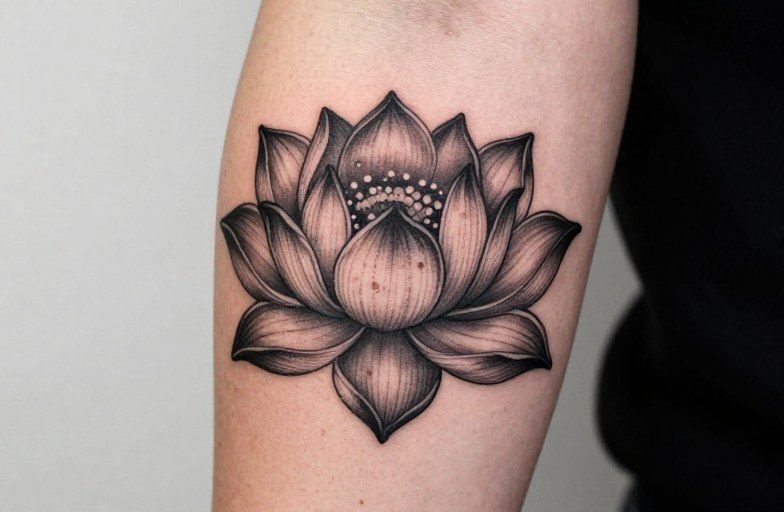
The black lotus tattoo represents emergence from darkness, resilience forged through struggle, and transformation that happens in shadow rather than light. Unlike the classic pink or white lotus tied to pure enlightenment, the black version carries an edge, growth through adversity, beauty that survives harsh conditions, and power found in what society often rejects. In Weslaco and the broader Rio Grande Valley tattoo scene, this design has taken on additional regional resonance, often connected to borderland identity, survival, and the specific cultural blend of South Texas.
Similar & Related Symbols
Understanding the black lotus means recognizing what sits nearby in the symbolic landscape. Several designs share DNA with this motif, and artists in the Weslaco area frequently pair or contrast them.
The Classic Lotus Family
Traditional lotus tattoos break into color-coded meanings across Buddhist and Hindu iconography: white for spiritual perfection, red for love and compassion, blue for wisdom and knowledge, purple for mysticism. The black lotus deliberately steps outside this system. It rejects the color hierarchy entirely, or reclaims it through negation. Think of it as the lotus equivalent of a photographic negative, same structure, inverted values.
Other dark floral symbols carry overlapping weight:
- Black roses: grief, death, rebellion against romantic idealism
- Black dahlia: mystery, the unsolved, dark feminine energy
- Wilted or decaying lotus: impermanence, memento mori, beauty in decline
- Chrysanthemum (especially in Japanese tradition): death, the afterlife, autumnal transition
The black lotus distinguishes itself through the specific biology of the actual flower. Real lotus roots grow in mud, stems push through murky water, blooms break the surface. That three-stage growth, muck, water, air, gives the symbol its structural power. Darkness becomes part of the process, not the endpoint.
Regional South Texas Parallels
Weslaco artists and clients sometimes connect the black lotus to local iconography: the nopal cactus surviving drought, the monarch butterfly’s migration through hardship, the calavera’s celebration of death as part of life. These aren’t direct equivalents, but they share the through-line of thriving despite adverse conditions.
History & Cultural Roots
The lotus as symbol stretches back thousands of years, though the black variant is a distinctly modern development. Ancient Egyptian art featured the blue lotus (Nymphaea caerulea) in funerary contexts, often linked to rebirth and the sun’s daily return. In South and East Asian traditions, the lotus became the seat of deities and a metaphor for enlightened consciousness rising above worldly attachment.
The black lotus specifically emerged from several converging streams. Fantasy gaming and collectible card communities adopted the name and image in the 1990s, giving it currency among younger tattoo clients. Gothic and dark romantic aesthetics in Western art history provided visual precedent, think of the Victorian language of flowers, where black blooms signaled farewell or dark emotions. Contemporary tattoo culture then synthesized these threads into a coherent design vocabulary.
The Weslaco and Valley context adds another layer. Border communities have long used symbolic imagery to encode experiences that resist straightforward narrative, migration, economic pressure, cultural negotiation, the specific weight of being between nations. The black lotus fits this symbolic ecology naturally. It doesn’t explain; it marks.
How Old Is This Specific Design?
As a tattoo motif, the black lotus gained noticeable traction in the 2000s and accelerated through the 2010s. It’s not ancient, and claiming ancient lineage would be misleading. What it inherits is ancient structure, the lotus’s established symbolic grammar, applied through contemporary concerns about darkness, trauma recovery, and identity formation.
Religious & Spiritual Angles
Traditional lotus symbolism is deeply embedded in several religious systems, but the black variant complicates straightforward spiritual reading.
Buddhist and Hindu Frameworks
In standard Buddhist iconography, lotus color matters. The black lotus has no canonical place in these color systems. Some practitioners view this as appropriation or dilution; others, particularly in Western convert communities, have embraced it as a legitimate evolution, representing the “dark night of the soul,” the difficult periods of practice that precede breakthrough, or the recognition that enlightenment doesn’t erase suffering but includes it.
Hindu traditions similarly associate specific lotus colors with particular deities and energies. Kali, the dark goddess of destruction and transformation, sometimes appears with dark or black lotus associations in contemporary devotional art, though this is more commonly linked to red hibiscus in traditional practice. The black lotus as Kali-related symbolism is a modern interpretive move, not ancient doctrine.
Esoteric and Occult Readings
Some ceremonial magic traditions use black lotus imagery in shadow work contexts, confronting repressed material, integrating rather than rejecting darkness. Thelema and certain Thelemic-influenced groups have adopted the image, partly through the influence of fantasy art and gaming culture that overlaps with these communities. These readings tend to be syncretic and self-consciously modern, drawing on multiple sources without claiming single-lineage authenticity.
Color vs Black and Grey
The choice between color and black-and-grey execution fundamentally changes how this tattoo reads and how it ages.
Color lotus tattoos, pink, white, blue, red, rely on saturation for impact. They pop against skin, draw immediate attention, and carry the traditional symbolic coding intact. They also demand more maintenance. Bright pigments, especially pinks and yellows, fade faster than darker tones. Sun exposure accelerates this. A color lotus on a frequently exposed area like forearm or calf may need significant refresh within 5-7 years.
Black and grey lotus tattoos, including the specifically “black lotus” concept, age differently. The value range, deep blacks through mid-tones to skin-bright highlights, creates dimension through contrast rather than hue. This ages more gracefully in most skin types. The tattoo may soften, but the structural readability persists longer. On darker skin tones, black and grey work often provides better long-term visibility than color, though skilled color application on melanin-rich skin has advanced significantly in recent years.
Line weight matters significantly. Fine linework in lotus petals can blur or blow out over time, especially in areas with movement or friction. Bold outlines with controlled interior shading tend to hold definition better. A common technical approach: thick outer contour, medium-weight petal divisions, fine detail only in stable skin areas like upper chest or outer thigh.
Placement affects both color choice and aging. High-friction zones, inner arm, ribs where clothing rubs, feet in shoes, accelerate wear regardless of technique. The black lotus’s emphasis on darkness and shadow actually benefits from some natural softening; the mood remains intact even as crisp edges mellow.
Mythology & Folklore
No single mythological source anchors the black lotus. Instead, it draws from multiple narrative traditions that share structural similarities.
The Lotus in Creation Stories
Hindu cosmology describes the universe born from a lotus emerging from Vishnu’s navel. Egyptian creation myths feature the lotus as the first thing to rise from primordial waters, its opening petals revealing the sun god. These emergence narratives, creation from water, from darkness, from divine body, establish the lotus as fundamentally a symbol of becoming, not static being.
The black lotus extends this: emergence not from clean water but from murk, not into light but into continued darkness, or into a light that doesn’t erase the dark. It’s the lotus for people who don’t trust easy redemption narratives.
Modern Mythmaking
Contemporary fantasy literature and gaming have generated their own black lotus folklore. The “Black Lotus” card in Magic: The Gathering, notoriously rare and powerful, created a secondary meaning around exclusivity, forbidden knowledge, and dangerous capability. For clients who came of age in gaming culture, this resonance may be primary, less spiritual transcendence, more mastery through rare, difficult acquisition. Tattoo artists in Weslaco and similar communities recognize this dual clientele: those seeking traditional symbolic depth, and those encoding specific subcultural membership.
Personal & Modern Meanings
What people actually express when requesting this design varies widely, and the best tattoo work accommodates specificity without forcing generic interpretation.
Common personal resonances include: surviving depression or addiction and refusing to frame that survival as simple “overcoming”; identifying with border or hybrid identity without romanticizing it; marking a period of necessary secrecy or hidden growth; reclaiming darkness as generative rather than purely negative; signaling membership in communities that value resilience over innocence.
The Weslaco context specifically introduces meanings around border life: the daily negotiation of two languages, two economies, two legal systems; the specific grief of family separation; the pride of place that coexists with economic struggle. A black lotus here may encode what can’t be said directly in mixed company, or what resists translation.
Design variations carry personal weight. Closed bud versus full bloom versus wilting flower. Roots visible or hidden. Water surface implied or absent. Single bloom versus cluster. Each choice shifts the narrative emphasis. Closed bud emphasizes potential, process, not-yet. Full bloom risks prettiness unless deliberately weighted with dark shading or surrounding context. Visible roots insist on the foundation, the unglamorous growth medium. Working with an artist who asks about these choices, who doesn’t just stencil a standard image, produces work that actually carries personal meaning rather than generic symbolic reference.
The Takeaway
The black lotus tattoo works because it inherits robust symbolic structure from ancient lotus traditions while refusing their color-coded optimism. It suits people who find growth narratives too clean, who’ve experienced the version of resilience that doesn’t photograph well, who need to mark survival without performing gratitude for the struggle itself.
Technically, it rewards black-and-grey execution, benefits from bold line weight, and ages well with proper placement and sun protection. Symbolically, it demands honest self-assessment about if you’re drawn to the darkness as aesthetic or as lived reference, both are valid, but the tattoo lands differently depending on which grounds it.
In Weslaco and the Valley, the design has found particular traction because the regional experience already involves thriving in conditions that aren’t supposed to be generative. The black lotus doesn’t need to be explained there. It recognizes.
Frequently Asked Questions
Does a black lotus tattoo have to mean something negative or dark?
Not necessarily. The darkness often represents the conditions of growth rather than the outcome, mud, struggle, hidden work. Many people read it as resilience, not pessimism. The meaning depends on what you bring to it and how you frame the design with your artist.
How big should a black lotus tattoo be for the detail to hold up?
Palm-sized or larger works best for petal detail and shading gradation. Smaller than three inches across, and the interior linework starts to risk blurring within a few years. Simple silhouette versions can go smaller, but they lose the dimensional quality that makes the black lotus distinctive.
Is the black lotus connected to any specific gang or group I should know about?
No documented gang affiliation exists for this design. The fantasy gaming connection (Magic: The Gathering) is the most common subcultural reference. As with any tattoo, local context matters, your artist will know if any specific variation has taken on unintended meaning in your area.
Can a black lotus work with other elements in a larger piece?
Absolutely. Common pairings include water or wave backgrounds (emphasizing the emergence narrative), geometric framing (contemporary contrast), script or lettering (personalizing with names, dates, or phrases), and skulls or timepieces (memento mori direction). The lotus shape, radial, contained, works well as a central anchor in chest, back, or thigh compositions.