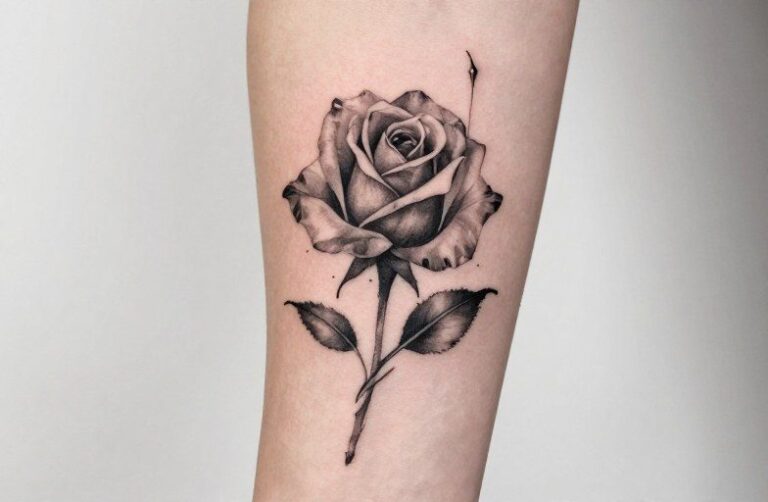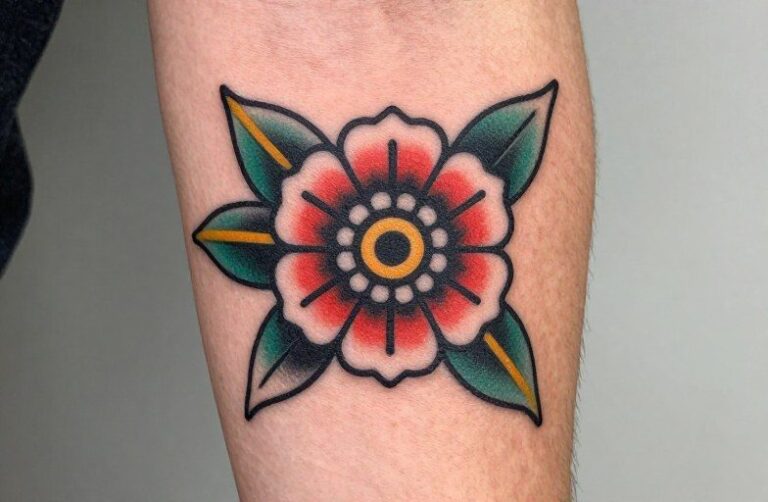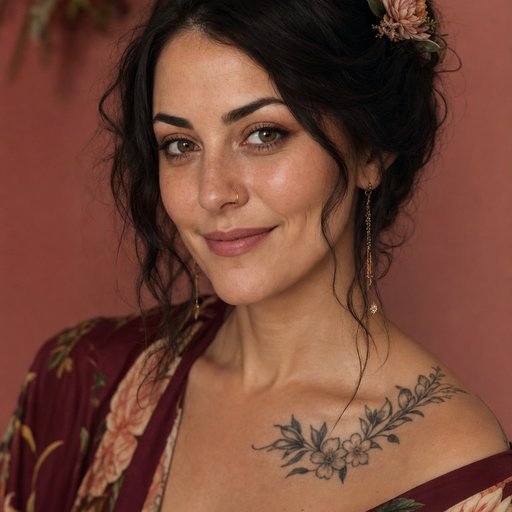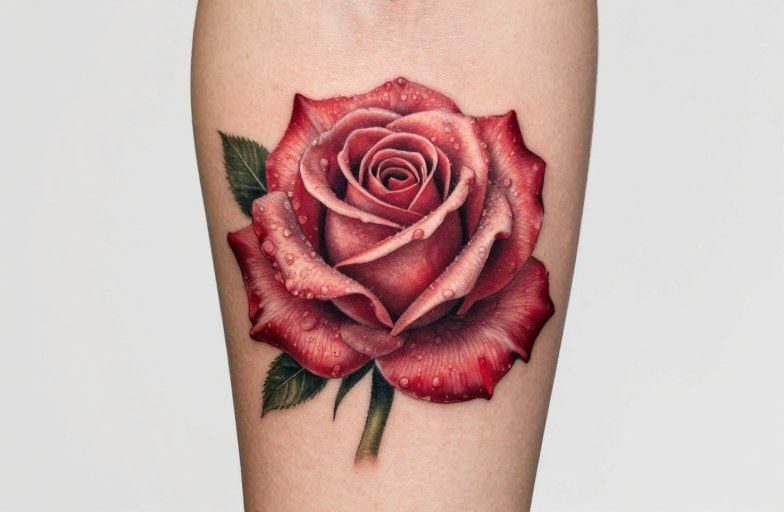
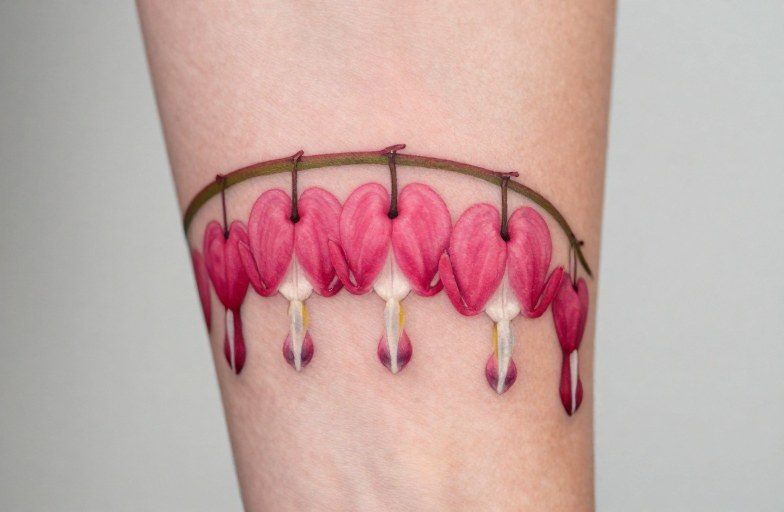
The bleeding heart flower tattoo carries a layered symbolism rooted in romantic sorrow, compassionate love, and emotional vulnerability. Its distinctive heart-shaped blossoms with drooping petals naturally evoke images of a heart literally bleeding, making it a powerful choice for marking grief, unrequited love, or the beauty found in emotional openness. Beyond the obvious heartbreak association, this flower also represents deep empathy and the courage to keep loving despite pain.
Symbolism & Core Meaning
The Heartbreak Connection
The flower’s common name wasn’t accidental. Those pendant, heart-shaped blooms with their protruding inner petals look unmistakably like a dripping heart, and tattoo wearers often gravitate toward this imagery during or after significant emotional loss. Unlike a broken heart motif that emphasizes damage, the bleeding heart suggests ongoing feeling, pain that hasn’t hardened into numbness. Some trace the symbolism to Victorian floriography, where the flower communicated intense romantic anguish that couldn’t be spoken aloud.
Compassion and Emotional Courage
Less commonly discussed is the bleeding heart’s association with unconditional compassion. The plant returns yearly, blooming reliably even after harsh winters, which resonates with people who’ve chosen to remain emotionally available despite repeated hurt. In this reading, the tattoo marks not victimhood but deliberate softness, a refusal to let difficult experiences close you off completely. The botanical name Dicentra spectabilis even hints at spectacle and visibility, suggesting these emotions are worn openly rather than hidden.
Best Placements
Where the Shape Works Naturally
The dangling form of bleeding heart blossoms lends itself to vertical compositions. Ribcage placements running along the side body follow the natural cascade of the flower stems and allow for multiple blooms in sequence. Inner forearms work well for single, prominent blossoms viewed by the wearer themselves, while the back of the upper arm provides a broader canvas for incorporating foliage and negative space. Collarbone placements, positioned with blooms trailing toward the shoulder, capitalize on the flower’s weeping architecture.
Scale Considerations
Small bleeding heart tattoos often lose the critical detail that makes the flower recognizable, the inner petal structure that creates the “drop” effect. Minimum comfortable size sits around two inches in height for a single bloom. Larger pieces incorporating the fern-like foliage benefit from placements with enough flat surface: outer thighs, upper back, or side torso. Finger and hand placements generally disappoint; the fine lines required blur quickly, and the complex shape becomes indistinguishable from generic floral blobs within months.
How It Ages on Skin
Line Weight and Detail Loss
The bleeding heart’s charm depends on delicate linework defining those distinctive inner petals and the tiny spur at each bloom’s base. Over five to ten years, lines under one millimeter tend to spread and soften, gradually filling in the negative spaces that create the flower’s characteristic shape. Experienced artists compensate with slightly heavier initial outlines in the central structure, preserving readability as the tattoo settles. The dangling stems, often rendered as thin single lines, typically require reinforcement or touch-up within the first decade regardless of placement.
Color Fading Realities
Pink bleeding heart tattoos, matching the most common garden variety, face predictable fading challenges. Magenta and rose pigments, particularly the organic-based reds common in vegan inks, shift toward orange or salmon tones within three to seven years depending on sun exposure. White highlights added for petal dimension almost always disappear entirely, leaving flatter color fields than originally intended. Black and grey versions age more gracefully in terms of color stability but lose the immediate species recognition that pink provides; without color, the shape could read as generic heart-shaped flora to casual viewers.
Color vs Black and Grey
Color bleeding heart tattoos deliver instant botanical accuracy. The gradient from deep rose at the petal base to pale pink or white at the tips, with those contrasting white inner petals, makes the flower unmistakable. Watercolor-style backgrounds in muted greens or soft purples can extend the composition without competing for attention. However, color demands more skin real estate to execute properly; tiny color pieces read as muddy from the start.
Black and grey approaches require strategic adaptation. Successful versions emphasize the silhouette, the dangling heart shape with its central split, and use whip-shading or dotwork to suggest the petal layers rather than outlining every edge. Some artists incorporate heavy black foliage to frame the negative space of the blooms, creating contrast that compensates for missing color. The trade-off is clear: black and grey ages better and suits more professional contexts, but sacrifices the immediate emotional punch of seeing that specific pink flower.
Similar & Related Symbols
The bleeding heart often appears alongside complementary imagery that extends its meaning. Forget-me-nots, another flower with overt emotional messaging, pair naturally for memorial pieces focused on lasting remembrance through pain. Frayed or anatomically accurate hearts incorporated into the composition literalize the “bleeding” aspect, though this combination risks visual clutter without careful spacing.
Butterflies and moths frequently accompany bleeding hearts in tattoo compositions, suggesting transformation through emotional hardship rather than despite it. Fern fronds or hosta leaves, actual companion plants in shade gardens, ground the design in botanical realism while filling background space organically. Some wearers incorporate lock and key imagery, playing on the heart-shaped blooms as literal locks with the dangling inner petals as keys, though this interpretation requires explicit composition choices to read clearly.
Japanese-inspired pieces sometimes substitute or pair with shōka-style arrangements featuring camellias or wisteria, creating cross-cultural floral language around impermanence and romantic sorrow. The bleeding heart’s North American and East Asian origins make it less common in traditional Japanese tattooing, but contemporary fusion work has adopted it increasingly.
Mythology & Folklore
Asian Origins
Some trace the bleeding heart to Chinese and Japanese folklore involving a young man who gives his heart to prove his love, though specific textual sources for this narrative remain elusive. The flower’s native range across Siberia, northern China, and Japan supports cultural association, but concrete mythological documentation is sparse compared to flowers like lotus or cherry blossom. What persists are garden-culture stories about the flower’s shape representing a heart that has been pierced or torn, often linked to romantic sacrifice narratives.
Western Adoption
In North American and European contexts, the bleeding heart became popular as a garden ornamental in the nineteenth century, and its symbolic meaning developed primarily through Victorian flower language rather than deep mythological tradition. The flower’s appearance in sentimental poetry and valentine imagery reinforced its romantic associations before tattoo culture adopted it. This relatively recent symbolic history means bleeding heart tattoos carry less ancient cultural weight than lotus, peony, or rose, but also less cultural appropriation concern for most wearers.
Key Takeaways
The bleeding heart flower tattoo works best when its specific botanical form is respected rather than treated as a generic heart symbol. Placement should accommodate the dangling growth habit, with enough scale to preserve the critical inner petal detail that makes the flower recognizable. Color delivers immediate impact but demands ongoing sun protection and eventual refreshment; black and grey offers longevity at the cost of some species-specific recognition. The core meaning, emotional vulnerability persisting through pain, resonates across contexts from fresh grief to long-carried compassion, making it one of the more emotionally articulate choices in floral tattoo vocabulary. Whatever your personal connection to the imagery, invest in an artist who understands the plant’s actual structure rather than working from stylized clip art; the difference between a convincing bleeding heart and a vague pink blob sits in those precise petal relationships.
Frequently Asked Questions
Does a bleeding heart tattoo always mean someone is heartbroken?
Not necessarily. While heartbreak is the most common association, many people choose this flower to represent emotional resilience, compassionate love, or the beauty of remaining vulnerable. The meaning depends on your personal context and what you want the image to communicate.
How big should a bleeding heart tattoo be to keep its detail?
A single bloom needs at least two inches of height to preserve the distinctive inner petal structure. Smaller than that, and the “bleeding” drop effect blurs into an unrecognizable shape within a few years. Multi-bloom compositions with foliage require significantly more space.
Can a bleeding heart tattoo be covered up easily if I change my mind?
The flower’s pale pink and white tones make cover-ups challenging if done in color, as lighter pigments don’t block new ink effectively. Black and grey versions offer more flexibility for future cover-up work. Consider placement carefully if you have any uncertainty about long-term commitment.
What season is best for getting a bleeding heart tattoo for healing?
Spring and fall typically offer optimal healing conditions, moderate temperatures mean less sweating and sun exposure compared to summer, without the extreme dryness that winter heating can cause on fresh tattoos. The flower’s natural bloom season in late spring makes for thematically appropriate timing if that matters to you.