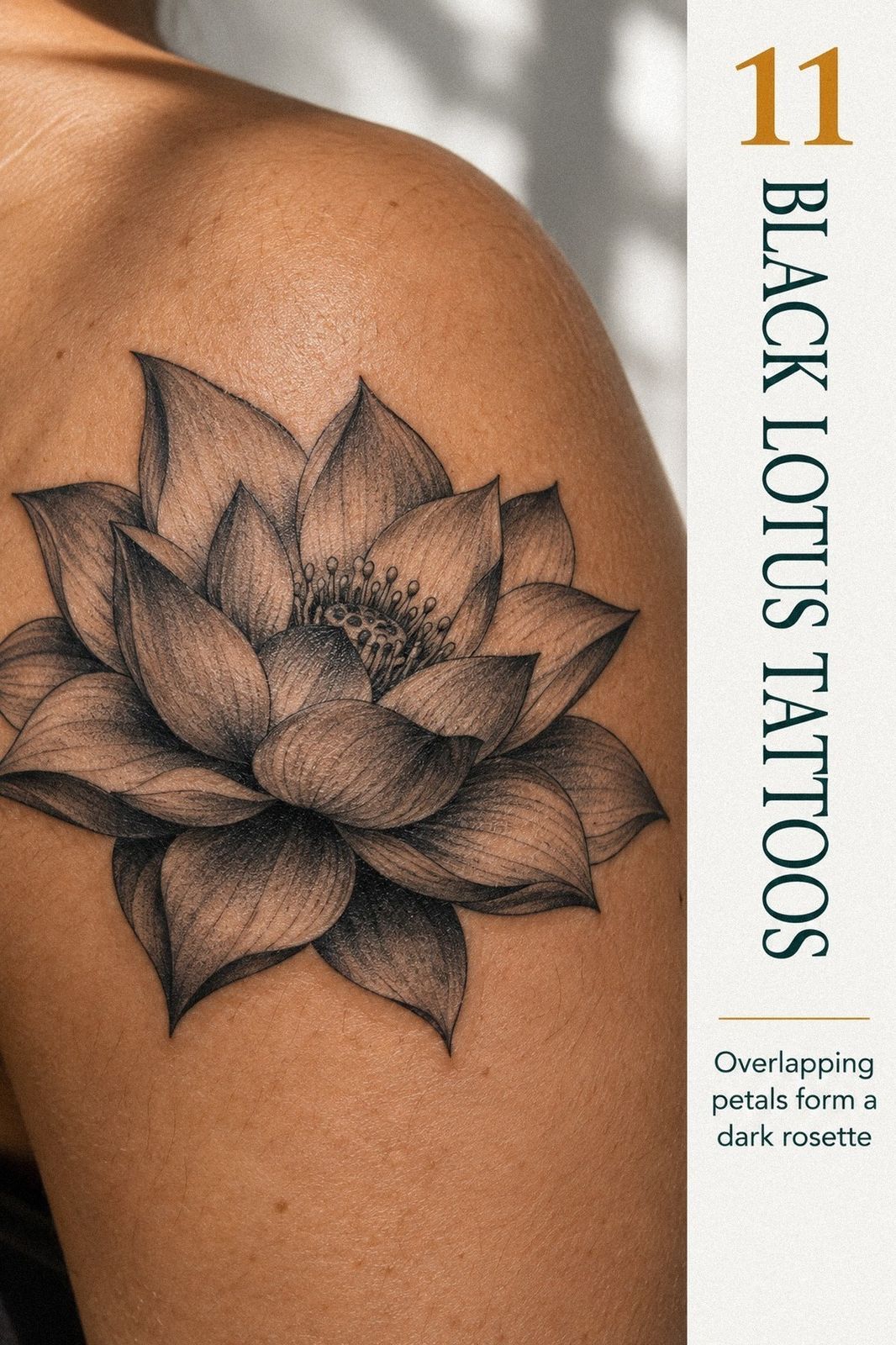
Black lotus tattoos work best when the meaning lives in the choices, not the explanation. I’ve seen people lose that privacy by copying a symbol too literally, then regretting the extra detail. This guide gives you a crisp, personal path from sketch to stencil, with placement, linework, cost, and healing in the right order.
- Start with a black lotus tattoo sketch
- Pick small black lotus tattoos for your wrist
- Place black lotus tattoos along the spine
- Keep black lotus tattoos crisp with fine linework
- Plan unique black lotus tattoos around scars
- Choose black lotus tattoos with symbolic petals
- Compare black lotus tattoo ideas using botanical shading
- Shape black lotus tattoos for a fierce sternum
- Balance black lotus tattoos with negative space
- Test black lotus tattoo ideas for ankle placement
- Refine unique black lotus tattoos with dotwork
1Start with a black lotus tattoo sketch
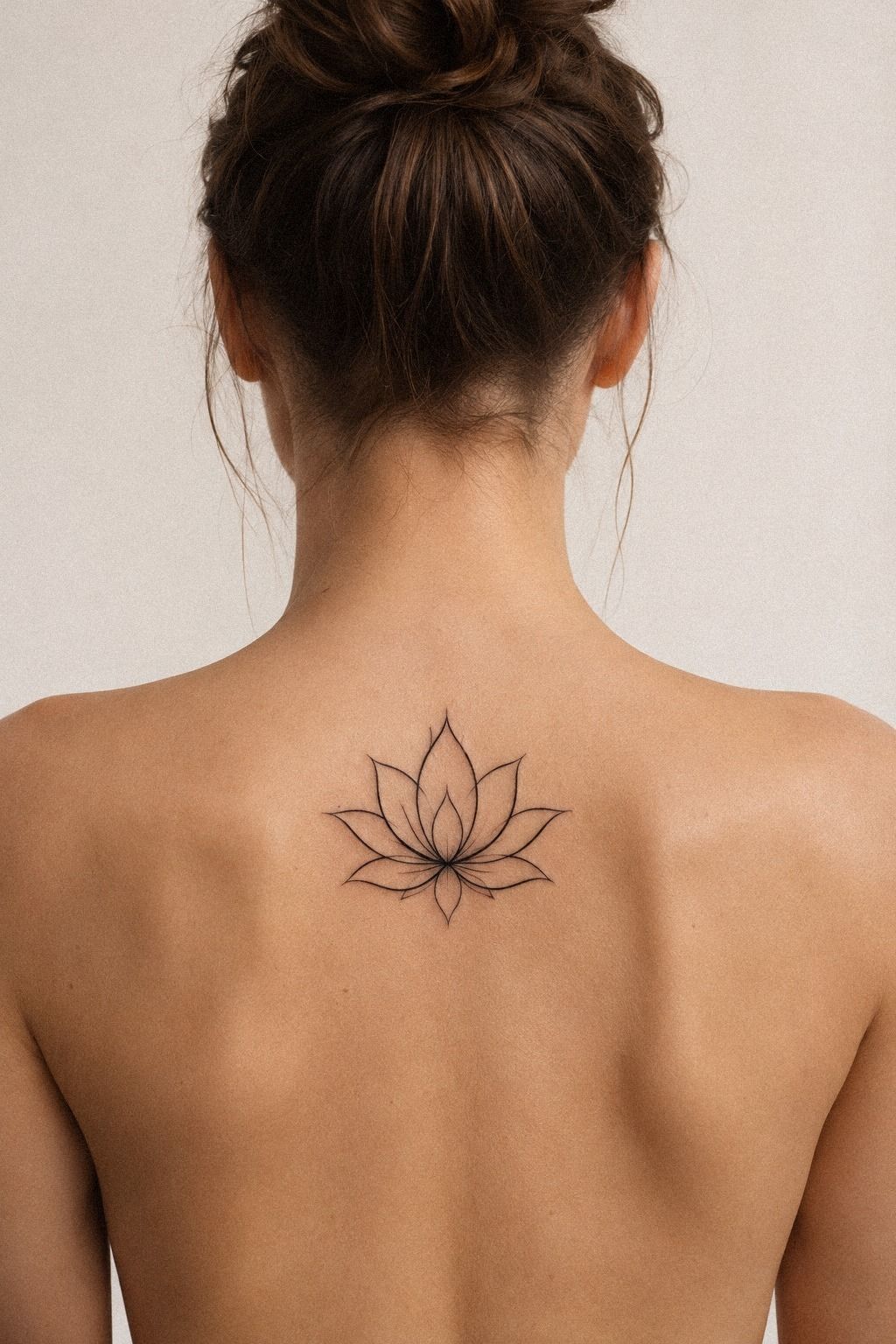
Begin with the silhouette before you add texture. A front-facing bloom with three outer petals and a smaller inner row can feel striking without explaining anything. I’d keep the central black lotus tattoo readable from a normal distance, then let one hidden detail carry the private meaning.
Your first draft shouldn’t contain every idea you’ve saved. I made that mistake with an early floral sketch, adding stems, stars, and lettering until the original thought disappeared.
Choose one direction, then mark what you want removed. A two-inch stencil can still feel powerful when the petals have breathing space.
Compare proportions with minimalist lotus tattoos before you ask your artist to add detail. The goal isn’t to make the design look busy. It’s to make every line earn its place.
– Front-facing bloom: symmetrical petals with a readable outer contour. – Black transfer paper: a temporary placement check before the final stencil. – Two-inch stencil: a compact scale for a dainty ankle or wrist design.
That first pass should feel almost blunt. If it already feels meaningful, you’re close!
2Pick small black lotus tattoos for your wrist

A wrist tattoo has to survive constant movement, clothing friction, and ordinary distance. I’d choose four or five petals, a narrow base, and one deliberate opening between the lower curves. That negative space keeps the flower sleek instead of turning it into a dark mark.
Don’t shrink a large design until every line touches. Your artist should redraw it for your wrist, because a small tattoo needs deliberate spacing rather than reduced artwork.
I’d skip a dense mandala here. It may look intricate on a screen, but the wrist needs crisp edges that remain legible.
Start with small lotus tattoos and compare those proportions with tiny lotus tattoos. If the smallest version loses its center, it’s not the right reference for you.
– Fine-line blackwork: narrow contours with visible gaps between petal layers. – Wrist placement: a position that follows movement instead of fighting it. – Petal spacing: enough separation to preserve the silhouette after healing.
A small lotus can look understated and still hold a fierce idea. Size doesn’t decide how personal the tattoo feels.
3Place black lotus tattoos along the spine
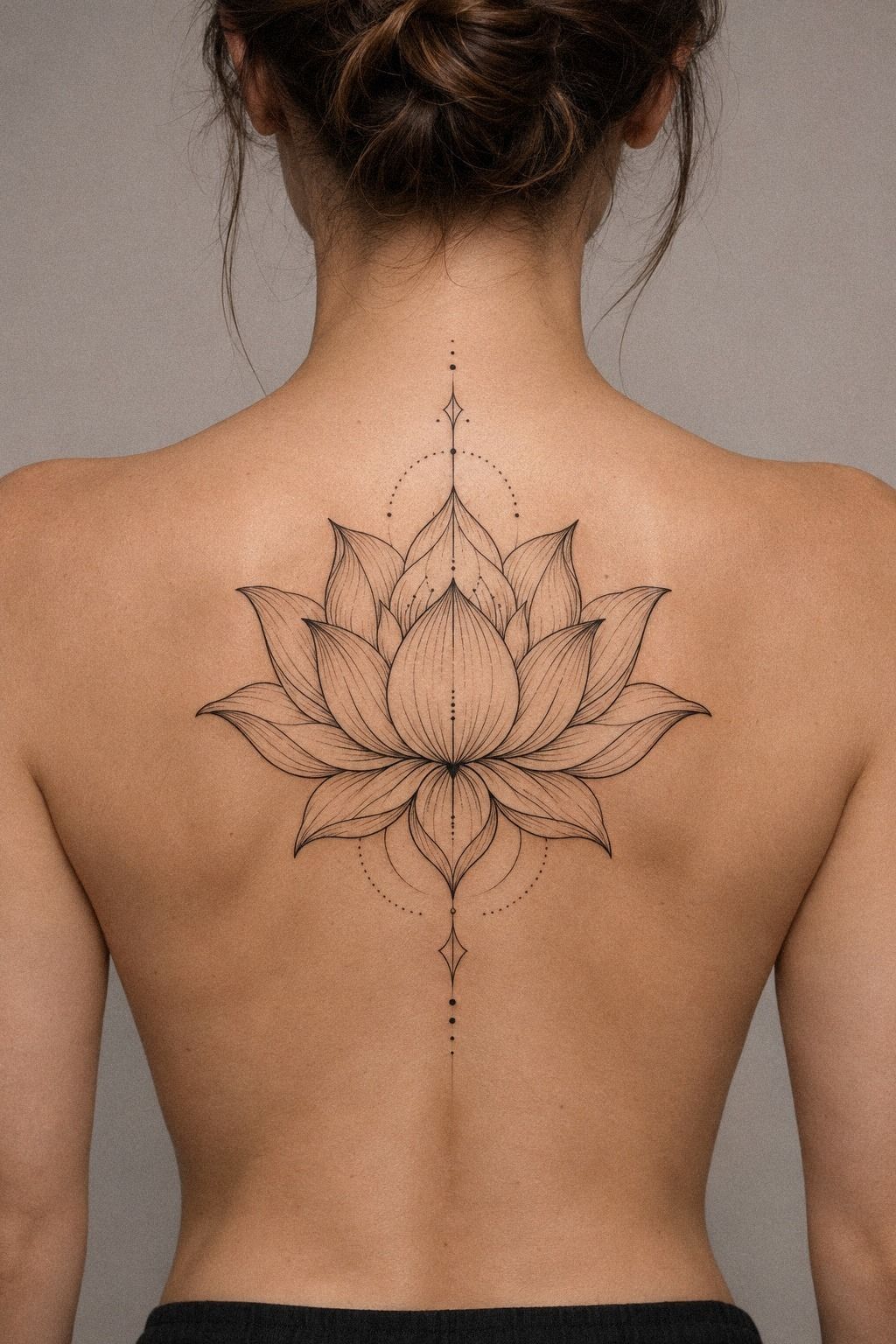
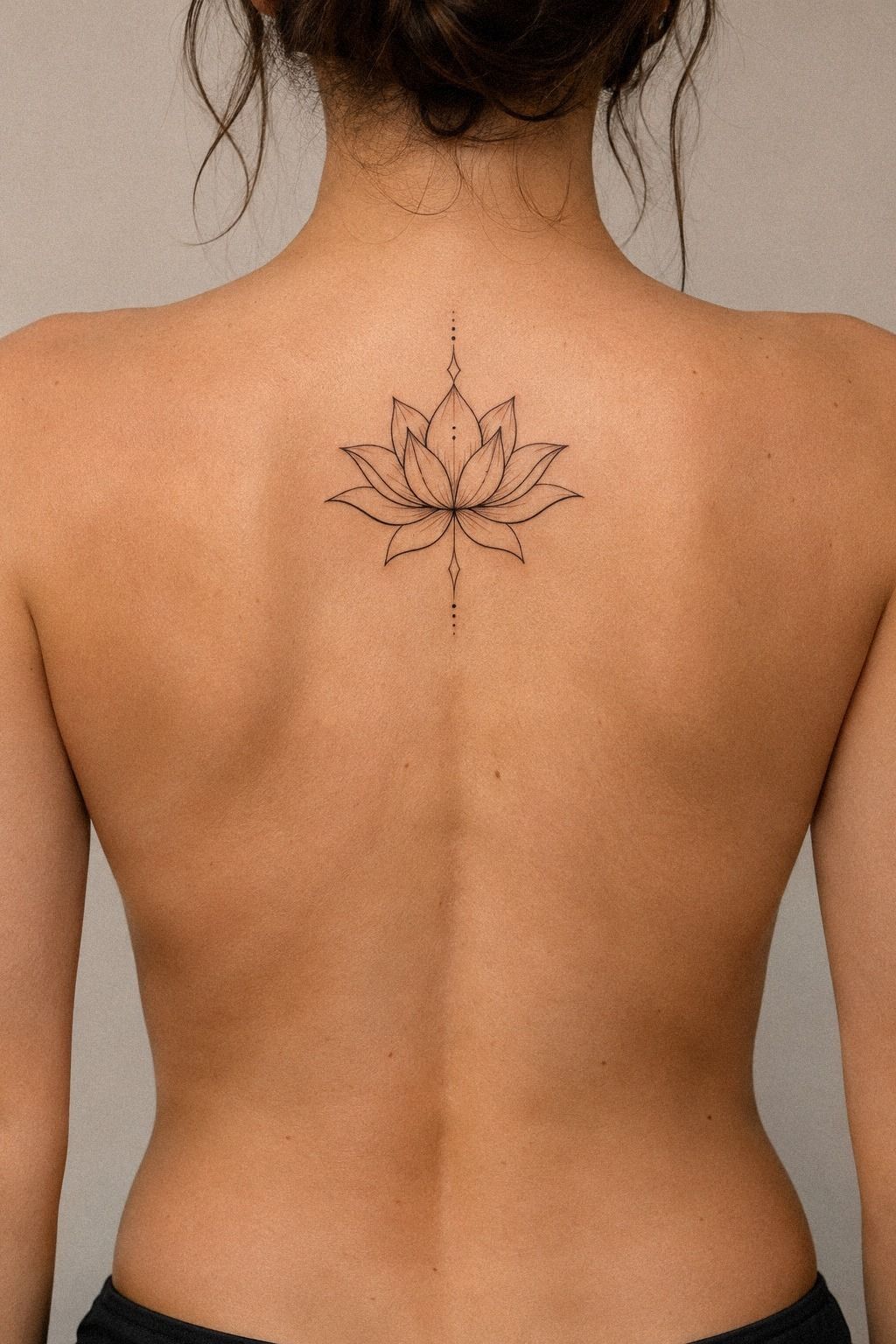
A spine design benefits from a vertical structure. Keep the lotus slightly longer than wide, then decide whether it belongs between the shoulder blades or lower along the back. The placement can feel sacred and timeless without exposing the meaning to everyone who sees it.
What do you want people to notice first, the flower or the placement? Your answer matters more than a trend. The spine and ribs are bony areas, and many people find them more painful than the forearm, thigh, or shoulder.
Use delicate lotus tattoos as a spacing reference, then ask for a stencil that follows your actual center line. Your artist can adjust it while you stand naturally.
That small test can prevent a graceful design from looking tilted. It can be subtle!
– Vertical petal stack: a narrow arrangement that follows the spine. – Center-line stencil: a temporary guide aligned with your posture. – Upper-back placement: a more private option with flexible scale.
A spine lotus can be expressive without being loud. That balance is one reason the placement remains so compelling.
4Keep black lotus tattoos crisp with fine linework
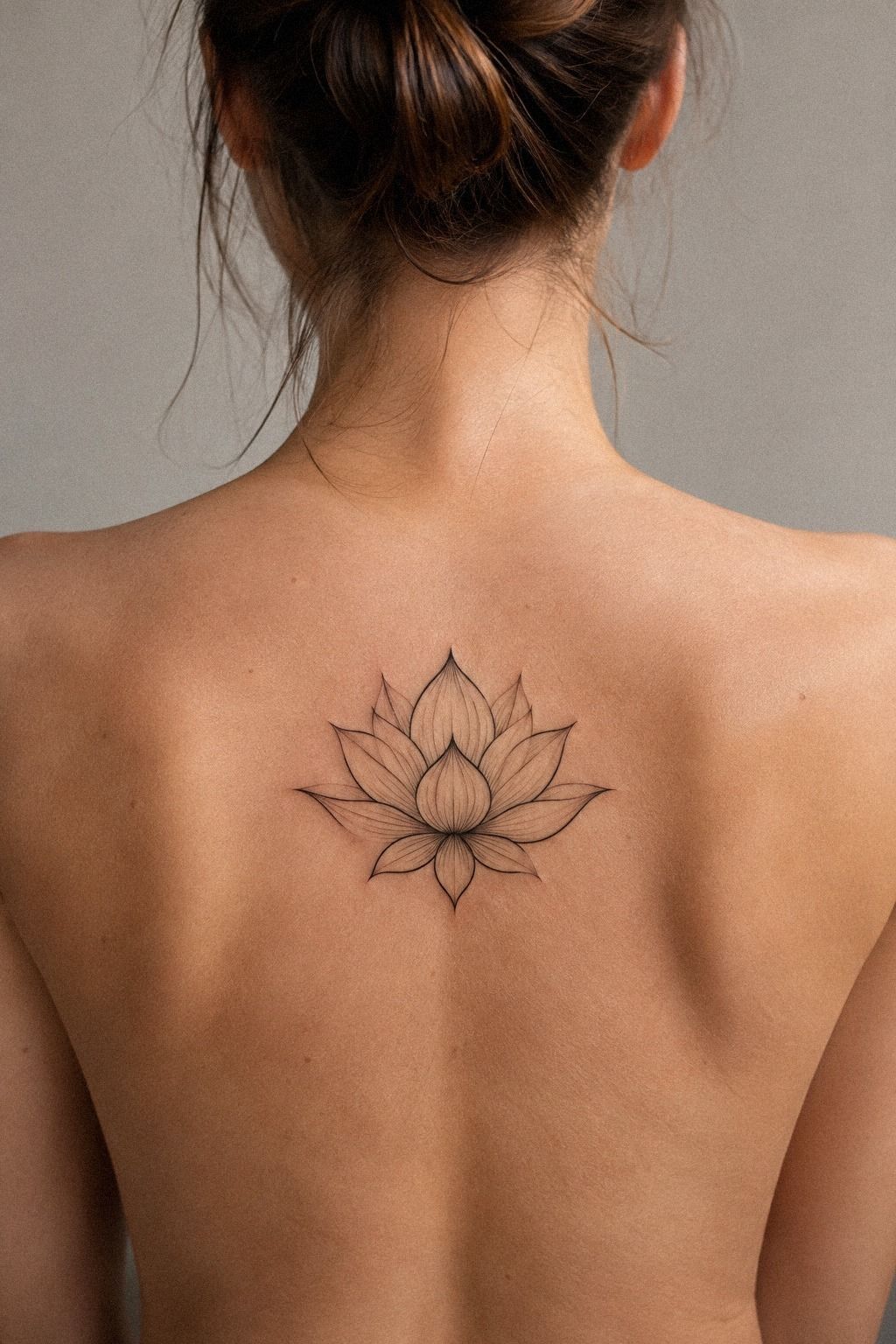
Fine linework depends on restraint. Ask your artist to separate the petal layers instead of tracing every vein. I prefer a sharp outer contour with only a few internal marks, because dense detail can blur into visual noise as the tattoo settles.
A tattoo should look graceful when you inhale, not collapse into a black knot. Slightly stronger lines may be the more elegant choice for your skin and lifestyle, especially if the design sits on a moving area.
Use fine line lotus tattoos for reference, but don’t automatically copy the thinnest example. Your artist should consider scale, placement, skin texture, and how much contrast you want.
– Outer contour: the line that carries the flower’s identity. – Petal separation: visible gaps that protect clarity. – Line-weight plan: a deliberate choice for long-term readability.
Fine lines can be delicate without being fragile. The best version feels polished on day one and remains recognizable later.
5Plan unique black lotus tattoos around scars
If you’re working around a scar, don’t treat it as a flaw that must disappear beneath random ornament. Your artist needs to see its direction, texture, and maturity before choosing the design. The most meaningful result may frame the mark rather than cover every inch.
Bring clear photos and explain what you want kept private. You don’t have to tell the artist the entire story. You can say, “This area matters, and I want the flower to move around it.” A scar may need extra care, and your artist should decide whether the skin is ready.
Use unique lotus tattoos to compare symbolic layouts, but let your own body set the final shape. A raw, honest approach usually creates a stronger result than trying to disguise everything.
– Scar direction: the path your artist must respect. – Mature scar tissue: skin that may require a professional assessment. – Open-petal layout: a design choice that leaves visual breathing space.
The tattoo can acknowledge what happened without making the story public. That’s an empowering distinction.
6Choose black lotus tattoos with symbolic petals
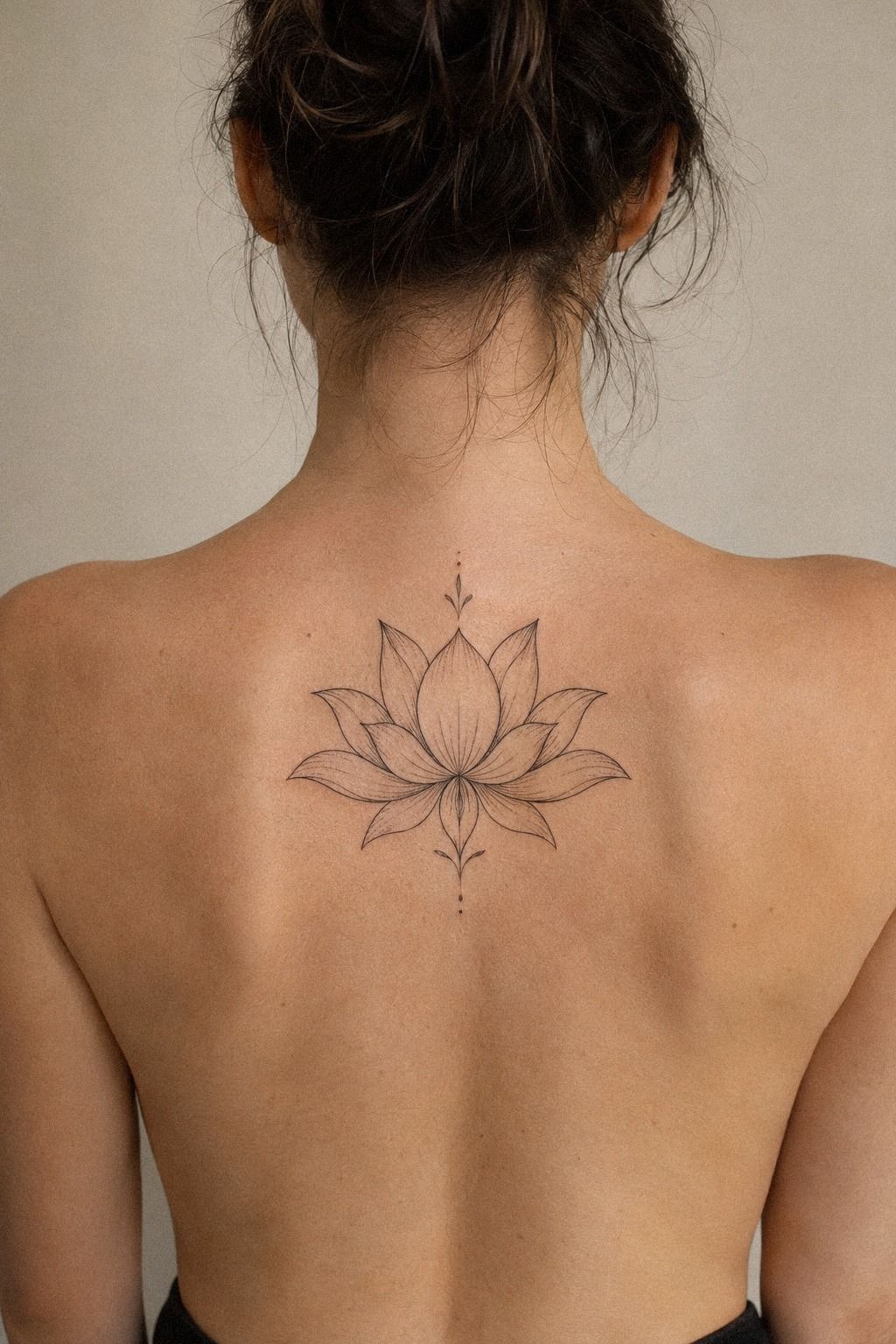
Private symbolism works best when you choose one or two ideas instead of assigning a public meaning to every mark. One closed petal might stand for restraint. An open center might represent survival.
A small break in the outline might suggest something you’re still carrying.
Your symbolism doesn’t need to match a search result. I’d skip any interpretation that doesn’t belong to your life. A fierce black lotus can still be delicate in its details, and a minimal flower can hold more weight than an ornate one.
Compare black lotus tattoo meaning with minimalist lotus tattoos before you decide. Keep the detail that feels personal, not the detail that merely looks impressive.
– Closed petal: a private symbol of restraint or protection. – Open center: a visual expression of endurance. – Forearm placement: visible when you want it to be, easy to cover when you don’t.
A symbolic tattoo can be powerful without becoming explanatory. You’re allowed to keep part of its meaning entirely yours.
7Compare black lotus tattoo ideas using botanical shading
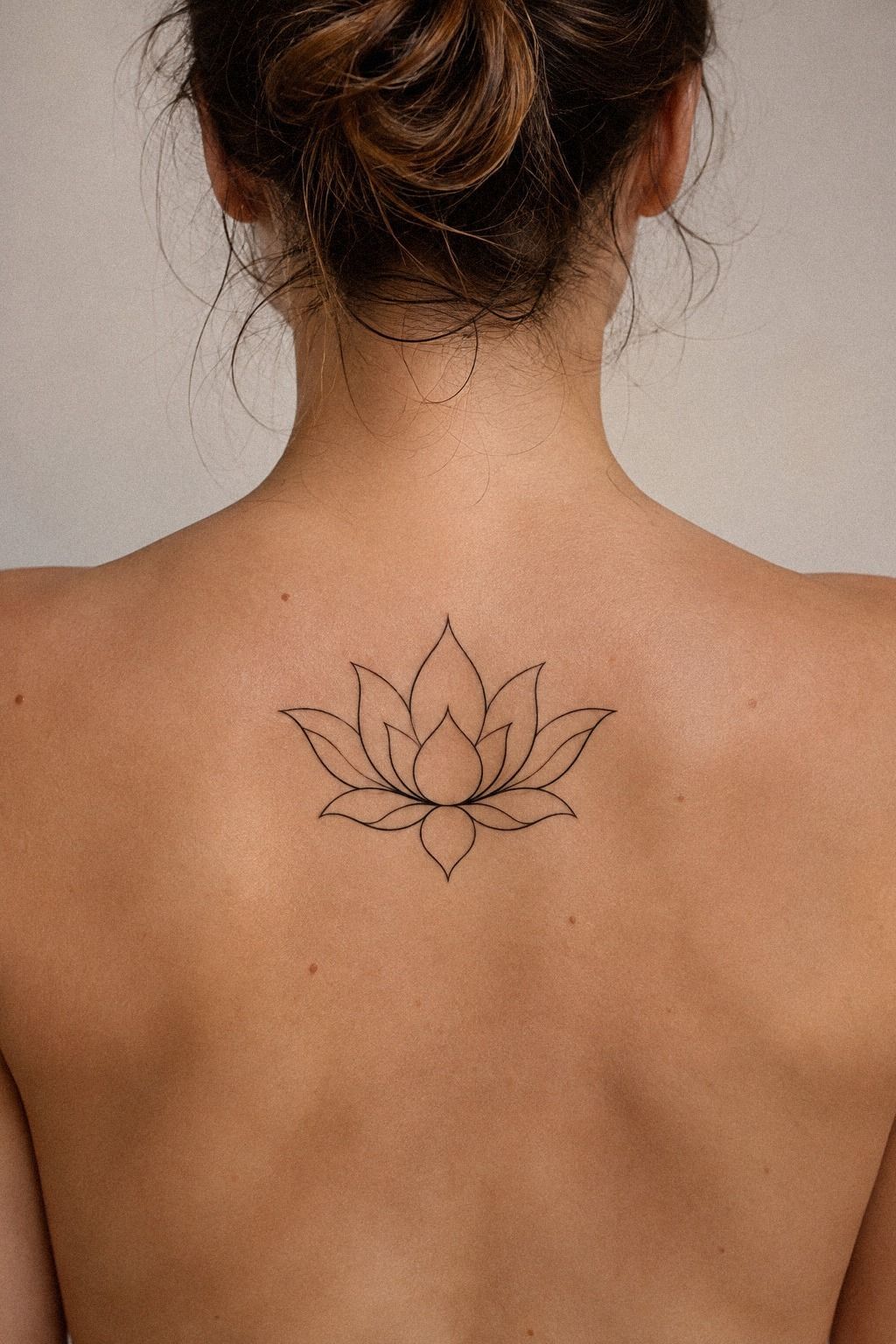
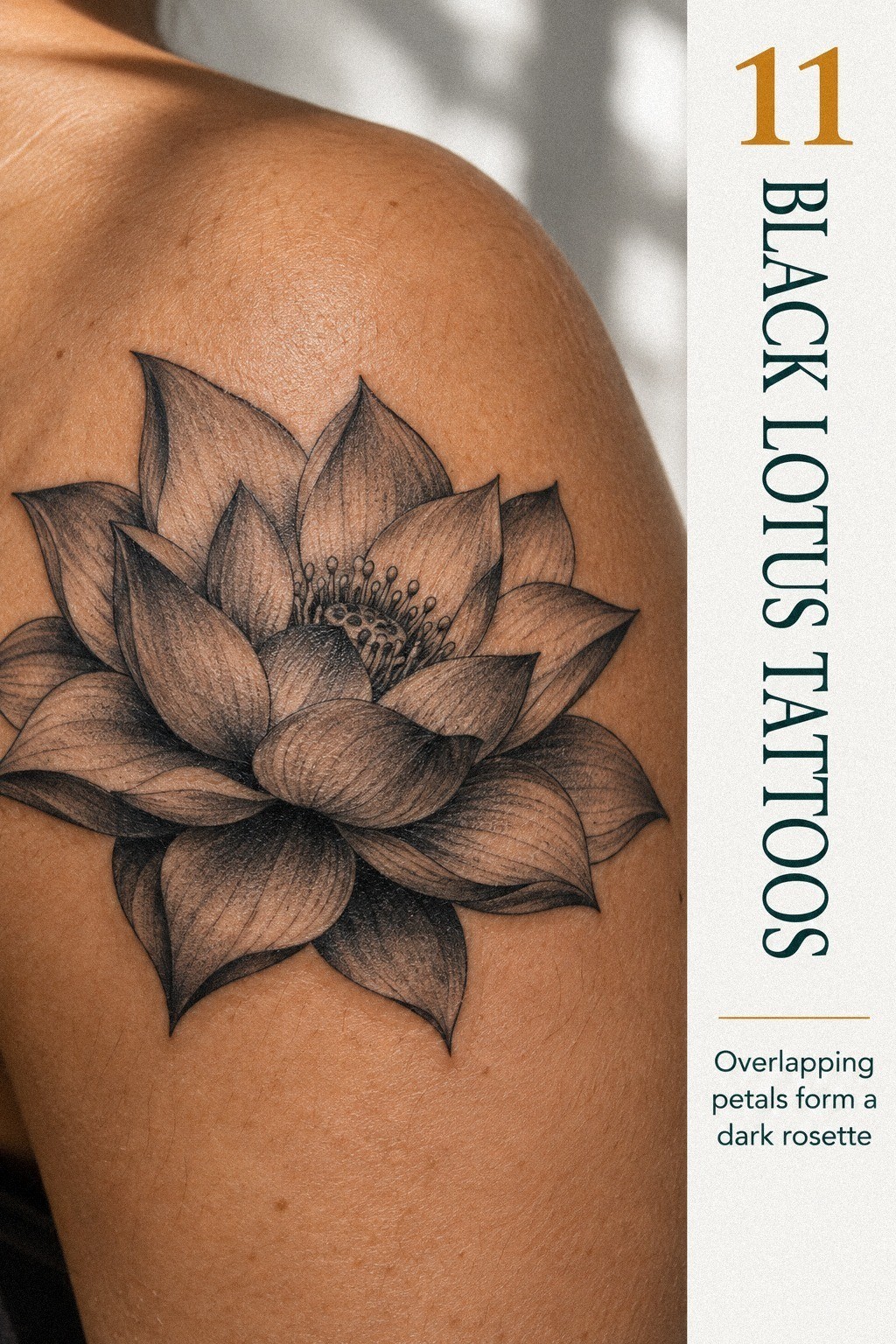
Compare designs by asking how much black is doing the work. Soft stippled shadows beneath the lower petals can create depth, but filling every interior section may swallow the form. I prefer shading that supports the flower instead of competing with it.
A botanical approach can look ornate without requiring leaves, vines, and extra flowers. I once went too far in that direction because a full composition looked dramatic on paper. The lone lotus felt more meaningful once I removed the decoration that didn’t serve the idea.
Browse black rose tattoos for shading ideas, then bring only the texture, not the entire arrangement. Your tattoo should remain personal, expressive, and easy to recognize.
– Stipple shading: controlled dots beneath or inside the petals. – Black saturation: the amount of ink needed for the intended contrast. – Single-flower composition: one focal symbol without unnecessary additions.
A crisp shadow can be enough. More detail isn’t automatically more valuable.
8Shape black lotus tattoos for a fierce sternum
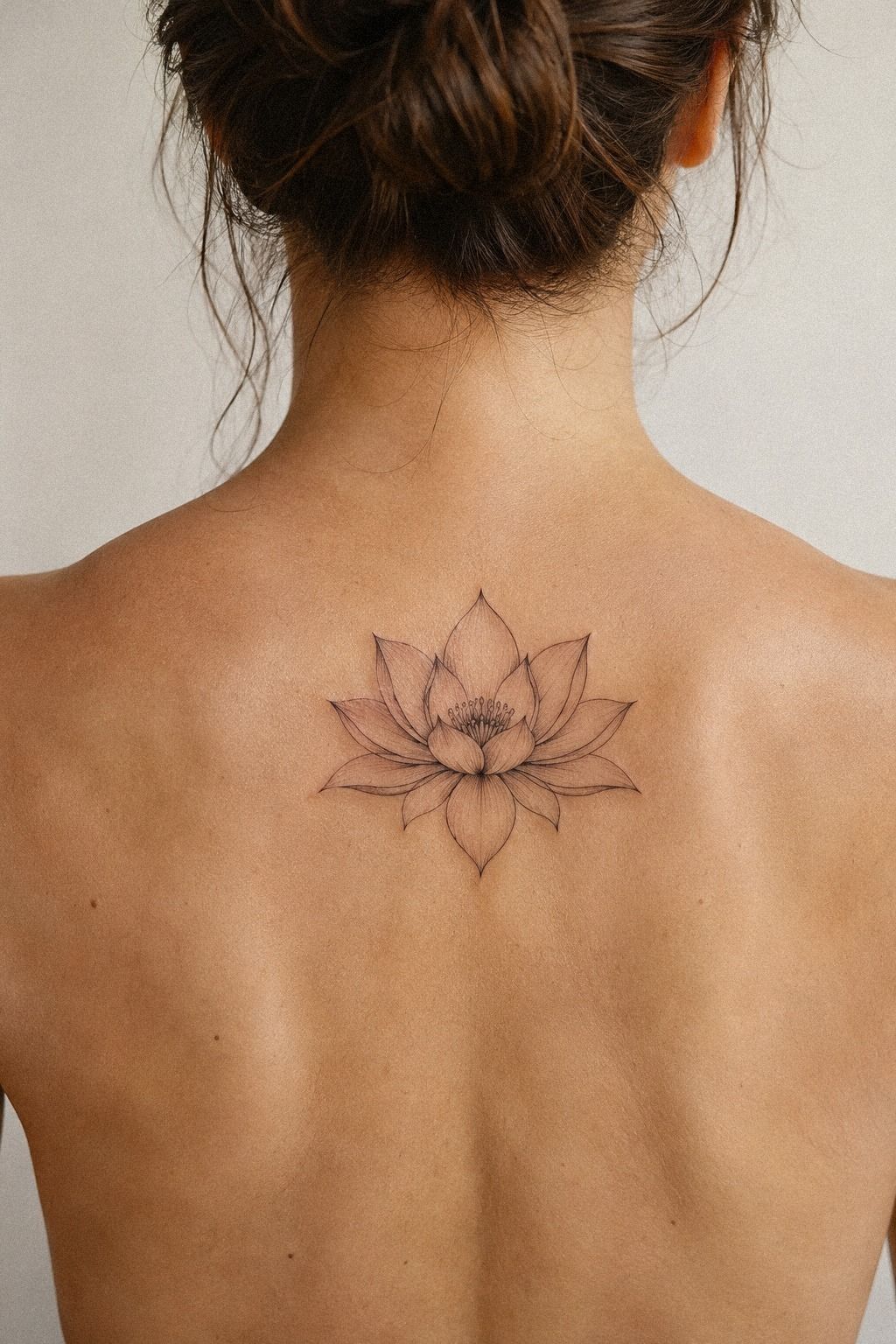
A sternum lotus needs a strong vertical center. I’d widen the upper petals slightly and keep the bottom point aligned with your natural middle line. That makes the tattoo feel fierce and balanced without turning it into a heavy emblem.
Ask your artist to place the stencil while your shoulders are relaxed. Posture can shift the entire design, especially near the chest. The sternum is also an area many people find painful, so a calm session plan matters.
Don’t choose an ornate design only because the placement feels dramatic. A crisp, understated lotus may age more gracefully than crowded linework. If you want a smaller comparison, look at small lotus tattoos before booking.
That small check matters!
– Sternum axis: the center line that steadies the bloom. – Relaxed stencil: a placement check made before your body tenses. – Chest-scale lotus: a proportion chosen for your anatomy.
The sternum can hold an iconic image, but comfort still matters. A daring placement isn’t automatically the right one.
9Balance black lotus tattoos with negative space

Negative space gives the petals somewhere to breathe.
10Test black lotus tattoo ideas for ankle placement
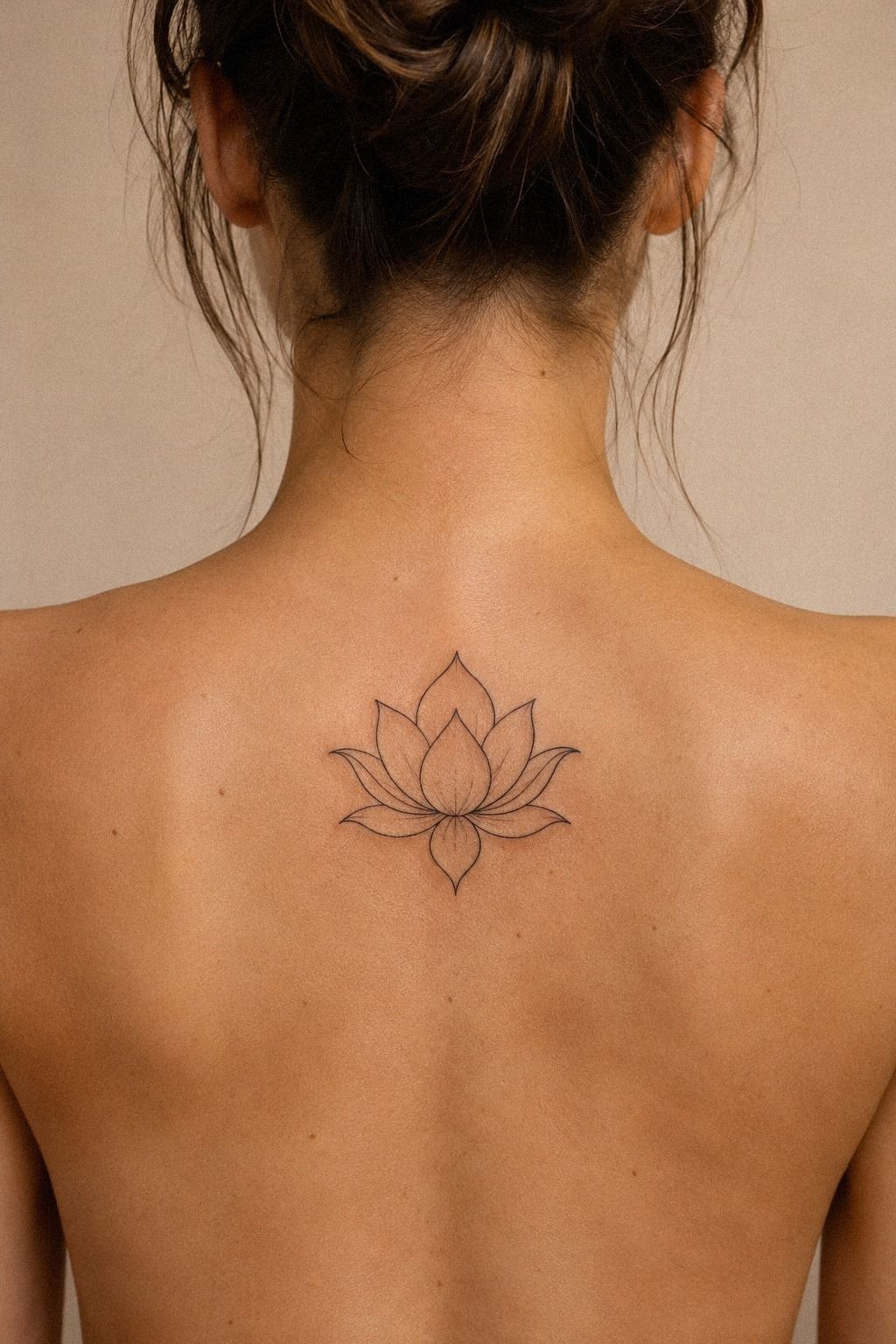
Before you commit, ask your artist to show the stencil at the ankle from standing and sitting positions. Your body changes shape, and the lotus should still read as a flower in both views. Pay attention to whether the base points naturally or looks pulled toward the joint.
Feet and ankles experience friction, sun, and movement. You’ll want simple lines and enough spacing. A tattoo’s surface usually heals in about 2 to 3 weeks, while complete healing can take about 2 to 3 months.
During that period, gentle washing, light hydration, and avoiding pools and direct sun will protect the result. Ask about footwear too. A beautiful design isn’t worth it if your recovery plan ignores daily pressure.
– Ankle stencil: a temporary guide before a permanent decision. – Healed linework: a realistic reference for softened edges. – Movement test: placement reviewed while standing, walking, and sitting.
The ankle can be a dainty, personal choice, but it needs practical planning. That’s where value comes from.
11Refine unique black lotus tattoos with dotwork

Dotwork can create soft depth without losing the front-facing lotus shape.
The Three-Question Privacy Test
Before you book, ask yourself three questions: Would I still want this shape if nobody knew the story? Does the placement give me the level of visibility I can live with? Which detail would I remove if the design started feeling too explanatory?
I’d write the answers in plain language, then show your artist only the parts that affect the design. You don’t need a long explanation for a private symbol. A short note about placement preference and line weight is enough.
This test keeps the process calm, direct, and empowering. It also helps you separate your actual meaning from the pressure to make the tattoo understandable to strangers.
The Private Meaning Rule
I’ve changed my mind about symbolic tattoos after watching people over-explain them. The strongest designs usually have one visible idea and one hidden layer. You can see the lotus, but you don’t need to see the memory, promise, loss, or turning point behind it.
For me, the right black lotus is never the one with the most detail. It’s the one that still feels honest after the trend disappears. I’d rather choose a crisp, meaningful flower with three intentional petal choices than an elaborate composition that borrows someone else’s story.
I learned this after saving too many references that looked impressive but felt emotionally empty. The fix was simple: I removed every detail that existed only to make the tattoo look finished. What remained was more elegant, more private, and easier to place.
That’s why I’d treat the stencil conversation as a real design decision, not a formality. Stand up.
Turn your wrist. Look at the ankle from across your body. Ask whether the shape still feels like yours when you stop analyzing it.
If it does, you’re close.
What Makes a Black Lotus Tattoo Worth It?
A black lotus tattoo is worth it when the design, placement, and meaning still make sense without outside approval. I’d consider the long-term value before chasing the lowest cost. A cheaper appointment can become expensive if you later pay for a cover-up, correction, or removal.
Think about the tattoo budget in three parts: the artist’s fee, the aftercare supplies, and a small reserve for a longer session than expected. A simple design may cost less, but the right artist can be worth paying for when line quality and healed results matter.
Ask for a quote based on size, placement, complexity, and the artist’s minimum. Don’t choose an artist solely because the first number sounds low. Value comes from skill, communication, hygiene, and a design you’ll still recognize years from now.
When Fine Lines Need a Stronger Plan
Fine-line work can be sleek and delicate, but it isn’t automatically low-maintenance. Sun exposure, friction, skin movement, and close spacing all affect how the tattoo settles. I’d ask your artist whether a slightly stronger contour would give you better long-term value.
Your artist should explain which details may soften first. Interior veins, tiny dots, and narrow openings usually need more consideration than the main silhouette. If the design only works at its freshest, it may not be worth the cost.
A sharp outline with restrained interior marks often creates a more timeless result. You can keep the tattoo minimal without making it plain. That balance is both practical and stylish.
A Healed Portfolio Is Better Than a Fresh Promise
When choosing an artist, ask for healed photographs of work similar in size and technique. Fresh tattoos can look vibrant and sharp because the ink hasn’t settled yet. Healed work shows you the actual line quality, spacing, saturation, and edge control.
Look for an artist who regularly works with botanical forms, blackwork, or fine-line pieces. One impressive lotus in a portfolio isn’t enough evidence. You want consistency across multiple clients and placements.
I’d also pay attention to how the artist answers questions. A polished portfolio matters, but clear communication matters too. If they can explain the healed tattoo process without dismissing your concerns, that’s a strong sign.
The Black Lotus Budget
Here’s a realistic planning range for the United States. Prices vary by region, artist experience, studio minimum, size, and placement.
A quote should include the design’s approximate size, placement, technique, and expected session length. Ask whether touch-ups are included and when they would be considered necessary.
If your budget is tight, simplify the design before choosing an inexperienced artist. Removing unnecessary shading can reduce cost while preserving the symbolic center. That’s usually better value than rushing into a low-cost appointment.
Worth it? For me, yes, when the artist has healed work and the design still feels personal after the excitement fades.
The Questions I Get Asked Most
How much does a black lotus tattoo usually cost?
I’d expect to pay about $100 to $300 for a small or medium black lotus tattoo in the United States. Larger shaded designs may cost $300 to $700 or more. Studio minimums often range from $50 to $150, while hourly rates commonly fall near $100 to $250.
Are black lotus tattoos a good idea for a first tattoo?
I think they can be a strong first tattoo because a clear silhouette is easy to understand and personalize. I’d choose a forearm, thigh, or shoulder before ribs, feet, hands, or sternum if you’re concerned about pain or recovery.
How do I choose a tattoo artist for black lotus tattoos?
I’d choose an artist with clean linework, healed photographs, and strong hygiene practices. Look for repeated botanical or blackwork results rather than one attractive lotus. A healed portfolio tells me more than a fresh photograph, so I’d ask to see both.
How much do black lotus tattoos hurt?
I’d expect pain to vary by person and placement. Ribs, feet, hands, and sternum often feel sharper than the forearm, thigh, or shoulder. I’d choose a tolerable placement rather than selecting a bony area only because it looks dramatic.
How long does a black lotus tattoo take to heal?
I’d plan for the surface to heal in about 2 to 3 weeks, with deeper healing taking roughly 2 to 3 months. I’d wash gently, follow the artist’s aftercare instructions, avoid swimming and direct sun, and avoid picking at peeling skin.
What’s the best placement for a black lotus tattoo?
I’d choose based on privacy, pain tolerance, scale, and your daily routine. A forearm is readable and visible, while the spine or upper back feels more private. I’d compare fine line lotus tattoos and tiny lotus tattoos before deciding.
The Stencil Gate
If I had to pick one step, I’d start with the stencil test. It catches weak symmetry before a needle touches your skin, and that can save you from a permanent compromise. Test the design while standing, sitting, and moving naturally.
Show your artist the version that still feels like yours. If the stencil looks right without an explanation, the idea is probably strong enough to keep.
Save the rest of the references for later, and let the black lotus stay personal. Keep it yours!