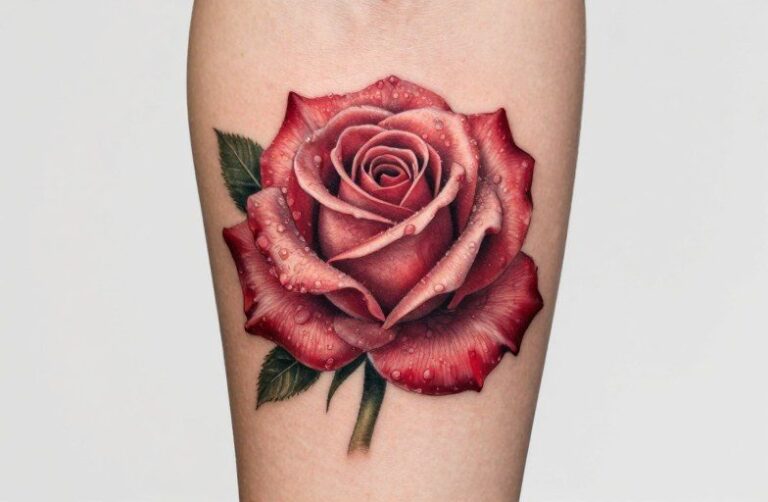
The Loretta rose tattoo pulls together three threads that rarely meet elsewhere: the stubborn endurance of traditional Americana, the quiet intimacy of naming someone on your skin, and the particular visual grammar that Instagram made visible. It is not simply a rose with a banner. The name changes the contract. A generic rose offers beauty. A named rose offers devotion, and the name “Loretta” carries specific tonal weight, country-western, mid-century, working-class feminine, that reshapes everything around it.
Where the Design Comes From
Understanding this tattoo means starting with the name itself. Loretta Lynn, the Kentucky coal miner’s daughter who became country music’s most unflinching chronicler of working women’s lives, gave the name a particular cultural resonance. Her autobiography detailed domestic violence, poverty, and industry sexism; her public persona became armored resilience. The tattoo that borrows her name borrows that history, whether the wearer intends it or not.
The design itself descends from the banner-and-rose tradition of 1940s-1960s American tattooing. Sailors and soldiers carried sweethearts’ names in curved ribbons through stylized blooms. The rose was the most common flower because it photographed clearly, aged well in bold line work, and carried universally understood romantic weight. The Loretta variant is a later specialization, often linked to the broader revival of traditional Americana imagery that accelerated in the 2010s as artists and clients mined vintage flash for designs with cultural specificity.
Related reading: Loretta rose tattoo meaning | rose breast tattoo meaning | red rose tattoo meaning | Selena Gomez rose tattoo meaning
The Instagram Amplification
Social media changed how this design spread. What might have remained regional, strong in Nashville, Austin, pockets of Los Angeles, became visible nationally through tagged posts and reference photos. The feedback loop is straightforward: a client sees a Loretta rose on Instagram, brings it to a local artist, the artist posts their version, another client sees it. This is not folk art spreading organically. It is algorithmic visibility shaping a tattoo subgenre, with both benefits (skilled execution examples widely available) and costs (homogenization, the same banner curvature repeated endlessly).
What Distinguishes the Visual Template
Not every named rose is a Loretta rose. The specific variant has recognizable markers:
- Banner lettering in period serif or script fonts, curved above or through the bloom rather than floating separately
- Stems with exaggerated, almost aggressive thorns, rendered in bold black lines
- Leaves with pointed geometry, distinct from the softer teardrop shapes of neo-traditional work
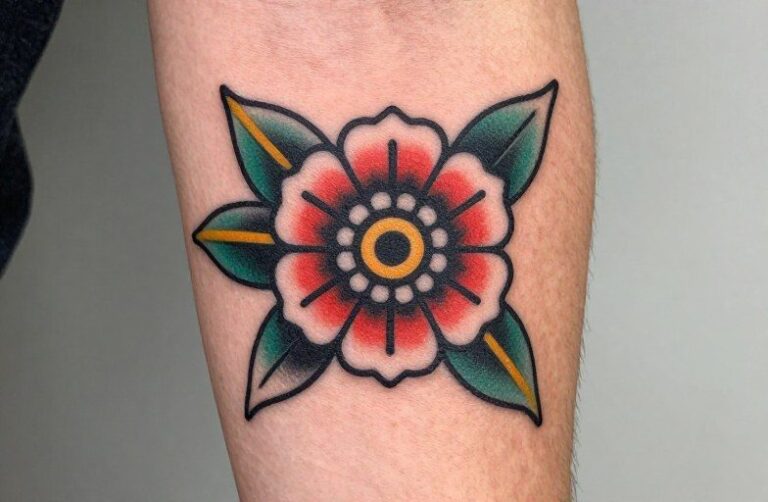
- Color palettes limited to true red, green, and yellow, mimicking the constrained ink sets of the Sailor Jerry era
- Compositional density, the bloom, banner, and foliage interlock rather than floating independently
When these elements are missing, the design reads as generic flash with a name added. The difference is intentionality in every component.
Who Gets This Tattoo and Why
The collector profiles are narrower than most rose variants suggest. This matters for placement, scale, and how you discuss the piece with your artist.
The Name-Bearer
Women named Loretta, born during the name’s 1930s-1950s peak, or named for grandmothers, make up a substantial portion of collectors. The name carries generational weight that can feel burdensome or dated in daily life. The tattoo reclaims it: ornamented, celebrated, made permanent on the wearer’s own terms. These pieces typically appear on the forearm, collarbone, or ribcage, sized for personal visibility rather than maximum public exposure. The wearer sees it; that is often the point.
The Memorial Collector
Another cluster collects the design as memorial work. Roses paired with birth and death dates, placed on the upper arm or thigh where the wearer controls disclosure. The name anchors grief to a specific person rather than abstract loss. The Loretta framing matters here because it is particular, not “Mom” in a heart, not a generic rose, but this person with this name and this history. The specificity is the comfort.
The Aesthetic Collector
A growing group lacks personal connection to the name but responds to the visual package: the vintage Americana vocabulary, the country-western tonal associations, the subcultural affiliation with traditional tattooing. These collectors often pair Loretta roses with swallows, anchors, or pin-up figures in coordinated sleeves. Placement favors the outer thigh, calf, or side of the neck, areas that photograph cleanly and integrate well with larger compositions. The traditional version asserts affiliation; the wearer is choosing a lineage, not just an image.
Working With Your Artist
Technical execution determines whether this reads as intentional homage or generic flash with a name applied. The conversation with your artist should cover specific technical choices.
Line Weight and Aging
Bold outlines, minimum 3-5 needle groupings, are non-negotiable for longevity. Fine-line variants photograph beautifully fresh but blur within three to five years as black spreads and red mutes to dusty pink. The banner lettering especially suffers: thin script lines become illegible, turning “Loretta” into an indistinguishable blob. Ask your artist to show you healed examples of their banner work, not just fresh photos.
Shading strategy matters equally. Traditional execution uses whip-shading for dimensional leaves and solid black drop shadows behind the bloom. Smooth gray-wash gradients, while technically proficient, read as contemporary and undermine the vintage effect you are presumably seeking. State your preference explicitly. Many skilled artists default to modern techniques unless directed otherwise.
Color Behavior Over Time
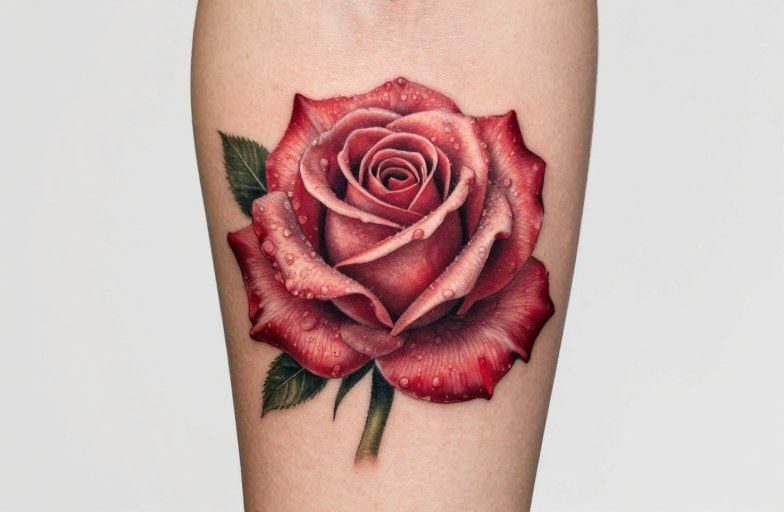
Color execution demands understanding specific pigment behavior. Cadmium-based reds, increasingly restricted in many regions, offered unmatched saturation but higher allergy risk. Modern organic alternatives like naphthol red require more frequent touch-ups. Green leaves using traditional verdigris mixtures shift blue-green over decades. Ask your artist which reds they use and their touch-up policy. The full-color Loretta rose reads as celebratory, almost aggressively cheerful, appropriate for memorials that emphasize lived joy rather than mourning.
Black and Grey Adaptations
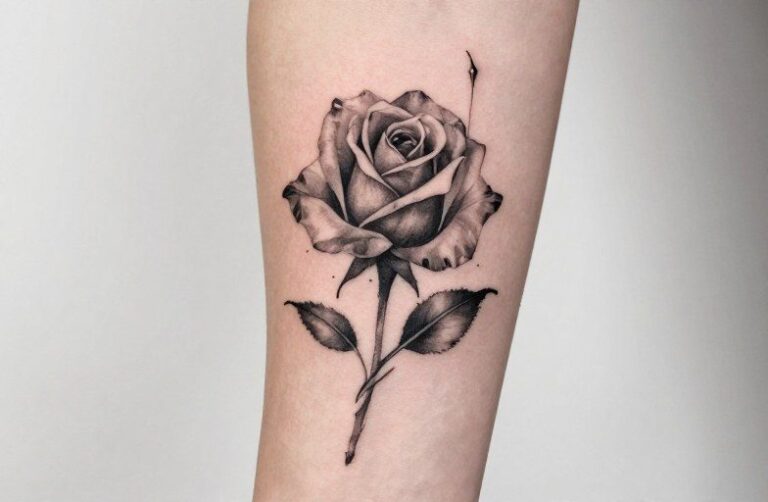
Stripped of color, the design enters different symbolic territory. Black and grey roses universally signify loss, remembrance, or gothic sensibility. The name banner becomes more prominent without chromatic competition. Technical execution requires careful gray-wash layering to prevent the rose from flattening into a dark blob; skilled artists use negative space highlights and subtle stippling to maintain petal separation. Healing differs slightly: black and grey settles faster with less scabbing, but color work’s initial vibrancy helps you gauge final results more accurately during the critical first month.
Design Elements That Work and Fail
The Loretta rose functions as a central image in larger compositions or stands alone. Either way, surrounding choices matter.
Complementary Elements
- Daggers through the bloom: adds narrative tension, traditionally symbolizing betrayal or protection
- Broken chains or banners with secondary text: extends the composition for larger placements like the thigh or upper arm
- Microphone or guitar neck: explicit Loretta Lynn reference, best kept small and integrated rather than competing with the rose
- Clock faces set to specific times: memorial function, but numerals must be large enough to hold over years
Elements to Avoid
- Watercolor backgrounds: they clash structurally with the hard edges of traditional Americana
- Realistic portrait attempts alongside stylized rose: mixed vocabulary looks accidental, not eclectic
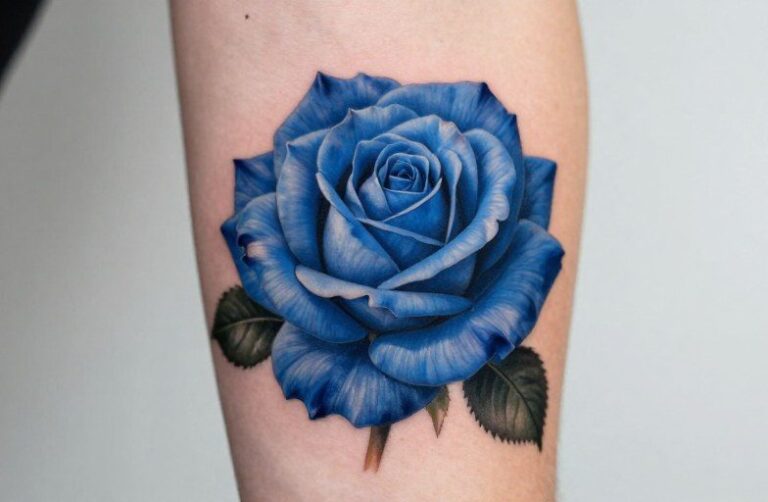
- Excessive jewel-toned purples or blues: period palettes did not include them, and they disrupt the temporal coherence
- Script fonts that are too ornate for the banner: legibility at small sizes is the primary criterion
Placement and Practical Concerns
The forearm is the most popular placement for this design, which creates a specific problem: constant sun exposure. Unprotected color fades 40 to 50 percent faster than on covered skin. Budget for a touch-up at three to five years, sooner if you work outdoors or live in high-UV climates. The upper arm, protected by sleeves, ages more gracefully. The ribcage offers excellent sun protection but requires more pain tolerance and limits display options.
Name tattoos carry cover-up implications worth considering. “Loretta” is a specific name. If your relationship to the namesake changes, a ended partnership, a complicated family dynamic, the tattoo becomes harder to repurpose than abstract imagery. This is true of all name tattoos, but worth stating explicitly because the Loretta rose’s personalization is its entire point.
How to Find the Right Artist
This design requires traditional Americana specialization, not general competence. Look for artists whose portfolios show:
- Consistent bold line work in healed, not just fresh, photographs
- Banner lettering that remains legible at small sizes
- Period color palettes, not default modern brights
- Experience with the specific constraints of name integration (spacing, curve, negative space management)
Ask directly: “How many Loretta roses or similar banner-name traditional pieces have you done?” The honest answer might be none, which is acceptable if their portfolio shows adjacent competence. The dishonest answer, claiming extensive experience without evidence, is a red flag. Travel to a specialist if your local options lack this specific vocabulary. Traditional Americana is geographically concentrated; Nashville, Austin, Portland, and several Los Angeles shops maintain deep benches of artists working in this idiom.
What to Remember
The Loretta rose tattoo succeeds when every element reinforces the same intention: period accuracy, personal specificity, technical boldness. It fails when treated as a generic rose with a name added. The name is not decoration. It redefines the entire image, turning a universal symbol into a particular commitment.
Before committing, verify your artist’s healed work, discuss pigment choices and touch-up policies, and choose placement with sun exposure and aging in mind. The traditional Americana vocabulary offers excellent longevity when executed properly, but it demands discipline in line weight, color restraint, and compositional density. The Loretta rose is not a design for subtlety. It is a design for declaration, of name, of lineage, of aesthetic allegiance. Make sure each component earns that declarative weight.
Frequently Asked Questions
Is the Loretta rose tattoo only for people named Loretta?
No, though name-bearers and those memorializing a Loretta make up a significant portion of collectors. A growing group chooses the design for its Americana aesthetic and country-western cultural associations, particularly within traditional tattooing subculture. The name carries tonal weight whether or not it is yours.
How much should I expect to pay for a Loretta rose tattoo?
Pricing varies by region and artist reputation, but traditional Americana specialists typically charge between $150-$300 per hour. A forearm-sized Loretta rose with banner usually requires 2-3 hours. Highly sought-after artists may have minimums or flat day rates. The premium for specialization is usually worth paying; poor execution of this specific design is expensive to correct.
Can I get a fine-line version of this design?
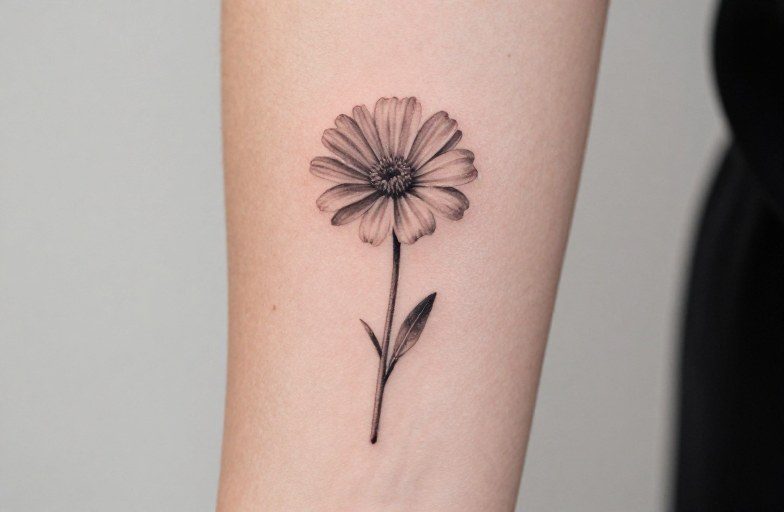
You can, but it undermines the design’s purpose and longevity. The Loretta rose’s visual identity depends on bold line work that ages into legibility. Fine-line banner lettering especially degrades, turning the name into an unreadable blur. If you prefer delicate work, consider a different floral design better suited to that vocabulary.
How do I protect the color from fading?
Sun protection is essential. Apply SPF 50+ to the tattoo whenever it is exposed, reapplying every two hours during prolonged outdoor activity. Consider placement on less sun-exposed areas like the upper arm or ribcage. Budget for a touch-up at 3-5 years regardless of protection, as all color tattoos shift over time.
What if I want to add a portrait of Loretta Lynn alongside the rose?
This is technically possible but visually risky. Realistic portraiture and stylized traditional rose work operate in different visual vocabularies. Combining them usually produces incoherence rather than eclecticism. If you want explicit Loretta Lynn reference, a small integrated microphone or guitar neck works better. For portraiture, consider a separate dedicated piece in a matching style.