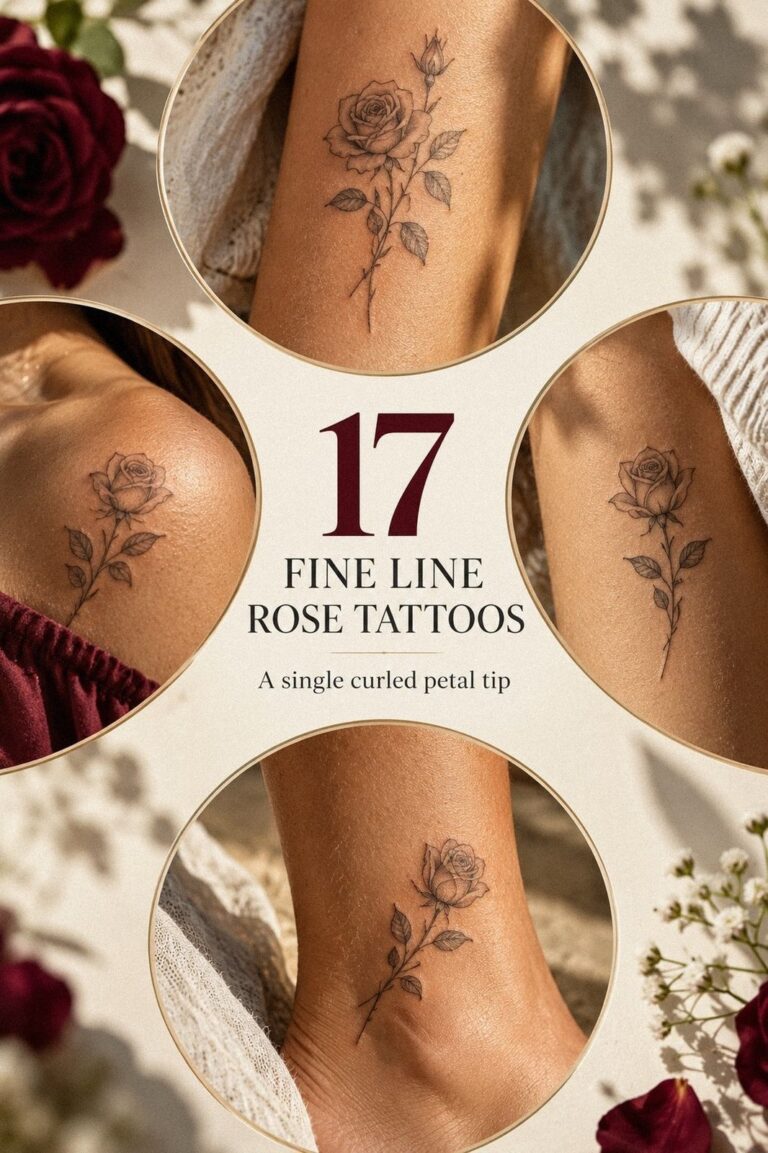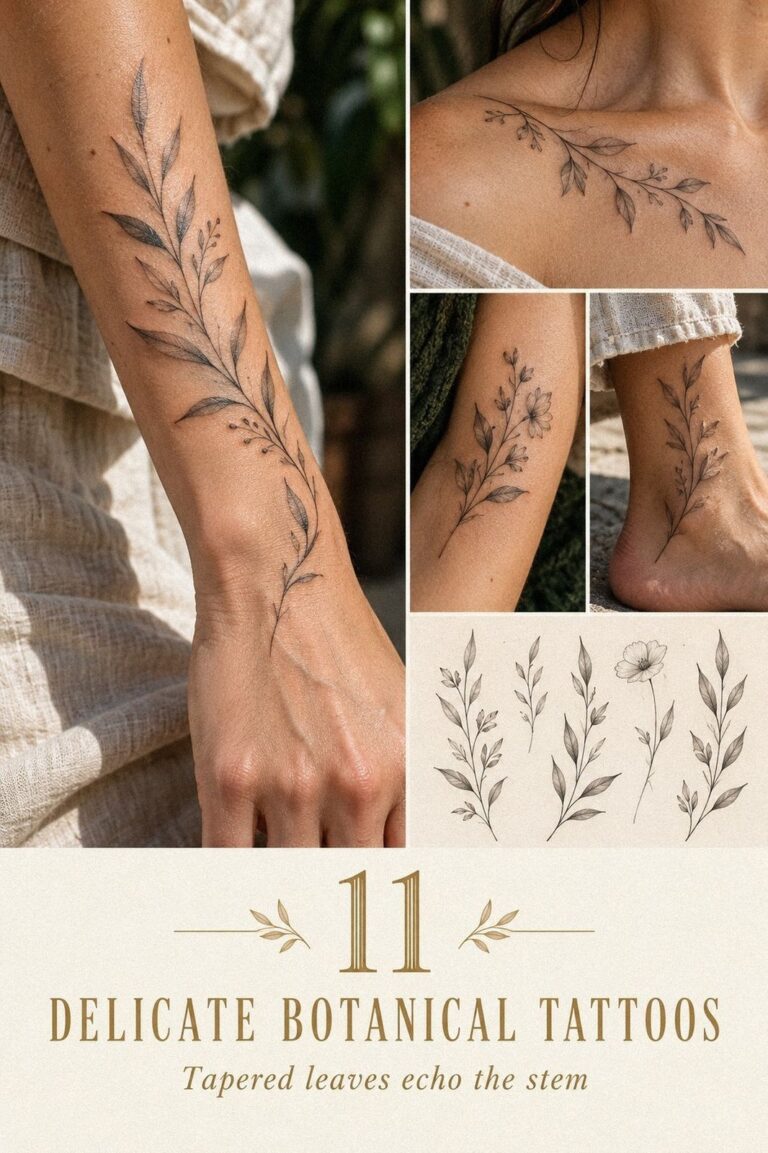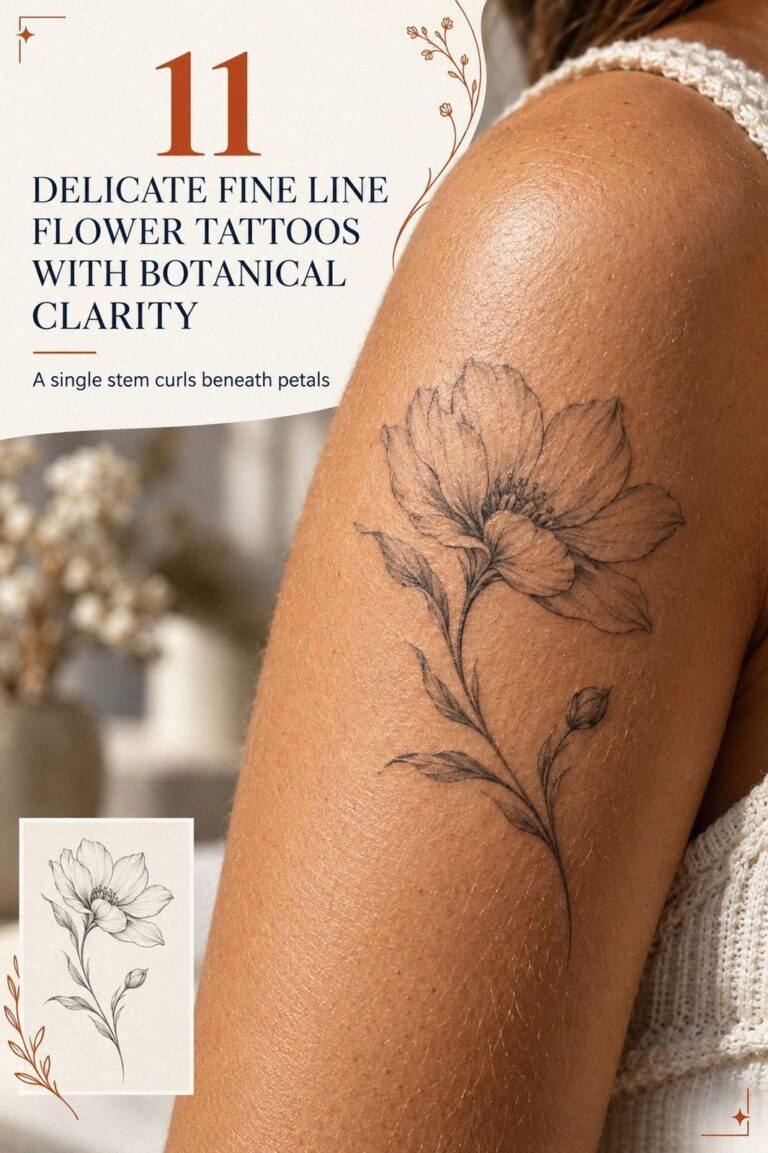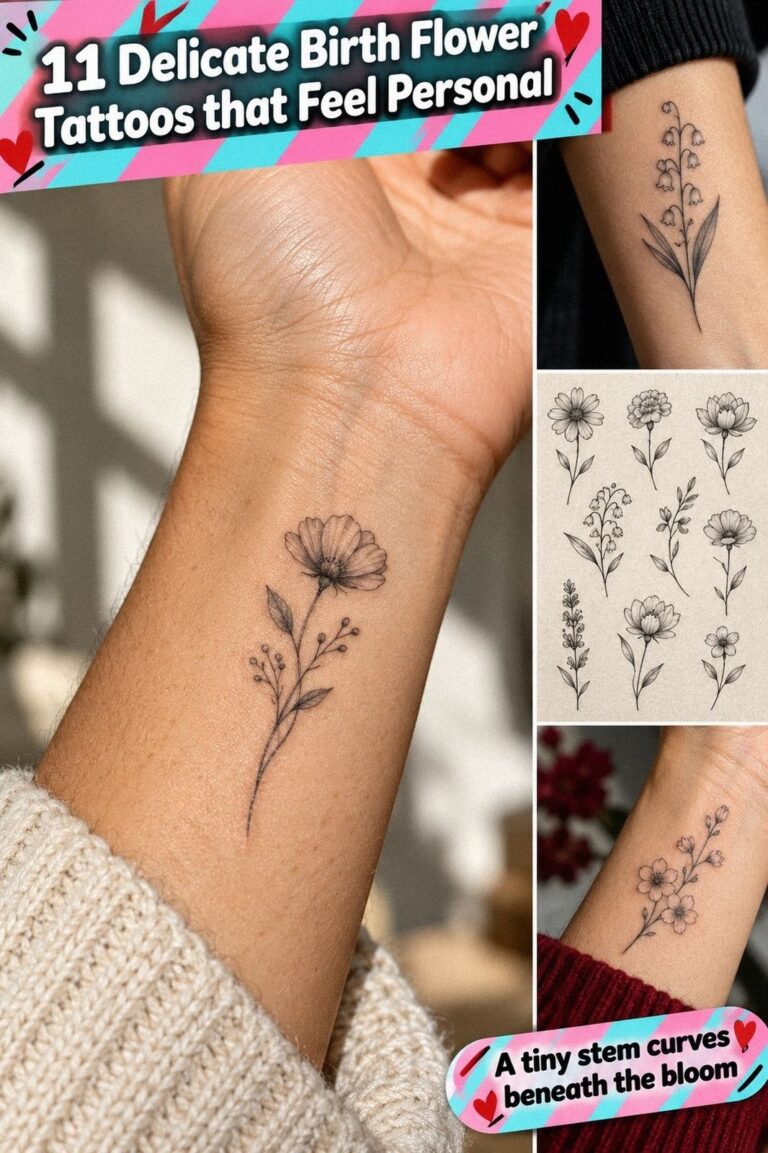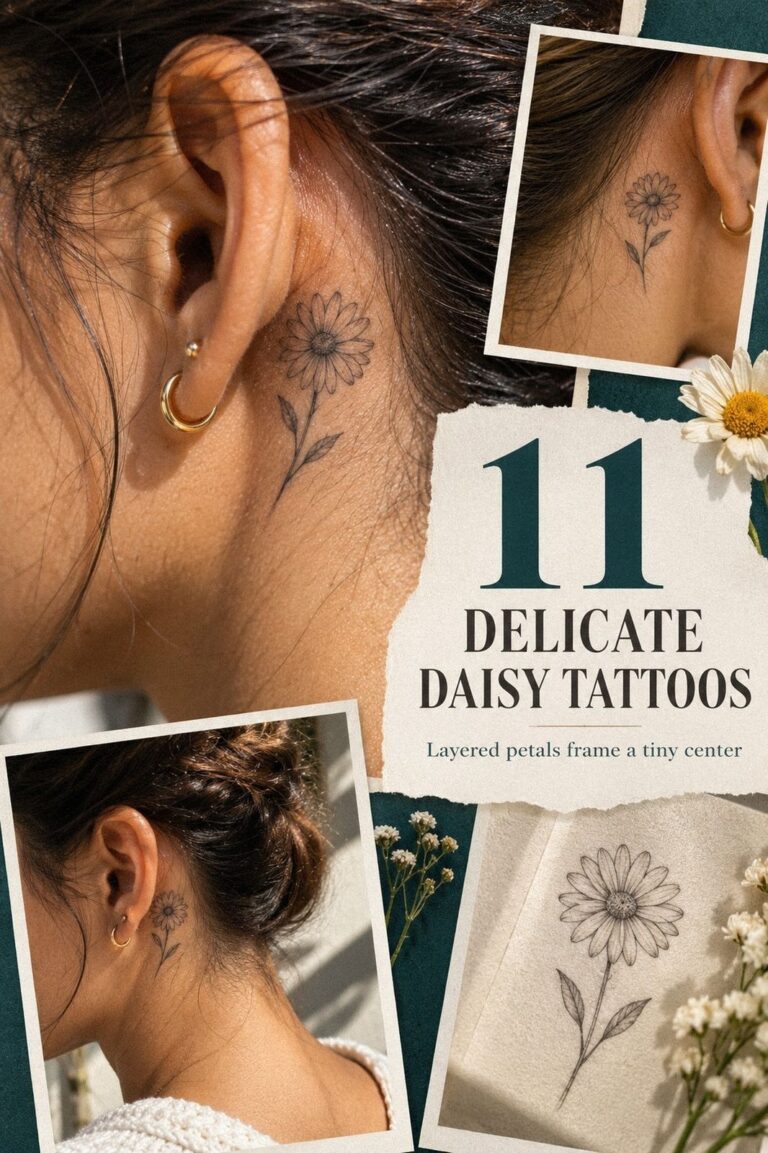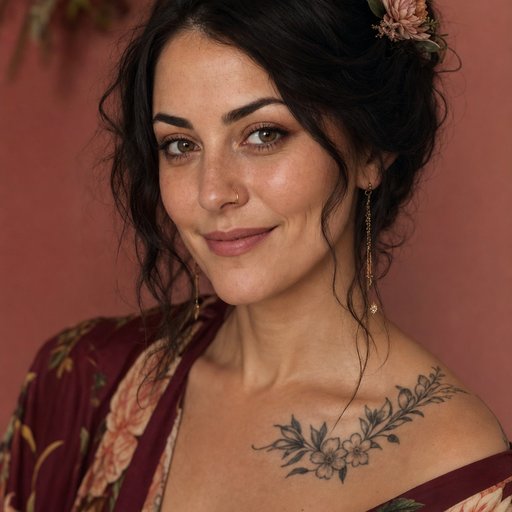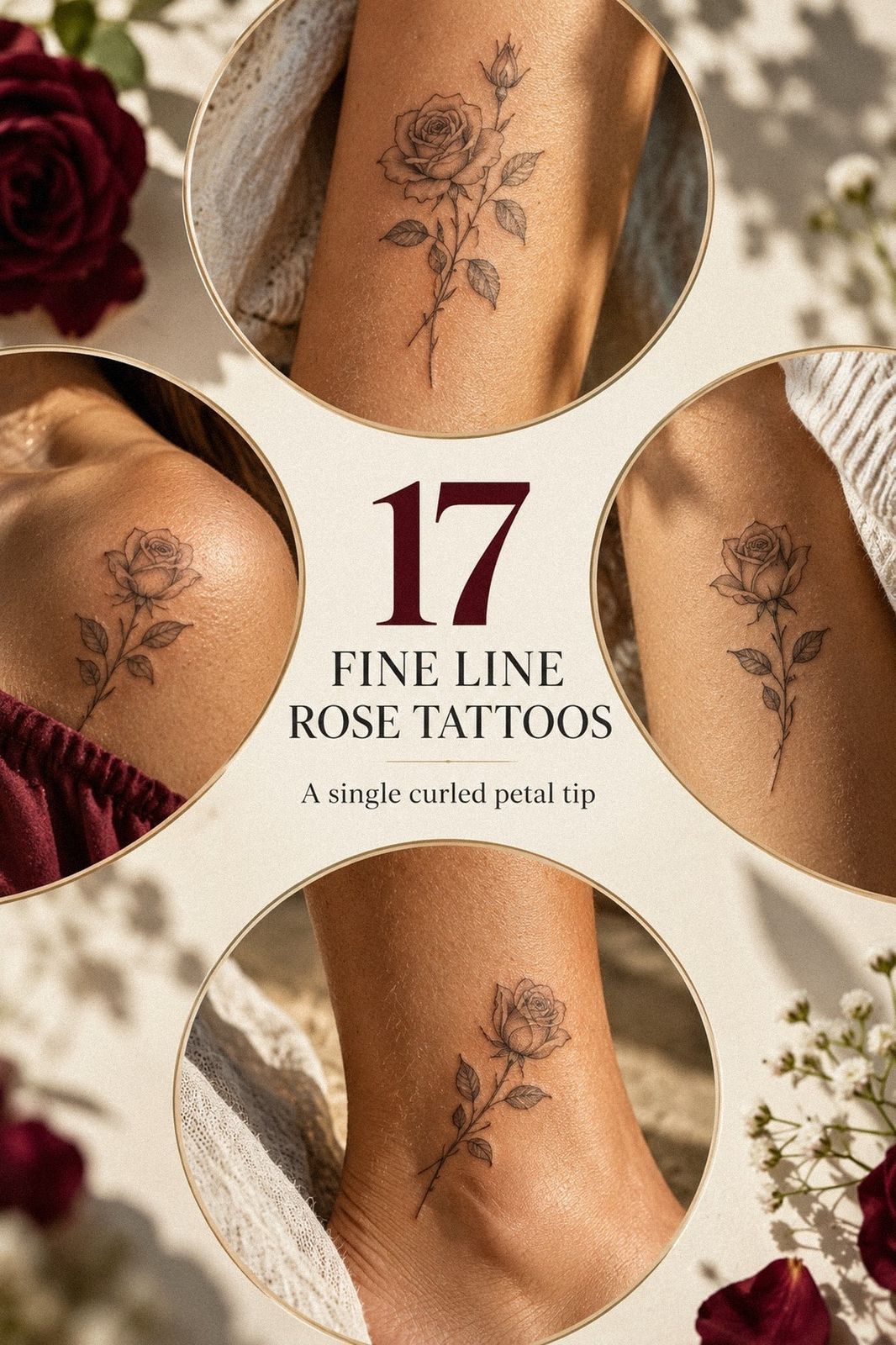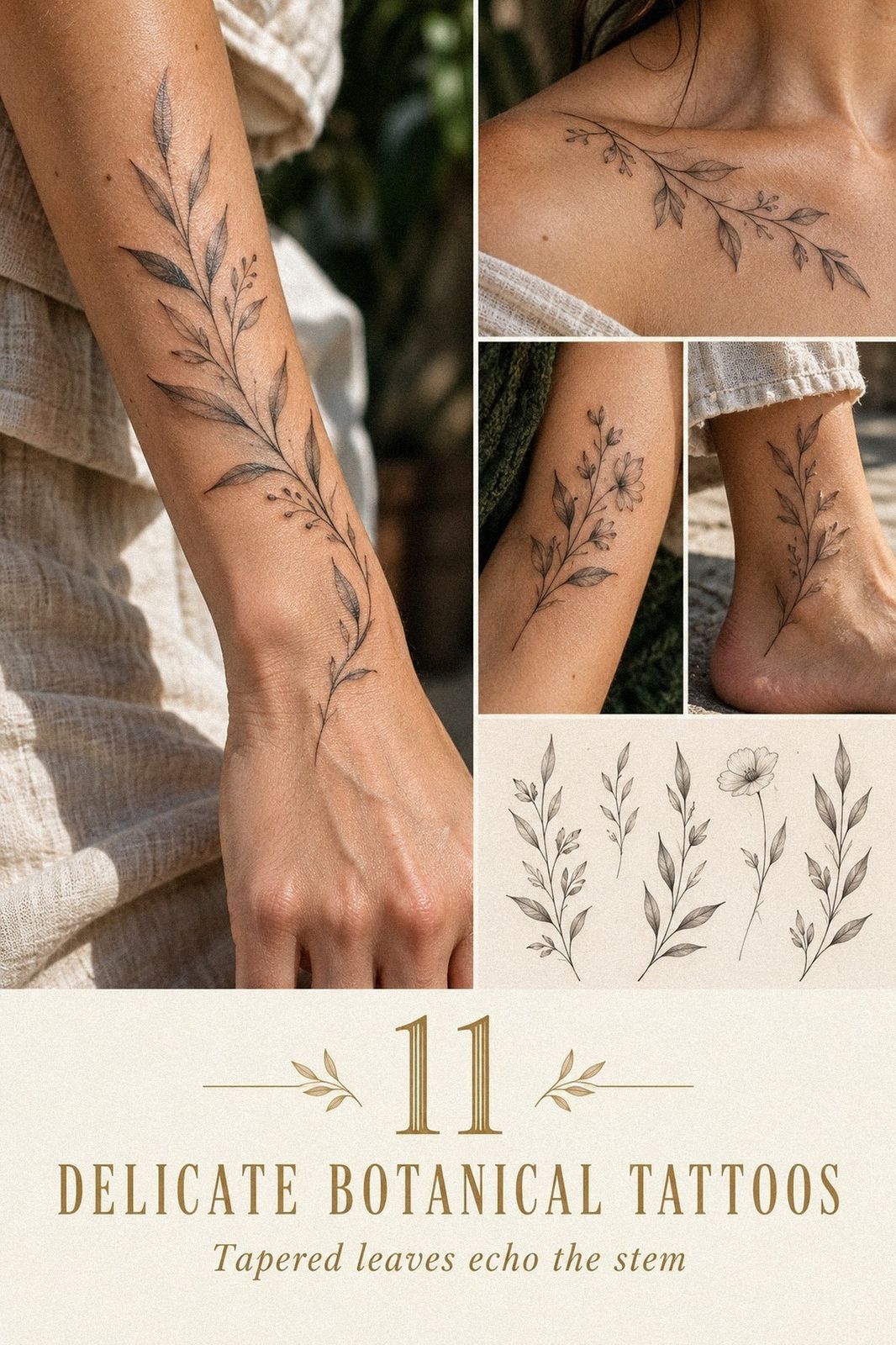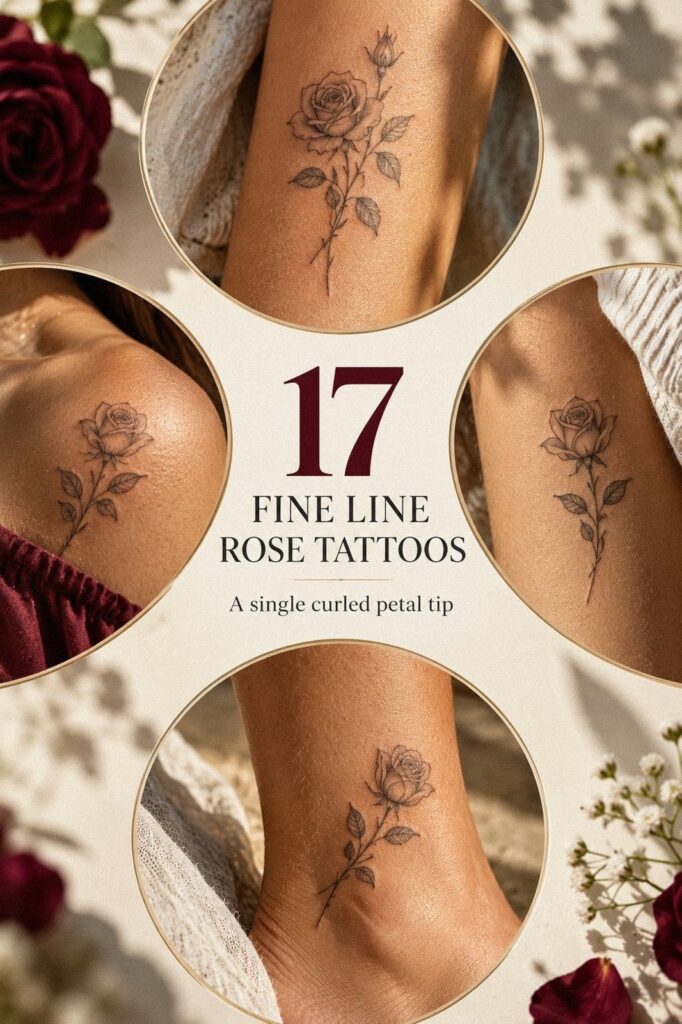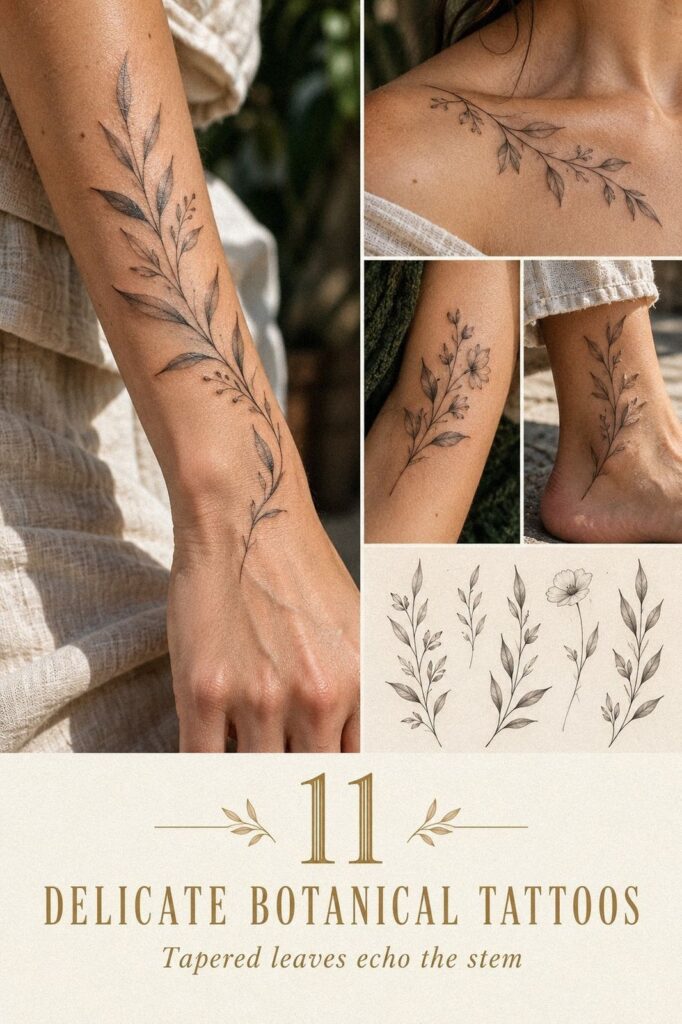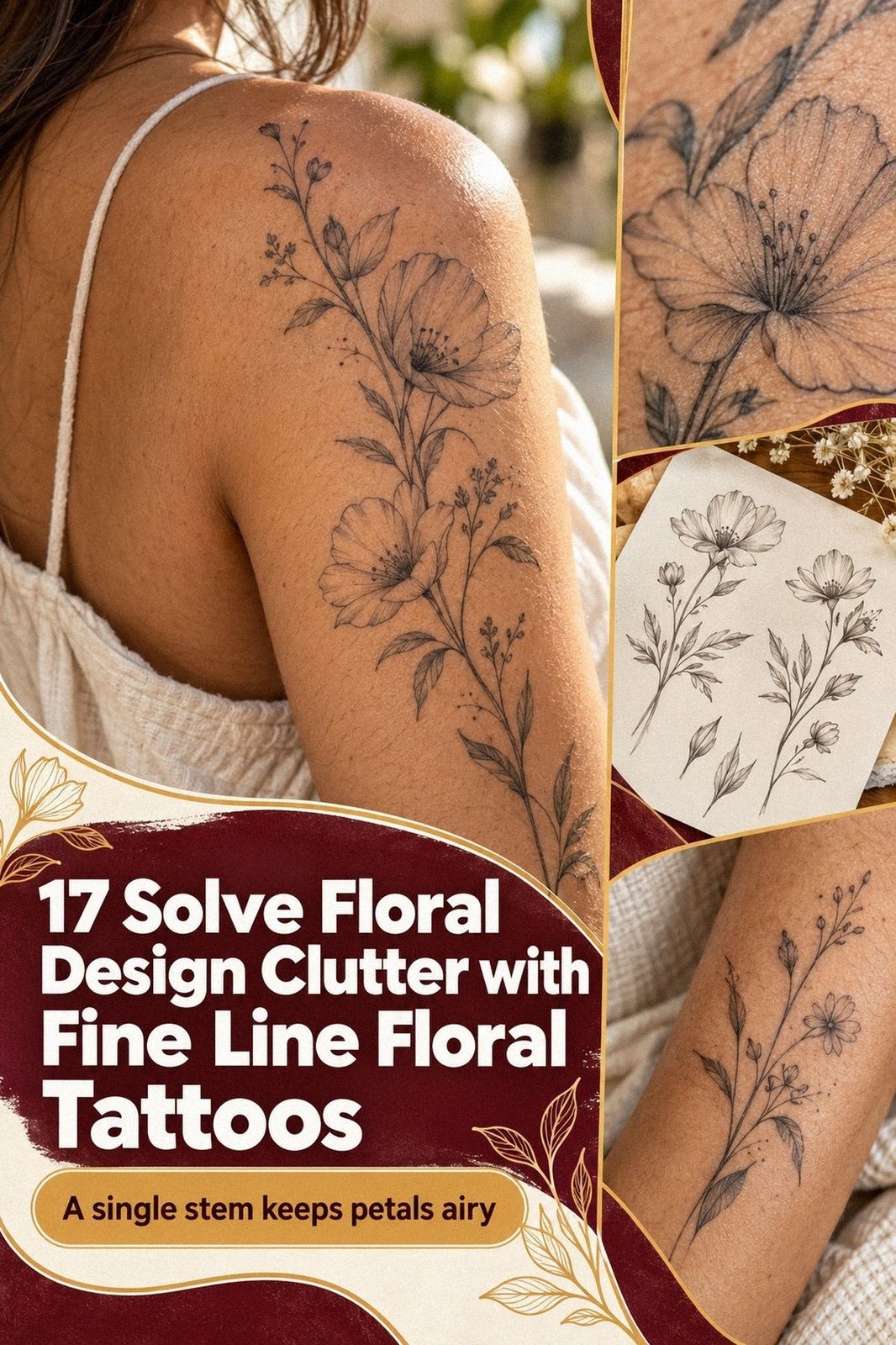
Fine line floral tattoos can stay crisp when the design, placement, and aftercare agree. I learned that after choosing a sprig that was too crowded for its size. You don’t need a giant piece to make it meaningful. You need clear spacing, a skilled artist, and a placement you’ll protect from constant sun. A carefully edited design can be worth the cost.
Start With the Silhouette
Before choosing a flower, look at the outer shape from a few feet away. A floral silhouette that reads clearly will usually age better than one packed with tiny petals, dots, and leaves.
I like to remove details before adding them. If the design still feels striking after one leaf disappears, you’re making a strong choice. If it collapses, the original idea may be too dependent on fragile detail.
Ask your artist to show the design at its actual size. A graceful screen image can become a dark cluster when reduced. The real-size stencil tells you more than a zoomed-in reference ever will.
Choose an Artist Before You Choose a Flower
A fine line tattoo artist should show fresh work and healed work in the same style. Look for healed portfolio examples where stems remain readable and small flowers still have separation.
You’ll also want to ask about the artist’s process, studio hygiene, stencil adjustments, and aftercare advice. A low quote isn’t automatically good value if the design needs an early correction.
I’d rather pay a fair price for careful placement than save money on a rushed session. The right artist can simplify your idea without stripping away its personal meaning. A useful rule!
Small Fine Line Floral Tattoos on the Wrist
A small wildflower sprig on the wrist looks delicate, personal, and easy to keep discreet when you need to. Ask for one fine stem, two or three open blooms, and enough breathing space between the petals. Muted terracotta and olive tattoo ink keeps the design distinctive, while a tiny dot of shading adds depth without making the image heavy.
Your wrist moves constantly, so you shouldn’t crowd the design with several flowers. I prefer a vertical sprig under 2 inches because it follows the natural length of the wrist instead of wrapping awkwardly.
The effect is understated but still expressive. That restraint matters!
The wrist placement is visible when you want to show it, but a sleeve or watch can hide part of it. Think about your work routine before deciding whether that flexibility matters.
The One-Stem Rule
I call this the One-Stem Rule: one clean stem should carry the whole idea. If you’re drawn to tiny fine line flower tattoo ideas, notice how the strongest designs leave open skin around each leaf. That negative space gives the flower its shape.
A wrist can be more sensitive than an upper arm, especially over the inner side where the skin is thinner. You’ll want to discuss visibility, sun exposure, and your daily routine before choosing the exact side. A watch or bracelet can rub the area while it heals, so plan around that.
Fine Line Floral Tattoos with Birth Flowers
A birth-flower sprig gives your tattoo a meaningful story without needing initials, dates, or a long quote. Choose one flower for yourself, or combine two small blooms for family members. Clay-toned fine line ink lets the shapes stay elegant, while tiny leaf details make the design feel personal rather than generic.
I wouldn’t force every birth flower into one narrow stem. Too many petals can blur together as the tattoo ages, and you won’t get the crisp look you’re after.
Choose the strongest silhouette first, then let the artist simplify the rest. Why crowd a meaningful design until none of the flowers can breathe?
Small Fine Line Floral Tattoos, With Meaning
Your artist can create a personal arrangement from the flower’s outline, not just copy a botanical drawing. A dainty violet, a narrow stem, or an open poppy can each carry a different feeling. If you’re comparing styles, this guide to small floral tattoos can help you decide how much detail you want.
Start with the birth-flower outline.
But symbolism shouldn’t replace good composition. Ask to see the stencil at its real size on your thigh or hip before the needle starts.
A design that looks intricate on a screen may read as a dark little cluster once it’s reduced. Keep the negative space visible, and your floral story will stay sharp.
The thigh usually gives you more skin area and tends to be more tolerable than ribs, feet, hands, or the sternum. You can choose a slightly longer sprig here, but you’ll still want a design that feels graceful when your body moves. A thigh placement can be a strong value if you want more detail without making the tattoo huge.
Botanical Fine Line Floral Tattoos Along the Rib
Rib tattoos can look haunting and flowing because the sprig follows the curve of the body. A botanical design with a narrow stem, pointed leaves, and two open flowers creates a crisp vertical rhythm. Muted plum-gray ink gives the piece a soft, expressive appearance, but the spacing matters more than the needle label.
The ribs are commonly considered one of the more painful placements, so you should be honest about your tolerance and session length. I wouldn’t start with a dense botanical wreath here.
It takes longer, adds repeated passes, and can make an already sensitive area harder to manage. A shorter session length may be worth prioritizing.
The Negative-Space Ladder
The Negative-Space Ladder is my name for spacing that widens as the design moves down the ribs. Your upper flower can be compact, the middle leaf slightly separated, and the lower stem more open. That pattern keeps the tattoo open and elegant instead of cramped.
You might bring a reference from delicate floral tattoos, but don’t ask an artist to reproduce someone else’s body placement exactly. Your rib curve, skin tone, and posture will change the final shape. The strongest version will be adjusted for your body placement.
Plan loose clothing for the appointment and gentle aftercare afterward. Surface healing commonly takes about 2 to 3 weeks, while complete healing can take about 2 to 3 months.
Avoid direct sun and swimming while the tattoo settles. The healing timeline should be part of your decision.
Fine Line Floral Tattoos Behind the Ear
Behind-the-ear floral tattoos are discreet, playful, and slightly edgy because the design appears only when your hair moves. A tiny wildflower with fine stems works better than a large bloom here. Deep navy linework gives the artist enough contrast to keep the petals readable without turning the piece bold.
Your artist will need to account for the curve behind the ear and the way hair can hide small details. I prefer a short diagonal sprig that points toward the neck instead of a horizontal row of flowers.
That shape follows the anatomy and looks less like a sticker. Hair movement becomes part of the design.
Why Does Placement Matter So Much Here?
Behind the ear can be sensitive, and the skin gets regular contact from hair, headphones, hats, and skincare products. You’ll want to mention those habits before choosing the exact position. If you wear glasses or over-ear headphones daily, leave a little extra distance from the headphone contact point.
A minimalist floral tattoo reference can help you show the level of restraint you like. Don’t choose an image only because it looks tiny online.
Ask your artist to print it at the proposed size, then check whether each leaf still reads. A printed reference can prevent an expensive surprise.
The result can be feminine, sharp, or quietly personal depending on the flower. Keep the stem clean, skip heavy shading, and let the placement provide the drama. A simple floral silhouette can feel more iconic than a busier version.
Can Fine Line Floral Tattoos Stay Discreet?
Yes, but discretion depends on scale, contrast, and where the tattoo sits. A small design behind the ear, along the rib, under the collarbone, or on the upper thigh can stay private in some settings and visible in others.
You should also consider clothing, work requirements, family expectations, and how often you want to explain the piece. A discreet tattoo isn’t automatically minimal. It can still be intricate, symbolic, and meaningful when the outline stays controlled.
If privacy is your main goal, avoid placing the most important detail on a spot that rubs constantly. The best discreet placement is one you can cover without irritating the healing skin.
Unique Fine Line Floral Tattoos with Wildflowers
A wildflower flash sheet gives you several starting points without locking you into a predictable rose or daisy. Look for a fine stem, uneven petals, and small leaves that feel hand-drawn. Emerald-and-gold ink accents can help you judge whether the design has enough contrast.
I like wildflowers because they can feel raw and romantic at the same time. You don’t need to choose the most ornate image on the page.
The strongest option is often a simple sprig with one unusual bloom, especially if the silhouette stays clear from a few feet away. A wildflower flash can be a starting point, not a final answer.
The Healed-Line Test
The Healed-Line Test is simple: imagine the thinnest line becoming slightly softer over time. If the design still reads after that change, it has enough structure. Very fine lines can widen as tattoos age, so your artist should avoid putting tiny details too close together.
Good ink rewards patience! Ask to see healed tattoo examples from the artist, not only fresh photographs. A fresh tattoo may look crisp because the skin is still raised and saturated.
You’ll learn more from healed work showing how the stems, petals, and dotwork settled.
For more small-scale references, browse unique fine line floral tattoos and mark the designs that still look readable without zooming. That is the standard your own idea should meet. Look for a readable silhouette.
A flash sheet can also become a personal piece. Change the flower, remove a leaf, or adjust the angle so the finished tattoo belongs to you. That small personal edit can make the difference between a generic choice and a meaningful one.
Fine Line Floral Tattoos Framing the Collarbone
A collarbone sprig can look powerful and graceful when it follows the natural line instead of sitting like a centered necklace. On deep ebony skin, a forest-green design with a restrained rust accent can create crisp contrast. Forest-green tattoo ink gives the artist a reliable anchor while the negative space keeps the floral shape delicate.
Your artist should consider how the design will look when your shoulder relaxes, not only when you stand perfectly straight. I wouldn’t place the largest bloom directly on the highest point of the collarbone.
It can look disconnected when your arm drops. Let the stem travel with the collarbone curve instead.
Fine Line Floral Tattoos Over Heavy Fill
Choose fine lines over heavy fill when you want the collarbone to remain visible and understated. A small leaf cluster can frame the shoulder without swallowing the anatomy. If you’re deciding between this and a darker ornamental piece, compare minimalist fine line flower tattoos first.
And don’t mistake a soft visual effect for weak tattooing. The design can be bold in meaning while staying delicate in construction.
Ask for clean outlines, measured spacing, and a stencil that follows your actual collarbone. This approach feels polished without looking overly planned.
Focus on the fine-line construction.
The collarbone may feel more sensitive than the upper arm, especially near the bone. You’ll want to discuss breaks before the appointment if the design takes longer than expected.
A calm pace usually produces better lines than rushing through discomfort. Confirm the appointment breaks in advance.
Minimal Fine Line Floral Tattoos on Fingers
Finger tattoos are minimal, visible, and expressive, but they need realistic expectations. A tiny wildflower on the side or top of a finger can look dainty and sharp at first. Charcoal micro-line ink with a dusty-rose accent creates the clearest result, while excessive detail can disappear quickly in such a small area.
Your hands face friction, washing, sunlight, and constant movement. I wouldn’t choose a complicated vine between the fingers if longevity is your top concern. Put the strongest part of the design on the top or side where the artist can work with a little more skin.
Consider hand friction before booking.
The Quiet Contrast Method
The Quiet Contrast Method pairs one crisp outline with one small area of solid fill. That gives your eye an anchor without turning the entire flower dark.
You can see a similar restrained approach in tiny floral tattoos, where the silhouette does most of the work. The Quiet Contrast Method keeps the mark sharp.
Finger tattoos may need a touch-up, and your artist should explain that before you book. This isn’t a flaw in your skin or the design.
It reflects how much the hands are used. Ask about the touch-up policy before you compare prices.
A finger flower can feel playful, romantic, or symbolic depending on the bloom. Keep your first version crisp and simple.
If you’re tempted to add three more flowers, wait until you’ve lived with the original. That restraint can protect your budget.
Fine Line Floral Tattoos with Fine Dotwork
Fine dotwork can give a floral tattoo a soft, textured finish without filling every petal. On the spine, a narrow stem with tiny dots around the leaves can look ethereal and refined. Black dotwork shading should support the flower’s shape, not compete with the outline.
The spine is a central placement, so symmetry and spacing matter. You don’t need the design to run perfectly straight, but you’ll want the artist to account for the natural curve of your back.
I prefer a slightly irregular botanical line because it feels organic rather than mechanically centered. Pay attention to the spine placement.
How Much Dotwork Can Your Design Carry?
Start with one dotwork zone, such as the center of a flower or the underside of a leaf. Too much stippling can turn fine lines muddy as the tattoo settles. If you’re gathering references, compare delicate fine line flower tattoos and focus on the distance between dots.
Keep the dotwork zone controlled.
Your artist may recommend a longer session for repeated dotwork, even when the tattoo looks small. A clean stencil, steady posture, and planned breaks will help.
The spine can be more sensitive than an arm or thigh, so you shouldn’t treat the session like a race. Good session planning protects the final result.
The finished effect can be intricate without becoming ornate. Let the dots fade into open skin, and the flower will keep its graceful shape.
Fine Line Floral Tattoos Inspired by Herbs
Herb-inspired tattoos feel personal because they connect the design to scent, cooking, gardens, or family memory. A rosemary stem, lavender branch, or basil sprig can look crisp on the sternum when the leaves are spaced carefully. Midnight-blue botanical ink with a copper accent keeps the image readable while the narrow shapes create a sleek vertical line.
The sternum is a bony, sensitive placement, so a small design is often the wiser starting point. I wouldn’t cover the entire center with dense leaves unless you already know how your body handles longer sessions.
One herb with a few open flowers can carry more meaning than a crowded bundle. Treat the sternum placement realistically.
The Herb Stem Principle
The Herb Stem Principle keeps each leaf attached to a visible central line. Your artist can vary leaf size slightly, but the structure should remain easy to follow.
That makes the design feel crisp and organic instead of like scattered marks. The central stem should remain obvious.
And if you want a softer version, choose gentle dot shading beneath only two leaves. You don’t need color to make the herb recognizable.
Discuss whether you want the stem to point upward, downward, or toward the heart, because direction changes the feeling. Limited leaf shading can be enough.
Look through small fine line flower tattoo references before your appointment, then bring the actual herb or a clear botanical photograph. A reference with the right silhouette will help more than a heavily edited tattoo image. A botanical photograph can reveal useful structure.
The result can be sacred, personal, and understated. Keep the central stem visible, and the idea will survive even if the finest leaf detail softens.
Fine Line Floral Tattoos Across the Shoulder
A shoulder tattoo gives you more skin to show the difference between a fresh stencil and healed linework. A clean split reference can show the same floral design on paper and on healed skin. Healed sage-green ink is what you should judge, because fresh work often looks darker and sharper than it will later.
A wildflower sprig across the shoulder can follow the curve toward the upper arm. You don’t need to wrap it all the way around.
I prefer a design that starts near the shoulder cap and ends before the back, leaving the stem visible when your arm rests naturally. Follow the shoulder curve.
Fresh Lines Over Crowded Detail
Choose fresh, clear lines over crowded detail when you want the tattoo to age with grace. The shoulder gets movement and sun exposure, but it generally offers more skin than fingers or behind the ear.
Ask your artist to keep the smallest leaves separated. That difference matters!
And bring questions about aftercare before the appointment, not while you’re standing at the studio. You’ll usually need gentle washing, light moisturizing, and protection from sun and swimming while the surface heals. Give the design time before judging whether it needs any adjustment.
Confirm the aftercare plan.
If you’re comparing broader placements, fine line floral tattoo ideas can help you see how different stems behave on the upper arm and shoulder. Your body will still need a custom stencil. Request a custom stencil before the needle starts.
A shoulder floral tattoo can be expressive without demanding attention every second. That balance is what makes the placement so wearable.
Symbolic Fine Line Floral Tattoos with Vines
A vine gives a floral tattoo movement, symbolism, and a graceful path across the collarbone. On deep brown skin with a warm undertone, crisp terracotta-and-olive linework can create a striking contrast. Terracotta-and-olive tattoo ink should be limited to the main stem or one central bloom.
Your vine can represent growth, family, resilience, or a private turning point. I wouldn’t add a symbol to every leaf.
One meaningful detail, such as a small star or initial hidden near the stem, will feel more personal than a crowded collection of icons. Choose one meaningful symbol.
The Meaningful Pause
The Meaningful Pause is the open section between two vine turns. It gives your eye a place to rest and prevents the design from becoming a continuous dark loop.
You can ask your artist to leave that pause near the center of the collarbone. This open pause gives the vine its rhythm.
A minimalist floral tattoos guide can help you compare open vines with denser botanical designs. But your artist should still draw the final stencil for your anatomy.
A vine that looks elegant on a flat reference may need a sharper curve on your body. Trust the final stencil.
The collarbone may be more sensitive than your upper arm, and you’ll want to think about clothing friction during healing. Choose soft fabric, avoid direct sun, and follow the studio’s aftercare instructions.
The final piece can be feminine, masculine, or entirely personal depending on the flower and line weight. Plan for clothing friction.
Fresh Lines Versus Healed Work
Fresh tattoos can look darker, sharper, and more saturated than healed tattoos. That doesn’t mean the healed result is a failure. It means you need to judge the design by its structure, not by the dramatic first-day contrast.
Ask to see healed examples photographed in ordinary light. Look for readable stems, separated petals, and details that haven’t merged into one mark. The fresh tattoo is only one stage of the decision.
UV exposure, friction, skin movement, and placement all affect how a piece settles. Your artist can’t freeze the lines in place forever, but a strong silhouette gives the tattoo a better chance. Consider the likely UV exposure before choosing a highly exposed spot.
A portfolio with consistent healed work is often worth a higher quote. You’re paying for judgment, not just minutes under the needle. Review the healed portfolio before deciding whether the price is worth it.
My Rule for Fine Line Floral Tattoos
I used to think the smallest floral tattoo would be the easiest choice. Then I saw how quickly a crowded design loses its identity when the petals, leaves, and stems are all competing for the same few millimeters. My opinion changed: the best fine line floral tattoos aren’t the ones with the most detail.
They’re the ones with the clearest decision behind them. Crisp linework matters, but editing matters more.
I now look at three things before I approve a sketch. First, can I recognize the flower from a short distance?
Second, does every tiny mark have enough open skin around it? Third, would the design still feel meaningful if the finest line softened over time? If the answer is no, I’d remove detail before I enlarged the tattoo.
That’s my design test.
Your placement should support that decision. A wrist or finger keeps the idea visible and compact, while a thigh or shoulder gives you more space for botanical structure.
Ribs, feet, hands, and sternum placements may feel more painful, while the forearm, thigh, and shoulder are often more tolerable. The right choice depends on your body and your daily habits.
Make the placement choice deliberately.
I also won’t promise that fine line work stays frozen forever. Lines can widen, and UV exposure can soften contrast.
That’s why I prefer solid black anchors, open spacing, and a clear silhouette. Protect the tattoo after healing, and choose an artist with healed examples in the same style.
Save the reference that still looks good when you stop zooming in. That is usually the one worth booking.
Solid black anchors give the design structure.
What Should a Fine Line Floral Tattoo Cost?
A fine line floral tattoo can cost about 100 to 300 dollars in the US, depending on the artist, region, size, and placement. A boutique minimum may be about 50 to 100 dollars, while hourly rates often run about 100 to 250 dollars. An artist’s minimum can matter more than the size of a tiny tattoo.
The cheapest quote isn’t always the best value. Ask what the price includes, whether a consultation is separate, and whether a touch-up policy exists. A clear hourly rate helps you compare artists honestly.
If your budget is limited, simplify the flower before choosing an inexperienced artist. Fewer leaves, less dotwork, and a shorter session can reduce the cost while preserving the meaning. A realistic tattoo budget is better than asking for too much detail and cutting corners later.
The Questions Worth Answering First
How much does a fine line floral tattoo usually cost?
A fine line floral tattoo usually costs about 100 to 300 dollars in the US, depending on the artist, region, size, and placement. A boutique minimum may be about 50 to 100 dollars, while hourly rates often run about 100 to 250 dollars. A clear budget helps you choose detail wisely.
Are fine line floral tattoos a good idea for a first tattoo?
Yes, they can be a strong first tattoo when you choose a clear design and a placement you can tolerate. A personal flower gives the piece meaning, while simple lines make the idea easy to understand. Start with a skilled artist, not the lowest quote.
How do I choose a tattoo artist for fine line floral tattoos?
Review a portfolio for clean linework, healed photographs, and floral designs that still read after settling. Ask about studio hygiene, stencil adjustments, and aftercare. You don’t need to buy a product through an artist, so there’s no affiliate disclosure involved.
Healed examples are the most useful proof.
How much do fine line floral tattoos hurt?
Pain varies by person and placement. Ribs, feet, hands, and the sternum are commonly more painful, while the forearm, thigh, and shoulder are often more tolerable. Placement comfort can matter more than design size, so tell your artist if you need breaks.
How long does a fine line floral tattoo take to heal?
The surface usually takes about 2 to 3 weeks to heal, while complete healing can take about 2 to 3 months. Wash gently, moisturize as directed, avoid picking, and stay away from direct sun and swimming during early healing. Simple aftercare protects the final lines.
What’s the best placement for fine line floral tattoos?
The forearm, thigh, and shoulder are often more tolerable and give the artist space for clean spacing. Fingers, feet, ribs, and sternum can be more sensitive and may experience more friction or fading. Your daily routine should guide the placement as much as visibility.
Which color works best for fine line floral tattoos in 2026?
Black remains the most reliable choice for crisp fine line floral tattoos, especially when the design is small. A restrained accent color can be meaningful, but it may soften differently over time. Solid black anchors usually give the tattoo stronger structure as the finer details settle.
Where I’d Start First
If I had to pick one, I’d start with the small wrist wildflower sprig. It stays discreet, reads clearly at under 2 inches, and doesn’t need dense shading to feel personal.
Pin that idea for later and compare it with our tiny floral tattoo guide before booking. A wrist wildflower sprig offers a strong balance of value, visibility, and meaning.