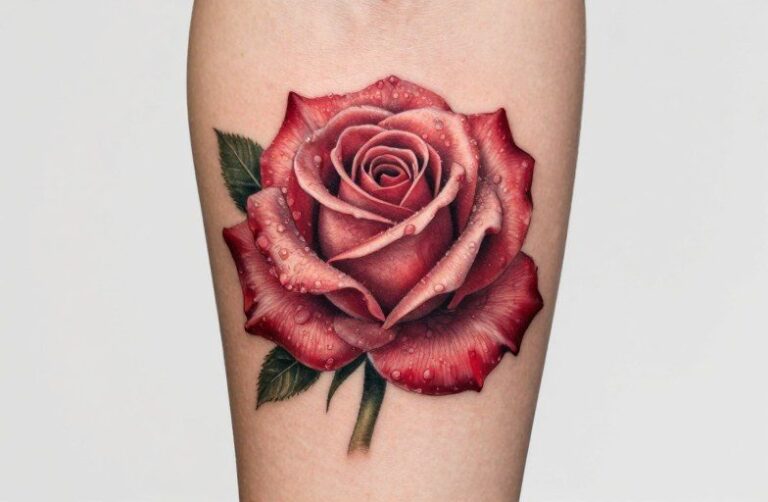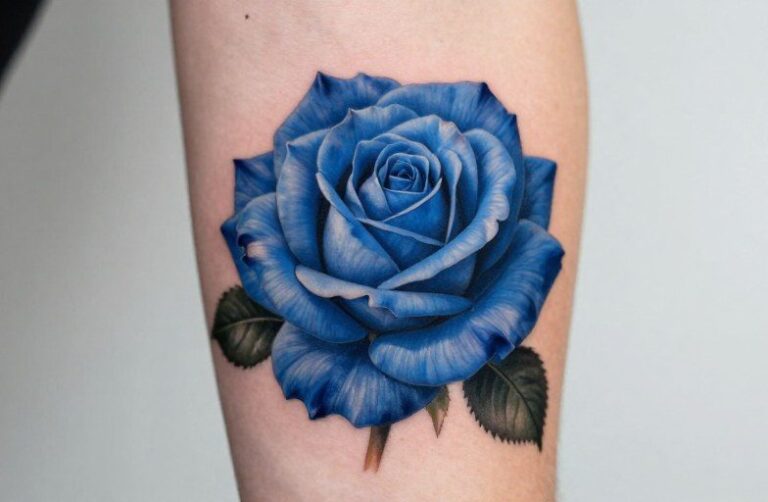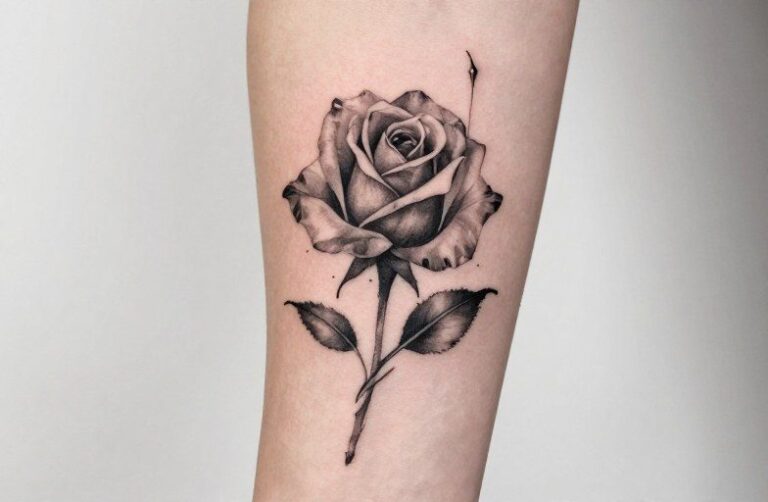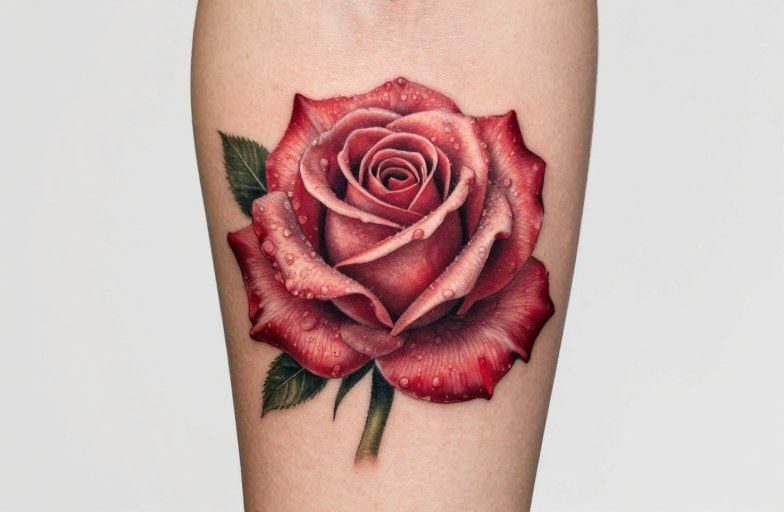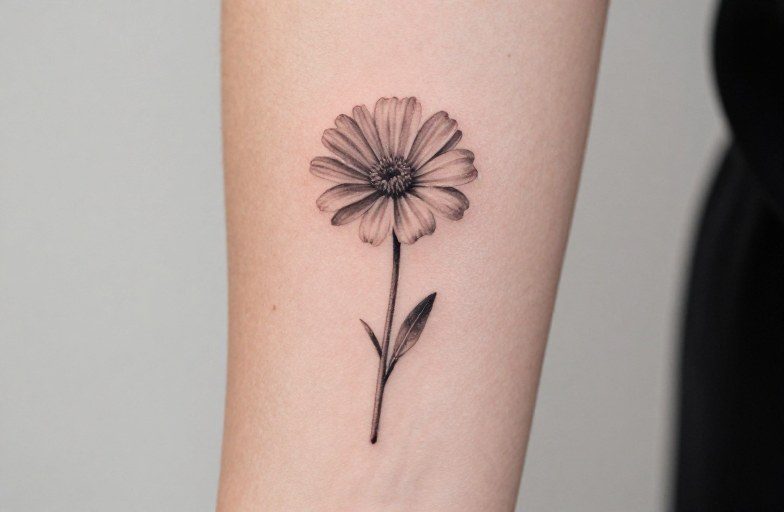
A red rose tattoo most commonly signals romantic love, but the full picture includes loss, courage, and the warning that beauty carries its own defenses. The thorns matter as much as the petals. On skin, this design has been popular across generations not because it’s simple, but because it holds tension, desire and danger, bloom and decay.
Design Tips & Pairings
Placement changes everything with a red rose. On the forearm, the natural curve of the muscle shapes the stem; on the ribs, the design competes with body contours and breathing movement. The upper outer arm and thigh give the most stable canvas for detail that lasts.
Color vs. Black and Grey
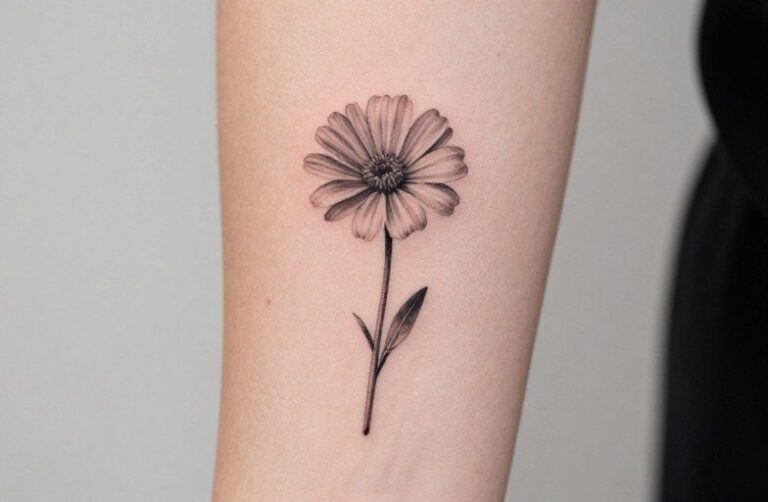
True red demands saturation. A well-saturated red rose on light skin stays vivid for five to eight years before noticeable muting. On darker skin tones, the same red can shift toward brown or purple as it settles. Some artists build red from a magenta base rather than straight fire-engine pigment, which ages more predictably. Black and grey roses with red accents, just the petals’ edge, a single drop, often read more clearly over decades than full color fields.
Common Pairings That Work
- Daggers: The classic “beauty and pain” pairing. The blade’s straight line contrasts the rose’s organic curves.
- Clocks or pocket watches: Time and impermanence. The rose softens the mechanical element.
- Script or banners: Names, dates, short phrases. Best placed below or above the bloom, not across it, to preserve readability as the tattoo ages.
- Skulls: Memento mori tradition. The red rose against bone creates immediate visual hierarchy.
- Bees or butterflies: Life cycles, pollination, transformation. These work best at smaller scales.
Negative space matters. A rose without background leaves room for the skin to breathe; heavy black backing behind the bloom makes the red pop initially but can swallow detail as the black spreads slightly over years.
Common Variations & Styles
Not all red roses look the same, and the style choice carries as much weight as the symbol itself.
Traditional American
Bold outlines, limited color palette, heavy black shading. The rose reads instantly from across a room. Traditional roses age exceptionally well because the thick lines hold and the simple color blocks don’t depend on subtle gradients. Expect slight line spread; the design accounts for it.
Realism and Neo-Traditional
Realist roses attempt photographic depth, petal translucency, dewdrops, stem texture. These require larger size to hold detail; a palm-sized realist rose loses its center definition within a few years. Neo-traditional splits the difference: stylized shapes with more color range than traditional, but still built for longevity.
Single Needle and Fine Line
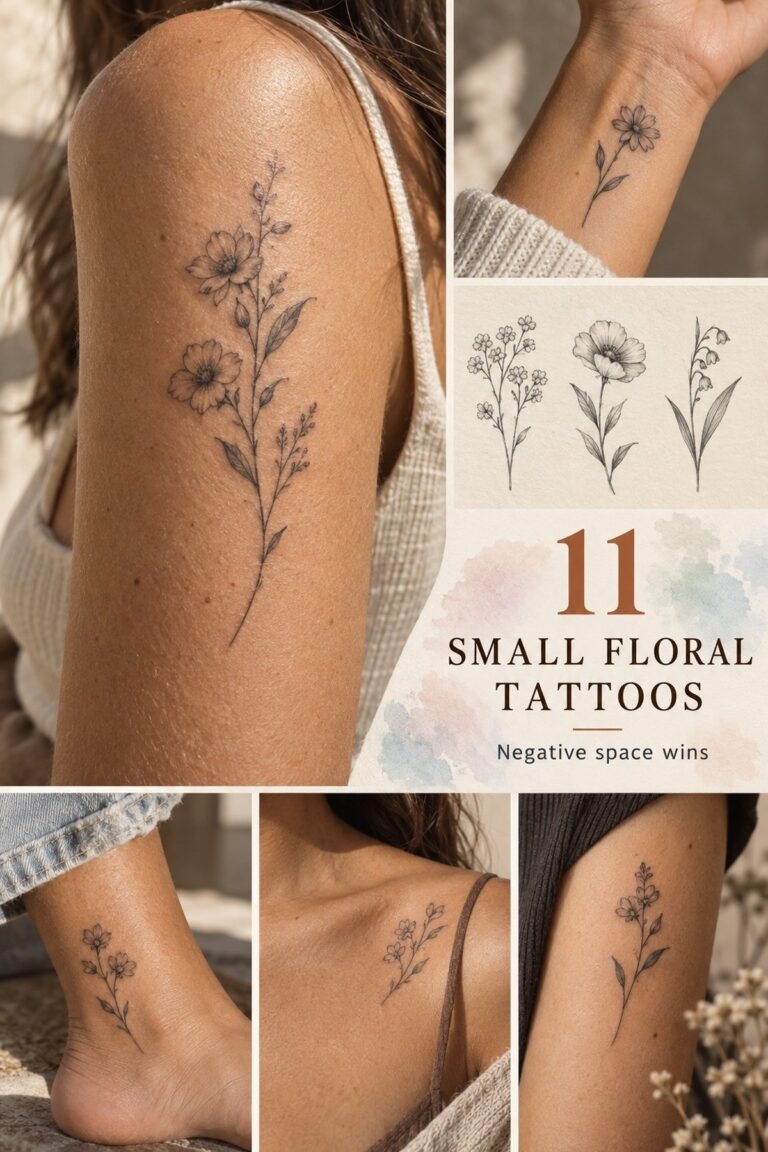
Delicate, sketch-like roses have dominated recent years. The risk is real: fine lines in red pigment fade faster than black, and the lack of bold outline means the shape can blur into a pinkish blob. For a fine line red rose, expect touch-ups and accept that it will soften significantly. Some clients choose this intentionally, the faded quality becomes part of the aesthetic.
Japanese (Irezumi)
Red roses appear in Japanese-inspired work, though peonies and chrysanthemums are more traditional. The rose adapts well to the flowing composition, wind bars, and background elements. The color approach differs: flatter, more decorative, less concerned with botanical accuracy.
Religious & Spiritual Angles
The red rose carries specific weight in several spiritual traditions, often linked to the Virgin Mary in Catholic imagery, the “rosa mystica.” In this context, the flower represents purity and divine love made physical. The rosary, named for the rose garden, connects prayer to the flower’s form.
In some esoteric traditions, the red rose symbolizes the heart chakra, passion balanced with compassion. The five petals correspond to the pentagram in certain pagan associations. Alchemically, the rose often linked to the completion of the “great work”, the red stage following the white, sulfur after mercury.
These layers mean a red rose can function as quiet spiritual marker without explicit religious iconography. The wearer knows; the viewer sees a flower.
Who Chooses This Tattoo
Demographics here are genuinely broad, which makes the red rose a useful case study in how symbols get personalized.
First Tattoos and Memorial Pieces
The red rose remains a common first choice for its familiarity and the safety of its meaning. Someone getting their first tattoo often wants recognizable symbolism. Simultaneously, roses dominate memorial work, parents, partners, siblings marked with a birth month flower or simply a bloom that held significance for the person lost. The same design serves opposite poles: beginning and ending.
Cover-Ups and Transitions
The red rose’s density and color saturation make it practical for covering older tattoos. A skilled artist can build dark greens and deep reds over faded ink. This functional use has created a secondary population of rose wearers: people who didn’t choose the flower for its meaning but accepted it as the path forward from a design they outgrew.
How It Ages on Skin
This section matters because red pigment behaves differently than black.
Red Fading and Color Shifts
Red tattoo pigment is generally iron oxide-based or organic. Iron oxides are stable but can shift toward brown or rust. Organic reds (naphthol, for example) stay brighter longer but have a slightly higher reaction rate in sensitive individuals. On sun-exposed skin, hands, forearms, upper chest, red fades faster than protected areas. Sunscreen extends vibrancy significantly; without it, expect noticeable muting in three to five years on high-exposure placements.
Line Spread and Detail Loss
A rose built from many fine lines and subtle shading will lose its internal structure. The center of the bloom, where petals overlap densely, becomes a solid mass. Artists compensate by exaggerating contrast during application, darker darks, cleaner separations between petal layers than nature requires. What looks slightly harsh when fresh settles into readable contrast over time.
White highlights, often added to suggest petal sheen, almost always disappear within two years. Some artists now skip white entirely in favor of skin-tone negative space, which lasts.
Mythology & Folklore
Greek mythology often links the red rose to Aphrodite, with the flower springing from her tears and the blood of her lover Adonis. The Roman parallel with Venus carries similar associations. In these stories, the red color itself is born from grief as much as love, an origin that complicates the flower’s purely romantic reading.
Some trace the rose’s symbolic duality to Persian poetry, where the nightingale’s love for the rose becomes a metaphor for divine longing and the pain of earthly beauty. The thorn isn’t an accident; it’s essential to the metaphor.
Celtic folklore treated the wild rose as protective, planted near doorways to ward off ill intent. This practical magic sits oddly against the flower’s modern romantic use, suggesting how symbols accumulate rather than replace meanings.
The War of the Roses in 15th-century England used red and white roses as faction markers, politicizing the flower entirely. A red rose tattoo carries none of this context for most modern wearers, but the historical layering explains why the symbol feels heavier than a simple flower should.
Before You Decide
A red rose tattoo works best when you push past the default. Ask what specific red, what specific rose, what specific thorn arrangement. A tea rose reads differently than a wild dog rose. A bud, half-open, full bloom, or shedding petals each stages a different moment.
Consider the long game: this design will likely need refreshment if you want it to stay legible as a rose rather than a red shape. Budget for that. Discuss with your artist how they’ll build the center of the bloom to hold, which reds they prefer for your skin tone, and whether the design accounts for the natural stretch of your chosen placement.
The red rose doesn’t need your personal story to justify it. The symbol has done centuries of cultural work. Your job is to make the specific version on your skin feel considered rather than grabbed from flash.
Frequently Asked Questions
Does a red rose tattoo always mean romance?
No. While love is the most common reading, red roses also mark memorials, signify courage through pain, or serve as spiritual symbols in Catholic and pagan contexts. The thorn element specifically complicates a purely romantic interpretation.
Why does my red rose look pink after healing?
Red pigment often settles lighter during the healing process as the top layer of skin sheds. True color reveals at four to six weeks. If it stays pink, the saturation was likely too light or the pigment diluted more than intended during application.
What’s the best size for a red rose tattoo?
For traditional styles, palm-sized or larger holds well. Realist or detailed work needs more space, think soda can or bigger, to preserve petal definition. Fine line roses can work smaller but expect faster fading and less readable detail over time.
Can a red rose cover a black tattoo?
Partially. Red over solid black won’t show true color; the black dominates. However, roses incorporate dark greens and deep reds that can work around or partially over older blackwork. A skilled cover-up artist redesigns the rose to strategically use those darker areas.