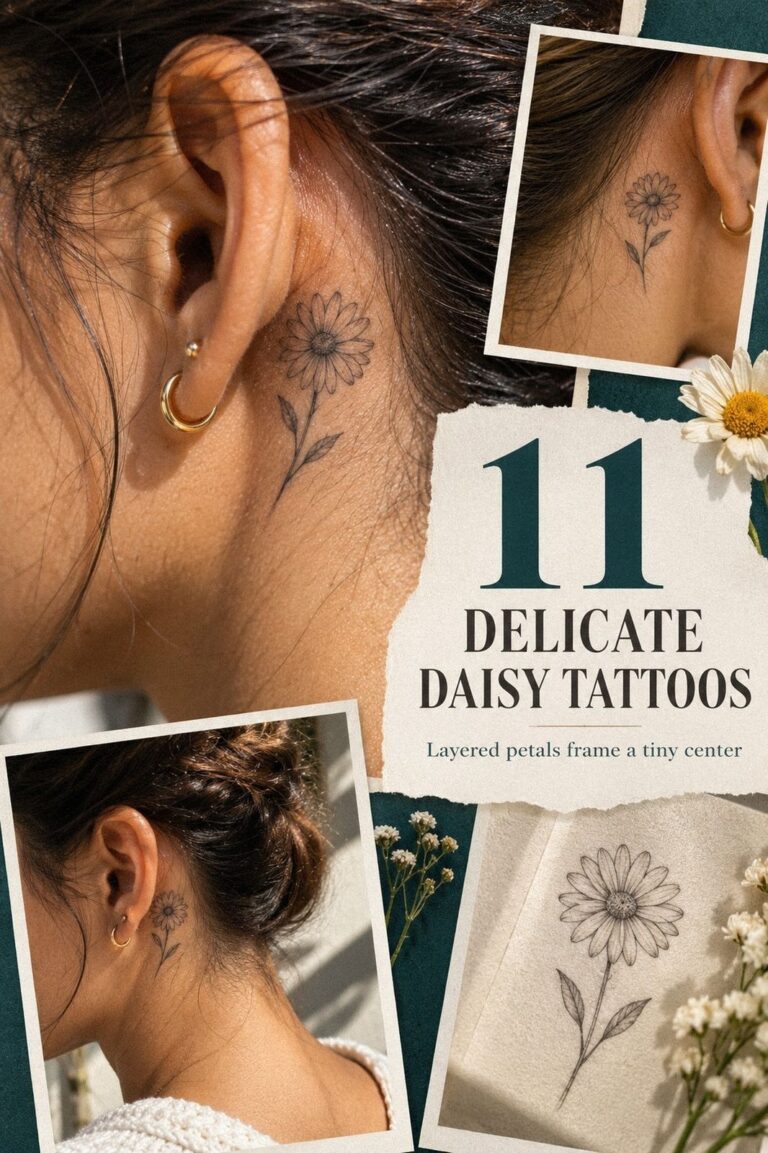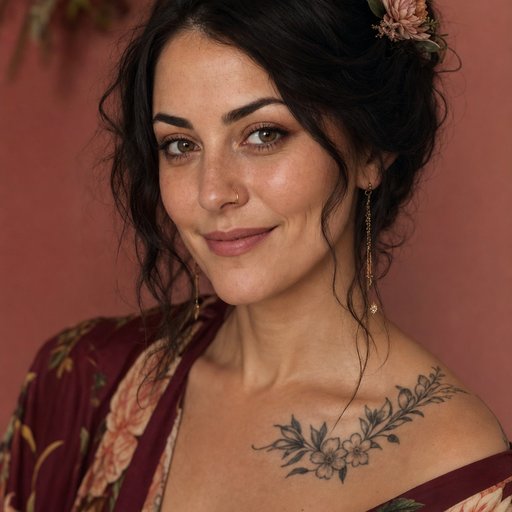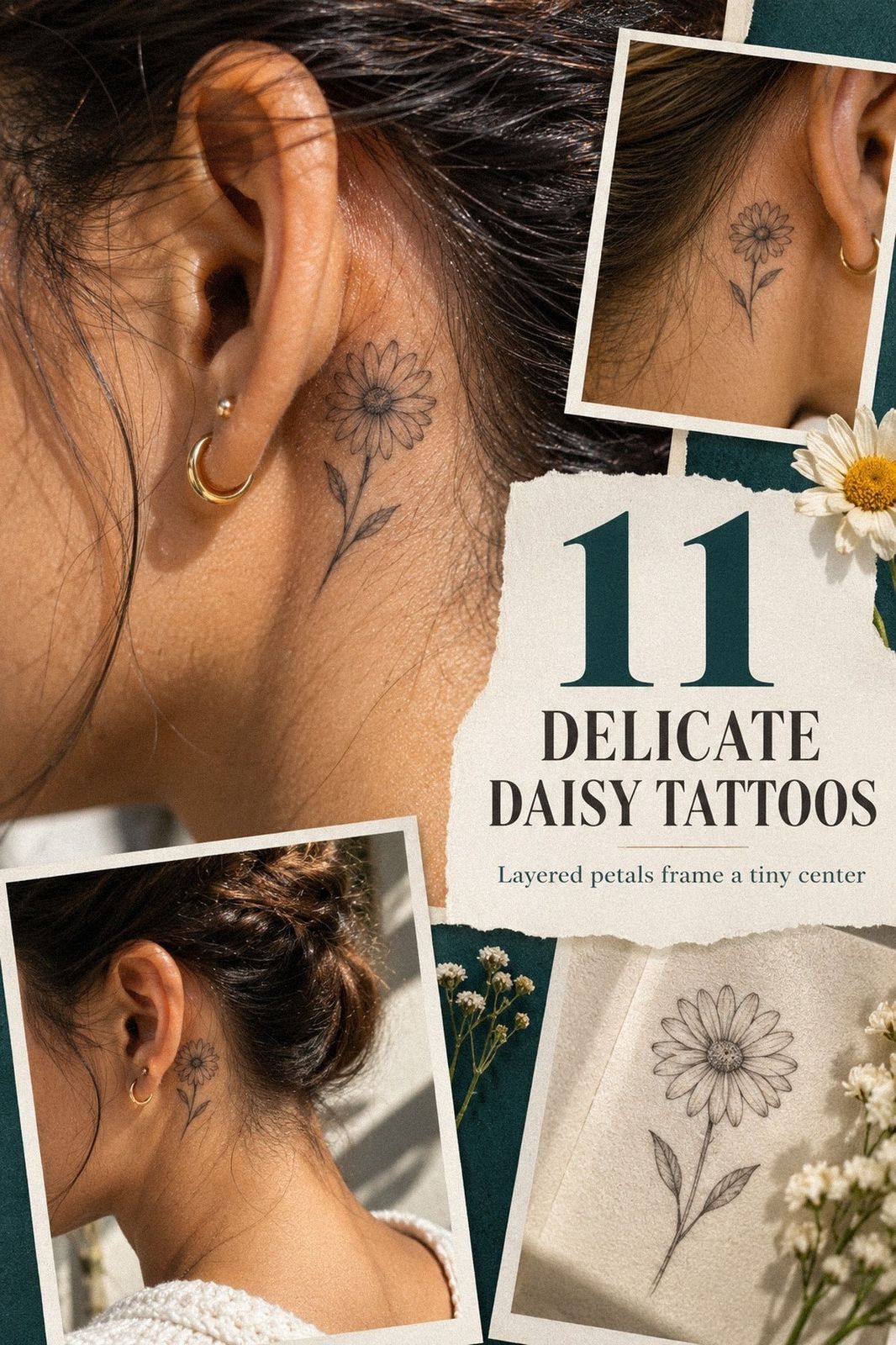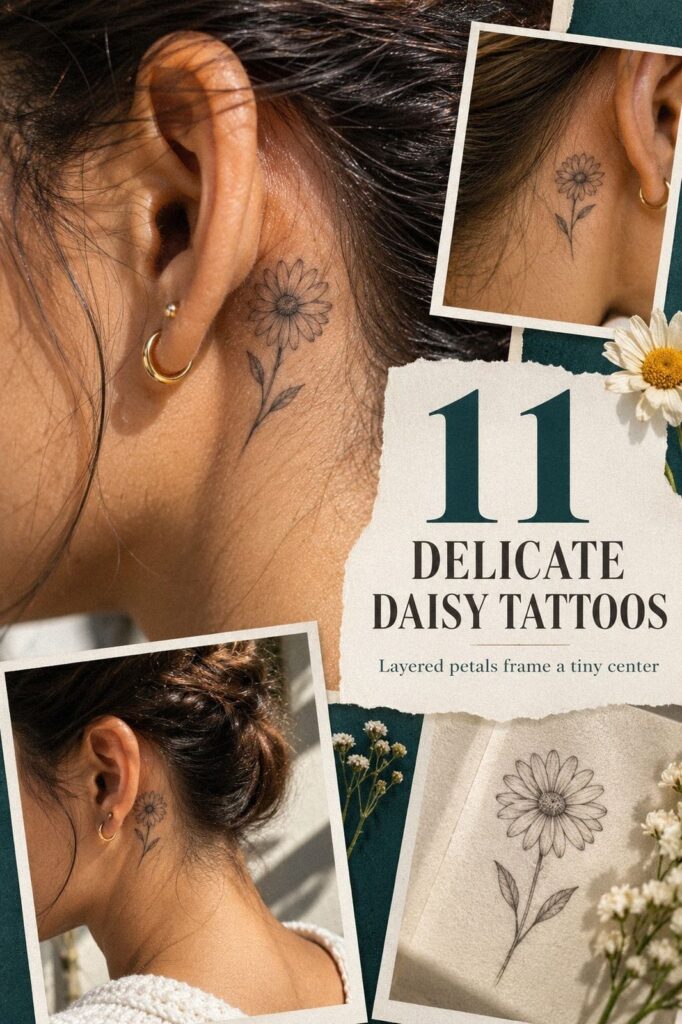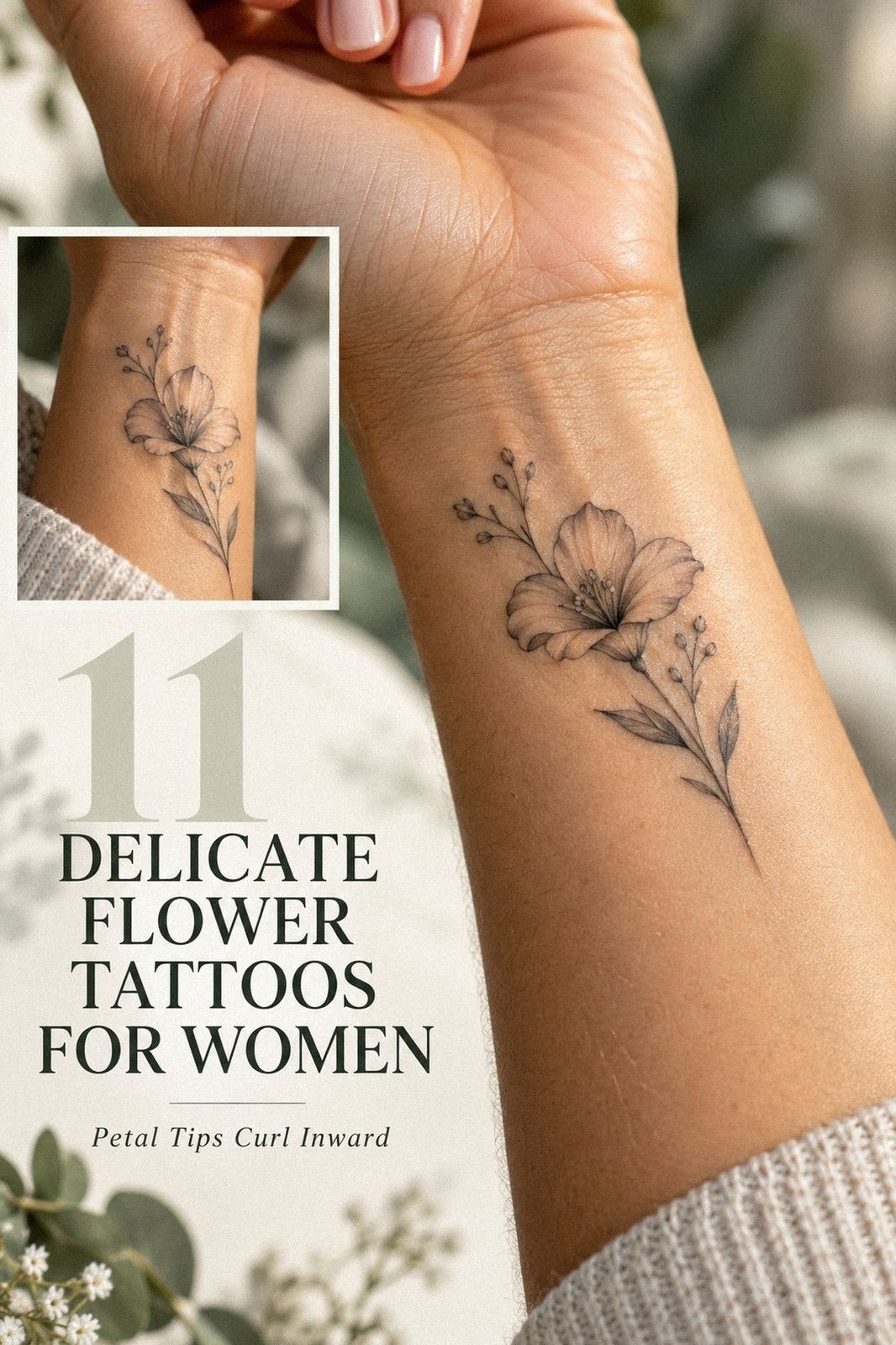
Yes, a delicate flower tattoo for women can make first ink feel simpler when the design, placement, and line weight work together. I learned that after choosing a pretty sketch that was too detailed for its size. These ideas keep the symbolism personal, the shapes readable, and the aftercare manageable. Start thoughtfully!
Editor’s note: My one rule is simple: choose the flower you’d still recognize if every tiny detail softened slightly. That usually gives you better long-term value than chasing the smallest possible design.
- Start with a Small Delicate Flower Tattoo on the Wrist
- Why Choose a Fine Line Wildflower Bouquet Along the Forearm?
- The Birth Flower Behind the Ear
- Compare Watercolor Petals Across the Shoulder Blade
- Follow the Botanical Flower Stem Down the Spine
- Choose Meaningful Lotus Linework on the Ankle
- Can a Unique Floral Finger Tattoo Hold Crisp Detail?
- Let the Dainty Rose Follow the Collarbone
- Where Should a Feminine Flower Constellation Go?
- Make a Fine Dotwork Daisy Cluster on the Hip
- Match Delicate Flower Tattoos for Sisters
1Start with a Small Delicate Flower Tattoo on the Wrist
A wrist flower works best when the stem stays clean and the petals have enough space to read. This single-stem fine line design feels personal without demanding attention. It’s minimal, graceful, and quietly meaningful.
I call this the One-Stem Rule: one main flower, one curved stem, and only a few leaves. You’ll get a more timeless result than you would from squeezing several flowers into the same area. If you’re comparing scale ideas, our guide to small flower tattoo for women can help you judge the balance and budget.
Ask your artist to show healed examples, not only fresh work. Fresh black ink looks crisp and sharp, while healed lines may soften slightly. Your wrist gets regular sun exposure, so you’ll want sunscreen once the surface has fully healed.
The placement is visible, but it doesn’t have to feel loud. A slightly inward-facing stem gives you a private view during the day, while a side-facing flower reads more clearly to other people. I’d skip heavy shading here because the wrist rewards understated work.
Would you still love the design if the petals softened a little over time? If your answer is yes, you’ve found a powerful first-tattoo test.
The small scale feels dainty, but the symbolism can stay bold. That is powerful!
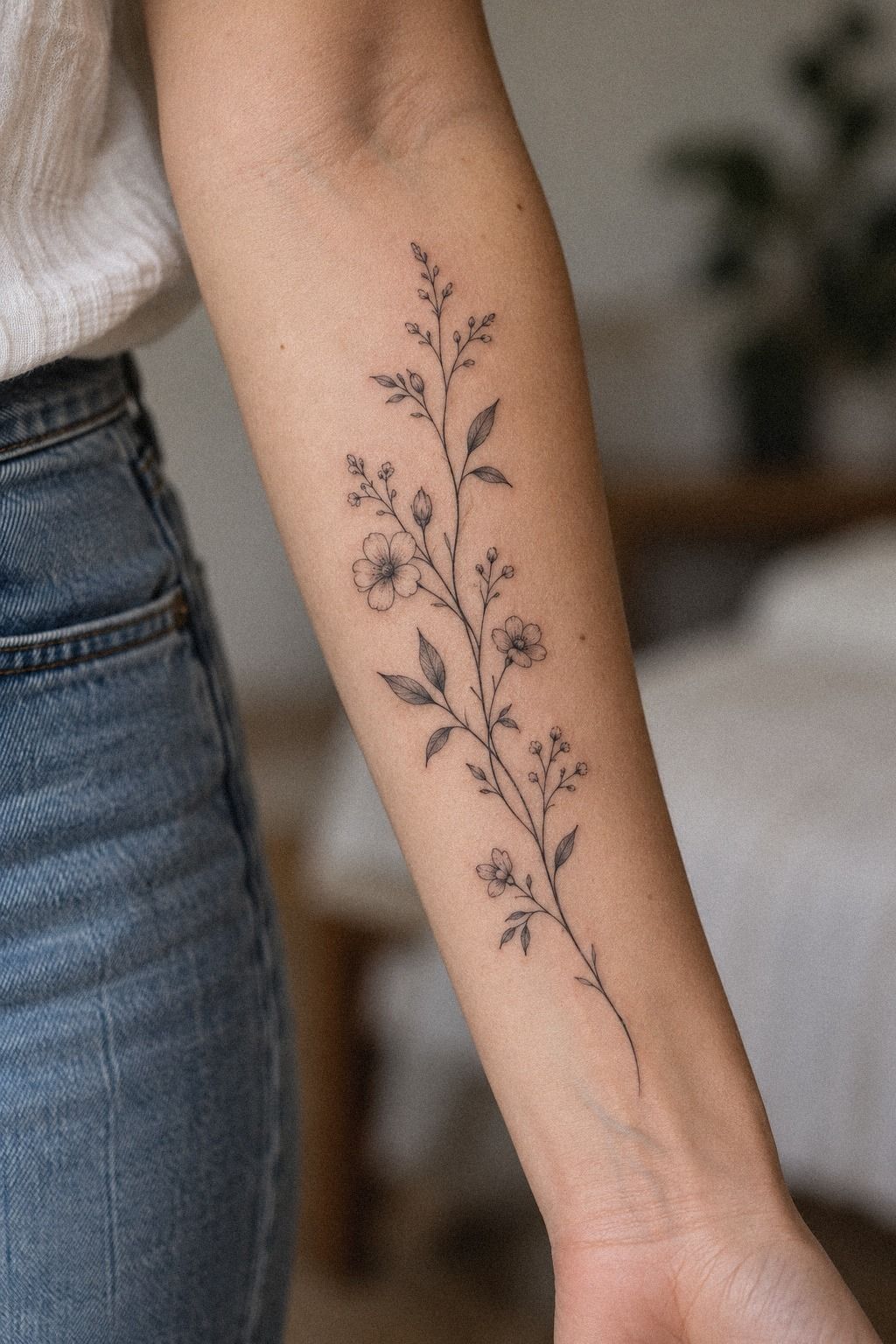
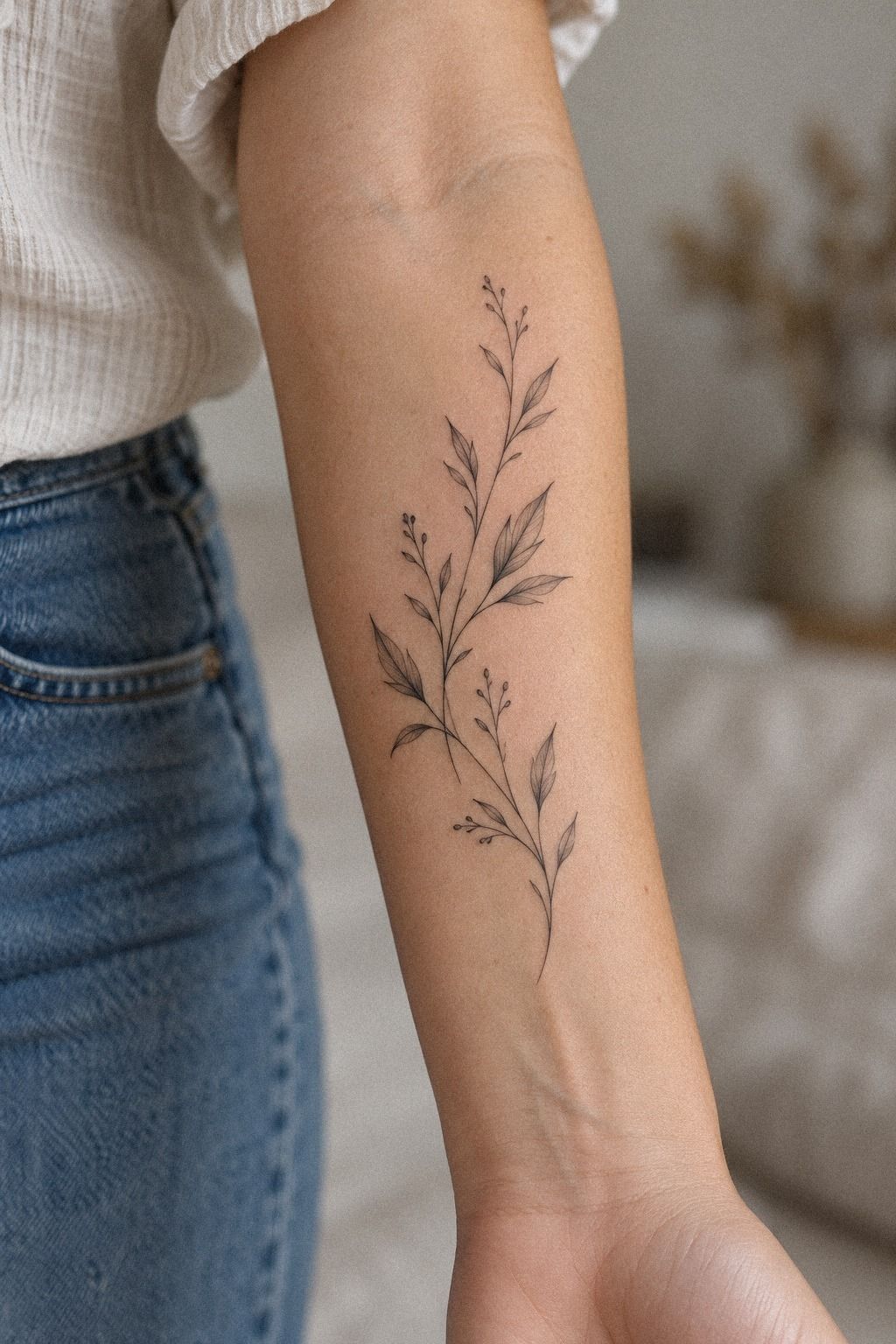
2Why Choose a Fine Line Wildflower Bouquet Along the Forearm?

A forearm bouquet gives you enough skin area for an intricate arrangement without losing the light quality of fine line work. Keep the stems separated and let each flower retain its own shape.
3The Birth Flower Behind the Ear
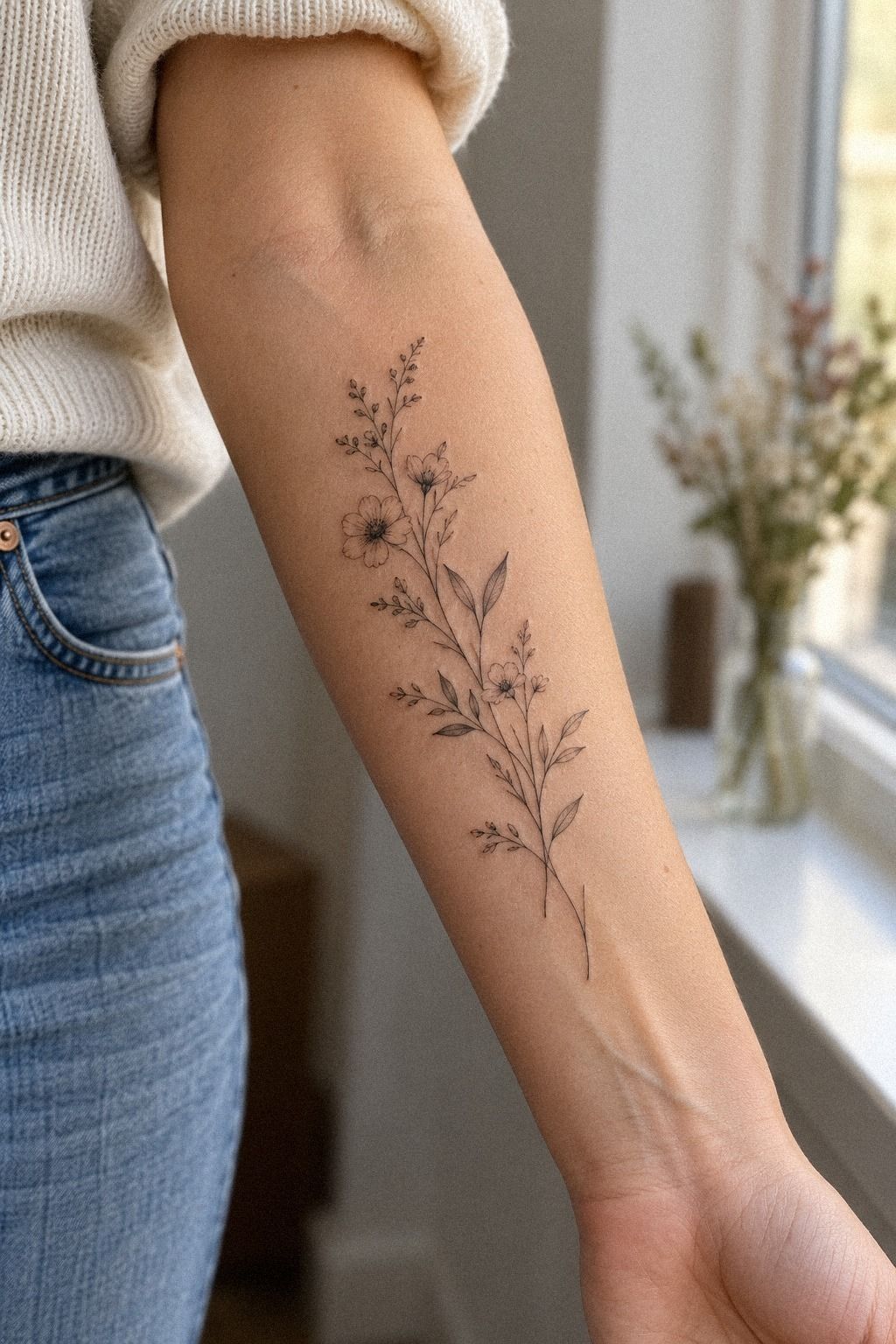
A birth flower behind the ear is small, personal, and easy to keep private when you want to. The tiny botanical outline uses a single stem, layered petals, and two leaves, so the design remains recognizable without becoming ornate. It’s a charming choice for a first tattoo because the placement feels intimate.
Behind the ear has limited space, which means your artist needs to simplify the reference flower. You’ll want the petal count reduced and the stem kept open. I’d skip tiny interior textures because they may blur into a dark patch as the tattoo ages.
The Quiet Placement Test is simple: hold a paper version behind your ear and check it from the front, side, and mirror. If you can still read the flower from each position, the shape is doing its job. Your artist can then adjust the curve to follow your ear.
This placement can feel more sensitive than the forearm or upper arm, so bring a calm mindset and don’t schedule it when you’re rushing. The single-needle detail should be crisp, but it shouldn’t chase every vein or line in the original flower.
Because the design carries a birth-month connection, you don’t need extra symbols to explain it. The meaning is already strong. A personal, elegant flower behind the ear can feel almost secretive, even though the design itself stays polished.

4Compare Watercolor Petals Across the Shoulder Blade

Watercolor petals across the shoulder blade create a more vibrant and expressive direction than a plain outline. The design uses a stemmed flower with layered petals, loose color movement, and separated tones. It’s graceful, but it still has presence.
Ask your artist how they build color, because watercolor tattoo styles vary widely. Some use a crisp black outline with watercolor pigment inside, while others rely on soft color marks and minimal contour. I’d choose a clear outline for a first piece so the flower remains readable after the color settles.
The shoulder blade offers enough space for a flowing composition, but you’ll still want the design fitted to your body rather than copied flat from a screen. Your shoulder moves constantly, and a good artist will angle the stem so it follows that motion.
This is where the Color Anchor Method helps. Pick one dominant shade, then use lighter or quieter touches around it. Too many colors can make a delicate flower look muddy, especially when the petals overlap.
If you want a more lasting finish, keep the black outline slightly stronger than the watercolor accents. I’d avoid an all-color design with no structure.
The result should feel ethereal and bold, not unfinished. Worth the patience!
5Follow the Botanical Flower Stem Down the Spine

A spine flower can feel powerful because the placement gives the stem a natural vertical path. Keep the design narrow enough to follow the body’s movement, and ask your artist to protect the main silhouette from unnecessary detail.
6Choose Meaningful Lotus Linework on the Ankle

A lotus on the ankle can carry sacred and personal meaning while keeping the visual language clean. Layered petals and a lifted stem make the flower feel graceful and expressive.
For any skin tone, ask your artist to show healed work with a similar level of contrast. A strong design relies on confident line placement and enough negative space. I’d choose black lotus linework over overly faint gray for better long-term clarity.
The ankle is more exposed to friction from socks, shoes, and movement, so placement needs care. You’ll want the flower positioned where footwear won’t constantly rub the healing surface. Your artist can help you test the outline before the needle starts.
The Grounded Lotus Method means keeping the blossom open and the stem uncomplicated. Too much shading inside the petals can compete with the silhouette. A meaningful flower doesn’t need every symbolic detail drawn into the same small area.
If you’re unsure about the lotus’s meaning, read this lotus flower tattoo meaning guide before choosing your final reference. The result can be fierce and timeless, especially when the petals stay open enough to read clearly. That clarity makes the design worth the budget!
7Can a Unique Floral Finger Tattoo Hold Crisp Detail?

A finger flower is tiny, visible, and surprisingly demanding. Ask for a simplified design with strong spacing, because even crisp detail can soften faster on fingers than on less exposed placements.
8Let the Dainty Rose Follow the Collarbone

A rose outline on the collarbone feels romantic without requiring heavy shading. The rose contour line follows the collarbone’s natural direction, which helps the design feel sleek instead of pasted on.
You’ll want to test the flower at rest and while moving your shoulder. A collarbone tattoo can look balanced standing still but shift visually when your posture changes. I’d keep the stem slightly curved and avoid placing the bloom directly over the sharpest bone.
The Collarbone Arc is a useful design idea: let the flower follow the body rather than forcing a straight horizontal line. Your piece will look more natural, and the petals can stay open enough for a crisp read.
This location is visible with many necklines, so ask yourself whether you want daily visibility. The answer doesn’t need to be dramatic. A personal rose can be feminine, meaningful, and understated without explaining itself to anyone.
If you prefer a more symbolic flower than a rose, compare the placement with these white anemone flower tattoo meanings. The fine black rose outline is the better choice when you want classic romance with a sharp, modern edge.
9Where Should a Feminine Flower Constellation Go?
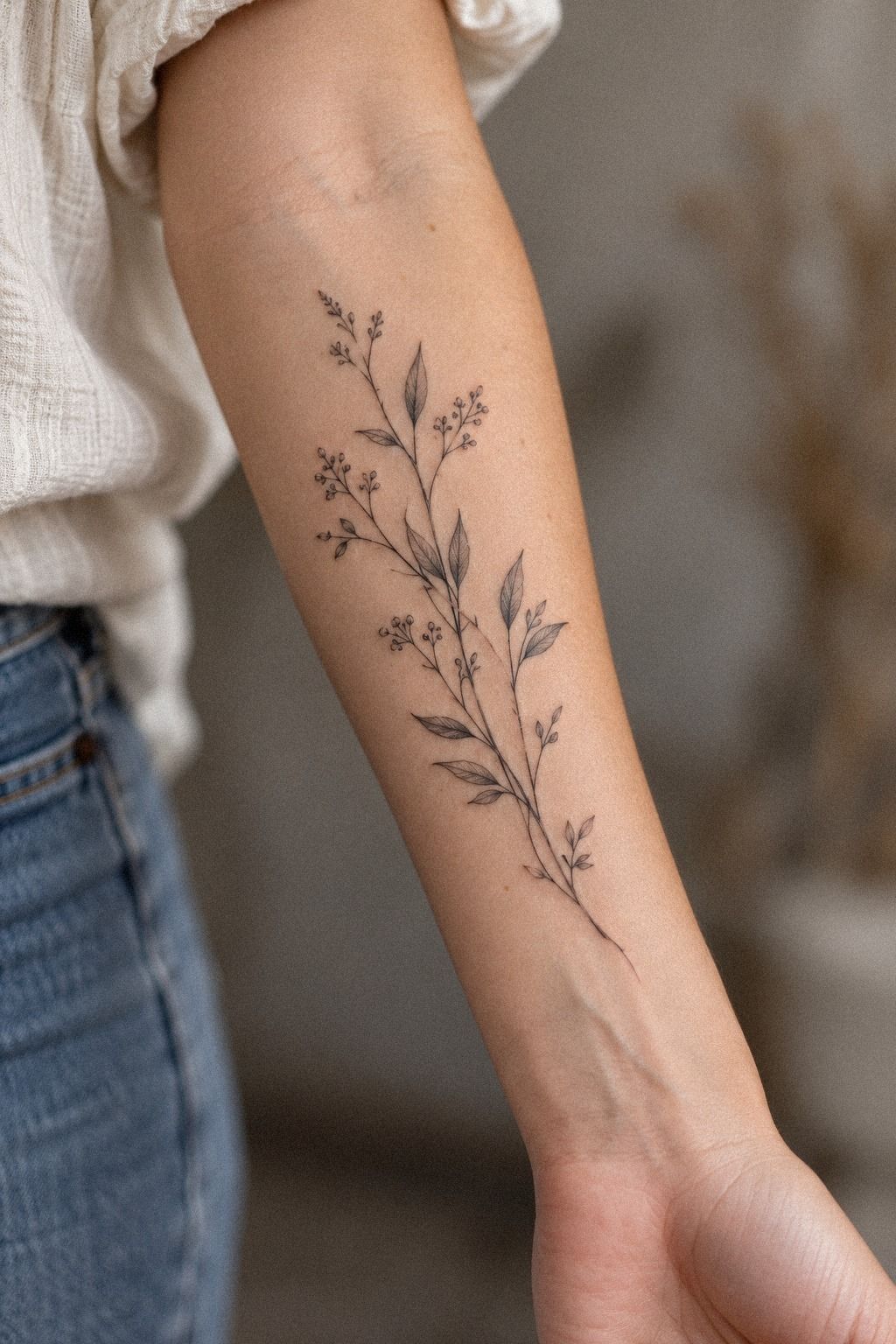
A floral constellation can work on the ribcage, calf, thigh, or another placement with enough skin area for the main bloom and its surrounding marks. Leave breathing space between each element so the constellation remains easy to read.
10Make a Fine Dotwork Daisy Cluster on the Hip

A daisy cluster gives you a playful alternative to one central flower. A stencil-to-skin comparison can help you judge whether the spacing will still work after healing. The dotwork daisy cluster looks crisp when the density is deliberate.
Dotwork depends on controlled density. You’ll want darker points near the flower centers and lighter spacing around the petals. I’d avoid filling every section with dots because the cluster can lose its shape as the marks settle.
The Stencil-to-Skin Check is worth doing before your appointment. Look at the paper design, then imagine it softened slightly after healing. Your artist can adjust the size and spacing so the tattoo still reads as a cluster rather than a dark blur.
The hip offers privacy and a softer placement than bony areas, though clothing friction may matter during healing. Ask your artist about clothing choices and aftercare. Black dot shading can look refined and delicate, but it needs enough open skin around it to stay legible.
This is a strong choice if you want something personal that isn’t always visible. The daisy shape feels cheerful and timeless, while the hip placement keeps the design intimate.
If the quote fits your budget and the spacing is generous, it can be excellent value. Worth it!
11Match Delicate Flower Tattoos for Sisters
Matching flowers work best when they share a visual language without becoming identical copies. You and your sister might choose the same stem, different blooms, or two flowers from one family. The matching botanical pair should feel connected without making either tattoo generic.
The design should be made for both bodies, not traced from one person to the other. Your artist can adjust the size, curve, and placement while keeping the core shape consistent. I’d choose connection over duplication because each tattoo should still feel personal.
The Sister Pair Rule is simple: share one element and personalize two. That shared element might be the stem angle, a leaf shape, or a small dot. Your individual flower can then reflect your own personality.
The thigh usually offers more skin area than the wrist, finger, or ankle, so you can include layered petals and a longer stem. You’ll still want clean negative space, especially if the design uses fine black botanical lines.
If you’re choosing flowers based on family meaning, this yin yang flower tattoo meaning guide may help you think through balance and connection. The result can be empowering, romantic, and deeply personal without looking identical.
The Line-Weight Test
Fine-line work succeeds when the artist treats line weight as part of the design, not as a fixed setting. A slightly stronger outer contour can protect the flower’s silhouette, while lighter interior marks add detail without overwhelming it.
Ask which lines are essential and which are decorative. If the tattoo would become unreadable after losing one interior vein, the design may be too fragile. I’d rather pay for a thoughtful redraw than spend less on a reference that can’t age well.
You can also compare a delicate reference with a bolder one in this minimalist flower tattoo guide. The goal isn’t maximum darkness. It’s a clear hierarchy between the main flower shape and its supporting details.
Which Placement Fits Your Budget?
The cheapest quote isn’t always the best value. A smaller tattoo may still carry a shop minimum, and a difficult placement can require slower work. Ask what the shop minimum charge covers before you compare prices.
A budget-friendly choice usually has a readable scale, a manageable session, and a placement your artist knows well. Forearm, upper arm, shoulder, and thigh designs often give more flexibility than fingers, ankles, or ribs.
If you’re deciding between placements, this small flower tattoo for women guide can help you compare scale before requesting a quote. You’ll make a smarter cost decision when you choose the design and placement together.
Classic Flowers, Personal Meanings
Roses can feel romantic, lotuses sacred, daisies playful, and wildflowers expressive, but symbolism shouldn’t become a rulebook. The most meaningful flower is usually the one connected to your memory, family, culture, or private turning point.
A birth flower reference can give you a starting point without dictating the final design. You can simplify it, pair it with a meaningful date, or keep the symbolism completely private.
For a more symbolic comparison, read this flower tattoo meaning guide before you choose your reference. Your tattoo can be graceful and bold even when nobody else understands why it matters.
What Makes Fine-Line Value Hold Up?
Long-term value comes from decisions made before the appointment. Look for healed work, clear communication, clean studio hygiene practices, and an artist who explains what the design can realistically handle.
You’ll also want a written quote that identifies the estimated cost, deposit, touch-up policy, and aftercare instructions. That makes the budget easier to judge and reduces unpleasant surprises.
A meaningful tattoo doesn’t need to be expensive, but it does need to suit the artist’s strengths. A simple, well-executed flower can be more worth it than a complicated design chosen only because it looks impressive online.
Care That Protects the Design
Aftercare affects how your healed tattoo surface looks while it settles. Follow your artist’s instructions, wash gently, moisturize lightly, and avoid swimming or direct sun during the early stage.
Friction matters too. Tight clothing, shoes, straps, and repeated rubbing can irritate a fresh tattoo. Plan the appointment around your schedule so the first several days are calm and manageable.
Once the tattoo has healed completely, sunscreen helps protect black and colored pigment from unnecessary fading. If you’re comparing rose, lotus, or daisy references, this anemone tattoo meaning guide offers another symbolic direction without forcing you into a larger design.
What I Learned After Choosing the Wrong Fine Line Design
I used to think a delicate tattoo was mainly about making the design smaller. That was my mistake.
A tiny flower with too many petals, interior marks, and pale shading doesn’t become more refined because it occupies less skin. It becomes harder to read.
I’ve learned to begin with the shape, then remove anything that doesn’t help the flower remain recognizable.
For a first tattoo, placement matters just as much as the sketch. Forearm, thigh, and shoulder areas are usually more tolerable than ribs, feet, hands, and sternum.
Your choice should also account for sunlight, friction, and how often you want to see the design. A healed fine-line tattoo tells you more than a fresh example ever will.
Tattoo costs vary by artist and region, but these are common U.S. reference points:
I’d spend more time reviewing healed portfolios than collecting endless reference images. Your artist should explain how the design may soften, how to protect it from UV exposure, and how to keep the linework from becoming overcrowded. Black ink with clear spacing tends to age more predictably than an overloaded miniature.
Healing is part of the design decision. The surface often takes about 2 to 3 weeks to settle, while complete healing can take about 2 to 3 months. You’ll need gentle washing, light moisturizing, and a break from swimming and direct sun during the early stage.
Fine lines can widen over time, especially when the tattoo is too small or placed where friction is constant. That doesn’t make delicate work a bad idea. It means you should choose a scale your artist can execute cleanly.
A lasting flower leaves room for skin to remain skin.
The Questions Worth Answering First
How much does a delicate flower tattoo for women usually cost?
A delicate flower tattoo usually costs about $100 to $300 in the U.S., though a shop minimum may be about $50 to $100 and hourly rates may run about $100 to $250. Artist experience and placement can change the final quote, so I’d request a clear estimate before booking.
Are delicate flower tattoos a good idea for a first tattoo?
Yes, they can be a meaningful first choice because many designs use clean shapes and manageable placements. A readable flower gives you room to start small without choosing something generic, especially when your artist shows healed fine-line work.
How do I choose a tattoo artist for delicate flower tattoos?
I’d look for a portfolio with clean linework, healed examples, and flowers drawn at a similar scale. Ask about studio hygiene and placement advice. Healed portfolio evidence matters more than a heavily edited fresh tattoo example.
How much do delicate flower tattoos hurt?
Pain varies by person and placement. Ribs, feet, hands, and sternum are often more sensitive, while forearms, thighs, and shoulders are usually more tolerable. Your placement choice can affect comfort more than the flower itself, so I’d choose a location you can approach calmly.
How long does a delicate flower tattoo take to heal?
The surface usually takes about 2 to 3 weeks to settle, while complete healing may take about 2 to 3 months. Wash gently, moisturize as advised, and avoid direct sun and swimming during early healing. Simple aftercare protects the finished linework.
What’s the best placement for a delicate flower tattoo?
I’d start with the forearm, thigh, shoulder, or upper arm because those placements are often more tolerable and give the artist room to keep lines clear. Better spacing usually helps a delicate tattoo age more gracefully than an ultra-small placement.
Where I’d Start First
If I had to pick one, I’d start with the small wrist flower. It’s visible enough to feel personal, but the single stem keeps the design readable when fine lines soften.
Pin this minimalist flower tattoo guide for later and take the sketch to an artist with healed examples. That’s the choice I’d trust.