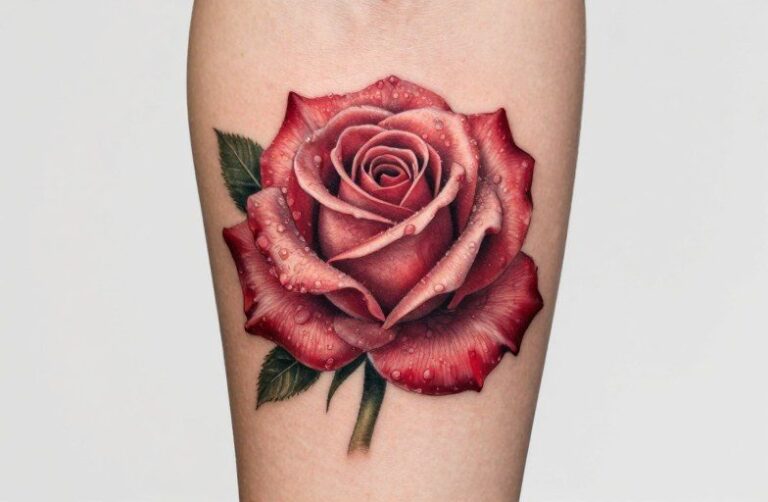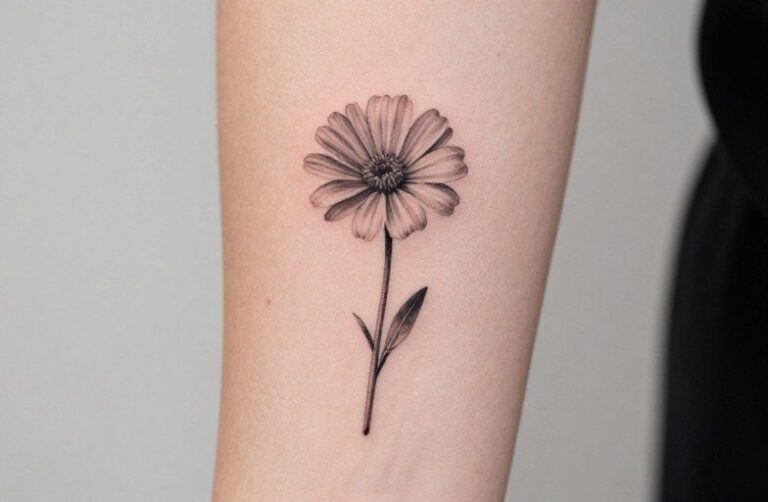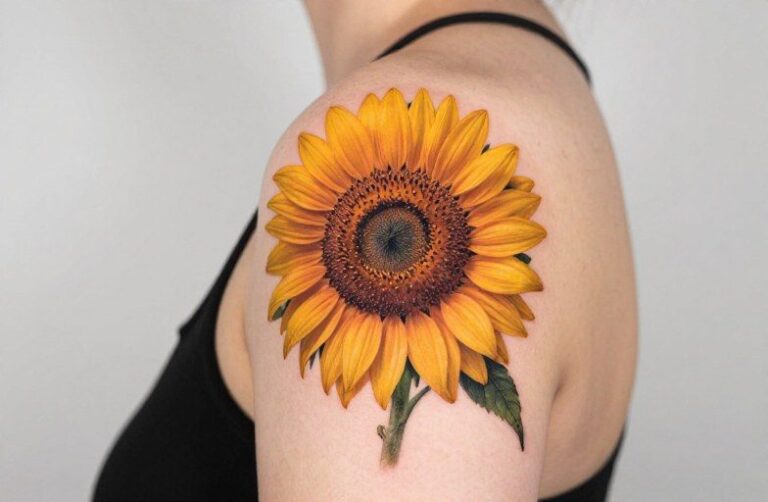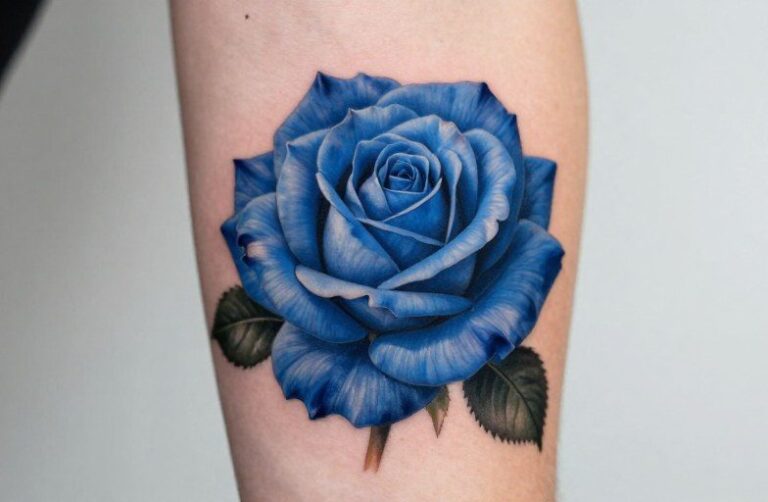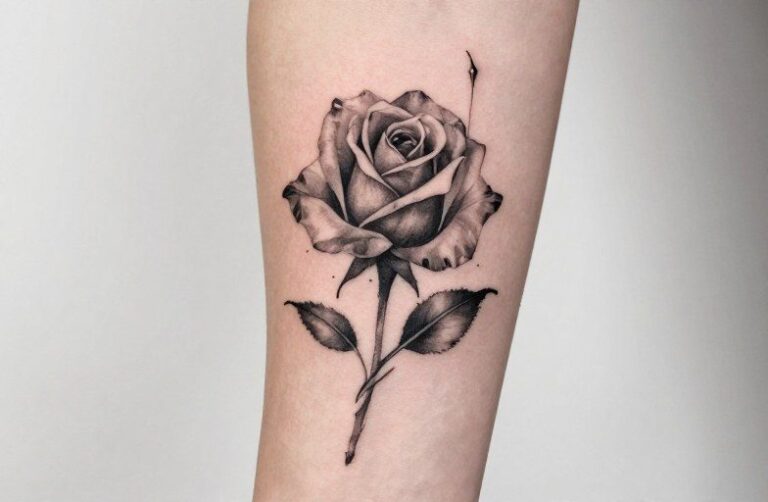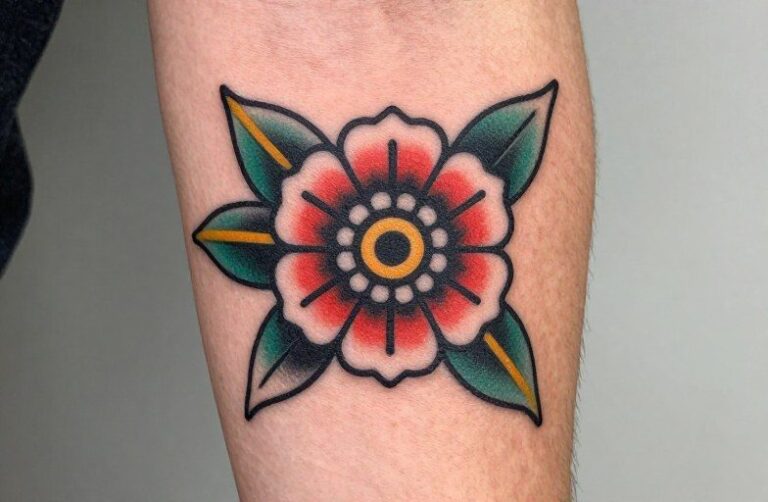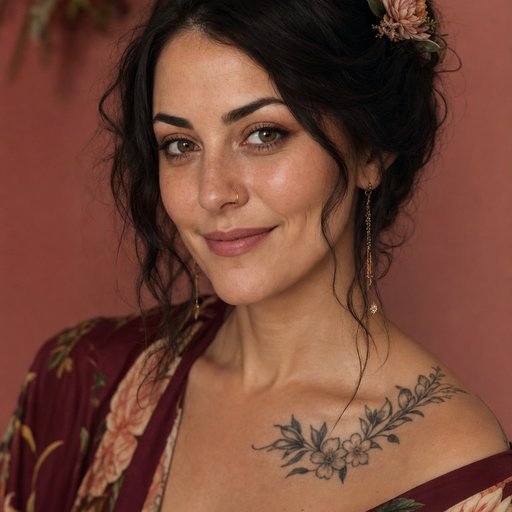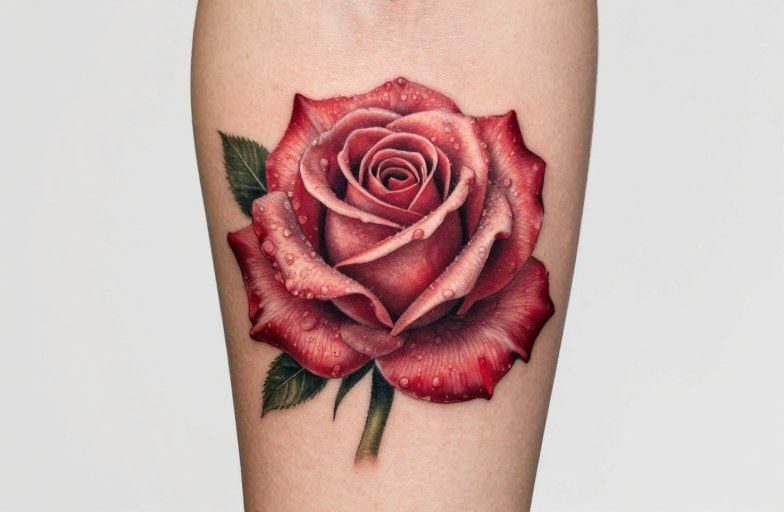
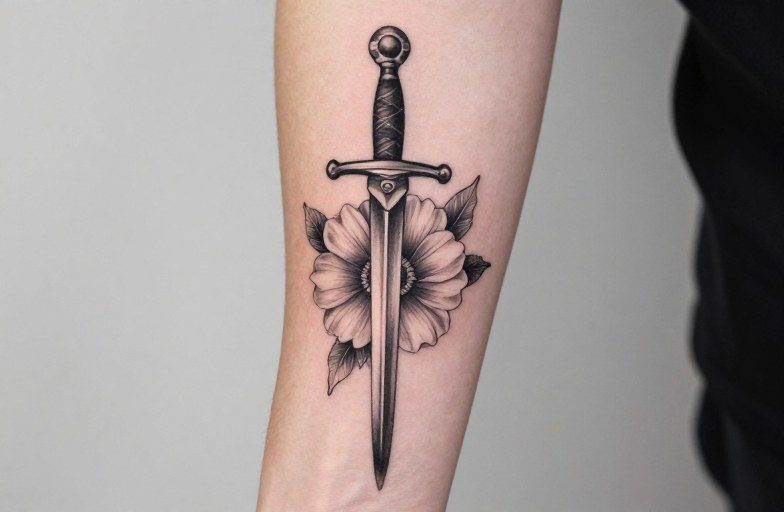
A sword and flower tattoo combines two forces that don’t naturally coexist: the blade cuts, the bloom opens. Together they usually signal duality, strength paired with vulnerability, protection alongside tenderness, or the damage someone has survived and the growth that followed. The specific meaning shifts depending on which flower you choose and how the two elements interact in the design.
Best Placements
Where you put this pairing changes how it reads. Forearms and outer biceps give both elements enough horizontal room to cross or intertwine naturally. Ribs and sternum work well for vertical compositions, think blade pointing down with vines wrapping upward. Thighs offer space for larger, more detailed renderings where the contrast between hard steel and soft petals gets room to breathe.
Size and Flow Considerations
Small sword-and-flower pieces under three inches tend to blur together within a few years. The thin lines of a blade and the fine details of petals compete for space. At four inches or larger, your artist can establish real separation between the metal and the organic elements. For wraparound designs on arms or legs, the spiral of a rose around a rapier or the diagonal slash of a katana through cherry blossoms follows the muscle flow rather than fighting it.
Skin Tone and Visibility
On darker skin, heavy black shading on the sword can swallow the flower if you’re not careful. Some artists use negative space or lighter gray washes for the blade, letting the flower carry the darker saturation. On very light skin, red flowers against black steel pop immediately but may fade to pink faster than darker pigments.
Mythology & Folklore
Swords piercing or paired with plants show up across several traditions, though the specific symbolism varies. Japanese lore often links the sword to the samurai’s discipline and the cherry blossom to the beauty and fragility of life, both celebrated precisely because they don’t last. The combination there isn’t about conflict but about accepting that precision and impermanence coexist.
European and Celtic Threads
In some Arthurian-derived imagery, the sword in the stone or the bleeding lance appears near flowering branches, though these are more commonly associated with the Holy Grail quest than with personal tattoo symbolism. Celtic traditions sometimes pair the sword with oak or holly, but the flower specifically is less common in pre-modern sources. Modern tattooing has largely invented or repurposed these combinations, drawing on visual resonance rather than strict mythological precedent.
Contemporary Storytelling
Today’s designs frequently reference anime, fantasy novels, and video games where characters literally carry blades adorned with flowers or where a warrior’s weapon transforms into something organic. These pop-culture roots are valid; they just aren’t ancient. The meaning still holds because the visual tension between weapon and plant communicates something immediately legible across cultures.
History & Cultural Roots
The pairing as a tattoo motif is largely a twentieth-century development, though both elements have long independent histories. Sword imagery in Western tattooing traces to military and naval traditions, often marking service, rank, or specific campaigns. Flower tattoos, meanwhile, carried varied meanings, roses for love and memorial, lilies for death, lotuses for spiritual emergence depending on the cultural context.
When the Two Combined
The fusion seems to have gained traction alongside the broader acceptance of “pretty” tattoos on people who also wanted to signal toughness or complexity. A sword alone can read as aggressive; a flower alone as decorative. Together, they complicate each other in ways that suit contemporary tastes for layered symbolism. Japanese tattooing likely provided the earliest consistent template, with horimono designs featuring weapons and natural elements in balanced compositions for centuries.
Modern Appropriation Concerns
Specific combinations carry cultural weight. A katana with cherry blossoms draws on Japanese aesthetic traditions; a European broadsword with a lotus reads differently, potentially as spiritual eclecticism or unintentional mishmash. If you’re borrowing from a tradition you don’t belong to, the execution matters, respectful research and skilled rendering versus careless mixing of symbols.
Common Variations & Styles
The flower you choose changes the entire equation. Roses with swords dominate for a reason: the thorns echo the blade, the bloom softens it. Peonies, common in Japanese tattooing, bring wealth and honor associations that complicate the weapon’s violence. Cherry blossoms emphasize transience. Lotus flowers add spiritual emergence, growth from mud through water to air, with the sword perhaps representing the cutting of attachment.
How the Elements Interact
- Crossed: sword and flower as equals, often tied together with ribbon or rope
- Pierced: blade through bloom, suggesting damage, sacrifice, or protection that costs
- Wrapped: vines or stems encircling the hilt, growth containing or softening violence
- Dual wield: weapon in one hand, flower in the other, often on mirrored forearms
Style-Specific Effects
Traditional American bold lines make the contrast graphic and immediate; the flower reads as decorative, the sword as iconic. Fine-line single needle work can make both elements feel delicate, which shifts the meaning toward fragility rather than force. Black-and-gray realism ages more predictably than color for this pairing, since the sword’s metal already reads as gray and flowers in black and gray rely on texture rather than hue.
How It Ages on Skin
This design has specific aging challenges. The sword’s straight lines blur outward over time; what starts as a crisp edge becomes fuzzy. Flowers, with their organic curves, hide this better. A blade that depends on fine parallel lines for its shine effect will lose that illusion within five to ten years, becoming a gray shape with indistinct edges.
Line Weight Strategy
Experienced artists vary line weight deliberately, thicker outlines on the sword’s core structure, thinner interior details that are allowed to fade. The flower can carry more of the visual interest as the piece ages, with the sword becoming a simpler silhouette. This planned degradation keeps the composition readable for decades rather than demanding frequent touch-ups to maintain effects that skin won’t hold.
Color Fading Patterns
Reds in roses turn pinkish then brownish. Yellows and whites fade fastest, sometimes disappearing to skin tone within a few years. Blues and purples hold longer but can shift toward gray. If your design depends on a specific flower color for its meaning, say, a red rose for love versus a white one for memorial, plan for the faded version, not the fresh brightness.
Religious & Spiritual Angles
Christian iconography sometimes features swords, though usually in specific contexts, the sword of Saint Michael, the flaming sword guarding Eden, the “sword of the Spirit” from Ephesians. Pairing these with flowers isn’t traditional but can be constructed meaningfully: a sword of justice with lilies of purity, or the blade that pierced Mary’s heart in Simeon’s prophecy paired with roses.
Eastern Frameworks
In Buddhist contexts, the sword of wisdom cuts through ignorance; the lotus rises unstained. Together they make coherent spiritual sense, though this specific pairing is more common in modern Western tattooing than in traditional Buddhist art. The meaning works if you understand it; it rings hollow if you’re just combining symbols that feel Eastern without grasping their relationship.
Personal Spirituality
Many people choose this combination without formal religious reference, using it to mark personal transformation, cutting away something harmful, growing something new. The symbolism functions as psychological metaphor rather than doctrinal statement, which is entirely valid. The tattoo’s power depends on your genuine connection to what it represents, not on its pedigree in established tradition.
Final Word
The sword and flower tattoo works because the visual contradiction is immediate and legible. Steel and petal, edge and softness, destruction and growth, your eye understands the tension before your mind names it. The specific meaning you assign matters less than whether the design earns that tension through skilled composition and honest personal relevance. Choose your flower deliberately, place it where the body supports the image, and let the artist handle the technical challenge of making two such different elements feel like they belong together. Done well, it’s a pairing that stays interesting because the contradiction doesn’t resolve, it holds.
Frequently Asked Questions
Does a sword through a rose mean something different than a sword beside a rose?
Yes. Piercing usually suggests damage, sacrifice, or protection that comes at cost. Side-by-side placement reads more as balance or partnership between two forces. The interaction matters as much as the elements themselves.
Which flower pairs best with a sword for a memorial tattoo?
Roses and lilies are most common for memorial work. Roses carry longstanding associations with love and loss; lilies often symbolize restored innocence after death. Either can work, though lilies require more detail to read clearly at smaller sizes.
Will the straight lines of the sword blur worse than the flower?
Generally yes. Straight lines and fine parallel shading on blades tend to spread and soften faster than the organic curves of petals. Plan for the sword to become a simpler silhouette over time while the flower carries more evolving detail.
Is this design more common on men or women?
It’s genuinely crossed gender lines in recent years. Earlier decades saw it more on men, often military-adjacent. Now the duality appeals broadly, and placement choices, ribs, thighs, forearms, are fairly evenly distributed across clients regardless of gender.