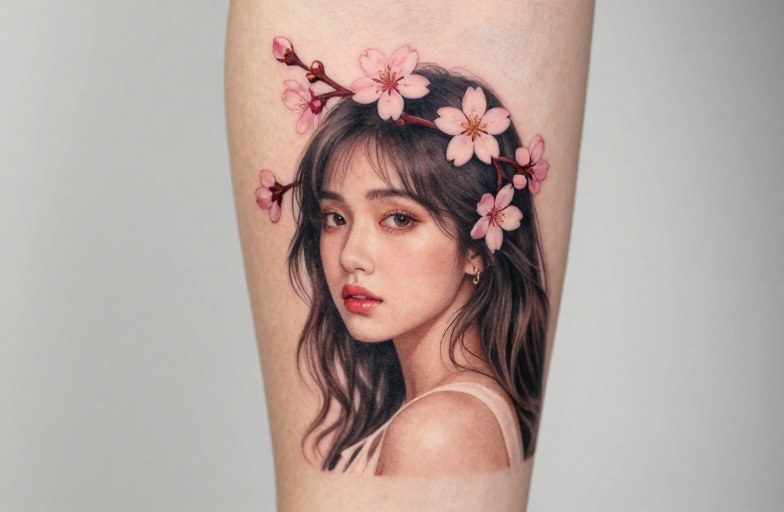
A cherry blossom tattoo on a woman most commonly represents the beauty of impermanence, the acceptance of life’s fleeting nature, and the strength to flourish despite knowing loss is inevitable. The blossom’s brief lifespan, typically one to two weeks, makes it a powerful metaphor for seizing the moment. Through a feminine lens, it also honors resilience, renewal, and the cyclical nature of growth. You might choose this design as a marker of personal transformation, a memorial, or a quiet declaration of choosing to live boldly while acknowledging fragility.
What the Blossom Actually Means
The cherry blossom’s core symbolism rests on contradiction: something delicate that persists through harsh conditions. This duality shapes how the motif reads across different life stages and experiences.
Impermanence and Mortality
The Japanese concept of mono no aware, often translated as the pathos of things or bittersweet awareness of transience, sits at the heart of cherry blossom meaning. Unlike Western symbols that might fight against death, the sakura embraces it. Choosing this tattoo often signals you have processed loss, whether through illness, grief, or major life upheaval, and emerged with a changed but intact relationship to time. The design works especially well as a collarbone piece or along the ribcage, areas where the tattoo moves with breath and heartbeat, literalizing the living quality of the symbol.
Strength and Renewal
Cherry trees bloom before their leaves emerge, producing flowers on bare branches. This biological quirk translates symbolically to courage that precedes full preparation, to acting before feeling ready. This resonates with moments of stepping forward: motherhood, career pivots, or leaving harmful situations. The blossom becomes less about passive beauty and more about active, almost defiant, blooming. Placements along the spine or upper back carry this forward, the vertical growth suggesting rising.
Spiritual and Religious Context
While not inherently tied to organized religion, cherry blossoms carry spiritual weight across several traditions you may draw from personally.
Buddhist Interpretations
In Buddhist contexts, particularly Japanese Zen, cherry blossoms illustrate the Three Marks of Existence: impermanence, suffering, and non-self. The flower’s brief appearance mirrors the teaching that clinging to permanence creates suffering. If you have Buddhist practice, you might choose this tattoo as a visual meditation, a reminder on the wrist or forearm where daily sight reinforces the teaching. The design here tends toward simplicity, single blossoms or sparse branches rather than dense clusters, supporting contemplation over decoration.
Shinto and Nature Worship
Shinto, Japan’s indigenous spiritual practice, recognizes kami or spirits within natural phenomena. Cherry trees, especially ancient specimens, are considered abodes of these spirits. Those with Shinto heritage or drawn to nature-based spirituality may wear the blossom as connection to this animist worldview, where the natural world possesses consciousness and sacredness. This interpretation shifts the tattoo from personal symbolism to relational, positioning you within a living cosmos rather than at its center.
History and Cultural Roots
The cherry blossom’s tattoo journey reflects broader cultural exchange, but its origins remain geographically and historically specific.
The ornamental cherry, Prunus serrulata, is native to East Asia, with Japan developing the most intensive cultivation and cultural association. Hanami, the practice of flower viewing, became established among Japanese aristocracy by the eighth century and spread more broadly during the Edo period (1603-1868). The military government later appropriated the symbol for nationalist purposes, including its use in World War II iconography, a history some wearers consciously reject or reclaim.
Tattooing the motif entered Western consciousness through Japanese tattoo tradition, where full-body suits often incorporated seasonal flower sequences. The cherry blossom specifically marked spring within these compositions, part of a larger temporal narrative. Western adoption accelerated from the 1990s onward as Japanese aesthetic influence spread through fashion and media, though often stripped of original compositional context. Today’s standalone cherry blossom tattoo represents a different proposition than the integrated Japanese body suit, a shift in meaning that occurs through placement and isolation alone.
Mythology and Folklore
Several narratives, often linked to Japanese cultural memory, attach to the cherry blossom and inform how you might understand your tattoo.
The Samurai Connection
The association between cherry blossoms and samurai developed primarily during the Edo period and was intensified by nationalist movements in the late 19th and early 20th centuries. The flower’s brief but beautiful life was presented as parallel to the warrior’s expected death in service. For women, this translation becomes complicated and productive, reclaiming a masculine-coded symbol of honorable death into feminine-coded survival. The tattoo here functions as subversion, keeping the aesthetic vocabulary while redirecting the narrative toward living rather than dying well.
The Weeping Cherry and Ghost Lore
Some Japanese folklore associates specific cherry trees with spirits of the dead, particularly women who died from love or injustice. The shidarezakura or weeping cherry, with its downward-hanging branches, carries this association most strongly. Those drawn to gothic or melancholic aesthetics might choose this variant specifically, the drooping form suggesting grief made visible. Tattooed in black and grey with heavy shading, the weeping cherry diverges sharply from the bright, celebratory pink of standard sakura designs, demonstrating how botanical variation within the same species carries distinct symbolic weight.
Related Symbols to Consider
You may weigh cherry blossoms against related floral and non-floral alternatives, each carrying different emphases.
- Plum blossom (ume): Blooms even earlier, in winter cold, symbolizing endurance and perseverance rather than transience. Hardier, less delicate visually, often chosen when you want to emphasize toughness over fragility.
- Peony: The king of flowers in Japanese tattoo tradition, associated with wealth, honor, and masculine power. Where cherry blossoms suggest acceptance, peonies assert dominance. Some pair both to balance these qualities.
- Lotus: Shares the Buddhist impermanence association but adds purity and spiritual awakening through its muddy origin. The lotus offers more explicit spiritual narrative; cherry blossom keeps meaning more open, more atmospheric.
- Butterfly: Another transformation symbol, but more individual and less cyclical. The butterfly suggests a completed change; the cherry blossom, ongoing renewal through repeated seasons.
- Hourglass or clock: Direct time symbolism without the aesthetic softness. Choosing cherry blossom over these alternatives typically means you want beauty integrated with mortality, not time as adversary.
Color vs Black and Grey
The technical choice between color and monochrome significantly alters how the symbolism reads on skin long-term.
Color: Pink, Red, and White Variations
Traditional Japanese pink, ranging from near-white to deep magenta, carries the most immediate cultural recognition. Lighter pinks soften with age, sometimes fading to near-invisibility on paler skin, requiring touch-ups every few years to maintain presence. Deep magentas hold longer but risk muddying as yellow undertones in the ink oxidize. White ink, occasionally used for highlights or full blossoms, is notoriously unreliable, often healing to a raised, yellowish scar rather than true white. Expect maintenance commitment and discuss specific pigment longevity with your artist, not just the shop’s general portfolio.
Black and Grey: Subtlety and Longevity
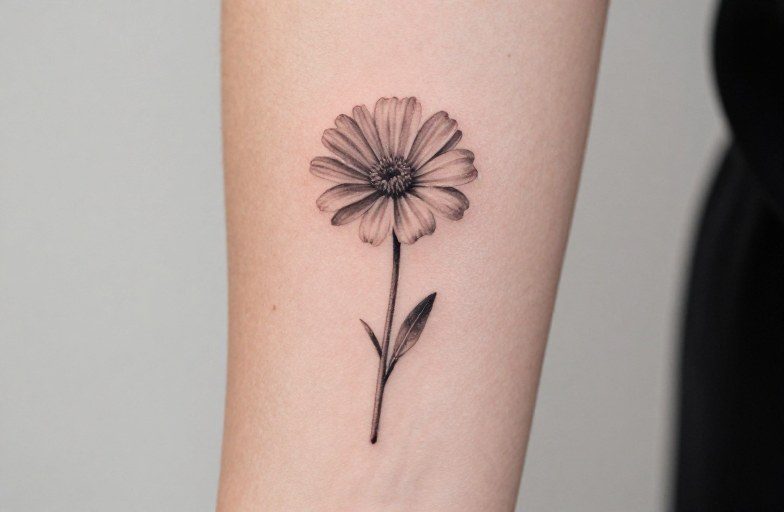
Black and grey cherry blossoms trade immediate floral recognition for graphic impact and staying power. Without color reference, the design reads more as botanical illustration or abstract pattern, the symbolism becoming more private, less immediately legible to observers. Grey wash allows subtle depth in petals that color sometimes flattens. Over decades, black and grey ages more gracefully, the contrast between ink and skin remaining readable even as lines soften slightly. This suits you if you prefer symbolism that reveals itself slowly, or if your professional environment rewards discretion.
What to Remember
A cherry blossom tattoo works best when you understand what you are borrowing and what you are making your own. The symbol carries genuine historical weight, not empty exoticism, but that weight includes militarization, romanticization, and commercial dilution. Your placement, color choice, and specific botanical variant, weeping or standard, sparse or clustered, determine whether the tattoo reads as meditation, decoration, or declaration.
The most successful versions I have seen share one quality: they do not try to explain themselves. The woman wears the blossom as she might wear a scent, present to those near her, invisible to the distant observer, carrying meaning she does not owe to anyone’s interpretation. If you are still deciding, spend time with actual cherry trees through a full season. Watch how the buds tighten, release, and fall. The tattoo should feel like a continuation of that attention, not a shortcut around it.
Frequently Asked Questions
Does a cherry blossom tattoo always mean something sad or about death?
Not necessarily. While impermanence is central, many wearers emphasize the renewal and living-boldly aspects. The meaning you emphasize depends on personal context and how you frame the symbol for yourself.
How much does a cherry blossom tattoo typically cost?
Pricing varies enormously by artist, location, size, and detail. Small simple designs might start around a few hundred dollars; large, detailed pieces by renowned artists can run into thousands. Consult specific artists rather than relying on general estimates.
Will a pink cherry blossom tattoo fade quickly?
Lighter pinks are prone to fading, especially on pale skin or with sun exposure. Expect touch-ups every few years. Deep magentas last longer but can shift in tone. Black and grey requires far less maintenance.
Is it culturally appropriative for a non-Japanese woman to get this tattoo?
The cherry blossom has become a globally circulated symbol, but thoughtful engagement matters. Avoid pairing it with unrelated Japanese imagery (kanji, geisha, etc.) as decorative backdrop. Consider whether your connection to the symbol is specific and personal rather than generic aesthetic preference.