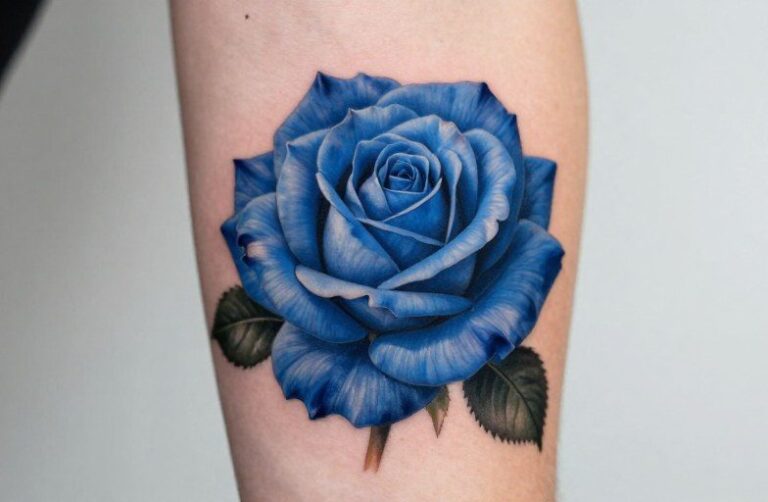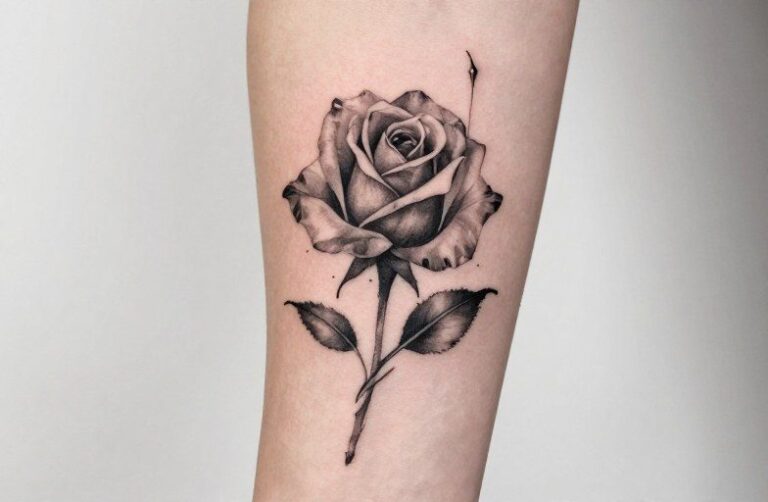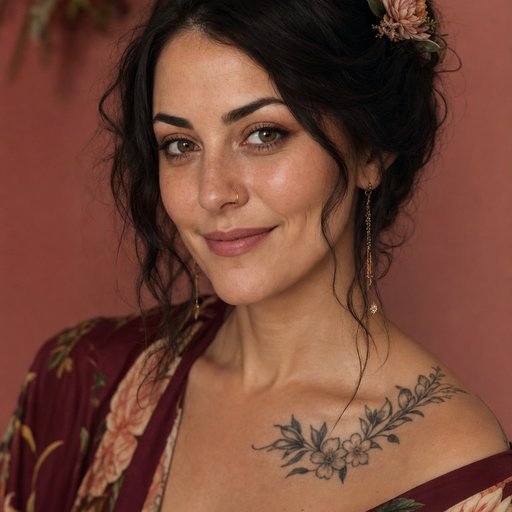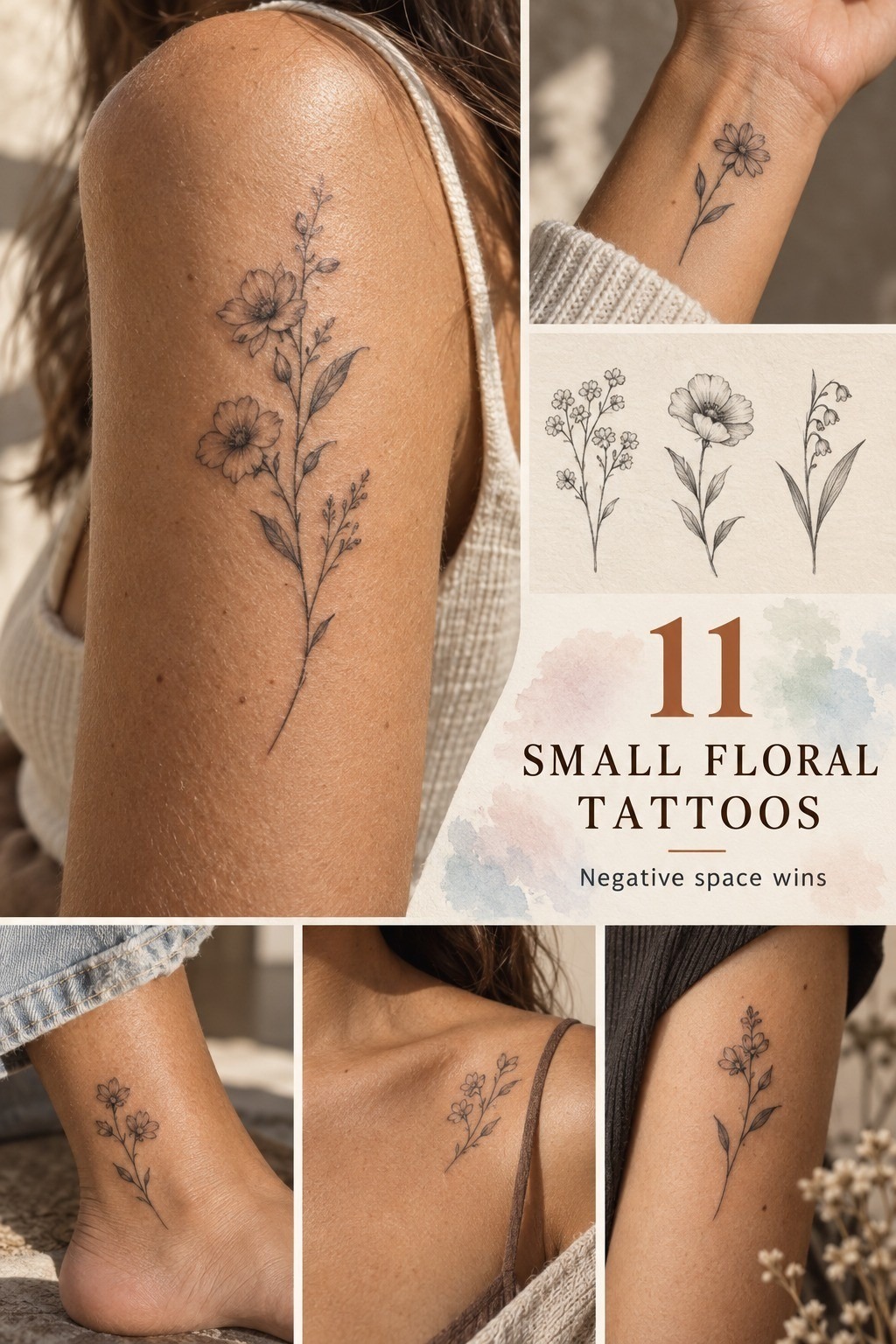
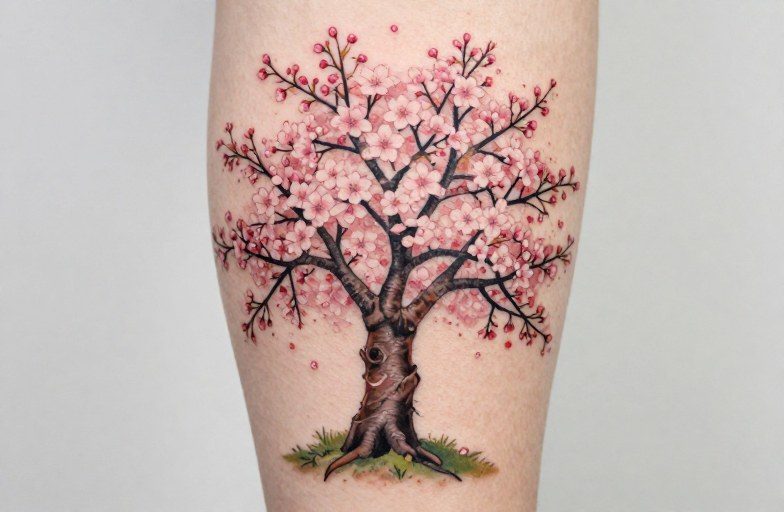
A Japanese cherry blossom tree tattoo most commonly represents the transient nature of life, beauty that is intense but brief. Rooted in the concept of mono no aware, the pathos of things, it reminds the wearer that existence is precious precisely because it is impermanent. Beyond this core meaning, the tree form specifically adds layers of endurance, rootedness, and the cycle of renewal, since the blossoms return each spring despite their short lifespan.
Personal & Modern Meanings
People gravitate toward this design for reasons that extend well beyond textbook symbolism. The cherry blossom tree has become a versatile emblem for personal transformation, survival through hardship, and the choice to find beauty in difficult seasons of life.
From Loss to Remembrance
For many, the falling petals serve as memorial imagery. Unlike rigid tombstone iconography, the blossom dissolves gently, an apt visual for grief that softens but never fully disappears. Some choose a single bare branch with sparse blooms to mark a specific loss; others want the full canopy to celebrate a life lived fully rather than mourn its end.
Rebirth and Resilience
The tree format specifically enables narratives of survival. Roots grip earth; trunk withstands weather; blossoms return after winter dormancy. This resonates with people who have rebuilt after addiction, illness, or profound life disruption. The imagery doesn’t require explanation, someone who has endured recognizes it immediately.
- Full tree with roots exposed: often chosen to acknowledge difficult origins or foundational struggle
- Wind-stripped branch with single bud: quiet persistence, hope against odds
- Canopy in full bloom with trunk splitting: beauty emerging from fracture
How It Ages on Skin
Cherry blossom trees present specific aging challenges that simpler floral designs avoid. The fine lines of individual petals, the gradient pinks and whites, and the delicate branch structures all shift as skin changes.
Line Weight Matters
Thin, hairline branches that look ethereal at age twenty-five often blur into indistinct grey by forty. The most durable tree tattoos use varied line weights, thicker primary branches with thinner secondary and tertiary splits. This hierarchy maintains readability even as fine details soften. Solid trunk structure anchors the design; wispy everything-equals-nothing approaches tend to age into visual mush.
The Pink Problem
Cherry blossom pink is notoriously fugitive. Lighter magentas and pastel rose tones fade fastest, sometimes shifting toward peach or disappearing entirely within five to eight years. Deeper crimson and burgundy holds better but reads differently, more dramatic, less ethereal. Black and grey cherry blossoms, while losing the color association, often maintain their graphic impact far longer.
- High-detail petal interiors (stamens, subtle veining): expect 50-70% clarity loss in 10 years
- Background washes suggesting sky or wind: prone to uneven fading, patchy appearance
- Trunk bark texture with whip-shading: ages gracefully, develops character similar to actual wood grain
Common Variations & Styles
The Japanese cherry blossom tree adapts across tattoo traditions, though each approach carries different visual weight and cultural associations.
Irezumi and Neo-Japanese
Traditional Japanese body suit work integrates cherry blossoms as keshoubori, decorative filler between major figures, or as background atmosphere around dragons, koi, or samurai. The blossoms are typically rendered with specific petal counts and arrangements, less botanically accurate than symbolically codified. Standalone tree compositions in this style often curve with body contours, trunk following rib lines or thigh musculature.
Contemporary Illustrative
Modern approaches borrow from watercolor painting, fine-line drawing, or graphic design. These permit asymmetrical compositions, negative-space techniques, and mixed media effects. A current trend places the tree as a partial sleeve with roots wrapping the wrist and canopy exploding across the shoulder, biomechanical in flow but organic in content.
- Single branch behind ear or along collarbone: minimalist, high visibility, limited aging surface
- Full back piece with moon or mountain: scale allows seasonal narrative, bare winter trunk transitioning to spring bloom
- Tree split across both thighs or forearms: requires precise client positioning during application
Who Chooses This Tattoo
Certain life contexts and personality types consistently select this imagery, though the demographic has broadened significantly in the last decade.
Life Transition Markers
Graduation, divorce, recovery milestones, career pivots, moments when someone recognizes that a chapter has definitively ended. The blossom’s brief perfection mirrors the intensity of transitional periods. People who choose this during upheaval often report wanting something permanent to mark something they finally understand as impermanent.
Cultural Connection and Disconnection
Japanese diaspora members sometimes choose this as accessible cultural heritage imagery, less politically loaded than rising sun motifs, less religiously specific than certain kami representations. Conversely, non-Japanese wearers are increasingly thoughtful about appropriation concerns, sometimes combining with personal heritage elements (family names in native scripts, regional flora) to create hybrid rather than borrowed meaning.
- Age distribution skews slightly female but has equalized; placement choices (ribs, hip, thigh) still trend gendered
- First tattoo frequency: moderate, often not someone’s initial piece due to size and complexity preferences
- Cover-up compatibility: excellent; dense canopy can obscure older work beneath
Similar & Related Symbols
Understanding adjacent imagery helps clarify whether the cherry blossom tree specifically serves your intention, or whether a related symbol might communicate more precisely.
Peonies (botan) share spring associations but emphasize prosperity and masculine courage in Japanese tradition, often paired with lions or warriors. Maple leaves (momiji) represent autumn’s mature beauty and the wisdom of age, contrasting with cherry blossom’s youth and ephemerality. Plum blossom (ume) blooms earliest, in winter’s end, and carries more scholarly, austere connotations, associated with perseverance rather than fleeting pleasure.
Willow trees appear in Japanese art but carry different emotional registers: feminine grace, melancholy, ghostly presence. For specifically memorial intent, chrysanthemums (imperial, noble death) or lotus (Buddhist transcendence) might align more directly with intended meaning. The cherry blossom tree occupies a middle space, beautiful enough for celebration, fragile enough for loss, cyclical enough for hope.
Color vs Black and Grey
This choice fundamentally alters the tattoo’s emotional register and practical longevity.
Color Realism
Soft pinks, white highlights, and the subtle green of new leaf growth capture the specific sensory experience of hanami, flower viewing. The best color work uses limited palettes: two to three pink values, warm grey for branch shading, perhaps a single cool tone for atmospheric depth. Over-saturated rainbow approaches read as generic floral rather than specifically cherry blossom. White ink, often used for petal highlights, yellows substantially on most skin tones within two to four years.
Black and Grey
Stripped of color, the design relies on composition and contrast. This suits the tree format particularly well, bark texture, branch architecture, and negative-space petal shapes become the entire visual language. Japanese sumi-e painting tradition supports this approach aesthetically. The tattoo reads more timeless, less tied to contemporary color trends, and typically requires less maintenance over decades.
- Color saturation requirement: higher on darker skin tones for pink visibility; consider deeper magenta or red shifts
- Black and grey advantage: easier touch-ups, less obvious fading, lower long-term cost
- Hybrid approach: black and grey tree with selective color blossoms, focuses attention, reduces color maintenance area
What to Remember
The Japanese cherry blossom tree tattoo works best when its specific visual qualities, delicacy, temporariness, cyclical return, genuinely match your intention. Avoid this if you want permanence, stability, or unchanging representation; the imagery contradicts those desires. Choose placement with aging in mind: areas with significant sun exposure (hands, forearms, upper chest) will accelerate pink fading and line spread. Work with artists who understand Japanese compositional principles even if executing in non-traditional styles; the asymmetry, negative space, and flow between elements require specific knowledge that generic floral experience doesn’t guarantee. Finally, let the tree be enough, overloading with butterflies, birds, and script banners often dilutes the very simplicity that gives the symbol its power.
Frequently Asked Questions
Does a Japanese cherry blossom tree tattoo require Japanese heritage to wear respectfully?
No single symbol belongs exclusively to one group, but context matters. Avoid combining with religious or military imagery you don’t understand, and consider whether your specific design draws from living tradition or generic stock art. Many artists recommend researching the specific variety and season you’re depicting.
How large does a cherry blossom tree tattoo need to be to age well?
Palm-sized minimum for any trunk detail; fist-sized or larger for full canopy with readable individual blossoms. Micro-realism approaches (under 3 inches) consistently disappoint within five years as fine lines collapse and color patches muddy.
Can cherry blossom tattoos be easily covered or modified later?
The tree format actually covers well, dense foliage can obscure older work, and trunk extension or root addition offers natural modification paths. However, light pink areas don’t laser remove efficiently; plan as permanent regardless of current intentions.
What’s the typical price range for a quality Japanese cherry blossom tree tattoo?
Single-branch small pieces run $400-800; full sleeves or back pieces with traditional Japanese complexity reach $2,000-5,000+ across multiple sessions. The skill level for convincing bark texture and petal arrangement justifies higher rates than simpler floral work.