Roses and flowers dominate tattoo flash for solid reasons. The shapes read clearly from a distance, the curves flow with muscle structure, and the subject offers endless variation without abandoning its core recognizability. But “flower tattoo” covers enormous ground, a tiny single-needle rose behind an ear bears almost no technical relationship to a full-color peony sleeve. This guide breaks down what actually matters when you’re choosing scale, placement, style, and color for botanical work that stays strong for years.
Size & Scale
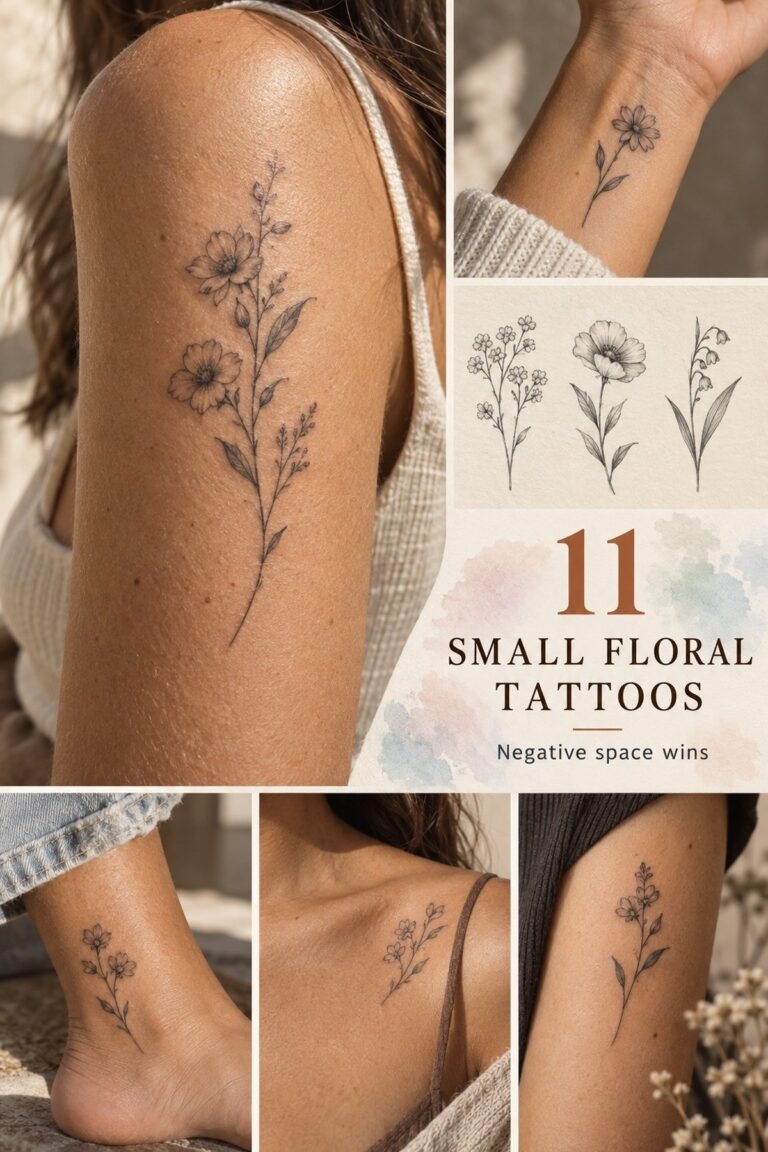
Botanical detail has a hard floor. Below certain sizes, petals collapse into muddy blobs and linework blurs beyond recovery. Understanding where that threshold sits saves you from a tattoo that ages poorly.
Minimum Viable Size
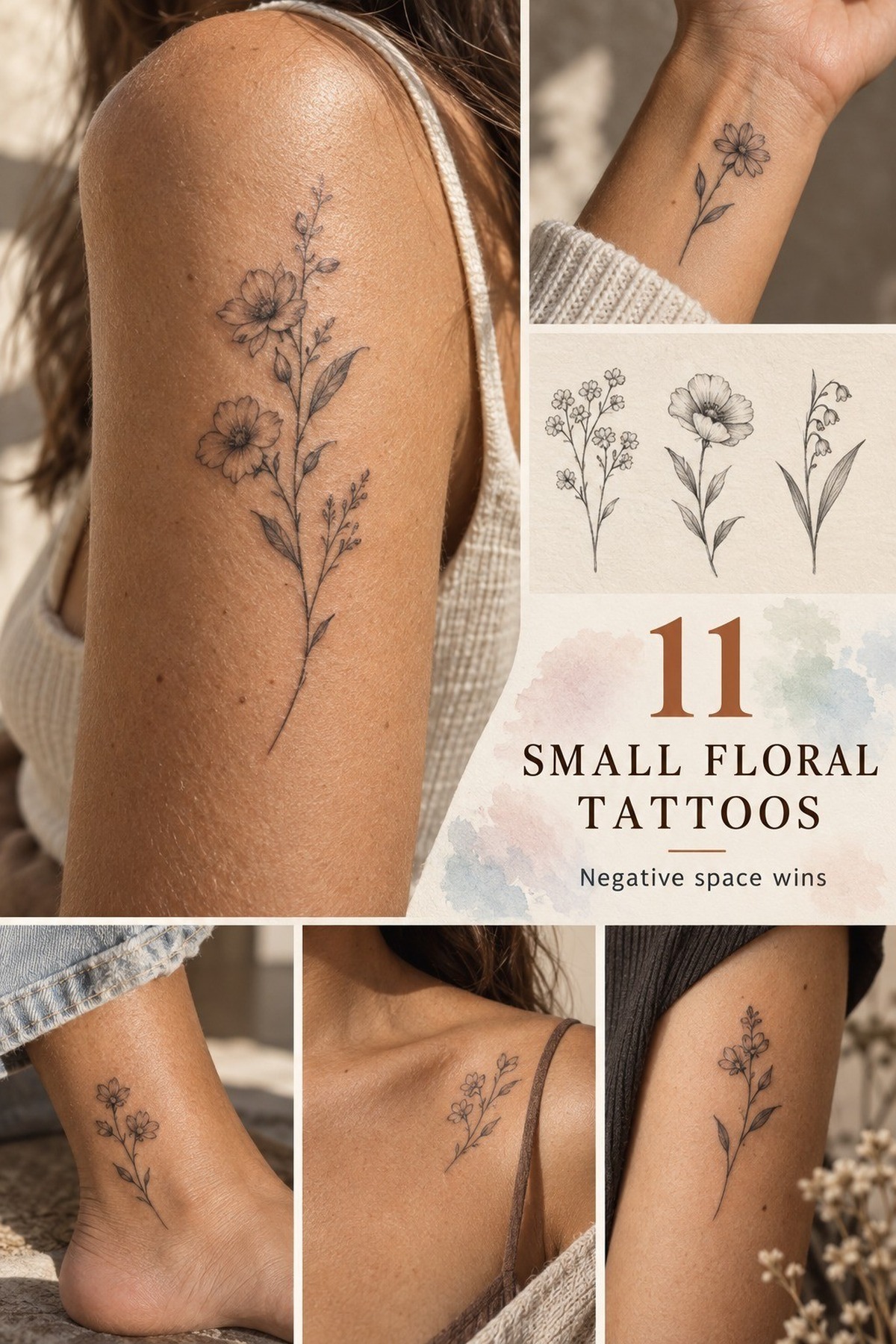
Single roses need roughly 2.5, 3 inches in height to maintain petal separation. Smaller than that, and the negative space between petals closes up during healing. Miniature florals can work, but they require extreme simplification, think three to five petal shapes total, not layered realism. Fine-line single-needle work pushes smaller, yet even specialists avoid going under 1.5 inches for anything with interior detail.
Scaling for Complexity
- Simple linework rose: 2, 4 inches
- Traditional bold rose with leaves: 3, 6 inches
- Realistic peony or chrysanthemum with full shading: 5, 8 inches minimum
- Full bouquet or vine composition: forearm, thigh, or torso territory
Large-scale floral work isn’t just “more detail”, it allows for atmospheric background, dewdrops, and depth that small pieces simply can’t support. If your reference photo shows a bouquet in a vase, don’t expect that same density compressed to wrist size.
Matching & Pairing Ideas
Flowers pair naturally with complementary imagery, but the integration matters more than the concept. A rose slapped next to a skull reads as two separate flash pieces unless the lineweights, flow lines, and shading values actually connect them.
Classic Combinations That Work
Daggers through roses work because the straight blade contrasts the organic curve, creating visual tension. Clock faces with wilting petals play with time symbolism through shared circular geometry. Snakes coiling through stems follow the natural S-curves of botanical growth. The successful versions share a single light source and consistent black density, novice pairings often look collaged because the technical execution doesn’t unify.
Multiple Flower Types Together
Mixing species requires attention to scale and seasonal logic. A cherry blossom branch (spring, delicate, short bloom) paired with a chrysanthemum (autumn, dense, layered) can work stylistically but reads disjointed narratively. Better mismatches happen within shared visual language: wildflowers of similar scale and openness, or tropical blooms with shared waxy leaf structures. Your artist can adjust relative sizes, but the underlying forms need compatible energy, spiky protea against soft peony creates friction that demands intentional design resolution.
Best Placements
Flower shapes follow body contours better than most subjects. The radial symmetry of a rose head sits beautifully on rounded surfaces, shoulder caps, knees, elbows, while stem-and-leave compositions trace the long bones of arms and legs.
High-Impact Spots
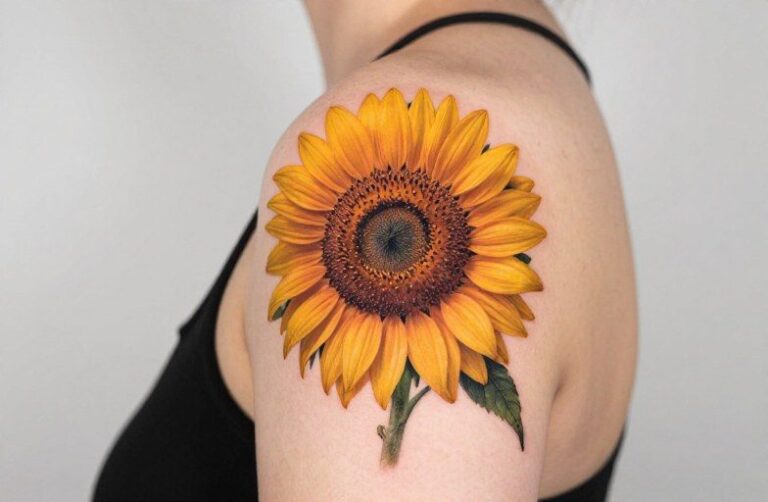
- Shoulder cap: rose blooms here read like epaulettes; the curve frames the petal spiral naturally
- Outer forearm: vertical stem designs flow with the bone; highly visible for personal significance pieces
- Thigh front or side: large format possible, moderate pain, easy to conceal
- Ribcage: follows the curve between ribs; florals soften the area’s harshness but healing involves significant movement
Tricky But Worth It
Hands and fingers present special problems. The skin turns over fast, detail blows out, and the canvas is tiny. Single-needle finger roses often look crisp at three months and fuzzy at three years. If you’re committed, accept the maintenance reality: these need periodic refresh sessions. Neck and throat florals face similar challenges plus sun exposure, plan for hats, sunscreen discipline, and touch-ups.
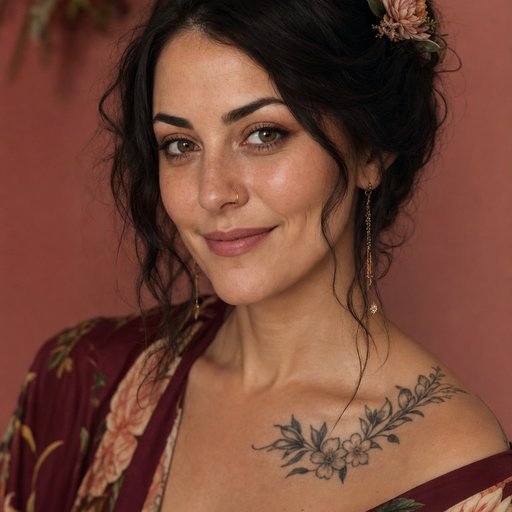
One placement rarely discussed: the sternum between breasts. The canvas is actually awkward, wider than tall, with significant stretch during breathing. Roses here often get compressed vertically. Better approach: a horizontal vine or scattered small blooms that use the width rather than fighting it.
Popular Styles
Not every style handles botanical subjects equally. The same rose reference translates radically differently across approaches.
American Traditional
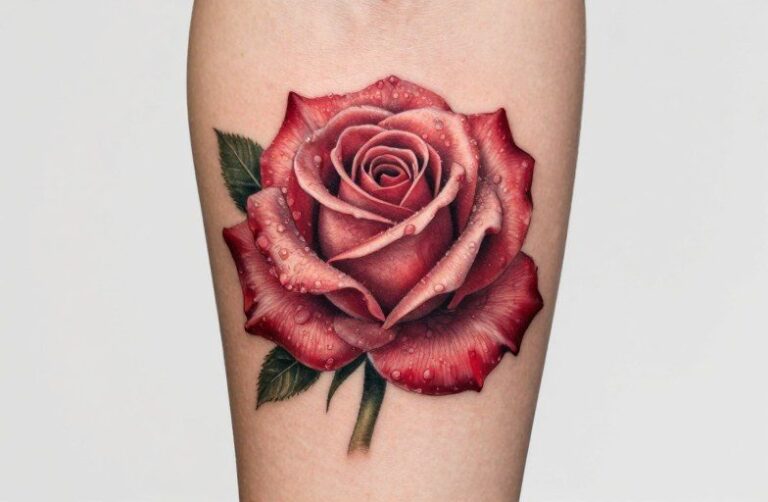
Bold black outlines, limited color palette (red, green, yellow, black), stylized rather than observed. Traditional roses are iconic for a reason: the heavy lines hold for decades, the simplified forms read instantly, and the color saturation stays relatively stable. The tradeoff is obvious, you’re not getting botanical accuracy. You’re getting a symbol that communicates “rose” with maximum clarity and minimum fuss.
Japanese (Irezumi)
Botanical elements in Japanese work serve compositional functions, cherry blossoms for wind and transience, peonies for wealth and seasonality, maple leaves for autumn transitions. They’re rarely standalone subjects; they fill space around primary imagery (koi, dragons, figures) and follow strict directional rules. The wind-bar indicates movement direction; elements must read as unified flow, not scattered decoration. This demands substantial skin commitment and specialist knowledge.
Blackwork & Ornamental
Contemporary blackwork florals often use heavy dotwork, geometric framing, or pure silhouette. These age excellently, no color to shift, no fine greywash to blur. The aesthetic reads graphic and modern, sometimes approaching textile or wallpaper patterns. Negative-space flowers (black background, skin-tone petals) create dramatic contrast but require confident black saturation; patchy fill ruins the effect.
Realism & Color
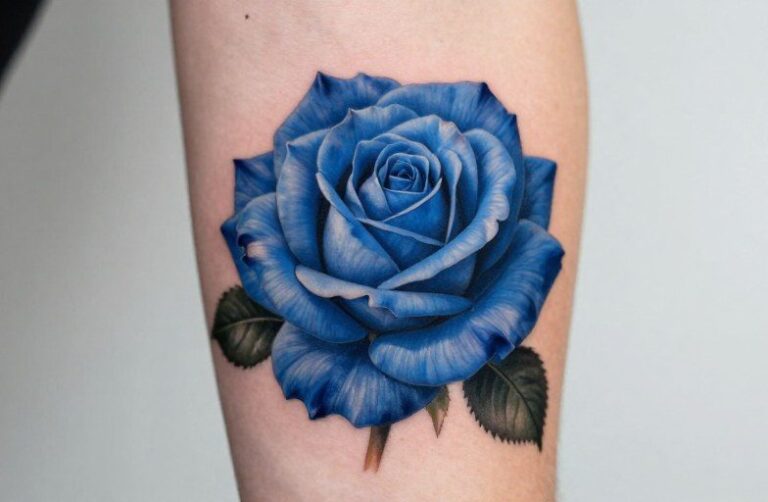
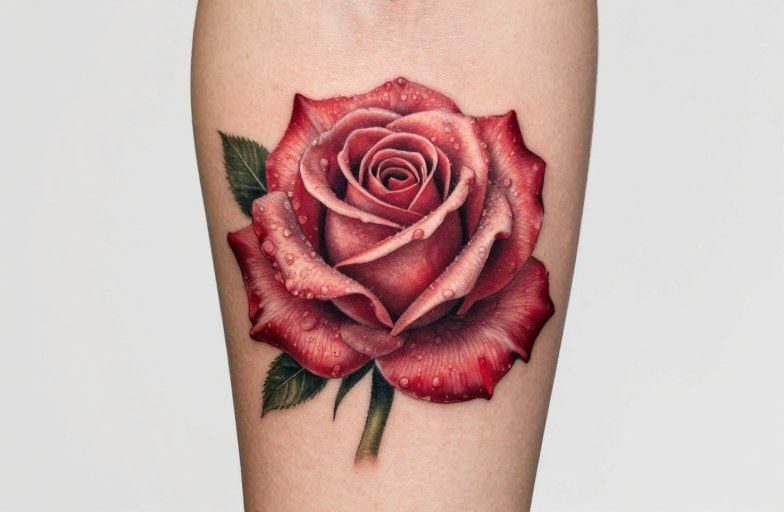
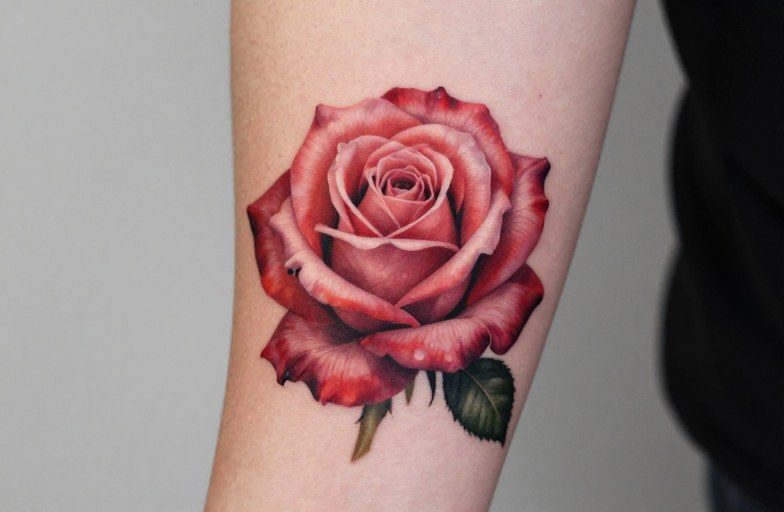
Photographic florals demand technical mastery: smooth color transitions, accurate petal translucency, botanical structure. Watercolor-style (no outlines, bleeding color fields) ages controversially, without structural linework, the composition can dissolve into soft abstraction. Some collectors love this evolution; others feel betrayed when their peony becomes a color cloud. Hybrid approaches, realistic form with illustrative line accents, offer compromise.
For First-Timers
Your first tattoo shouldn’t be your most ambitious. Floral work offers excellent entry points if you choose wisely.
Start Simple
Single-needle fine-line roses are trendy but technically demanding for artists and unforgiving for beginners. A small traditional rose with bold outline and limited color sits in the chair briefly, heals predictably, and gives you reference for how your body handles ink. Avoid watercolor or heavy realism for first pieces, you lack the healed-tattoo literacy to judge whether results match intentions.
What to Ask For
- Clear line-drawing stencil preview before application
- Explanation of how detail will read at proposed size
- Healing timeline specific to placement (not generic advice)
- Artist’s healed photos, not just fresh work
Red flags: artists who can’t explain why they’re recommending certain sizes, portfolios showing only fresh tattoos, or pressure to add complexity beyond your comfort. Good floral work doesn’t need to be enormous to be successful.
Color Choices
Color theory for florals isn’t arbitrary, certain pigments behave predictably in skin, and botanical subjects have established palettes that carry visual weight.
Red and Its Variants
Classic rose red (vermillion-based) stays relatively stable but can shift orange with sun exposure. Deeper crimsons using magenta bases hold better long-term. Bright fire-engine red often contains more white and yellow, fading faster. Dark red approaching burgundy can heal purple-black, especially on deeper skin tones, test patches matter.
Yellow, White, and Pastel
Yellow pigments are notoriously transient. A bright yellow rose center often becomes cream or skin-tone within five years. White highlights on petals similarly disappear, though strategic use can create temporary luminosity. Pastel pinks and lavenders require heavy white mixing, making them especially fade-prone. If you want soft color, commit to maintenance or accept the gentle muting as aesthetic evolution.
Black and Grey
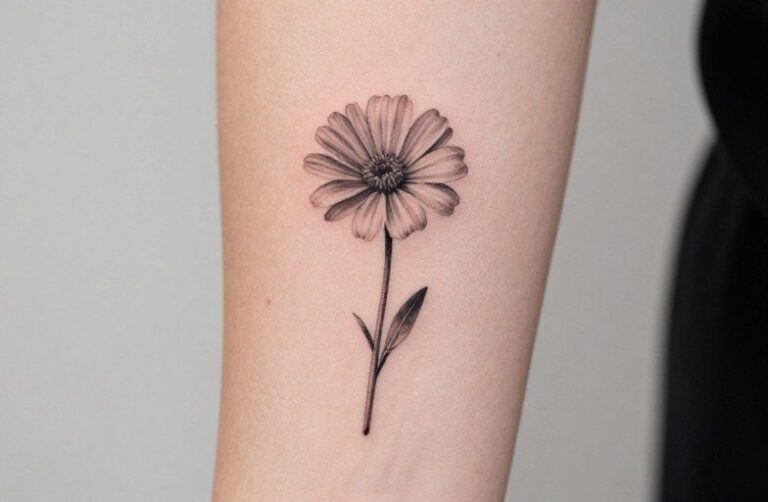
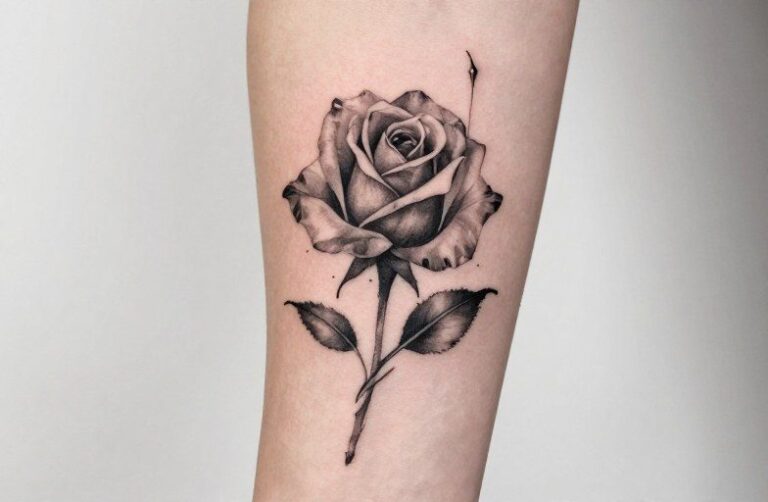
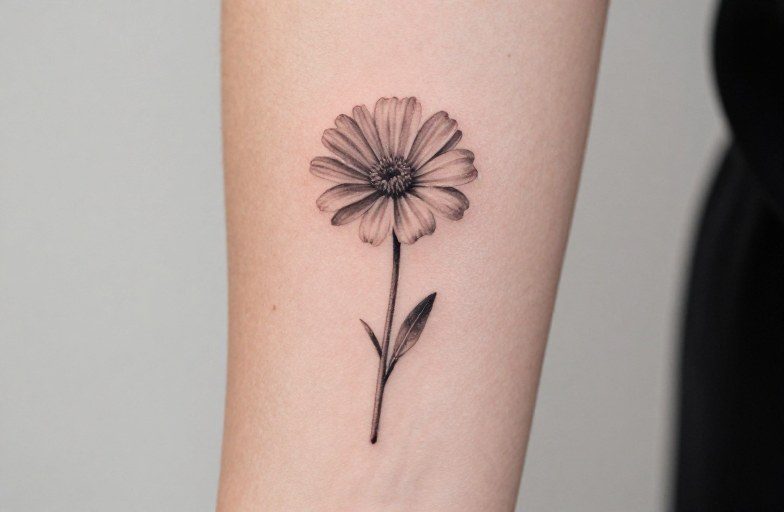
Blackwork florals rely on contrast density rather than hue. A well-executed black and grey rose uses three to four distinct grey values plus solid black for depth. Without color, texture becomes paramount, stippling, whip-shading, and precise line variation create petal softness. These age gracefully because there’s no color to shift, only black to potentially soften slightly.
Green leaves present their own challenge: true green (blue-yellow mix) often heals blue-shifted as the yellow component fades. Artists sometimes compensate by starting more yellow-green than intended, knowing the drift. Discuss this explicitly if leaf accuracy matters to you.
The Takeaway
Rose and flower tattoos reward thoughtful decisions about scale, placement, and style more than most subjects. The forms are forgiving but the details are not, what looks stunning at five inches becomes illegible at two. Color brings life and demands maintenance; blackwork endures with graphic force. Pairing flowers with other imagery succeeds when technical execution unifies, not just when concepts align. For first-timers, simplicity and bold structure beat trendy delicacy. And everywhere, healed results matter more than fresh photos: ask to see them, plan for touch-ups, and choose an artist whose botanical work shows consistent clarity across time. The best floral tattoos grow into your skin rather than fighting it.
Frequently Asked Questions
How long does a detailed color rose tattoo take to complete?
A palm-sized traditional rose with color runs 2, 3 hours. Realistic work with full shading and background can demand 4, 6 hours or multiple sessions. Size, style, and your skin’s cooperation all affect chair time significantly.
Do rose tattoos on dark skin tones need special color considerations?
Deeper skin carries more melanin, which interacts with pigment. Bright reds and oranges show vibrantly; light pastels and yellows may struggle for visibility. Experienced artists adjust value contrast and sometimes favor jewel tones over pale washes for optimal clarity.
Can I cover an old tattoo with a new floral design?
Flowers excel at cover-ups because their organic shapes disguise underlying lines. Dark centers, heavy leaf clusters, and strategic black backgrounds absorb old ink. Success depends on the existing tattoo’s density and the new design’s planned darkness, consult specifically for cover-up portfolios.
Why do my flower tattoo’s petals look less defined after healing?
Healing involves plasma and ink settling; some lines soften slightly. More often, the issue was insufficient initial lineweight or detail packed too small. Fresh tattoos always look sharper than healed ones. If definition drops dramatically, the design may have been under-scaled for its complexity.