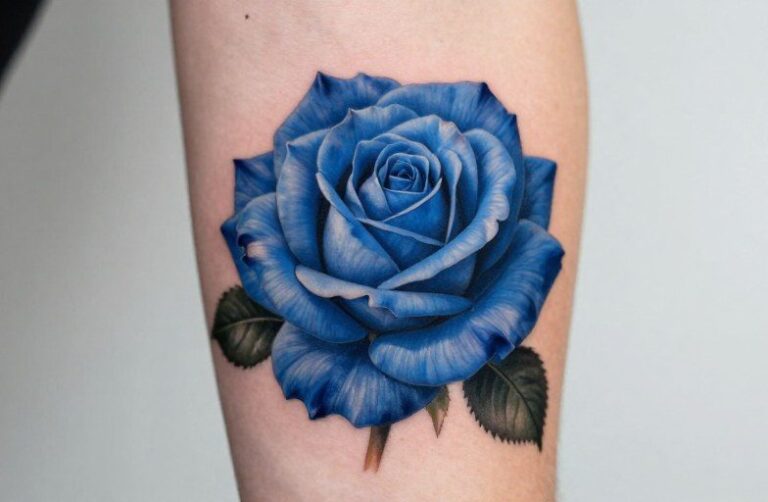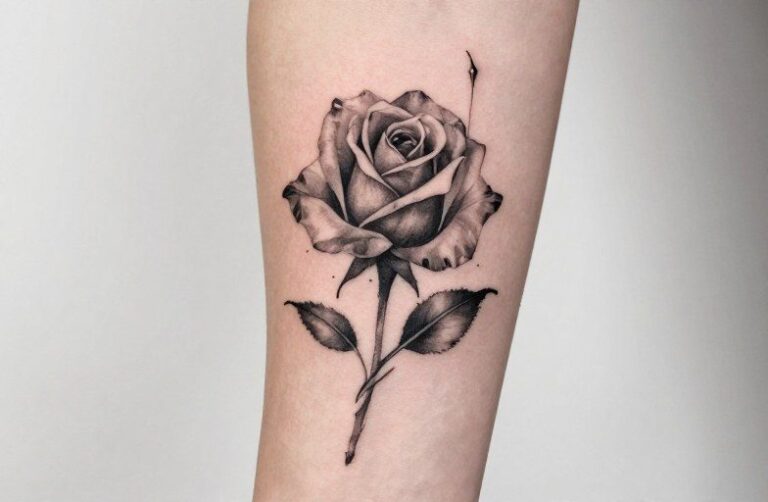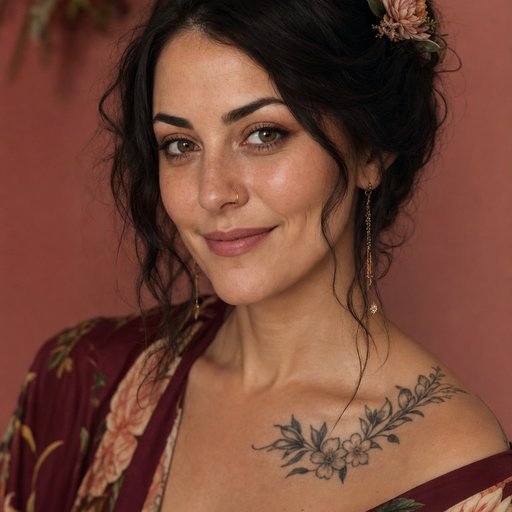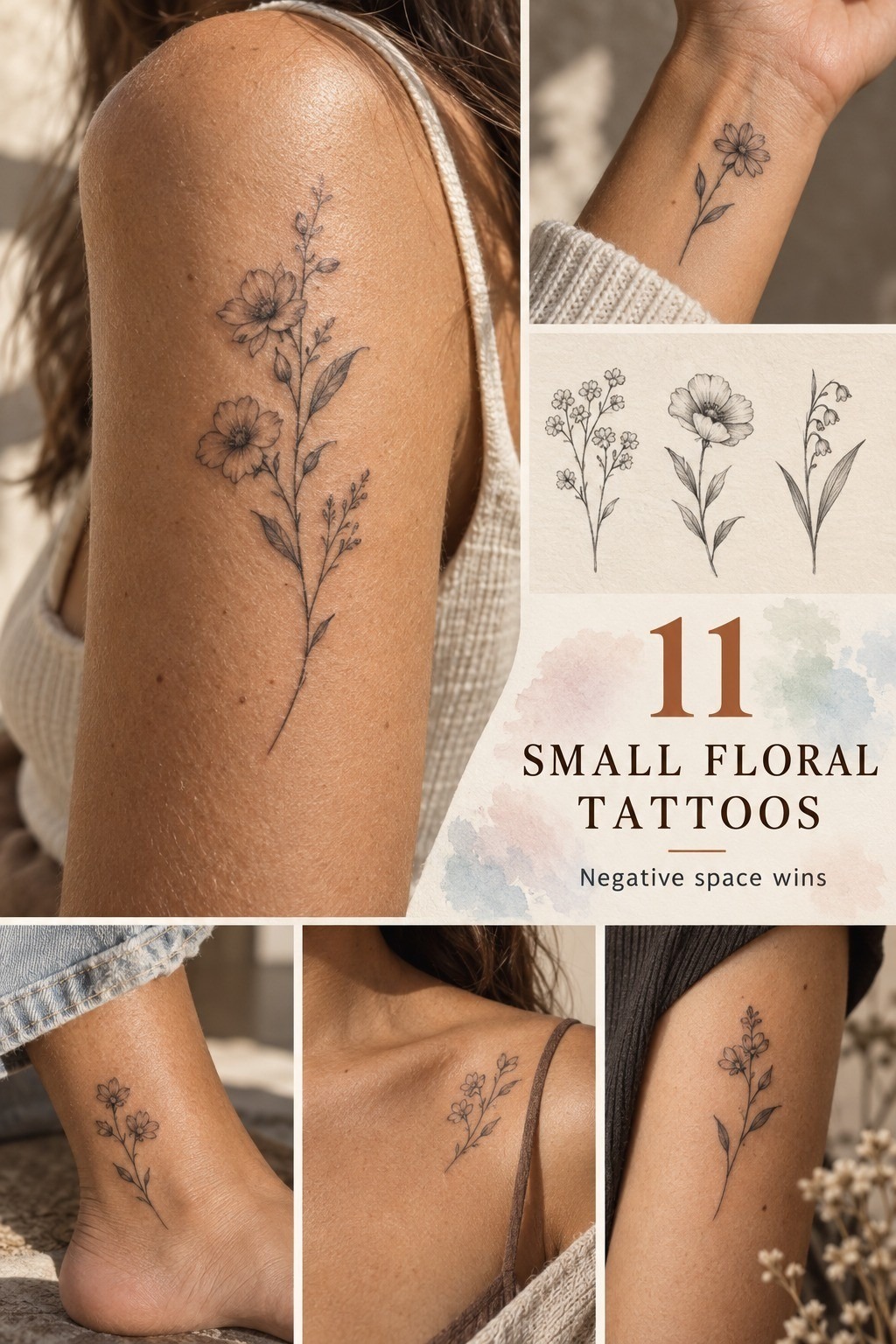
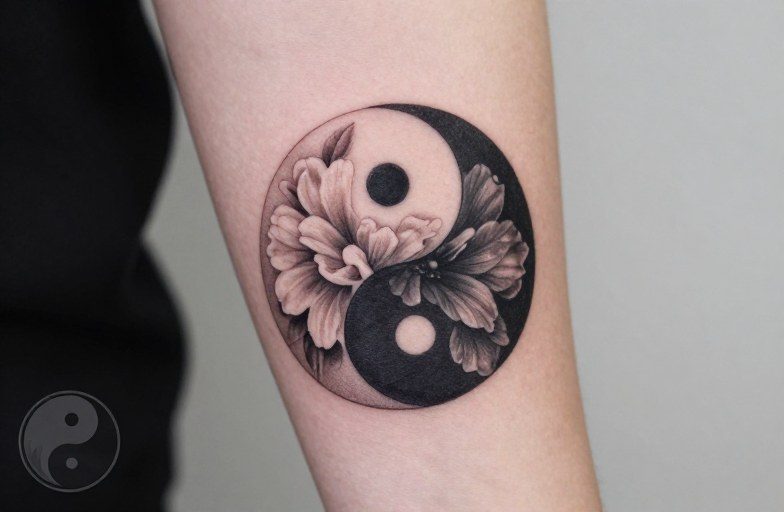
A yin yang flower tattoo holds the ancient circle of interlocking forces against something softer: petals that open and close, stems that bend, roots that tangle underground. The meaning stays grounded in duality, light against dark, movement against stillness, but the flower keeps it from freezing into pure abstraction. Most people who choose this design are marking a balance they have found, or one they are still learning to maintain through change.
Color vs Black and Grey
How you handle color changes the emotional weight of this piece more than with most designs. The yin yang itself reads as stark geometry; adding a flower either sharpens that contrast or dissolves it entirely.
Full Color Approaches
Splitting the flower across the black and white halves creates immediate visual tension. A lotus in full color on the yang (white) side, desaturated or fully black on the yin side, makes the duality literal. Reds and pinks warm up the yang energy; deep purples or blues push the yin side toward stillness. This works best at medium to large scale: shoulder blade, outer thigh, or ribs, where the color blocks have room to breathe without bleeding together over time.
One practical note: bright colors in the white half of a yin yang can look muddy against pale skin. Yellows and light oranges especially tend to disappear. Darker skin carries the black ink more boldly, which can flatten the white half unless your artist builds it with negative space and skin-tone contrast rather than trying to force white pigment where it will not hold.
Black and Grey Techniques
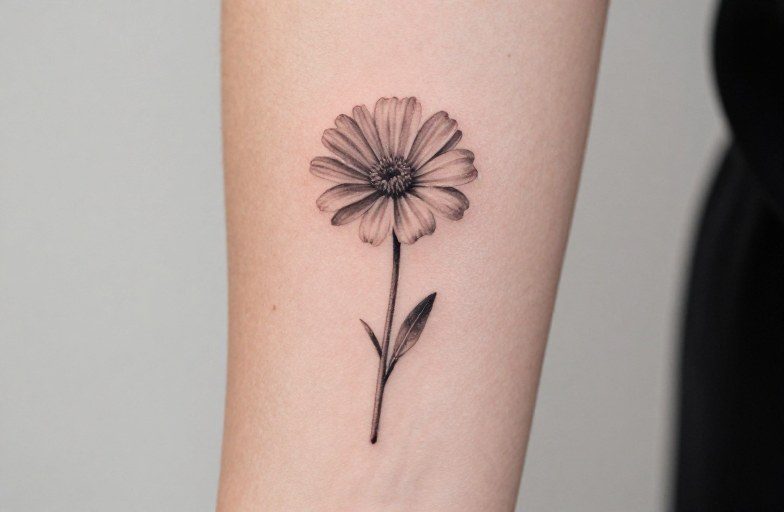
Stippling, whip shading, and fine line work let a flower exist inside the yin yang without breaking its silhouette. A rose rendered in dotwork across both halves, with density shifting from sparse (yang) to concentrated (yin), keeps the symbol intact while adding texture. This ages cleaner on hands, wrists, and other high-movement spots where color saturation tends to drop out unevenly.
Black and grey also lets you play with the flower as negative space, petals carved out of the black half, stem emerging from the white. That inversion reads subtle from a distance and rewards closer inspection.
Design Tips and Pairings
Placement and surrounding elements shape how this tattoo functions day to day. Small yin yang flower designs on the wrist or behind the ear trend toward jewelry-like aesthetics; larger pieces on the back or thigh become personal landmarks you see less often but feel more deliberately.
Scale and Placement Reality
- Under 2 inches: The flower detail becomes symbolic rather than readable; expect abstraction, not botany. Fingers and side of the neck fit here, but plan for touch-ups as the fine lines blur.
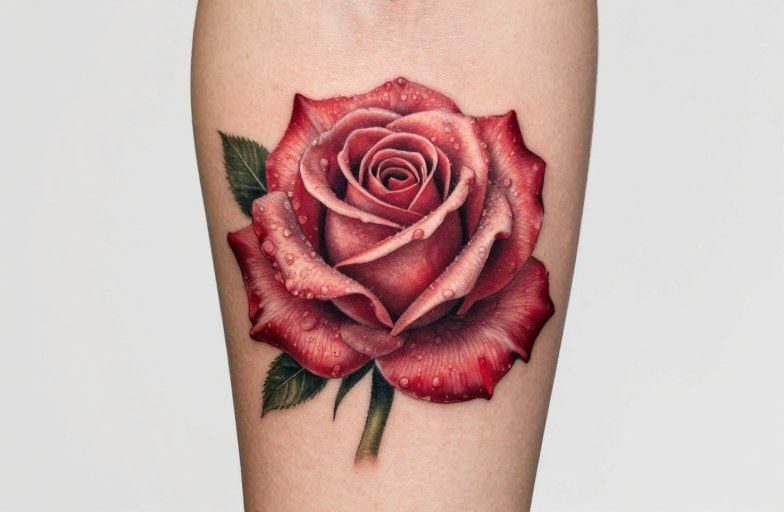
- 3 to 5 inches: Enough room for a recognizable bloom, lotus, cherry blossom, or rose, without crowding the yin yang curve. Inner forearm and calf carry this well.
- 6 inches and above: Full composition territory. The flower can interact with the symbol rather than simply sitting inside it, roots wrapping the circle, petals breaking the boundary, multiple blooms at different stages of opening.
Pairing with water, moon phases, or koi fish extends the Taoist-natural theme without cluttering. A single lotus rising from a yin yang pool on the upper back reads as complete narrative without needing additional elements. Geometric frames, hexagons, mandala edges, can fight the organic flow; if you want structure, let the flower’s stem provide it instead.
History and Cultural Roots
The yin yang symbol itself, often linked to Zhou Dynasty China and later developed through Taoist philosophy, represents complementary forces rather than strict opposition. The small dots within each half, black within white, white within black, acknowledge that each force contains the seed of its opposite. This is not conflict resolution; it is coexistence recognition.
Flowers carry their own layered symbolism across East Asian traditions. The lotus, commonly associated with Buddhist purity emerging from mud, pairs naturally with the yin yang’s water-and-earth associations. Cherry blossoms, tied to Japanese mono no aware (the pathos of impermanence), add temporal weight: the balance you find is temporary, seasonal, requiring renewal. Peonies in Chinese art represent prosperity and honor, and are often linked to protective qualities when paired with symbolic imagery.
Western adoption of these combined motifs grew noticeably during the 1990s, though the fusion may have appeared earlier in Asian diaspora communities where cultural symbols blended with American tattoo vocabulary. Today’s designs range from faithful traditional representation to loose interpretation where the yin yang becomes barely visible, dissolved into petals.
Similar and Related Symbols
Understanding adjacent imagery helps clarify what you are actually asking for, and gives your artist reference points beyond the obvious.
Close Visual Cousins
The enso, the open Zen circle, shares the yin yang’s circular form but rejects its internal division. Where yin yang insists on duality, enso suggests completion through imperfection, often drawn in a single brushstroke. A flower breaking an enso’s edge reads as emergence; a flower contained within yin yang reads as managed growth.
Mandala structures offer radial balance rather than bilateral. Flowers at mandala centers radiate outward in all directions; yin yang flowers pull tension between two poles. Your preference likely maps to whether you experience balance as distributed or contested.
The vesica piscis, two overlapping circles, creates a similar lens shape to the yin yang’s central curve, but in Christian and sacred geometry contexts. Flower-of-life patterns built from this overlap share the yin yang flower’s mathematical-organic hybrid quality without the Taoist philosophical load.
Mythology and Folklore
Specific stories behind this combined motif remain sparse; it is largely a visual fusion rather than a narrative tradition. However, the component symbols carry folklore that informs how the tattoo functions.
In Chinese origin stories, often linked to the philosopher Laozi, the Tao itself precedes the separable world: yin and yang emerge from undifferentiated unity, not the reverse. The flower that grows from this duality, then, represents a return to complexity from simplicity, or the world’s refusal to stay abstract.
Japanese folklore places the lotus in contexts of death and rebirth, particularly in Pure Land Buddhist imagery where souls arrive on lotus thrones. A yin yang lotus tattoo can quietly reference this transit, death and life as the ultimate dualism, without requiring explicit religious commitment. The cherry blossom’s association with samurai mortality adds sharper edge: beauty and destruction as inseparable as the symbol’s halves.
Western floral language, the Victorian tradition of floriography, lets you specify meaning through bloom choice. Roses for love (or secrecy, depending on color), marigolds for grief, lavender for distrust. Layering this onto yin yang structure creates personal code: your specific balance of emotions rendered in botanical shorthand.
Personal and Modern Meanings
Contemporary wearers rarely invoke full Taoist philosophy; instead, the symbol gets repurposed for lived dualities. Recovery and addiction. Independence and partnership. Ambition and contentment. The flower element specifically tends to mark growth as process rather than destination, a blooming that continues, withers, and returns.
The design’s visibility has increased alongside mental health awareness movements, where the yin yang’s acceptance of darkness resonates against toxic positivity. The flower keeps it from reading as purely philosophical or detached; it grounds the abstraction in bodily, seasonal experience. A half-dead rose split across the symbol’s curve can acknowledge depression without romanticizing it.
Gender associations have shifted. Historically, floral yin yang designs skewed feminine in Western tattoo culture; current execution varies widely, with bold blackwork and aggressive placement (throat, hands, chest) dissolving that distinction. The symbol itself carries no gender in its origins, and modern wearers increasingly treat it as neutral territory.
What to Remember
The yin yang flower tattoo succeeds when the two elements genuinely interact rather than simply coexist. A flower pasted inside a stock symbol reads as clip art; a bloom that grows from, breaks, or redefines the circle’s edge becomes something particular to you. Work with an artist who understands both the geometry’s precision and the organic form’s refusal to stay precise.
Consider your flower choice as carefully as your placement. A lotus carries different weight than a rose, a cherry blossom different than a peony. These are not interchangeable decorations; they are the specific emotional vocabulary of your piece. The yin yang provides the structure of balance, but the flower tells what kind of balance you mean: one that rises through mud, one that blooms briefly and falls, one that thorns as it opens.
Healing will test the design’s integrity. Color saturation settles, black lines spread slightly, the finest details soften. Plan for this by building contrast into the original composition, not relying on future clarity that time will not preserve. The best yin yang flower tattoos look intentional at five years and twenty, because the balance was built into the initial structure, not just the initial impression.
Your relationship to the symbol will also shift. What reads as equilibrium today may read as tension tomorrow, or peace, or something you no longer need to carry visibly. The flower’s seasonal quality helps here: it makes the tattoo about ongoing process rather than fixed statement. That is the real strength of this design. Not that it captures a moment of balance, but that it admits balance is always moving.
Frequently Asked Questions
What does a yin yang flower tattoo mean?
It represents balance within growth: the yin yang’s duality of light and dark, action and stillness, combined with a flower’s living, seasonal quality. The specific meaning depends on your flower choice and how the two elements interact in the design.
Which flower works best with a yin yang tattoo?
Lotus, rose, cherry blossom, and peony are common choices, each carrying distinct symbolism. Lotus suggests purity emerging from difficulty; cherry blossom emphasizes impermanence; rose carries love or secrecy; peony connects to prosperity and protection. Choose based on what balance you are marking, not just visual preference.
Should I get a yin yang flower tattoo in color or black and grey?
Color makes the duality literal and dramatic but requires more space and fades faster on high-movement areas. Black and grey ages cleaner, allows negative space techniques, and keeps the symbol’s silhouette intact. Consider your skin tone, placement, and how much maintenance you are willing to commit to.
Where is the best placement for a yin yang flower tattoo?
Medium to large scales (3 inches and above) suit the shoulder blade, outer thigh, ribs, upper back, inner forearm, and calf. Small versions work on wrists and behind the ear but become abstract rather than botanically detailed. Fingers and side of the neck need touch-up planning.
Is a yin yang flower tattoo culturally appropriative?
The yin yang symbol has been widely adopted globally, but thoughtful execution matters. Avoid treating it as purely decorative; understand the philosophy you are referencing. Working with an artist who respects the symbol’s origins, and choosing flower pairings that make personal sense rather than random exoticism, helps keep the tattoo grounded in genuine meaning rather than superficial collection.