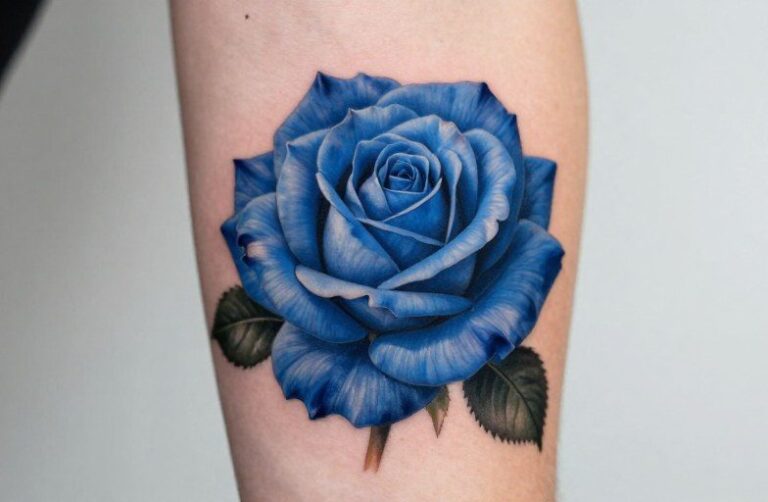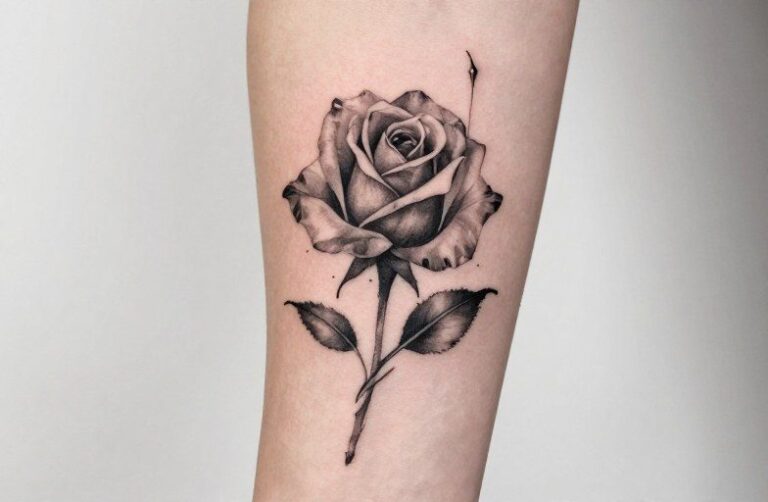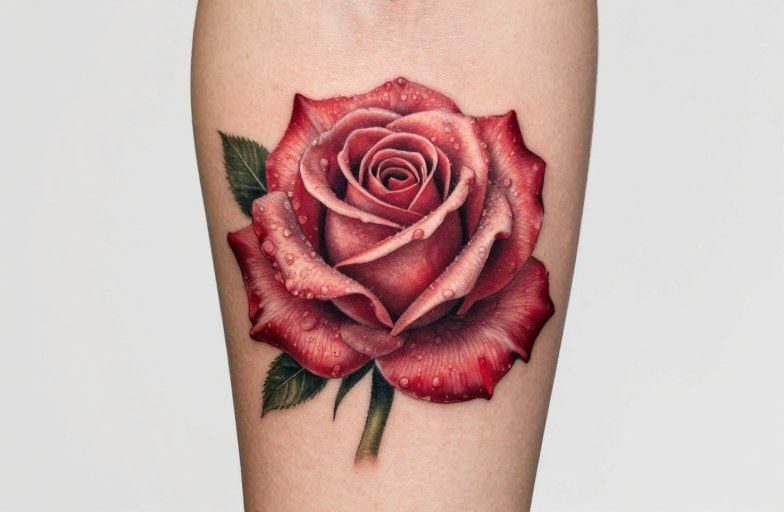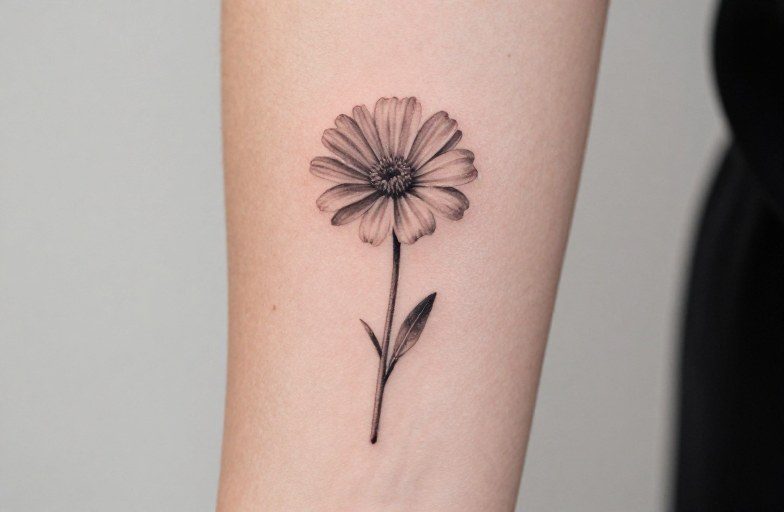
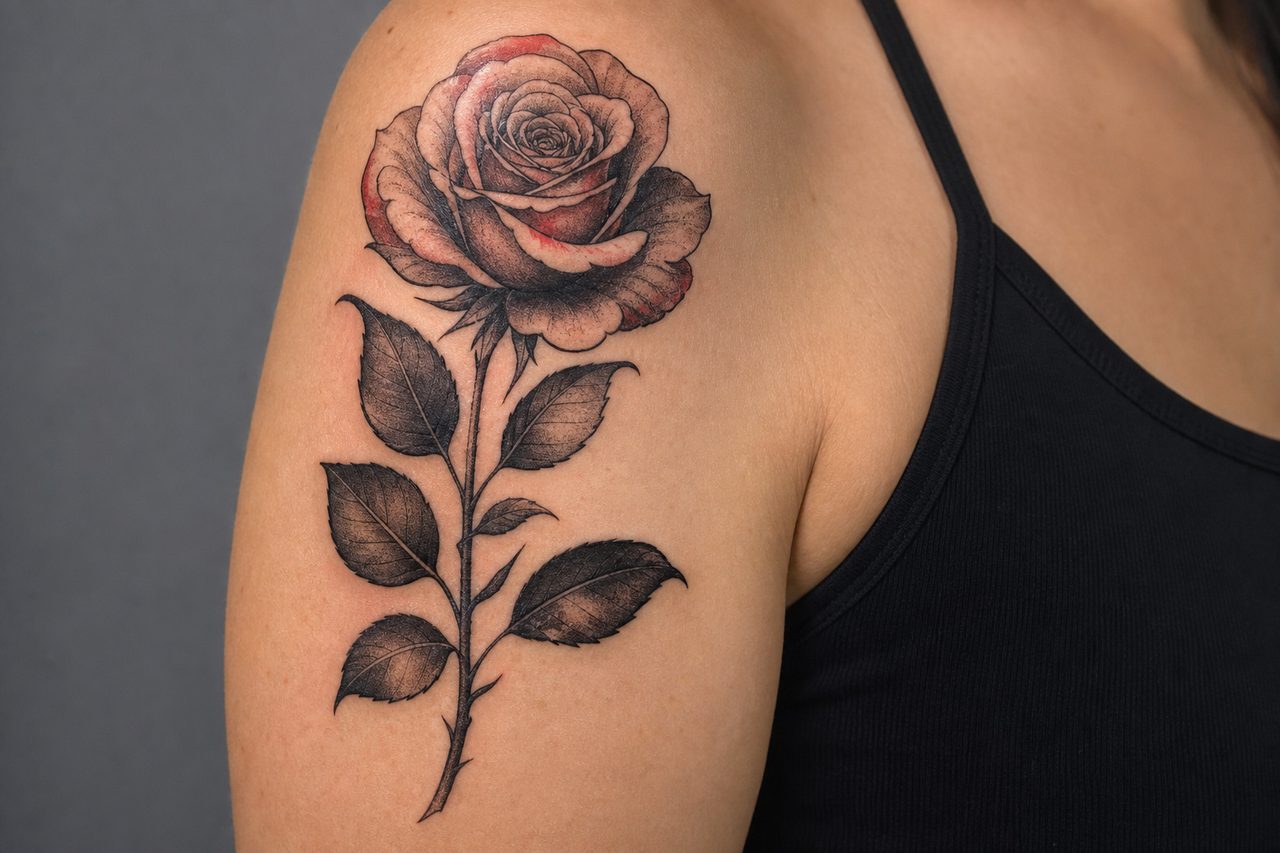
A rose tattoo most commonly signals love, beauty, and passion, but the full picture includes thorns, blood, and loss. The meaning tightens or loosens depending on color, whether thorns appear, what accompanies the bloom, and where it sits on the body. Black and grey roses lean memorial; red ones stay classic romantic; yellow or white shift the reading toward friendship, purity, or new beginnings. The thorn is not decorative, it is part of the symbol.
Symbolism & Core Meaning
The Duality Built In
The rose’s symbolism rests on contradiction. Soft petals against hard thorns. Fragrance and wound. Beauty that demands care. This duality makes it one of the most adaptable tattoo symbols across cultures and centuries. A single rose without thorns reads as straightforward admiration or romantic love. Add thorns, and the meaning complicates, beauty with cost, love with risk, life with pain. Skulls nestled among petals push further into memento mori territory: the bloom fades, the bone remains.
Color as Language
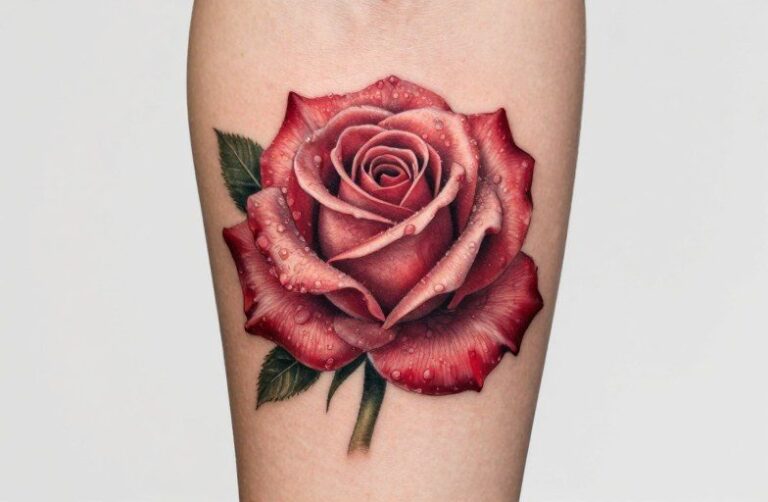
Color changes everything in rose tattoo meaning. Red maintains its grip as the color of romantic passion and desire. Black roses, whether literal black ink or deep purple so dark it reads black, connect to death, grief, and farewell. White roses suggest purity, innocence, or spiritual love. Yellow historically signaled friendship and joy, though some European traditions tied it to jealousy or infidelity. Pink occupies the middle ground, gratitude, gentle affection, admiration. A blue rose, impossible in nature, carries the weight of the unattainable or the engineered. Multicolor roses in a single design usually serve aesthetic rather than symbolic purposes, though a deliberate gradient can suggest transition or growth.
- Red: passion, romantic love, desire
- Black/deep purple: death, grief, rebellion, farewell
- White: purity, innocence, spiritual love
- Yellow: friendship, joy, occasionally jealousy
- Pink: gratitude, admiration, gentle affection
- Blue: the unattainable, mystery, engineered rarity
Mythology & Folklore
Greek and Roman Threads
The rose often links to Aphrodite and Venus, goddesses of love, with myths tracing the flower’s red color to blood, either from the goddess herself or from her wounded lover Adonis. In Roman telling, roses symbolized secrecy and confidentiality. The phrase “sub rosa” (under the rose) indicated private matters not to be repeated. This thread of secrecy and hidden knowledge still surfaces in tattoo designs where roses accompany eyes, keys, or sealed lips.
Later European Folklore
Celtic and broader European folklore treated the rose as a threshold plant. Roses growing over a grave meant the departed soul was at peace. A rose with seven petals was thought to confer fairy sight. In tattoo translation, these associations rarely appear explicitly, but they explain why roses pair naturally with coffins, tombstones, and memorial portraits. The flower marks boundaries between worlds.
Religious & Spiritual Angles
Christian Symbolism
The rose carries significant weight in Christian iconography, often linked to the Virgin Mary as the “rose without thorns”, a symbol of sinless purity. The rosary itself derives its name from this association. Medieval mystics, particularly Teresa of Avila, used the rose as a metaphor for divine love and the soul’s union with God. In tattoo work, this manifests as roses with crosses, praying hands, or scriptural text. The thorned rose specifically connects to Christ’s crown of thorns and the suffering embedded in redemption.
Sufi and Mystical Traditions
Some trace the rose’s spiritual significance to Sufi poetry, where it represents divine beauty and the beloved. The nightingale’s longing for the rose became a central metaphor for the soul’s desire for God. Rumi’s extensive use of rose imagery filtered into Western awareness through translation, and occasionally surfaces in tattoo designs that pair roses with birds or Persian calligraphy. The meaning here tilts toward spiritual longing rather than romantic or memorial.
History & Cultural Roots
European Tattoo Tradition
Roses entered Western tattooing through multiple channels. British sailors carried them as reminders of home and beloveds left behind, a practice that solidified the rose’s place in traditional American tattooing. The design traveled through port cities and merged with other influences. In this context, the rose was never neutral, it was always someone’s name, a specific memory, a particular harbor. The traditional rose, bold outlines and saturated red, still carries this weight of specific attachment rather than abstract decoration.
Chicano and Latin American Influence
Chicano tattoo culture developed distinctive rose imagery, often photorealistic, frequently black and grey, integrated with religious figures, portraits of family members, and prison-style lettering. Here the rose serves as both beauty and penance, decoration and devotion. The specific rendering, soft shading, careful attention to petal texture, integration with script, differs markedly from the bold traditional approach. Understanding this lineage matters for anyone considering a rose tattoo, as the style choice itself carries cultural signaling.
Design Tips & Pairings
Placement and Scale
Roses work at almost any scale, but the meaning shifts with size and placement. A small rose behind the ear or on the wrist reads as personal, quiet, possibly hidden. The same design at chest scale or as a full sleeve becomes public declaration. The upper arm and shoulder offer traditional placement with good aging potential, the skin moves less and sun exposure is easier to manage. Hand and finger roses make bold statements but fade faster; the detail that reads as a petal at first quickly becomes a blur. Neck and throat placement carries undeniable visibility and social weight.
Common Pairings and Their Effect
What surrounds the rose reshapes its meaning. Daggers through roses suggest betrayal, protection, or the defense of something beautiful. Skulls with roses are memento mori, remember death, celebrate life. Clocks or hourglasses introduce time and mortality. Names and dates anchor the rose to specific people and events. Snakes wrapped around stems suggest temptation, transformation, or danger coiled within beauty. Birds, swallows, crows, eagles, add freedom or death-omen dimensions depending on species. Each pairing is a sentence; the rose is the subject, the companion is the verb.
- Dagger: betrayal, protection, sacrificed beauty
- Skull: memento mori, life/death balance
- Clock/hourglass: time, mortality, fleeting moments
- Name/date: memorial, specific attachment
- Snake: temptation, hidden danger, transformation
- Birds: freedom, travel, specific omen by species
Line Work vs. Shading
Bold line work with minimal shading carries the traditional tattoo signal, timeless, graphic, readable across decades. Heavy black and grey shading with soft edges reads more contemporary, more photographic, more emotionally immediate. Color realism demands more skin real estate to work; small color roses often muddy as the ink settles and ages. Black and grey ages more gracefully in small sizes. Watercolor-style roses, popular in the 2010s, have proven particularly vulnerable to fading and distortion as the soft edges bleed and the bright colors dull.
Similar & Related Symbols
Peonies carry comparable layers in Japanese tattoo tradition, beauty, wealth, but also masculine courage and the fleeting nature of prosperity. Lotus flowers share the rise-from-mud narrative but with stronger Buddhist and Hindu spiritual anchoring. Lilies, particularly calla lilies, occupy similar memorial territory with more explicit funeral association. Carnations, especially red ones, carry working-class and labor-movement history that roses lack. For those drawn to the rose’s duality but seeking something less common, the peony offers the closest parallel in complexity and visual weight.
Thorns alone, stripped of petals, appear occasionally as a more severe, more masculine variant, beauty abandoned, only the defense remaining. The bleeding heart flower, despite its name, carries different emotional architecture: vulnerability displayed, not beauty armed.
The Takeaway
The rose tattoo endures because its meaning is structured, not fixed. The thorn is as important as the petal. Color matters. Companions reshape the message. The specific style, traditional, black and grey, photorealistic, minimalist, carries its own cultural weight and aging trajectory. What reads as timeless romance in bold red and green on a sailor’s forearm becomes mourning in black and grey on a shoulder blade. Same flower, different grammar. The rose does not mean one thing. It means what its context insists it means, and that context is yours to build with your artist, your placement, your chosen companions, and your own history with beauty and pain.
Frequently Asked Questions
Does a rose tattoo always mean love or romance?
No. While red roses lean romantic, black roses signal death or grief, yellow ones friendship, and thorned roses often emphasize pain or protection. The surrounding imagery reshapes the meaning significantly.
Do rose tattoos fade faster than other designs?
Color realism roses fade faster than bold traditional work because soft edges and subtle color gradations blur together over time. Black and grey ages more cleanly, especially in smaller sizes.
What does a dagger through a rose mean?
This pairing typically suggests betrayal, sacrificed beauty, or the need to protect something vulnerable. It adds violence or defense to the rose’s standard associations.
Is a rose with thorns different from one without?
Yes. Thorns introduce the element of cost, risk, or defense. A thornless rose reads as pure beauty or uncomplicated love; thorns acknowledge that beauty coexists with pain or requires protection.