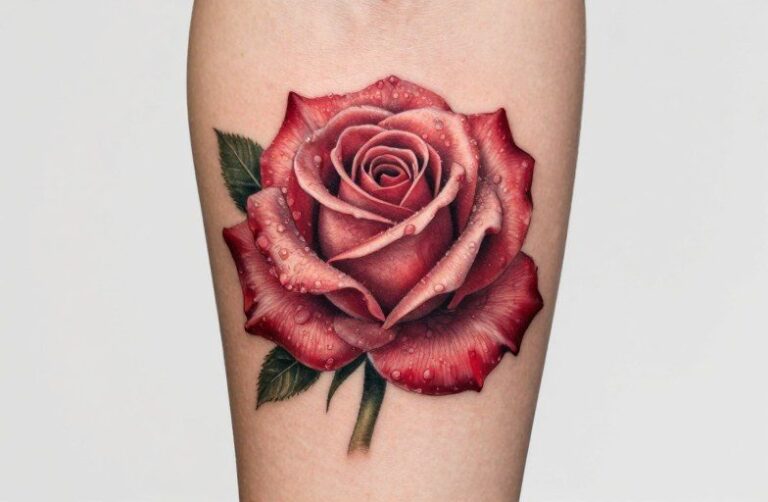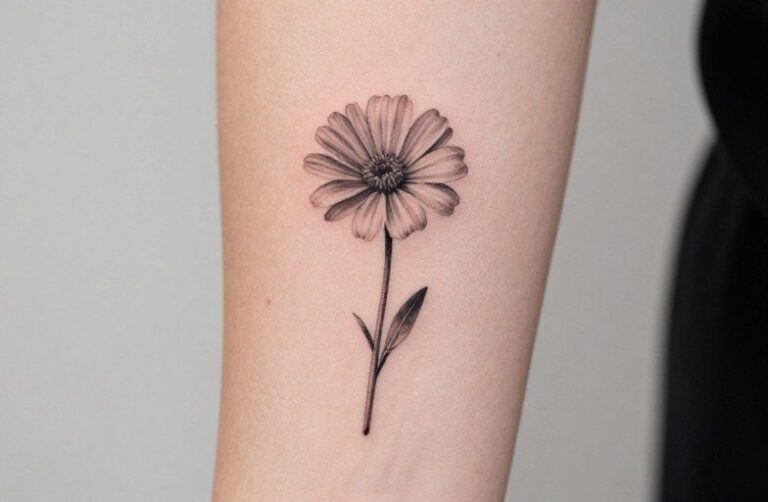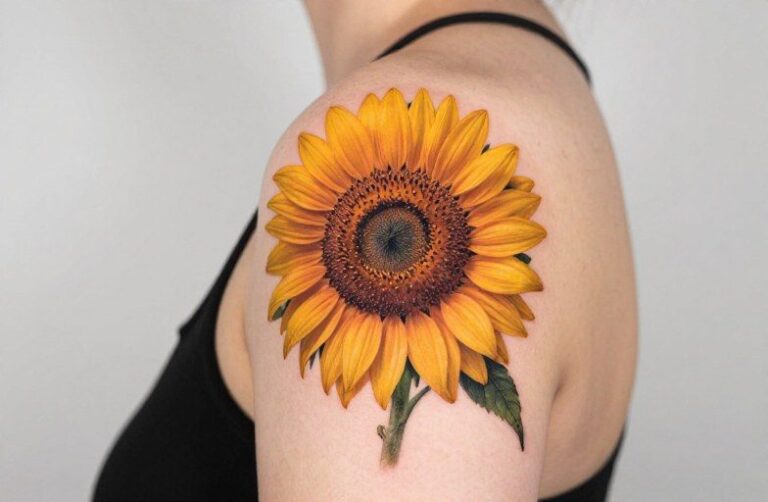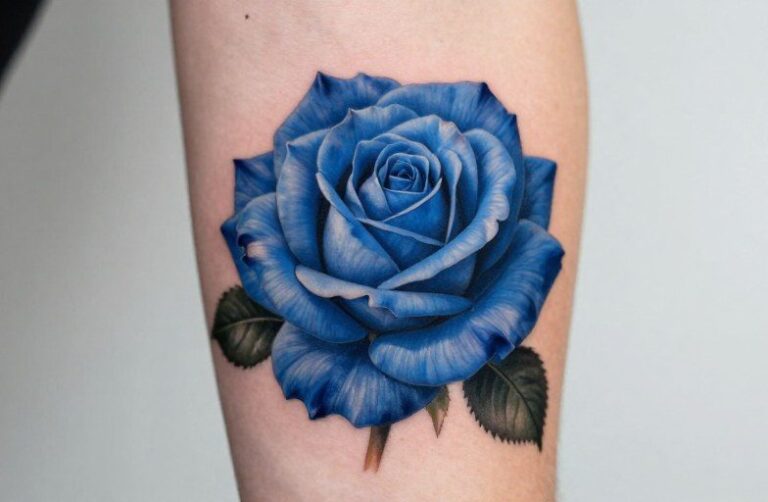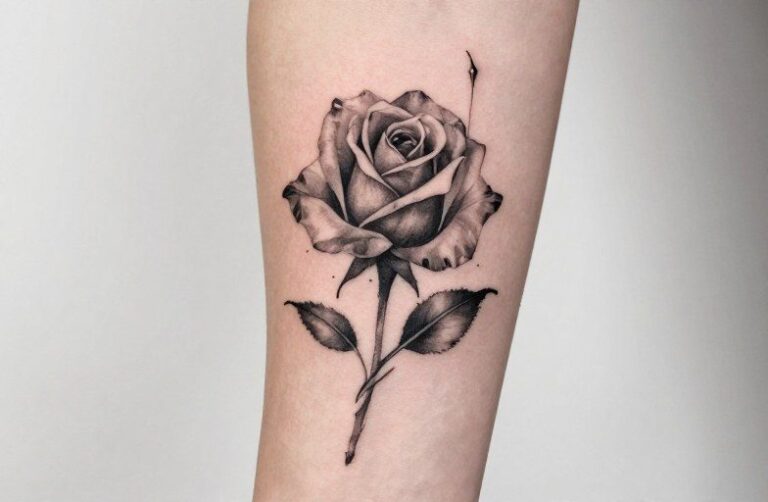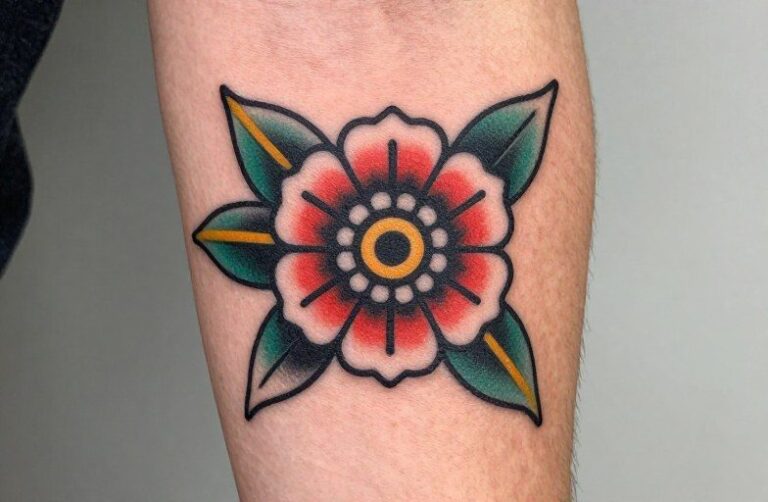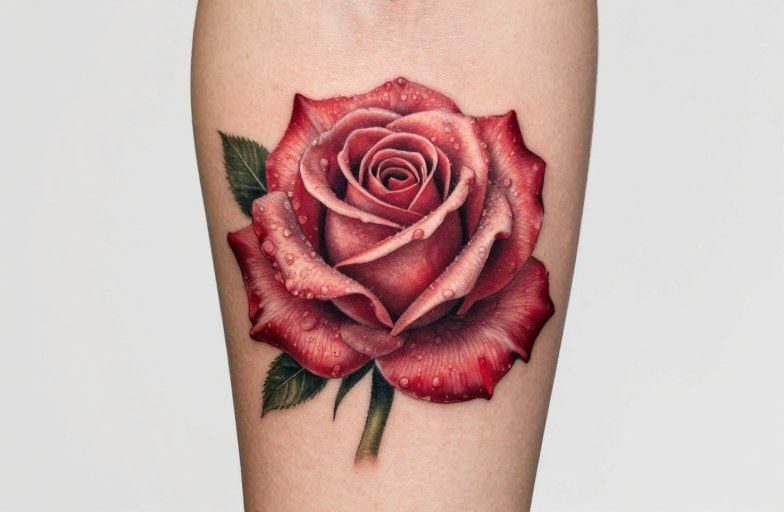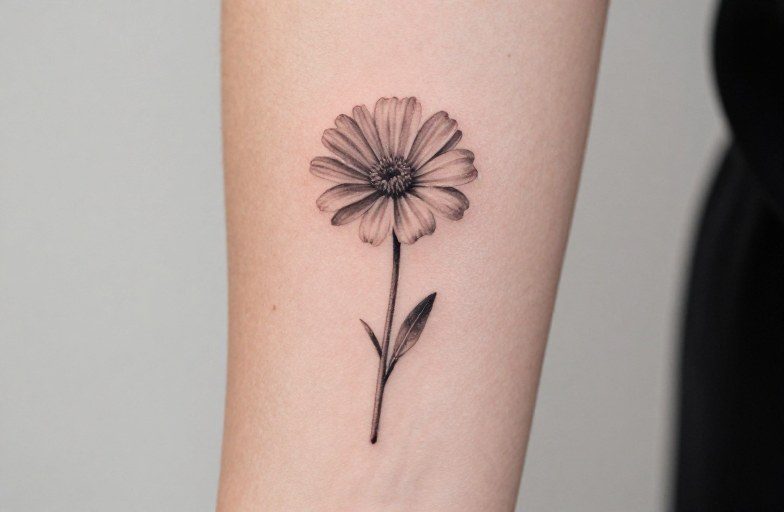
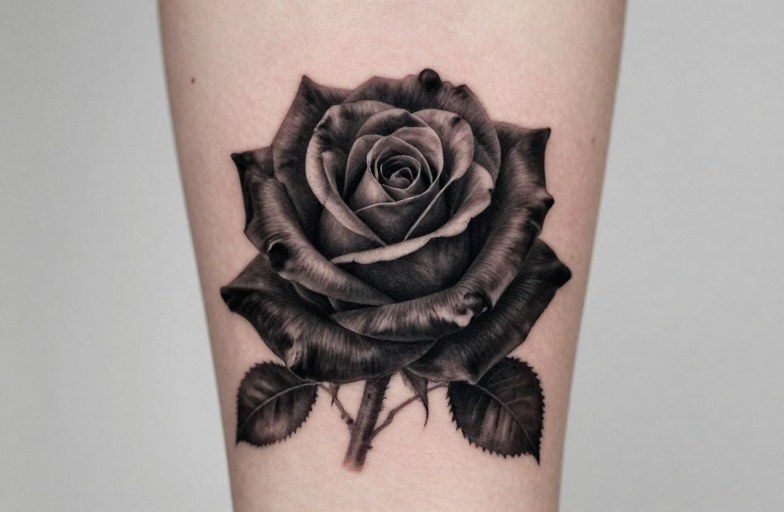
A realistic black rose tattoo is exactly what it sounds like: a rose rendered in grayscale that aims to look photographic rather than graphic. The petals show soft gradients, the edges catch implied light, and the stem carries thorns you could almost feel. Unlike traditional rose tattoos with their bold outlines and saturated reds, this style relies on smooth black-to-gray transitions, negative space for highlights, and obsessive attention to how actual rose petals fold, curl, and catch shadows.
Who It Suits
There’s no personality type required here, but there are skin and lifestyle factors that matter more than with flashier styles.
Skin Tone Considerations
Realistic black and gray work lives or dies on contrast. On very fair skin, the soft gray washes can look stunning but may fade toward a blue haze over time. Medium to deeper skin tones hold the black ink beautifully, though the lighter gray values need to be packed slightly heavier to remain visible as the tattoo ages. The best artists adjust their graywash ratios specifically for your skin tone rather than working from a default formula.
Pain Tolerance and Session Length
These pieces take time. A palm-sized realistic rose with proper detail runs three to five hours minimum. Larger compositions with multiple roses, stems weaving through, or background elements can stretch across multiple sessions. The shading work involves repeated passes over the same areas to build smooth gradients, which means certain spots get worked longer than they would with a simpler design. If you know you tap out after two hours, scale your expectations accordingly or plan a multi-session piece.
Choosing the Right Artist
This is not a style you let a generalist attempt. Realistic black and gray requires specific, demonstrable skills.
What to Look For in a Portfolio
- Healed photos, not just fresh work. Fresh black and gray always looks sharper; healed work shows whether the artist’s gradients actually hold.
- Close-up petal detail. Look for soft edges where the black dissolves into gray, not visible dot patterns or stripey shading.
- Multiple angles of the same piece. Good realistic work holds up from every viewpoint, not just the Instagram angle.
- Roses specifically, or comparable organic subjects with similar texture challenges, soft petals, hard thorns, curved surfaces.
Red Flags
Smooth shading machines or “stipple shaders” don’t automatically make an artist a realism specialist. Watch for portfolios heavy on soft portraits but lacking crisp edge control, roses need both. Also beware artists who only show fresh work; if every photo is gleaming and new, you’re not seeing how their graywash settles at six months or two years.
Common Mistakes to Avoid
Most realistic black rose disappointments stem from decisions made before the needle touches skin.
Going Too Small
Photographic detail needs room. A dime-sized realistic rose becomes a gray blob as it ages and the ink spreads slightly. Minimum workable size for a single realistic rose with visible petal structure: about three inches in the longest dimension. Smaller than that, and you’re better off with a simpler graphic interpretation.
Ignoring the Background
A floating rose with no context rarely looks finished in this style. Even subtle gray haze, soft cast shadows, or minimal stem and leaf work grounds the image and gives the eye somewhere to rest. The background doesn’t need to compete; it needs to exist.
Overworking the Black
Clients sometimes ask for “extra black” thinking it will stay bold longer. In realistic work, heavy black saturation kills the dimensionality. The darkest areas should be the centers of shadowed petals and the deepest stem creases, not the entire outline. Solid black borders are for traditional work, not this.
Aftercare Notes
Realistic black and gray has specific healing vulnerabilities that color work or bold traditional doesn’t share.
The Graywash Risk
Light gray tones are essentially dilute black ink. During healing, if you scab heavily or pick at peeling skin, those delicate grays can lift out unevenly, leaving patchy spots that are hard to fix. The first two weeks demand discipline: keep it clean, keep it lightly moisturized, and let the flakes fall when they’re ready.
Long-Term Fading Patterns
Black and gray tattoos don’t fade to green or blue like some color inks; they fade toward a softer, slightly lighter version of themselves. The problem is uneven fading, areas that were packed lighter (the soft petal highlights) can disappear faster than the darker mid-tones, creating a reversed-contrast effect where the shadows outlast the lights. Sun exposure accelerates this dramatically. A realistic black rose on a frequently sun-exposed forearm will look five years older than the same piece on a upper arm covered by sleeves.
Modern Variations
The style has evolved beyond pure photorealism into several hybrid approaches worth considering.
Single-Needle Detail Work
Some artists now combine realistic form with single-needle linework for petal edges and thorn textures. This creates a slightly illustrative quality while maintaining the grayscale palette. The fine lines age more delicately than pure smooth shading, so expect touch-ups down the line.
Negative Space Integration
Rather than shading every petal fully, artists increasingly leave strategic skin breaks for highlights, almost a blackwork approach to realism. This reads as dramatic contrast and ages exceptionally well since the “brightest” areas are literally untouched skin. The tradeoff is less soft, photographic subtlety.
Morph and Dissolve Effects
Roses that transition into geometric fragments, smoke, or abstract black at the edges have become common. These work best when the realistic portion is fully resolved, half a rose dissolving reads as unfinished, not artistic.
Best Placements
Where you put this matters for both visual impact and longevity.
High-Detail Zones
- Outer upper arm: Flat, stable skin that holds fine detail well. Easy to show or cover. Room for a fully developed rose with stem and leaves.
- Thigh (front or side): Large canvas, minimal daily friction, good for multi-rose compositions. Heals relatively predictably.
- Upper back/shoulder blade: Excellent for roses that wrap slightly onto the shoulder or trail down the back. Skin quality here is usually consistent.
Proceed With Caution
- Inner forearm: High sun exposure, frequent stretching, and the skin here shifts more than people realize. Realistic work can distort and fade unevenly.
- Hands and fingers: The detail level simply doesn’t hold. A realistic rose here becomes unrecognizable within a few years. Choose a bolder, simpler interpretation instead.
- Ribs and sternum: Beautiful placement visually, but the skin moves constantly with breathing and the healing process is more demanding. The pain factor also means artists may work faster than ideal for this detail-heavy style.
Final Word
A realistic black rose tattoo done well is one of the most technically impressive pieces in contemporary tattooing. Done poorly, it’s a muddy gray disappointment that no amount of meaning can salvage. The difference is almost entirely in artist selection and your willingness to give the piece the size, placement, and aftercare it requires. This style demands patience, both in the chair and in the research phase before you ever book. The roses that last are the ones built with technical respect for what black and gray ink can and cannot do on human skin.
Frequently Asked Questions
How long does a realistic black rose tattoo take to complete?
A single palm-sized rose runs three to five hours. Larger pieces with multiple flowers, stems, or background elements typically need two or more sessions. The smooth shading requires multiple passes that can’t be rushed.
Will a realistic black rose tattoo fade to green or blue?
No, black and gray ink fades toward lighter gray, not colored hues. The risk is uneven fading where light gray highlights disappear faster than darker mid-tones, creating reversed contrast over time.
Can you add color to a realistic black rose later?
Technically possible but not recommended. The gray values will compete with color saturation, and the realistic style depends on grayscale tonal range. Adding color typically requires shifting to a different stylistic approach entirely.
How do you fix a realistic black rose that healed patchy?
A skilled artist can reinforce faded gray areas with targeted graywash, but it’s harder than touching up bold traditional work. Prevention matters more here, proper aftercare and sun protection from day one saves you from difficult corrections later.