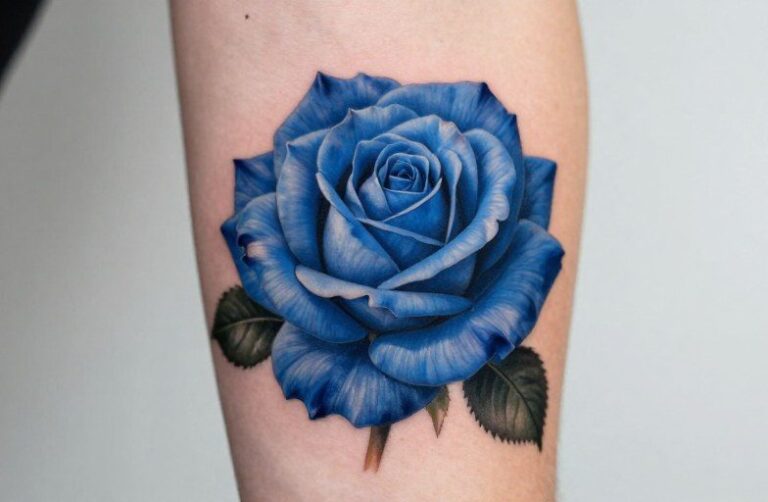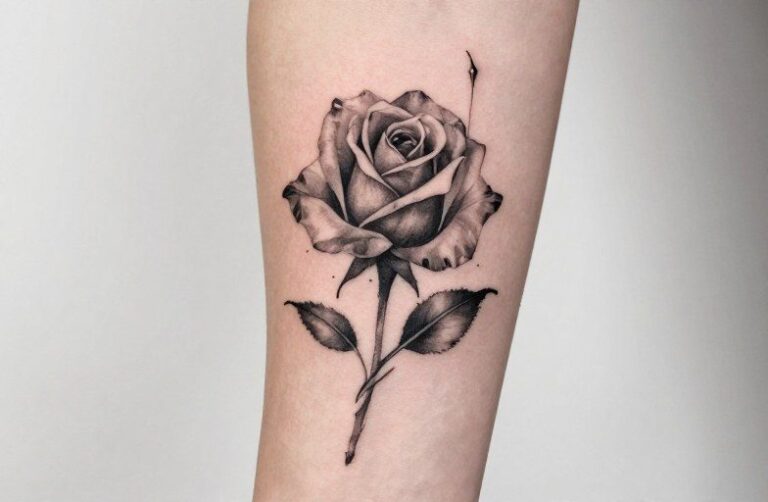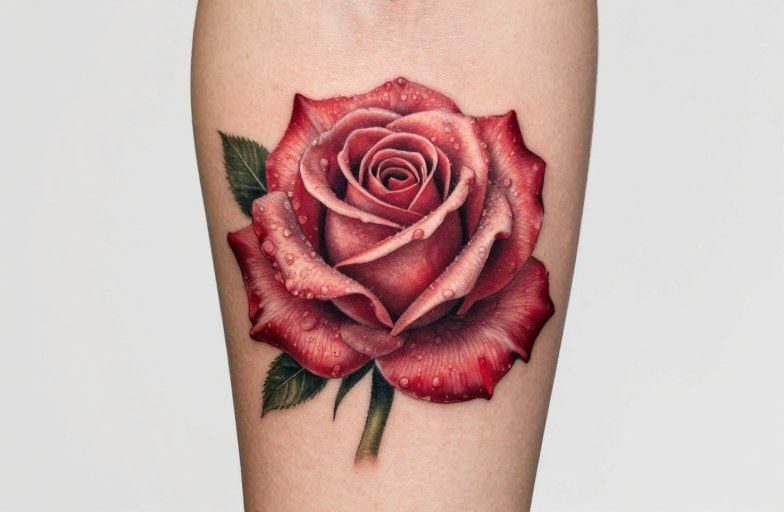
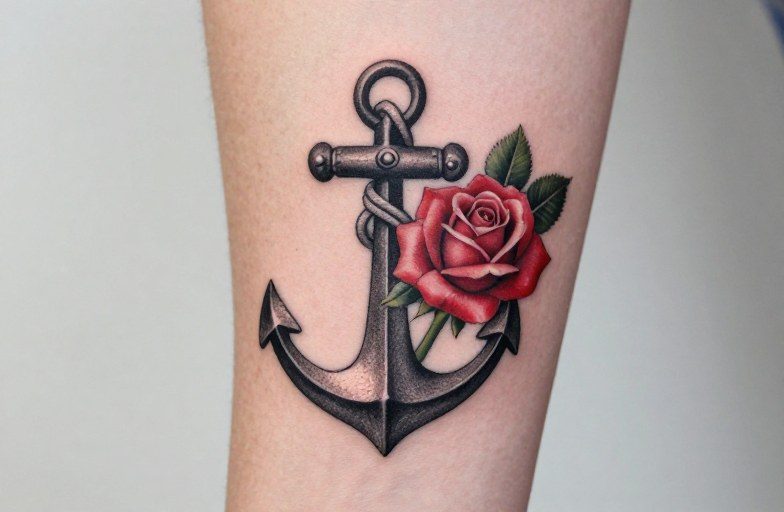
The anchor and rose tattoo fuses two potent symbols: the anchor as steadfastness, hope, and grounded loyalty, and the rose as love, beauty, and the willingness to endure pain for something precious. Together, they typically signal devotion that holds fast through difficulty, romantic, familial, or self-directed. The pairing has been a staple in Western tattooing since at least the early 20th century, particularly among sailors and later in traditional American shops.
Mythology & Folklore
Neither symbol lacks historical baggage, and their combination carries layers that go beyond the obvious.
The Anchor’s Religious and Maritime Roots
The anchor’s symbolic weight predates tattooing by millennia. Early Christians used it as a covert cross during persecution, making it an emblem of faith under pressure. Maritime culture later cemented its association with stability and safe return. Sailors got anchor tattoos after crossing the Atlantic, or sometimes to mark hope of surviving the sea. That religious echo, endurance through trial, still hums beneath the surface in many anchor and rose pieces, even when the wearer isn’t devout.
The Rose’s Thorny Duality
The rose’s meaning is less straightforward than greeting cards suggest. In tattoo tradition, it often represents beauty that coexists with pain, or love that requires sacrifice. Some trace the anchor-rose pairing to sailor culture, where a rose named a sweetheart back home and the anchor promised return. Others see it as a later shop development, combining two reliable sellers into one design. Either way, the rose’s thorns matter as much as its petals in this context, they’re the difficulty the anchor is supposed to weather.
How It Ages on Skin
This pairing presents specific aging challenges that affect how you should plan the piece.
Line Weight and Detail Decay
Anchor and rose designs often combine bold nautical lines with delicate floral detail. The anchor’s rope and chain hold up well, thick, dark lines blur slowly and remain readable for years. The rose is where problems emerge. Fine petal lines, stippled shading, and tiny leaves tend to spread and muddy. On high-movement areas like wrists, elbows, or shoulders, a detailed rose can become a pinkish blob within a decade. Plan for this: either accept a softer, more impressionistic rose over time, or build in heavier line weights and larger negative spaces from the start.
Placement Realities
- Forearm: Excellent visibility, but the rose will catch sun and fade faster than the anchor’s dark lines. Expect to refresh color in 5-8 years.
- Chest/shoulder: Stable skin, good for larger compositions where both elements breathe. The anchor sits well on muscle curves; the rose can wrap toward the shoulder cap.
- Calf or thigh: Lower sun exposure means slower fading, but the anchor’s vertical format can feel cramped on narrow calf muscles.
- Hands or fingers: Not recommended for this pairing. The detail required for a readable rose rarely survives the abuse and rapid ink migration of hand skin.
Color vs Black and Grey
The choice between color and black and grey fundamentally changes what the tattoo communicates and how it endures.
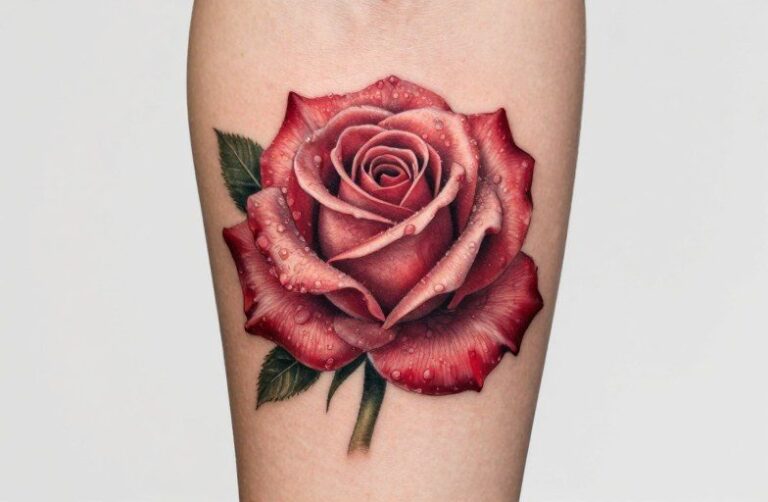
Traditional American execution almost demands bold color: a navy or black anchor, a deep red rose with green leaves, perhaps a yellow banner for names or dates. This reads immediately, carries vintage shop energy, and ages predictably if the color saturation is heavy enough. Light, watercolor-style color in this pairing is risky, the anchor needs weight to feel like an anchor, and a pale rose lacks the contrast to stay distinct.
Black and grey shifts the tone toward memorial or grittier aesthetics. A black anchor with a greywash rose can feel more somber, more about loss or endurance than active romance. It also ages more gracefully in some ways: no color to shift or fade, though the rose’s subtle grey tones can disappear into skin if the contrast isn’t aggressive enough. For longevity, a black and grey anchor and rose needs darker rose shading than intuition might suggest.
Similar & Related Symbols
The anchor and rose doesn’t exist in isolation. Understanding its neighbors helps clarify what you’re actually asking for.
Anchor with Heart or Dagger
Swap the rose for a heart and the meaning narrows to romantic fidelity specifically, less about enduring hardship, more about straightforward devotion. Add a dagger through the rose and you introduce betrayal, sacrifice, or protection through violence. The anchor-rose pairing sits in a middle space: love tested by circumstance, not by malice.
Rose with Compass or Clock
These combinations share the rose’s romantic or memorial weight but shift the framework. Compass and rose suggests love as direction or journey. Clock and rose is explicitly about time, mourning, aging, seizing the moment. The anchor’s specificity is stability: not where you’re going, not how much time you have, but what holds you in place.
Who Chooses This Tattoo
Patterns emerge in who requests this design, though individual reasons vary widely.
People with military or naval connections often gravitate toward it as a variation on service tattoo tradition, sometimes with specific unit numbers or deployment dates worked into the anchor’s banner. Those with seafaring family history use it to mark continuity across generations. Partners getting matching or complementary pieces sometimes choose anchor and rose to symbolize mutual grounding, though this carries risk if the relationship ends, given the design’s strong fidelity associations.
Perhaps most commonly, it’s chosen by people who’ve weathered something significant: illness, loss, recovery, a major life transition. The anchor represents the self or a relationship that held; the rose acknowledges what was beautiful in the struggle, or what was risked and preserved. This isn’t universal, but it’s a recurring thread in consultations.
Common Variations & Styles
The basic pairing adapts across tattoo genres with distinct results.
Traditional American
Heavy black outlines, limited but saturated color palette, stylized rather than realistic rose. The anchor is typically symmetrical, with a rope wrapping the stock and fluke. Banners with lettering are common. This is the most durable style choice and the most immediately readable.
Neo-Traditional
More elaborate rose rendering, sometimes with jewel tones or unusual color choices (purple, orange, blue-black). The anchor may be more ornate, with decorative elements or asymmetrical composition. Line weights vary more, creating visual interest but requiring more careful aging planning.
Realistic or Photographic
A fully rendered rose with a metallic, three-dimensional anchor. Striking when fresh, but the realism demands large scale and suffers disproportionately as detail blurs. Best reserved for larger placements with experienced collectors who understand maintenance.
Minimalist or Single-Needle
Thin lines, little to no shading, maximum negative space. This is a modern interpretation that often loses the symbols’ traditional weight. The anchor can feel insubstantial; the rose becomes merely suggestive. Works for small, personal pieces but sacrifices the pairing’s historical resonance.
Final Word
The anchor and rose tattoo persists because it solves a genuine symbolic problem: how to represent love that doesn’t flinch. It’s not the only solution, and it’s not right for everyone. But executed with attention to line weight, placement, and color strategy, it remains one of the most readable, emotionally direct combinations in tattooing. The best versions don’t try to reinvent the pairing, they simply do the classic well, with skin-specific craft that ensures the message lasts as long as the commitment it represents.
Frequently Asked Questions
Does an anchor and rose tattoo always mean romantic love?
No. While often used for romantic devotion, the pairing also represents familial loyalty, personal resilience, or faith-based steadfastness. The rose’s meaning broadens to beauty or sacrifice in general, not strictly romance.
How big should an anchor and rose tattoo be to age well?
At minimum, palm-sized for the combined design. Smaller pieces lose the rose’s petal definition and the anchor’s structural clarity within a few years. Larger allows proper line weight and spacing between elements.
Can you add names or dates to an anchor and rose design without making it look cluttered?
Yes, typically through a banner across the anchor’s stock or tucked into the rope coils. The key is working with the design’s natural lines rather than forcing text where it disrupts the visual flow.
Is the anchor and rose considered a masculine or feminine tattoo?
Neither, historically. Sailors of all genders wore variations, and modern execution spans styles from aggressively bold to delicate. The symbolism itself, steadfastness and love, carries no gendered weight.