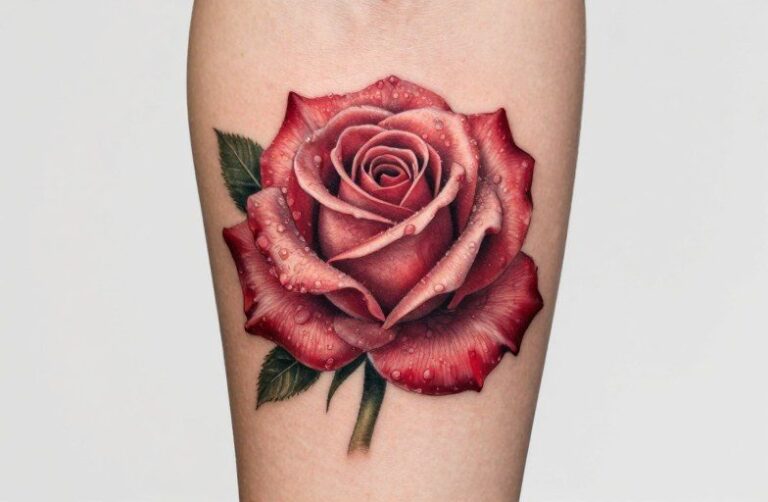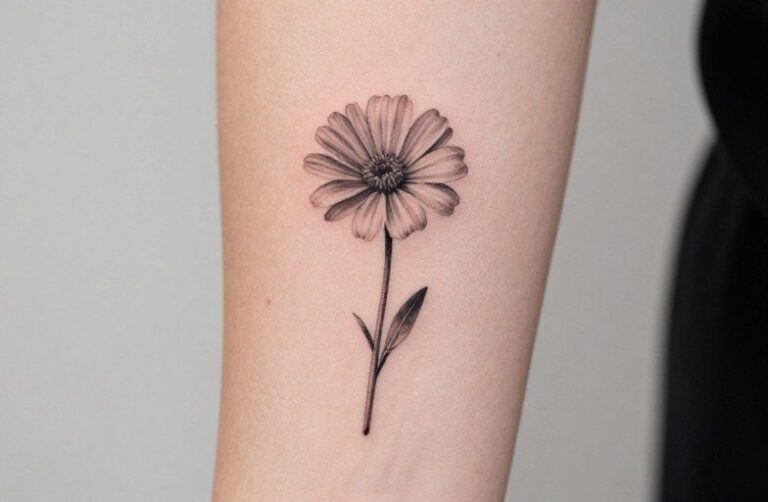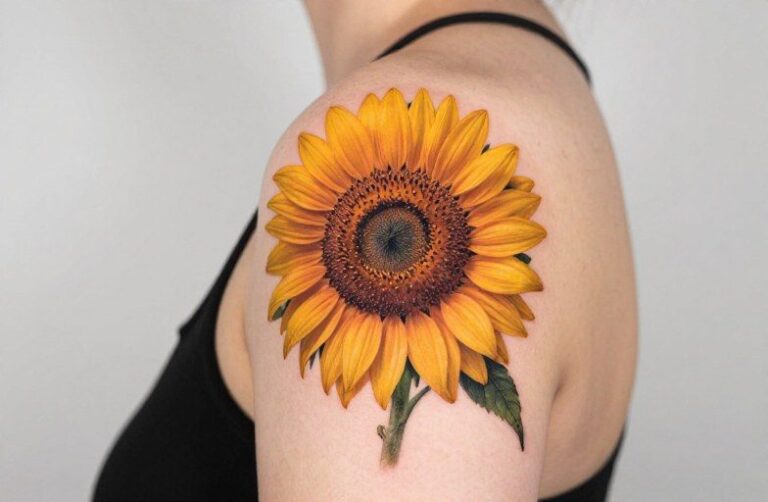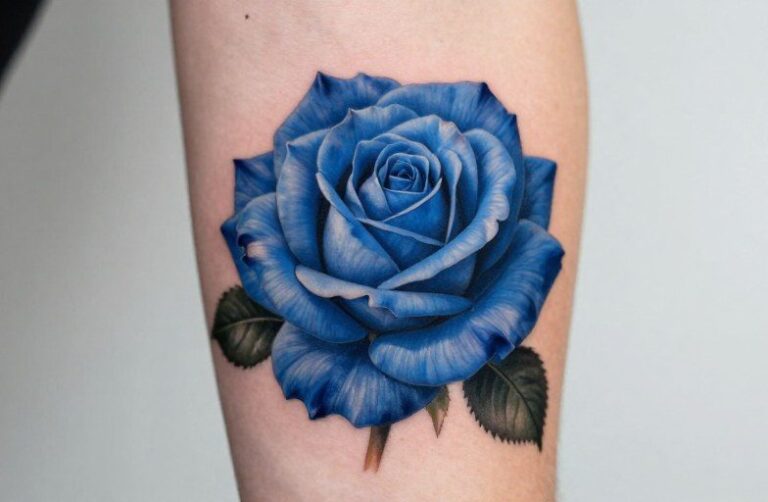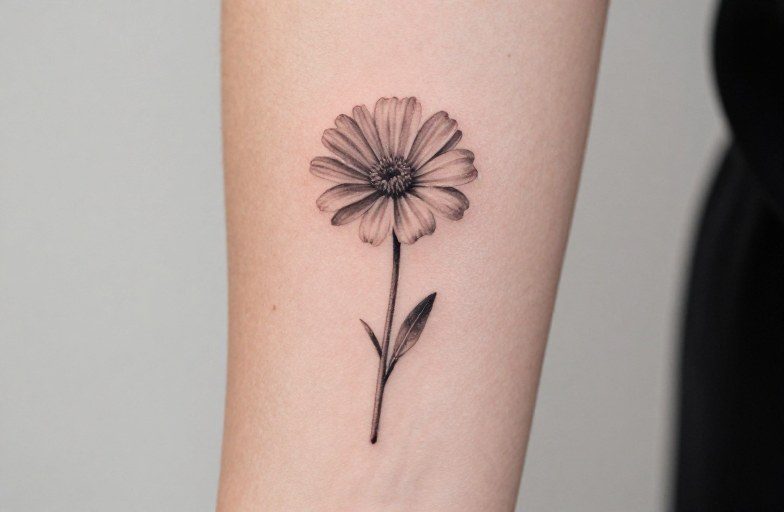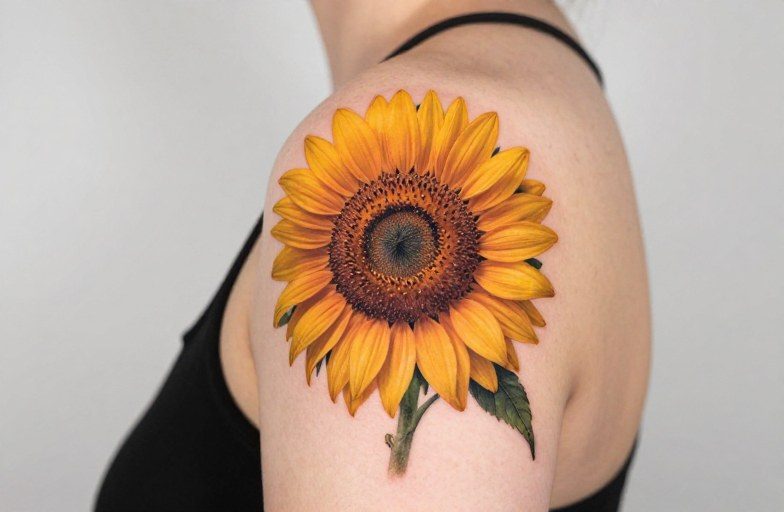
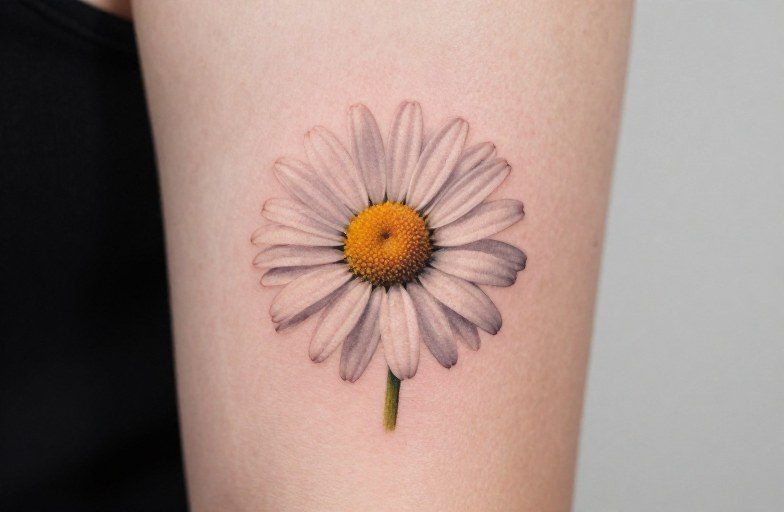
A daisy flower tattoo most commonly signals innocence, purity, and loyal love, think “he loves me, he loves me not” plucked petals, or the fresh-start energy of spring’s first bloom. Beyond the sweet surface, the daisy’s ability to thrive in cracked sidewalks and manicured gardens alike gives it a harder edge: resilience without noise, persistence without complaint. That dual nature, soft petals, stubborn root system, makes it a design people return to across decades and styles.
Design Tips & Pairings
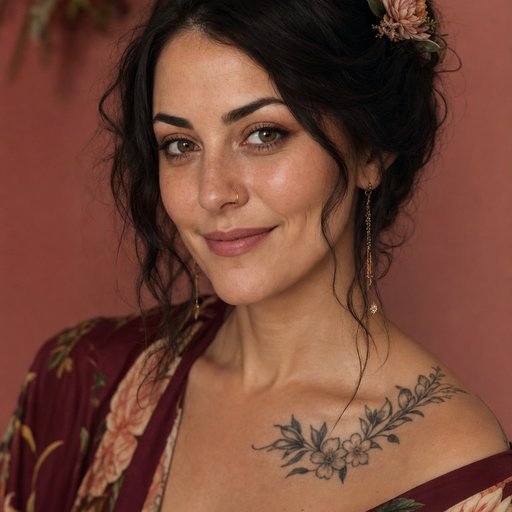
The daisy’s simple structure invites creative placement, but that simplicity can also expose weak design choices. A single daisy with a thin stem works beautifully on the wrist, ankle, or behind the ear, where the negative space around it becomes part of the composition. Clustered daisies demand more room, ribs, shoulder cap, outer thigh, so the blooms don’t crowd into a blob.
Line Work vs. Shading
Clean black line captures the daisy’s graphic quality, especially for smaller pieces. The white petals read as skin-tone negative space, which ages well because there’s no white ink to yellow or disappear. Shaded or color-packed daisies need more maintenance; yellow centers can shift toward orange or brown as the ink settles, and petal gradients often muddy faster than bold outlines. If you want color, consider limiting it to the center and keeping petals in line or light dotwork.
Common Pairings
- Bee or butterfly: Adds movement and pollinator symbolism without cluttering the core image.
- Birth month integration: April’s birth flower pairs naturally with numerals or simple script.
- Cracked earth or concrete: Leans into the resilience angle, visually grounding the flower.
- Name or initials: The stem’s natural curve can carry light lettering if spacing allows.
Common Variations & Styles
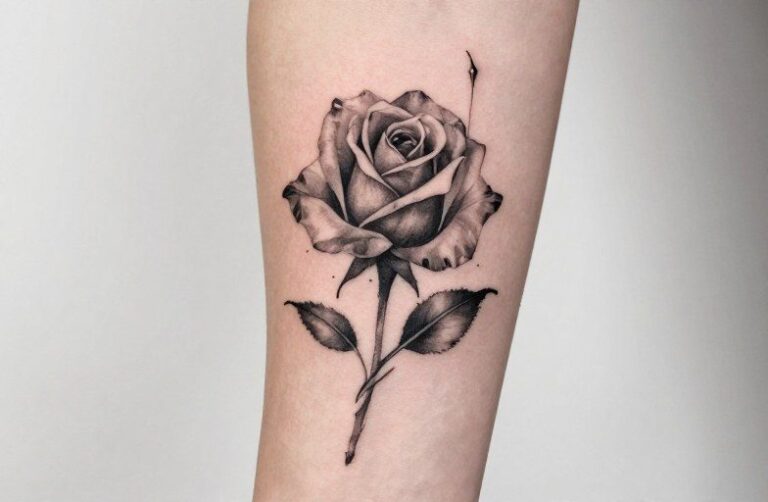
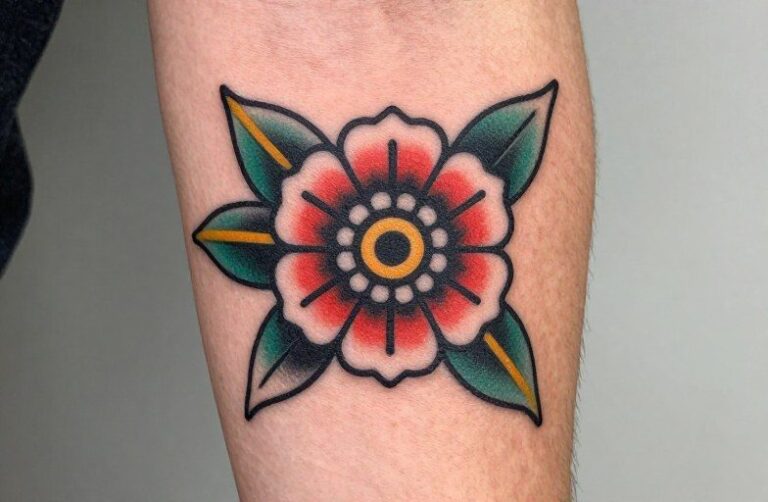
Daisy tattoos travel across aesthetic boundaries more easily than most floral designs. A traditional American daisy uses thick black outlines, limited color blocks, and a slightly cartoonish center, bold, readable, built to last. Fine-line single-needle work strips the flower to its essence: whisper-thin petals, minimal stem, maximum elegance. This style demands precise aftercare; thin lines blur faster than bold ones, and the daisy’s white-petal-as-skin trick only works if the outline stays crisp.
Geometric and Abstract Approaches
Some artists deconstruct the daisy into mandala patterns or dotwork spirals, using the flower’s natural radial symmetry as a framework. Others split the design, half realistic botanical illustration, half geometric line. These hybrids require an artist who understands both languages fluently; the transition point between styles is where tattoos often fail.
Color Choices and Their Weight
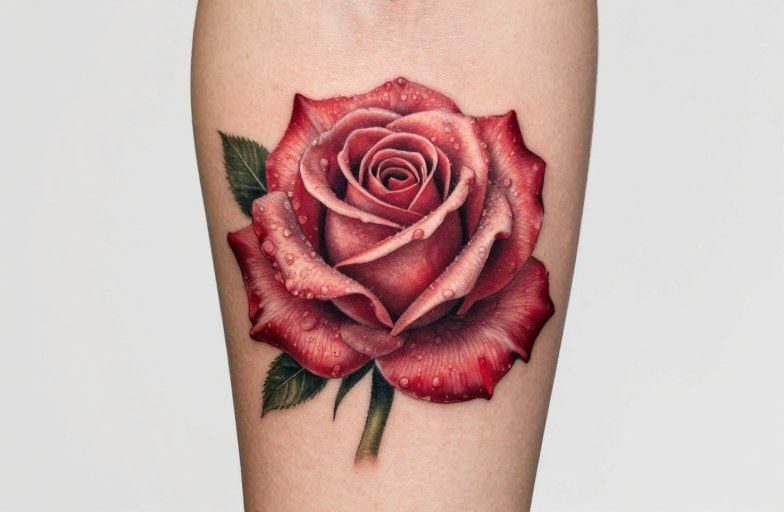
Classic white petals with yellow center reads cheerful and straightforward. All-black daisies shift toward memorial or gothic territory. Pink or purple tints suggest personalization beyond the traditional palette. Red daisies, while not botanically accurate, carry deliberate intensity, love bleeding into passion, innocence complicated by experience.
How It Ages on Skin
The daisy’s aging profile depends heavily on its initial construction. White-ink-heavy designs are notorious for fading to invisibility or yellowing unpredictably; the skin-tone negative space approach avoids this entirely. Small single-needle daisies on high-movement areas like fingers or wrists often blur within five years as the lines spread. Larger pieces with varied line weights hold definition longer because the eye reads the contrast even as edges soften.
Yellow ink in the center is particularly vulnerable to sun exposure and immune response. It can shift greenish or brownish over time, especially on medium to darker skin tones where the ink interacts with more melanin. A skilled artist accounts for this by building the center with warm orange undertones rather than pure yellow, or by using a denser black outline to contain the color.
Placement matters mechanically. The daisy’s radial structure means any skin stretching, from pregnancy, muscle growth, or weight fluctuation, distorts the symmetry. The rib cage, upper back, and outer arm generally stay more stable than abdomen, inner thigh, or breast tissue.
Mythology & Folklore
Norse traditions link the daisy to Freya, goddess of love and fertility, making it a flower associated with childbirth and maternal blessing. In Celtic practice, daisies were sometimes scattered around homes to ward off lightning and misfortune, though the exact mechanism of this protection was more folk habit than documented ritual. The “he loves me, he loves me not” petal-plucking game appears across multiple European cultures, often linked to unmarried girls seeking romantic prophecy.
The Flower of Innocence
Medieval art frequently placed daisies in the hands of the Christ child or young saints, cementing their association with prelapsarian purity. This wasn’t random botanical decoration; the daisy’s white petals surrounding a golden center visually echoed halos and divine light in the symbolic vocabulary of the period. That religious innocence transferred gradually into secular childhood symbolism, which persists in children’s illustration and naming conventions today.
Religious & Spiritual Angles
Christian iconography often uses the daisy as a symbol of Christ’s innocence and the Virgin Mary’s purity, particularly in Northern European devotional art. The flower’s habit of closing at night and opening with morning light lent itself to resurrection narratives and the triumph of light over darkness. Some trace this association to medieval monastic gardens, where daisies were cultivated alongside other symbolically loaded plants.
In contemporary spiritual practice, the daisy sometimes represents the crown chakra or heart-centered energy in New Age frameworks, though these associations are more modern synthesis than ancient tradition. The flower’s radial symmetry and central disk read as mandala-like to some practitioners, making it a tattoo choice for people marking meditation practice or spiritual awakening without committing to explicitly Eastern imagery.
History & Cultural Roots
The word “daisy” derives from “day’s eye,” Old English for the flower’s diurnal opening and closing. This etymology shaped how English-speaking cultures perceived the flower: watchful, cyclical, modest but persistent. The daisy’s European ubiquity made it accessible across class boundaries, nobility might commission elaborate floral still lifes, but peasants wore daisy chains with equal cultural fluency.
From Folk to Fine Art
The 19th-century Arts and Crafts movement raised the daisy alongside other “humble” wildflowers, rejecting formal garden exoticism in favor of native botanicals. William Morris’s daisy-patterned textiles spread the flower through middle-class domestic spaces, creating a visual vocabulary that tattooing later absorbed. The daisy’s presence in 1960s and 70s counterculture, flower crowns, anti-war imagery, back-to-the-land aesthetics, added political innocence to its symbolic load, a layer some wearers still invoke deliberately.
Contemporary Cultural Weight
Today the daisy carries generational associations. For some, it reads as vintage feminine, tied to 1970s nostalgia or 1990s grunge-era baby-doll aesthetics. For others, it’s become a minimalist tattoo staple, stripped of heavy symbolism in favor of clean graphic appeal. Neither reading is wrong; the daisy’s longevity as a symbol comes partly from this flexibility, its ability to absorb new contexts without losing core recognizability.
Key Takeaways
A daisy tattoo works best when its technical construction matches its intended meaning. The white-petal-as-negative-space approach solves aging problems that plague white-ink-heavy designs. Line weight should vary to maintain readability as the tattoo settles. Color in the center needs thoughtful pigment choice and sun protection to avoid muddy shifts. The flower’s symbolism layers innocently, purity, new beginnings, loyal love, but its botanical reality as a hardy, opportunistic plant offers a harder undertone many wearers find more personally accurate than the greeting-card version. Placement should account for symmetry distortion over time. Most importantly, the daisy’s centuries of cultural use mean you’re joining a long tradition, not inventing one; the tattoo’s power comes from that accumulated weight, not from any single wearer’s unique interpretation.
Frequently Asked Questions
Does a daisy tattoo always mean innocence?
Not necessarily. While innocence is the most common association, many people choose daisies for resilience, new beginnings, or memorial purposes. The meaning depends on personal context and how the design is styled, darker, more abstract versions can signal complexity rather than purity.
Why do so many daisy tattoos use skin-tone negative space for petals?
White ink fades and yellows unpredictably on most skin tones. Leaving the natural skin as the “white” petal creates a cleaner, longer-lasting contrast against black outlines, and it heals more reliably than packed white pigment.
Is a daisy tattoo too common or basic?
The daisy’s popularity is actually a strength, it carries immediate cultural recognition that rare flowers lack. What prevents it from feeling generic is specific styling: unusual placement, paired imagery, or technical execution that shows deliberate artistic choice rather than template selection.
How do I keep the yellow center from turning green or brown over time?
Limit sun exposure, especially during the first year. Ask your artist about warmer orange-based yellows rather than cool pure yellow, which shifts more dramatically. A tight black outline around the center also helps contain color migration as the tattoo ages.