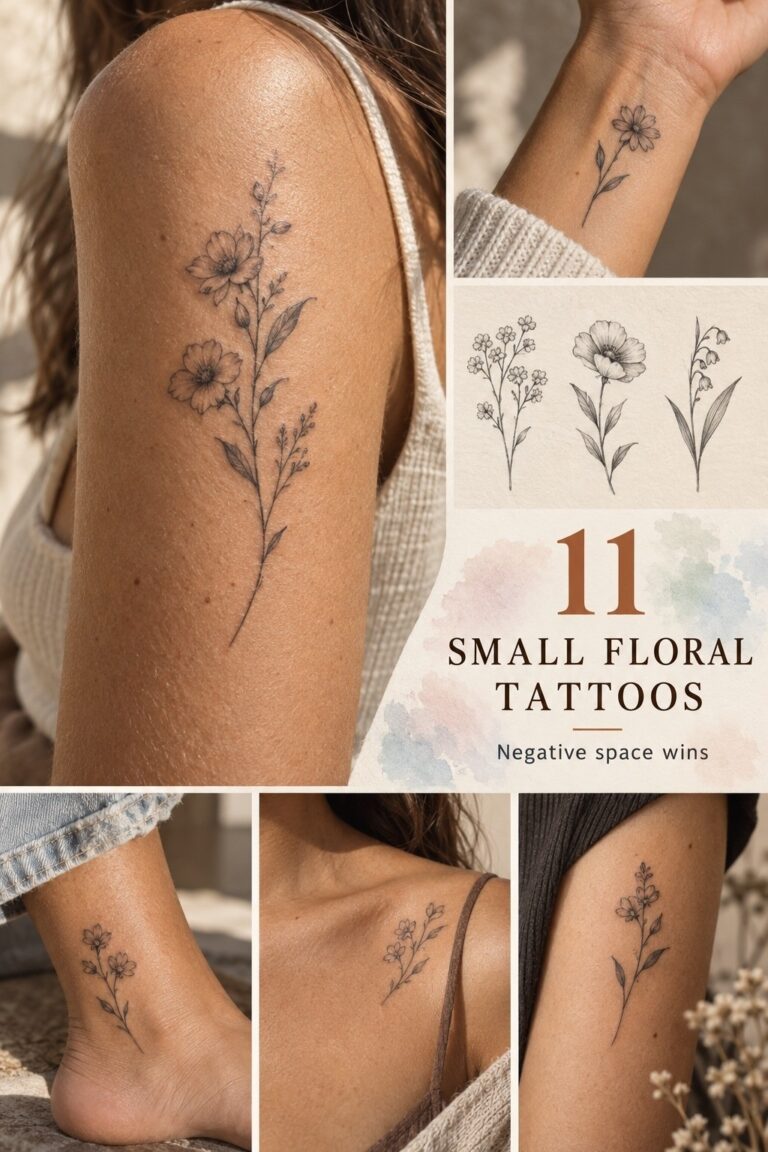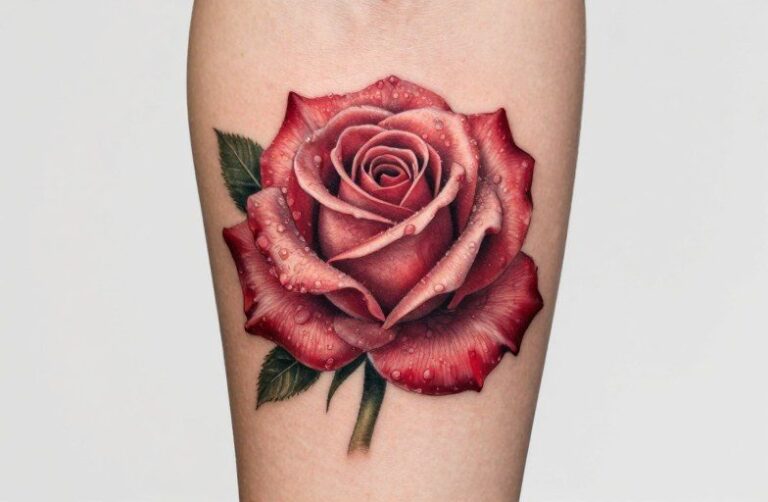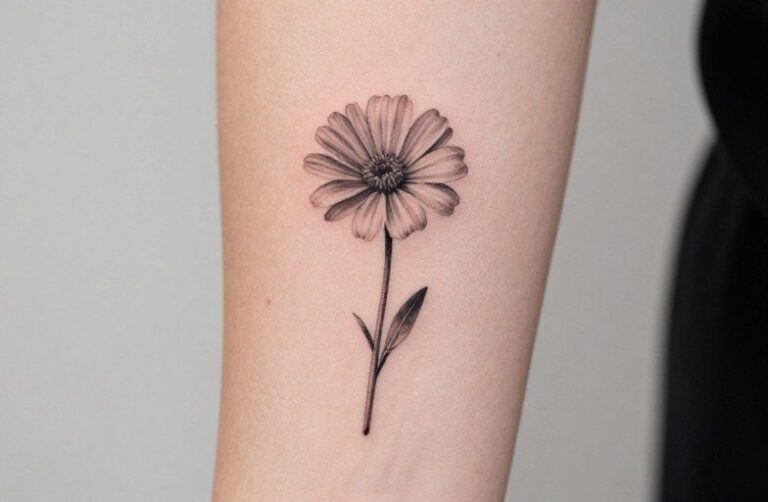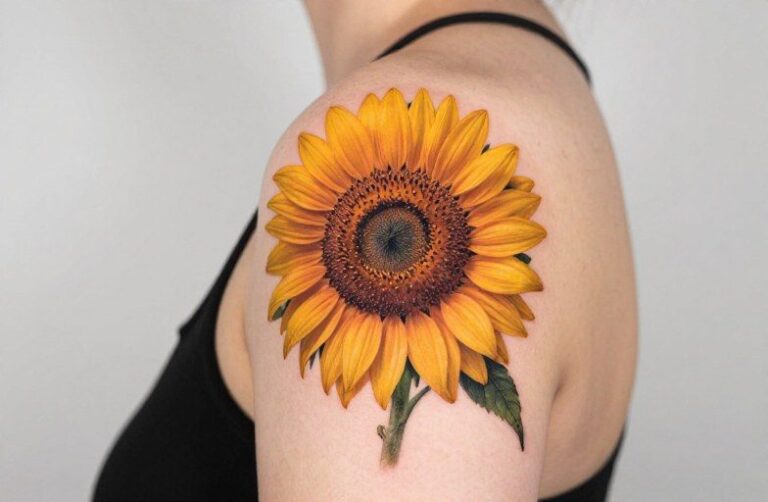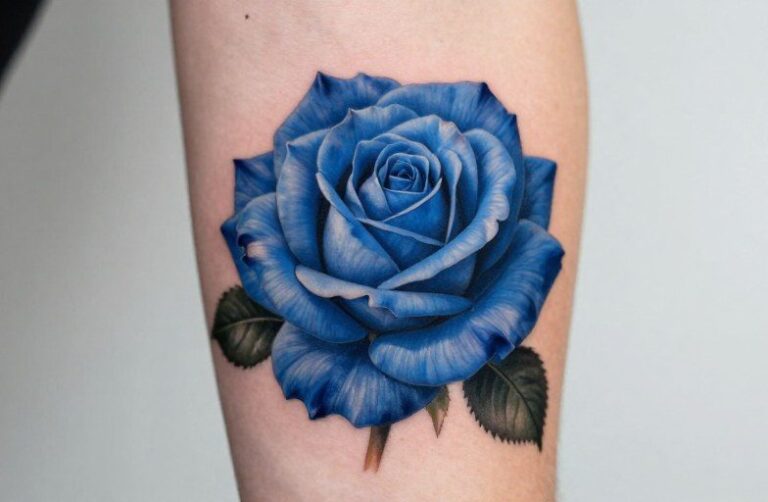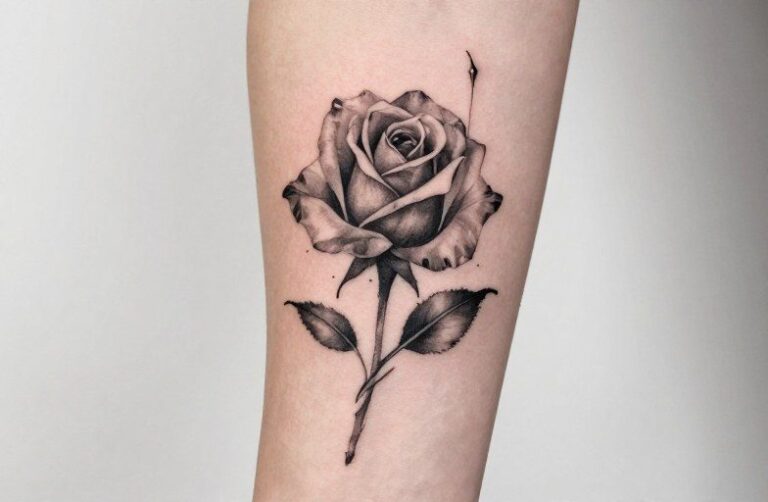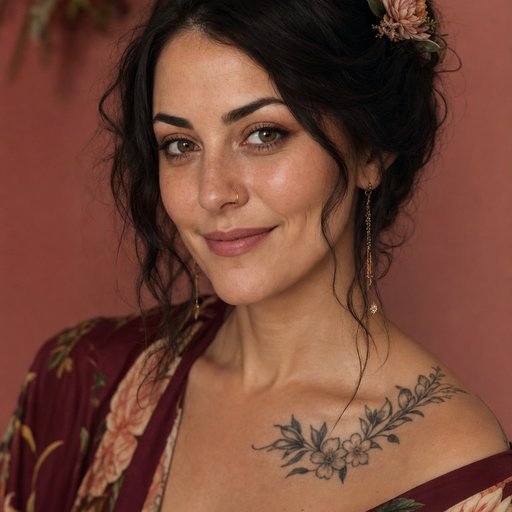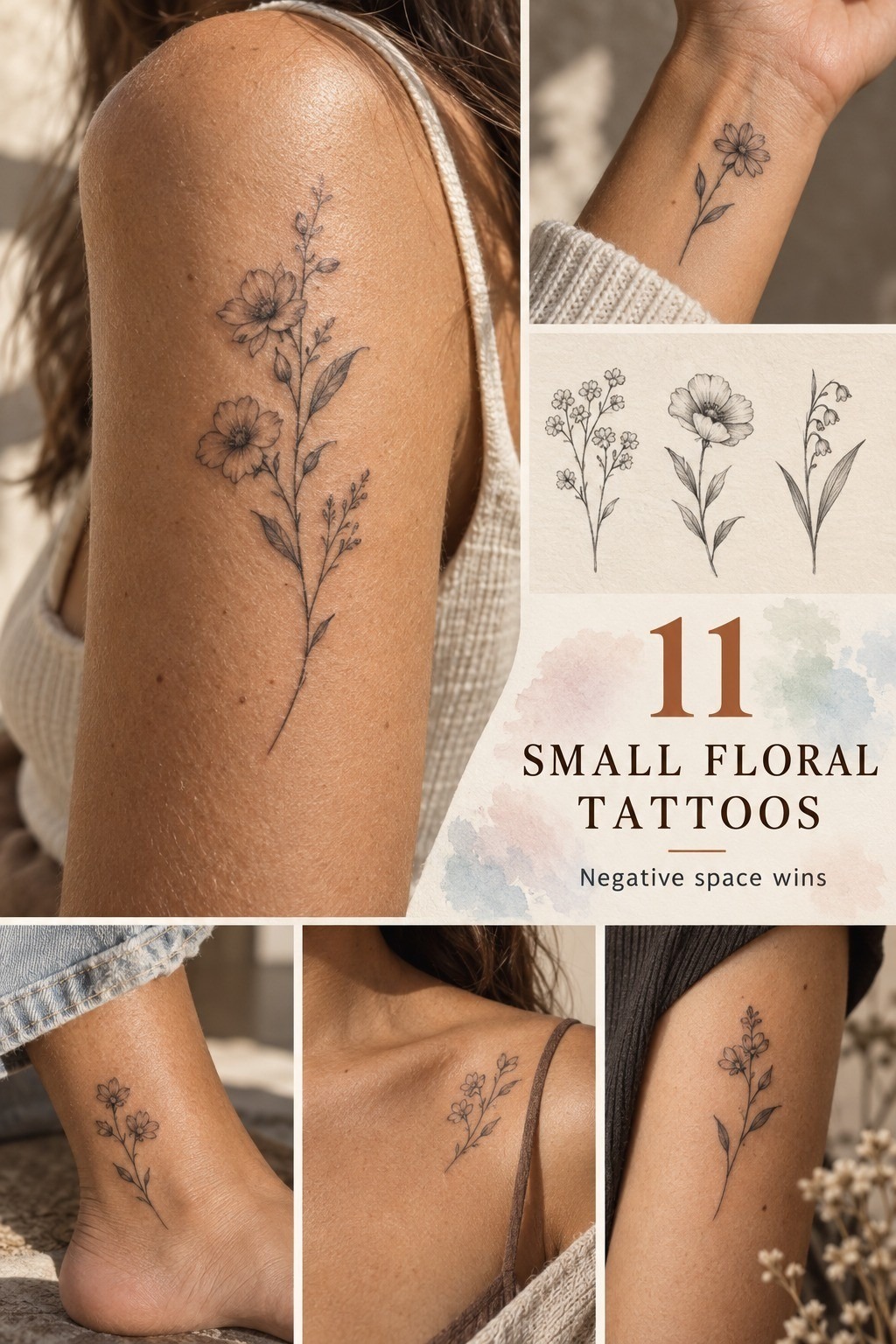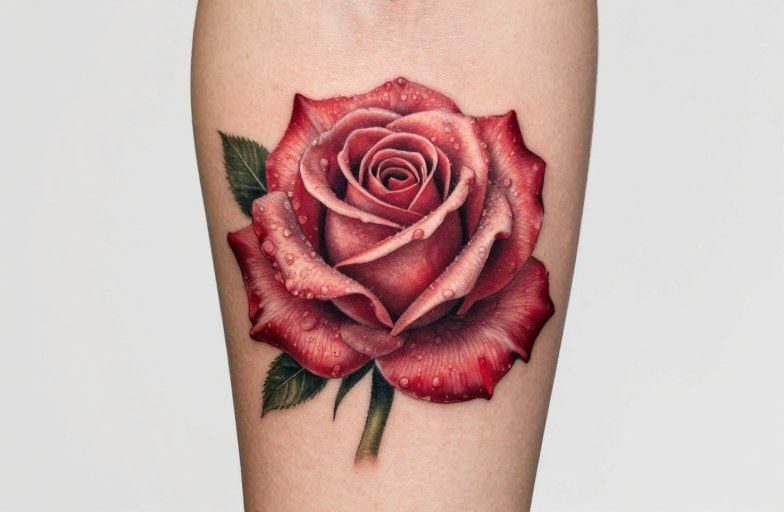
Flower tattoos for women most commonly symbolize growth, beauty, and the natural cycles of life and death. Specific blooms carry sharper meanings: roses for passion, lotuses for spiritual awakening, peonies for prosperity, and wildflowers for untamed independence. The appeal spans centuries and continents because flowers communicate what words often cannot, transience made permanent, or beauty claimed on one’s own terms.
How It Ages on Skin
Flowers are detail-heavy designs, and that detail doesn’t always survive the decades. Fine lines in petals, delicate stamen dots, and subtle color gradients are the first to blur as skin loses elasticity and ink particles migrate. What starts as a crisp peony can soften into a pink blob if the original linework was too thin or the color too lightly saturated.
Placement and Longevity
High-friction areas, the inner wrist, tops of feet, fingers, accelerate fading. Sun exposure breaks down pigments fastest on the collarbone, shoulders, and forearms. Deeper saturation and slightly bolder outlines hold up better. A flower with a 3mm minimum line weight will outlast one drawn with single-needle hairlines. For color pieces, black linework underneath provides structural scaffolding that keeps the shape readable even as hues mute to pastels.
Style Choices That Endure
- Traditional/Americana: thick black outlines, limited color palette, readable at any age
- Japanese irezumi: bold backgrounds, strong contrast, flowers integrated with waves or wind bars
- Black and grey realism: relies on value contrast rather than color, ages gracefully if contrast stays high
- Watercolor (without black lines): high risk; the “splash” effect often becomes unrecognizable within 5-10 years
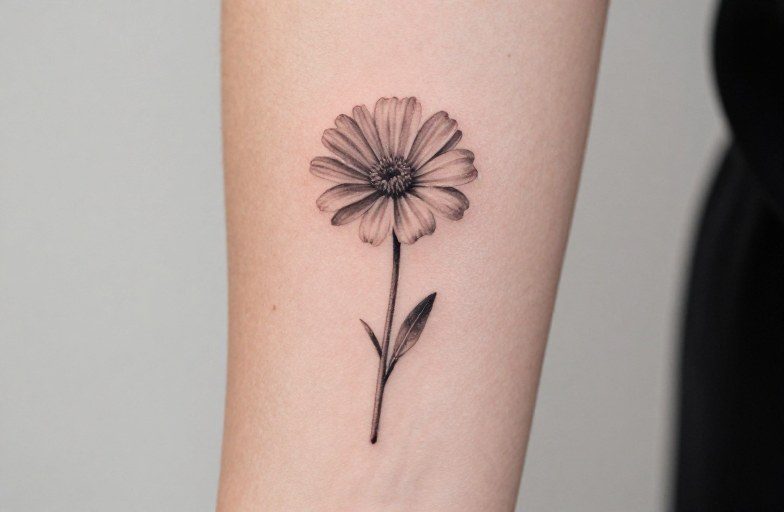
Single-needle fine line florals photograph beautifully fresh but require touch-ups within 3-5 years to maintain definition. Ask your artist to show healed work, not just fresh photos, before committing to a style.
Religious & Spiritual Angles
The lotus dominates spiritual flower tattooing. In Buddhist and Hindu contexts, it represents purity emerging from muddy conditions, enlightenment rising through suffering. The flower’s daily cycle of submerging at night and reblooming above water mirrors meditation practice and spiritual discipline. Unopened buds, half-open blooms, and fully open flowers can mark stages of personal growth.
Christian and Islamic Traditions
The rose is often linked to the Virgin Mary in Catholic iconography, sometimes called the “mystical rose.” Medieval rosary beads derive their name from this association. In Islamic art, flowers appear in geometric and arabesque patterns rather than figurative representation, but the tulip, especially in Ottoman-influenced work, carries divine love and the manifestation of God’s beauty in creation. For tattoo wearers from these backgrounds, the flower can signal faith without text, a private marker visible only to those who recognize the symbolism.
Similar & Related Symbols
Flowers rarely stand alone in tattoo composition. Understanding what pairs with them clarifies the full message.
- Skulls with flowers: memento mori tradition, life and death intertwined, not opposed
- Butterflies and bees: pollination, transformation, industry; the insect completes the flower’s reproductive narrative
- Daggers and swords: beauty with defense, or the sharp edge hidden within softness
- Clocks and hourglasses: explicit time markers; the bloom’s brief life made visible against mechanical measurement
- Snakes: temptation narratives, or the cycle of shedding and renewal
Vines and leaves carry their own weight. Ivy clings and persists; laurel crowns victory; olive branches signal peace. The stem’s direction matters too, upward growth versus downward hanging suggests different emotional tones.
History & Cultural Roots
Flower tattoos on women have documented history stretching back to the early 20th century in Western contexts, though some trace certain motifs to earlier maritime and circus traditions. Sailors’ wives and girlfriends reportedly wore rose tattoos as loyalty markers while men were at sea. By the 1960s, flower imagery became associated with counterculture movements, daisies especially, though the specific political valence has largely dissolved into general nostalgia.
Japanese Floral Tradition
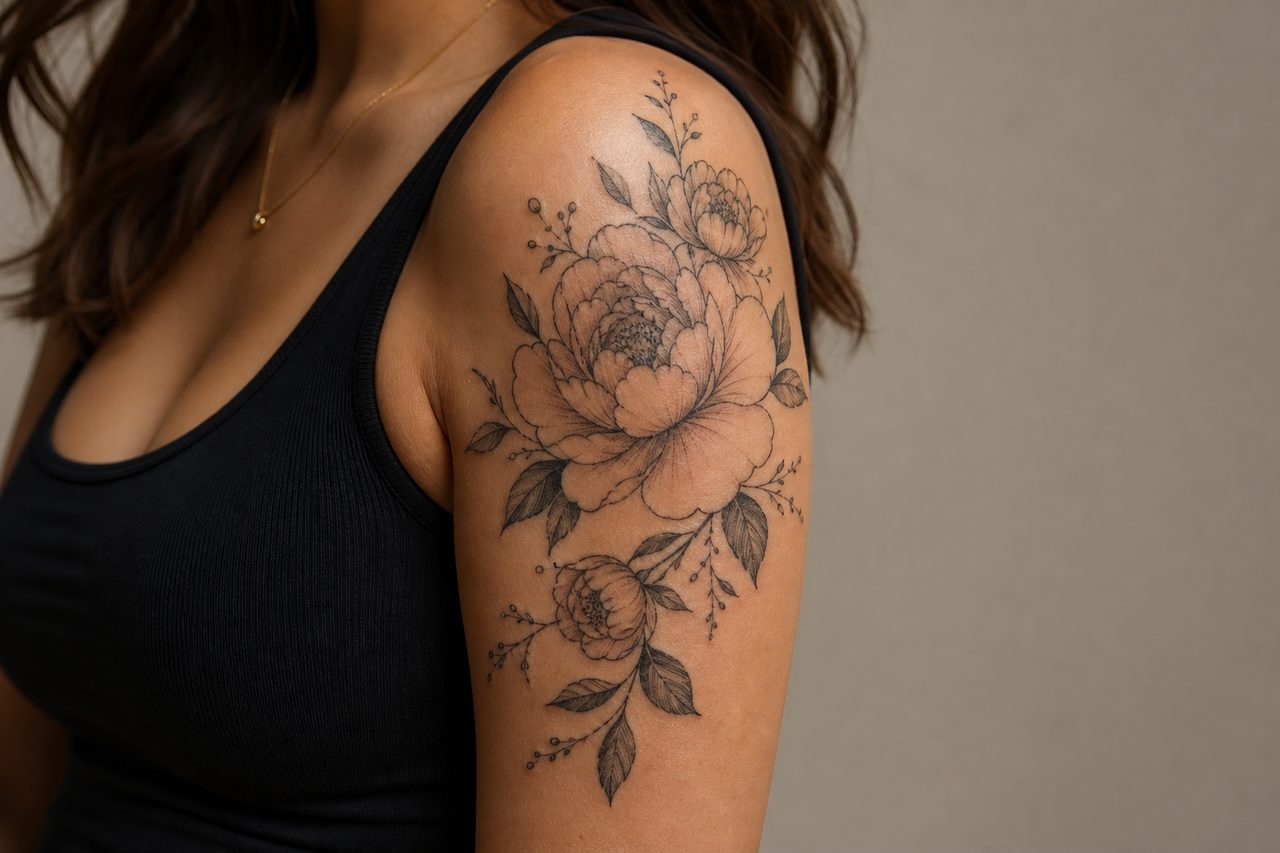
Cherry blossoms (sakura) in Japanese tattooing carry layered meaning: the samurai’s acceptance of mortality, the Buddhist concept of impermanence, and seasonal awareness. Peonies (botan) represent wealth and masculine bravery, often paired with lions or dragons in full back pieces. The chrysanthemum (kiku), associated with the imperial family, signifies longevity and perfection. These aren’t decorative afterthoughts; they’re codified symbols within a larger visual language where placement, direction, and pairing carry specific meaning.
Polynesian and Pacific Influences
While not flower-dominant, some Pacific traditions incorporate botanical elements. The hibiscus in Hawaiian-influenced work commonly associated with island identity and the aliʻi (chiefly) class, though modern tourist imagery has diluted this connection. Authentic Polynesian work follows strict genealogical and social codes; floral additions in contemporary fusion styles should be approached with awareness of what is being borrowed and why.
Personal & Modern Meanings
Birth flowers have become a major driver of personal meaning. January’s carnation, February’s violet, March’s daffodil, each month carries assigned blooms that function like zodiac signs or birthstones. The system has no ancient unified origin; it’s a Victorian-era commercial invention that gained traction through greeting cards and, more recently, tattoo culture. That doesn’t invalidate it. Shared cultural reference points create meaning through use, not just antiquity.
Commemorative and Memorial Use
Specific flowers mark specific losses. Lilies for death, rosemary for remembrance, forget-me-nots for literal memory-keeping. Some trace the forget-me-not’s association to medieval German folklore, though the tattoo usage is contemporary. The flower’s color can shift the meaning: white for innocence or grief, red for passion or sacrifice, yellow for friendship or jealousy depending on context. A single stem versus a bouquet, a living bloom versus a wilting one, these choices communicate emotional state without explicit text.
Mythology & Folklore
Greek myth gives us the narcissus as punishment and warning, beauty that traps the self. The anemone sprang from Aphrodite’s tears over Adonis; red blooms specifically mark blood and mourning. Apollo’s pursuit of Daphne, transformed into laurel, makes that leaf a symbol of preserved virginity and escape from unwanted pursuit.
Floral Transformations
Metamorphosis myths cluster around flowers. Hyacinthus, beloved of Apollo, became the flower that bears his name, petals marked with AI, AI, the Greek cry of grief. Clytie, the sunflower (or heliotrope in some versions), turned to follow her lost love across the sky. These stories give tattoo wearers narrative depth: the flower as frozen moment of emotional extremity, beauty crystallized from pain.
Norse tradition connects certain flowers to specific goddesses. The cowslip is linked to Freya in some sources. Celtic folklore assigns protective properties to St. John’s wort and rowan, though these appear less frequently in tattoo form than their symbolic weight might suggest.
Final Word
Flower tattoos work because they’re immediately legible and infinitely layered. A rose on a shoulder reads as decorative to strangers and specific to the wearer. The same image holds different weight at 25 than at 55, which is part of the point, living symbols grow with you, or at least they should be chosen with that possibility in mind.
Prioritize technical execution over conceptual cleverness. A well-rendered common flower outlasts a poorly drawn rare one. Ask your artist about their experience with the specific bloom you want, how they handle petal overlap in their linework, and what their healed pieces look like at five years. The meaning you bring matters, but the craft determines whether that meaning remains visible.
Frequently Asked Questions
Which flower tattoos fade the fastest?
Light pink and yellow pigments fade fastest, especially in watercolor styles without black linework. White highlights often disappear entirely within a few years. Deep reds, blues, and black-based designs hold their saturation longest.
Can a flower tattoo be covered up if I change my mind?
Dense, dark floral designs are actually easier to cover than sparse ones because the existing pigment provides a base to work with. Large black-and-grey roses or traditional flowers make solid cover-up foundations; fine line single-needle work is harder to mask.
Do certain flowers have negative meanings I should avoid?
Yellow roses can signal jealousy or fading love in some contexts; marigolds connect to death in Mexican tradition but that’s often the intended meaning. Research the specific bloom’s cultural associations, especially if you’re drawing from traditions outside your own background.
How do I choose between color and black and grey for a flower tattoo?
Consider your skin’s undertone and your existing tattoos. Black and grey ages more predictably and suits professional environments where visibility matters. Color pops immediately but requires more maintenance. Many artists recommend starting black and grey, adding color later if desired.