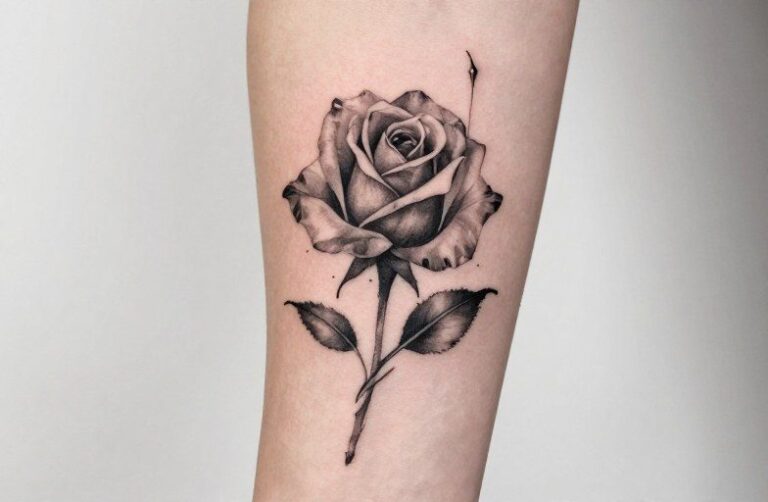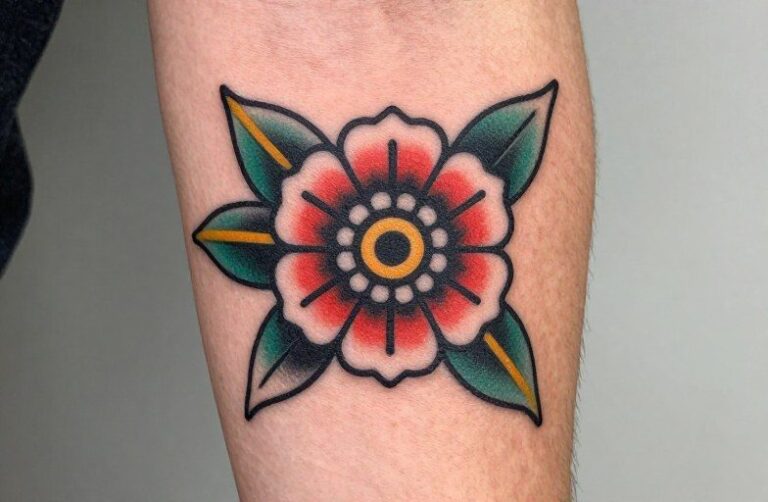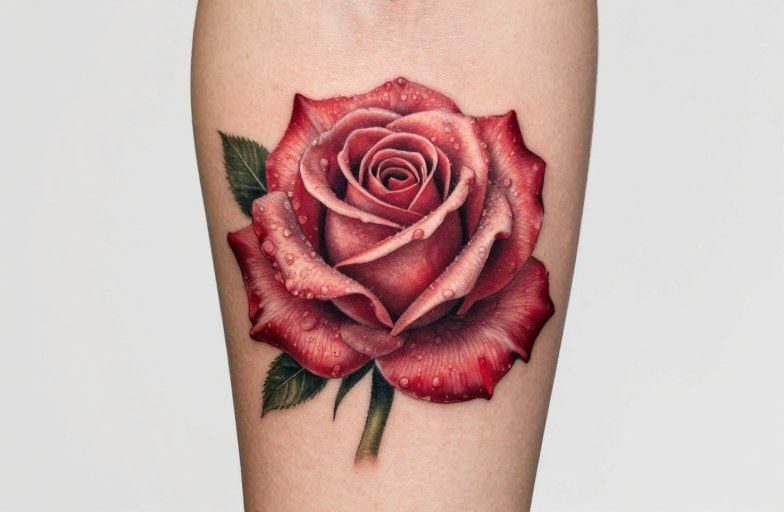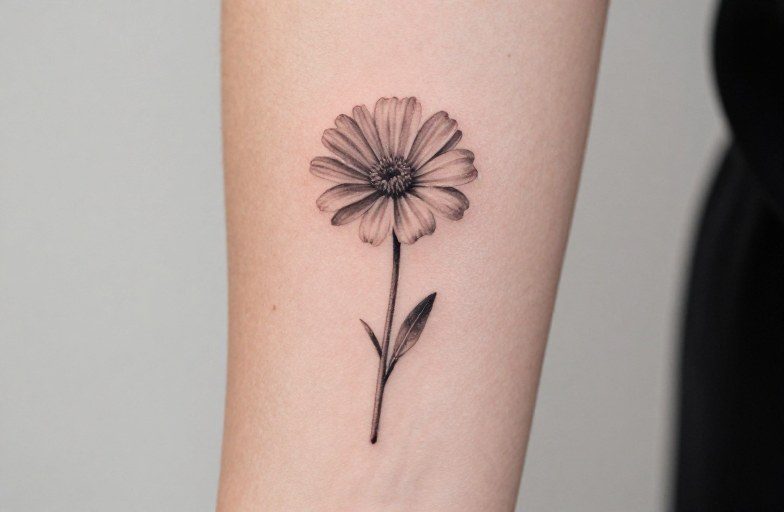
A dying rose tattoo most directly signals acceptance of mortality and the beauty found in decline. It can mark personal loss, a relationship’s end, or a period of transformation where something had to wither for something else to grow. The image refuses the polished optimism of a blooming rose, opting instead for emotional honesty that resonates deeply with people who’ve lived through hard transitions.
Symbolism & Core Meaning
What the Withered Petal Actually Communicates
Roses carry centuries of loaded meaning, love, secrecy, the Virgin Mary, political rebellion. Strip that back to a dying specimen and the symbolism narrows to something more urgent. Drooping petals suggest exhaustion, grief, or the natural conclusion of a cycle. Crisp, browning edges read as time passed, not as failure. Many who choose this motif want to acknowledge that something valuable ended without pretending it never mattered.
The stem tells its own story. A thorny, intact stem with a fading bloom suggests resilience despite depletion. A broken or cut stem lands differently, interruption, violence, premature end. Leaves curling inward signal withdrawal; leaves already fallen suggest the worst has passed. These details matter more than most people realize during their first consultation.
The Tension Between Decay and Remaining Structure
What’s compelling about a dying rose is that it’s still identifiably a rose. The architecture remains. This creates a specific emotional register: not nihilism, but clear-eyed recognition. Some interpret it as memorial work, others as survivor imagery. The meaning tightens or loosens based on accompanying elements, clocks, dates, moths, barbed wire, clean negative space. A dying rose alone tends toward introspection; paired with dates or names, it becomes elegy.
Common Variations & Styles
Realism and Neo-Traditional Approaches
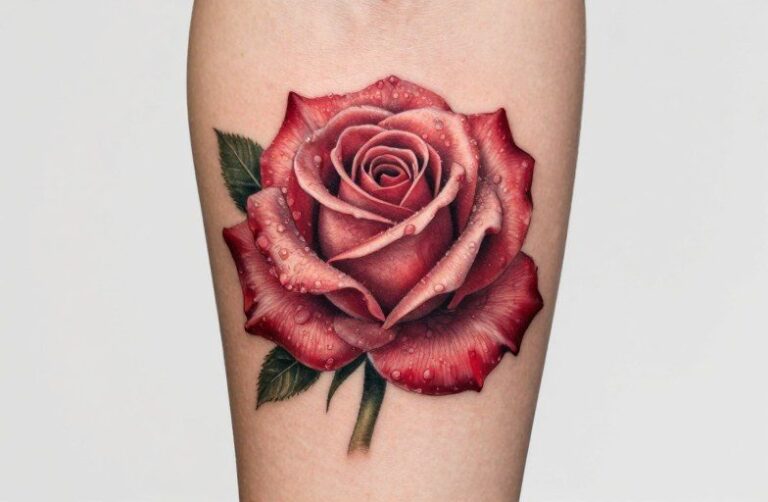
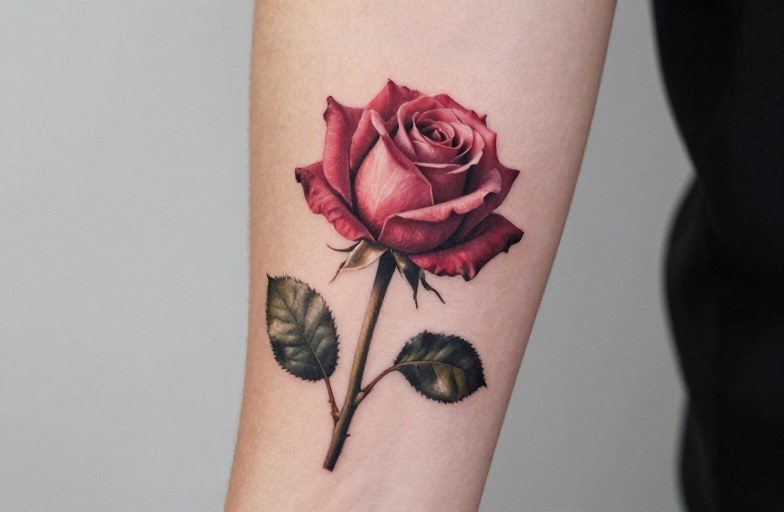
Photorealistic dying roses demand technical precision. The artist must render the papery translucency of browning petals, the subtle mold spots that sometimes develop, the way moisture recedes from once-lush tissue. Color realism handles this best, though skilled black and grey artists can suggest the same textures through stipple and whip shading. The risk with realism is sentimentality, too pristine a dying rose looks staged, like a magazine spread of “beautiful decay” rather than the real thing.
Neo-traditional work solves this by leaning into stylization. Flattened perspective, bold outlines, and selective detail let the artist control where the eye rests. A neo-trad dying rose might exaggerate the curl of a single petal or render the center as near-black void. The style’s graphic clarity prevents the image from becoming maudlin.
Japanese-Influenced and Illustrative Options
Some artists adapt the motif through Japanese tattoo conventions, falling petals integrated into larger compositions, the rose treated as a foreign flower with specific symbolic loading. Illustrative or “etching” styles use fine parallel lines to suggest botanical illustration, which lends intellectual distance and historical weight. Watercolor techniques, conversely, often fail here; the medium’s inherent cheerfulness fights against the subject’s gravity.
- Single dying rose: intimate, focused, often smaller scale
- Dying rose with falling petals: passage of time, spreading loss
- Rose transitioning from bloom to decay in one stem: life cycle narrative
- Dying rose in a vase or with ribbon: domestic grief, specific relationship
- Skeletal or hand holding dying rose: memento mori tradition
Best Placements
Where Detail Survives and Where It Doesn’t
Forearms and outer biceps offer the best visibility for the nuanced linework dying roses typically require. The flat planes let petal edges read clearly, and the moderate sun exposure means colors fade somewhat uniformly. Ribs and sternum placements work for larger compositions but suffer from movement distortion, every breath slightly shifts the image, and the thin skin there blurs fine detail faster than you’d expect.
Hands and fingers present real problems. The thin dermis and constant use cause ink to spread; a delicate dying rose becomes a smudged blob within a few years. If you want the motif visible at all times, consider the side of the hand or a knuckle rose rendered with heavier line weight and less dependent on subtle shading. Thighs and calves provide excellent real estate for larger, more detailed work, though calf tattoos can blow out where the muscle bellies meet.
Scale Considerations
A dying rose needs minimum size to register its subject matter. Too small and it reads as generic flower; too large and the decay becomes grotesque rather than poignant. Most successful pieces fall between three and six inches at their widest point. The negative space around the bloom matters, crowding it against other elements diminishes its impact.
Religious & Spiritual Angles
Christian and Catholic Traditions
The rose carries complex Christian symbolism, often linked to Mary and the concept of the rosary itself. A dying rose in this context can represent the sorrows of Mary, the temporary nature of earthly devotion, or the believer’s own spiritual dryness. Some Catholic imagery pairs wilted roses with the Sacred Heart, suggesting love that persists despite apparent lifelessness. The connection to the Rosary’s prayer beads makes this placement choice occasionally deliberate, inner forearm where fingers might actually rest during prayer.
Secular Spiritual Readings
Outside organized religion, the dying rose frequently serves as a kind of personal memento mori. Not the skull-and-hourglass variety, but a gentler reminder that attachment brings necessary pain. Buddhist-influenced interpretations sometimes use it to illustrate anicca, impermanence, though the rose itself is not traditional to that iconography. The image works as spiritual shorthand for people who’ve moved through grief into something like acceptance without resolution.
Color vs Black and Grey
What Color Actually Adds
A dying rose in color can be devastating. The shift from deep crimson to brownish purple at the edges, the yellowing that creeps through once-white petals, the grey-green of desiccating leaves, these are specific, observable phenomena that color renders accurately. The emotional punch comes from recognizing the process: this was recently bold. That recentness matters. A fully brown, long-dead rose reads as historical; one caught mid-transition reads as immediate loss.
The Case for Black and Grey
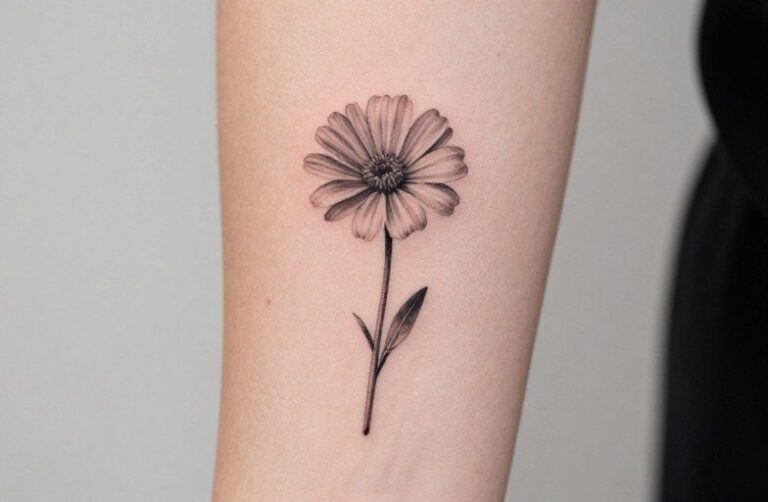
Black and grey dying roses carry a different weight. They universalize the image, remove it from specific botanical reality and push it toward archetype. The technique also ages more predictably; color reds are notorious for shifting unpredictable directions (pink, orange, muddy brown) depending on ink chemistry and individual skin response. For someone planning to carry this image for decades, greyscale offers practical longevity. The tradeoff is emotional immediacy versus timelessness.
- Color: specific grief, recent loss, botanical accuracy, higher maintenance
- Black and grey: universal meditation, better aging, archetypal resonance
How It Ages on Skin
The Decay of Decay
There’s a certain irony here: a tattoo of a dying rose will itself undergo visible degradation. The fine lines that define individual petals spread. Subtle shading that suggests papery texture becomes uniform grey wash. What starts as nuanced commentary on impermanence becomes, literally, a demonstration of it.
Planning for this means building in structural redundancy. Outlines need enough weight to hold form as they soften. Contrast between dark and light areas must be stronger than the artist’s instinct might suggest, because middle tones will migrate toward each other over time. A dying rose designed with only delicate linework and soft shading will become illegible faster than bolder work.
Touch-Up Reality
These pieces often need refreshment at the 7-12 year mark, sooner if placed on high-movement or high-sun areas. The good news: the subject matter accommodates some visible aging. A slightly blurred dying rose doesn’t contradict its own meaning the way a crisp geometric piece would. Still, strategic initial design prevents the kind of degradation that obscures the image entirely. Ask your artist about line weight minimums and how they’ll handle the transition areas between dark stem and lighter petals.
Final Word
The dying rose tattoo works because it refuses easy emotional categories. Not purely sad, not morbid, not romanticized, it’s a complicated image for complicated experience. Getting one right means finding an artist who understands that the technical challenge (rendering decay convincingly) and the emotional challenge (honoring loss without performing it) are the same problem. The best examples feel observed rather than staged, specific rather than generic, and they age in ways that strangely deepen rather than diminish their impact.
Frequently Asked Questions
Does a dying rose tattoo always mean someone died?
Not necessarily. While many choose it for memorial purposes, others use it to mark ended relationships, personal transformations, or periods of burnout. The meaning depends entirely on context and accompanying elements.
How much detail can a small dying rose tattoo hold?
Less than most people expect. Under two inches, petal differentiation disappears and the image reads as generic flower. For genuine “dying” readability, plan for at least three inches in the design’s longest dimension.
Will a dying rose tattoo look too depressing over time?
The subject’s emotional weight tends to integrate into the wearer’s life rather than intensify. Most report the image becomes a familiar marker of survived experience rather than an ongoing source of sadness. Initial placement choice matters more than subject for daily emotional impact.
Can a dying rose be combined with other flowers that are blooming?
Yes, and this creates specific narrative effects, contrast between life stages, commentary on relationships with different trajectories, or personal growth timelines. The combination requires careful color or value planning so the blooming elements don’t visually dominate the composition.