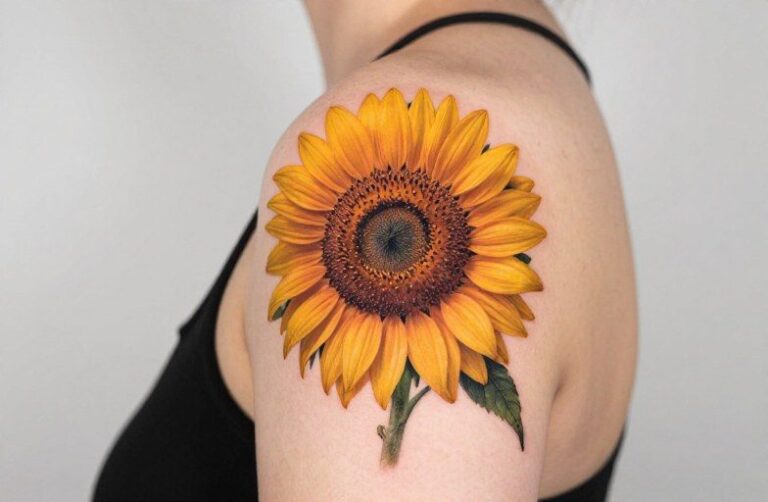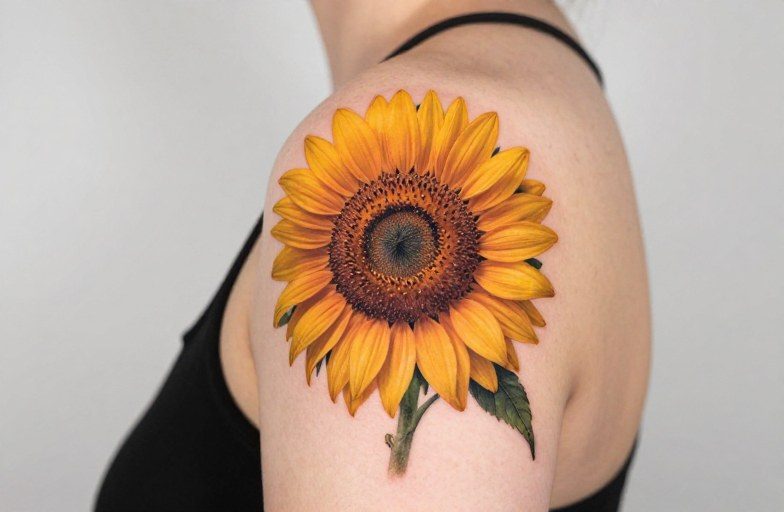
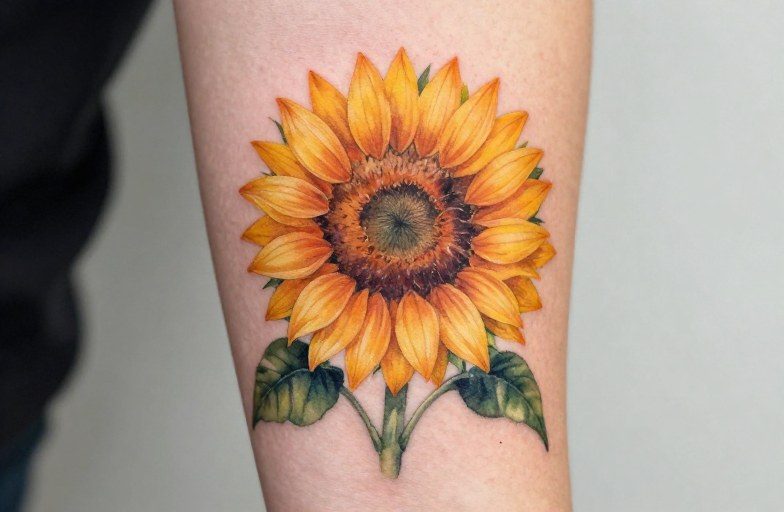
A watercolor sunflower tattoo marries the structural geometry of a sunflower, radiating petals, textured seed disk, thick stem, with the loose, pigment-bleeding techniques borrowed from watercolor painting. The result isn’t a flower sitting on top of color; the color becomes the flower, bleeding outward from defined linework or dissolving entirely at the edges. Done well, it feels spontaneous. Done poorly, it looks like a spill.
Key Characteristics & Motifs
Linework vs. Pure Color Wash
Two approaches dominate. Some artists anchor the sunflower with black or dark green line work, outlining petals, defining the seed disk’s spiral pattern, then flooding adjacent areas with yellow, amber, and burnt orange washes. Others abandon outline entirely, building the flower from overlapping color patches and negative space. The latter demands more skin real estate; without lines to guide the eye, the composition needs room to breathe. Small pure watercolor pieces often heal into indistinct blobs.
Color Behavior and Saturation
Yellows and oranges, the sunflower palette, are notoriously temperamental in tattoo ink. They fade faster than blacks and blues, and cheaper pigments can shift toward mustard or brown within a few years. Quality watercolor work uses high-grade, densely saturated yellows, sometimes layered over a subtle white or pale orange base, to maintain vibrancy. Splatter effects, “drips,” and gradient backgrounds should extend organically from the flower, not look like clip-art overlays. The best pieces let the color bleed along the natural grain of the muscle beneath.
- Defined seed disk with visible Fibonacci spiral pattern
- Petals that transition from solid color to transparent wash
- Background splashes that follow body contours, not random placement
- Strategic negative space, skin showing through, to prevent muddiness
- Stem and leaves often rendered in cooler, more stable greens for contrast
Origins & History
The watercolor tattoo style itself emerged from the broader fine-art tattoo movement of the late 2000s and early 2010s, often linked to artists like Amanda Wachob who pushed painterly techniques into skin. Sunflowers specifically carry weight across multiple traditions, associated with Helios in Greek mythology, with solar worship in Incan culture, and with Van Gogh’s later paintings that redefined the flower’s visual language in Western art. Some trace the sunflower-as-tattoo motif to 1970s biker and folk art, though the watercolor treatment is distinctly contemporary. The style’s popularity surged as Instagram made visual, color-heavy work more shareable than traditional black-and-grey pieces.
Who It Suits
Skin Tone Considerations
Watercolor technique relies on translucent color layers. On very fair skin, yellows and oranges read bright and true. On medium to deeper skin tones, the same pigments can appear muted or muddy unless the artist adjusts, using more concentrated oranges, incorporating deeper amber or even red undertones, and relying less on pale “wash” effects that disappear against melanin. The best watercolor sunflower work on darker skin often uses bolder color blocks and less transparent fading, essentially adapting the style rather than copying the pale-skin template.
Placement and Lifestyle
This style needs flat or gently curved surfaces to prevent the watercolor effect from distorting. Upper arms, thighs, ribs, and shoulder blades work well. Finger and hand placement fails, the color bleeds unpredictably in high-movement areas, and sun exposure destroys yellows fastest where hands live. People with outdoor jobs or heavy sun exposure should budget for more frequent touch-ups, or choose placements easily covered.
How It Ages
The Yellow Problem
Yellow pigment particles are smaller and less stable than black carbon. In watercolor sunflowers, the pale yellow “wash” areas often fade to near-invisibility within five to seven years. The more saturated orange and amber petal bases usually hold longer. The seed disk, if done in dark brown or black, remains readable longest. Expect the piece to soften significantly, what starts as crisp petal edges becomes gentle color clouds. This isn’t necessarily failure; it’s the nature of the style. But clients wanting twenty-year clarity should either accept touch-ups or choose a hybrid approach with stronger line reinforcement.
Healing and Aftercare Specifics
Color-heavy pieces scab more dramatically than black work. Large watercolor fields can peel in sheets rather than flakes. During healing, the yellows often look almost neon-bright for the first two weeks, then settle 20-30% duller. This surprises people who expect the fresh brightness to persist. Moisture management matters more than with line work, dry healing can cause color dropout in the wash areas, while over-moisturizing leaches pigment. Follow your artist’s specific protocol; watercolor veterans usually have stricter aftercare than traditional shops.
Choosing the Right Artist
Portfolio Red Flags
Look for healed photos, not just fresh work. Many watercolor tattoos photograph beautifully at one week, then deteriorate. Ask specifically for pieces two years or older. Be wary of artists whose “watercolor” consists of solid traditional color with a few random splatters added at the end, that’s costume jewelry, not technique. True watercolor tattooing requires understanding how pigments diffuse in skin, how to control bleeding edges, and how to build value without black outlines. The portfolio should show variety in color temperature and flow direction, not identical splatter patterns copy-pasted across different subjects.
Consultation Questions
- “How do you adjust this style for my skin tone?”, A prepared artist has specific answers, not vague reassurance.
- “What yellow brands do you use, and why?”, Eternal, Fusion, and World Famous make reliable warm palettes, but the artist should explain their choices.
- “Show me a healed watercolor sunflower or similar floral.”, If they can’t, you’re the experiment.
- “What’s your touch-up policy when the yellows fade?”, Good artists price this into the original quote or offer discounted maintenance.
Common Mistakes to Avoid
Size inflation kills watercolor sunflowers. The detail in the seed disk and the gradient work in petals demands space. Under six inches, the wash effects merge into single-color blobs. Over-stylization is another trap, too many drips, too much background noise, the flower drowning in its own effects. The sunflower should remain botanically recognizable; abstract color fields with a yellow circle in the middle isn’t a sunflower tattoo.
Placement against the grain of muscle movement creates distortion. A watercolor sunflower across the elbow or knee will warp every time the joint bends, destroying the flow that makes the style work. Color choice errors matter too, opting for cheap, pastel yellows instead of saturated golds saves money upfront and costs clarity within three years. Finally, combining watercolor technique with heavy black traditional shading in the same piece usually fights itself; the two languages need translation by a very skilled hand, not default inclusion.
Key Takeaways
Watercolor sunflower tattoos live or die on pigment quality, artist-specific technique, and realistic aging expectations. The style offers genuine visual impact, color that seems to move, botanical structure that dissolves into pure paint, but demands more maintenance than traditional approaches. Choose artists with healed portfolios, budget for touch-ups, protect the work from sun, and give it enough skin to actually breathe. The sunflower is a resilient motif; make sure the technique backing it has equal staying power.
Frequently Asked Questions
Why do watercolor sunflower tattoos fade faster than black and grey work?
Yellow and orange pigments have smaller, less stable particles than black carbon ink. They’re also more reactive to UV light. The translucent wash technique uses less pigment density overall, so there’s simply less color present to begin with.
Can a watercolor sunflower tattoo be covered up or modified later?
Difficult but not impossible. The lack of heavy black outline means less dark material to laser, but the color saturation in petal areas can be stubborn. Cover-ups usually need to incorporate or darken the existing color rather than starting fresh.
How much should a quality watercolor sunflower tattoo cost?
Expect to pay more than equivalent black-and-grey work. Color packing takes longer, watercolor technique requires specific skill, and the pigment itself costs more. A palm-sized piece from a specialist typically runs in the mid-hundreds to low thousands, depending on location and artist demand.
Is there a best season to get a watercolor sunflower tattoo?
Fall and winter are ideal. The healing period keeps you out of intense sun when UV is weakest, and you’re more likely to wear clothing that covers the piece. Fresh yellows are especially vulnerable to sun damage during their first few months.