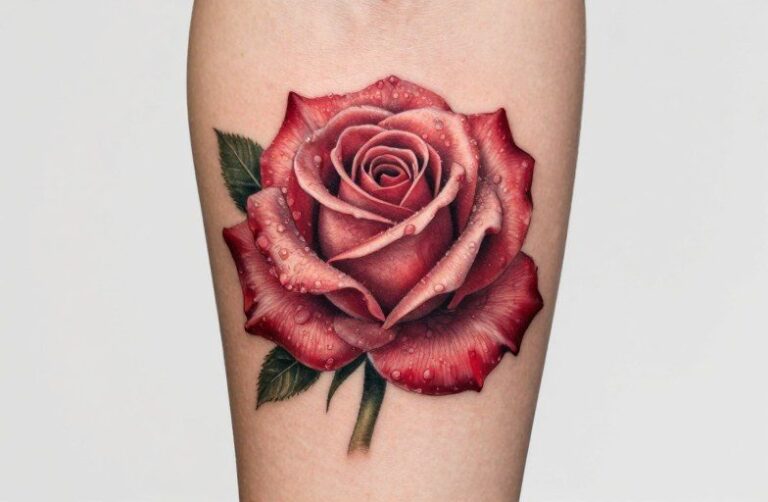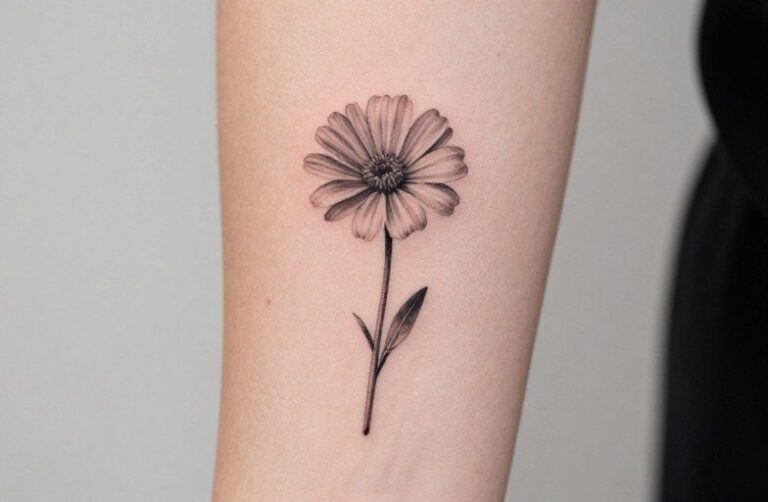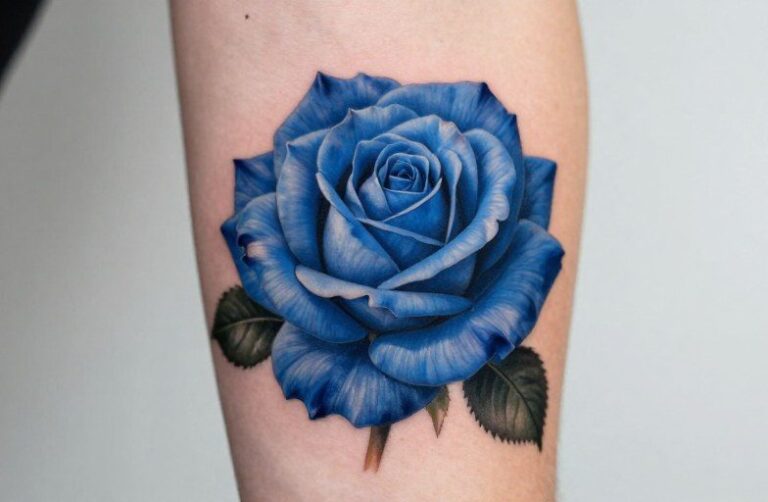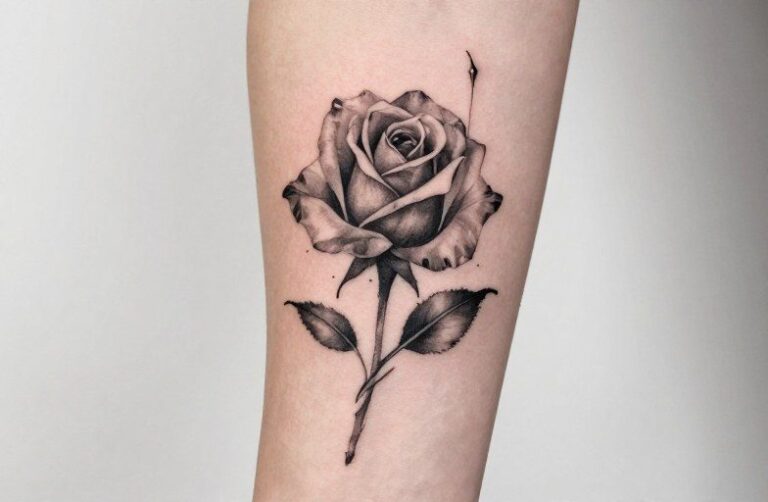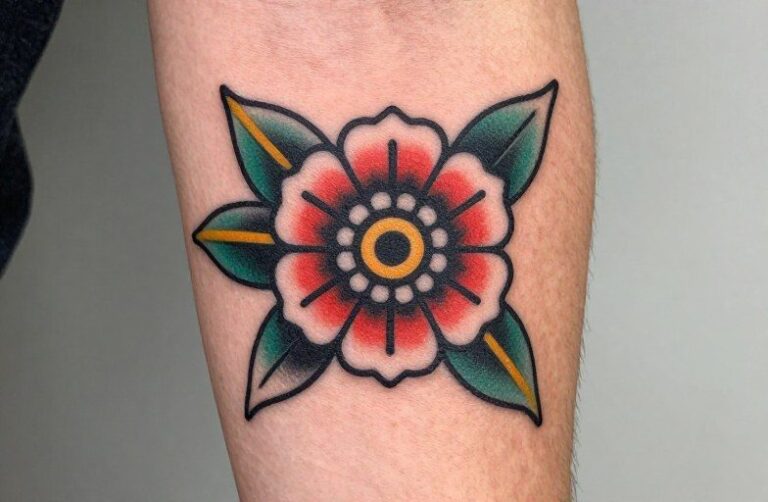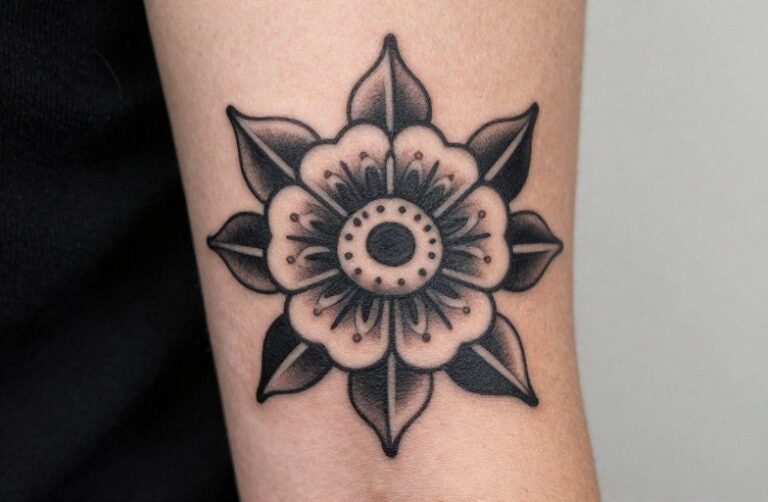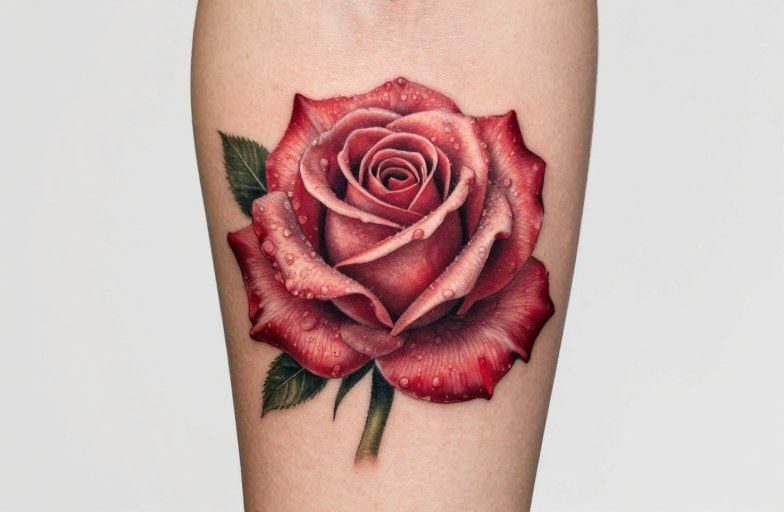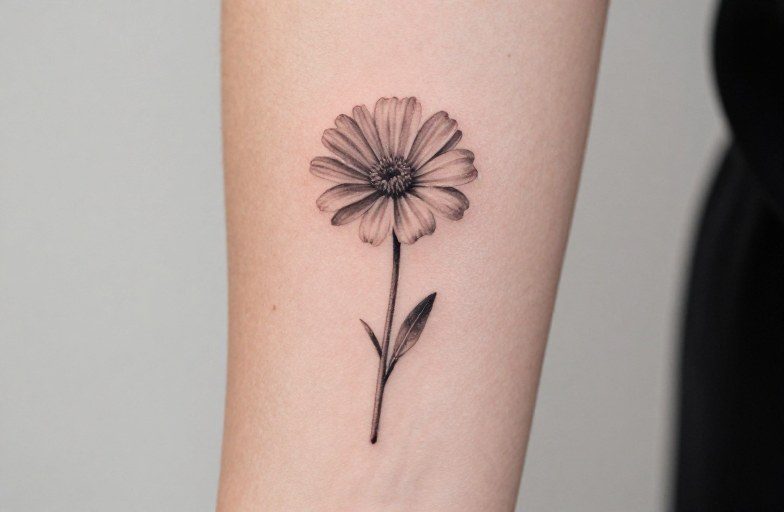
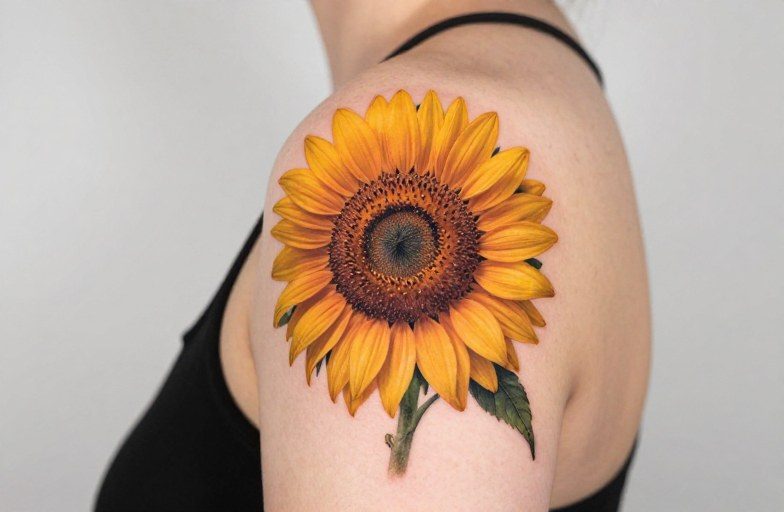
A sunflower tattoo on the shoulder typically symbolizes adoration, loyalty, and the pursuit of light, both literal and metaphorical. The shoulder placement matters: it frames the face in profile, turns with the body, and lets the bloom appear to follow the sun as you move. For comparison on how other flowers use placement to reinforce meaning, abstract rose tattoo symbolism and placement makes a useful reference. That physical motion reinforces the flower’s natural heliotropism, making the symbolism feel active rather than static.
Color vs Black and Grey
Color choices fundamentally change how the tattoo reads and how it holds up over time. This isn’t merely aesthetic preference, it’s a technical decision that affects longevity and emotional tone.
Full Color: Warmth and Fidelity
Traditional golden yellows and burnt oranges pop against most skin tones, especially on the shoulder where sun exposure is frequent. The downside: yellow pigment fades faster than darker colors. Expect bright saturation for roughly 3-5 years before significant muting, particularly on the outer shoulder where UV hits hardest. Touch-ups become part of the maintenance. Color reads as cheerful, open, almost celebratory, less ambiguous in its optimism.
Black and Grey: Subtlety and Contrast
Stippled shading and fine linework create texture without relying on fugitive pigments. Black ink holds; grey washes soften edges. For examples of how this works across different flower subjects, black American traditional flower tattoos show the range well. The mood shifts toward resilience rather than joy, surviving winter rather than basking in summer. On darker skin tones, black and grey often provide better contrast than muted yellows. The shoulder’s flat planes and gentle curves suit this approach, giving the artist room to build depth through technique rather than chroma.
History & Cultural Roots
The sunflower’s tattoo lineage is shorter than roses or anchors, but its cultural weight accumulated fast once it entered the Western ink vocabulary.
Native American Associations
Some trace sunflower cultivation to North American agriculture around 3000 BCE, with domesticated varieties appearing in present-day Arizona and New Mexico. For several Plains tribes, the flower signified harvest, bounty, and provision. In tattooing, these associations often surface when someone wants to honor Indigenous heritage or agricultural family roots, though the connection is frequently simplified from its original cultural specificity.
Victorian Flower Language
During the 19th-century floriography craze, sunflowers conveyed “pure and lofty thoughts” in British and American social codes. If you want to compare across species, different flower meanings for tattoos covers the broader symbolic landscape. This “language of flowers” occasionally resurfaces in tattoo consultations, especially when clients want coded symbolism that isn’t immediately legible to casual observers. The shoulder placement, visible in sleeveless contexts, hidden professionally, fits this semi-private communication style.
How It Ages on Skin
Shoulder skin behaves differently than ribs, hands, or thighs. Understanding this helps set realistic expectations for how the sunflower will look in a decade.
The outer shoulder (deltoid) sees sun, friction from bag straps, and stretching from arm movement. These factors accelerate fading and blur fine details. The inner shoulder, closer to the clavicle, stays more protected but experiences different tension, skin stretches horizontally when reaching, which can distort circular designs over time.
Line-based sunflowers with minimal interior detail age more gracefully than photorealistic petals with hundreds of tiny lines. Bold outlines act as containment walls; without them, yellow and orange bleed outward like watercolor on wet paper. A common aging pattern: the center disk stays readable longest (dense black), while petal tips soften and lose definition first. Plan for this, either accept the gentle blur as organic evolution, or budget for periodic reinforcement.
Healing on the shoulder presents specific challenges. Sleeping position matters; side-sleepers crush fresh work against the mattress. T-shirts rub. The joint’s constant micro-movement keeps the skin flexing during initial scabbing, sometimes pulling out ink. Artists often recommend keeping the arm relatively immobilized for 48-72 hours, which is genuinely difficult for active people.
Mythology & Folklore
Sunflower mythology clusters around transformation and unrequited devotion, stories that resonate differently depending on which version a client knows.
Greek Narratives
The Clytie myth, often linked to Ovid’s Metamorphoses, describes a water nymph who turns into a sunflower while watching Apollo’s chariot cross the sky. Some versions specify heliotrope rather than sunflower, since the modern sunflower species isn’t native to the Mediterranean. This distinction rarely matters in tattoo shops, but it matters for accuracy if you’re building meaning around classical sources. The core theme, fixed devotion, watching what you cannot possess, transfers regardless of botanical precision.
Slavic and Eastern European Traditions
In Ukrainian folklore, sunflowers often symbolized protection and solar energy. This association intensified culturally after the 2022 invasion, with sunflower tattoos becoming a visible solidarity marker. The shoulder placement allows this meaning to be shown deliberately, raised in a tank top, hidden under a blazer, rather than constantly displayed on a wrist or neck.
Personal & Modern Meanings
Beyond inherited symbolism, contemporary wearers layer personal significance that wouldn’t translate to strangers.
Recovery narratives appear frequently: the sunflower’s turn toward light mirrors moving toward health after depression, addiction, or illness. The shoulder specifically, carrying weight, bearing burdens, adds physical metaphor to emotional progress. Someone might place it on the left shoulder, near the heart, or the right, associated with action and forward movement.
Commemorative sunflowers honor specific people: a grandmother who grew them, a friend who loved Van Gogh, a child with a sunny disposition. The flower’s lack of funerary association (unlike lilies or chrysanthemums in some cultures) makes it suitable for celebrating lives rather than mourning deaths. The shoulder’s proximity to the face in conversation creates intimacy, someone talking to you sees it in their peripheral vision, a gentle presence.
Van Gogh’s sunflower paintings generate their own tattoo subcategory. These aren’t botanical representations but art-historical quotations. The shoulder accommodates the vertical format of Vase with Twelve Sunflowers better than a forearm’s horizontal plane. Wearers often want the painter’s thick impasto suggested through tattoo texture, achievable through whip shading and color packing, though never truly replicating oil paint’s dimensionality.
Religious & Spiritual Angles
Sunflower symbolism intersects with several spiritual frameworks without being owned by any single tradition.
Christian Interpretations
The heliotropic habit, turning toward light, maps easily onto faith-based orientation toward divine presence. Some Christian wearers explicitly frame it this way; others simply appreciate the structural parallel without doctrinal commitment. The shoulder placement lacks the exposed evangelism of a forearm cross or a neck scripture, making it suitable for personal faith that doesn’t require public declaration.
General Spiritual Practice
In less doctrinal contexts, the sunflower represents conscious attention, choosing where to direct energy, what to grow toward. This resonates with mindfulness practices and certain recovery frameworks. The flower’s daily motion (young plants actually track the sun; mature ones typically face east) suggests ongoing practice rather than achieved state. A shoulder tattoo thus becomes a physical reminder at the edge of vision, present without demanding constant focus.
Key Takeaways
- Shoulder placement makes the sunflower dynamic, visible in motion, hidden at rest, literally turning with the body.
- Color emphasizes joy and openness but requires maintenance; black and grey prioritizes longevity and subtle resilience.
- Aging patterns favor bold outlines and simplified petal structures over photorealistic detail.
- Historical roots span Indigenous agriculture, Victorian floriography, and classical mythology, none of which need be claimed, all of which can inform.
- Personal meaning layers over inherited symbolism: recovery, commemoration, artistic reference, spiritual orientation.
- The shoulder’s specific skin behavior and healing challenges deserve consideration before committing to design complexity.
Ultimately, the shoulder sunflower works because the body and the symbol align. Both turn toward light. Both carry weight. Both show their best face while still acknowledging what shadows exist behind.
Frequently Asked Questions
Does a sunflower tattoo on the shoulder hurt more than other placements?
The outer shoulder sits over thick muscle with fewer nerve endings, making it one of the more tolerable spots. The inner shoulder near the collarbone and the armpit edge hurt significantly more due to bone proximity and sensitive skin.
Why do so many people choose the shoulder specifically for sunflowers?
The shoulder’s rounded shape accommodates the flower’s natural form without awkward distortion, and the placement allows it to peek from sleeveless tops while staying professional under a shirt sleeve.
Will a yellow sunflower tattoo look good on darker skin tones?
Yellow can heal muted or ashy on deeper skin; many artists recommend richer oranges and golds, or shifting to black and grey with strategic warm highlights for better contrast and longevity.
How large should a shoulder sunflower be to age well?
Minimum 3-4 inches in diameter to prevent the center disk from blurring into an indistinct blob; petal tips need room to stay separated as lines naturally spread over years.