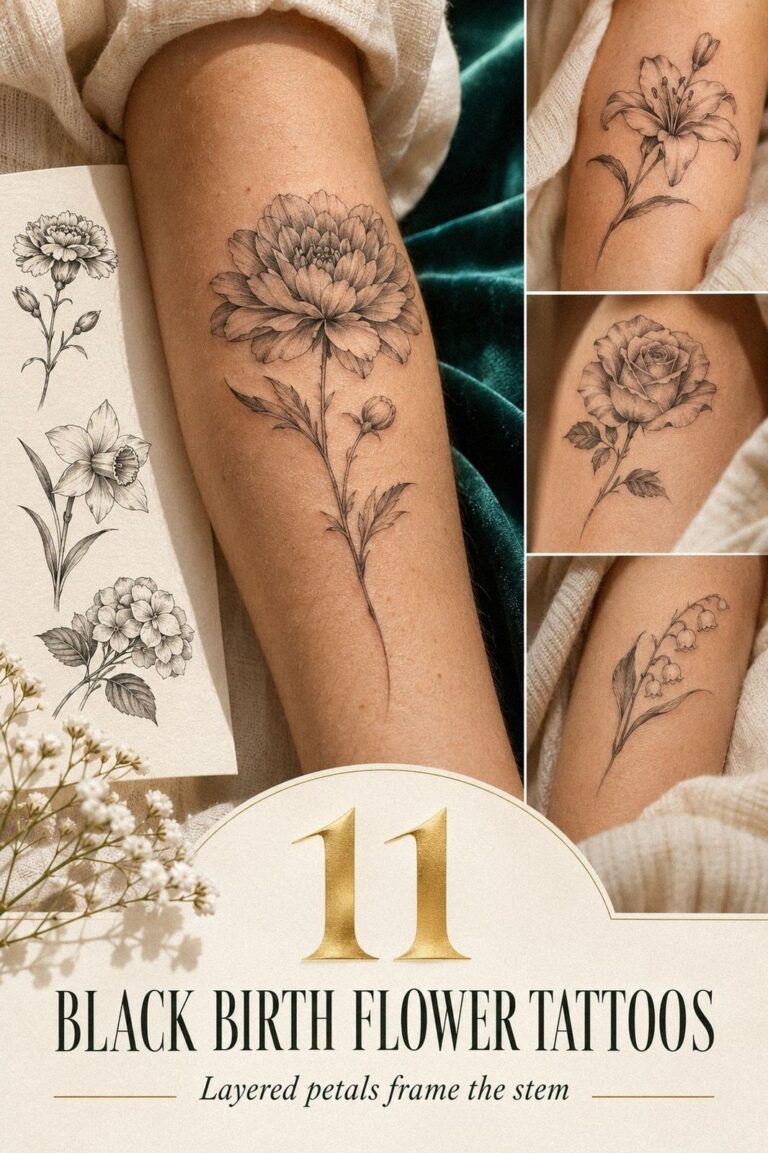
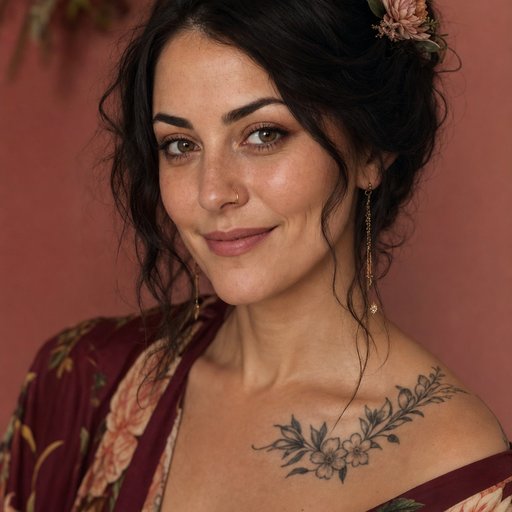
Fine line botanical tattoo designs can stay discreet, readable, and personal when placement does the heavy lifting. I learned that after choosing a wrist piece that looked crisp on day one but needed a better scale. You don’t need a huge sleeve to make botanical ink feel striking. You need a clear stem, clean spacing, and an artist who knows how skin changes!
- Small Fine Line Botanical Tattoo on the Wrist
- Fine Line Botanical Tattoo Ideas with Wildflowers
- Unique Fine Line Botanical Tattoo Behind the Ear
- Fine Line Botanical Tattoo Sleeve with Ferns
- Fine Line Botanical Tattoo on the Ribcage
- Fine Line Botanical Tattoo Ideas for Birth Flowers
- Unique Fine Line Botanical Tattoo with Herbs
- Fine Line Botanical Tattoo Along the Collarbone
- Fine Line Botanical Tattoo with Botanical Moon Phases
- Small Fine Line Botanical Tattoo on the Ankle
- Fine Line Botanical Tattoo with Delicate Insects
1Small Fine Line Botanical Tattoo on the Wrist
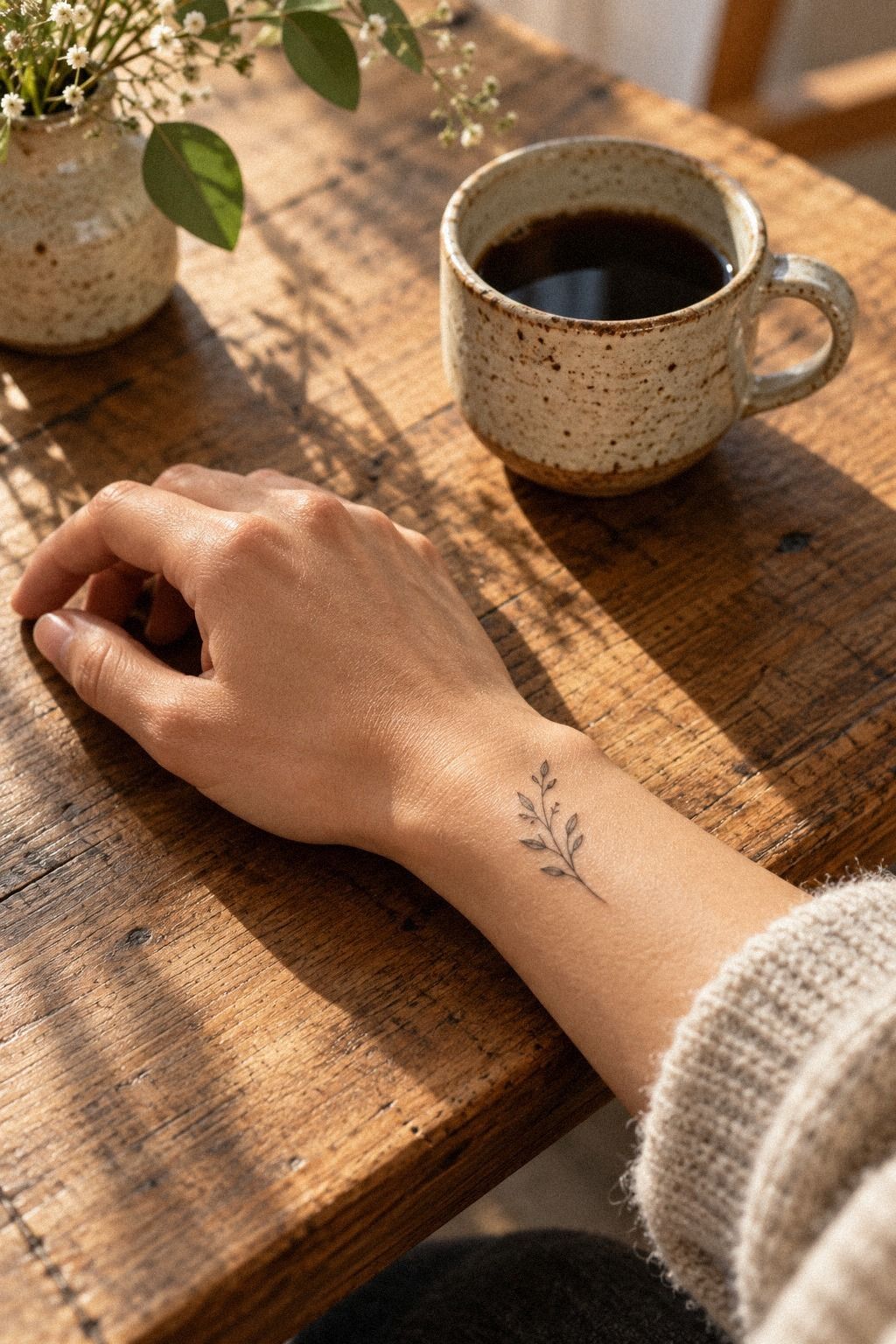
A small wrist design works best when the stem follows the natural direction of your arm. The compact scale keeps the idea minimal and delicate, while terracotta-toned ink gives the outline enough contrast to stay readable.
If you’re choosing a discreet first piece, ask for a crisp outline with one leaf shape rather than several crowded petals. It’ll read at a glance without becoming loud from across the room.
The Wrist Scale Rule is simple: your botanical shape needs breathing room around the stem. I’d skip a dense cluster here because the wrist bends, rubs against sleeves, and catches sunlight.
A single sprig, tiny daisy, or narrow fern will age more gracefully than a miniature bouquet. You’ll want your artist to leave open skin between each line.
– Hair-thin stem. – One small flower head. – Clean negative space.
And you can make it more personal through the plant choice. A symbolic herb, birth flower, or meaningful wildflower can say more than extra shading.
If you’re comparing tiny placements, browse these tiny fine line flower tattoo ideas before you settle on your final sketch. The goal isn’t to hide the design completely.
It’s to let you decide when it gets noticed!
Start With Placement, Not the Plant
Before you fall for an intricate flower, check how the placement moves. Your wrist, ankle, collarbone, and behind-the-ear area all create different limits for negative space.
I’d trace the direction of your arm or torso with a washable marker, then look at the shape while you move. A design that feels graceful while standing might look awkward when your wrist turns.
That little test can protect your budget. If the stencil already feels cramped, shrinking it further won’t improve its value. Ask whether a slightly larger outline would be worth it for clarity, or whether another placement would let the same plant breathe.
Your first choice doesn’t have to be the cheapest choice.
2Fine Line Botanical Tattoo Ideas with Wildflowers
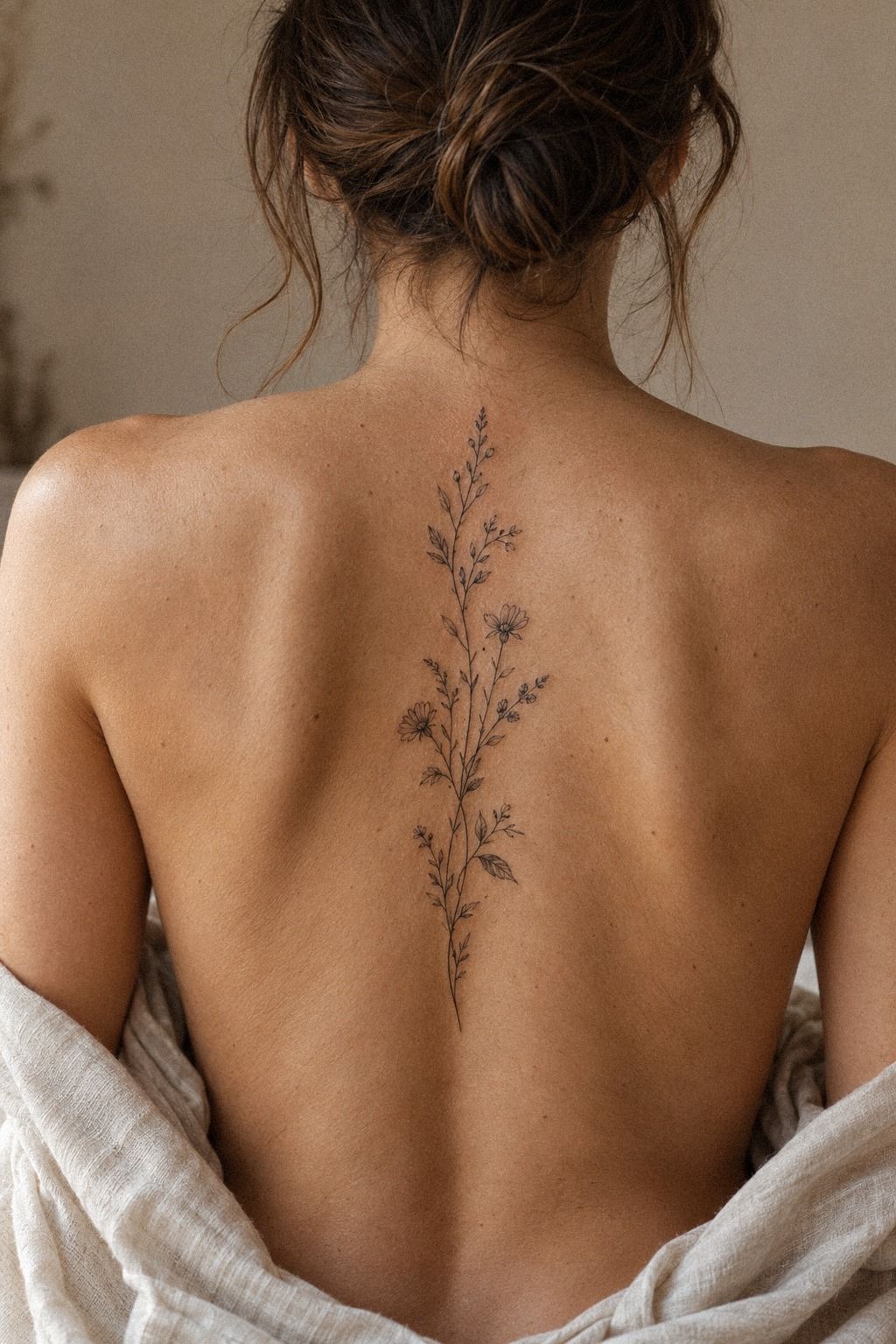
A single stemmed wildflower on the sternum feels expressive because it follows the center of the body without needing a large composition. The single stem keeps the idea graceful, meaningful, and easy to recognize.
3Unique Fine Line Botanical Tattoo Behind the Ear
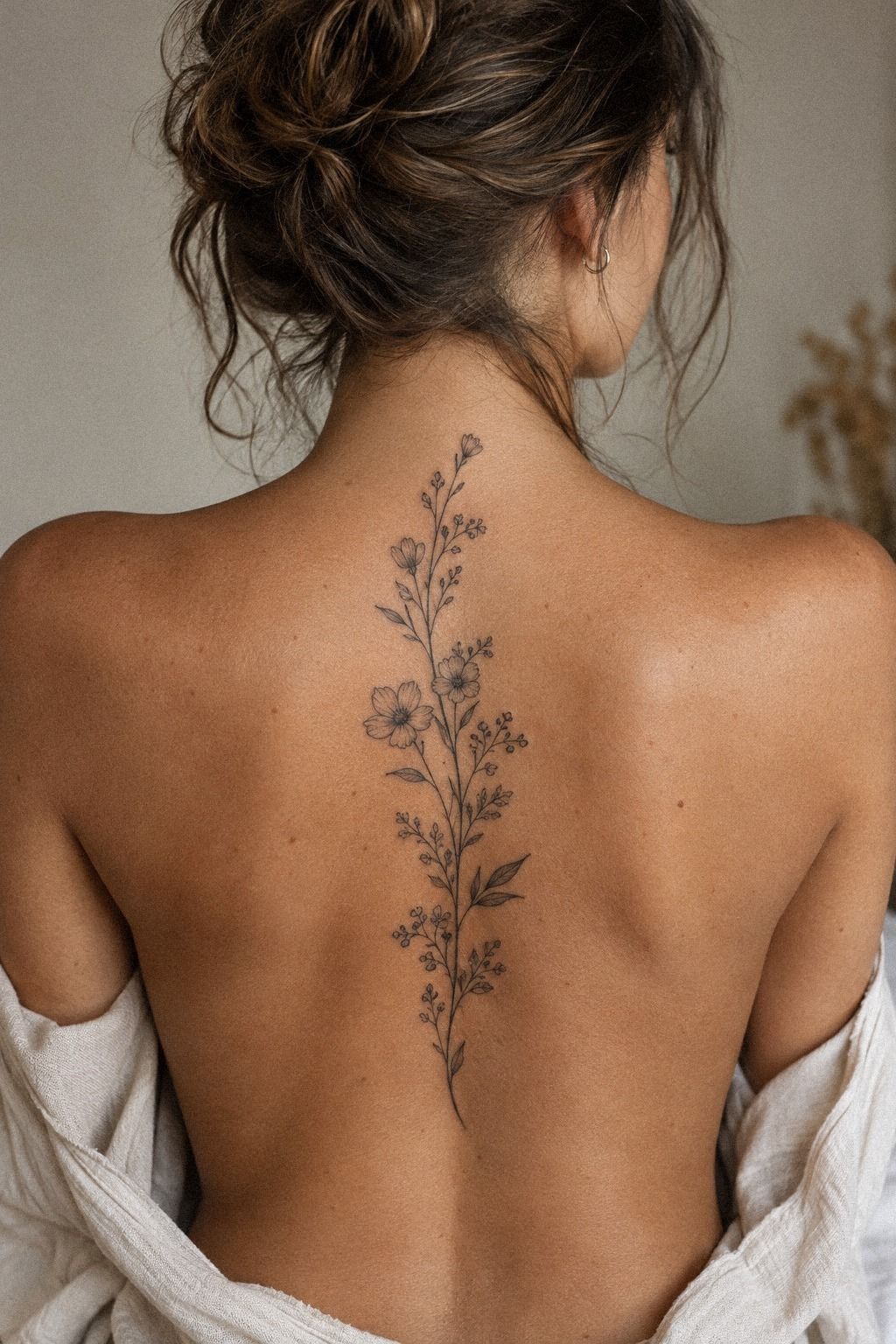
Behind-the-ear placement gives you a fierce, discreet option because the design can disappear under your hair or show when you turn your head. A narrow botanical shape works well here because hair-thin linework can follow the curve without taking over the small surface. If you want something personal but don’t want it centered on your arm, a tiny leaf, seed pod, or herb sprig can work beautifully.
And you’ll want to keep this one simpler than the sketch in your imagination. The skin is small, the surface curves, and friction from hair or headphones can make a crowded design hard to read.
I’d choose one strong outline and perhaps a short interior vein. A complicated flower crown would lose its clarity here, even if it looks ornate on paper.
The Behind-the-Ear Whisper is my favorite approach for this spot. Your design should have one recognizable anchor, such as a pointed leaf or open bloom, then fade into clean space.
That gives you an edgy detail without making the placement feel overworked. It’s also easier to cover when your hair is down.
Before booking, ask your artist to show healed examples from curved areas. You can also save a few small fine line flower tattoo references and mark which shapes still look clear at a glance.
Don’t choose an artist only because freshly finished work looks polished. Your skin deserves proof that the linework remains readable.
What Makes a Botanical Tattoo Read Clearly?
Clarity comes from the relationship between the outer contour, the plant’s scale, and the open skin around it. I’ve seen tiny designs become more powerful after one unnecessary petal was removed. That kind of editing can make the result sleek, expressive, and easier to recognize.
Your artist should be able to explain what will remain visible after the lines soften. Ask which details are essential, which are optional, and how much spacing the design needs.
A meaningful tattoo shouldn’t depend on every microscopic mark surviving perfectly. The essential details should still carry the idea.
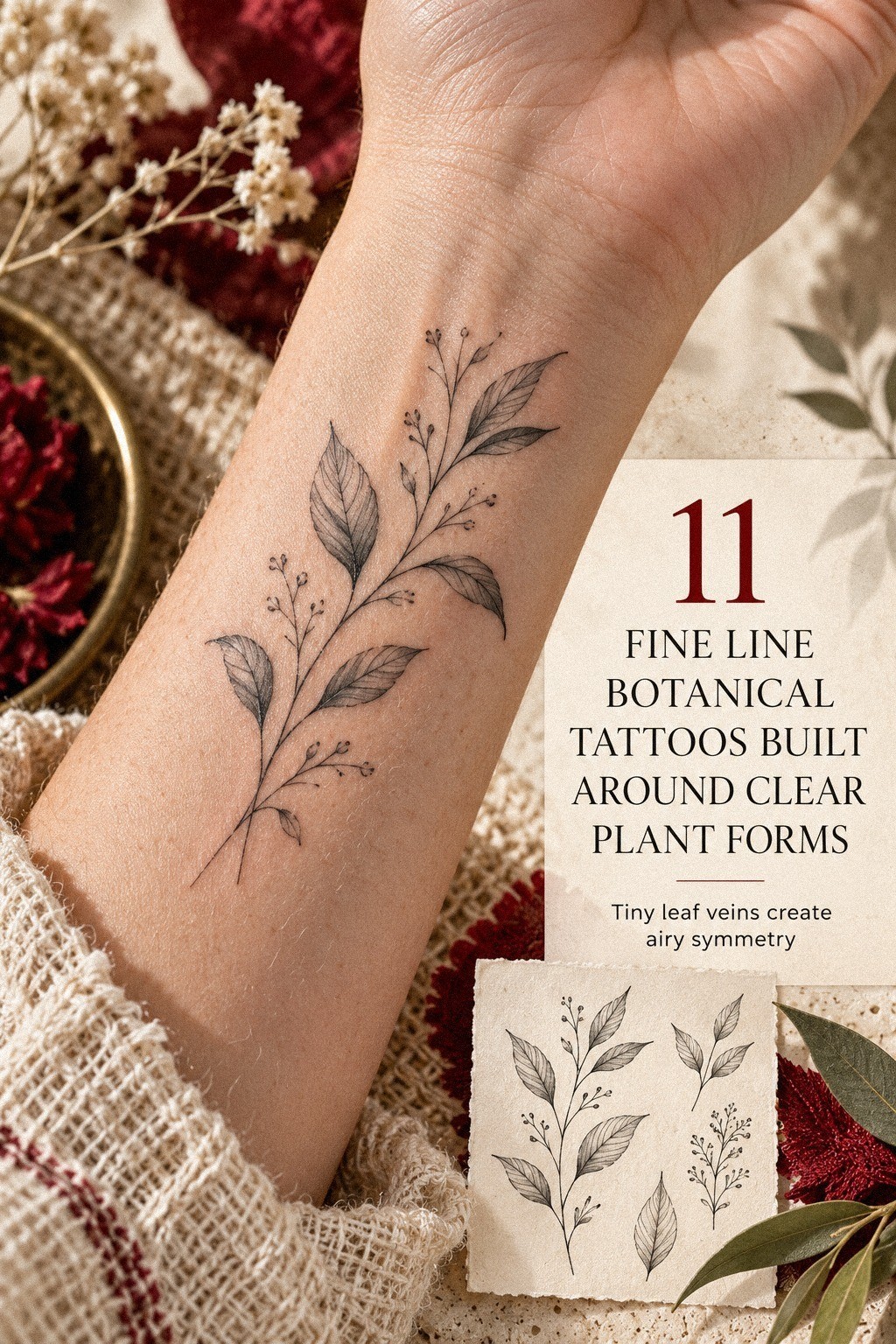
4Fine Line Botanical Tattoo Sleeve with Ferns
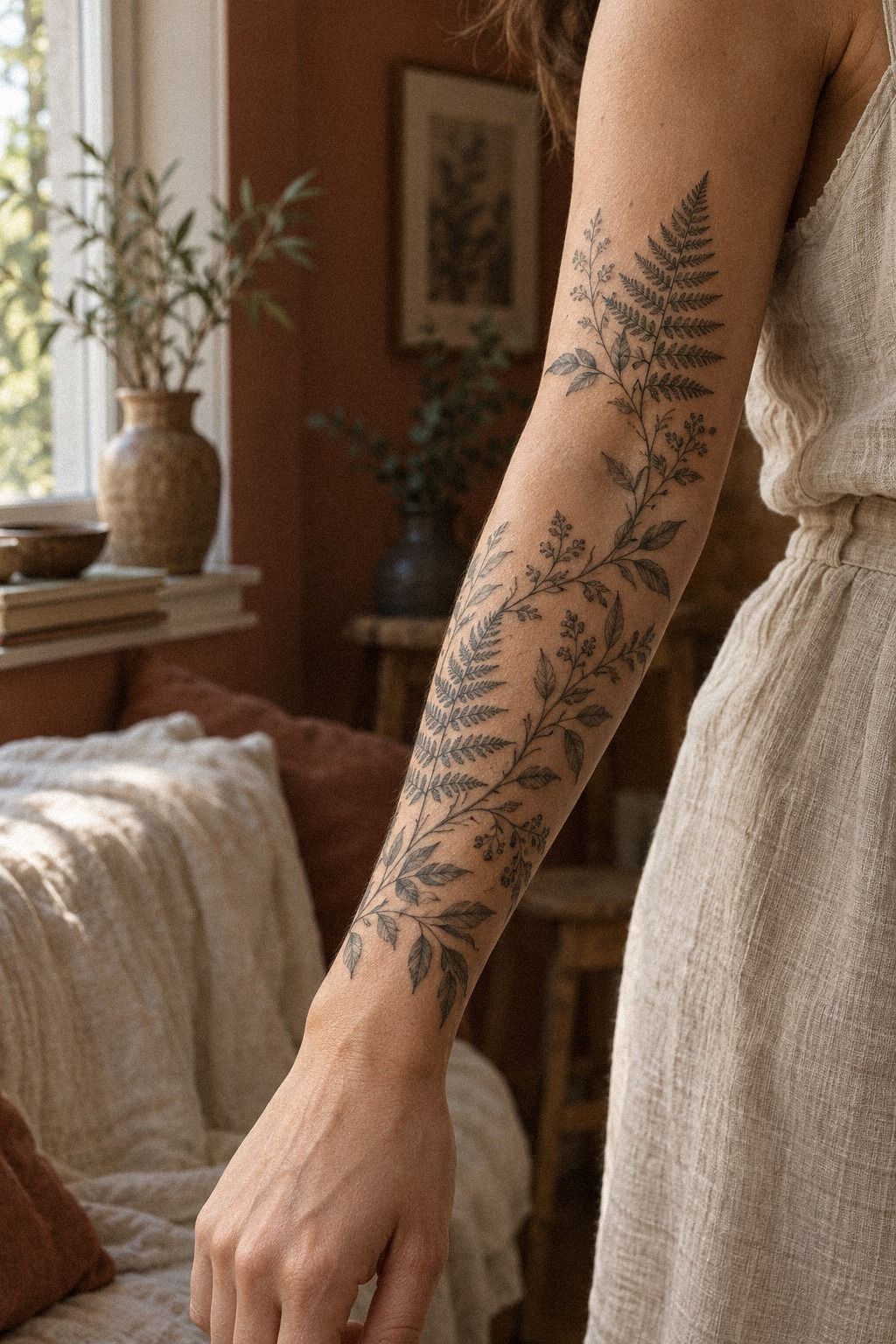
A fern sleeve gives you a flowing botanical path from the forearm toward the wrist. Repeated fronds create rhythm without requiring heavy fill, while deep navy ink gives the main stems a sharp foundation. If you want a sleeve that feels organic, let the stems turn with your arm instead of stacking identical leaves in a straight column.
I’d skip perfectly mirrored ferns. Your arm already has movement, and a little variation makes the piece look more alive.
Use larger fronds near the upper forearm, then let the leaves become thinner as they approach your wrist. That scale shift gives your artist room to protect the fine details where the skin bends most.
The Fern Ladder is built from three visual levels: a main frond, smaller side leaves, and occasional open gaps. Your artist can use greywash shading sparingly near the central stem, but you don’t need every leaf filled. A strong navy vein will hold better than a cloud of delicate grey once the tattoo settles.
– Tall fern silhouette. – Uneven leaf spacing. – Open skin at the wrist.
And if you’re planning a larger botanical project, look at fine line flower crown tattoo inspiration for ways to connect separate plant shapes. You’ll want your sleeve to feel like one expressive drawing, not eleven unrelated stickers. A little asymmetry can make the result more stylish and timeless!
5Fine Line Botanical Tattoo on the Ribcage
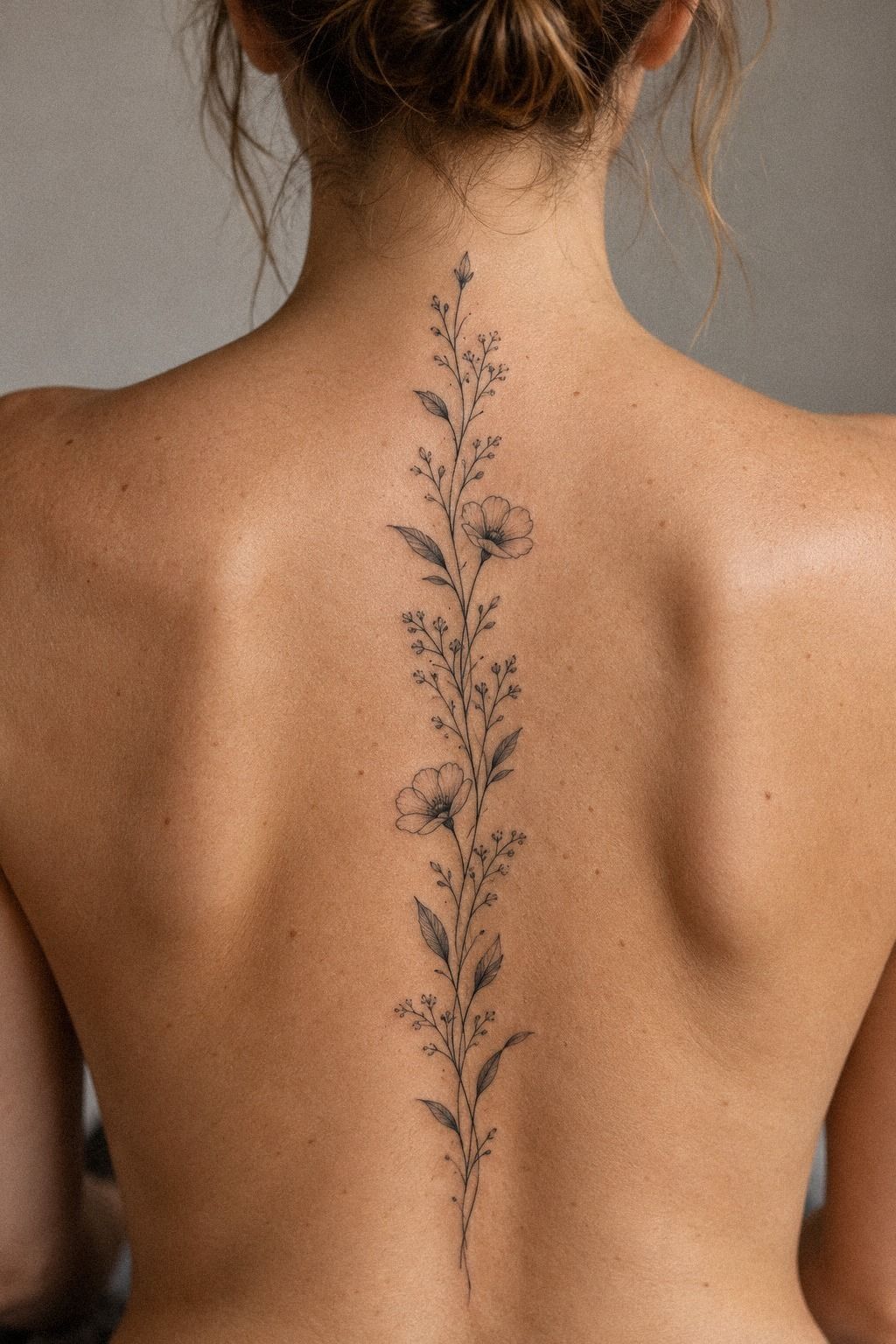
A ribcage design can feel haunting and ornate when the concept begins with one strong botanical outline. The ribs are a more sensitive placement, so your design should earn its size.
I’d choose a single focal flower rather than a dense panel that keeps you in the chair longer. Your artist can show how the piece will sit beneath the natural curve of your ribs.
The Flash-Sheet Filter helps you separate a memorable drawing from a pretty sketch. Ask yourself whether you still like the plant when it’s reduced to a clean deep emerald stencil.
If the answer is no, the design may be relying too heavily on shading. You’ll want strong outer contours, open spaces, and a shape that feels personal without a caption.
For more feminine but not overly sweet references, compare fine line flower tattoo designs for women. Keep your favorite ideas together and note which ones look readable at actual body scale. That small step can prevent an ornate sketch from becoming too delicate once it’s transferred.
Should You Choose a Bold Stem or Delicate Petals?
Choose the stem first. A bold central stem can hold the composition together even when the petals soften over time. Delicate petals still have a place, but they should support the silhouette rather than carry the entire meaning.
I’d also compare the long-term value of detail against the cost of extra sessions. A slightly simpler tattoo may be worth it if it heals clearly and still feels symbolic years later. Your artist should help you decide where precision matters most.
6Fine Line Botanical Tattoo Ideas for Birth Flowers
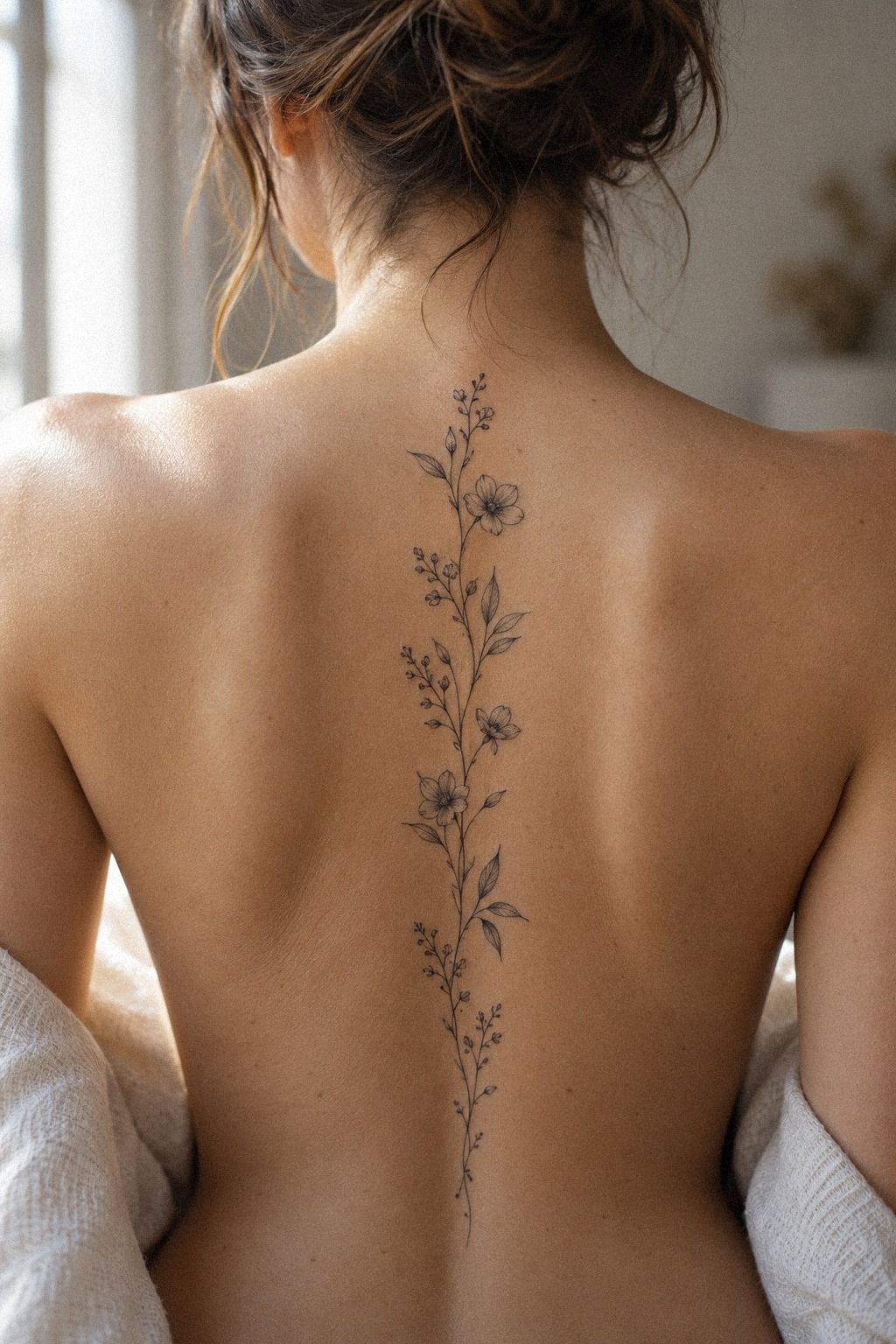
Birth flowers make botanical ink personal without requiring initials, dates, or text. A layered petal design can have a meaningful presence when the silhouette is clear and the flower isn’t reduced to a vague symbol. If you’re marking a family member or a month, choose the plant first, then decide whether the stem should be realistic, simplified, or slightly stylized.
But you don’t have to use only one birth flower. A parent and child could share two stems, or you could combine a birth flower with a small leaf from a place that matters to you.
I’d avoid adding a whole calendar of blooms. Two well-spaced plants will look more expressive than six tiny flowers competing for attention.
The Birth-Flower Pairing Rule keeps the composition readable. Your artist can give each flower a different petal structure while keeping the line weight consistent.
That creates an elegant relationship between the plants, especially when one is open and the other is shown in profile. A little contrast can make the piece feel empowering instead of decorative.
I’d also ask how the design will read on your skin after healing, not only when freshly completed. Deep skin can carry striking forest-green linework when the artist understands contrast and spacing.
Save a few fine line peony tattoo ideas if you want layered petals, or choose a simpler bloom if you prefer an understated result. You’ll know the right flower when the meaning feels personal rather than assigned.
7Unique Fine Line Botanical Tattoo with Herbs
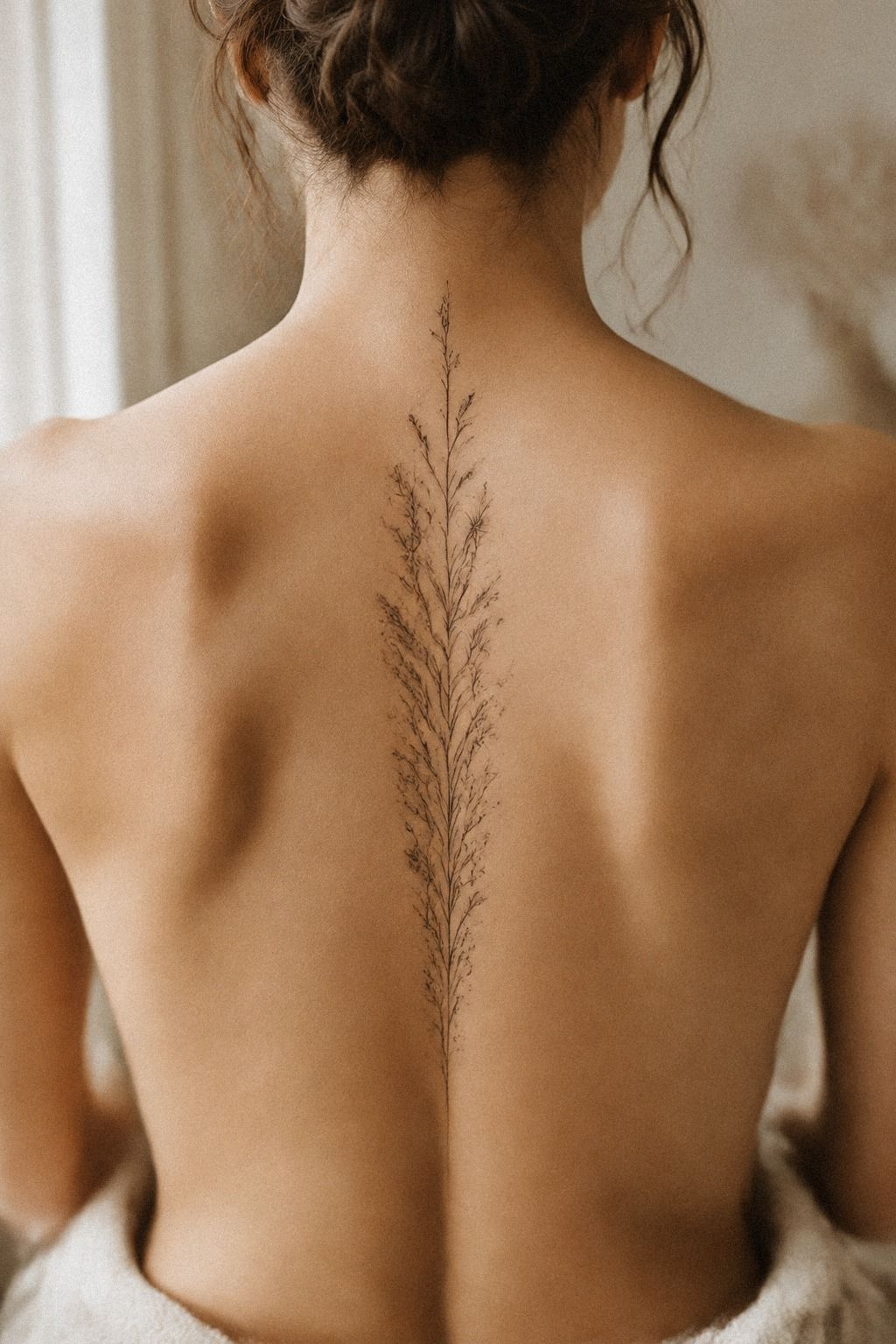
Herb tattoos feel sleek because their leaves are easy to recognize and their stems can stay narrow. The thigh gives an artist enough room for a rosemary sprig, thyme, basil, or sage branch with fine line detail. If you want a botanical tattoo that doesn’t look like a standard bouquet, an herb can carry a quieter, more unusual story.
The Herbarium Line works best when each leaf has a little space from the next. I’d choose a longer stem and fewer leaves instead of filling every inch with tiny marks.
Your thigh gives you flexibility, but that doesn’t mean the design needs to become large. A clean outline can feel daring when the plant has a raw, hand-drawn quality.
You can also use the herb to anchor a memory. Maybe it’s the plant your grandmother kept near a window, or the scent you remember from a trip. That personal link gives the tattoo weight without adding words.
I went back and forth on adding a tiny label once, but the lettering made the composition less graceful.
– Rosemary with narrow needles. – Basil with rounded leaves. – Sage with a soft oval shape.
And you can compare minimalist fine line flower tattoo examples if you want the same restraint in a flower-based design. Your artist should show the stencil before beginning, especially if the herb has repeated leaves. A slight adjustment in spacing can keep your final piece polished rather than crowded.
The Healed-Line Check
Fresh work can look crisp because the tattoo surface is still new. Healed work tells you much more. Ask for examples in ordinary light, then check whether stems remain connected, leaves remain distinct, and the overall shape still feels personal.
This is where value matters. A lower quote isn’t automatically better if the artist can’t show consistent healed results.
I’d pay attention to artist judgment, spacing, and communication before chasing a bargain. Your skin is the part of the process you can’t replace.
8Fine Line Botanical Tattoo Along the Collarbone
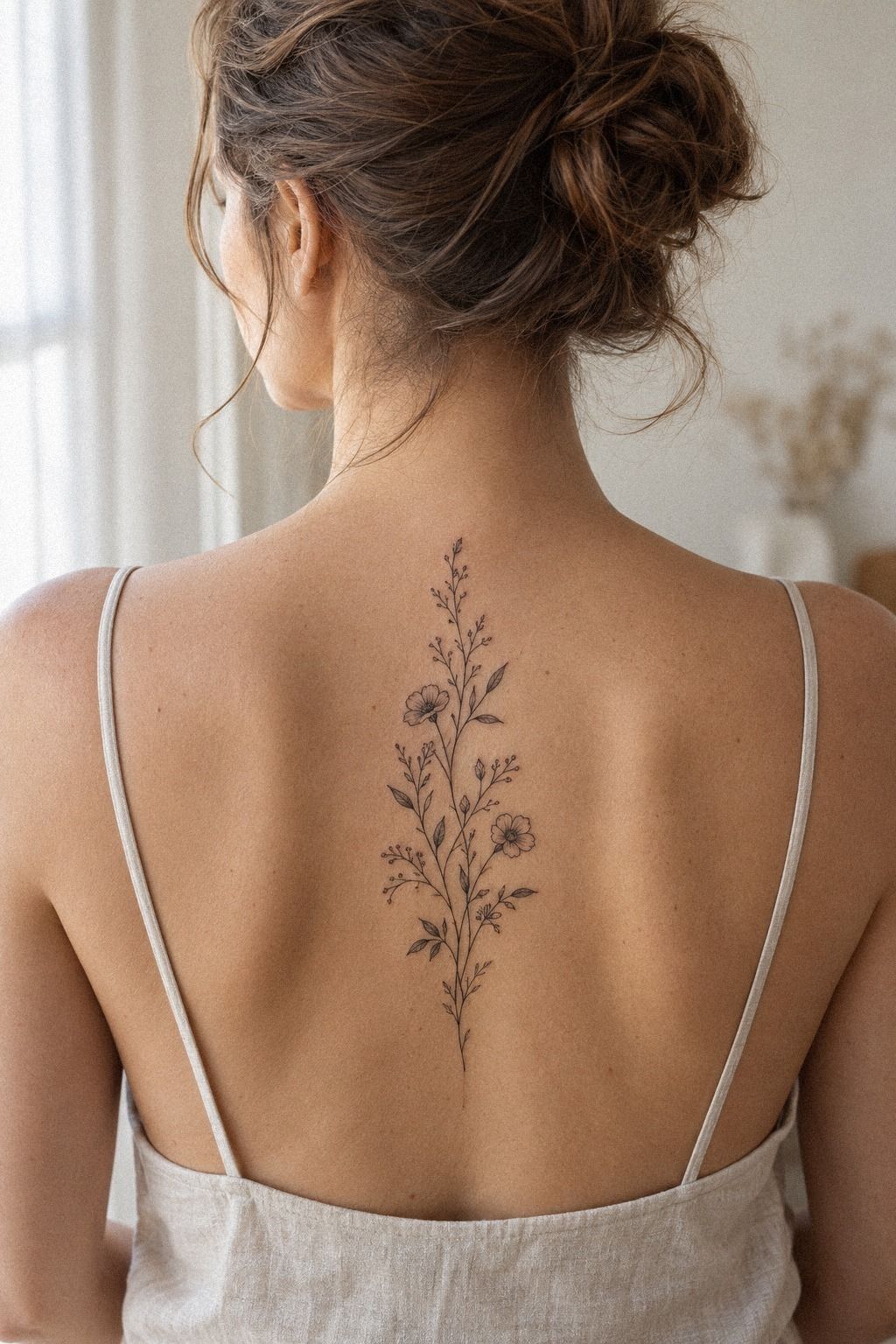
A collarbone tattoo can look graceful when the stem follows the bone instead of fighting it. A flowing stem gives the placement direction without requiring a large composition.
Fine Line Versus Micro Detail
Fine line doesn’t mean every mark should be microscopic. A consistent line weight gives your artist a stable foundation, while selective detail adds personality. If every vein, thorn, and petal is equally tiny, the design can become muddy instead of intricate.
I prefer one memorable detail: a pointed leaf, an unusual seed pod, or a single open petal. That choice can make the tattoo iconic without making it busy. It’s also a smarter use of your budget because the design spends selective detail where it actually changes the result.
9Fine Line Botanical Tattoo with Botanical Moon Phases
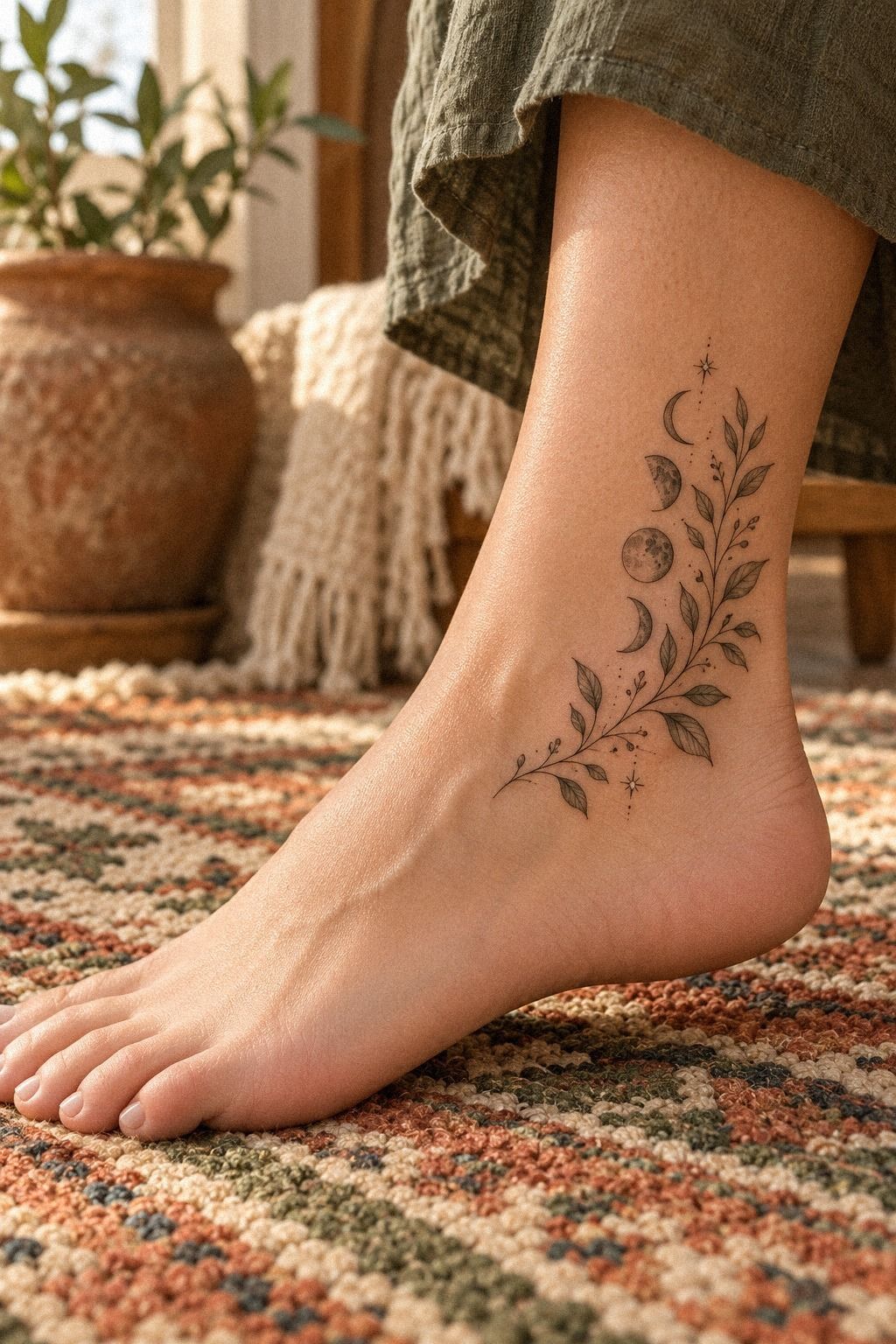
A crescent moon with small stems and leaves creates an ethereal composition because the botanical elements soften the celestial shape. The sternum placement gives the design a centered, symbolic quality. If you want your tattoo to feel expressive without using text, moon phases can suggest growth, change, or a private ritual.
The Moon-and-Stem Balance keeps one element from overpowering the other. I’d make the crescent the anchor, then use two or three small botanical marks around it.
Too many stars can push the design toward a generic celestial flash style. Your artist should leave open skin inside the moon so the shape remains sharp after healing.
A powerful design doesn’t need heavy fill. Midnight-blue accents, a few crisp leaves, and one small flower can create enough contrast. You’ll want to ask whether the artist plans to use solid color or a lighter greywash, especially if your skin sees frequent sun.
UV exposure can soften fine lines over time, so placement and protection matter.
If you’re comparing symbolic flowers, browse fine line lotus flower tattoo references and fine line wildflower tattoo ideas. And ask yourself, do you want the moon to be the first thing people notice, or the plant? Your answer will guide the scale, spacing, and final direction of the design!
10Small Fine Line Botanical Tattoo on the Ankle
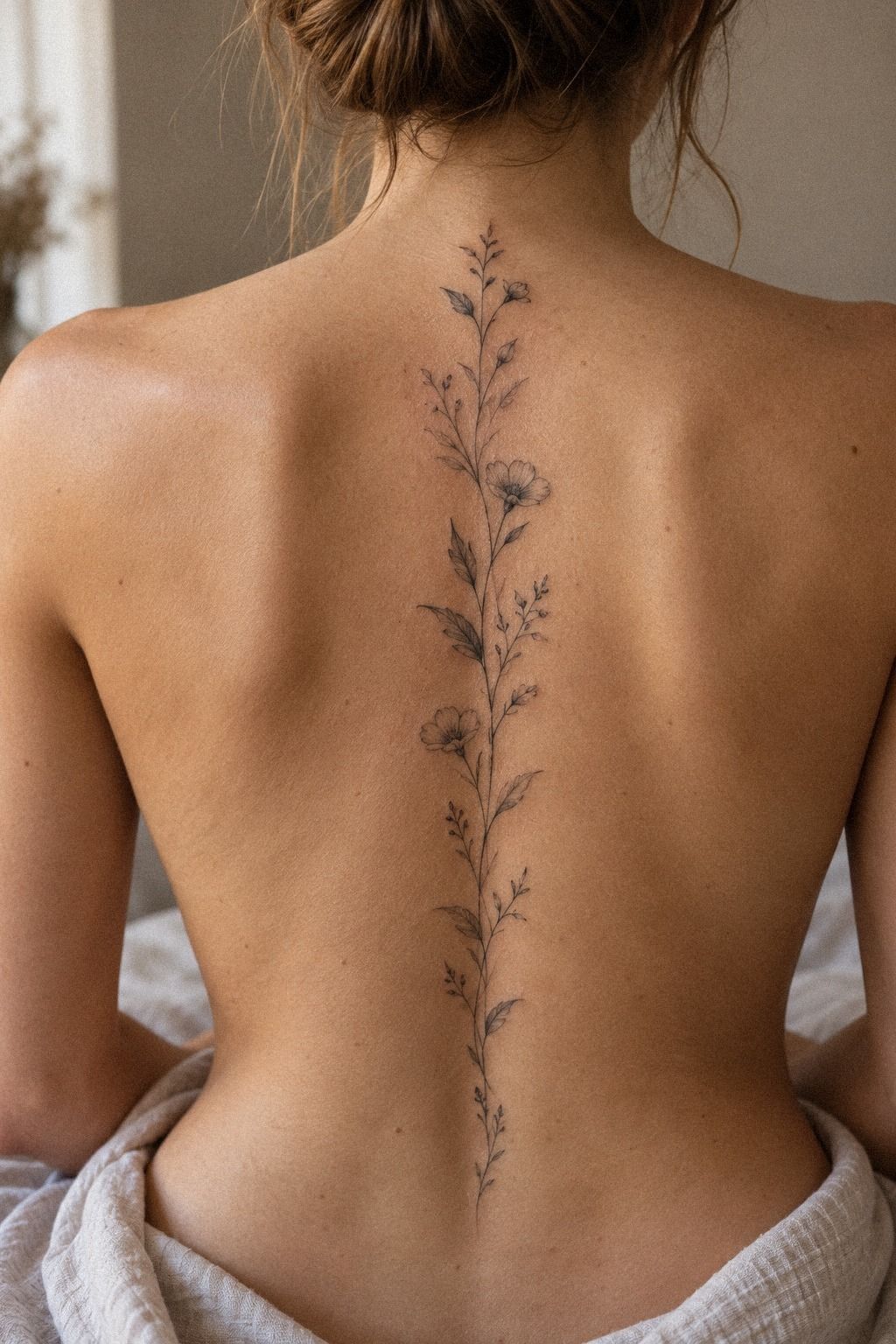
The ankle works well for a small botanical shape, but friction matters. Socks, shoes, and movement can make the area sensitive while it heals.
I’d choose a narrow sprig with one clear bloom rather than a crowded plant with many tiny veins. Your design can still feel polished and personal when the outer silhouette does most of the work.
The Healed-Line Check should be part of your artist search. Ask for healed work in regular light, then look at whether the stem remains connected and whether the leaves still have breathing room. Fine lines can widen as they settle, and deep sage-green ink generally ages better than extremely pale marks.
You’ll find more compact references in these tiny fine line flower tattoo ideas. Keep your aftercare simple: wash gently, moisturize as directed, and avoid direct sun and swimming while the surface heals. A surface healing period of about 2 to 3 weeks is common, while complete healing can take about 2 to 3 months.
How Much Detail Is Worth the Cost?
A tiny ankle tattoo can be worth it when the design remains readable, but extra detail isn’t always good value. Open-skin spacing may matter more than another petal or vein. Ask your artist what they’d remove if the design had to be reduced by twenty percent.
That question reveals judgment. I’d rather pay for a crisp, deliberate outline than spend more on details that blur together. Your budget should support a design that still works after healing, not only one that looks impressive in the stencil.
11Fine Line Botanical Tattoo with Delicate Insects
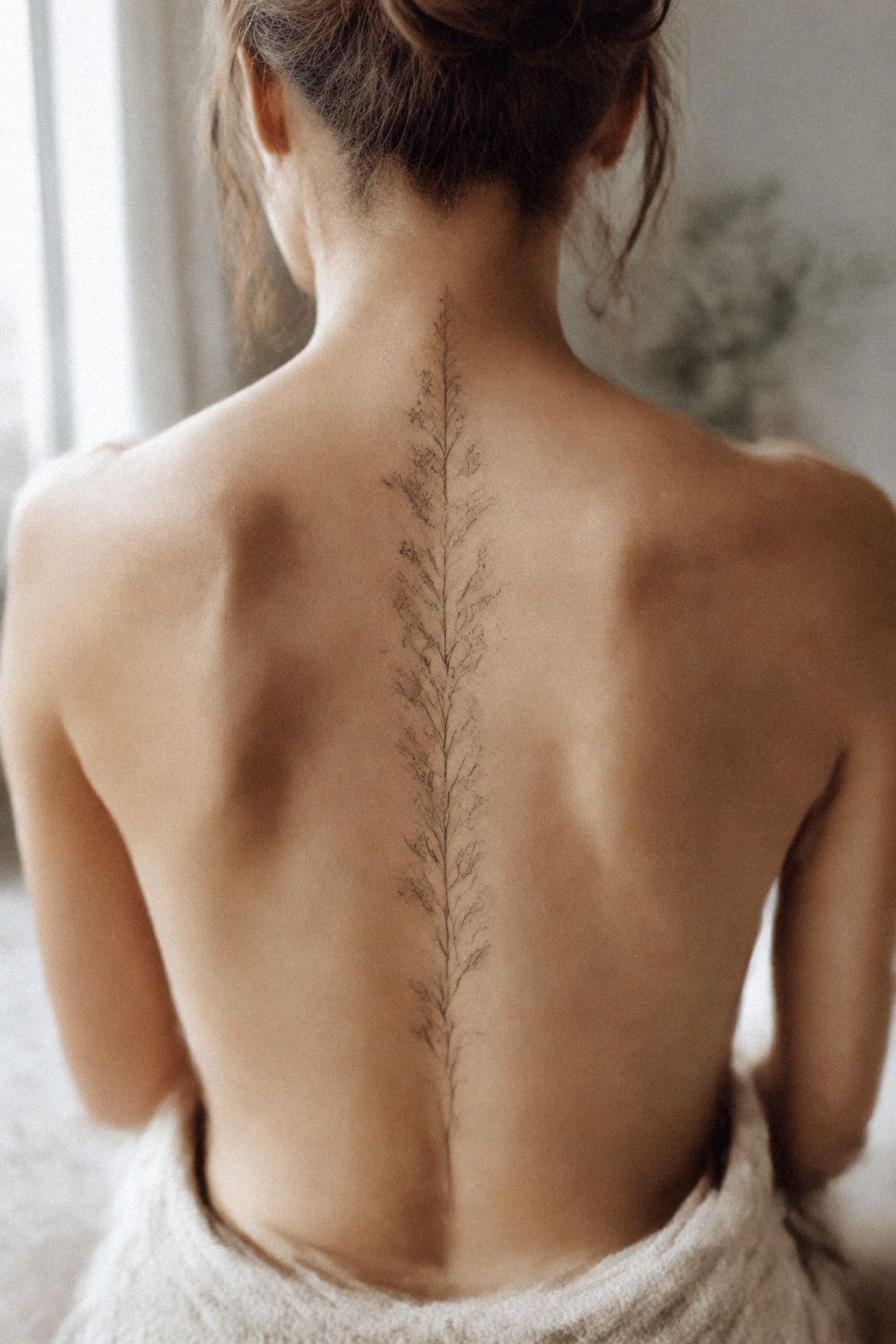
A small insect beside a botanical stem can make a wrist tattoo feel whimsical, personal, and slightly unexpected. If you want a butterfly, moth, bee, or beetle, keep the insect’s silhouette clear and let the plant carry the softer detail. Terracotta linework can give the relationship a strong, expressive presence.
The Insect Pairing Rule is to match the insect to the plant’s character. A moth beside a night-blooming flower can feel haunting, while a bee with a tiny herb sprig can feel playful.
I’d skip mixing several insects in one small design because the story becomes harder to read. Your best option is usually one insect, one stem, and one point of connection.
You can make the idea more personal through movement. Let the insect face the bloom, rest on a leaf, or sit just beyond the stem.
Those choices create a daring little narrative without adding words. Your artist can use solid wing accents and leave the veins open, which keeps the design visible as it settles.
For more ideas with a feminine or personal direction, save fine line flower tattoo ideas for women. Keep the lines sharp and the composition understated. A tiny insect can make the tattoo iconic when the relationship between the two elements feels intentional, not randomly assembled.
Which Details Should Stay Personal?
Keep the detail that carries your meaning. That might be a birth flower, a herb connected to family, or an insect that reminds you of a particular season. The most meaningful choice isn’t always the most complicated one.
I’d write down the story in one sentence before finalizing the stencil. If the design needs a paragraph to explain what it means, simplify it until the symbol feels immediate. A clear idea usually creates a more powerful tattoo.
Why Are Fine Line Botanical Tattoos Still Worth Choosing?
Fine line botanical tattoos are having a lasting moment because they offer personal meaning without demanding a loud visual statement. I don’t think every design needs to be large, saturated, or instantly visible. A small stem on your wrist, ankle, collarbone, or behind your ear can become part of your daily language.
You notice it when you reach for a cup, tie your shoe, or catch your reflection. That quiet repetition matters.
I’ve also learned that fine line doesn’t mean careless or weightless. The most delicate-looking tattoo still needs a firm structure underneath it.
Your artist has to understand skin, spacing, placement, and the way a line may soften. I made the mistake of choosing a design because the fresh tattoo looked polished.
The healed result taught me to ask for real healed work, especially from curved or high-friction areas.
My opinion is simple: choose a smaller botanical tattoo only when the design has enough room to breathe. Don’t shrink an intricate flower until the petals become decoration. Don’t add grey shading just because the stencil feels too plain.
A crisp dark stem with one meaningful detail often looks more timeless than an overworked piece that tries to explain everything.
If you’re still deciding, compare the placement before the plant. Ask whether you want privacy, visibility, lower friction, or a stronger symbolic position.
Ribs and sternum can feel more sensitive, while the forearm, thigh, and shoulder are often more tolerable. You’ll make a better choice when your personal reason leads and the trend follows.
For more restrained references, see minimalist fine line flower tattoo ideas.
Fine Line Botanical Tattoo Cost, Healing, and Placement Data
These are general US reference points, not a quote for your design. Your artist, region, placement, size, and session length will change the total. A small behind-the-ear piece may still meet a studio minimum, while a botanical sleeve will depend on the drawing, the number of sessions, and the artist’s hourly rate.
You’ll want to ask what’s included before booking. A clean studio, a detailed consultation, a custom stencil, and clear aftercare instructions all matter more than chasing the lowest price. I’d be cautious with any artist who won’t show healed work or explain how they’ll protect your lines.
During healing, wash gently, use the recommended moisturizer, and avoid direct sun and swimming until the surface has recovered. Your skin may look softer or darker during the process, and that can be normal. Don’t pick at flakes.
Don’t judge the final result in the first few days!
The Questions Worth Answering First
How much does a fine line botanical tattoo usually cost?
A fine line botanical tattoo often costs about $50 to $100 at a US boutique minimum, while hourly rates commonly sit around $100 to $250. Your region, artist, placement, and drawing complexity will affect the quote.
Ask for a written estimate after showing your reference. A custom stencil may take more planning than a simple flash design, and a larger piece may need more than one appointment.
Are fine line botanical tattoos a good idea for a first tattoo?
Yes, they can be a meaningful first tattoo because you can choose a discreet placement and a clear, manageable design. The forearm, thigh, or shoulder may feel more tolerable than ribs or sternum.
Start with a flower or stem you’ll still understand years from now. A simple dark outline gives your artist room to keep the shape readable as it heals.
How do I choose a tattoo artist for fine line botanical tattoos?
Choose an artist with a portfolio showing clean botanical linework, healed results, and consistent hygiene. You’ll want to see how their stems, leaves, and petals look after the fresh stage.
Look for healed tattoo examples, not only freshly completed work. Ask about their process, placement advice, and aftercare before you book.
How much do fine line botanical tattoos hurt?
Pain varies by placement, but ribs, feet, hands, and sternum are often more sensitive than the forearm, thigh, or shoulder. Your session length and personal tolerance matter too.
A short consultation can help you plan around sensitivity. Don’t choose a spot only because it’s hidden. You’ll enjoy the experience more when the placement suits your comfort.
How long does a fine line botanical tattoo take to heal?
The surface usually heals in about 2 to 3 weeks, while complete healing can take about 2 to 3 months. Your skin may look different during each stage.
Follow your artist’s gentle aftercare instructions, wash carefully, moisturize as directed, and avoid swimming and direct sun while the surface heals. You’ll protect the final lines by leaving the tattoo alone.
What’s the best placement for fine line botanical tattoos?
The best placement depends on how visible, private, and tolerable you want the tattoo to be. The forearm, thigh, and shoulder are often more comfortable, while the collarbone, ribs, and sternum create a more intimate result.
For fine lines, choose a place where your design won’t face constant friction. Your placement choice matters, especially around the ankle, wrist, and fingers.
One Meaningful Stem Over a Crowded Bouquet
If I had to pick one, I’d start with the small wrist wildflower. Its clear stem stays discreet, the placement is easy to see before you cover it, and the design won’t need extra shading to feel personal. Pin the small fine line flower tattoo guide for later and bring one favorite stem to your artist.