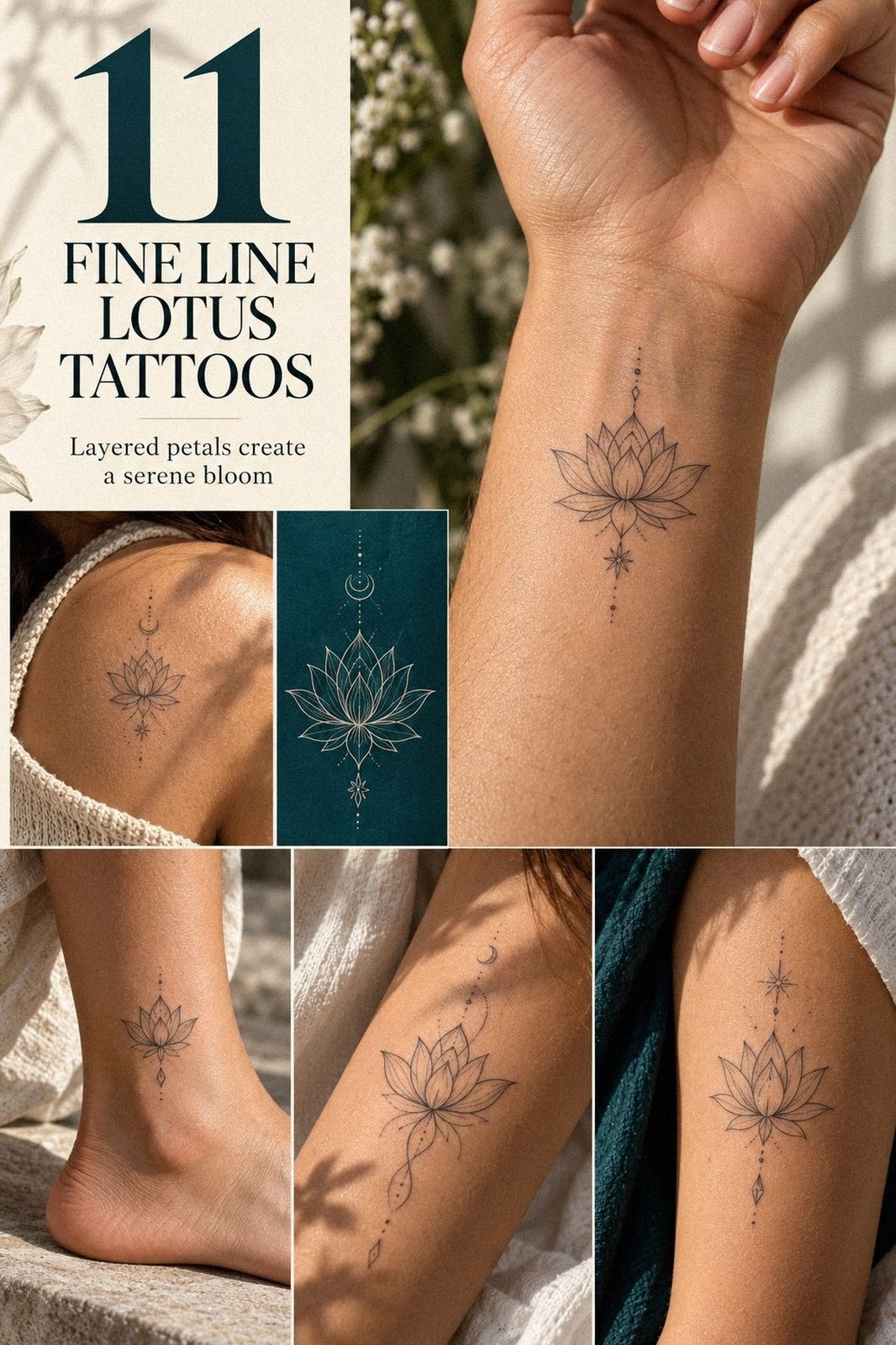
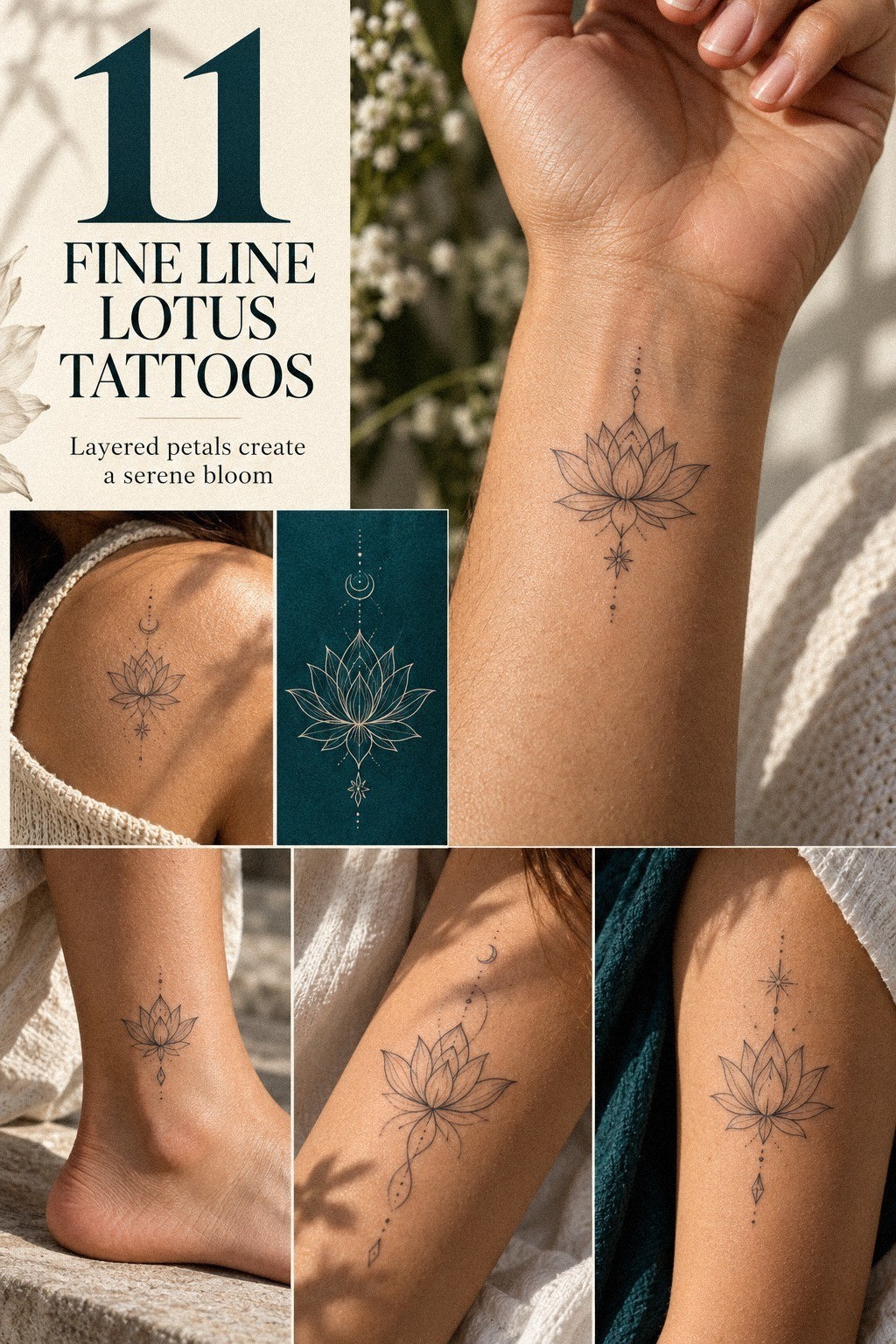
Fine line lotus flower tattoo ideas can stay crisp, personal, and wearable when placement leads the design. I learned that after choosing detail before scale, and the result softened faster than I expected. You’ll see eleven striking options here, plus honest notes on pain, healing, cost, and line longevity. Start small, but choose deliberately!
- Small Fine Line Lotus Tattoo on the Wrist
- Fine Line Lotus Flower Tattoo Ideas with Dots
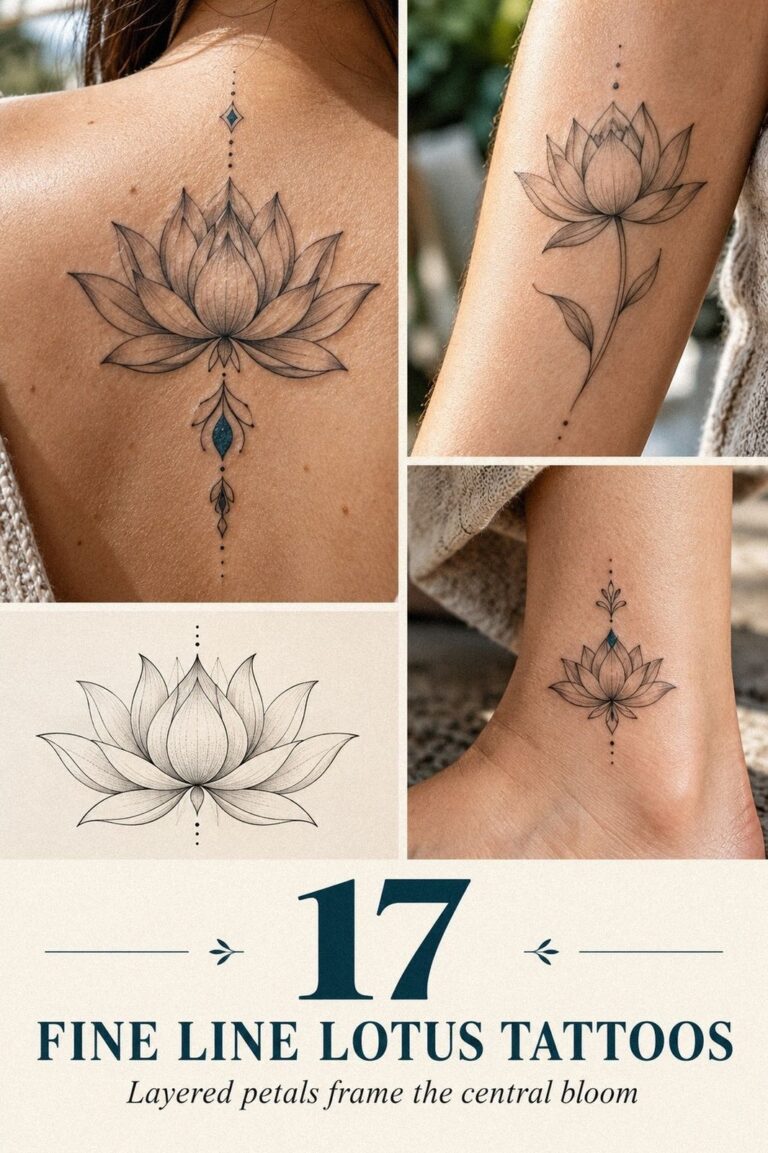
- Build a Unique Fine Line Lotus Along the Spine
- Minimal Fine Line Lotus Flower Behind the Ear
- Fine Line Lotus Tattoo with Crescent Moon Details
- Let a Delicate Fine Line Lotus Lead on the Forearm
- Frame the Flower with Geometric Linework
- Can a Fine Line Lotus Frame the Ankle?
- Make a Bold Fine Line Lotus with Stem Script
- Fine Line Lotus Flower on the Ribcage
- Balance Symbolic Lotus and Mandala Accents
1Small Fine Line Lotus Tattoo on the Wrist
A small wrist lotus gives you a striking first tattoo without hiding the shape under clothing. The terracotta ink with tiny olive accents can look expressive against the skin, while a front-facing bloom keeps every petal balanced. You’ll want the flower centered, not crowded against the wrist crease.
I’d keep this design fierce but restrained, with a stem that stops before the hand begins. Your artist can leave tiny spaces between the petals so the image won’t become one dark knot as it ages. Don’t shrink every detail simply because the tattoo is small.
The lotus petal spacing matters more than adding another decorative mark. A slightly larger flower may give the petals enough breathing space to remain recognizable years later.
The wrist is visible, so your choice will feel personal every time you reach for a glass or type a message. A neat flower can look feminine or quietly fierce depending on the petal angle. Clean, spare, readable.
That’s the appeal.
If you’re comparing proportions, look through this guide to tiny fine line flower tattoo ideas. I’d skip heavy shading here because the wrist moves constantly, and dense pigment can make a dainty design look muddy sooner.
Before you book, ask whether the proposed size leaves enough room for the wrist placement and the petals. A slightly larger flower may offer better value than an ultra-tiny version that loses its identity within a few years. The cheapest option isn’t always worth it when readability matters.
2Fine Line Lotus Flower Tattoo Ideas with Dots
The dotted version feels meaningful without becoming ornate. A single stem rises into layered petals, while small dots create a soft orbit around the bloom. Those marks should look intentional, not sprinkled randomly across your wrist.
Ask for a controlled fine-line needle grouping and a clear spacing plan before your session. You’ll want the dots to remain separate from the petals, especially if your design is under 2 inches wide. I’ve seen too many tiny dots placed close together, and they lose their airy rhythm after healing.
This is a meaningful option if you want your lotus to suggest growth, patience, or a private turning point. The style is understated, but it isn’t plain. Your eye moves from the stem to the bloom, then pauses at each dot.
And if you’re choosing between dots and extra shading, I’d choose dots for a softer, more expressive result. Save denser blackwork for a larger placement. You can compare related proportions in these small fine line flower tattoo ideas.
A dot halo also gives you a way to personalize the tattoo without adding lettering. You might use three dots for a family connection, seven for a meaningful date, or an uneven arrangement that feels more raw than perfectly geometric. Your personal number should stay clear to you, even if nobody else knows the reason.
3Build a Unique Fine Line Lotus Along the Spine
A spine placement makes the lotus feel powerful because the body’s centerline does some of the design work. The plum, grey, and rose-gold palette gives this version an intricate sense of movement without requiring heavy fill.
Ask your artist to check the spinal alignment while you’re standing. A flower that looks centered while lying down can shift once your posture changes.
I’d keep the grey shading sparse and let the plum line carry the petals. Small rose-gold touches can add warmth, but too many colored details may compete with the flower’s silhouette.
This placement can feel daring and intimate. It also gives you privacy when you want it, especially if the lotus sits between the shoulder blades or lower along the back.
4Minimal Fine Line Lotus Flower Behind the Ear
Behind the ear suits a minimal lotus because the placement rewards a compact silhouette. The navy linework gives the flower more presence than pale ink, while small skin breaks keep the design from looking heavy. You’ll want the bloom angled slightly outward so it can still be seen.
The single-stem flower keeps the design light enough to follow the curve behind the ear. A few white spaces between the petals can preserve the shape as the line softens.
And yes, this spot can be more sensitive than people expect. The skin is thin, the area is close to bone, and the buzzing sound feels louder near your ear. Most sessions are brief, though, and your artist can work in short passes if you need a pause.
I’d choose an understated petal arrangement instead of a dense mandala here. The tattoo should read from a few feet away, then reward someone who looks closer. That balance makes it sleek without turning the side of your head into a crowded display.
Your aftercare matters because hair, shampoo, and friction can irritate the area during the first days. Keep the aftercare instructions from your artist nearby, and don’t improvise with thick products. If you want more compact references, browse these minimalist fine line flower tattoo designs.
It’s a tiny placement with a surprisingly bold presence!
Behind-the-ear tattoos can also fade faster than protected placements because of sun exposure and regular washing. That doesn’t make the choice wrong. It simply means you should discuss a touch-up plan before you treat the lower price or shorter appointment as the whole value calculation.
5Fine Line Lotus Tattoo with Crescent Moon Details
A crescent moon gives the lotus a dreamy, sacred edge, especially when the two shapes share one clean arrangement. You’ll want to choose one moon-and-lotus pairing instead of combining every mark you like.
The moon can sit above the bloom, inside an open halo, or beside the stem. I’d pick the first arrangement for a clean, classic read. A tiny crescent placed too close to the petals may blur into the flower, while a little breathing space keeps the symbolism clear.
This idea can feel romantic and ethereal without becoming overly decorative. Your version might stand for cycles, renewal, or simply a night sky you carry with you. The strongest symbols are personal, even when the image is familiar.
Before your appointment, ask to see the stencil size at the intended scale. You’ll catch awkward spacing before ink touches skin, and you won’t have to make a rushed decision in the chair. For a softer botanical direction, compare this with a watercolor lotus flower tattoo guide.
I’d avoid placing a very thin crescent directly over the darkest part of the bloom. The contrast should create a hierarchy, with one focal point and one supporting shape. An emerald accent can add color, but the lotus should remain the first thing you recognize.
6Let a Delicate Fine Line Lotus Lead on the Forearm
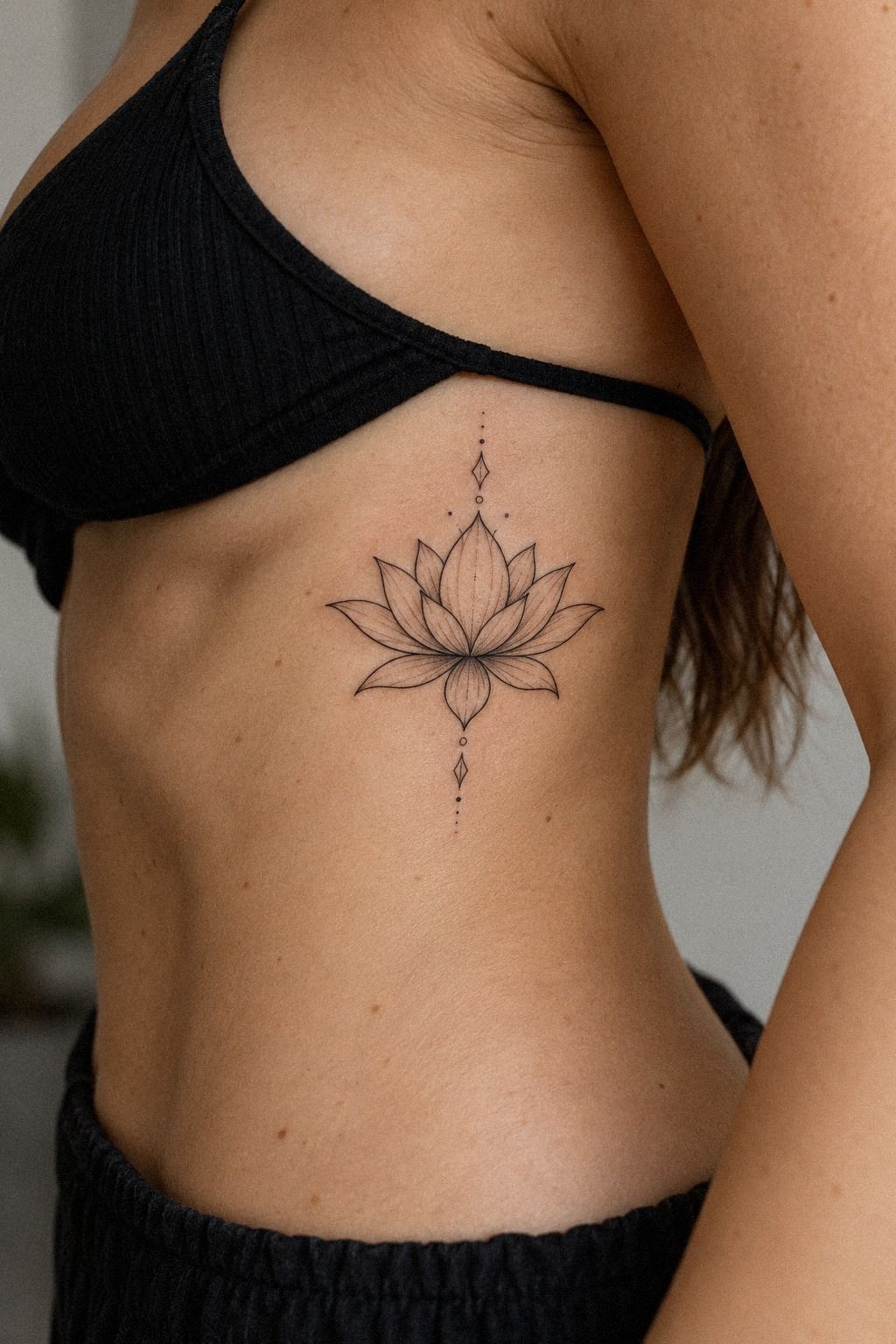
The forearm is a practical place for a delicate lotus because you can see the design while it heals and protect it from constant rubbing. Forest-green linework with a rust detail gives this version a graceful botanical character.
A forearm placement also gives the artist enough length to stretch the stem without crushing the petals. I’d keep the lower line warm and subtle, then let the bloom carry the attention.
The rust detail should stay small, especially if you want the flower to remain readable as the colors soften. Too much fill can make a fine-line lotus feel heavier than intended.
Follow the aftercare plan carefully, since sleeves, exercise, and direct sun can all irritate a healing forearm tattoo. This is a good placement for someone who wants to monitor every stage.
7Frame the Flower with Geometric Linework
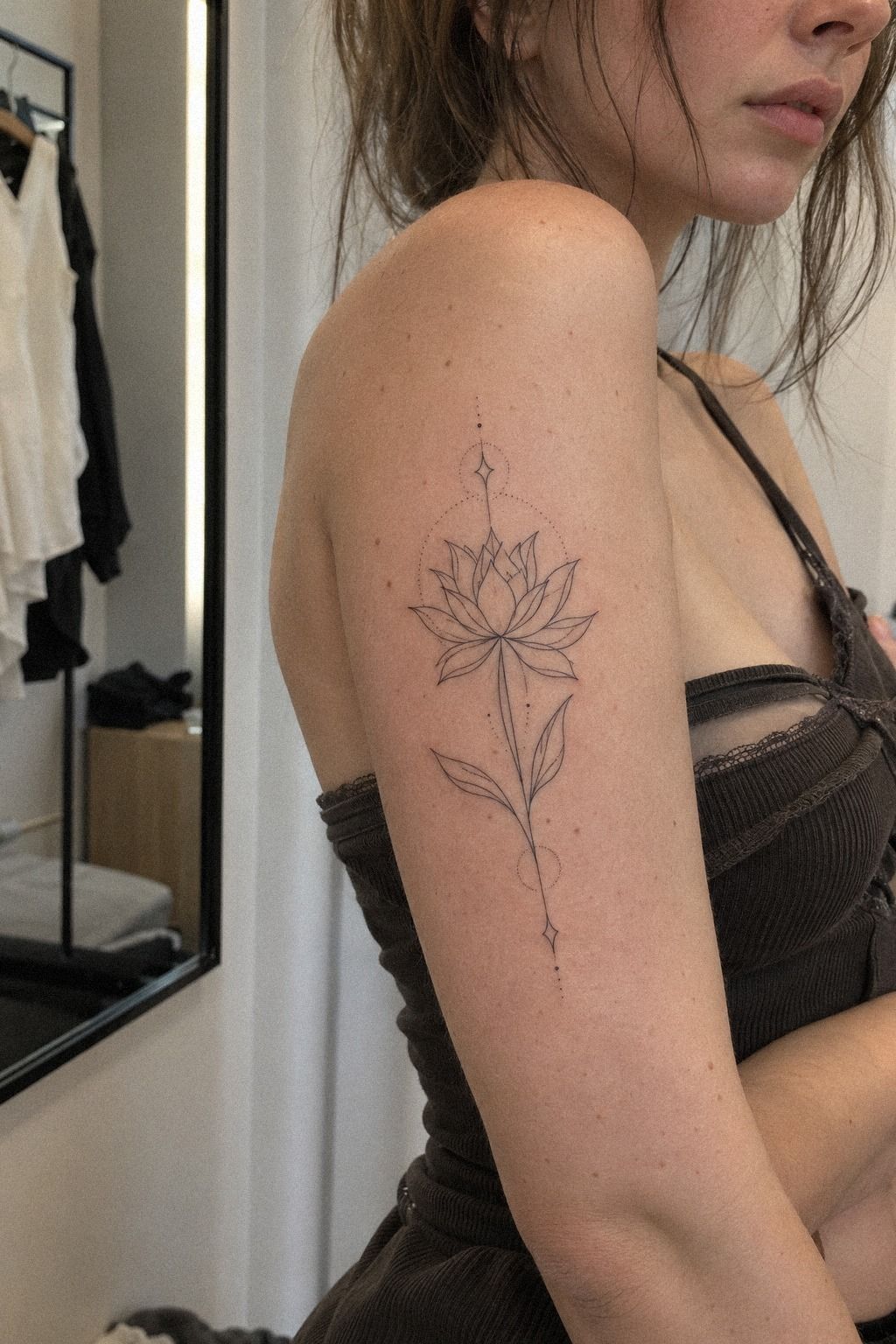
Geometric accents give a single-stem lotus a sharp, modern edge. The geometric stencil should be measured as carefully as the blossom, so circles and angles follow your arm rather than float awkwardly beside it.
This is where a simple flower can become expressive. A dusty-rose wash may soften the design, while charcoal linework keeps the geometry legible. I’d use one geometric shape and one dot cluster, not five competing symbols.
The upper arm is usually more tolerable than ribs, feet, hands, or sternum, though every body responds differently. You’ll get more privacy here, too. That makes it a smart choice if you want an iconic idea that doesn’t need to be visible every day.
Your artist should show healed portfolio examples with similar geometry, not only fresh work. Fresh ink can look impossibly sharp, while healed lines tell you what the spacing will really do. That portfolio check is worth the extra time and can save you from an expensive correction!
For another structured botanical direction, see these fine line flower crown tattoo ideas. I’d keep the geometric frame lighter than the lotus so the lotus focal point remains the emotional center.
8Can a Fine Line Lotus Frame the Ankle?
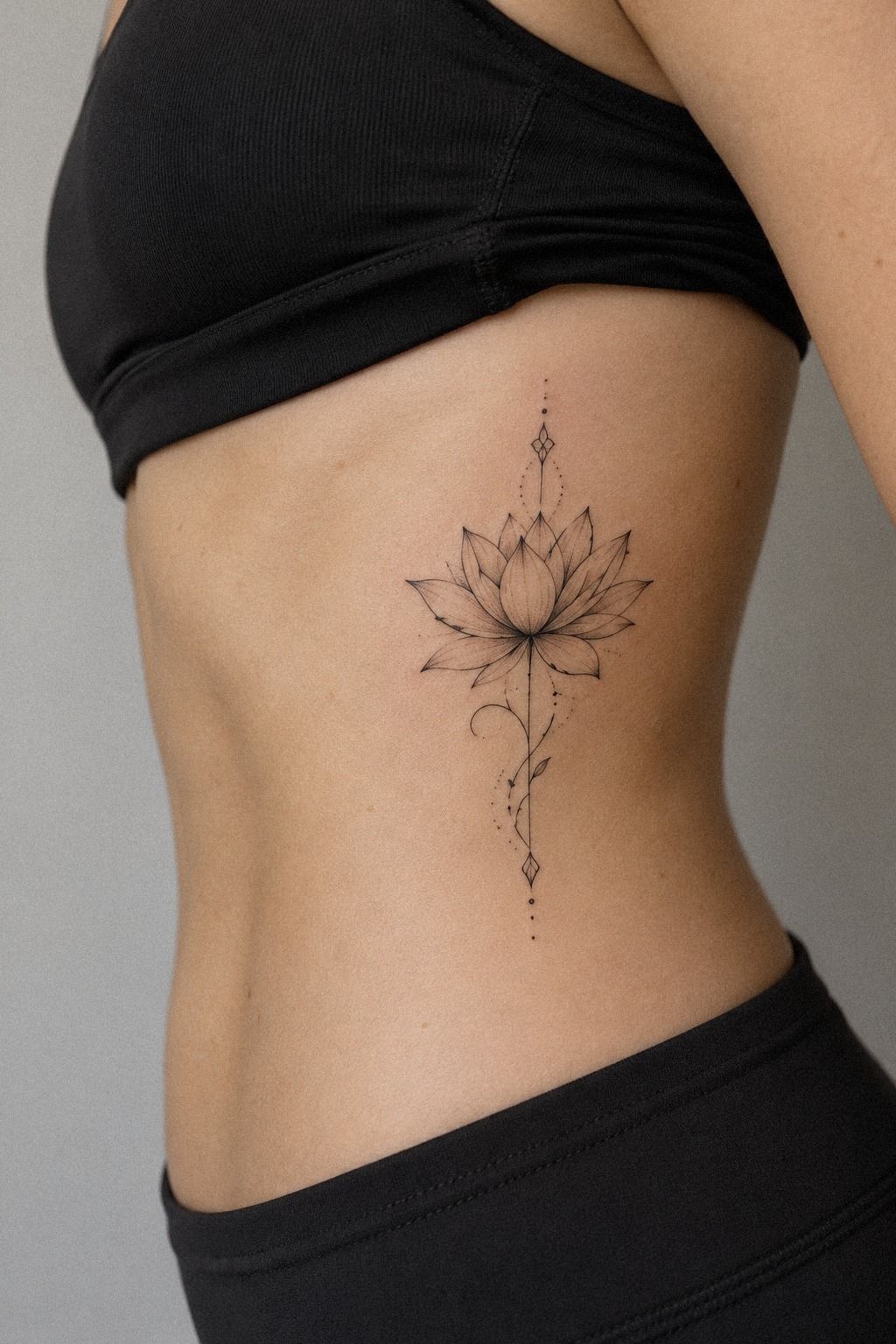
An ankle lotus works best when the design follows the joint instead of sitting like a sticker on top of it. The ankle placement should leave enough skin breaks around the curve for the flower to remain legible.
Warm-white negative space and a restrained camel accent can make the lotus feel edgy without forcing the design into dense shading. Keep the camel accent close to the stem or one petal edge.
A black contour can give the bloom enough contrast against the lighter palette. I’d avoid filling every petal, especially if the tattoo wraps toward the foot.
Think about footwear friction before booking. Socks, straps, and daily walking can make ankle healing more annoying than expected, so plan for loose shoes and a calmer first week.
9Make a Bold Fine Line Lotus with Stem Script
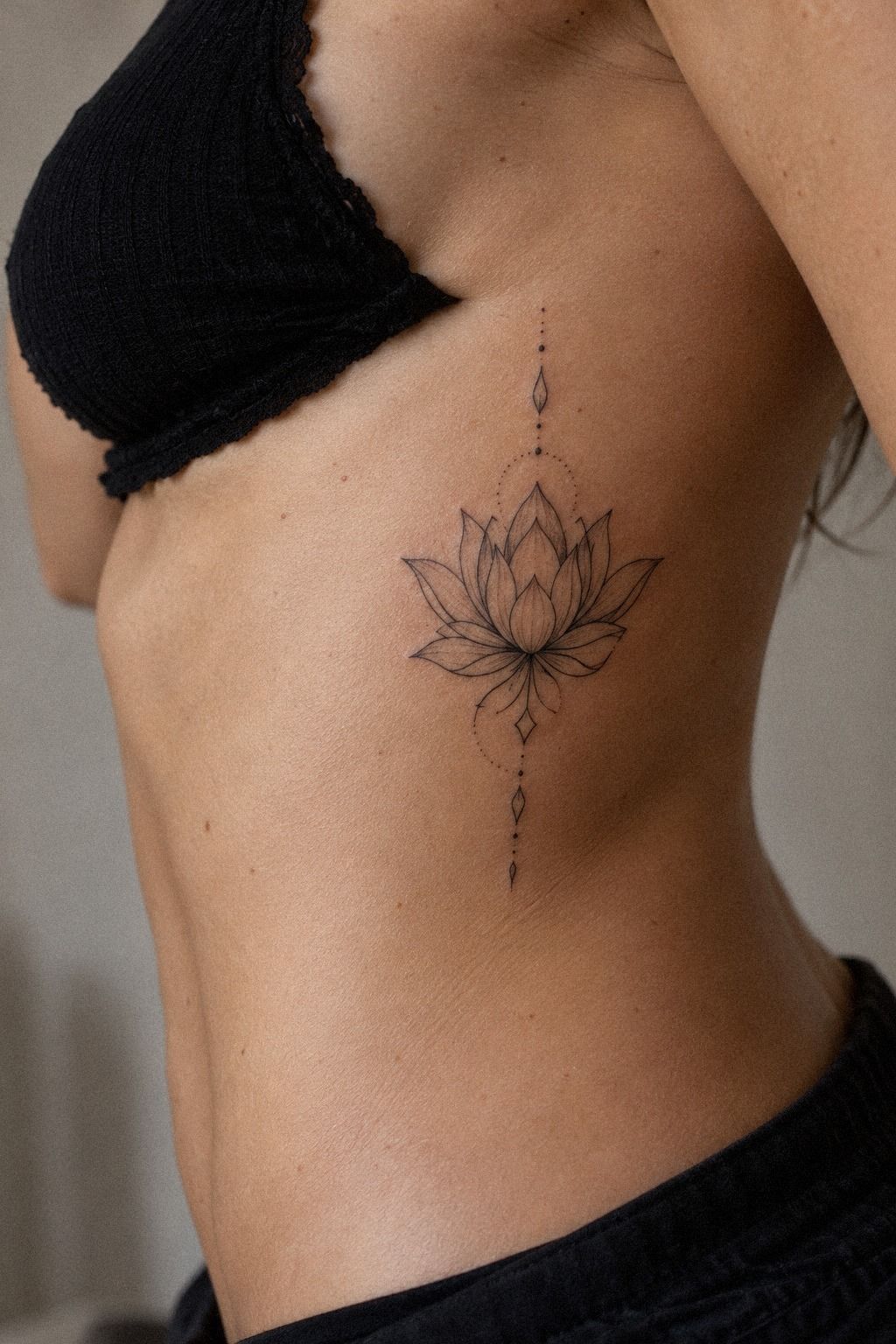
A script stem turns the lotus into a more personal piece, especially on the calf where you have room for a longer arrangement. The midnight-blue ink can support the flower, while copper and ivory details keep the lettering from feeling like an afterthought.
Keep the stem script short. One word, initials, or a brief date will usually age more clearly than a full quote squeezed beneath the petals. I’d choose lettering with open counters and clean spacing, because cramped script can become difficult to read as fine lines soften.
The copper detail should support the bloom rather than compete with it. A few warm marks are enough to create contrast against the darker blue line.
The calf is generally more forgiving than the ribs or foot, and you can keep the tattoo covered while it heals. Your artist should place the stencil while you’re standing, not only lying down. Muscles shift, and a design that looks centered on a flat surface may tilt when you walk.
This is a daring idea, but darker ink doesn’t require heavy shading. A few stronger anchors can keep the bloom legible while the script stays lighter. If you’re still deciding whether words belong in the design, compare the cleaner approach in this fine line flower tattoo collection.
That contrast may settle it.
Think carefully about the lettering choice itself. A romantic phrase can feel right today, while initials or a private date may offer stronger long-term value. You’re paying for permanent placement, so give the language the same attention you’d give the petals.
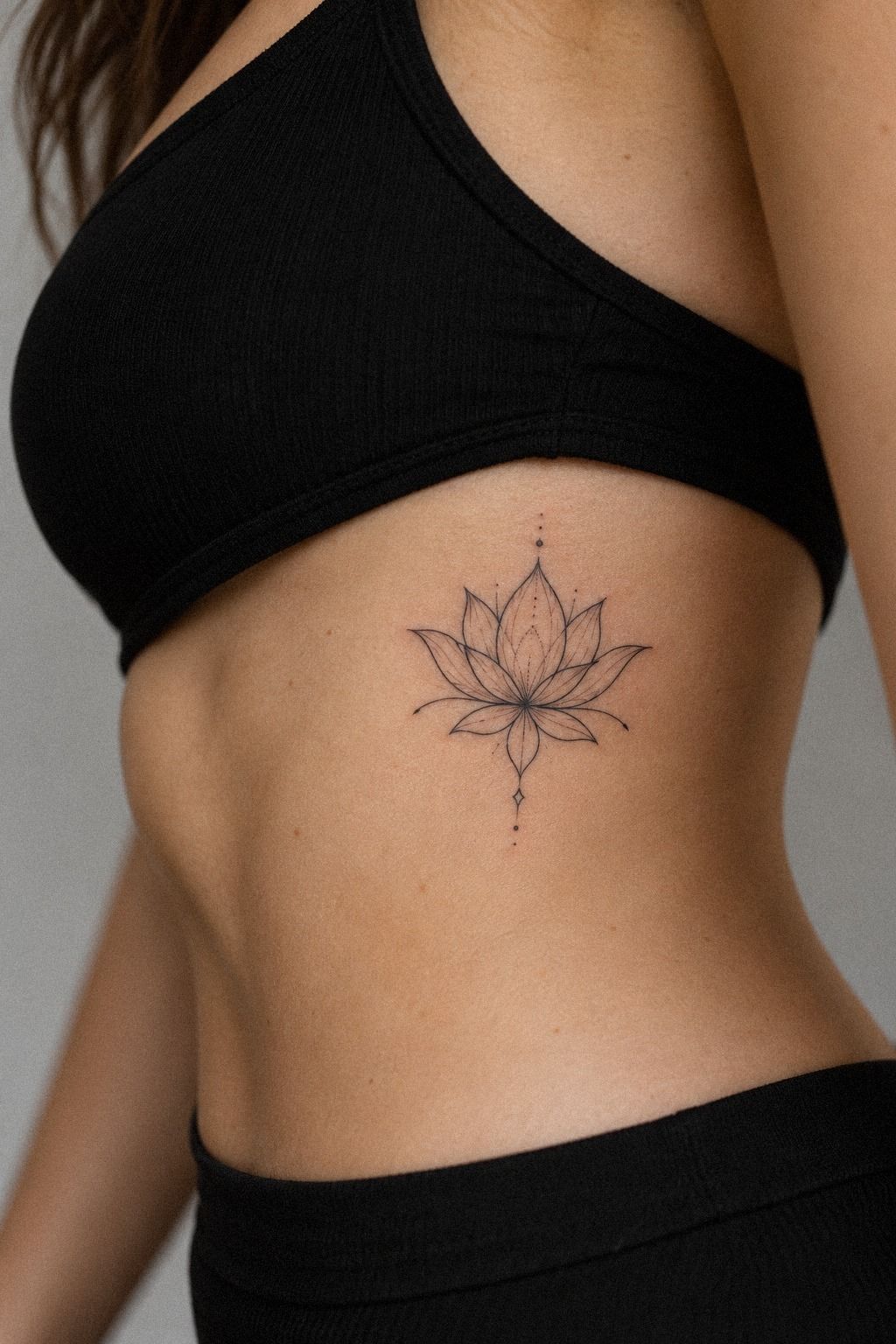
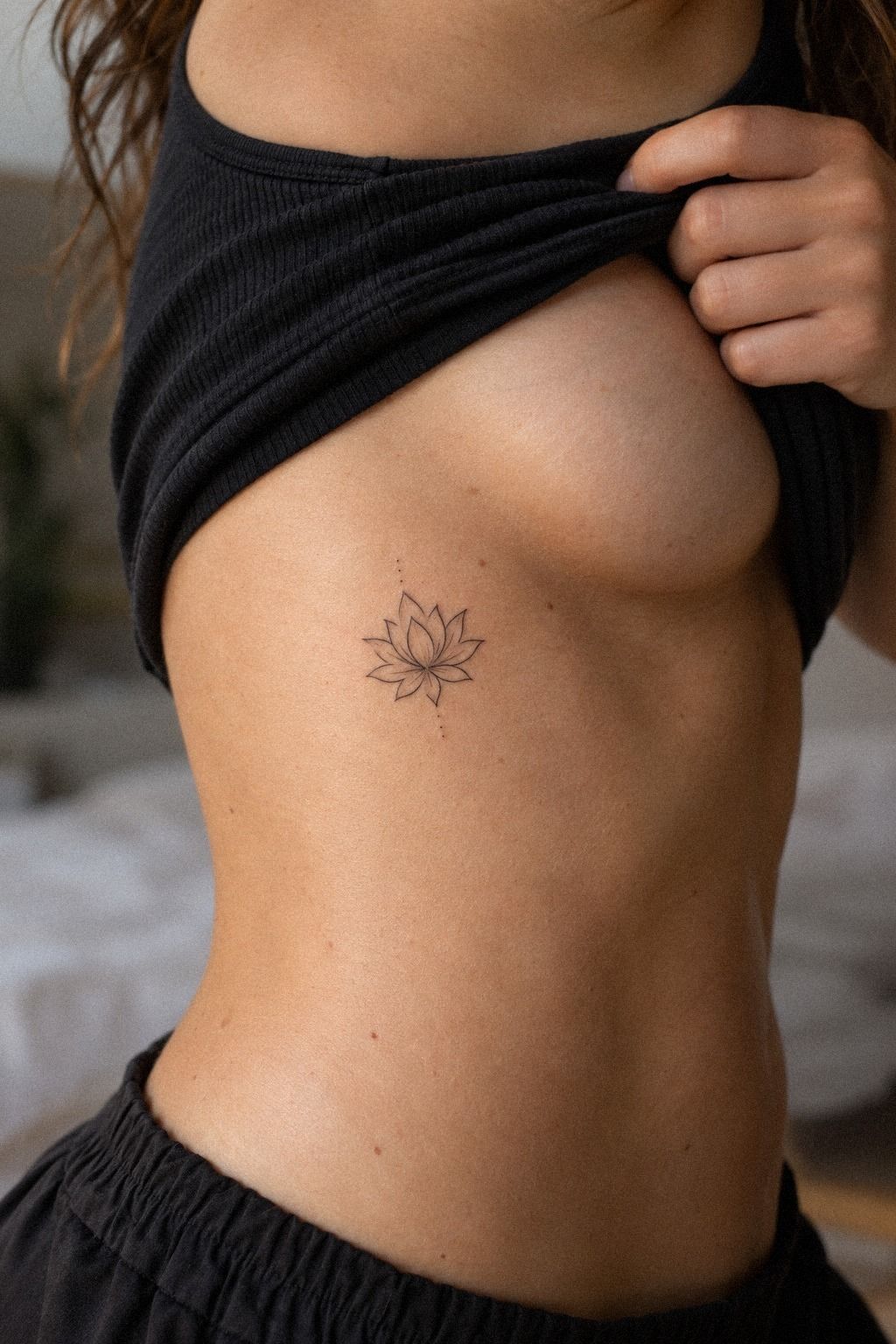
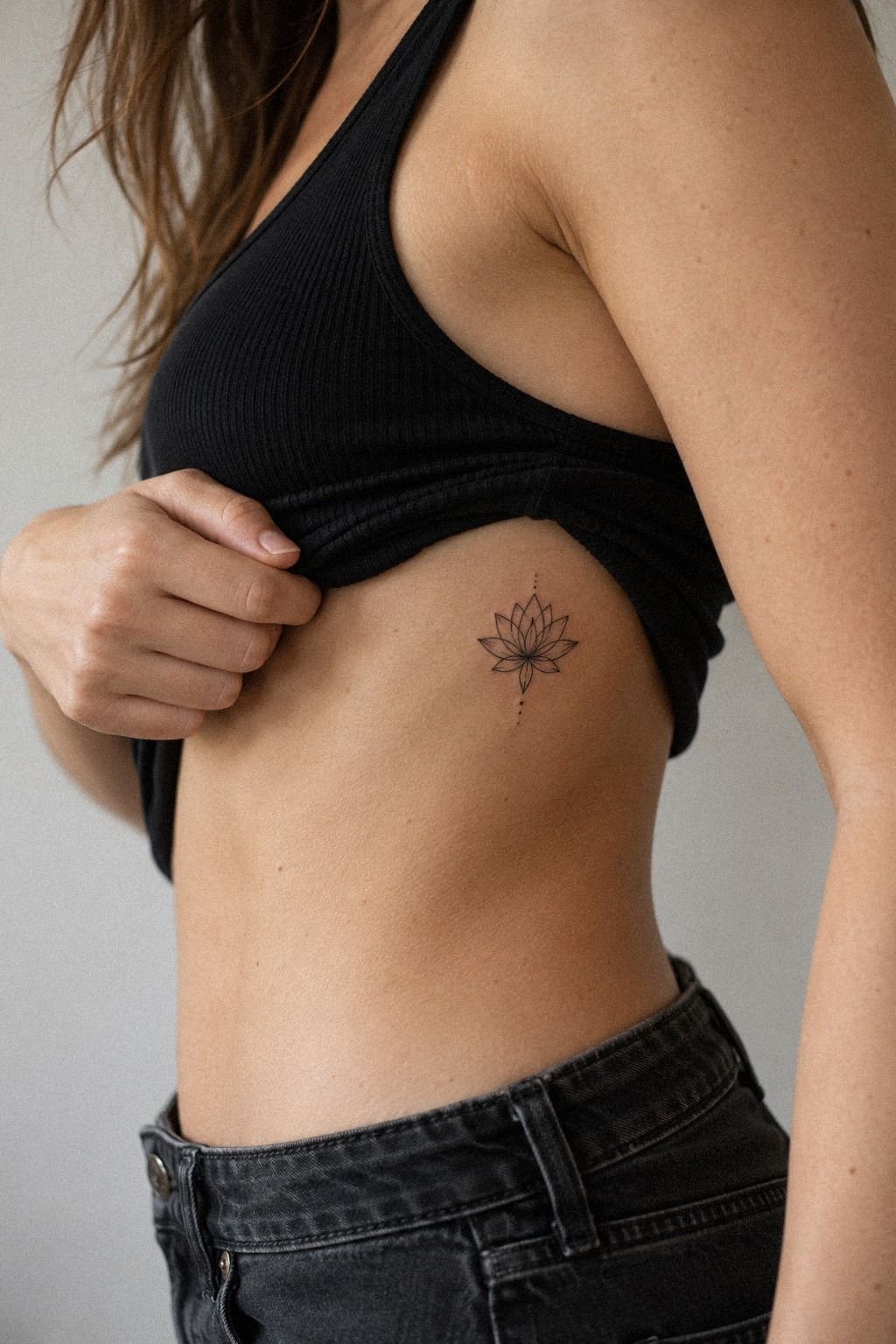
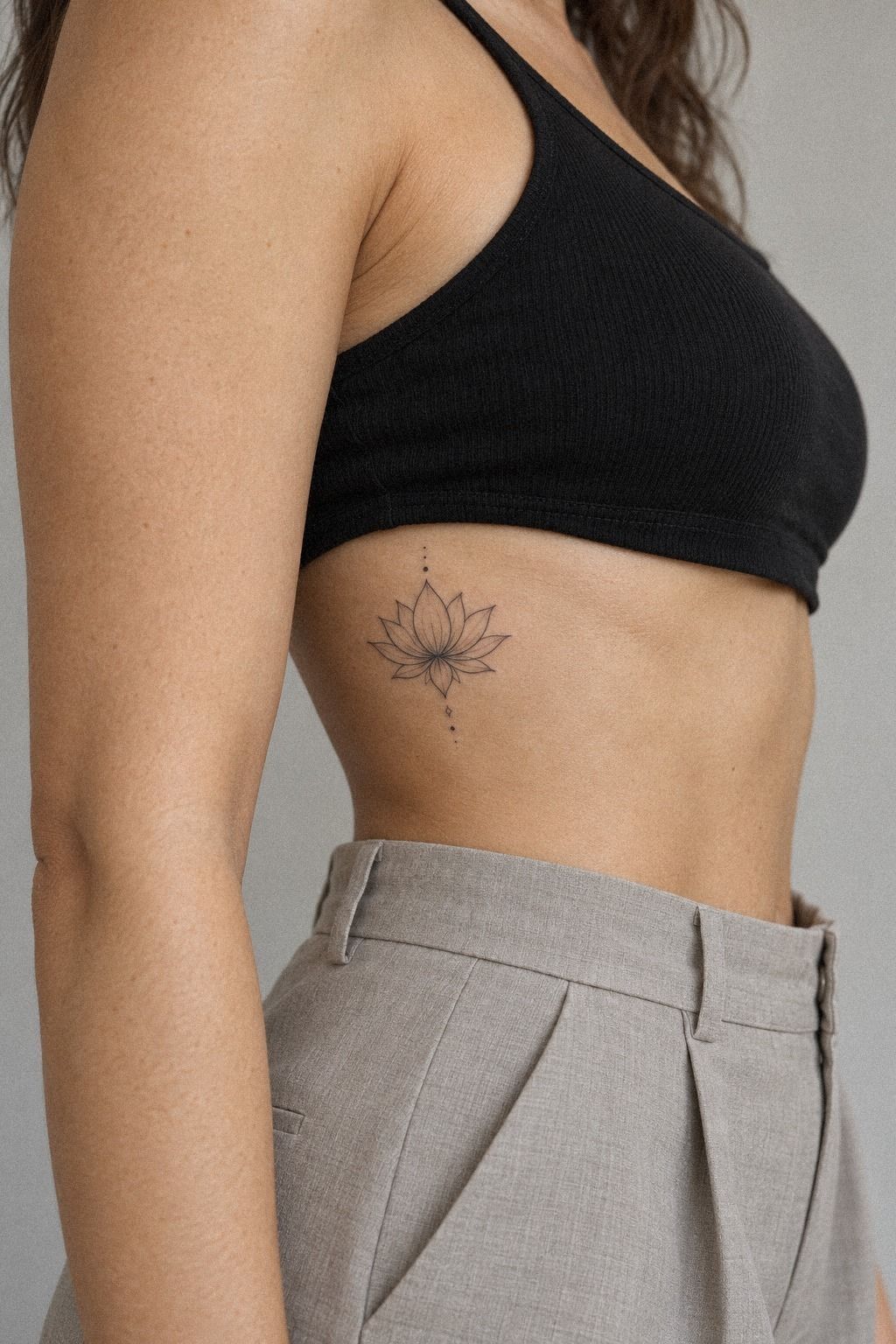
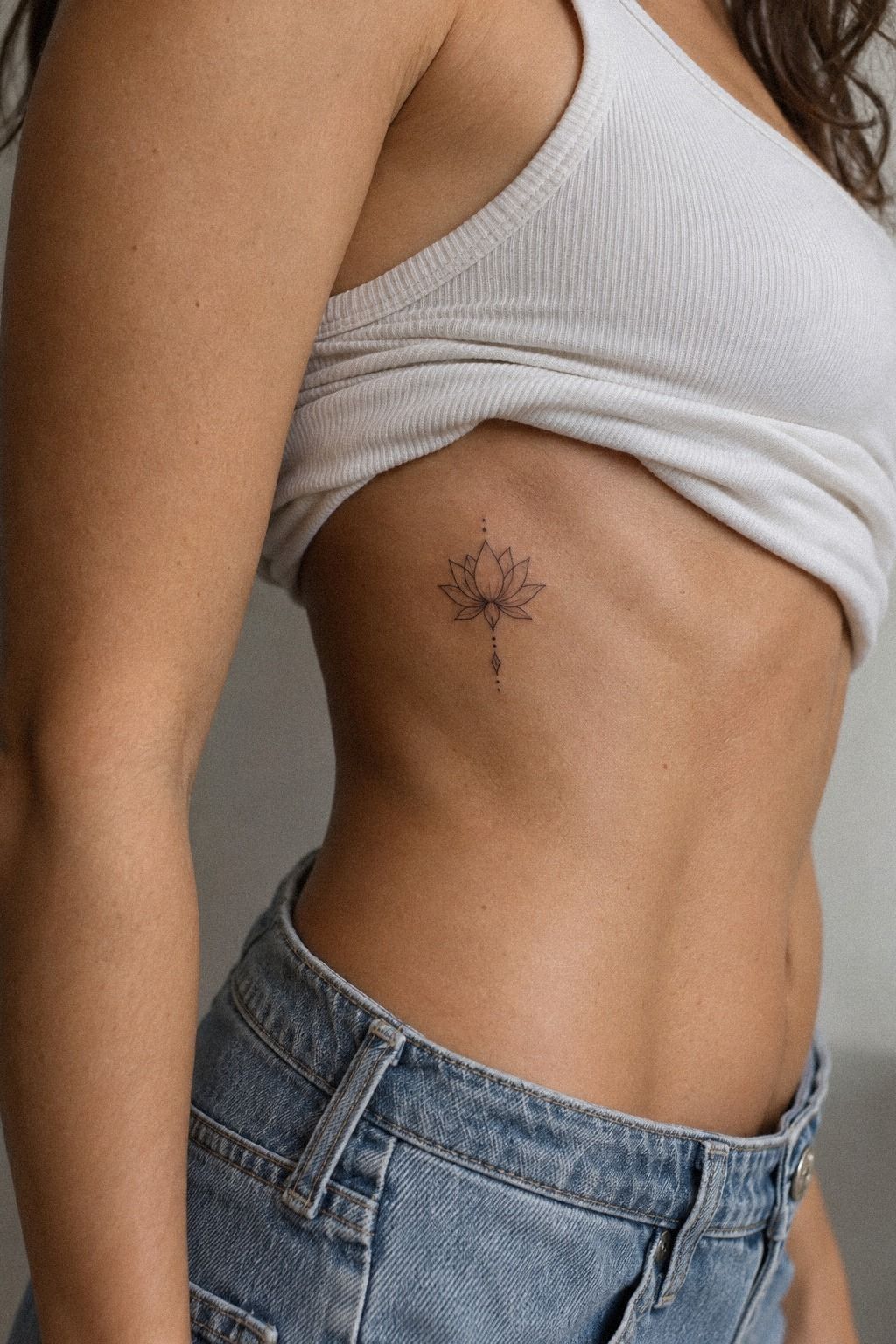
10Fine Line Lotus Flower on the Ribcage
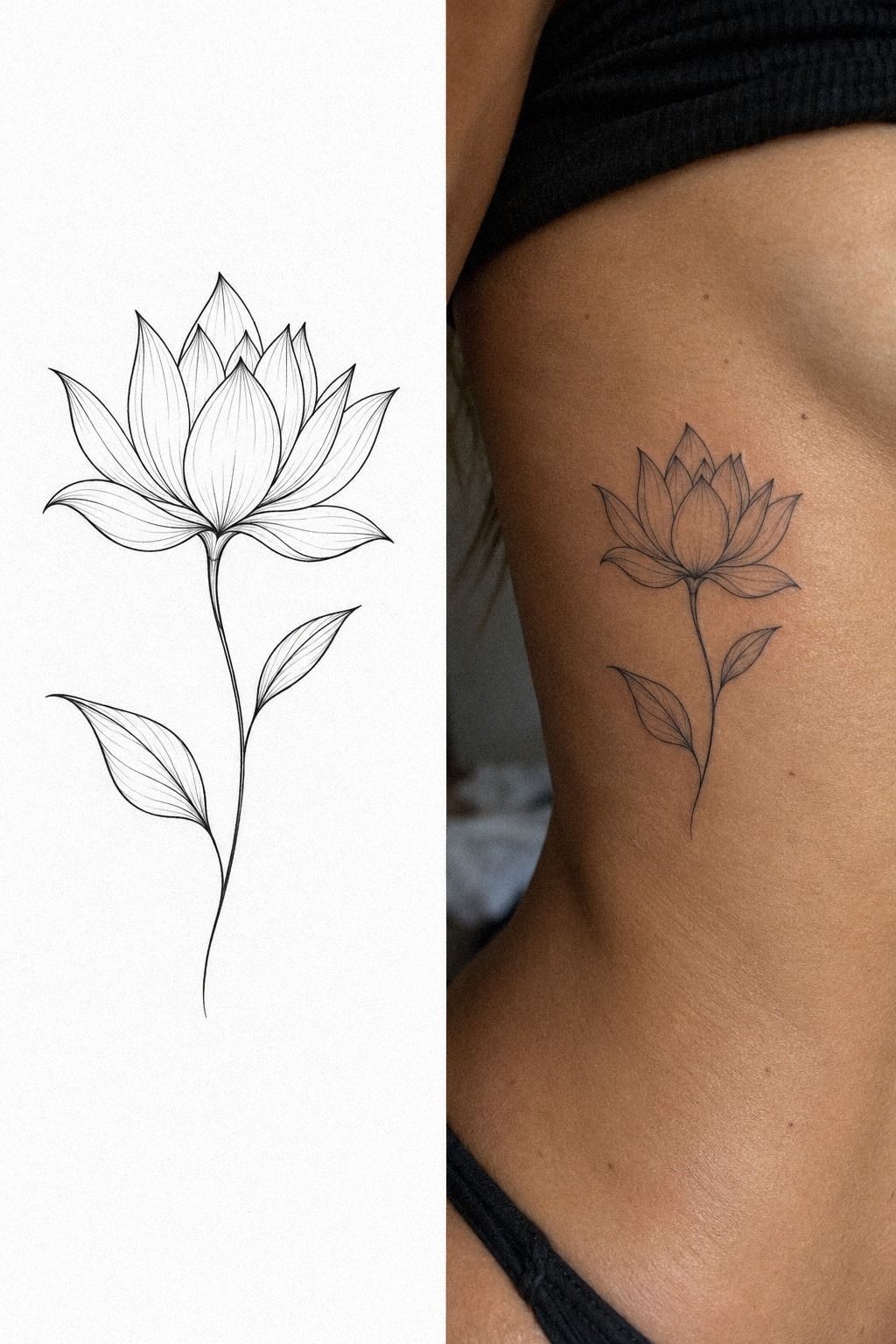
The ribcage version asks you to think about both the stencil and the healed result. The sage-green ink can look raw and elegant against warm-cream negative space, especially when the petals stay open.
Ribs can be a demanding placement because the skin is thin and the body moves with every breath. A session may feel more intense than an upper-arm tattoo, so plan a calm day and wear clothing that won’t press on the area. Your artist can also divide a larger design into manageable stages.
The ribcage placement should follow the body’s curve rather than forcing a perfectly upright flower. A muted brown detail can give the stem warmth without turning the design muddy.
I’d keep the lotus open and let the rib curve create the drama. Dense shading may look impressive in a sketch, but it can overpower fine petals on a moving body. The clean version feels timeless, sharp, and more likely to remain readable.
Aftercare needs patience here. Wash gently, moisturize according to your artist’s instructions, and avoid swimming and direct sun while the surface heals.
The aftercare routine matters as much as the stencil. You can compare a softer floral approach in these fine line flower tattoo ideas.
The stencil is only the beginning!
Rib tattoos can cost more when the artist needs extra time to work around breathing and body movement. That higher price may be worth it if the artist has strong healed examples. Include a touch-up budget before you book, especially if you’re choosing several colors.
11Balance Symbolic Lotus and Mandala Accents
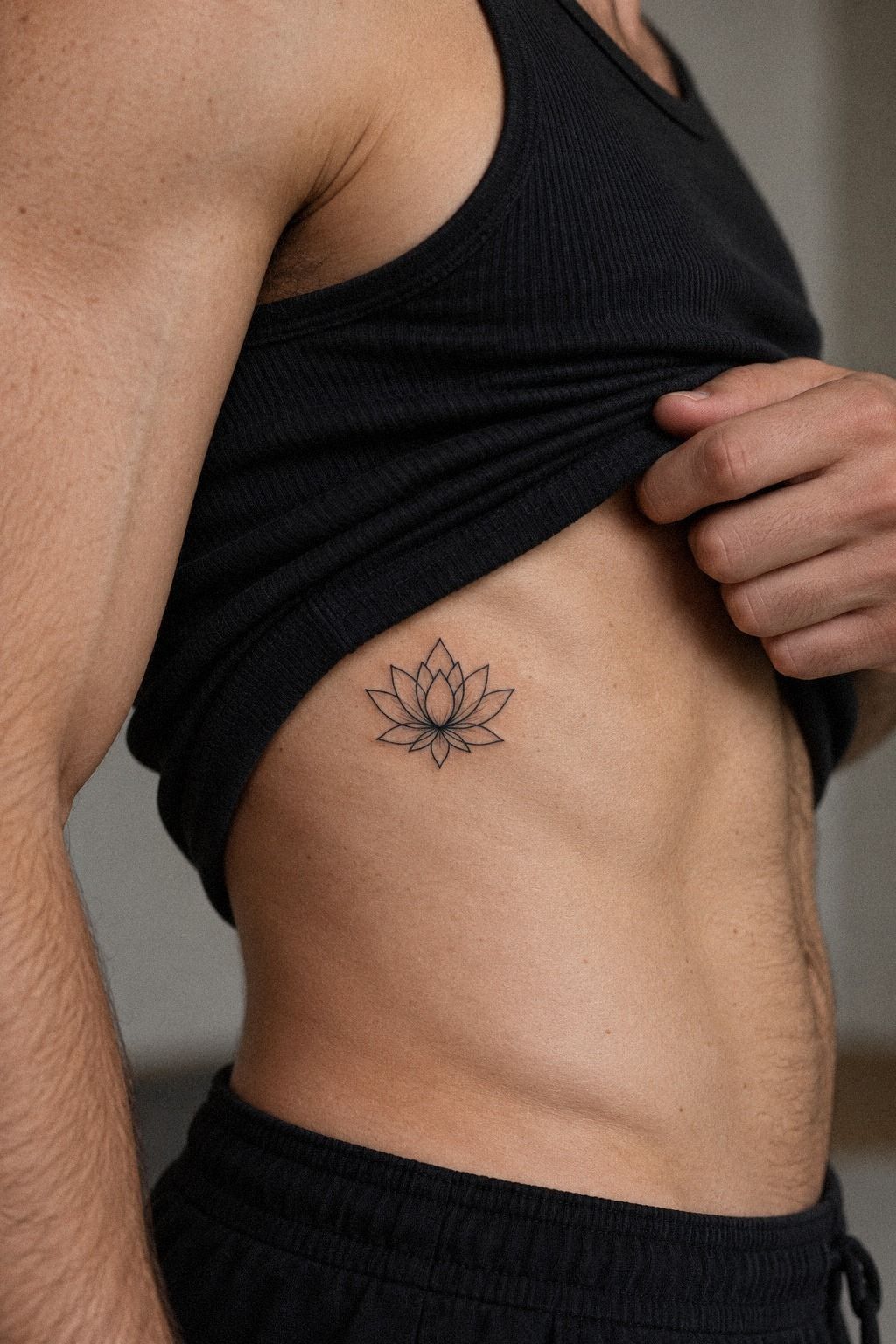
A shoulder lotus with mandala accents can feel symbolic without losing its botanical center. Terracotta, stone-grey, and olive details give the design a vibrant balance, while black-and-white contrast keeps the petals readable.
I’d let the terracotta detail appear in the central bloom and keep the olive marks close to the stem. That separation makes the color story easier to follow.
The black-and-white contrast can suggest the look of veined stone without turning the tattoo into a heavy blackwork piece. Use white as skin space whenever possible, since white pigment can soften noticeably.
A shoulder lotus gives you enough flexibility for an shoulder placement that follows the curve. It can remain private under a sleeve or become visible when you want it to.
The Negative-Space Method I Trust
I used to think a fine line tattoo succeeded when the sketch looked detailed enough to impress someone from a distance. That was the wrong test. Your skin isn’t archival paper, and your body isn’t perfectly still.
The better question is whether the lotus will remain readable when the lines soften, the placement moves, and the light changes.
I now look for three things before I approve a design: generous negative space, a clear silhouette, and one strong visual anchor. That might be a darker stem, a single black petal edge, or a small geometric circle.
If every line has equal importance, none of them leads your eye. A tattoo needs hierarchy.
The second lesson came from choosing a placement because it looked elegant in a reference. My first impulse was the ribcage, but I kept touching the area while discussing the stencil. I chose the forearm instead, and I’m glad I did.
You’ll live with the placement longer than you’ll remember the appointment.
I’m also more cautious about “tiny” designs now. A small flower can be dainty and stylish, but tiny isn’t automatically easier.
Your artist still needs enough room for the petals, stem, and breathing space. Ask to see the stencil on your actual body, then look at it while standing, sitting, and moving.
The trend will keep shifting from barely-there marks to crisp black anchors and back again. Your choice doesn’t need to follow that cycle. A personal meaning can feel timeless, expressive, and quietly iconic long after a seasonal style has faded.
If you’re comparing meanings, placements, and line weights, use this minimalist fine line flower tattoo guide as a second reference. Pick the version you’d still recognize without the trend attached.
How I Compare Fresh Lines with Healed Results
Fresh tattoos can look darker, sharper, and more precise than the final result. That’s why I’d ask to see a fine-line portfolio from the same artist, ideally on placements that move similarly to yours. Healed work tells you far more than a perfect appointment-day photograph.
Look for consistent petal shapes, clean gaps, and lines that still guide the eye after the skin settles. You don’t need every mark to remain razor-thin. You do need the composition to stay readable and intentional.
Ask how long the examples have healed. Six weeks can show a useful early result, while several months gives you a better sense of fading and softening. A clear healing timeline helps you judge whether the artist explains reality instead of promising that every line will remain unchanged.
Skin tone, sun exposure, placement, and aftercare all affect longevity. A crisp tattoo on one person may soften differently on another. Your artist should understand how skin tone changes contrast and explain those variables clearly.
For another portfolio comparison, see these rose fine line tattoo designs. The flower may differ, but the same questions about spacing and healed clarity still apply.
Fine-Line Longevity: What Actually Changes
Fine lines don’t stay frozen. Over time, pigment can soften at the edges, small gaps can narrow visually, and exposed placements may fade faster. That doesn’t mean your lotus will lose its meaning.
It means the original design needs enough pigment spacing to survive normal change.
The most vulnerable details are usually tiny dots, crowded lettering, and several lines placed almost on top of one another. Your artist can protect the design by enlarging the petals slightly, separating the accents, and using a few stronger anchors.
Sun protection helps. So does following aftercare instructions instead of picking, soaking, or applying products your artist didn’t recommend. You’ll improve the odds of a crisp result when you treat healing as part of the tattoo process.
I’d rather choose a slightly larger design than a microscopic one that only looks perfect for a short season. The larger tattoo may cost more initially, but its long-term value can be better if you still recognize the lotus years later.
You can study other small compositions in these small fine line flower tattoo ideas. Notice how much of their readability comes from open skin, not extra marks.
Where Budget Meets Value
Fine line lotus tattoos commonly fall somewhere around $100 to $300 in the United States, though local rates, studio minimums, size, placement, and artist demand can change the quote. A small design may meet a studio minimum, while a detailed rib or spine piece can cost more.
Treat these figures as planning numbers, not a promise. Your local artist may charge more or less, and a high-demand specialist may have a larger minimum. Ask for the full quote before you approve the stencil.
A low quote can look attractive, but it isn’t always the best value. Portfolio quality, hygiene, communication, and healed results should all be part of your decision. For permanent work, paying a little more can be worth it when the artist’s judgment is reliable.
Your budget should also include aftercare supplies and a possible touch-up. Don’t book the largest design you can technically afford if it leaves no room for those practical costs. A smaller, well-planned lotus can be the smarter purchase.
For more delicate options, compare this fine line flower tattoo collection before you decide how much detail your budget can support.
Could Your Placement Change the Design?
Yes. The same lotus won’t work identically on a wrist, rib, calf, or shoulder. Curves, movement, friction, visibility, and available skin all affect the final arrangement.
Your artist should account for body movement before finalizing the stencil.
Think about your clothing, work environment, exercise routine, and willingness to protect the tattoo while it heals. A simple placement map can help you compare visibility, friction, and sun exposure before booking.
For a wrist, I’d simplify the petals and avoid a crowded halo. For the spine, I’d use vertical balance.
For the ribcage, I’d let the body’s curve create movement. Your artist should adapt the design rather than stamp one template onto every placement.
You should also consider how often you want to see it. A visible forearm lotus can feel empowering and reassuring, while a hidden rib tattoo may feel more private and intimate. Neither choice is more meaningful.
They simply create different relationships with the design during your daily routine.
I’d compare a few placement-specific references in this minimalist fine line flower tattoo guide. The best version is the one that respects how your body actually moves.
A Short Consultation Checklist
Bring three references: one for the lotus shape, one for the line quality, and one for the placement. You don’t need to copy a single tattoo. Your goal is to explain what you like, then let the artist create a design that fits your body.
Ask these questions before booking:
– How will this design age at the proposed size? – Can I see healed fine line work? – What is the studio minimum and total expected cost? – How long should the surface take to heal? – What aftercare products do you recommend? – Will you place the stencil while I’m standing? – Is a touch-up included, and when would it be appropriate?
Notice how your artist responds. A thoughtful artist response is a good sign. Pressure, vague pricing, or promises that ignore your skin and placement are reasons to pause.
You can also ask whether the artist has worked with your preferred line quality. Some specialize in whisper-light marks, while others create fine-line tattoos with crisp black anchors. Your taste should match their normal approach.
Before the appointment, compare these minimalist flower tattoo designs and note which details still look clear at a small scale.
A Few Things Worth Answering
How much does a fine line lotus flower tattoo usually cost?
A fine line lotus tattoo in the US often costs about $100 to $300, depending on size, placement, artist, and region. Some studios have a minimum of roughly $50 to $100, while hourly rates commonly sit around $100 to $250. Your final quote comes from the studio.
Are fine line lotus flower tattoos a good idea for a first tattoo?
Yes, they can be a meaningful first tattoo because you can choose a tolerable placement and a clear, manageable design. A well-spaced lotus may age more gracefully than crowded detail. I’d still check healed portfolios and realistic aftercare expectations before booking.
How do I choose a tattoo artist for a fine line lotus flower tattoo?
Choose an artist whose portfolio shows clean linework, healed photos, and consistent flower anatomy. A strong portfolio should include work on varied skin tones and placements. I’d also look for a hygienic studio, clear consent procedures, and direct answers to your questions.
How much do fine line lotus flower tattoos hurt?
Pain varies by person and placement, but ribs, feet, hands, and sternum are often more painful than forearm, thigh, or shoulder areas. Your placement matters most for comfort. I’d choose a short session, steady breathing, and an artist who lets you pause when needed.
How long does a fine line lotus flower tattoo take to heal?
The surface commonly takes about 2 to 3 weeks to heal, while complete healing may take about 2 to 3 months. Gentle aftercare means washing softly, moisturizing as directed, and avoiding direct sun and swimming until your artist says it’s safe.
What’s the best placement for a fine line lotus flower tattoo?
The forearm, shoulder, and upper arm are strong choices if you want a more tolerable placement with good visibility. The forearm is my practical pick because you can monitor healing and protect the lines from constant friction. Your lifestyle should guide the final choice.
Where I’d Start First
If I had to pick one, I’d start with the delicate forearm lotus. You’ll see it clearly, protect it easily, and give fine lines enough room to breathe. It’s a stylish, personal starting point without forcing you into a huge commitment.
Pin this forearm idea for later and compare it with more small fine line flower tattoo ideas before booking. My final test is simple: would you still choose the shape, placement, and meaning if nobody else ever saw it?
If yes, you’re probably close to the right lotus. That’s the test!