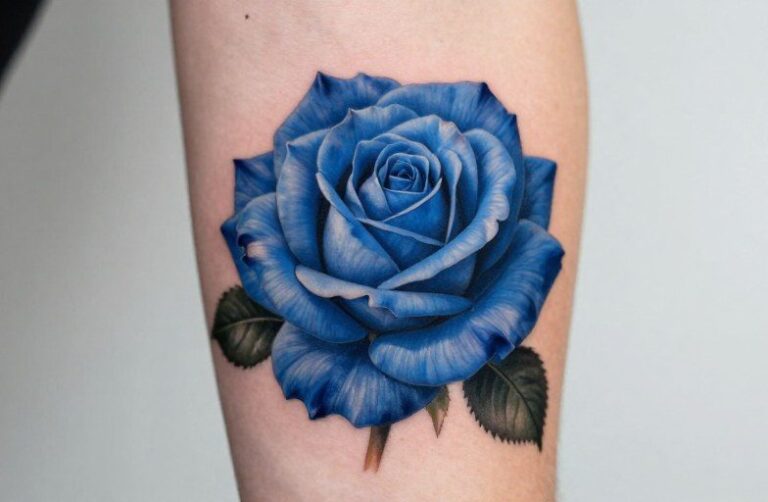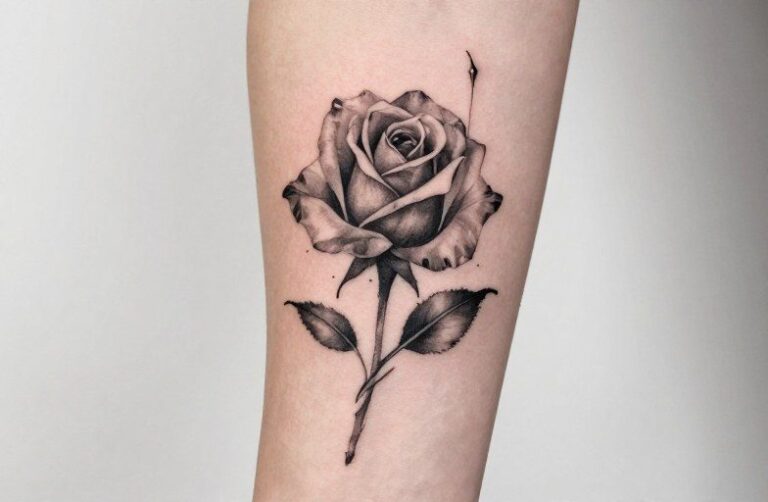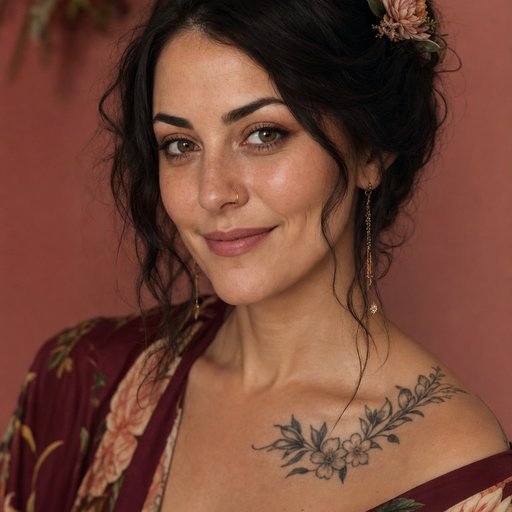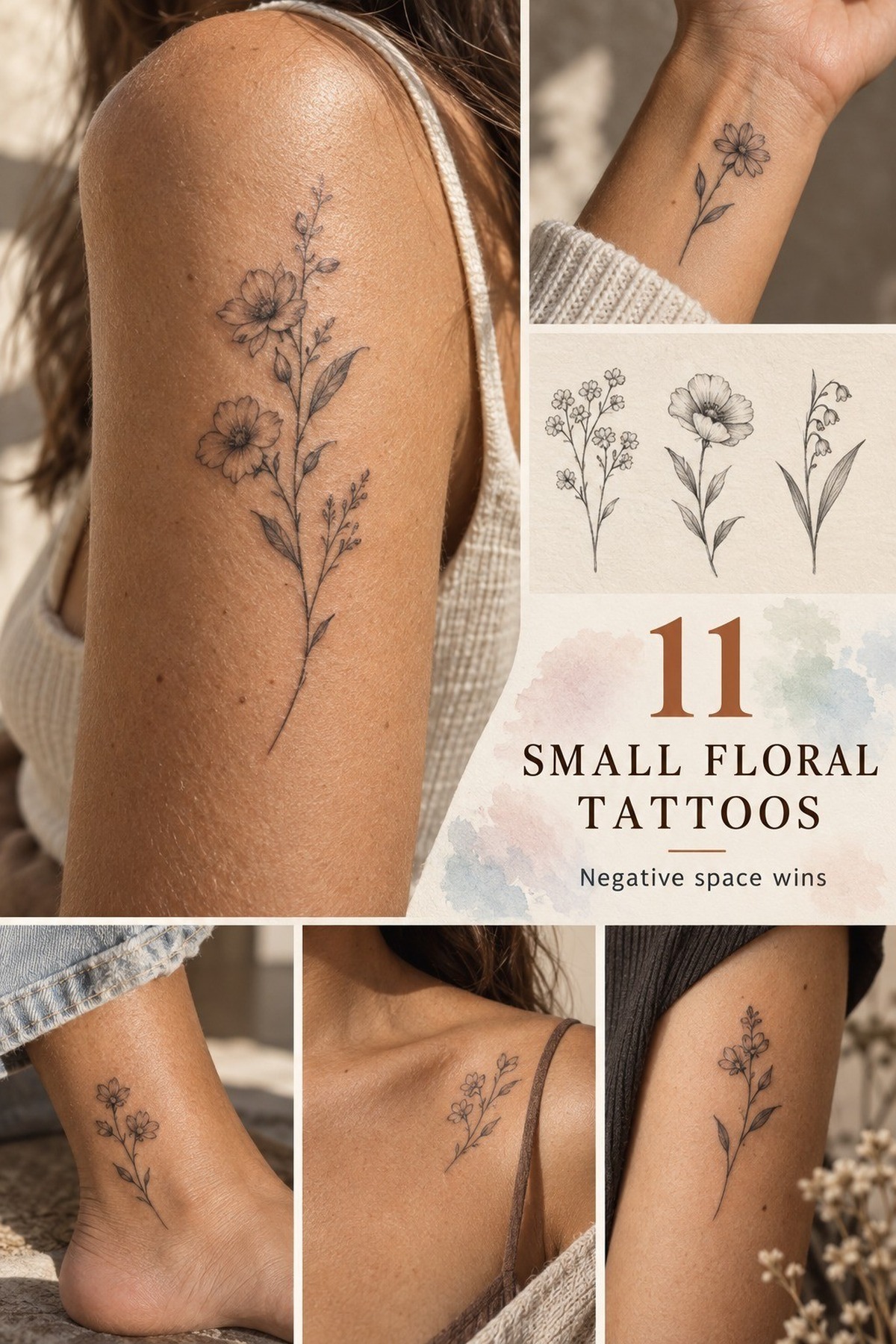
A ladies flower tattoo typically signifies beauty, growth, and the natural cycles of life, blooming, withering, and returning. Beyond the generic “pretty” association, specific flowers carry distinct meanings: roses for passion, lotuses for spiritual emergence, peonies for prosperity and honor. The design’s personal significance often comes from which flower you choose, how it’s rendered, and where it sits on your body.
Common Variations & Styles
Not all flower tattoos read the same. The style you choose changes the entire mood and longevity of the piece.
Traditional and Neo-Traditional
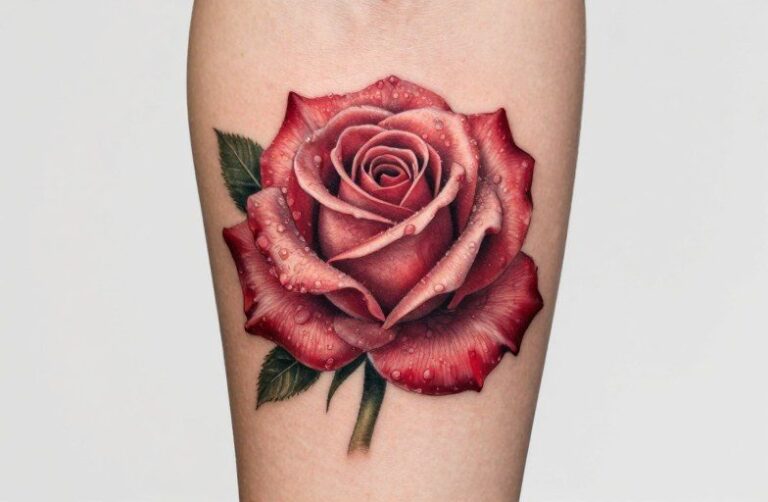
Think bold black outlines, limited but saturated color palettes, and slightly stylized petals. Traditional rose tattoos often pair with daggers, skulls, or banners, imagery that softens or sharpens the flower’s meaning depending on context. Neo-traditional allows more detail, more color gradients, and more experimental composition while keeping that readable, graphic punch. These styles age well because the heavy linework holds up as skin shifts over decades.
Fine Line and Botanical
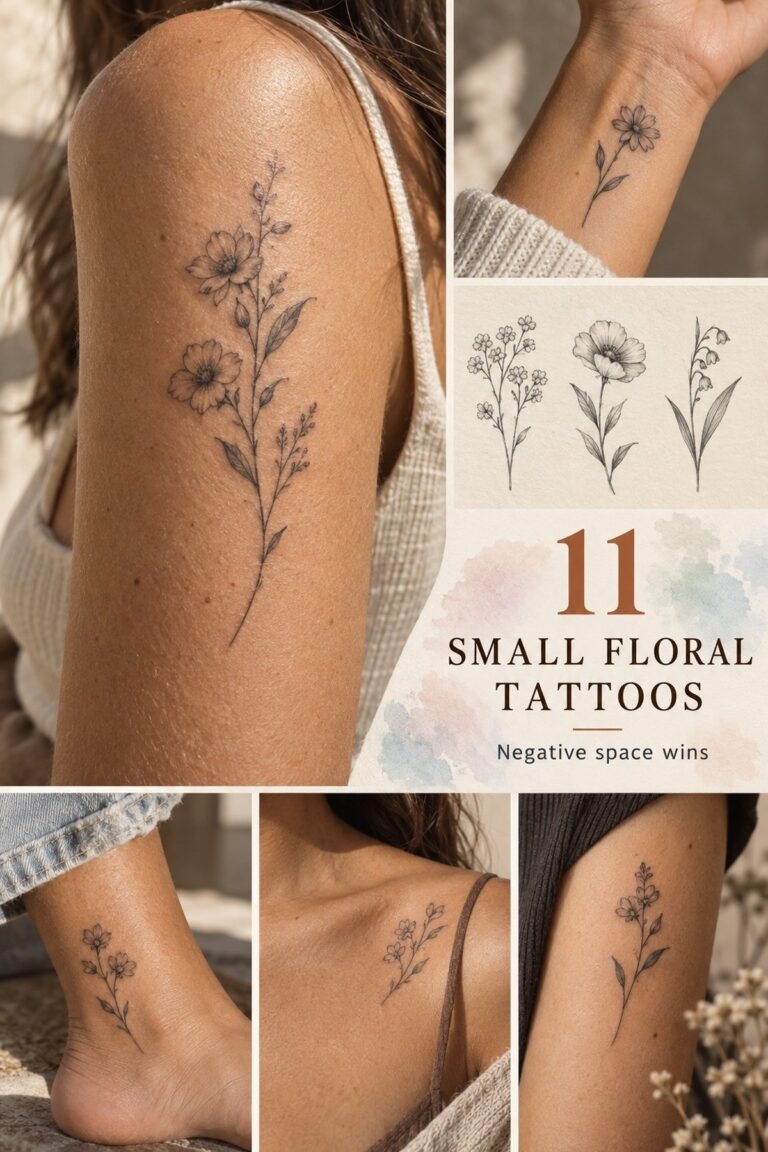
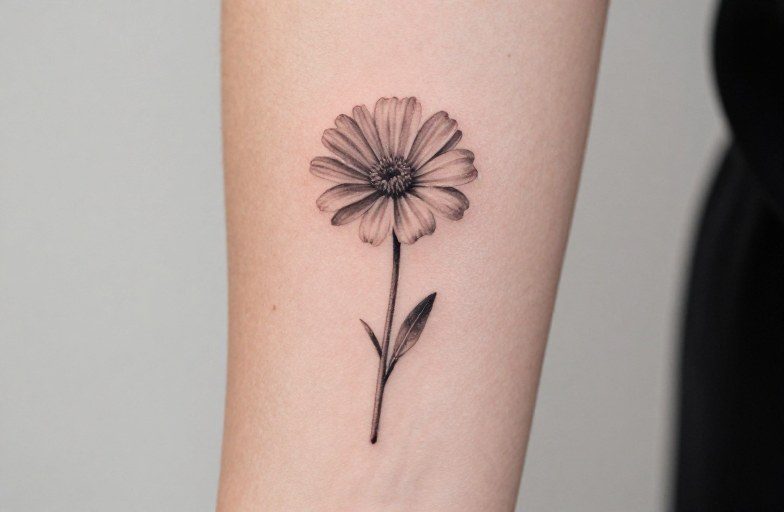
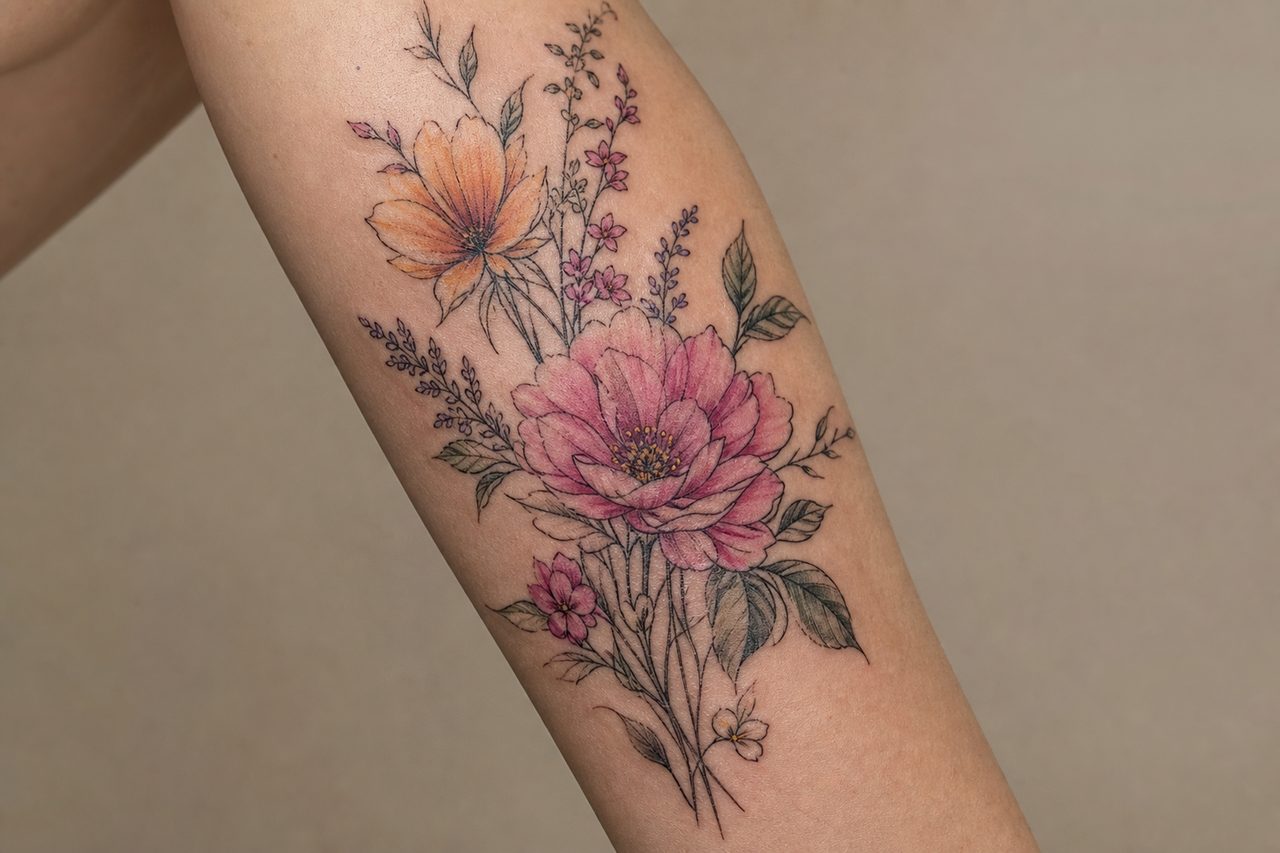
Single-needle or fine line work captures delicate veining, translucent petals, and scientific accuracy. Popular flowers include wildflowers, pressed-flower compositions, and species with personal significance, maybe something from a grandmother’s garden. The trade-off: fine lines blur faster. Touch-ups every few years aren’t optional; they’re maintenance. Sunscreen becomes non-negotiable.
- Watercolor: Splashed pigment without hard outlines, mimicking paint on paper. Stunning when fresh, unpredictable as it ages.
- Japanese (Irezumi): Peonies, chrysanthemums, and cherry blossoms integrated into larger bodysuits or sleeves, often with wind bars or waves.
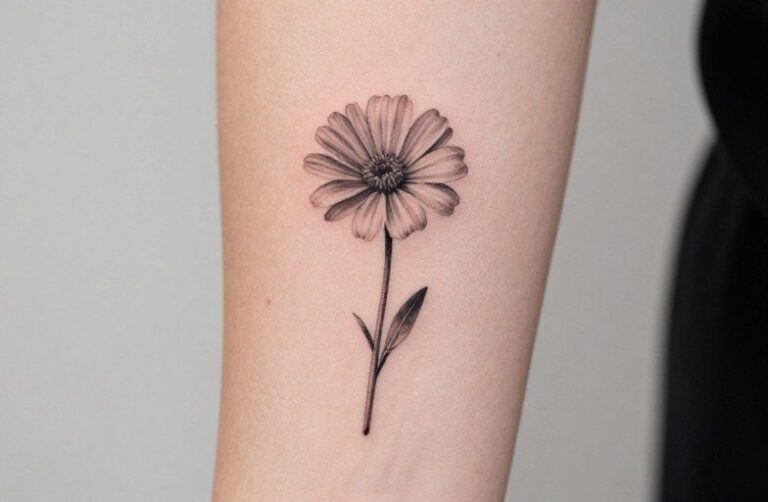
- Minimalist: Single stem, tiny bloom behind the ear or on the wrist. Less about symbolism, more about quiet presence.
Color vs Black and Grey
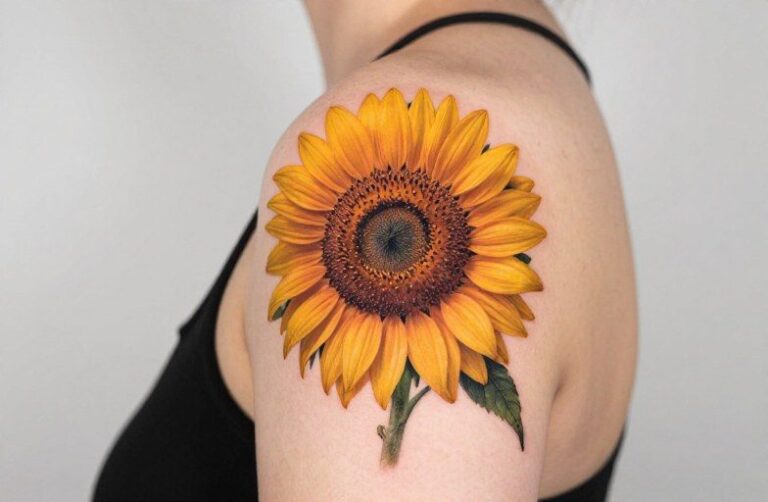
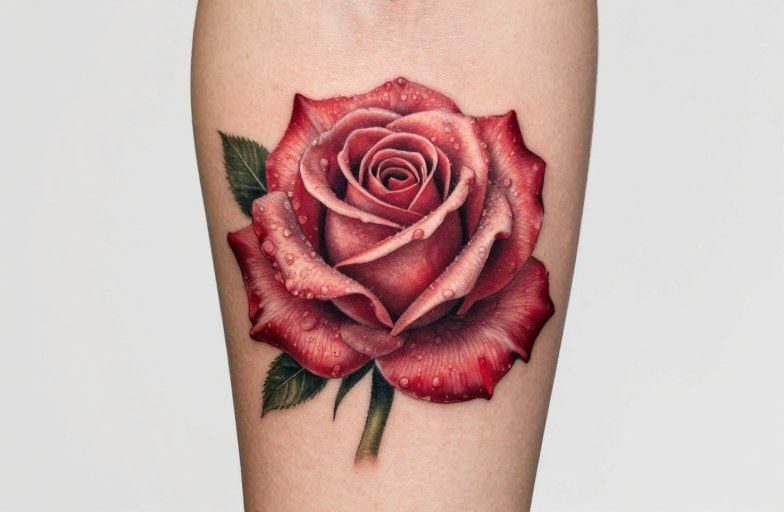
Color carries meaning beyond aesthetics. Red roses signal romantic love; yellow ones, friendship or jealousy depending on the culture. White lilies connect to purity and mourning. Purple orchids suggest royalty and rare beauty. A skilled artist can push these associations through hue choice alone.
How Color Ages
Bright pinks and reds generally hold better than pastels. Yellows and light greens fade fastest, often shifting to a muddy tone within five to ten years. Black and grey flower tattoos rely on contrast and shading to suggest depth, think photorealistic petals with soft gradients. They age more predictably but can look flat if the artist lacks subtlety with wash.
Skin tone matters practically, not as limitation but as consideration. Darker skin can absolutely carry bold color; it requires an artist experienced in saturation and contrast, not someone who defaults to “black only.” Ask to see healed photos on similar skin tones, not just fresh work.
History & Cultural Roots
Flower symbolism in tattooing stretches across multiple traditions, often linked to specific regions rather than universal codes. Japanese tattooing raised the peony and chrysanthemum to near-mythic status, peonies as “king of flowers” associated with wealth and masculine courage, paradoxically rendered in full bodysuits. Cherry blossoms (sakura) represent the transience of life, a concept borrowed from Buddhist thought.
Western Traditions
In European and American tattooing, roses dominated sailor and working-class imagery from the early 1900s onward. A rose on the chest often marked a romantic commitment; on the hand, sometimes a rougher association. The language of flowers (floriography) from Victorian England occasionally surfaces in tattoo choice, myrtle for love, forget-me-nots for remembrance, though most modern wearers discover these meanings after selecting the bloom, not before.
Some trace Hawaiian floral motifs to post-contact adaptation, where native artists incorporated introduced imagery while maintaining distinctive bold-line approaches. Mexican tattooing frequently incorporates marigolds (cempasúchil) for Día de los Muertos remembrance, connecting living memory with cyclical return.
Religious & Spiritual Angles
Christian iconography uses lilies for the Virgin Mary’s purity, roses for the rosary and divine love. The lotus carries the most cross-cultural spiritual weight, emerging clean from muddy water, it’s commonly associated with Buddhist enlightenment and Hindu creation narratives. A lotus tattoo can signal spiritual practice without explicit religious affiliation.
Secular Spirituality
Many women choose flower tattoos to mark transformation, recovery from illness, the end of a relationship, a relocation that demanded reinvention. The growth metaphor needs no religious framework. A seed, a bulb, a bloom, a seed again: the visual logic resonates whether or not you hold formal beliefs. Some artists compose “life cycle” pieces showing the same flower in bud, full bloom, and wilting stages across a shoulder or rib panel.
Similar & Related Symbols
Flowers rarely appear alone in meaningful tattoo work. Understanding common pairings helps you decide what to include or exclude.
- Bees and butterflies: Pollinators suggest interdependence, fleeting presence, or personal change (particularly the butterfly’s metamorphosis parallel).
- Skulls: Memento mori tradition, beauty and decay intertwined. The juxtaposition reads differently than a skull alone; less aggressive, more contemplative.
- Vases and hands: The “hand holding flowers” motif, often in fine line, suggests offering, vulnerability, or memorial.
- Snakes: Wrapping through peonies or roses, suggesting temptation, transformation, or protection depending on cultural reading.
Geometric and Abstract Additions
Mandala patterns behind or integrated with flowers create a meditative frame. Dotwork stippling can suggest pollen, texture, or simply visual rhythm. These additions shift a straightforward botanical piece toward something more symbolic or decorative, depending on your intent.
Best Placements
Where a flower tattoo lives changes how it’s seen and how it ages.
High-Visibility Spots
Forearms, wrists, and collarbones announce themselves. These work well for pieces with personal significance you want to share, or for professional contexts where visible tattoos aren’t penalized. The downside: constant sun exposure accelerates fading. A forearm rose will need more maintenance than a thigh piece.
Intimate and Contoured Placements
Ribs, hips, and underbreast areas follow the body’s natural curves. A sternum flower composition draws the eye downward and can be easily concealed. These placements hurt more, less muscle padding, more nerve endings, but the privacy appeals to many. The rib cage expands and contracts significantly; designs here need thoughtful composition to avoid distortion.
Behind the ear and ankle: small, delicate, increasingly accepted in conservative workplaces. The ankle’s thin skin and constant sock/shoe friction make it a challenging heal. Behind the ear stays cleaner but limits size and detail.
Shoulder caps and upper arms offer flat, stable canvas for larger compositions. A half-sleeve of winding vines and blooms can be added to gradually, piece by piece, rather than committed to in one marathon session.
What to Remember
A flower tattoo’s meaning crystallizes through specific choices, not automatic cultural transmission. The species matters, the style matters, the placement matters. A fine line wildflower behind your ear carries different weight than a traditional rose dagger on your forearm. Both are valid; neither is “just” a flower.
Research your artist’s healed portfolio, not just Instagram fresh shots. Botanical accuracy, color saturation, and line stability reveal themselves months after the needle. Ask about touch-up policies. Budget for them.
Most importantly: the flower you choose should feel like yours, not a Pinterest board’s. The best flower tattoos grow with the person wearing them, literally, as skin changes, and figuratively, as meaning accumulates through lived experience.
Frequently Asked Questions
Do flower tattoos have to be feminine or delicate?
Absolutely not. Bold traditional roses, dark botanicals with skulls or snakes, and large-scale Japanese peonies carry weight and edge. The flower itself is neutral, style and context determine the energy.
Which flower tattoo colors fade the fastest?
Pastel yellows, pale greens, and soft pinks tend to blur and muddy within five to ten years. Deep reds, saturated purples, and black and grey hold their structure much longer with proper sun protection.
Can I combine multiple flowers in one tattoo?
Yes, and many do, birth month flowers for family members, a bouquet marking a specific event, or complementary species with shared symbolic territory. Just ensure your artist understands botanical structure so the composition reads naturally.
How do I choose between realistic and stylized flower designs?
Consider your long-term aesthetic and maintenance willingness. Realistic pieces need larger scale and skilled shading; stylized or traditional work stays readable longer and allows more artistic interpretation. Your pain tolerance and budget factor in too.